
North America Robotic Lawn Mowers Market Outlook to 2030
Region:Mexico
Author(s):Naman Rohilla
Product Code:KROD4389
Region:Mexico
Author(s):Naman Rohilla
Product Code:KROD4389
December 2024
97
North America Robotic Lawn Mowers Market Segmentation
The North American robotic lawn mower market is dominated by a few major players, primarily from Europe and the U.S. Key companies like Husqvarna Group and Bosch have a substantial influence, leveraging technological advancements and strong distribution networks. These companies focus on product innovation and feature-rich offerings, catering to the increasing demand for smart home integration.
|
Company Name |
Establishment Year |
Headquarters |
Revenue (USD Bn) |
Market Penetration |
Innovation Index |
Customer Satisfaction |
Product Portfolio Size |
Distribution Network |
Global Presence |
|
Husqvarna Group |
1689 |
Stockholm, Sweden |
- |
- |
- |
- |
- |
- |
- |
|
Honda Power Equipment |
1946 |
Tokyo, Japan |
- |
- |
- |
- |
- |
- |
- |
|
Robert Bosch GmbH |
1886 |
Gerlingen, Germany |
- |
- |
- |
- |
- |
- |
- |
|
Worx |
2004 |
Suzhou, China |
- |
- |
- |
- |
- |
- |
- |
|
Stiga Group |
1934 |
Castelfranco, Italy |
- |
- |
- |
- |
- |
- |
- |
Over the next five years, the North American robotic lawn mower market is expected to witness steady growth. Factors such as advancements in AI technology, increased penetration of smart home ecosystems, and rising labor costs in the landscaping industry are driving market demand. Additionally, environmental concerns and the adoption of green energy solutions are further incentivizing consumers and businesses to shift towards robotic lawn mowers.
|
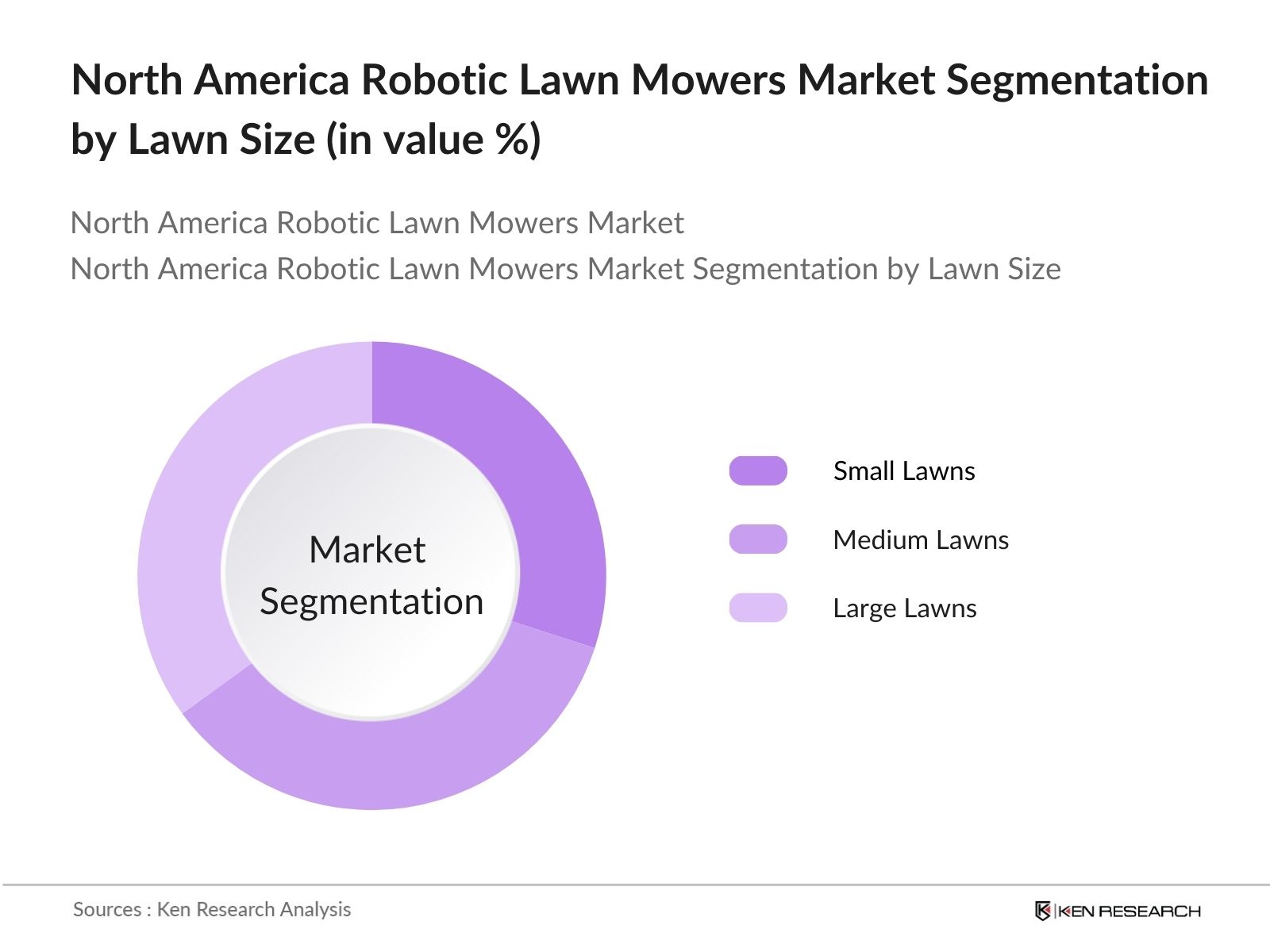
By Lawn Size |
Small Lawns Medium Lawns Large Lawns |
|
By Technology |
GPS-enabled Non-GPS-enabled |
|
By End-user |
Residential Commercial |
|
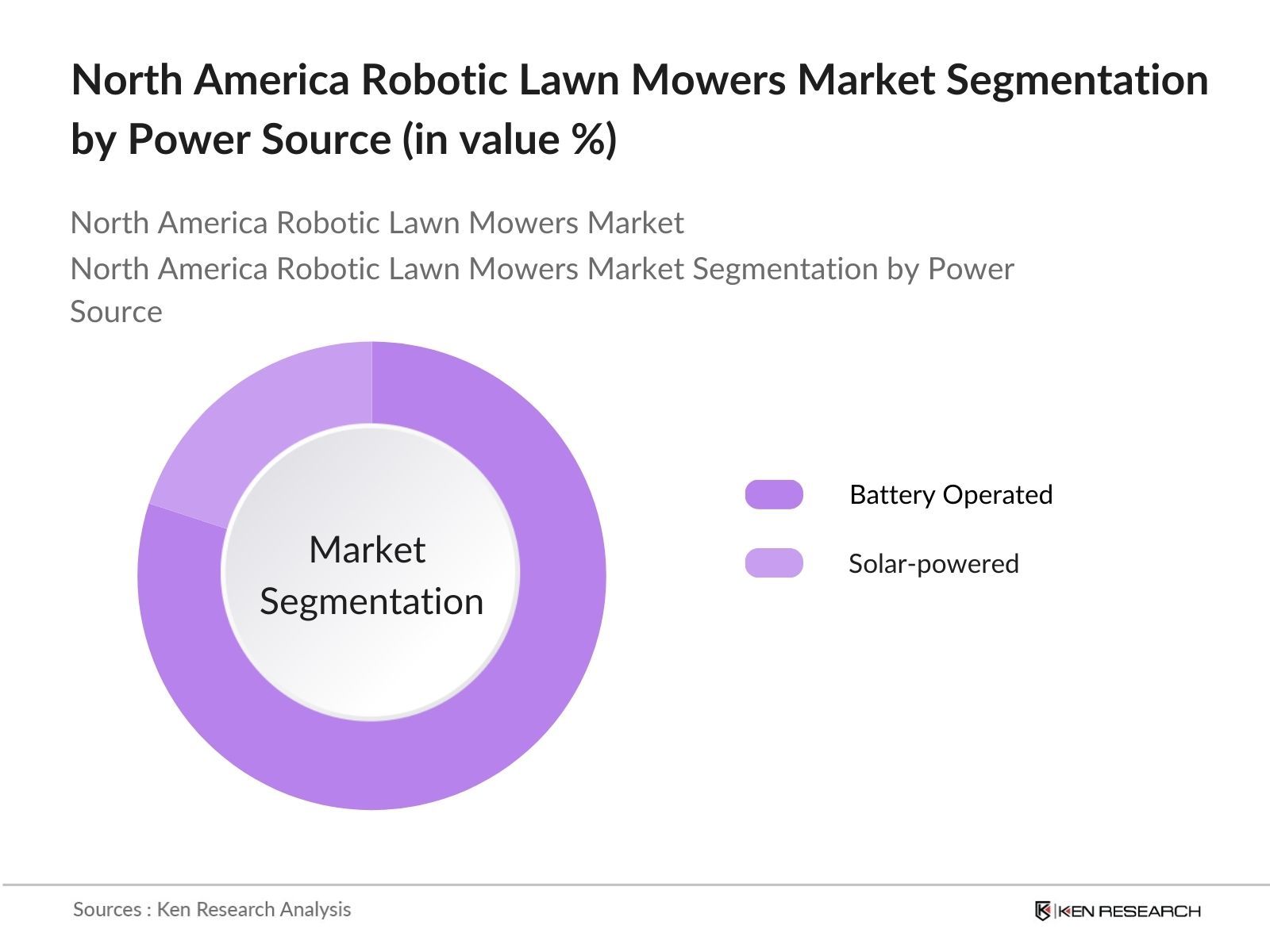
By Power Source |
Battery Operated Solar-powered |
|
By Distribution Channel |
Online Stores Offline Retail |
1.1. Definition and Scope
1.2. Market Taxonomy
1.3. Market Growth Rate
1.4. Market Segmentation Overview
2.1. Historical Market Size
2.2. Year-on-Year Growth Analysis
2.3. Key Market Developments and Milestones
3.1. Growth Drivers (Battery Advancements, Environmental Concerns, Labor Shortage in Landscaping)
3.1.1. Technological Advancements in Batteries
3.1.2. Increased Adoption Due to Environmental Concerns
3.1.3. Rising Labor Costs in Landscaping Services
3.2. Market Challenges (Cost, Technical Maintenance, Limited Use in Uneven Terrain)
3.2.1. High Initial Costs of Robotic Lawn Mowers
3.2.2. Technical Maintenance and Repair Challenges
3.2.3. Inefficiency on Uneven or Complex Terrains
3.3. Opportunities (Smart Home Integration, AI-Driven Enhancements, Residential Expansion)
3.3.1. Growth in Smart Home Ecosystems
3.3.2. Integration of AI and Autonomous Features
3.3.3. Expansion in Urban and Suburban Residential Areas
3.4. Trends (Smartphone Connectivity, Eco-friendly Solutions, AI Navigation)
3.4.1. Increase in Smartphone-Controlled Mowers
3.4.2. Shift Towards Eco-friendly, Battery-Operated Models
3.4.3. Advanced AI-Powered Navigation and Obstacle Detection
3.5. Government Regulation (Noise Pollution Standards, Green Energy Initiatives, Industry Standards)
3.5.1. Compliance with Noise Pollution Standards
3.5.2. Green Energy and Low Emission Guidelines
3.5.3. Industry Standards for Product Safety and Performance
3.6. SWOT Analysis
3.7. Stakeholder Ecosystem (Manufacturers, Distributors, Service Providers)
3.8. Porters Five Forces Analysis (Supplier Power, Buyer Power, Competitive Rivalry, Threat of Substitutes, Entry Barriers)
3.9. Competition Ecosystem (Product Innovation, Market Leadership, Regional Competition)
4.1. By Lawn Size (In Value %)
4.1.1. Small Lawns
4.1.2. Medium Lawns
4.1.3. Large Lawns
4.2. By Technology (In Value %)
4.2.1. GPS-enabled Robotic Mowers
4.2.2. Non-GPS-enabled Robotic Mowers
4.3. By End-user (In Value %)
4.3.1. Residential
4.3.2. Commercial
4.4. By Power Source (In Value %)
4.4.1. Battery Operated
4.4.2. Solar-powered
4.5. By Distribution Channel (In Value %)
4.5.1. Online Stores
4.5.2. Offline Retail
5.1. Detailed Profiles of Major Companies
5.1.1. Husqvarna Group
5.1.2. Honda Power Equipment
5.1.3. Robert Bosch GmbH
5.1.4. Deere & Company
5.1.5. Stiga Group
5.1.6. Worx
5.1.7. Robomow
5.1.8. STIHL Inc.
5.1.9. Cub Cadet
5.1.10. AL-KO Kober SE
5.1.11. McCulloch
5.1.12. Ambrogio Robot (Zucchetti Centro Sistemi)
5.1.13. Mowbot
5.1.14. Gardena GmbH
5.1.15. LG Electronics Inc.
5.2. Cross Comparison Parameters (Revenue, Production Capacity, Innovation Index, Market Share, Distribution Network, Product Portfolio, Operational Regions, Customer Ratings)
5.3. Market Share Analysis
5.4. Strategic Initiatives (Partnerships, Product Launches, Marketing Campaigns)
5.5. Mergers and Acquisitions
5.6. Investment Analysis
5.7. Venture Capital Funding
5.8. Private Equity Investments
6.1. Environmental Regulations (Noise Pollution, Energy Efficiency)
6.2. Compliance Requirements (Safety Standards, Certification)
6.3. Certification Processes (ISO, CE Certifications)
7.1. Future Market Size Projections
7.2. Key Factors Driving Future Market Growth
8.1. By Lawn Size (In Value %)
8.2. By Technology (In Value %)
8.3. By End-user (In Value %)
8.4. By Power Source (In Value %)
8.5. By Distribution Channel (In Value %)
9.1. TAM/SAM/SOM Analysis
9.2. Customer Cohort Analysis (Homeowners, Commercial Entities, Landscaping Companies)
9.3. Marketing Initiatives (Targeted Advertising, Product Awareness Campaigns)
9.4. White Space Opportunity Analysis
Disclaimer Contact UsThis step involves a thorough examination of all stakeholders in the North American robotic lawn mower market. Data is gathered from reputable secondary sources, including industry databases and government reports. Critical variables include consumer demand, technological advancements, and environmental trends.
We collect and analyze historical data, focusing on market growth rates, lawn sizes, and consumer preferences. This step involves building a market model that aligns with the gathered data and ensures revenue estimation accuracy.
Through consultations with industry leaders and practitioners via CATIs, we validate the market assumptions and projections. These insights help refine the data and provide real-world perspectives on market trends.
In the final stage, we compile the data to form a comprehensive market report. This includes insights on product performance, customer preferences, and market segmentation, ensuring a robust analysis of the robotic lawn mower market.
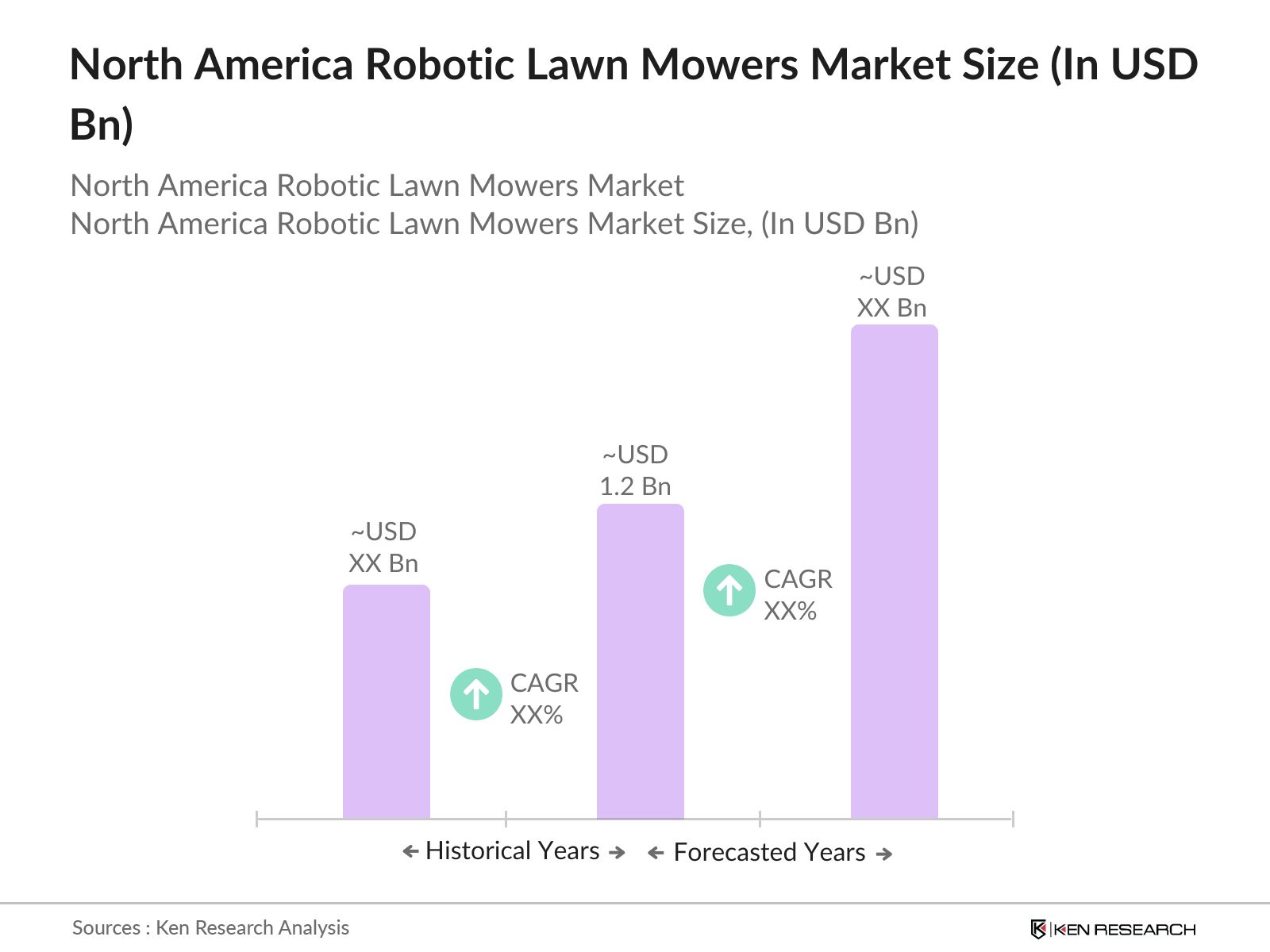
The North American robotic lawn mower market is valued at USD 1.2 billion, driven by the rise in smart home ecosystems and increased demand for automated lawn care solutions.
The key challenges in the North American robotic lawn mower market include the high initial cost of robotic lawn mowers, maintenance and repair complexities, and inefficiency in mowing uneven or complex terrains.
Major players in the North American robotic lawn mower market include Husqvarna Group, Honda Power Equipment, Robert Bosch GmbH, Worx, and Stiga Group, all of which have a significant influence due to their technological advancements and distribution networks.
North American robotic lawn mower market growth is driven by advancements in AI and automation, rising labour costs in landscaping, and environmental concerns pushing the adoption of battery-operated solutions.

What makes us stand out is that our consultants follows Robust, Refine and Result (RRR) methodology. i.e. Robust for clear definitions, approaches and sanity checking, Refine for differentiating respondents facts and opinions and Result for presenting data with story

We have set a benchmark in the industry by offering our clients with syndicated and customized market research reports featuring coverage of entire market as well as meticulous research and analyst insights.

While we don't replace traditional research, we flip the method upside down. Our dual approach of Top Bottom & Bottom Top ensures quality deliverable by not just verifying company fundamentals but also looking at the sector and macroeconomic factors.

With one step in the future, our research team constantly tries to show you the bigger picture. We help with some of the tough questions you may encounter along the way: How is the industry positioned? Best marketing channel? KPI's of competitors? By aligning every element, we help maximize success.

Our report gives you instant access to the answers and sources that other companies might choose to hide. We elaborate each steps of research methodology we have used and showcase you the sample size to earn your trust.

If you need any support, we are here! We pride ourselves on universe strength, data quality, and quick, friendly, and professional service.