North America Smart Elevator Market Outlook to 2030

Region:North America

Author(s):Sanjeev

Product Code:KROD4166

Published On

November 2024

Total pages

99

About the Report

North America Smart Elevator Market Overview

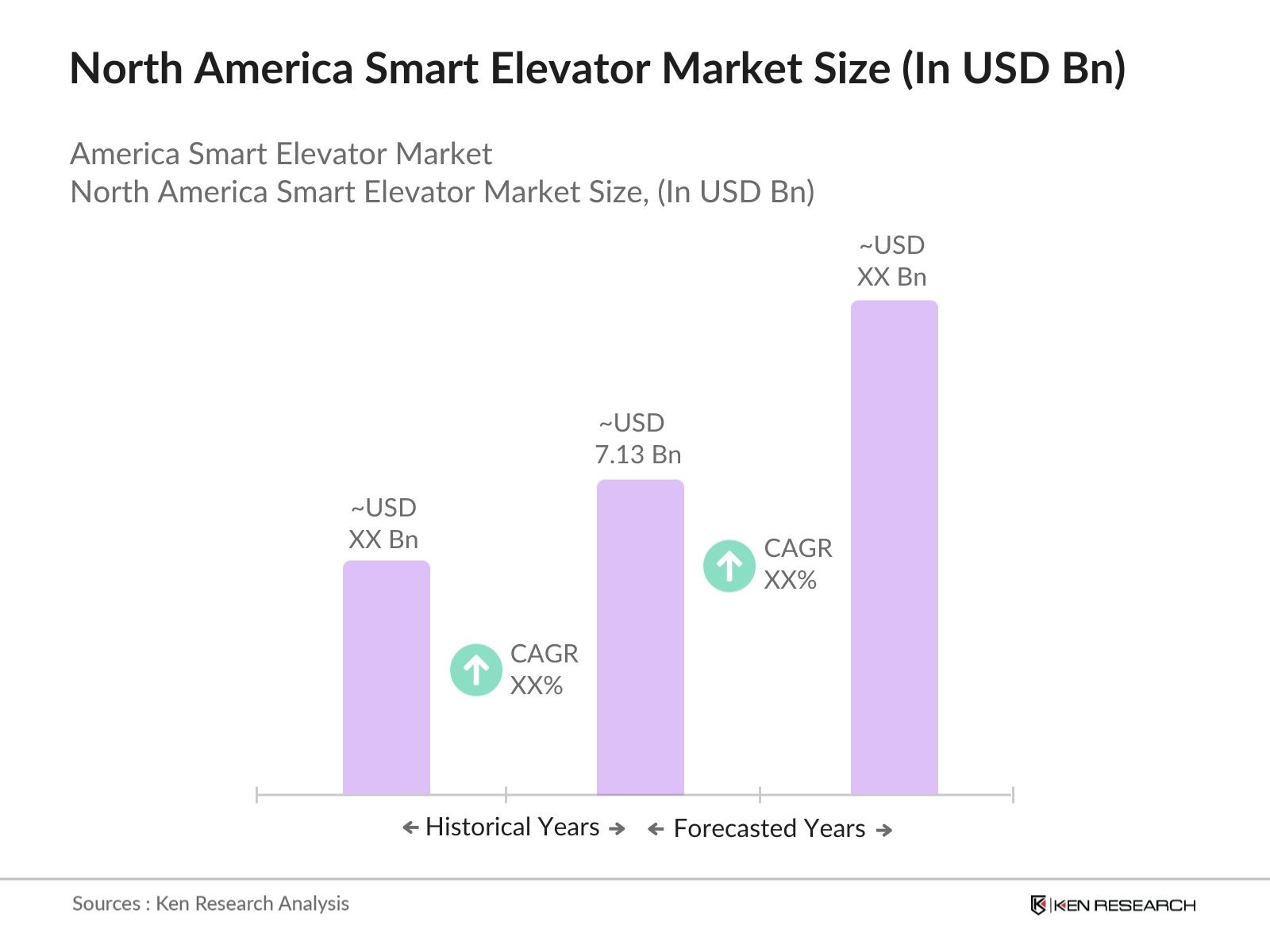
  • The North American smart elevator market is experiencing significant growth, driven by rapid urbanization and the increasing adoption of advanced technologies in building infrastructure. In 2023, the market was valued at USD 7.13 billion, reflecting a strong demand for energy-efficient and intelligent vertical transportation solutions. This growth is propelled by the need for enhanced security, improved passenger experience, and the integration of IoT and AI technologies in modern buildings. North America Smart Elevator Market Size
  • The United States stands as the dominant player in the North American smart elevator market. This dominance is attributed to the country's substantial investments in smart building projects, a robust construction industry, and the presence of major market players such as Otis Elevator Company and KONE Corporation. Additionally, the U.S. government's initiatives to promote energy-efficient and sustainable building solutions have further accelerated the adoption of smart elevators across the nation.
  • Governments worldwide enforce building codes to ensure structural integrity and occupant safety. For instance, the United States mandates adherence to the International Building Code (IBC) and the National Fire Protection Association (NFPA) standards, which set comprehensive safety requirements for various building types. Similarly, Australia implements the National Construction Code (NCC), which outlines minimum requirements for health, safety, accessibility, and sustainability in building design and construction. These regulations are periodically updated to incorporate advancements in construction practices and materials, ensuring that buildings meet current safety and performance standards.

North America Smart Elevator Market Segmentation

The North American smart elevator market can be segmented based on Component and Application.
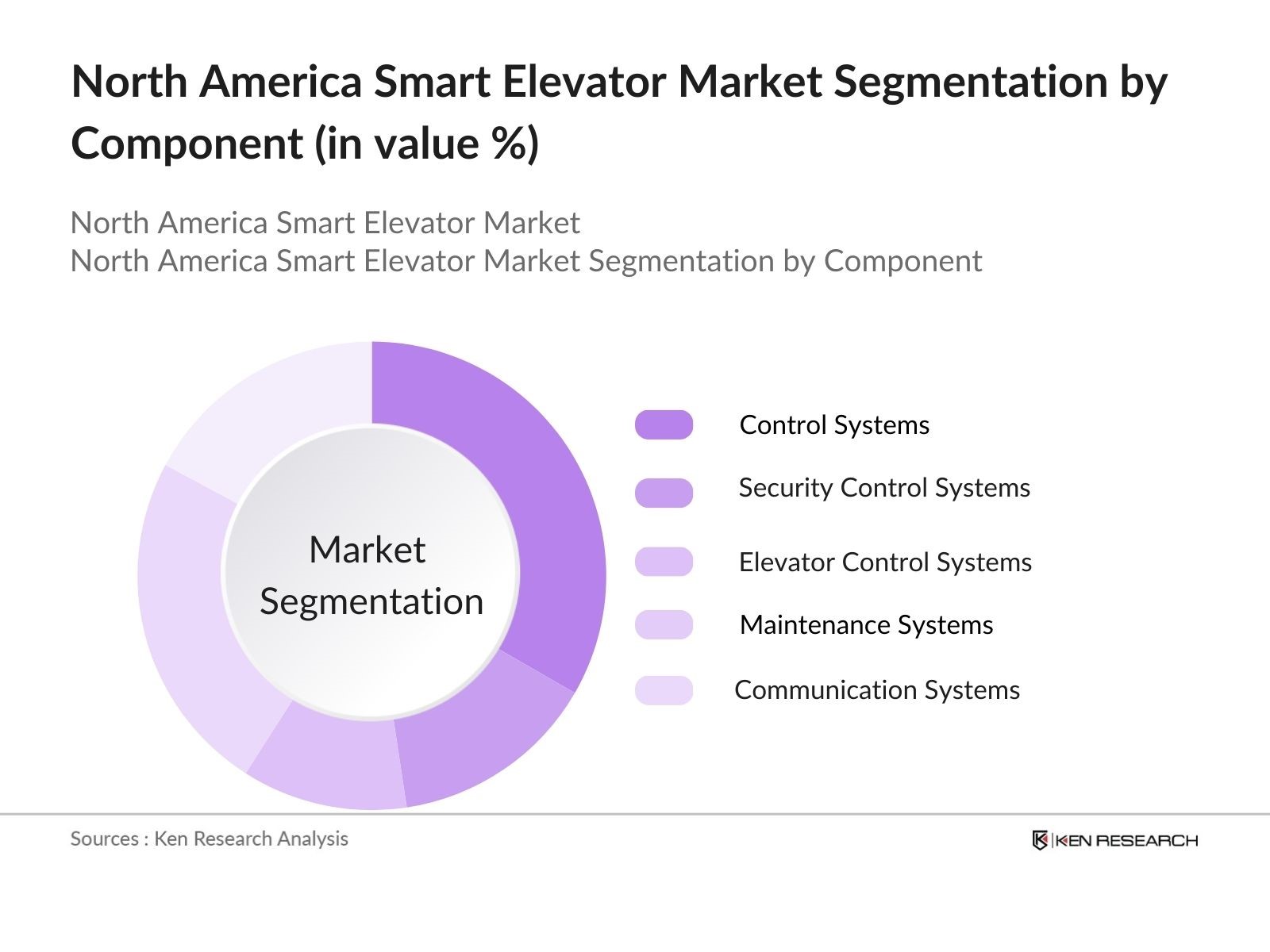
  • By Component: The North American smart elevator market can be segmented based on Component into Control Systems, Access Control Systems, Maintenance Systems and Communication Systems. Control systems hold a significant share in the North American smart elevator market. Their dominance is due to the critical role they play in ensuring the safety, efficiency, and reliability of elevator operations. Advanced control systems incorporate features like destination dispatching, which optimizes passenger flow and reduces wait times. Moreover, the integration of AI and IoT technologies in control systems enables predictive maintenance, minimizing downtime and enhancing user experience. North America Smart Elevator Market Segmentation
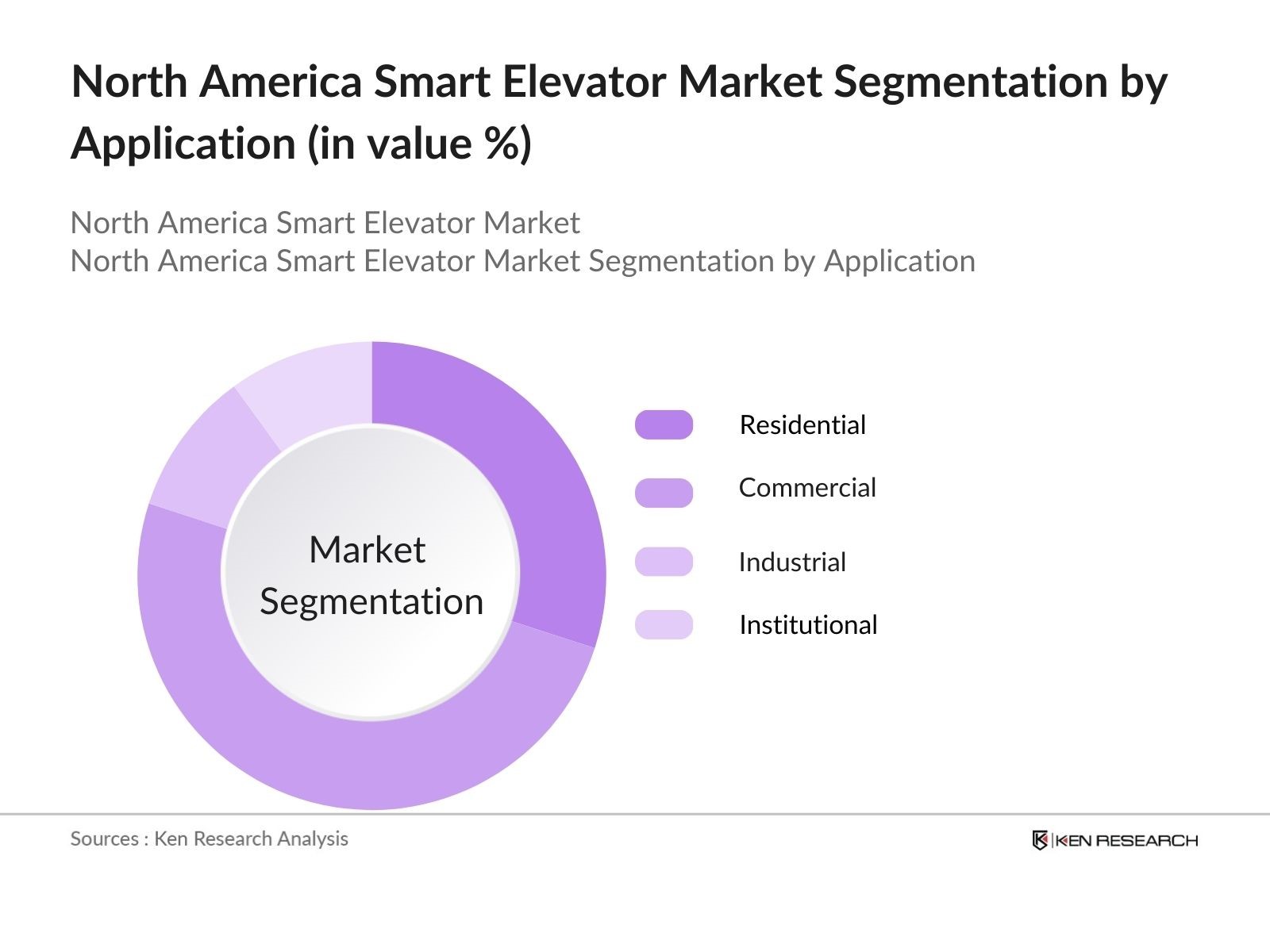
  • By Application: The North American smart elevator market can be segmented based on application into residential, commercial, industrial and institutional. The commercial segment dominates the North American smart elevator market. This is primarily due to the high concentration of office buildings, shopping malls, hotels, and other commercial establishments that require efficient vertical transportation solutions. The demand for smart elevators in commercial spaces is driven by the need for enhanced security features, energy efficiency, and improved passenger experience. Additionally, the integration of smart technologies in commercial buildings aligns with the growing trend of smart cities and intelligent infrastructure development.

??????? North America Smart Elevator Market Segmentation

North America Smart Elevator Market Competitive Landscape

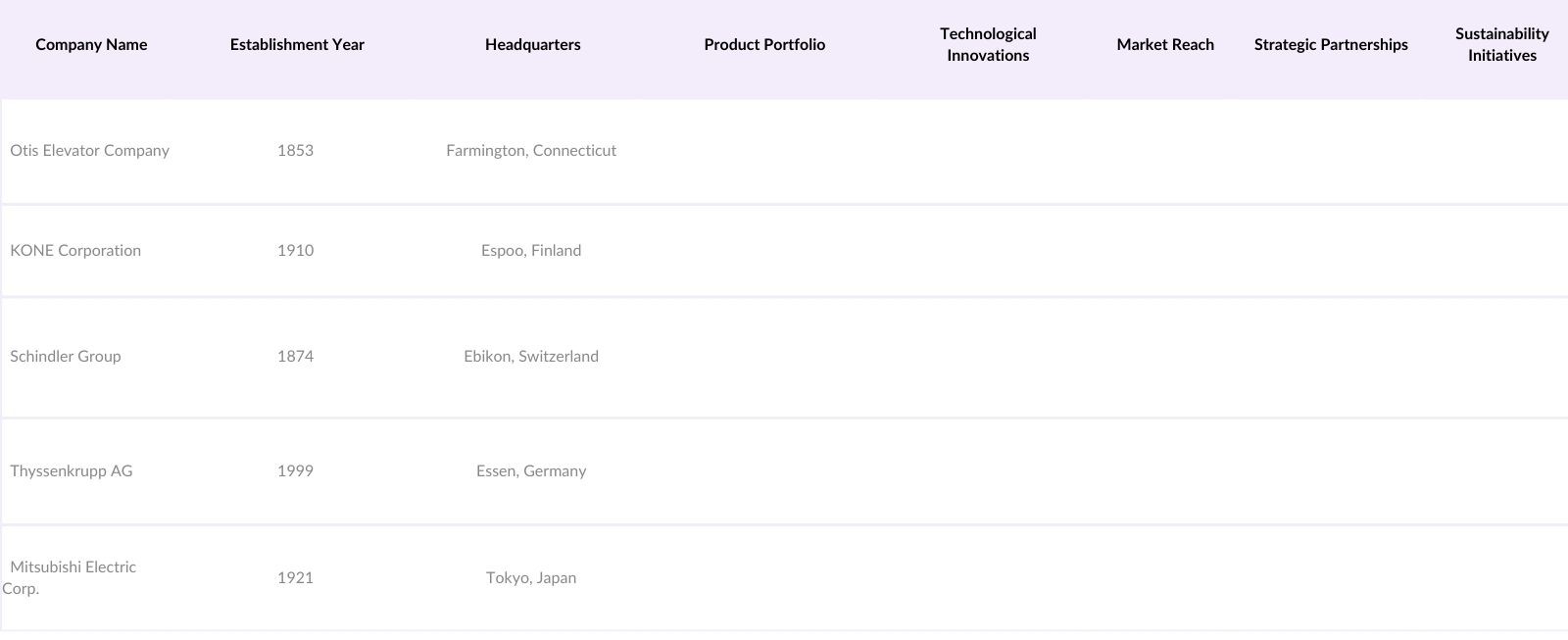
The North American smart elevator market is characterized by the presence of several key players who contribute to its growth and innovation. These companies focus on technological advancements, strategic partnerships, and expanding their product portfolios to maintain a competitive edge.North America Smart Elevator Market Competitive Landscape
North America Smart Elevator Market Analysis

Growth Drivers

  • Urbanization and High-Rise Construction: As of 2024, approximately 4.4 billion people reside in urban areas, accounting for 56% of the global population. This urban influx has led to a surge in high-rise constructions to accommodate the growing urban populace. For instance, in 2023, 177 buildings exceeding 200 meters in height were completed worldwide, setting a new record for tall building completions. This trend underscores the escalating demand for vertical housing solutions in densely populated cities.
  • Energy Efficiency and Sustainability Initiatives: In 2023, global energy-related CO emissions reached a record high, prompting intensified efforts toward energy efficiency and sustainability. Governments and organizations are implementing measures to enhance energy efficiency, with the goal of doubling the global rate of improvement by 2030. These initiatives are driving the adoption of energy-efficient technologies and sustainable building practices across various sectors.
  • Technological Advancements (IoT, AI Integration): The integration of Internet of Things (IoT) and Artificial Intelligence (AI) technologies is revolutionizing industries by enhancing operational efficiency and enabling predictive maintenance. For example, the cruise industry has adopted AI-driven tools like OptiCruise, which is expected to reduce emissions by 15% across fleets by 2026. Such technological advancements are pivotal in optimizing resource utilization and reducing environmental impact.

Market Challenges

  • High Initial Installation Costs: The adoption of advanced technologies often entails substantial upfront investments. For instance, the U.S. Postal Service plans to acquire 66,000 electric vehicles over five years, a significant financial commitment aimed at reducing greenhouse gas emissions by 40% by 2030. Such high initial costs can be a barrier for organizations, especially small and medium-sized enterprises, in implementing new technologies.
  • Technical Challenges and Integration Issues: Integrating new technologies into existing systems can present technical challenges. For example, the construction industry faces difficulties in incorporating energy-efficient materials and technologies into traditional building practices, which can lead to delays and increased costs. Addressing these integration issues is crucial for the seamless adoption of innovative solutions.

North America Smart Elevator Market Future Outlook

Over the next five years, the North American smart elevator market is expected to witness substantial growth. This expansion will be driven by continuous advancements in elevator technologies, increasing investments in smart building projects, and a growing emphasis on energy efficiency and sustainability. The integration of AI and IoT in elevator systems will further enhance predictive maintenance capabilities and passenger experience, solidifying the market's upward trajectory.

Market Opportunities

  • Expansion into Emerging Markets: Emerging markets present significant growth opportunities due to rapid urbanization and industrialization. For example, India's urban population is expected to reach 600 million by 2031, driving demand for infrastructure development. Companies can capitalize on these markets by offering tailored solutions that address local needs and challenges.
  • Retrofitting and Modernization of Existing Buildings: The global push for sustainability is leading to increased retrofitting and modernization of existing buildings. In the U.S., the Better Buildings Initiative has resulted in significant energy savings through building upgrades. This trend offers opportunities for companies specializing in energy-efficient technologies and services.

Scope of the Report

By Component


Control Systems
Security Control Systems
Elevator Control Systems
Access Control Systems
Maintenance Systems
Communication Systems

By Service


New Installations
Modernization
Maintenance

By Application


Residential
Commercial
Industrial
Institutional

By Carriage Type


Passenger Elevators

Freight Elevators

By Region

US

Canada

Mexico


Products

Key Target Audience

  • Elevator Manufacturers

  • Building and Construction Companies

  • Property Management Firms

  • Facility Management Companies

  • Government and Regulatory Bodies (e.g., U.S. Department of Energy)

  • Investment and Venture Capitalist Firms

  • Real Estate Developers

  • Architectural and Engineering Firms

Companies

Players Mention in the Report:

  • Otis Elevator Company

  • KONE Corporation

  • Schindler Group

  • Thyssenkrupp AG

  • Mitsubishi Electric Corporation

  • Hyundai Elevator Co., Ltd.

  • Fujitec Co., Ltd.

  • Hitachi Ltd.

  • Toshiba Elevator and Building Systems Corporation

  • Bosch Security Systems

  • Honeywell International Inc.

  • Johnson Controls International plc

  • Siemens AG

  • TK Elevator GmbH

  • Motion Control Engineering Inc.

Table of Contents

Market Overview

Definition and Scope

Market Taxonomy

Market Growth Rate

Market Segmentation Overview

Market Size (USD Million)

Historical Market Size

Year-On-Year Growth Analysis

Key Market Developments and Milestones

Market Analysis

Growth Drivers

Urbanization and High-Rise Construction

Energy Efficiency and Sustainability Initiatives

Technological Advancements (IoT, AI Integration)

Government Regulations and Incentives

Market Challenges

High Initial Installation Costs

Technical Challenges and Integration Issues

Lack of Skilled Workforce

Economic Slowdowns and Impact on Construction

Opportunities

Expansion into Emerging Markets

Retrofitting and Modernization of Existing Buildings

Integration with Smart Building Systems

Development of Green Building Certifications

Trends

Adoption of Destination Control Systems

Integration with Building Management Systems

Increased Use of Predictive Maintenance

Touchless and Biometric Access Controls

Government Regulations

Building Codes and Safety Standards

Energy Efficiency Mandates

Accessibility Requirements

Incentives for Smart Infrastructure

SWOT Analysis

Stakeholder Ecosystem

Porters Five Forces Analysis

Competitive Landscape

Market Segmentation

By Component (Value %)

Control Systems

Security Control Systems

Elevator Control Systems

Access Control Systems

Maintenance Systems

Communication Systems

By Service (Value %)

New Installations

Modernization

Maintenance

By Application (Value %)

Residential

Commercial

Industrial

Institutional

By Carriage Type (Value %)

Passenger Elevators

Freight Elevators

By Country (Value %)

United States

Canada

Mexico

Competitive Analysis

Detailed Profiles of Major Companies

Otis Elevator Co.

KONE Corporation

Schindler Group

Thyssenkrupp AG

Hitachi Ltd.

Hyundai Elevator Co., Ltd.

Mitsubishi Electric Corporation

Fujitec Co., Ltd.

Toshiba Elevator and Building Systems Corporation

Bosch Security Systems, LLC

Honeywell International Inc.

Johnson Controls Inc.

Motion Control Engineering, Inc.

Thames Valley Controls Ltd

TK Elevator GmbH

Cross Comparison Parameters

Number of Employees

Headquarters Location

Year of Inception

Annual Revenue

Product Portfolio

Market Share

Recent Developments

Strategic Initiatives

Market Share Analysis

Strategic Initiatives

Mergers and Acquisitions

Investment Analysis

Venture Capital Funding

Government Grants

Private Equity Investments

Regulatory Framework

Building and Safety Codes

Compliance Requirements

Certification Processes

Environmental Standards

Future Market Size (USD Million)

Future Market Size Projections

Key Factors Driving Future Market Growth

Future Market Segmentation

By Component (Value %)

By Service (Value %)

By Application (Value %)

By Carriage Type (Value %)

By Country (Value %)

Analysts Recommendations

Total Addressable Market (TAM), Serviceable Available Market (SAM), Serviceable Obtainable Market (SOM) Analysis

Customer Cohort Analysis

Marketing Initiatives

White Space Opportunity Analysis

Disclaimer Contact Us

Research Methodology

Step 1: Identification of Key Variables

The initial phase involves constructing an ecosystem map encompassing all major stakeholders within the North American Smart Elevator Market. This step is underpinned by extensive desk research, utilizing a combination of secondary and proprietary databases to gather comprehensive industry-level information. The primary objective is to identify and define the critical variables that influence market dynamics.

Step 2: Market Analysis and Construction

In this phase, we compile and analyze historical data pertaining to the North American Smart Elevator Market. This includes assessing market penetration, the ratio of marketplaces to service providers, and the resultant revenue generation. Furthermore, an evaluation of service quality statistics is conducted to ensure the reliability and accuracy of the revenue estimates.

Step 3: Hypothesis Validation and Expert Consultation

Market hypotheses are developed and subsequently validated through computer-assisted telephone interviews (CATIs) with industry experts representing a diverse array of companies. These consultations provide valuable operational and financial insights directly from industry practitioners, which are instrumental in refining and corroborating the market data.

Step 4: Research Synthesis and Final Output

The final phase involves direct engagement with multiple elevator manufacturers to acquire detailed insights into product segments, sales performance, consumer preferences and other pertinent factors. This interaction serves to verify and complement the statistics derived from the bottom-up approach, ensuring a comprehensive, accurate, and validated analysis of the North American Smart Elevator Market. The final report integrates qualitative insights with quantitative data, providing actionable intelligence for stakeholders.

Frequently Asked Questions

01. How big is the North American Smart Elevator Market? 

The North American Smart Elevator Market is valued at USD 7.13 billion. This robust market valuation is driven by advancements in technology, a surge in urban construction, and the growing emphasis on energy-efficient infrastructure. 

02. What are the challenges in the North American Smart Elevator Market? 

North American Smart Elevator Market Challenges include high installation costs, technical integration complexities, and a shortage of skilled technicians. Economic fluctuations and stringent regulatory compliance also pose significant hurdles for market growth. 

03. Who are the major players in the North American Smart Elevator Market? 

North American Smart Elevator Market Key players include Otis Elevator Company, KONE Corporation, Schindler Group, Thyssenkrupp AG, and Mitsubishi Electric Corporation. These companies leverage innovation, strategic partnerships, and robust portfolios to dominate the market. 

04. What are the growth drivers of the North American Smart Elevator Market? 

North American Smart Elevator Market Growth is propelled by increasing adoption of IoT and AI technologies, government initiatives for energy-efficient buildings, and the rising demand for improved passenger safety and convenience. 

05. What is the future outlook of the North American Smart Elevator Market? 

The North American Smart Elevator Market is poised for significant growth, driven by investments in smart city projects, technological advancements, and heightened demand for sustainable solutions. The integration of predictive maintenance and touchless technologies will shape future trends. 


Why Buy From Us?

RRR
Refine Robust Result (RRR) Framework

What makes us stand out is that our consultants follows Robust, Refine and Result (RRR) methodology. i.e. Robust for clear definitions, approaches and sanity checking, Refine for differentiating respondents facts and opinions and Result for presenting data with story

Our Reach Is Unmatched

We have set a benchmark in the industry by offering our clients with syndicated and customized market research reports featuring coverage of entire market as well as meticulous research and analyst insights.

Research
Shifting the Research Paradigm

While we don't replace traditional research, we flip the method upside down. Our dual approach of Top Bottom & Bottom Top ensures quality deliverable by not just verifying company fundamentals but also looking at the sector and macroeconomic factors.

Insite
More Insights-Better Decisions

With one step in the future, our research team constantly tries to show you the bigger picture. We help with some of the tough questions you may encounter along the way: How is the industry positioned? Best marketing channel? KPI's of competitors? By aligning every element, we help maximize success.

Trust
Transparency and Trust

Our report gives you instant access to the answers and sources that other companies might choose to hide. We elaborate each steps of research methodology we have used and showcase you the sample size to earn your trust.

support
Round the Clock Support

If you need any support, we are here! We pride ourselves on universe strength, data quality, and quick, friendly, and professional service.

Why Client Choose Us?

400000+ Reports in repository
150+ Consulting project a year
100+ Analysts
8000+ Client Queries in 2022