
North America Smart Parcel Locker Market Outlook to 2030
Region:Mexico
Author(s):Meenakshi Bisht
Product Code:KROD4093
Region:Mexico
Author(s):Meenakshi Bisht
Product Code:KROD4093
November 2024
92
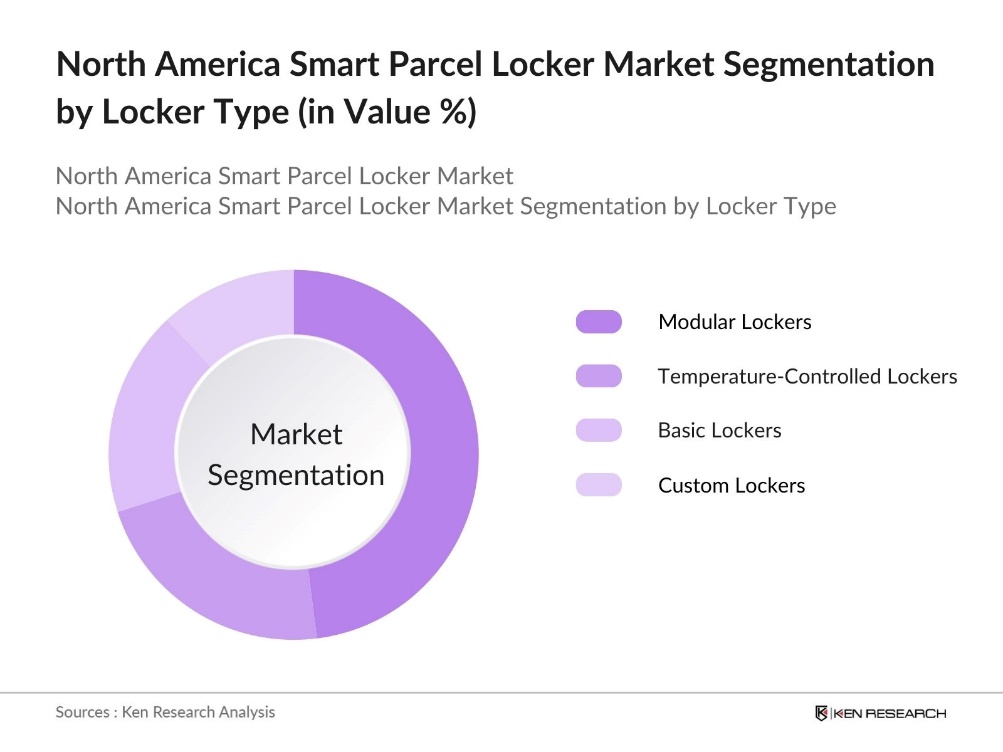
By Locker Type: The North America Smart Parcel Locker market is segmented by locker type into Modular Lockers, Temperature-Controlled Lockers, Basic Lockers, and Custom Lockers. Modular Lockers dominate the market share under this segmentation due to their versatility in being customized according to different spatial and operational requirements. Their modular design allows property managers and businesses to scale locker systems as per their needs, making them the most widely adopted type of smart parcel lockers across commercial, residential, and retail sectors.
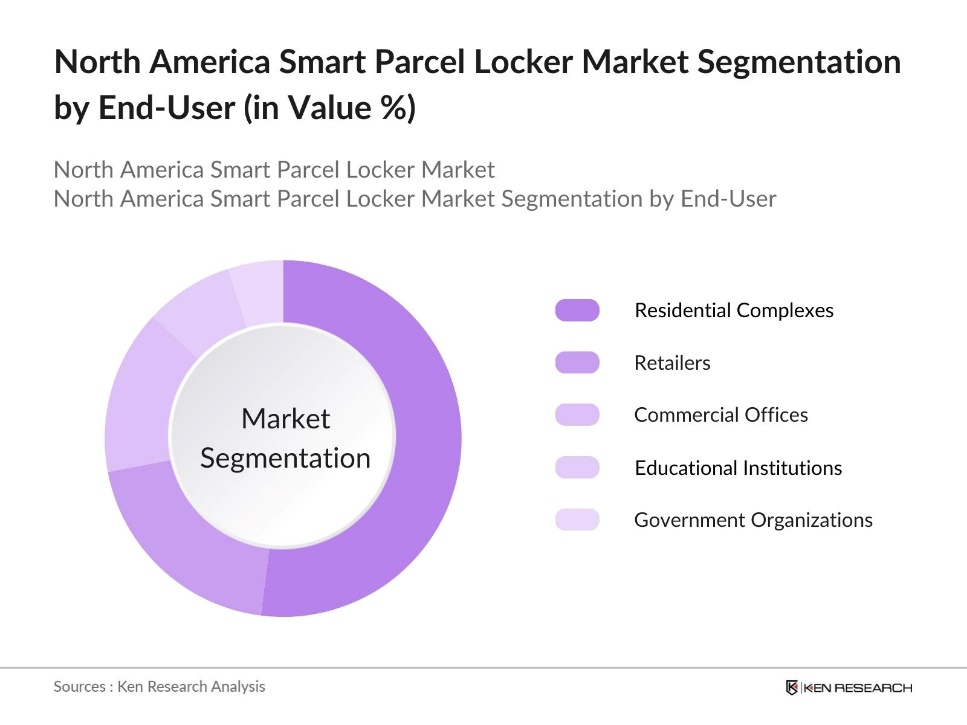
By End-User: The North America Smart Parcel Locker market is further segmented by end-user into Residential Complexes, Retailers, Commercial Offices, Educational Institutions, and Government Organizations. Residential complexes hold the largest market share in this segment due to the increasing demand for automated package management solutions, especially in urban areas with high e-commerce activity. The rising need for secure, efficient, and contactless delivery solutions has driven residential buildings to invest heavily in smart parcel locker systems, enhancing the convenience and security of package deliveries for tenants.
The market is dominated by a few key players, with both local and global companies making significant contributions. These players have established strong partnerships with real estate developers, e-commerce firms, and logistics providers, further strengthening their position. The competitive landscape is characterized by strategic product innovations and mergers & acquisitions, aimed at improving service offerings and expanding market presence.
|
Company Name |
Establishment Year |
Headquarters |
Revenue (2023) |
Product Range |
Technology Used |
Market Reach |
Recent Investments |
Strategic Partners |
Expansion Strategy |
|
Quadient |
1999 |
France, USA |
|||||||
|
TZ Limited |
2001 |
Australia |
|||||||
|
Cleveron AS |
2007 |
Estonia, USA |
|||||||
|
Luxer One |
2010 |
United States |
|||||||
|
Parcel Pending |
2013 |
United States |
The North America Smart Parcel Locker market is expected to witness significant growth in the coming years, driven by the increasing adoption of smart city projects, advancements in automation technology, and the growing need for secure, contactless deliveries. The proliferation of e-commerce, combined with changing consumer behavior toward digital shopping and package management, is likely to propel the demand for smart parcel lockers across multiple sectors.
|
By Locker Type |
Modular Lockers Temperature-Controlled Lockers Basic Lockers Custom Lockers |
|
By End-User |
Residential Complexes Retailers Commercial Offices Educational Institutions Government Organizations |
|
By Technology |
RFID Technology Barcode Scanning PIN Code Access Biometric Verification |
|
By Deployment Type |
Indoor Outdoor |
|
By Region |
United States Canada Mexico |
1.1. Definition and Scope
1.2. Market Taxonomy
1.3. Industry Life Cycle Analysis
1.4. Market Segmentation Overview
2.1. Historical Market Size
2.2. Year-on-Year Growth Analysis
2.3. Market Milestones and Developments
3.1. Growth Drivers (Urbanization, E-commerce Expansion, Automation in Logistics)
3.1.1. E-commerce Growth Impact
3.1.2. Increased Demand for Contactless Deliveries
3.1.3. Government Support for Smart Infrastructure
3.2. Market Challenges (Operational Costs, Cybersecurity Risks, Infrastructure Limitations)
3.2.1. High Installation and Maintenance Costs
3.2.2. Network Integration Challenges
3.2.3. Consumer Trust in Technology
3.3. Opportunities (Smart City Integration, Partnerships with Delivery Firms, AI Implementation)
3.3.1. Expansion in Residential Areas
3.3.2. Partnerships with Retailers and E-commerce Companies
3.3.3. Enhanced Data Analytics for Operational Efficiency
3.4. Trends (IoT, AI in Logistics, Sustainability)
3.4.1. Internet of Things Integration
3.4.2. Artificial Intelligence for Package Management
3.4.3. Energy-Efficient Lockers
3.5. Government Regulations (Data Privacy Laws, Postal Regulations, Security Compliance)
3.5.1. Data Protection Regulations
3.5.2. U.S. Postal Locker Standards
3.5.3. Security and Surveillance Mandates
3.6. SWOT Analysis
3.7. Value Chain Analysis
3.8. Porters Five Forces Analysis
3.9. Competition Ecosystem
4.1. By Locker Type (In Value %)
4.1.1. Modular Lockers
4.1.2. Temperature-Controlled Lockers
4.1.3. Basic Lockers
4.1.4. Custom Lockers
4.2. By End-User (In Value %)
4.2.1. Residential Complexes
4.2.2. Retailers
4.2.3. Commercial Offices
4.2.4. Educational Institutions
4.2.5. Government Organizations
4.3. By Technology (In Value %)
4.3.1. RFID Technology
4.3.2. Barcode Scanning
4.3.3. PIN Code Access
4.3.4. Biometric Verification
4.4. By Deployment Type (In Value %)
4.4.1. Indoor
4.4.2. Outdoor
4.5. By Region (In Value %)
4.5.1. United States
4.5.2. Canada
4.5.3. Mexico
5.1. Detailed Profiles of Major Competitors
5.1.1. Quadient
5.1.2. TZ Limited
5.1.3. Cleveron AS
5.1.4. Luxer One
5.1.5. Parcel Pending (a division of Quadient)
5.1.6. Amazon Hub Locker
5.1.7. Pitney Bowes
5.1.8. Smartbox
5.1.9. InPost
5.1.10. Snaile Inc.
5.1.11. KEBA AG
5.1.12. Kiosoft Technologies
5.1.13. Zhilai Tech
5.1.14. DeBourgh Lockers
5.1.15. Pudo Inc.
5.2. Cross Comparison Parameters (Revenue, No. of Employees, Product Portfolio, Technological Capabilities)
5.3. Market Share Analysis
5.4. Strategic Initiatives (Partnerships, New Product Launches, Geographical Expansions)
5.5. Mergers and Acquisitions
5.6. Venture Capital Funding
5.7. Government Grants and Incentives
6.1. Postal Service Compliance Standards
6.2. Cybersecurity and Data Protection Regulations
6.3. Building and Zoning Laws for Locker Installation
7.1. Projections for Market Growth
7.2. Factors Driving Future Growth
8.1. By Locker Type (In Value %)
8.2. By End-User (In Value %)
8.3. By Technology (In Value %)
8.4. By Deployment Type (In Value %)
8.5. By Region (In Value %)
9.1. Total Addressable Market (TAM) Analysis
9.2. Strategic Market Entry Recommendations
9.3. Marketing and Go-to-Market Strategies
9.4. Key Opportunities for Expansion
In the initial stage, we conducted a comprehensive review of the North America Smart Parcel Locker market ecosystem, identifying key stakeholders such as parcel locker providers, e-commerce companies, and logistics firms. Extensive desk research and industry reports were utilized to define the critical variables impacting market growth, including e-commerce penetration, urbanization trends, and logistics advancements.
This phase involved compiling historical data on market penetration, adoption rates across different sectors, and revenue generation. The research focused on analyzing the influence of major players, adoption trends by end-users, and the ratio of smart parcel lockers to traditional methods. Market trends were also reviewed, particularly with regards to customer satisfaction and service quality.
To validate the initial market assumptions, we conducted interviews with industry experts from leading smart parcel locker companies and real estate developers. The insights gathered from these consultations helped refine the market hypotheses and provided valuable data on operational efficiencies and user preferences.
Finally, we synthesized the data collected through the bottom-up approach and engaged with parcel locker manufacturers to verify the accuracy of the findings. This stage ensured a comprehensive and reliable analysis of the North America Smart Parcel Locker market, with emphasis on market size, segmentation, and competitive dynamics.
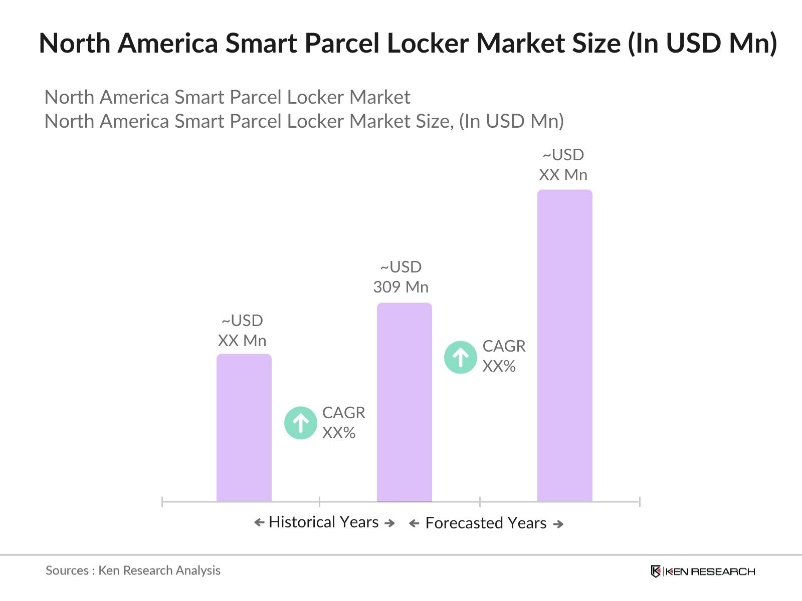
The North America Smart Parcel Locker Market is valued at USD 309 million, driven by the rise of e-commerce, urbanization, and the demand for contactless deliveries across residential, commercial, and retail sectors.
Key challenges in North America Smart Parcel Locker Market include the high cost of installation and maintenance, integration with existing infrastructure, and cybersecurity concerns related to the storage and transfer of package data.
The North America Smart Parcel Locker Market is dominated by major players such as Quadient, TZ Limited, Cleveron AS, Luxer One, and Parcel Pending. These companies have a strong foothold due to their extensive product portfolios and strategic partnerships with logistics and e-commerce companies.
The North America Smart Parcel Locker Market is primarily driven by the expansion of e-commerce, urbanization, and the demand for secure, automated, and contactless delivery solutions. Additionally, smart city initiatives and increasing investments in technological innovations contribute to market growth.

What makes us stand out is that our consultants follows Robust, Refine and Result (RRR) methodology. i.e. Robust for clear definitions, approaches and sanity checking, Refine for differentiating respondents facts and opinions and Result for presenting data with story

We have set a benchmark in the industry by offering our clients with syndicated and customized market research reports featuring coverage of entire market as well as meticulous research and analyst insights.

While we don't replace traditional research, we flip the method upside down. Our dual approach of Top Bottom & Bottom Top ensures quality deliverable by not just verifying company fundamentals but also looking at the sector and macroeconomic factors.

With one step in the future, our research team constantly tries to show you the bigger picture. We help with some of the tough questions you may encounter along the way: How is the industry positioned? Best marketing channel? KPI's of competitors? By aligning every element, we help maximize success.

Our report gives you instant access to the answers and sources that other companies might choose to hide. We elaborate each steps of research methodology we have used and showcase you the sample size to earn your trust.

If you need any support, we are here! We pride ourselves on universe strength, data quality, and quick, friendly, and professional service.