
North America Sportswear Market Outlook to 2030
Region:North America
Author(s):Sanjana Verma
Product Code:KROD9114
December 2024
95
About the Report
North America Sportswear Market Overview
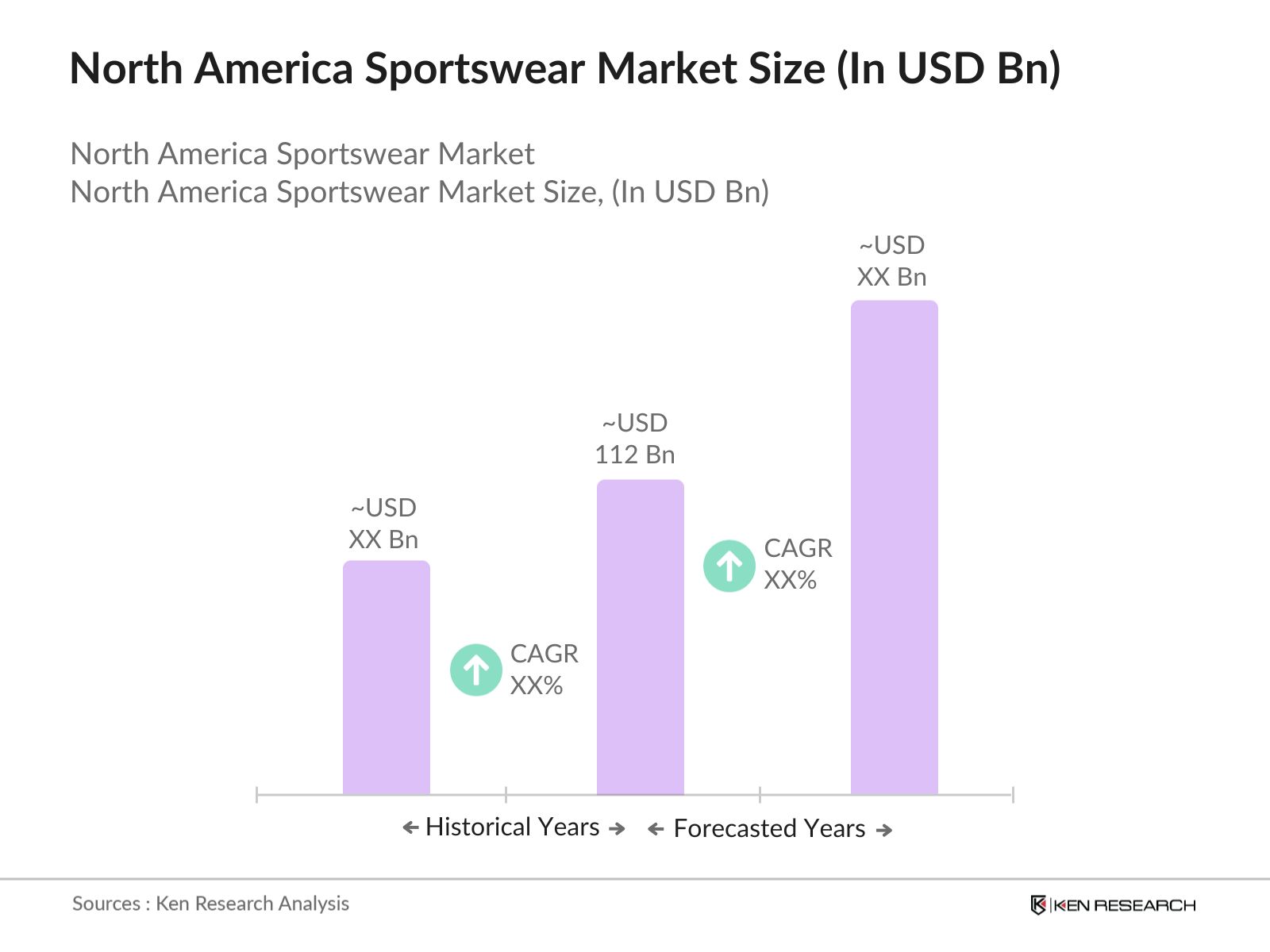
- The North America Sportswear market is valued at USD 112 billion, based on a five-year historical analysis. The market is driven by the increasing consumer focus on fitness, health, and athletic participation. This trend is further fueled by rising disposable income, increased access to sporting activities, and growing awareness of the benefits of a healthy lifestyle. Moreover, the adoption of athleisure, combining fashion with functionality, has led to a significant increase in demand for sports apparel and footwear.
- Key cities and regions, such as New York, Los Angeles, and Chicago, dominate the North American sportsgear market. These regions have a strong sporting culture, major league sports teams, and a concentration of sports enthusiasts. Additionally, the popularity of large-scale sporting events, such as the Super Bowl, NBA Finals, and MLS Cup, further drives demand in these urban centers. The United States remains the largest contributor to the market, owing to its advanced retail infrastructure and the presence of global sportsgear brands.
- Trade regulations have a significant impact on the sportsgear market, particularly in relation to tariffs and import-export controls. In 2023, the U.S. International Trade Commission reported that tariffs on imported sportsgear amounted to $350 million. These regulations affect the pricing strategies of sportsgear companies, as they must account for increased costs due to tariffs. In response, some companies are relocating production to avoid tariff impacts, while others are passing the additional costs onto consumers.
North America Sportswear Market Segmentation
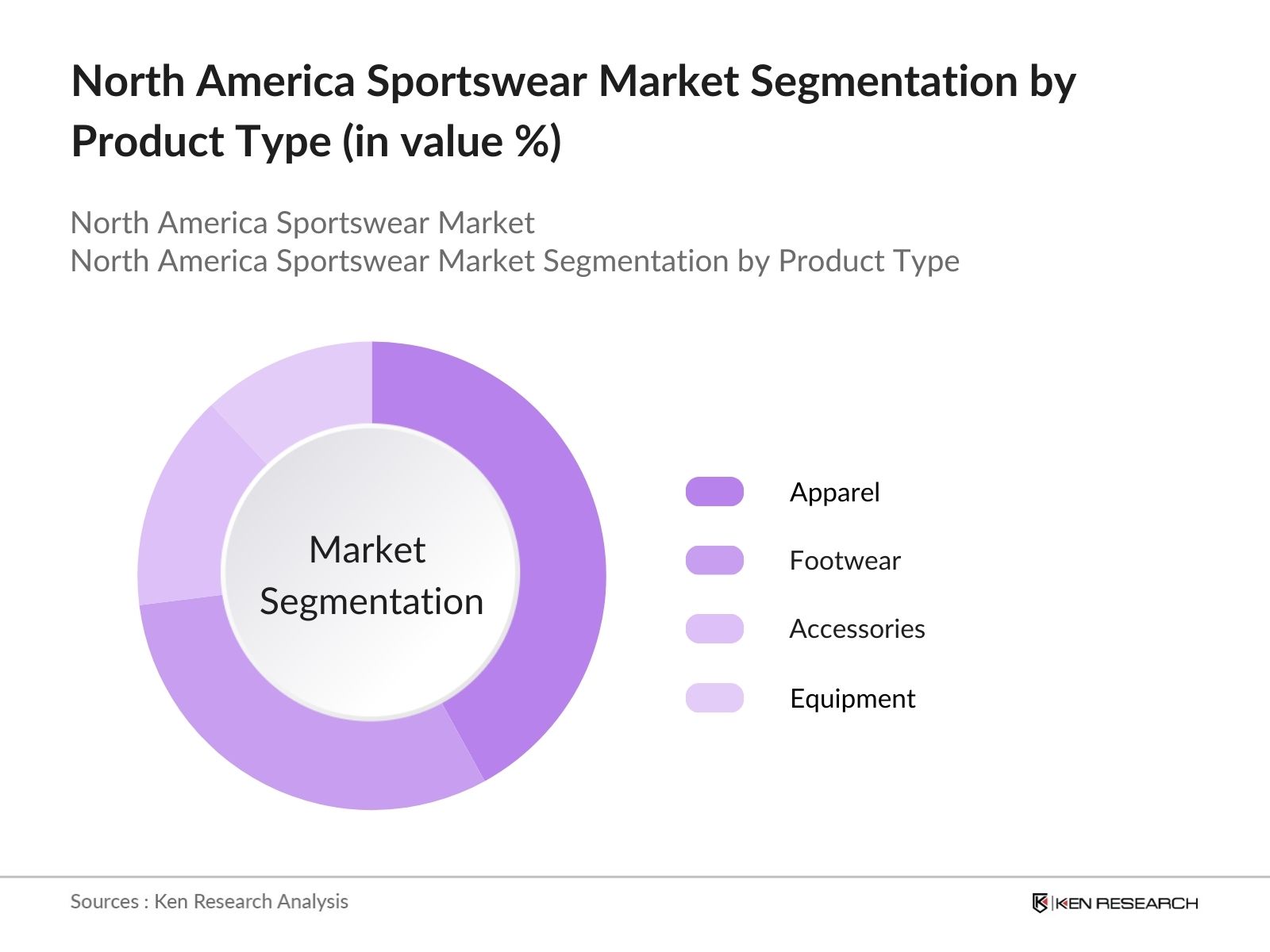
By Product Type: The North America Sportswear market is segmented by product type into apparel, footwear, accessories, and equipment. Sports apparel, including activewear and athleisure, dominates the market share in this segmentation. The demand for performance-driven apparel is high due to its multifunctional use in both athletic and casual settings. Furthermore, technological advancements in fabric, such as moisture-wicking and antimicrobial properties, have fueled the growth of this segment.
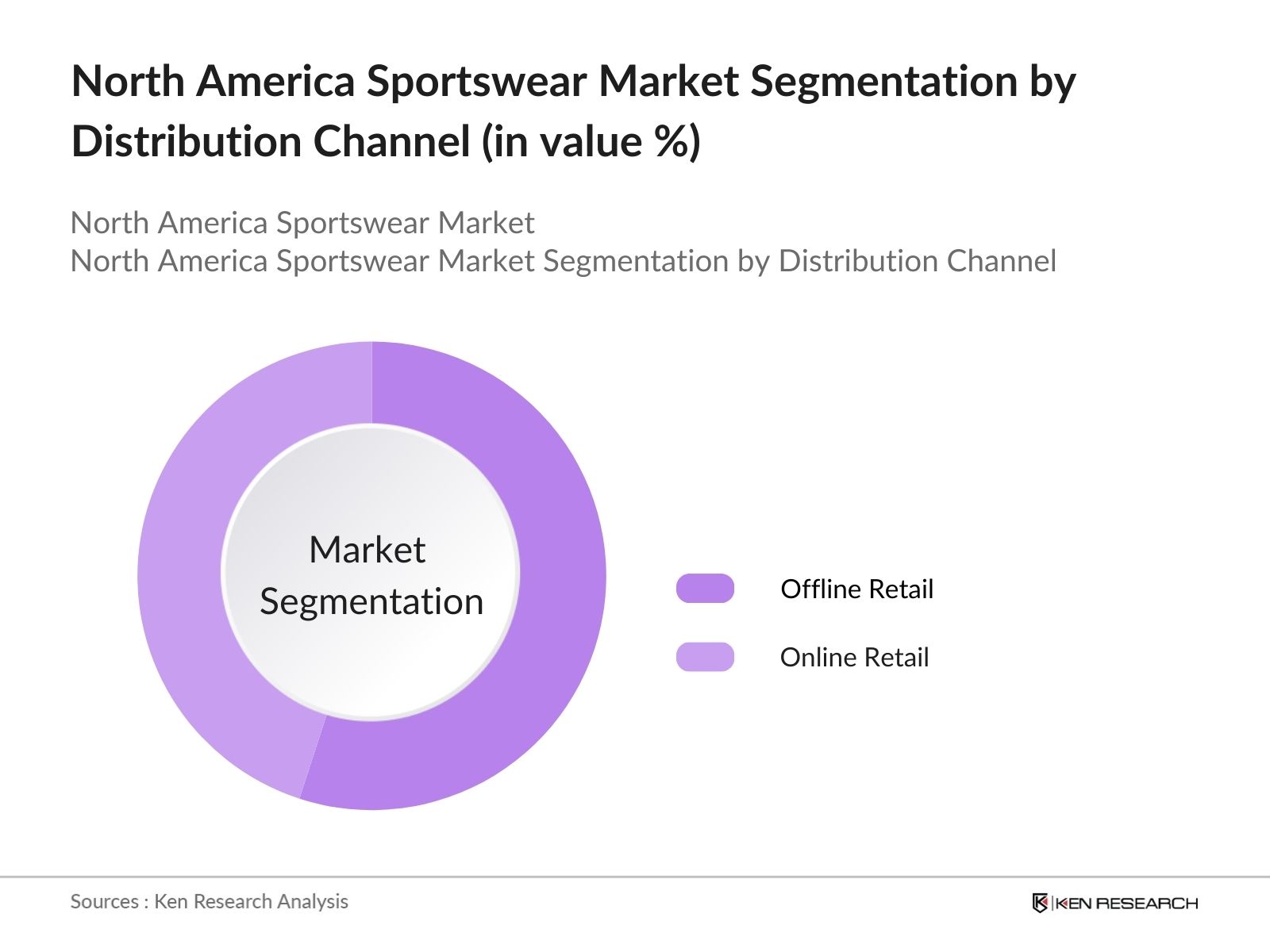
By Distribution Channel: The market is further segmented by distribution channel into offline retail and online retail. Offline retail, including sporting goods stores and department stores, continues to dominate the market. The tactile nature of sportsgear products, where consumers prefer to physically try on apparel and test equipment before purchasing, plays a significant role in the dominance of this channel. Additionally, brand loyalty programs and exclusive in-store discounts contribute to higher sales volumes through brick-and-mortar stores.
North America Sportswear Market Competitive Landscape
The North America Sportswear market is highly competitive, with several global and regional players vying for market share. Major companies like Nike, Adidas, and Under Armour continue to lead, thanks to their strong product portfolios, extensive distribution networks, and large marketing budgets. Local brands also compete by catering to specific consumer preferences, focusing on sustainability, and tapping into niche segments such as eco-friendly and customized sportsgear.
The consolidation of these key companies underscores their influence, with their ability to innovate and respond to consumer trends driving growth across the market. This competitive landscape has seen frequent collaborations with athletes, sports teams, and influencers to capture brand loyalty and elevate consumer engagement.
|
Company Name |
Establishment Year |
Headquarters |
No. of Employees |
Revenue (USD Bn) |
Product Range |
Sponsorship Deals |
Sustainability Initiatives |
Global Presence |
|
Nike, Inc. |
1964 |
Beaverton, Oregon, USA |
- |
- |
- |
- |
- |
- |
|
Adidas AG |
1949 |
Herzogenaurach, Germany |
- |
- |
- |
- |
- |
- |
|
Under Armour, Inc. |
1996 |
Baltimore, Maryland, USA |
- |
- |
- |
- |
- |
- |
|
Puma SE |
1948 |
Herzogenaurach, Germany |
- |
- |
- |
- |
- |
- |
|
Columbia Sportswear |
1938 |
Portland, Oregon, USA |
- |
- |
- |
- |
- |
- |
North America Sportswear Market Analysis
Growth Drivers
- Sport Participation Rates: The North American sportsgear market is directly linked to the rising participation in sports activities across the region. Organized sports participation has grown steadily as more people engage in recreational and competitive sports. For instance, over 58 million Americans participated in organized sports in 2022, according to the U.S. Census Bureau. This includes a wide range of activities, from soccer to basketball, and encompasses both youth and adult categories. The steady growth in youth sports leagues, school-based sports programs, and adult recreational leagues is an important driver for the sportsgear market, as athletes across all age groups require reliable, high-quality gear for performance and safety.
- Consumer Fitness Trends: The increasing emphasis on fitness and wellness has led to a surge in demand for sportsgear, especially post-pandemic, as more people focus on maintaining a healthy lifestyle. The National Health and Nutrition Examination Survey (NHANES) shows a notable increase in fitness participation, with over 68 million Americans actively involved in fitness routines by 2024, up from 43 million in 2020. Consumers are now looking for sportsgear that supports their fitness journey, ensuring durability, comfort, and functionality.
- Brand Sponsorship: Brand sponsorships play a crucial role in the North American sportsgear market, with major brands entering high-profile sponsorship deals to increase visibility.Theapparel, clothing, and accessories sectoras a whole is estimated to spend$5.98 billionon sports sponsorships in 2023. These deals drive consumer demand as athletes become brand ambassadors, influencing fan purchases. For example, Nikes sponsorship of the NFL led to an increase in sales of branded football gear, while Adidas partnership with NBA teams significantly boosted their basketball product line. These sponsorships not only enhance brand visibility but also create loyalty among consumers who associate the gear with top-performing athletes.
Challenges
- Supply Chain Disruptions: The global supply chain crisis has disrupted the sportsgear market in North America, leading to delays and shortages in product availability. According to the U.S. Department of Commerce, over 30% of sportsgear manufacturers experienced disruptions in their supply chains during 2023, primarily due to shipping delays, factory shutdowns in Asia, and material shortages. These challenges have delayed the introduction of new products and have caused inventory backlogs in key markets like the U.S. and Canada.
- Raw Material Price Fluctuations: The price volatility of raw materials, particularly synthetic fibers such as polyester and rubber, has been a significant challenge for sportsgear manufacturers. In 2023, the price of oil-based synthetic materials increased by 18%, driven by rising global oil prices and supply chain disruptions, according to the U.S. Energy Information Administration (EIA). These materials are essential components in the production of sportsgear, including footwear and apparel.
North America Sportswear Market Future Outlook
North America Sportswear market is expected to experience robust growth, driven by evolving consumer lifestyles that prioritize health and fitness. Advances in wearable technology, coupled with the integration of smart fabrics and sustainable materials, are likely to reshape product offerings in the sportsgear sector. Additionally, the expansion of online retail platforms and direct-to-consumer sales will further contribute to market growth, as convenience and accessibility become key factors for consumers.
Future Market Opportunities
- Expansion of E-Commerce: E-commerce has become a significant sales channel for sportsgear companies. According to the U.S. Census Bureau, online sales of sports apparel and footwear reached $9 billion in 2023, reflecting the increasing preference for online shopping. The convenience of purchasing sportsgear online, coupled with technological advancements such as virtual fitting rooms and personalized recommendations, has boosted sales for both established and emerging brands.
- Athlete Endorsements: Athlete endorsements offer a lucrative opportunity for sportsgear brands to capitalize on consumer loyalty. According to the U.S. Federal Trade Commission, endorsements by top athletes such as LeBron James, Tom Brady, and Serena Williams contributed to over $500 million in sportsgear sales in 2023. These high-profile endorsements not only enhance brand visibility but also establish a strong connection with consumers, who are more likely to purchase products worn or endorsed by their favorite athletes.
Scope of the Report
|
By Product Type |
Apparel Footwear Accessories Equipment |
|
By Sport Type |
Team Sports Individual Sports Outdoor Activities |
|
By Distribution Channel |
Offline Retail Online Retail |
|
By End User |
Men Women Kids |
|
By Geography |
United States Canada Mexico |
Products
Key Target Audience
Sportsgear Manufacturers
Online E-commerce Platforms
Sportswear and Equipment Manufacturers
Fitness and Sports Technology Companies
Apparel and Footwear Brands (Beyond Sports)
Sports Media Companies
Government and Regulatory Bodies (U.S. Consumer Product Safety Commission, Canadian Standards Association)
Investors and Venture Capitalist Firms
Companies
Players Mentioned in the Report
Nike, Inc.
Adidas AG
Under Armour, Inc.
Puma SE
Columbia Sportswear
New Balance Athletics, Inc.
ASICS Corporation
The North Face, Inc.
VF Corporation
Lululemon Athletica
Table of Contents
North America Sportswear Market Overview
1.1. Definition and Scope
1.2. Market Taxonomy
1.3. Market Growth Rate
1.4. Market Segmentation Overview
North America Sportswear Market Size (In USD Bn)
2.1. Historical Market Size
2.2. Year-On-Year Growth Analysis
2.3. Key Market Developments and Milestones
North America Sportswear Market Analysis
3.1. Growth Drivers
3.1.1. Sport Participation Rates
3.1.2. Consumer Fitness Trends
3.1.3. Brand Sponsorship
3.1.4. Innovation in Fabric Technology
3.2. Market Challenges
3.2.1. Supply Chain Disruptions
3.2.2. Raw Material Price Fluctuations
3.2.3. Counterfeit Products
3.2.4. Competitive Landscape
3.3. Opportunities
3.3.1. Expansion of E-Commerce
3.3.2. Athlete Endorsements
3.3.3. Sustainability Trends
3.3.4. Digital Innovation
3.4. Trends
3.4.1. Sustainability Initiatives
3.4.2. Wearable Technology Integration
3.4.3. Customization Demand
3.4.4. Gender-Specific Gear
3.5. Government Regulation
3.5.1. Trade Regulations
3.5.2. Tariff Impact on Imports
3.5.3. Consumer Protection Laws
3.5.4. Environmental Standards
3.6. SWOT Analysis
3.7. Stakeholder Ecosystem
3.8. Porters Five Forces
3.9. Competition Ecosystem
North America Sportswear Market Segmentation
4.1. By Product Type (In Value %)
4.1.1. Apparel
4.1.2. Footwear
4.1.3. Accessories
4.1.4. Equipment
4.2. By Sport Type (In Value %)
4.2.1. Team Sports
4.2.2. Individual Sports
4.2.3. Outdoor Activities
4.3. By Distribution Channel (In Value %)
4.3.1. Offline Retail
4.3.2. Online Retail
4.4. By End User (In Value %)
4.4.1. Men
4.4.2. Women
4.4.3. Kids
4.5. By Geography (In Value %)
4.5.1. United States
4.5.2. Canada
4.5.3. Mexico
North America Sportswear Market Competitive Analysis
5.1. Detailed Profiles of Major Companies
5.1.1. Nike, Inc.
5.1.2. Adidas AG
5.1.3. Under Armour, Inc.
5.1.4. Puma SE
5.1.5. New Balance Athletics, Inc.
5.1.6. ASICS Corporation
5.1.7. Columbia Sportswear Company
5.1.8. The North Face, Inc.
5.1.9. VF Corporation
5.1.10. Lululemon Athletica
5.2. Cross Comparison Parameters
5.3. Market Share Analysis
5.4. Strategic Initiatives
5.5. Mergers and Acquisitions
5.6. Investment Analysis
5.7. Venture Capital Funding
5.8. Government Grants
5.9. Private Equity Investments
North America Sportswear Market Regulatory Framework
6.1. Trade Regulations
6.2. Compliance Requirements
6.3. Certification Processes
North America Sportswear Future Market Size (In USD Bn)
7.1. Future Market Size Projections
7.2. Key Factors Driving Future Market Growth
North America Sportswear Future Market Segmentation
8.1. By Product Type (In Value %)
8.2. By Sport Type (In Value %)
8.3. By Distribution Channel (In Value %)
8.4. By End User (In Value %)
8.5. By Geography (In Value %)
North America Sportswear Market Analysts Recommendations
9.1. TAM/SAM/SOM Analysis
9.2. Customer Cohort Analysis
9.3. Marketing Initiatives
9.4. White Space Opportunity Analysis
Research Methodology
Step 1: Identification of Key Variables
In this stage, we identify the critical factors driving the North America Sportswear market. We conduct extensive research on consumer buying behavior, product innovation, and regional sports participation trends. Key stakeholders across the sportsgear value chain, including manufacturers, retailers, and distributors, are mapped to ensure comprehensive analysis.
Step 2: Market Analysis and Construction
We collect and analyze historical data on sportsgear sales, focusing on both online and offline retail channels. This involves evaluating the impact of consumer preferences, promotional activities, and macroeconomic factors on revenue generation. A detailed assessment of brand positioning and market penetration is also conducted.
Step 3: Hypothesis Validation and Expert Consultation
Market hypotheses are tested through consultations with industry professionals, including brand managers, retail executives, and product development specialists. These insights help refine our understanding of market dynamics and validate data points derived from secondary sources.
Step 4: Research Synthesis and Final Output
In the final step, we engage with sportsgear manufacturers and retailers to verify the accuracy of our market estimates. Detailed insights into consumer preferences, sales trends, and product performance are incorporated into the report to ensure a comprehensive market overview.
Frequently Asked Questions
01. How big is the North America Sportswear market?
The North America Sportswear market is valued at USD 112 billion, with strong consumer demand driven by an increased focus on health, fitness, and sporting activities. The market has witnessed continuous growth due to the rise of athleisure and the adoption of wearable technology.
02. What are the key challenges in the North America Sportswear market?
Key challenges in North America Sportswear market include fluctuating raw material costs, which impact pricing strategies, and the rising presence of counterfeit products. Additionally, competitive pressure among major brands and the need for constant product innovation present significant hurdles for companies operating in the market.
03. Who are the major players in the North America Sportswear market?
Leading players in North America Sportswear market include Nike, Adidas, Under Armour, Puma, and Columbia Sportswear. These companies dominate due to their extensive product portfolios, strong brand loyalty, and robust distribution networks.
04. What are the growth drivers of the North America Sportswear market?
North America Sportswear market is driven by increasing consumer interest in fitness and health, advancements in fabric technology, and the popularity of athleisure. The expansion of e-commerce platforms and direct-to-consumer models also contributes to market growth.
Why Buy From Us?

What makes us stand out is that our consultants follows Robust, Refine and Result (RRR) methodology. i.e. Robust for clear definitions, approaches and sanity checking, Refine for differentiating respondents facts and opinions and Result for presenting data with story

We have set a benchmark in the industry by offering our clients with syndicated and customized market research reports featuring coverage of entire market as well as meticulous research and analyst insights.

While we don't replace traditional research, we flip the method upside down. Our dual approach of Top Bottom & Bottom Top ensures quality deliverable by not just verifying company fundamentals but also looking at the sector and macroeconomic factors.

With one step in the future, our research team constantly tries to show you the bigger picture. We help with some of the tough questions you may encounter along the way: How is the industry positioned? Best marketing channel? KPI's of competitors? By aligning every element, we help maximize success.

Our report gives you instant access to the answers and sources that other companies might choose to hide. We elaborate each steps of research methodology we have used and showcase you the sample size to earn your trust.

If you need any support, we are here! We pride ourselves on universe strength, data quality, and quick, friendly, and professional service.