















North America Synthetic Rubber Market Outlook to 2030
Region:North America
Author(s):Sanjeev
Product Code:KROD7657
December 2024
83
About the Report
North America Synthetic Rubber Market Overview
- The North America synthetic rubber market is driven by increasing demand from the automotive and industrial sectors. Valued at USD 13.8 billion based on a five-year historical analysis, this markets growth is bolstered by the rising production of automotive tires and industrial components such as seals, gaskets, and conveyor belts. The need for durable and cost-effective materials has led manufacturers to increasingly adopt synthetic rubber over natural alternatives, driving significant market expansion.
- The U.S. dominates the North America synthetic rubber market due to its robust automotive manufacturing industry, particularly in Detroit, the "Motor City," where major automobile manufacturers have established production facilities. Canada also plays a key role, with significant demand from its construction and transportation sectors. Both countries benefit from advanced technological infrastructure, established supply chains, and favorable regulatory environments, further cementing their dominance in this market.
- Stringent environmental protection regulations are impacting the synthetic rubber market in North America. The U.S. Environmental Protection Agency (EPA) enforces laws related to emissions and waste disposal, with regulations on tire and rubber recycling being a key focus. In 2022, the EPA introduced tighter regulations on tire-derived fuels and waste management practices, prompting manufacturers to adopt more sustainable production processes. These regulations are aimed at reducing the environmental impact of synthetic rubber, leading to increased investment in sustainable technologies.
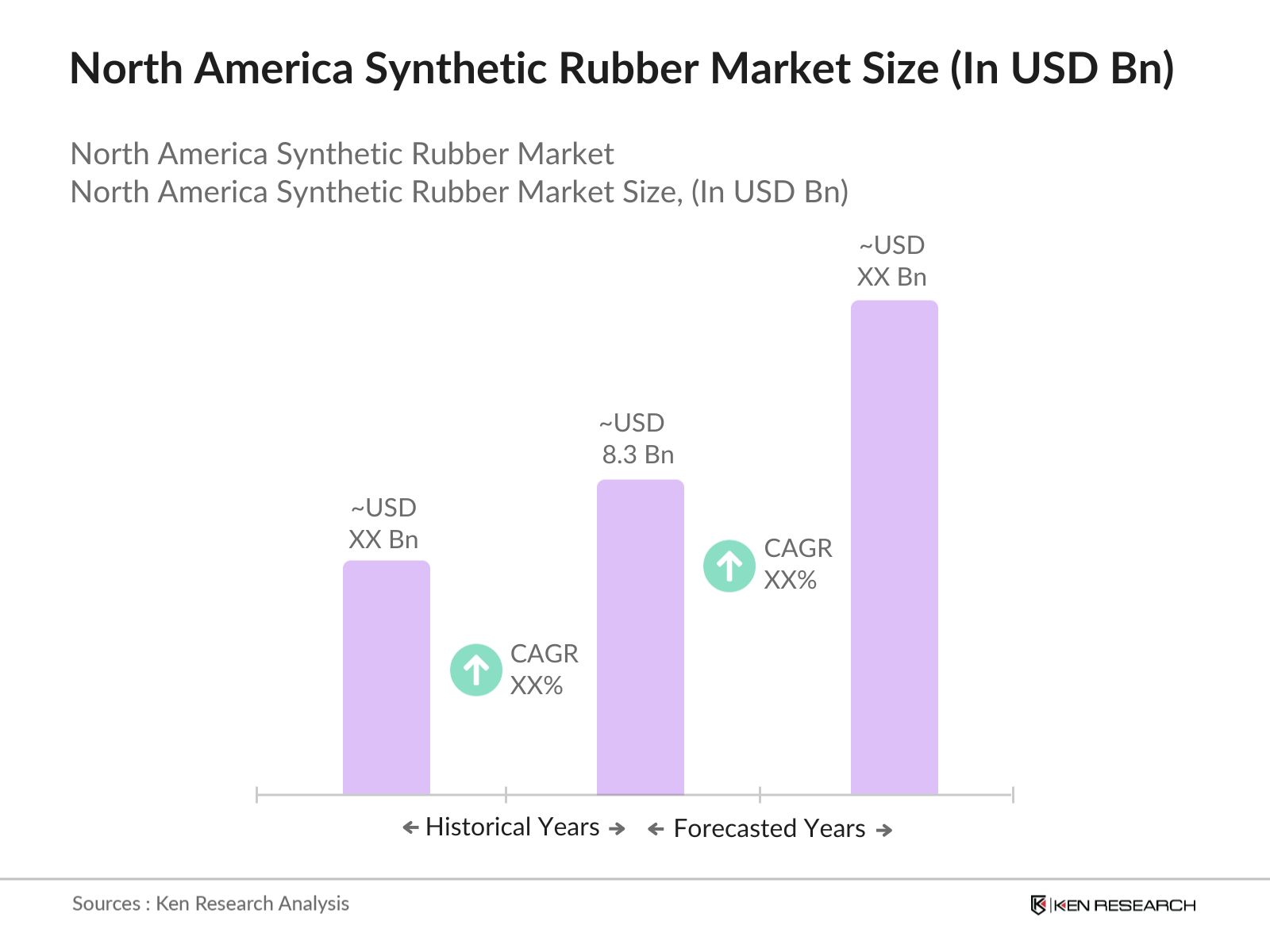
North America Synthetic Rubber Market Segmentation
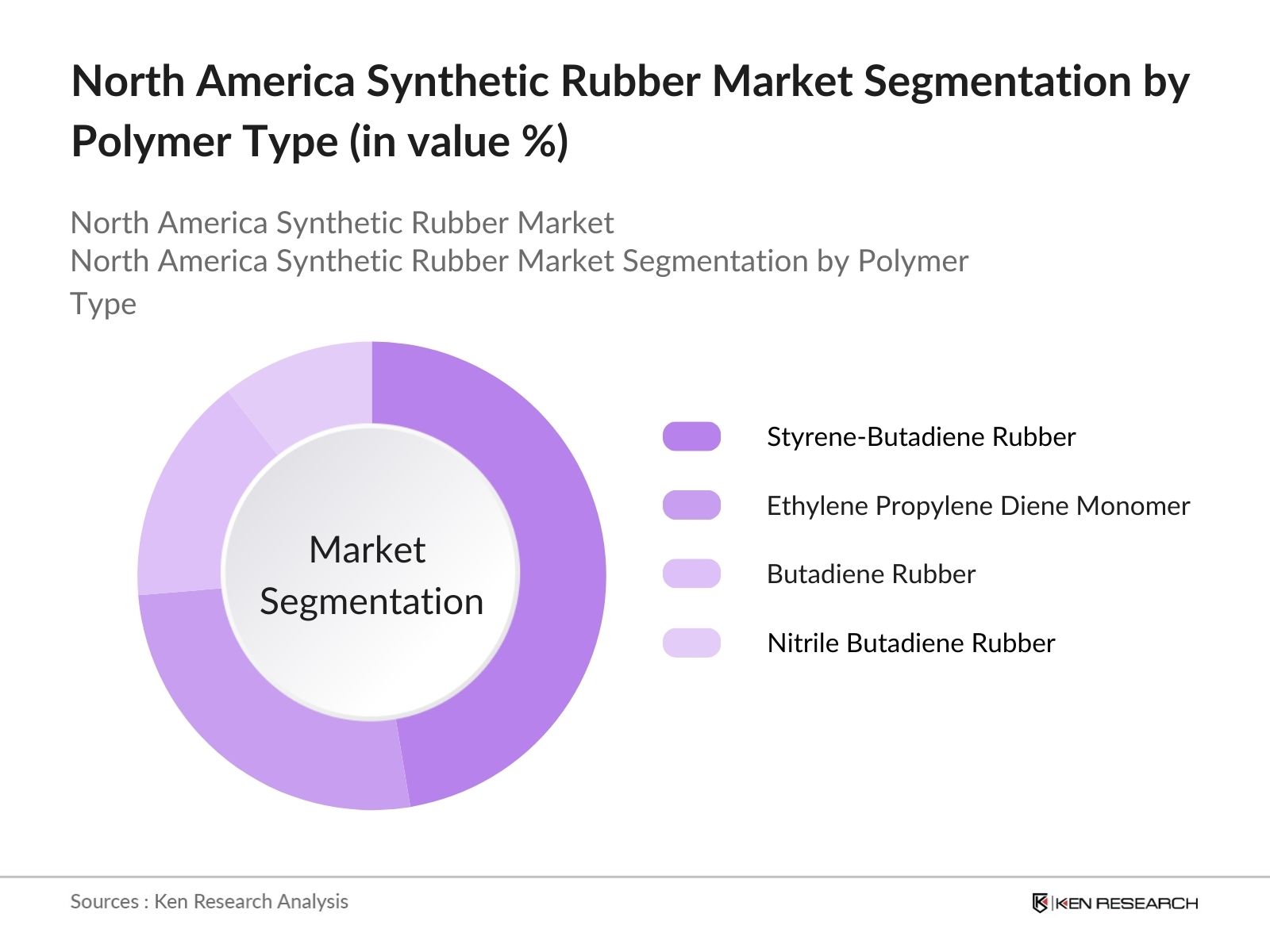
The North America synthetic rubber market is segmented by polymer type and
- By Polymer Type: The North America synthetic rubber market is segmented by polymer type into Styrene-Butadiene Rubber (SBR), Ethylene Propylene Diene Monomer (EPDM), Butadiene Rubber (BR), Nitrile Butadiene Rubber (NBR), and Others. SBR holds a dominant share of the market due to its widespread use in the production of tires, which are essential for the automotive industry. SBRs resilience, durability, and affordability make it a preferred material for tire manufacturers, especially in the U.S. automotive sector, where production volume continues to rise steadily. Additionally, its use in footwear and conveyor belts contributes to its market leadership.
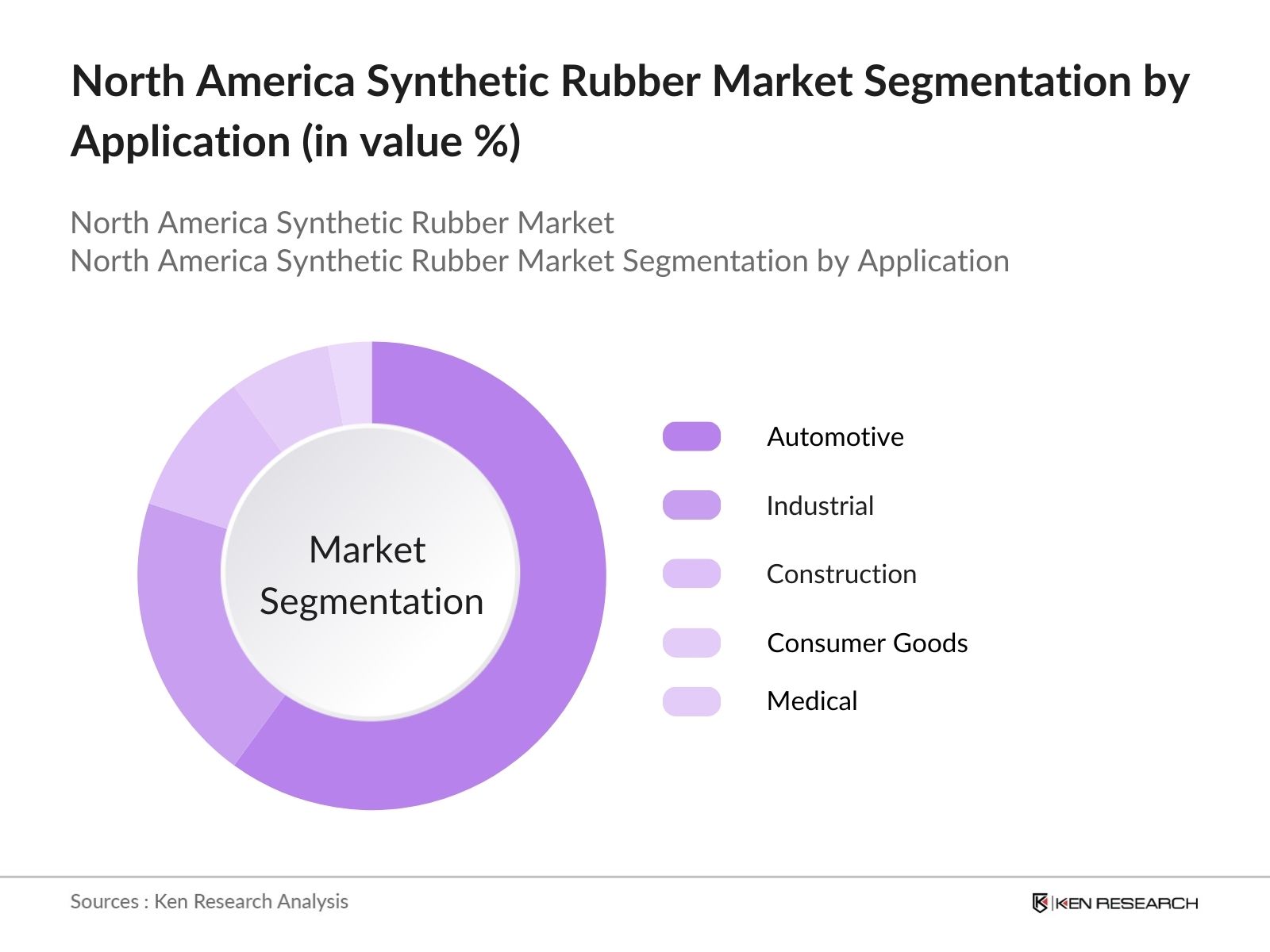
- By Application: The market is segmented by application into Automotive (Tires, Seals, Gaskets), Industrial (Conveyor Belts, Hoses), Construction (Flooring, Roofing), Consumer Goods (Footwear, Sports Goods), and Medical (Gloves, Tubing). The automotive segment leads the market due to the continued expansion of vehicle production in North America, with tire manufacturing being a major contributor. The automotive sector relies heavily on synthetic rubber for tire production, where materials such as SBR and BR are crucial for their durability, resistance to wear, and ability to handle high stress.
North America Synthetic Rubber Market Competitive Landscape
The North America synthetic rubber market is characterized by the presence of key global players that contribute to a highly competitive landscape. The market is dominated by companies with strong research and development capabilities, robust production infrastructure, and established supply chains. Some of the top companies have expanded their operations in this market due to rising demand from the automotive and industrial sectors.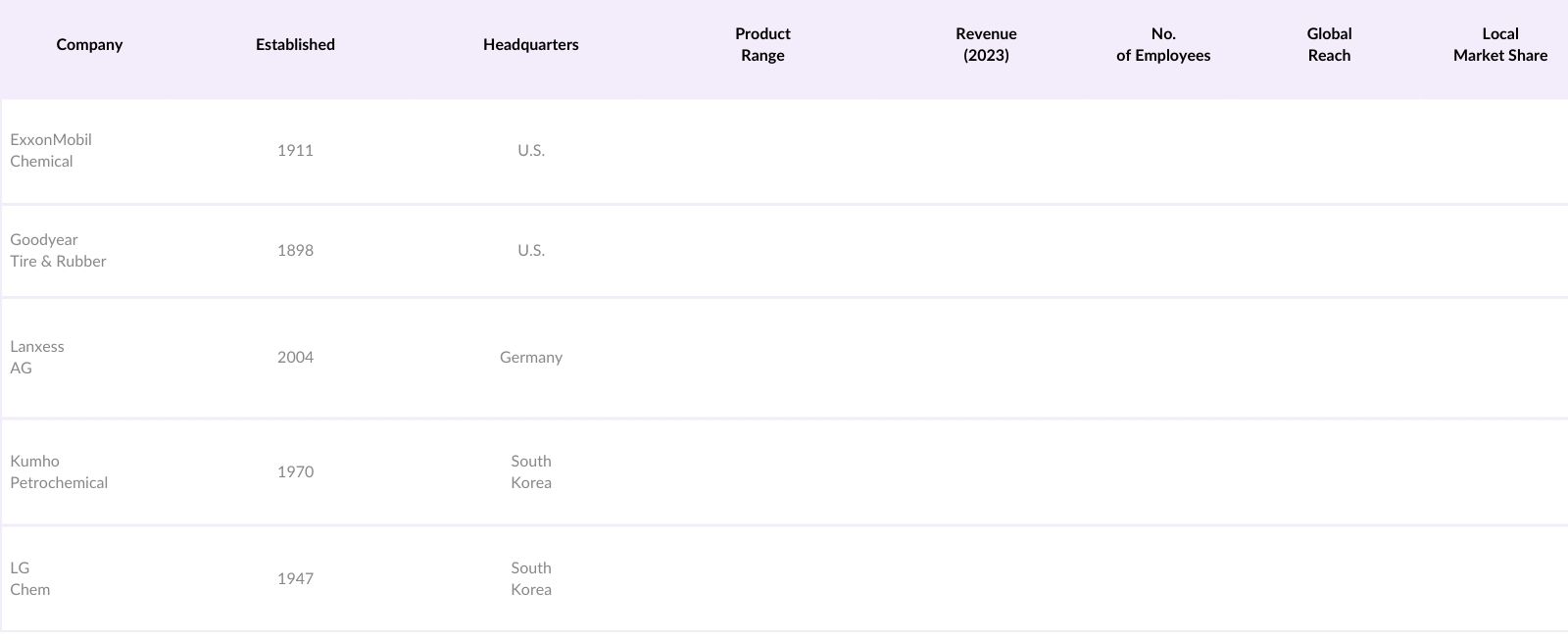
North America Synthetic Rubber Industry Analysis
Growth Drivers
- Rising Automotive Demand (Vehicle Tire Production): The North American automotive sector is a significant consumer of synthetic rubber, particularly for tire production. In 2023, the U.S. automotive industry produced over 9.2 million vehicles, with each vehicle requiring approximately 20-25 pounds of synthetic rubber, primarily styrene-butadiene rubber (SBR). This demand is driven by the need for durability and performance in tires, a market expected to remain robust due to steady vehicle production. Government policies like the U.S.-Mexico-Canada Agreement (USMCA) incentivize local production, further supporting synthetic rubber demand in automotive manufacturing.
- Industrial Applications Growth (Rubber Seals, Conveyor Belts): Industrial applications of synthetic rubber in North America have expanded, particularly for products such as rubber seals and conveyor belts. In 2022, the U.S. industrial machinery sector grew by $354 billion, with increased demand for rubber components critical to machinery. Synthetic rubbers durability and resistance to chemicals make it essential for industrial use, driving consistent demand from the machinery, mining, and chemical sectors. The World Bank reported a steady increase in industrial output in North America, contributing to rising consumption of synthetic rubber in these applications.
- Government Infrastructure Initiatives (Public Infrastructure Projects): Government initiatives like the Infrastructure Investment and Jobs Act (IIJA) are playing a key role in boosting demand for synthetic rubber in North America. The $1.2 trillion investment package includes a focus on roads, bridges, and public transportation systems, all of which require durable materials like synthetic rubber for applications such as sealants, gaskets, and tires. In 2023, over $45 billion was allocated to highway and transit projects, further increasing the use of synthetic rubber in construction and infrastructure.
Market Challenges
- Environmental Concerns (Recycling and Disposal of Synthetic Rubber): Synthetic rubber presents significant environmental challenges due to difficulties in recycling and disposal. In North America, the Environmental Protection Agency (EPA) estimates that nearly 290 million tires are discarded annually, many of which are made from synthetic rubber. Concerns about microplastics and non-biodegradable waste have led to growing pressure on industries to improve recycling practices. Regulations on waste management and emissions are tightening, with several states introducing legislation targeting tire recycling. Efforts to reduce synthetic rubber waste are essential for sustainable growth in this market.
- Volatility in Raw Material Prices (Pet Feedstocks): The production of synthetic rubber is highly dependent on petrochemical feedstocks, particularly butadiene and styrene. Fluctuations in crude oil prices directly impact the cost of these raw materials, creating volatility for manufacturers. In 2022, crude oil prices peaked at $125 per barrel due to geopolitical tensions, increasing the cost of petrochemical derivatives used in synthetic rubber production. This volatility poses a significant challenge for North American manufacturers, as it can lead to increased production costs and price instability for rubber products.
North America Synthetic Rubber Market Future Outlook
Over the next five years, the North America synthetic rubber market is expected to experience steady growth, driven by continuous demand from the automotive, industrial, and construction sectors. The increasing production of electric vehicles (EVs) will boost demand for specialty rubber materials. Furthermore, advancements in eco-friendly and bio-based synthetic rubber production, along with investments in recycling technologies, are likely to reshape the market dynamics.
Market Opportunities
- Advancements in Bio-based Synthetic Rubber (Sustainability Initiatives): Innovations in bio-based synthetic rubber present significant opportunities for growth in North America, as sustainability becomes a key focus for industries. Bio-based alternatives, such as isoprene rubber derived from renewable resources, are being developed to reduce reliance on petrochemicals. In 2022, the U.S. Department of Energy funded over $10 million in grants to support research into sustainable rubber alternatives. These advancements align with corporate sustainability goals and government incentives aimed at reducing carbon footprints, offering new avenues for manufacturers to expand into eco-friendly rubber solutions.
- Growing Demand for Electric Vehicles (Specialty Rubber for EV Applications): The rise in electric vehicle (EV) production is driving demand for specialty synthetic rubber used in EV-specific components, such as high-performance tires and insulation. In 2023, EV sales in the U.S. surpassed 1.3 million units, a 40% increase from 2022. The unique performance requirements of EVs, including lighter weight and improved durability, have led to increased demand for synthetic rubber compounds like EPDM and SBR. These materials are essential for heat and electrical resistance in EV components, representing a growing market for North American manufacturers.
Scope of the Report
|
Styrene-Butadiene Rubber (SBR) Ethylene Propylene Diene Monomer (EPDM) Butadiene Rubber (BR) Nitrile Butadiene Rubber (NBR) |
|
|
By Application |
Automotive (Tires, Seals, Gaskets) Industrial (Conveyor Belts, Hoses) Construction (Flooring, Roofing) Consumer Goods (Footwear, Sports Goods) Medical (Gloves, Tubing) |
|
By End-Use |
Automotive Industrial Construction Consumer Goods Healthcare |
|
By Production Process |
Solution Polymerization Emulsion Polymerization |
|
By Region |
North East West South |
Products
Key Target Audience
Automotive Manufacturers
Industrial Equipment Manufacturers
Construction Companies
Rubber Processing Facilities
Government and Regulatory Bodies (Environmental Protection Agency, OSHA)
Investments and Venture Capital Firms
Rubber Recycling Companies
Chemical Industry Suppliers
Companies
Major Players in the North America Synthetic Rubber Market
ExxonMobil Chemical
Goodyear Tire & Rubber
Lanxess AG
Kumho Petrochemical
LG Chem
JSR Corporation
Dow Inc.
Sinopec
Asahi Kasei Corporation
Bridgestone Corporation
Zeon Corporation
Sumitomo Chemical
Versalis S.p.A.
Synthos S.A.
Kumho Tire
Table of Contents
1. North America Synthetic Rubber Market Overview
1.1. Definition and Scope
1.2. Market Taxonomy
1.3. Market Growth Rate
1.4. Market Segmentation Overview (Polymer Type, Application, End-Use, Production Process, Region)
2. North America Synthetic Rubber Market Size (In USD Bn)
2.1. Historical Market Size
2.2. Year-on-Year Growth Analysis
2.3. Key Market Developments and Milestones
3. North America Synthetic Rubber Market Analysis
3.1. Growth Drivers
3.1.1. Rising Automotive Demand (Vehicle Tire Production)
3.1.2. Industrial Applications Growth (Rubber Seals, Conveyor Belts)
3.1.3. Expanding Construction Sector (Rubber Flooring, Insulation)
3.1.4. Government Infrastructure Initiatives (Public Infrastructure Projects)
3.2. Market Challenges
3.2.1. Environmental Concerns (Recycling and Disposal of Synthetic Rubber)
3.2.2. Volatility in Raw Material Prices (Petrochemical Feedstocks)
3.2.3. Global Competition from Low-Cost Producers
3.3. Opportunities
3.3.1. Advancements in Bio-based Synthetic Rubber (Sustainability Initiatives)
3.3.2. Growing Demand for Electric Vehicles (Specialty Rubber for EV Applications)
3.3.3. Research & Development in Recycling Technologies
3.4. Trends
3.4.1. Use of Styrene-Butadiene Rubber (SBR) in Eco-friendly Tires
3.4.2. Growth of EPDM Rubber in Construction and Industrial Applications
3.4.3. Increased Focus on Lightweight Materials for Automotive
3.5. Government Regulation
3.5.1. Environmental Protection Regulations (Emissions and Waste Disposal)
3.5.2. Industry Compliance Standards (ASTM and ISO Certifications)
3.5.3. Tariff and Trade Policies Impacting Raw Material Imports
3.5.4. Incentives for Bio-based and Recyclable Materials
3.6. SWOT Analysis
3.6.1. Strengths
3.6.2. Weaknesses
3.6.3. Opportunities
3.6.4. Threats
3.7. Stake Ecosystem
3.7.1. Suppliers (Polymer Feedstock Suppliers, Equipment Providers)
3.7.2. Manufacturers (Synthetic Rubber Producers)
3.7.3. Distributors
3.7.4. End-users
3.8. Porters Five Forces
3.9. Competition Ecosystem
4. North America Synthetic Rubber Market Segmentation
4.1. By Polymer Type (In Value %)
4.1.1. Styrene-Butadiene Rubber (SBR)
4.1.2. Ethylene Propylene Diene Monomer (EPDM)
4.1.3. Butadiene Rubber (BR)
4.1.4. Nitrile Butadiene Rubber (NBR)
4.1.5. Other Synthetic Rubbers
4.2. By Application (In Value %)
4.2.1. Automotive (Tires, Seals, Gaskets)
4.2.2. Industrial (Conveyor Belts, Hoses, Gaskets)
4.2.3. Construction (Flooring, Roofing, Insulation)
4.2.4. Consumer Goods (Footwear, Sports Goods)
4.2.5. Medical (Gloves, Tubing)
4.3. By End-Use (In Value %)
4.3.1. Automotive
4.3.2. Industrial
4.3.3. Construction
4.3.4. Consumer Goods
4.3.5. Healthcare
4.4. By Production Process (In Value %)
4.4.1. Solution Polymerization
4.4.2. Emulsion Polymerization
4.4.3. Others
4.5. By Region (In Value %)
4.5.1. U.S.
4.5.2. Canada
4.5.3. Mexico
5. North America Synthetic Rubber Market Competitive Analysis
5.1. Detailed Profiles of Major Companies
5.1.1. ExxonMobil Chemical
5.1.2. Goodyear Tire & Rubber Company
5.1.3. Lanxess AG
5.1.4. Kumho Petrochemical
5.1.5. Zeon Corporation
5.1.6. JSR Corporation
5.1.7. LG Chem
5.1.8. Dow Inc.
5.1.9. Sinopec
5.1.10. Asahi Kasei Corporation
5.1.11. Sumitomo Chemical
5.1.12. Versalis S.p.A.
5.1.13. Synthos S.A.
5.1.14. Bridgestone Corporation
5.1.15. Kumho Tire
5.2. Cross Comparison Parameters (Number of Employees, Headquarters, Inception Year, Revenue, Production Capacity, R&D Expenditure, Sustainability Initiatives, Global Presence)
5.3. Market Share Analysis
5.4. Strategic Initiatives
5.5. Mergers and Acquisitions
5.6. Investment Analysis
5.7. Venture Capital Funding
5.8. Government Grants
5.9. Private Equity Investments
6. North America Synthetic Rubber Market Regulatory Framework
6.1. Environmental Standards
6.2. Compliance Requirements
6.3. Certification Processes
7. North America Synthetic Rubber Future Market Size (In USD Bn)
7.1. Future Market Size Projections
7.2. Key Factors Driving Future Market Growth
8. North America Synthetic Rubber Future Market Segmentation
8.1. By Polymer Type (In Value %)
8.2. By Application (In Value %)
8.3. By End-Use (In Value %)
8.4. By Production Process (In Value %)
8.5. By Region (In Value %)
9. North America Synthetic Rubber Market Analysts Recommendations
9.1. TAM/SAM/SOM Analysis
9.2. Customer Cohort Analysis
9.3. Marketing Initiatives
9.4. White Space Opportunity Analysis
Research Methodology
Step 1: Identification of Key Variables
The initial phase involved mapping the ecosystem of the North America Synthetic Rubber Market, identifying major stakeholders such as polymer suppliers, tire manufacturers, and industrial component producers. Extensive desk research was conducted using both secondary sources and proprietary databases to gather critical information on market dynamics.
Step 2: Market Analysis and Construction
This phase included compiling and analyzing historical data on market penetration, production volumes, and sales revenue. Data on the ratio of raw material inputs to output production in key regions like the U.S. and Canada were carefully evaluated to ensure accuracy in market estimates.
Step 3: Hypothesis Validation and Expert Consultation
Market hypotheses regarding demand drivers, technological advancements, and key challenges were developed and validated through expert interviews. These consultations provided key insights from industry professionals involved in tire production and chemical supply chains.
Step 4: Research Synthesis and Final Output
The final step included synthesizing insights from tire manufacturers and rubber producers to cross-validate statistical models. This bottom-up approach allowed for a comprehensive and accurate analysis of the North America synthetic rubber market.
Frequently Asked Questions
01. How big is the North America Synthetic Rubber Market?
The North America synthetic rubber market is valued at USD 13.8 billion, driven by strong demand from the automotive and industrial sectors. Rising tire production and innovations in rubber compounds are significant contributors to market expansion.
02. What are the key challenges in the North America Synthetic Rubber Market?
The primary in North America synthetic rubber market challenges include volatility in raw material prices, particularly petrochemical feedstocks, and environmental concerns related to synthetic rubber waste disposal and recycling. These issues could affect profit margins for manufacturers.
03. Who are the major players in the North America Synthetic Rubber Market?
Key players in North America synthetic rubber market include ExxonMobil Chemical, Goodyear Tire & Rubber, Lanxess AG, Kumho Petrochemical, and LG Chem. These companies dominate due to their strong R&D capabilities, extensive production infrastructure, and well-established supply chains.
04. What are the growth drivers of the North America Synthetic Rubber Market?
Growth in the North America synthetic rubber market is propelled by increasing automotive production, rising demand for industrial applications, and advances in eco-friendly synthetic rubber technology.
05. Which region is expected to see the most growth in the North America Synthetic Rubber Market?
The U.S. is expected to see the most growth due to its dominant automotive industry and ongoing infrastructure development projects, driving significant demand for synthetic rubber in tire and construction applications.
Why Buy From Us?

What makes us stand out is that our consultants follows Robust, Refine and Result (RRR) methodology. i.e. Robust for clear definitions, approaches and sanity checking, Refine for differentiating respondents facts and opinions and Result for presenting data with story

We have set a benchmark in the industry by offering our clients with syndicated and customized market research reports featuring coverage of entire market as well as meticulous research and analyst insights.

While we don't replace traditional research, we flip the method upside down. Our dual approach of Top Bottom & Bottom Top ensures quality deliverable by not just verifying company fundamentals but also looking at the sector and macroeconomic factors.

With one step in the future, our research team constantly tries to show you the bigger picture. We help with some of the tough questions you may encounter along the way: How is the industry positioned? Best marketing channel? KPI's of competitors? By aligning every element, we help maximize success.

Our report gives you instant access to the answers and sources that other companies might choose to hide. We elaborate each steps of research methodology we have used and showcase you the sample size to earn your trust.

If you need any support, we are here! We pride ourselves on universe strength, data quality, and quick, friendly, and professional service.