
North America Terahertz Technology Market Outlook to 2030
Region:Mexico
Author(s):Meenakshi Bisht
Product Code:KROD5454
Region:Mexico
Author(s):Meenakshi Bisht
Product Code:KROD5454
December 2024
98
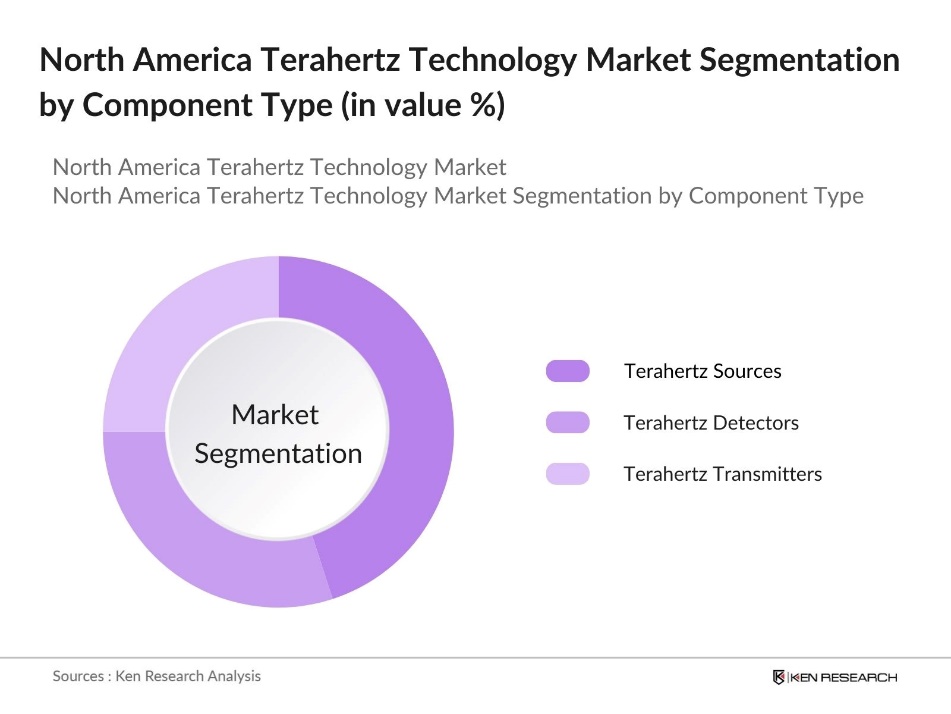
By Component Type: The North America Terahertz Technology market is segmented by component type into Terahertz Sources, Terahertz Detectors, and Terahertz Transmitters. Among these, Terahertz Sources hold the dominant market share due to their essential role in generating terahertz waves for applications such as imaging and spectroscopy. The demand for reliable and efficient terahertz sources is high, especially in the defense and security industries, where accurate detection and identification of materials are crucial.
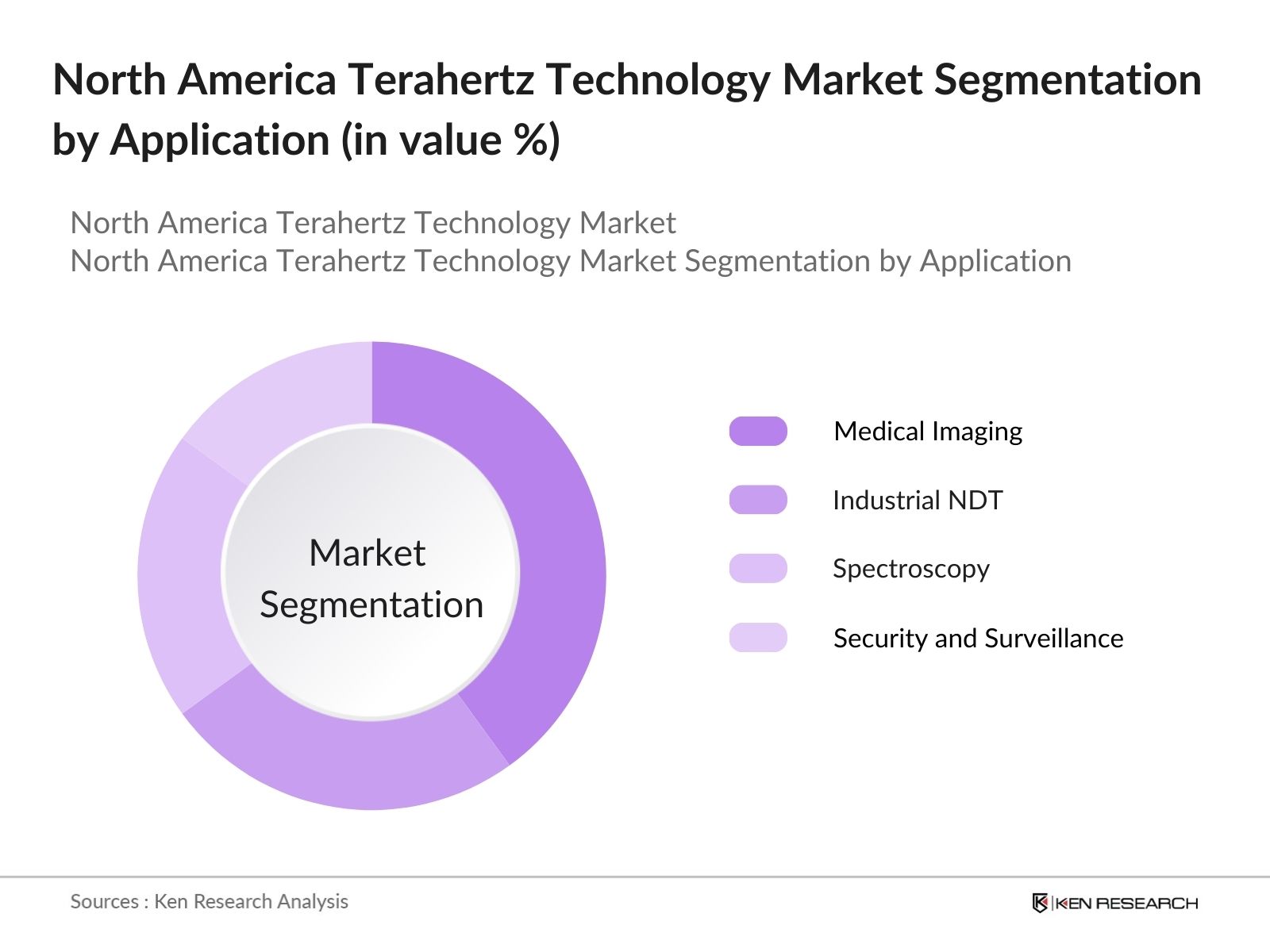
By Application: The North America Terahertz Technology market is segmented by application into Medical Imaging, Industrial Non-Destructive Testing (NDT), Spectroscopy, and Security and Surveillance. Medical Imaging dominates this segment due to the increasing use of terahertz technology in early cancer detection and other non-invasive diagnostic applications. The ability of terahertz waves to penetrate tissues without harmful radiation makes them highly suitable for medical use, especially in regions with high healthcare expenditure like the U.S.
The market is dominated by a few key players, most of which are headquartered in the U.S. and Europe. These companies control a significant portion of the market through strategic collaborations, technological advancements, and expanding application areas.
|
Company |
Establishment Year |
Headquarters |
Revenue (USD Mn) |
R&D Spending |
Product Portfolio Size |
Number of Patents |
Global Market Reach |
Major Application Focus |
|
TeraView Ltd. |
2001 |
Cambridge, UK |
||||||
|
Menlo Systems GmbH |
2001 |
Munich, Germany |
||||||
|
Luna Innovations Inc. |
1990 |
Roanoke, USA |
||||||
|
Advanced Photonix Inc. |
1988 |
Ann Arbor, USA |
||||||
|
Toptica Photonics AG |
1998 |
Munich, Germany |
Over the next five years, the North America Terahertz Technology market is expected to experience considerable growth driven by increasing R&D investments, advancements in communication technologies, and the expansion of non-destructive testing in industries like aerospace and defense. The demand for terahertz solutions in medical imaging is also set to rise as healthcare infrastructure improves and governments prioritize early detection of critical diseases such as cancer.
|
By Component Type |
Terahertz Sources Terahertz Detectors Terahertz Transmitters |
|
By Application |
Medical Imaging Industrial NDT Spectroscopy Security and Surveillance |
|
By Technology |
Photonic Electronic |
|
By End-Use Industry |
Aerospace & Defense Healthcare Telecommunications Manufacturing |
|
By Region |
United States Canada Mexico |
1.1. Definition and Scope
1.2. Market Taxonomy
1.3. Market Growth Rate
1.4. Market Segmentation Overview
2.1. Historical Market Size
2.2. Year-On-Year Growth Analysis
2.3. Key Market Developments and Milestones
3.1. Growth Drivers
3.1.1. Demand for Non-Destructive Testing (NDT) in Aerospace and Defense
3.1.2. Growing Adoption in Medical Imaging
3.1.3. Expansion in Wireless Communication (6G)
3.1.4. Government Investment in Research & Development
3.2. Market Challenges
3.2.1. High Production Costs of Terahertz Systems
3.2.2. Complexity of Technology Integration
3.2.3. Limited Adoption due to Regulatory Constraints
3.3. Opportunities
3.3.1. Application in Security and Surveillance
3.3.2. Advancements in Spectroscopy and Sensing Applications
3.3.3. Potential Use in Pharmaceutical Quality Control
3.4. Trends
3.4.1. Miniaturization of Terahertz Devices
3.4.2. Increasing Use in Wireless Communication and 6G Networks
3.4.3. Adoption of Terahertz Imaging in the Food Industry
3.5. Government Regulation
3.5.1. FCC Guidelines for Terahertz Communications
3.5.2. Funding Programs for Terahertz Research
3.5.3. Regulatory Policies on Terahertz Frequency Spectrum Usage
3.6. SWOT Analysis
3.7. Stake Ecosystem
3.8. Porters Five Forces
3.9. Competition Ecosystem
4.1. By Component Type (in Value %)
4.1.1. Terahertz Sources
4.1.2. Terahertz Detectors
4.1.3. Terahertz Transmitters
4.2. By Application (in Value %)
4.2.1. Medical Imaging
4.2.2. Industrial NDT
4.2.3. Spectroscopy
4.2.4. Security and Surveillance
4.3. By Technology (in Value %)
4.3.1. Photonic
4.3.2. Electronic
4.4. By End-Use Industry (in Value %)
4.4.1. Aerospace & Defense
4.4.2. Healthcare
4.4.3. Telecommunications
4.4.4. Manufacturing
4.5. By Region (in Value %)
4.5.1. United States
4.5.2. Canada
4.5.3. Mexico
5.1. Detailed Profiles of Major Companies
5.1.1. TeraView Ltd.
5.1.2. Menlo Systems GmbH
5.1.3. Luna Innovations Incorporated
5.1.4. Advanced Photonix Inc.
5.1.5. Bruker Corporation
5.1.6. TOPTICA Photonics AG
5.1.7. Hbner GmbH & Co. KG
5.1.8. Insight Product Company
5.1.9. TeraSense Group Inc.
5.1.10. Zomega Terahertz Corporation
5.1.11. Thorlabs, Inc.
5.1.12. Digital Barriers PLC
5.1.13. EKSPLA
5.1.14. Microtech Instruments, Inc.
5.1.15. Asqella Oy
5.2. Cross Comparison Parameters (Revenue, Headquarters, Number of Employees, Technology Focus, Global Presence, Partnerships, Terahertz Spectrum Expertise, and Production Capacity)
5.3. Market Share Analysis
5.4. Strategic Initiatives
5.5. Mergers And Acquisitions
5.6. Investment Analysis
5.7. Venture Capital Funding
5.8. Government Grants
5.9. Private Equity Investments
6.1. Spectrum Allocation and Usage Regulations
6.2. Industry Compliance Standards
6.3. Certification and Licensing Procedures
7.1. Future Market Size Projections
7.2. Key Factors Driving Future Market Growth
8.1. By Component Type (in Value %)
8.2. By Application (in Value %)
8.3. By Technology (in Value %)
8.4. By End-Use Industry (in Value %)
8.5. By Region (in Value %)
9.1. TAM/SAM/SOM Analysis
9.2. Customer Cohort Analysis
9.3. White Space Opportunity Analysis
The initial phase involves mapping all key stakeholders within the North America Terahertz Technology market. Desk research, leveraging proprietary and secondary databases, is conducted to identify critical variables affecting the market, such as technological advancements, regulatory policies, and funding trends.
In this phase, historical data on market penetration, usage in various industries, and revenue streams are analyzed. This includes evaluating product demand across applications like medical imaging and industrial NDT to estimate current market size.
Market assumptions are tested and validated through consultations with industry experts. Insights from these interviews are instrumental in refining revenue estimates and understanding operational challenges.
The final phase entails direct interviews with terahertz technology manufacturers and key stakeholders to ensure the accuracy of collected data. This step serves to cross-check the results of the bottom-up approach and consolidate the final market analysis.
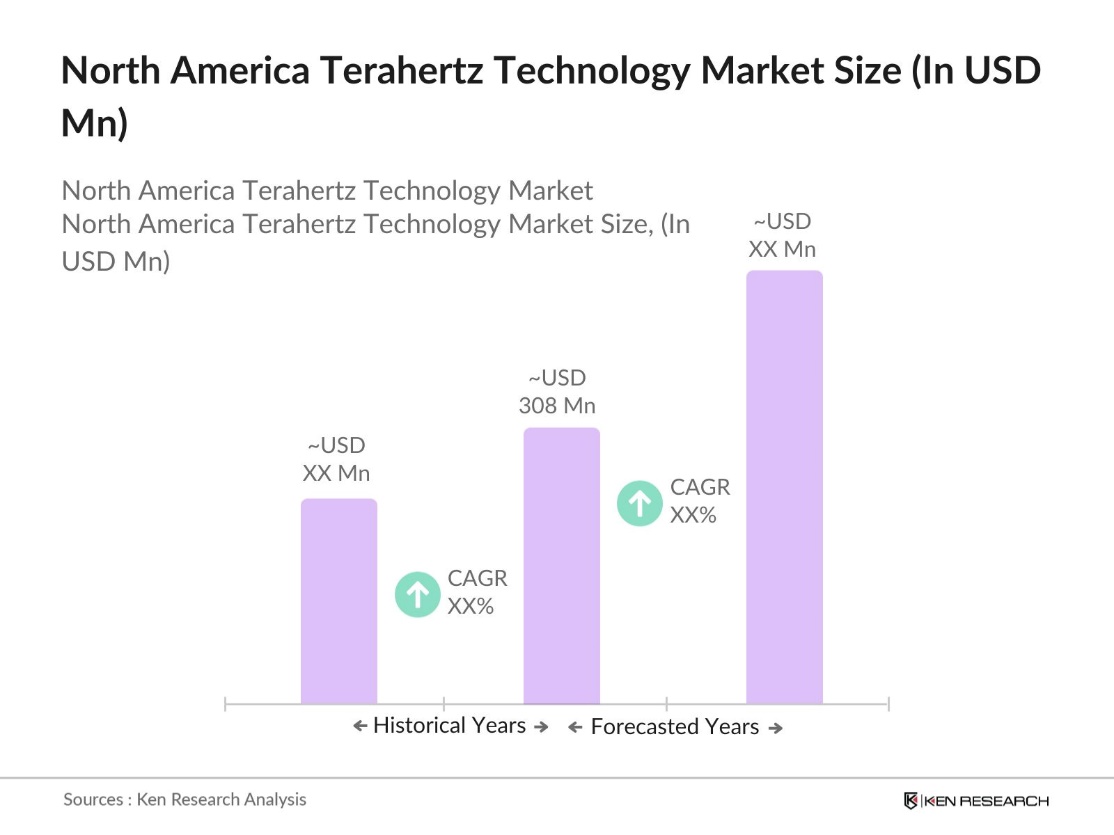
The North America Terahertz Technology Market was valued at USD 308 million, driven by advancements in non-destructive testing and medical imaging technologies.
Key challenges in North America Terahertz Technology Market include the high cost of production for terahertz systems and the complexity of integrating terahertz technologies into existing infrastructures.
Major players in the North America Terahertz Technology Market include TeraView Ltd., Menlo Systems GmbH, Luna Innovations Inc., and Advanced Photonix Inc., which dominate due to their advanced R&D capabilities and strong global presence.
The North America Terahertz Technology Market growth drivers include the increasing demand for non-invasive testing in aerospace and defense industries and the growing adoption of terahertz systems in medical imaging and wireless communication.

What makes us stand out is that our consultants follows Robust, Refine and Result (RRR) methodology. i.e. Robust for clear definitions, approaches and sanity checking, Refine for differentiating respondents facts and opinions and Result for presenting data with story

We have set a benchmark in the industry by offering our clients with syndicated and customized market research reports featuring coverage of entire market as well as meticulous research and analyst insights.

While we don't replace traditional research, we flip the method upside down. Our dual approach of Top Bottom & Bottom Top ensures quality deliverable by not just verifying company fundamentals but also looking at the sector and macroeconomic factors.

With one step in the future, our research team constantly tries to show you the bigger picture. We help with some of the tough questions you may encounter along the way: How is the industry positioned? Best marketing channel? KPI's of competitors? By aligning every element, we help maximize success.

Our report gives you instant access to the answers and sources that other companies might choose to hide. We elaborate each steps of research methodology we have used and showcase you the sample size to earn your trust.

If you need any support, we are here! We pride ourselves on universe strength, data quality, and quick, friendly, and professional service.