
North America Vacuum Truck Market Outlook 2030
Region:North America
Author(s):Shubham Kashyap
Product Code:KROD4579
December 2024
93
About the Report
North America Vacuum Truck Market Overview
- The North America vacuum truck market, valued at USD 750 million, is driven by stringent environmental regulations and the growing demand for efficient waste management solutions across industries. The market has been fueled by a combination of factors such as increasing industrial activities, government mandates for hazardous waste disposal, and urbanization, which requires municipalities to invest in advanced vacuum truck solutions for sewer and stormwater management. Additionally, the oil and gas industry heavily rely on vacuum trucks for efficient handling of waste materials, further contributing to market growth.
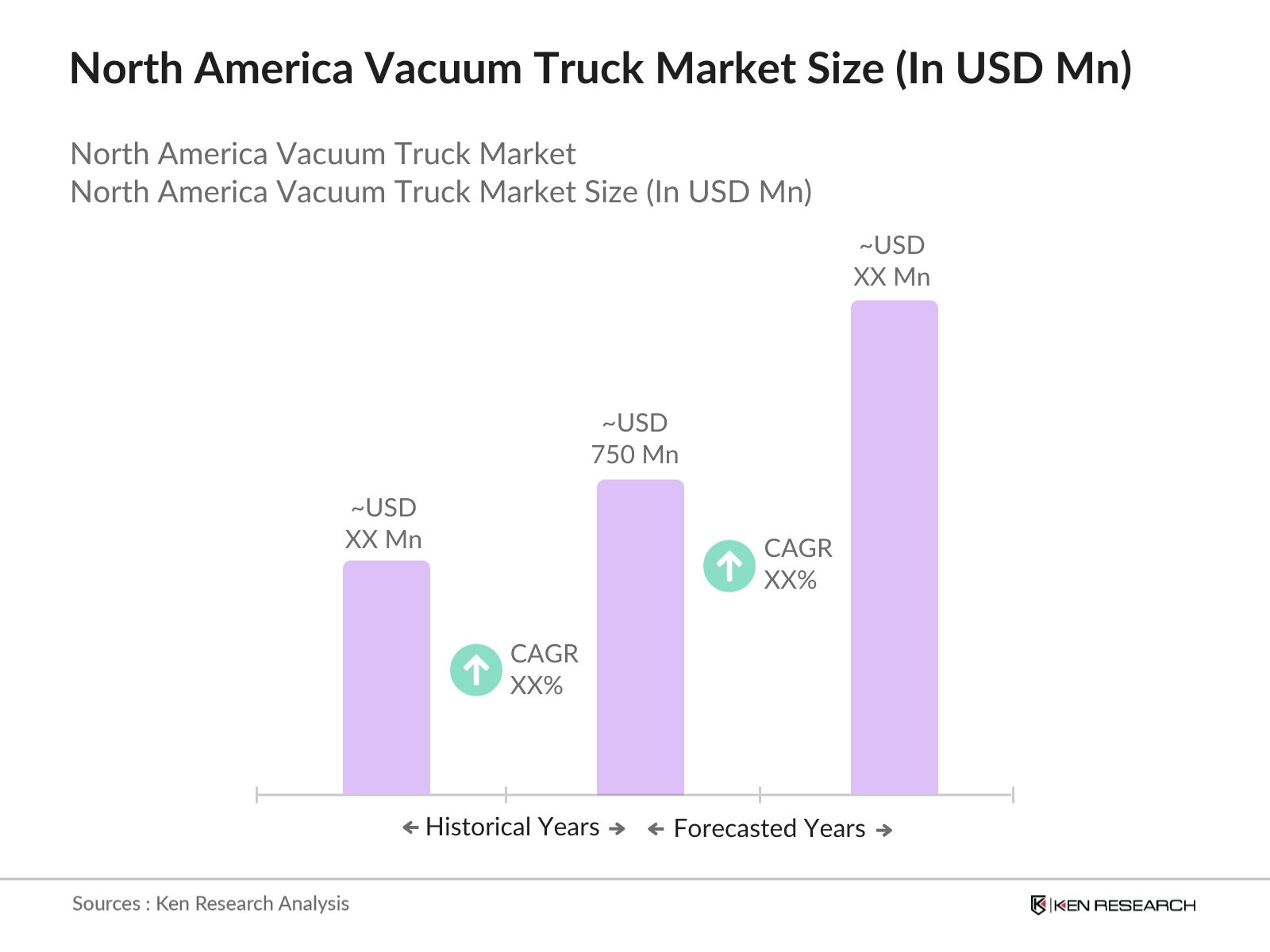
- The United States dominates the vacuum truck market in North America, particularly in industrial hubs like Texas and California, where oil and gas extraction, industrial manufacturing, and construction are significant. Canada's Alberta region also plays a key role due to its large oil sands projects. These regions require vacuum trucks for waste management, sludge removal, and hazardous waste handling. The focus on industrial waste treatment and environmental sustainability makes these regions prime drivers of market demand.
- Strict regulatory requirements enforced by bodies such as the Environmental Protection Agency (EPA) and Canadian Environmental Protection Act (CEPA) mandate stringent waste disposal measures, driving the demand for vacuum trucks. These regulations ensure that vacuum trucks meet high standards for safety, emissions, and efficiency, thereby enhancing market growth.
North America Vacuum Truck Market Segmentation
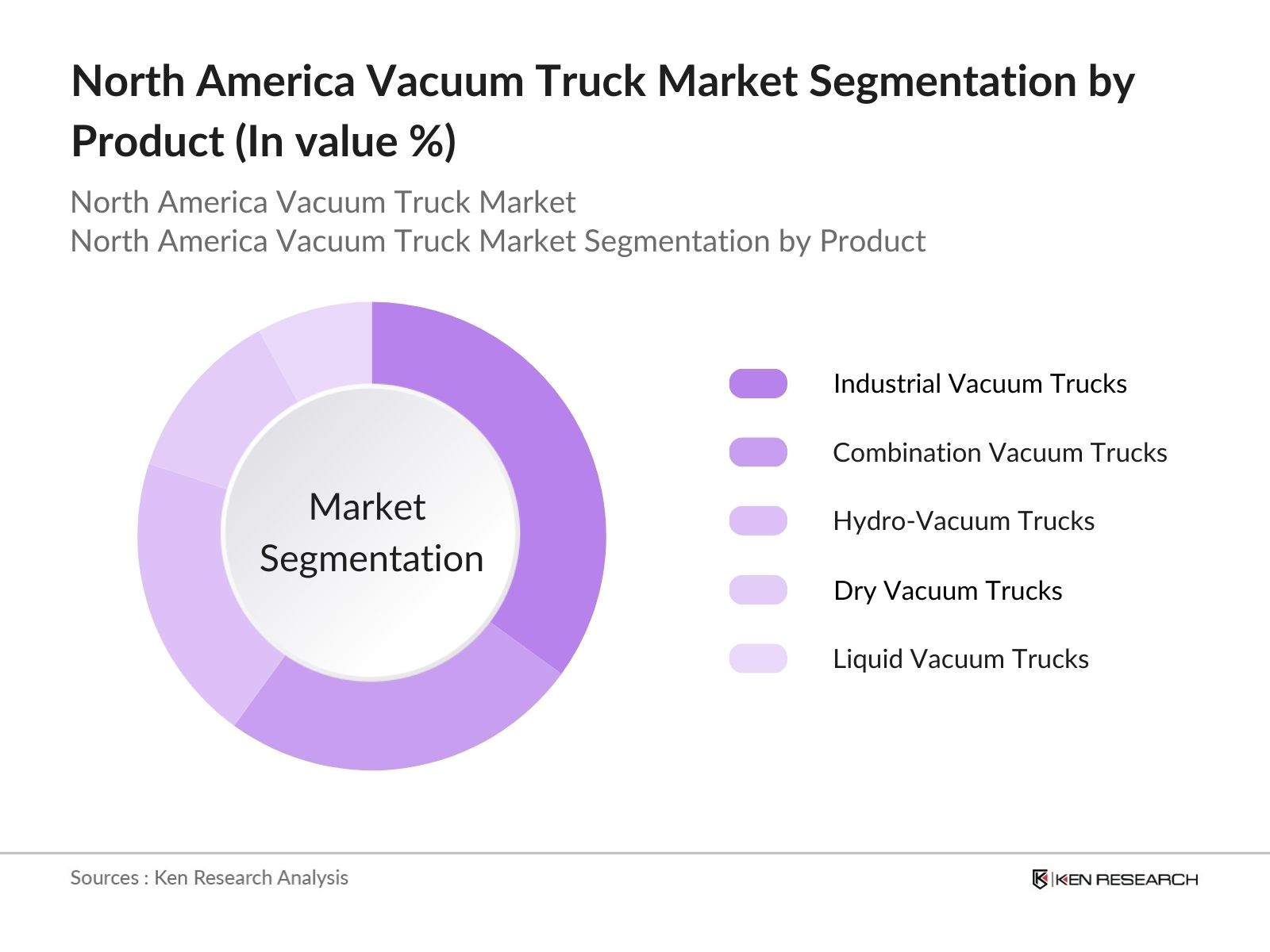
- By Product Type: The market is segmented into industrial vacuum trucks, combination vacuum trucks, dry vacuum and hydro-vacuum trucks. Industrial vacuum trucks hold the dominant market share, driven by their widespread use in industries like oil and gas, where they are critical for handling hazardous materials and cleaning up spills. These trucks are designed to handle large quantities of liquid and sludge, which are common in industrial settings, particularly in areas with high environmental safety regulations like Texas and Alberta. The demand for industrial vacuum trucks continues to grow as regulatory bodies impose stricter requirements on hazardous waste management.
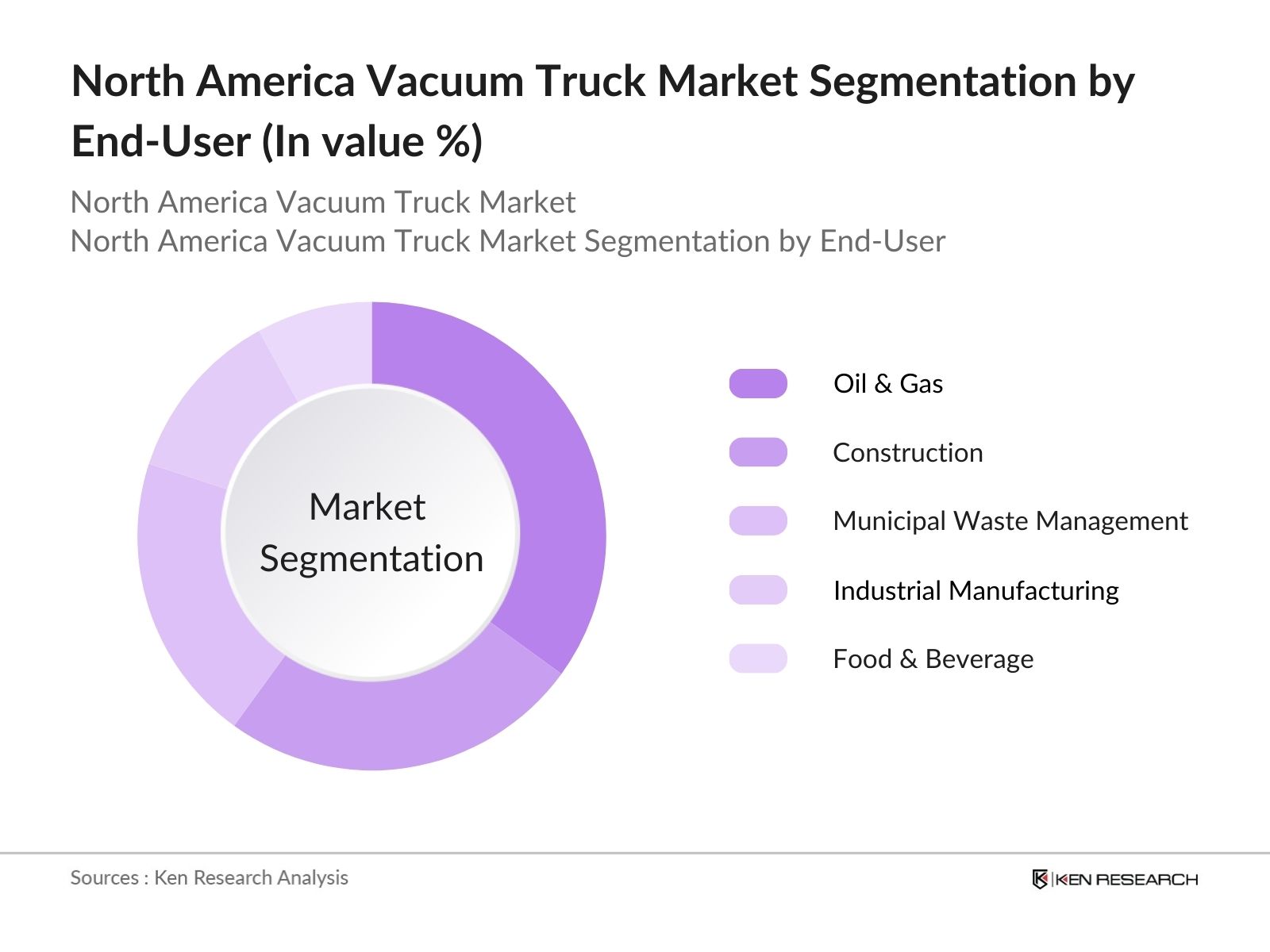
- By End-Use: The vacuum truck market is also segmented by end-use into oil & gas, construction, municipal waste management, industrial manufacturing, and food & beverage. The oil & gas industry holds the largest market share due to the high demand for vacuum trucks for drilling mud removal, oil spill clean-ups, and hazardous waste management. North America, particularly the U.S., with its vast shale oil production, sees extensive use of vacuum trucks in the oilfields. Additionally, the increasing number of regulations governing waste disposal in the oil and gas sector fuels demand for these vehicles, making this industry the largest consumer.
North America Vacuum Truck Market Competitive Landscape
The North America Vacuum Truck Market is highly competitive, with numerous key players holding substantial market shares. Companies are heavily investing in product innovation, research, and development to meet the growing demand for advanced, environmentally compliant vacuum trucks.
|
Company Name |
Establishment Year |
Headquarters |
Market Innovation |
Major Contracts |
No. of Employees |
Revenue (USD) |
R&D Expenditure |
Key Product Lines |
|
Federal Signal Corporation |
1901 |
Illinois, U.S. |
||||||
|
Guzzler Manufacturing |
1963 |
Alabama, U.S. |
||||||
|
Vac-Con |
1986 |
Florida, U.S. |
||||||
|
Vactor Manufacturing |
1964 |
Illinois, U.S. |
||||||
|
Kaiser AG |
1913 |
Liechtenstein |
North America Vacuum Truck Market Analysis
Growth Drivers
- Regulatory Push for Efficient Waste Management: The growing focus on environmental regulations, particularly in the U.S. and Canada, has led to an increased demand for vacuum trucks in managing waste more efficiently. In 2022, the Environmental Protection Agency (EPA) imposed stricter wastewater treatment regulations, requiring industries to adopt cleaner practices. The Clean Water Act mandates industries to ensure compliance with wastewater disposal, driving demand for vacuum trucks for sludge removal. These regulations create growth opportunities as municipalities and industries invest in equipment that meets compliance standards. Additionally, industrial waste generation in the U.S. reached 7.6 billion tons annually, further underscoring this need
- Increasing Industrialization in Key Sectors: North America's industrial sector, particularly oil & gas and construction, is a significant growth driver for vacuum trucks. The U.S. saw 500 active oil wells in 2023, which require regular cleaning and maintenance through vacuum trucks. In construction, rapid urban expansion in cities like Houston and Toronto increases the demand for efficient waste removal and debris handling. The U.S. construction industry further driving demand for vacuum trucks as the need for waste management solutions increases. Industrial projects generate significant liquid and solid waste that vacuum trucks are essential to manage.
- Expanding Municipal Infrastructure for Waste Removal: Municipal investments in North America are focusing heavily on expanding waste management infrastructure, creating a demand for advanced vacuum trucks. The U.S. government allocated USD 1.2 trillion in 2022 for upgrading waste and stormwater systems under the Infrastructure Investment and Jobs Act. With over 16,000 wastewater treatment plants across the U.S. and ongoing expansion projects, vacuum trucks are critical for handling large-scale municipal waste. Public-sector investments in new waste management infrastructure are expected to increase as cities struggle to manage growing populations and waste levels.
Challenges
- High Maintenance Costs: One of the key challenges facing the vacuum truck market in North America is the high initial investment required for fleet upgrades. The substantial capital outlay involved in purchasing new vacuum trucks, particularly models equipped with advanced technologies, makes it difficult for smaller businesses to enter the market or expand their existing fleets. Additionally, stringent emissions regulations, particularly from the EPA, compel companies to invest in trucks that meet new compliance standards. This further drives up the initial cost, creating financial barriers for smaller operators and limiting their ability to compete effectively.
- Maintenance and Operational Costs: Vacuum trucks are complex machines that require ongoing maintenance and regular service, which can place a significant burden on operators. Companies often face operational disruptions due to repairs, increasing their overall operational costs. Labor shortages in the skilled trade sector have also contributed to rising maintenance expenses, as businesses struggle to find qualified technicians. These costs add up over time, placing an additional long-term financial strain on businesses, particularly smaller operators. Keeping trucks in peak operating condition is essential for minimizing downtime, but it can be a challenge for companies operating on tighter budgets.
North America Vacuum Truck Market Future Outlook
The North America Vacuum Truck Market is expected to see moderate growth, driven by technological advancements, the expansion of municipal infrastructure, and the need for environmentally responsible waste management solutions. The continued investment in infrastructure projects, particularly in the U.S. and Canada, will sustain demand for vacuum trucks across various sectors.
Advancements in hybrid and electric-powered vacuum trucks are likely to gain traction, aligning with North Americas push for greener transportation solutions. However, challenges such as high maintenance costs and a shortage of skilled operators could temper growth.
Future Market Opportunities
- Adoption of Hybrid and Electric Vacuum Trucks: The push for environmentally friendly solutions has created opportunities for the adoption of hybrid and electric vacuum trucks. In 2022, the U.S. government introduced tax incentives for companies adopting electric vehicles (EVs) in their fleet, and several municipal governments followed suit. With over 10200 electric trucks sold in the U.S. in 2023, vacuum truck operators have begun to benefit from reduced fuel costs and lower emissions. This adoption aligns with stringent EPA regulations and offers companies a way to improve their environmental credentials, enhancing their market competitiveness.
- Government Infrastructure Investments: Government investments in wastewater and stormwater infrastructure are generating significant opportunities for vacuum truck operators. In 2023, U.S. federal and state governments allocated over USD 55 billion to upgrade wastewater and stormwater management systems. Vacuum trucks play a vital role in these projects, particularly in storm drain cleaning and sludge removal. Municipalities are increasingly partnering with private contractors to manage these services, providing a lucrative market for vacuum truck operators. This trend is expected to continue as governments seek to modernize infrastructure to cope with climate change-related challenges.
Scope of the Report
|
By Product Type |
Industrial Vacuum Trucks Combination Vacuum Trucks Hydro-Vacuum Trucks Dry Vacuum Trucks Liquid Vacuum Trucks |
|
By End-User |
Oil & Gas Construction Municipal Waste Management Industrial Manufacturing Food & Beverage |
|
By Application |
Wastewater Treatment Hazardous Material Cleanup Industrial Cleaning Spill Response |
|
By Technology |
Continuous Vacuum Systems Intermittent Vacuum Systems Mobile Vacuum Units Stationary Vacuum Units |
|
By Region |
United States Canada Mexico |
Products
Key Target Audience
Government and Regulatory Bodies (EPA, OSHA, Department of Transportation)
Oil & Gas Companies
Construction Firms
Municipalities
Industrial Manufacturers
Waste Management Service Providers
Investors and Venture Capitalist Firms
Vacuum Truck Manufacturers
Banks and Financial Institutions
Companies
Major Players Mentioned in the Report
Federal Signal Corporation
Guzzler Manufacturing
Vac-Con
Vactor Manufacturing
Kaiser AG
Keith Huber Corporation
Super Products LLC
K&E Engineering
GapVax
Cusco
Fulongma Group Co., Ltd
Rivard Group
Amthor International
Sewer Equipment Co. of America
Presvac Systems
Table of Contents
1. North America Vacuum Truck Market Overview
1.1. Definition and Scope
1.2. Market Taxonomy
1.3. Market Growth Rate
1.4. Market Segmentation Overview
2. North America Vacuum Truck Market Size (In USD Bn)
2.1. Historical Market Size
2.2. Year-On-Year Growth Analysis
2.3. Key Market Developments and Milestones
3. North America Vacuum Truck Market Analysis
3.1. Growth Drivers
3.1.1. Regulatory Push for Efficient Waste Management (Environmental Regulations, Wastewater Compliance)
3.1.2. Increasing Industrialization in Key Sectors (Oil & Gas, Construction)
3.1.3. Expanding Municipal Infrastructure for Waste Removal (Public Sector Investments)
3.1.4. Technological Advancements in Vacuum Truck Design (Hybrid/Electric Trucks, IoT-Enabled Systems)
3.2. Market Challenges
3.2.1. High Initial Investment Costs (Capital Requirements for Fleet Upgrades)
3.2.2. Maintenance and Operational Costs (Repair and Service)
3.2.3. Shortage of Skilled Operators (Labor Constraints, Certification Requirements)
3.2.4. Intense Competition from Small Regional Players (Market Saturation)
3.3. Opportunities
3.3.1. Adoption of Hybrid and Electric Vacuum Trucks (Environmental Initiatives, Emission Controls)
3.3.2. Government Infrastructure Investments (Wastewater and Stormwater Management)
3.3.3. Expansion into Untapped Regional Markets (Municipal Demand in Rural Areas)
3.3.4. Contractual Services with Private and Public Sectors (Service-Based Contracts, Multi-Year Deals)
3.4. Trends
3.4.1. Integration of IoT and Fleet Management Software (Digitalization of Operations, Predictive Maintenance)
3.4.2. Development of Compact Vacuum Trucks for Urban Environments (Urbanization, Narrow Street Solutions)
3.4.3. Increased Adoption of AI-based Safety Features (Enhanced Driver Assistance Systems)
3.4.4. Sustainable Material Use in Truck Manufacturing (Green Vehicle Design, Recyclable Components)
3.5. Government Regulations
3.5.1. EPA Standards for Industrial Waste Disposal (Hazardous Waste Handling)
3.5.2. Vehicle Emission Regulations (Fuel Efficiency, Low-Emission Vehicles)
3.5.3. Compliance with OSHA Safety Standards (Workplace Safety, Operator Safety Regulations)
3.5.4. Regional Certification Requirements (Emission Certifications, Vehicle Safety Certifications)
3.6. SWOT Analysis
3.7. Stakeholder Ecosystem
3.8. Porters Five Forces
3.9. Competition Ecosystem
4. North America Vacuum Truck Market Segmentation
4.1. By Product Type (In Value %)
4.1.1. Industrial Vacuum Trucks
4.1.2. Combination Vacuum Trucks
4.1.3. Hydro-Vacuum Trucks
4.1.4. Dry Vacuum Trucks
4.1.5. Liquid Vacuum Trucks
4.2. By End-Use Industry (In Value %)
4.2.1. Oil & Gas
4.2.2. Construction
4.2.3. Municipal Waste Management
4.2.4. Industrial Manufacturing
4.2.5. Food & Beverage
4.3. By Application (In Value %)
4.3.1. Wastewater Treatment
4.3.2. Hazardous Material Cleanup
4.3.3. Industrial Cleaning
4.3.4. Spill Response
4.4. By Technology (In Value %)
4.4.1. Continuous Vacuum Systems
4.4.2. Intermittent Vacuum Systems
4.4.3. Mobile Vacuum Units
4.4.4. Stationary Vacuum Units
4.5. By Region (In Value %)
4.5.1. United States
4.5.2. Canada
4.5.3. Mexico
5. North America Vacuum Truck Market Competitive Analysis
5.1 Detailed Profiles of Major Companies
5.1.1. Federal Signal Corporation
5.1.2. Guzzler Manufacturing
5.1.3. Vac-Con
5.1.4. Vactor Manufacturing
5.1.5. Keith Huber Corporation
5.1.6. Super Products LLC
5.1.7. K&E Engineering
5.1.8. GapVax
5.1.9. Cusco
5.1.10. Fulongma Group Co., Ltd
5.1.11. Rivard Group
5.1.12. Amthor International
5.1.13. Kaiser AG
5.1.14. Sewer Equipment Co. of America
5.1.15. Presvac Systems
5.2 Cross Comparison Parameters (Headquarters, Inception Year, Revenue, Market Innovation, Major Contracts, No. of Employees, R&D Expenditure, Product Portfolio)
5.3. Market Share Analysis
5.4. Strategic Initiatives
5.5. Mergers And Acquisitions
5.6. Investment Analysis
5.7. Venture Capital Funding
5.8. Government Grants
5.9. Private Equity Investments
6. North America Vacuum Truck Market Regulatory Framework
6.1. Environmental Standards (Waste Disposal Regulations, Hazardous Material Handling)
6.2. Compliance Requirements (Emission Standards, Safety Certifications)
6.3. Certification Processes (OSHA, ISO Certification)
7. North America Vacuum Truck Future Market Size (In USD Bn)
7.1. Future Market Size Projections
7.2. Key Factors Driving Future Market Growth
8. North America Vacuum Truck Future Market Segmentation
8.1. By Product Type (In Value %)
8.2. By End-Use Industry (In Value %)
8.3. By Application (In Value %)
8.4. By Technology (In Value %)
8.5. By Region (In Value %)
9. North America Vacuum Truck Market Analysts Recommendations
9.1. TAM/SAM/SOM Analysis
9.2. Customer Cohort Analysis
9.3. Marketing Initiatives
9.4. White Space Opportunity Analysis
Research Methodology
Step 1: Identification of Key Variables
In the initial phase, we constructed an ecosystem map of key stakeholders within the North America vacuum truck market. This included a combination of desk research and secondary data from proprietary databases to define the critical variables driving market trends, such as environmental regulations and technological advancements.
Step 2: Market Analysis and Construction
During this phase, historical data on market penetration, sales, and the ratio of vacuum truck types were compiled. Analysis was conducted on market trends, revenue generation, and penetration rates for various applications, such as oil & gas, construction, and municipal use. Data was cross-verified to ensure accuracy and reliability.
Step 3: Hypothesis Validation and Expert Consultation
Market hypotheses were developed and validated through computer-assisted telephone interviews (CATIs) with key industry professionals, including vacuum truck manufacturers and industrial users. The data obtained from these interviews provided valuable insights into product trends and market performance.
Step 4: Research Synthesis and Final Output
In the final stage, we engaged directly with vacuum truck manufacturers to gather in-depth insights into product innovations, sales growth, and market demand. This data was synthesized and verified to ensure a comprehensive and validated analysis of the North America vacuum truck market.
Frequently Asked Questions
01. How big is the North America Vacuum Truck Market?
The North America vacuum truck market is valued at USD 750 million, driven by the increasing demand for waste management solutions across industrial and municipal sectors.
02. What are the growth drivers for the North America Vacuum Truck Market?
Key growth in the North America vacuum truck market drivers include stringent environmental regulations, expanding industrial activities, and increasing municipal investments in wastewater management systems, all contributing to the rising demand for vacuum trucks.
03. What challenges does the North America Vacuum Truck Market face?
Challenges in the North America vacuum truck market include high initial investment costs for purchasing advanced vacuum trucks, as well as the shortage of skilled operators necessary to handle these vehicles efficiently.
04. Who are the major players in the North America Vacuum Truck Market?
Major players in the North America vacuum truck market include Federal Signal Corporation, Guzzler Manufacturing, Vac-Con, Vactor Manufacturing, and Kaiser AG, all of which lead the market with their innovative product offerings and strong contracts in industrial and municipal sectors.
Why Buy From Us?

What makes us stand out is that our consultants follows Robust, Refine and Result (RRR) methodology. i.e. Robust for clear definitions, approaches and sanity checking, Refine for differentiating respondents facts and opinions and Result for presenting data with story

We have set a benchmark in the industry by offering our clients with syndicated and customized market research reports featuring coverage of entire market as well as meticulous research and analyst insights.

While we don't replace traditional research, we flip the method upside down. Our dual approach of Top Bottom & Bottom Top ensures quality deliverable by not just verifying company fundamentals but also looking at the sector and macroeconomic factors.

With one step in the future, our research team constantly tries to show you the bigger picture. We help with some of the tough questions you may encounter along the way: How is the industry positioned? Best marketing channel? KPI's of competitors? By aligning every element, we help maximize success.

Our report gives you instant access to the answers and sources that other companies might choose to hide. We elaborate each steps of research methodology we have used and showcase you the sample size to earn your trust.

If you need any support, we are here! We pride ourselves on universe strength, data quality, and quick, friendly, and professional service.