















North America Vertical Farming Market Outlook to 2030
Vietnam Travel & Tourism Market Outlook 2028
Region:North America
Author(s):Mukul Soni
Product Code:KROD1805
December 2024
83
About the Report
North America Vertical Farming Market Overview
- The North America Vertical Farming Market was valued at USD 1.5 billion in 2023, driven by the growing demand for sustainable agricultural practices, the need for efficient urban farming solutions, and advancements in controlled environment agriculture technologies. Vertical farming offers a viable solution to the challenges of traditional farming, particularly in densely populated urban areas where space and resources are limited.

- Key players in the North America vertical farming market include AeroFarms, Plenty, Bowery Farming, Gotham Greens, and BrightFarms. These companies are recognized for their innovation in agricultural technologies, extensive production capacities, and significant investments in research and development aimed at improving the efficiency and scalability of vertical farming operations.
- Major cities driving the market include New York, San Francisco, and Chicago. New York's dominance is attributed to its high population density and strong demand for locally sourced fresh produce, San Francisco for its robust tech ecosystem that supports agricultural innovations, and Chicago for its ongoing efforts to integrate urban agriculture into city planning and food security strategies.
- In 2023, Plenty announced the opening of its largest vertical farm in Compton, California, with the capacity to produce over 4.5 million pounds of fresh produce annually. This USD 140 million facility is expected to revolutionize the local food supply chain by providing year-round access to fresh greens and herbs. This development underscores the growing investments in vertical farming infrastructure in North America, driven by the increasing demand for sustainable and locally sourced food products.
North America Vertical Farming Market Segmentation
- By Farm Type: The North America Vertical Farming Market is segmented by farm type into indoor vertical farms, outdoor vertical farms, and hybrid vertical farms. In 2023, indoor vertical farms dominated the market due to their ability to provide year-round production and control over environmental factors such as temperature, humidity, and light.

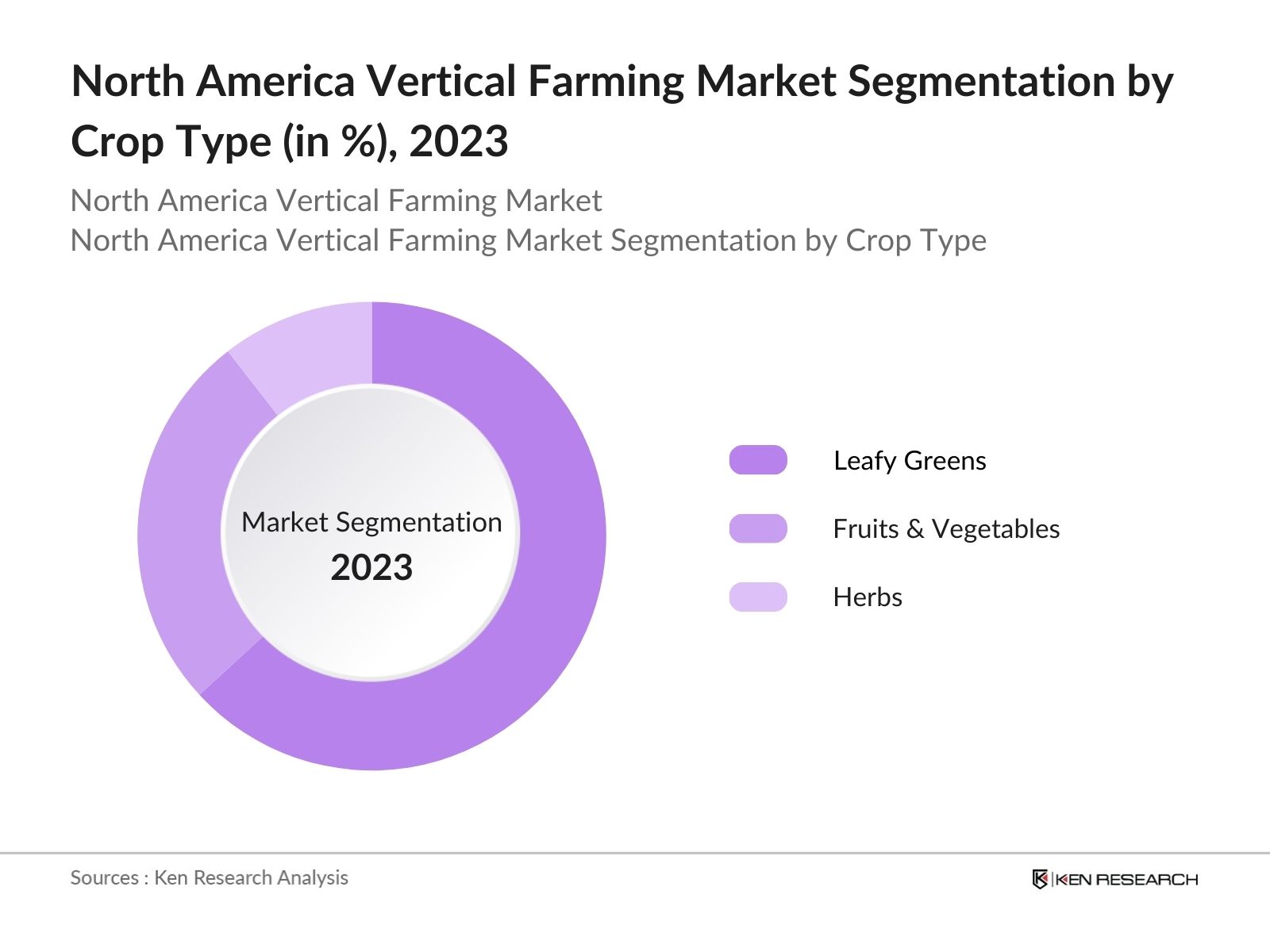
- By Crop Type: The market is segmented by crop type into leafy greens, fruits & vegetables, herbs. In 2023, leafy greens dominated the market, driven by the high consumer demand for fresh and nutritious salad greens. Leafy greens, including lettuce, spinach, and kale, are ideal for vertical farming due to their short growth cycles and high market value.
- By Region: The North America Vertical Farming Market is segmented by region into the USA and Canada. In 2023, the USA dominated the market due to its advanced agricultural infrastructure, high investment in agricultural technologies, and strong consumer demand for locally sourced food.
North America Vertical Farming Market Competitive Landscape
|
Company Name |
Establishment Year |
Headquarters |
|
AeroFarms |
2004 |
Newark, New Jersey |
|
Plenty |
2014 |
South San Francisco, California |
|
Bowery Farming |
2015 |
New York, New York |
|
Gotham Greens |
2009 |
Brooklyn, New York |
|
BrightFarms |
2011 |
Irvington, New York |
- Plenty: In August 2023, Plenty Unlimited Inc. began construction on a vertical indoor farming campus in Compton, California that will be one of the largest such operations in the world when completed. The multi-phase USD 300 million project will sit on 120 acres in the Meadowville Technology Park.
- Gotham Greens: In September 2023, Gotham Greens announced that it raised over USD 310 million in a Series E funding round, bringing its total financing to USD 440 million since the company was founded in 2009. The round was led by BMO Impact Investment Fund and Ares Management funds.
North America Vertical Farming Industry Analysis
North America Vertical Farming Market Growth Drivers
- Surge in Urbanization and Food Security Concerns
The North America Vertical Farming Market is being driven by the rapid urbanization in major cities and the increasing concerns over food security. As urban populations continue to grow, the need for sustainable and efficient food production methods has become critical. Vertical farming offers a viable solution by enabling high-density food production within urban environments, reducing the dependency on rural agricultural lands and minimizing food transportation costs. - Technological Advancements in Controlled Environment Agriculture (CEA)
The adoption of advanced technologies in Controlled Environment Agriculture (CEA) is a significant growth driver for the vertical farming market. Technologies such as AI, IoT, and automated systems have enhanced the efficiency and productivity of vertical farms by optimizing growing conditions and reducing resource usage. - Government Initiatives Supporting Urban Agriculture
Government support through initiatives and subsidies is playing a crucial role in driving the growth of the vertical farming market in North America. In 2023, the U.S. Department of Agriculture (USDA) launched the Urban Agriculture and Innovative Production Program, which provided USD 50 million in grants to support urban farming projects, including vertical farming.
North America Vertical Farming Market Challenges
- Limited Crop Varieties Vertical: farming is currently more suited for the cultivation of certain types of crops, particularly leafy greens and herbs, due to their short growth cycles and high market value. In 2023, these crops accounted for over 70% of the total produce from vertical farms in North America. However, the limited variety of crops that can be efficiently grown in vertical farms remains a challenge.
- Energy Consumption and Environmental Impact: Vertical farming operations are heavily reliant on artificial lighting, climate control systems, and other technologies, leading to high energy consumption. In 2024, the energy demand for vertical farming in the U.S. was at 5,000 GWh, which has raised concerns about the environmental impact of these operations.
North America Vertical Farming Market Government Initiatives
- U.S. Urban Agriculture and Innovative Production (UAIP) Program, 2023
The U.S. Department of Agriculture launched the Urban Agriculture and Innovative Production Program in 2023, providing USD 50 million in grants to support urban farming projects, including vertical farming. This program is aimed at promoting sustainable agricultural practices in urban areas, enhancing food security, and reducing food deserts across the United States. The UAIP program is a key driver for the adoption of vertical farming technologies, offering financial and technical support to urban farmers. - Canadas Agricultural Clean Technology (ACT) Program, 2024
In 2024, the Canadian government introduced the Agricultural Clean Technology Program, which allocated USD 165 million over five years to support the adoption of clean technologies in agriculture, including vertical farming. The ACT program focuses on reducing greenhouse gas emissions and improving energy efficiency in farming practices. Vertical farming operations in Canada are eligible for grants under this program to implement energy-efficient lighting, climate control systems, and other sustainable technologies, further driving the growth of the market. - New York States Urban Agriculture Innovation Zone Initiative, 2023
New York State launched the Urban Agriculture Innovation Zone Initiative in 2023, with a USD 25 million investment aimed at developing vertical farms in urban areas. The initiative focuses on transforming underutilized urban spaces into productive agricultural hubs, providing fresh produce to local communities, and creating jobs. The program also offers tax incentives and low-interest loans to businesses engaged in urban agriculture, making it easier for new vertical farming projects to get off the ground and thrive.
North America Vertical Farming Market Future Outlook
The North America Vertical Farming Market is expected to experience substantial growth from 2023 to 2028, driven by increasing consumer demand for locally sourced produce, advancements in agricultural technologies, and supportive government policies.
Future Market Trends
- Integration of Vertical Farms with Urban Infrastructure: Over the next five years, vertical farming will increasingly be integrated into urban infrastructure, with farms becoming a common feature of residential and commercial buildings. This trend will be particularly prominent in densely populated cities where space is limited. By 2028, it is expected that vertical farms will be seamlessly incorporated into the design of new urban developments, providing fresh produce directly to local communities and reducing the carbon footprint associated with food transportation.
- Adoption of Renewable Energy Sources: As concerns over energy consumption and environmental impact continue to grow, the vertical farming industry will increasingly adopt renewable energy sources such as solar and wind power. By 2028, a significant portion of vertical farms in North America will be powered entirely by renewable energy, reducing their carbon footprint and enhancing sustainability.
Scope of the Report
|
By Region |
United States Canada |
|
|
By Farm Type |
Indoor Vertical Farms Outdoor Vertical Farms Hybrid Vertical Farms |
|
|
By Crop Type |
Leafy Greens Fruits & Vegetables Herbs Others |
|
|
By Technology |
Hydroponics Aeroponics Aquaponics |
|
|
By Structure Type |
Building-based Shipping Container-based Warehouse-based |
Products
Key Target Audience
Urban Agriculture Companies
Food Retailers and Supermarkets
Food and Beverage Manufacturers
Technology Providers for Vertical Farming
Government and Regulatory Bodies (e.g., USDA, FDA)
Sustainable Agriculture Advocacy Groups
Food Service Providers and Restaurants
Real Estate Developers Specializing in Urban Farming Infrastructure
Environmental NGOs and Sustainability Organizations
Agricultural Input Suppliers (e.g., Seeds, Nutrients)
Time Period Captured in the Report:
Historical Period: 2018-2023
Base Year: 2023
Forecast Period: 2023-2028
Companies
Players Mentioned in the Report:
AeroFarms
Plenty
Bowery Farming
Gotham Greens
BrightFarms
Iron Ox
Square Roots
Infarm
Vertical Harvest
Crop One Holdings
Upward Farms
Kalera
Farm.One
Freight Farms
Table of Contents
1. North America Vertical Farming Market Overview
1.1. Definition and Scope
1.2. Market Taxonomy
1.3. Market Growth Rate
1.4. Market Segmentation Overview
2. North America Vertical Farming Market Size (in USD Bn), 2018-2023
2.1. Historical Market Size
2.2. Year-on-Year Growth Analysis
2.3. Key Market Developments and Milestones
3. North America Vertical Farming Market Analysis
3.1. Growth Drivers
3.1.1. Surge in Urbanization and Food Security Concerns
3.1.2. Technological Advancements in Controlled Environment Agriculture (CEA)
3.1.3. Government Initiatives Supporting Urban Agriculture
3.2. Challenges
3.2.1. High Initial Capital and Operational Costs
3.2.2. Limited Crop Varieties
3.2.3. Energy Consumption and Environmental Impact
3.3. Opportunities
3.3.1. Expansion of Product Offerings to Include Diverse Crop Varieties
3.3.2. Collaboration with Urban Developers for Integrated Infrastructure
3.3.3. Leveraging Government Incentives for Sustainable Practices
3.4. Trends
3.4.1. Integration of Vertical Farms with Urban Infrastructure
3.4.2. Adoption of Renewable Energy Sources
3.4.3. Use of Advanced AI and IoT for Precision Farming
3.5. Government Initiatives
3.5.1. U.S. Urban Agriculture and Innovative Production (UAIP) Program, 2023
3.5.2. Canadas Agricultural Clean Technology (ACT) Program, 2024
3.5.3. New York States Urban Agriculture Innovation Zone Initiative, 2023
3.6. SWOT Analysis
3.7. Stake Ecosystem
3.8. Competition Ecosystem
4. North America Vertical Farming Market Segmentation, 2023
4.1. By Farm Type (in Value %)
4.1.1. Indoor Vertical Farms
4.1.2. Outdoor Vertical Farms
4.1.3. Hybrid Vertical Farms
4.2. By Crop Type (in Value %)
4.2.1. Leafy Greens
4.2.2. Fruits & Vegetables
4.2.3. Herbs
4.3. By Region (in Value %)
4.3.1. USA
4.3.2. Canada
4.4. By Technology (in Value %)
4.4.1. Hydroponics
4.4.2. Aeroponics
4.4.3. Aquaponics
4.5. By Structure Type (in Value %)
4.5.1. Building-based
4.5.2. Shipping Container-based
4.5.3. Warehouse-based
5. North America Vertical Farming Market Cross Comparison
5.1 Detailed Profiles of Major Companies
5.1.1. AeroFarms
5.1.2. Plenty
5.1.3. Bowery Farming
5.1.4. Gotham Greens
5.1.5. BrightFarms
5.1.6. Iron Ox
5.1.7. Square Roots
5.1.8. Infarm
5.1.9. Vertical Harvest
5.1.10. Crop One Holdings
5.1.11. Upward Farms
5.1.12. Kalera
5.1.13. Farm.One
5.1.14. Freight Farms
5.2 Cross Comparison Parameters (No. of Employees, Headquarters, Inception Year, Revenue)
6. North America Vertical Farming Market Competitive Landscape
6.1. Market Share Analysis
6.2. Strategic Initiatives
6.3. Mergers and Acquisitions
6.4. Investment Analysis
6.4.1. Venture Capital Funding
6.4.2. Government Grants
6.4.3. Private Equity Investments
7. North America Vertical Farming Market Regulatory Framework
7.1. Environmental Standards
7.2. Compliance Requirements
7.3. Certification Processes
8. North America Vertical Farming Market Future Size (in USD Bn), 2023-2028
8.1. Future Market Size Projections
8.2. Key Factors Driving Future Market Growth
9. North America Vertical Farming Market Future Segmentation, 2028
9.1. By Farm Type (in Value %)
9.2. By Crop Type (in Value %)
9.3. By Region (in Value %)
9.4. By Technology (in Value %)
9.5. By Structure Type (in Value %)
10. North America Vertical Farming Market Analysts Recommendations
10.1. TAM/SAM/SOM Analysis
10.2. Customer Cohort Analysis
10.3. Marketing Initiatives
10.4. White Space Opportunity Analysis
Disclaimer
Contact Us
Research Methodology
Step 1: Identifying Key Variables
Ecosystem creation for all major entities involved in the North America Vertical Farming Market, including technology providers, key players, regulatory bodies, and end-users. This step involves referring to multiple secondary and proprietary databases to perform comprehensive desk research. The goal is to gather industry-level information, including market size, growth trends, key drivers, challenges, and government initiatives.
Step 2: Market Building
Collating and analyzing statistics on the North America Vertical Farming Market over the years, focusing on the adoption rates of various technologies, penetration of different farm types, and the share of key crop types. Additionally, market building involves calculating revenue generated across different segments by examining market penetration, production capacities, and consumption patterns. This step ensures the accuracy of market size estimations and growth projections.
Step 3: Validating and Finalizing
Building market hypotheses and conducting Computer-Assisted Telephone Interviews (CATIs) with industry experts, vertical farming operators, and key stakeholders to validate the collected data. This process includes seeking operational and financial information directly from company representatives, as well as verifying the adoption of new technologies and market trends. The validation step is crucial to ensure the reliability of the statistics and insights derived from secondary research.
Step 4: Research Output
Engaging with vertical farming companies, technology providers, and key market players to gather insights into product segments, sales trends, consumer preferences, and market dynamics. This information is used to cross-check and validate statistics derived from bottom-up approaches. The final research output is a detailed and accurate representation of the North America Vertical Farming Market, covering all critical aspects such as market segmentation, competitive landscape, growth drivers, and future trends.
Frequently Asked Questions
01. How big is the North America Vertical Farming Market?
The North America Vertical Farming Market reached a valuation ofUSD 1.5 billion in 2023, fueled by an increasing demand for sustainable agricultural practices, the necessity for effective urban farming solutions, and advancements in controlled environment agriculture technologies. Vertical farming presents a practical answer to the challenges posed by traditional agriculture, especially in densely populated urban areas where space and resources are constrained.
02. What are the challenges in the North America Vertical Farming Market?
Challenges include high initial capital and operational costs, limited crop varieties that can be efficiently grown, and significant energy consumption, which raises concerns about the environmental impact of vertical farming operations.
03. Who are the major players in the North America Vertical Farming Market?
Key players in the market include AeroFarms, Plenty, Bowery Farming, Gotham Greens, and BrightFarms. These companies lead the market due to their advanced technologies, extensive production capacities, and strategic expansions.
04. What are the growth drivers of the North America Vertical Farming Market?
The market is driven by rising consumer demand for locally sourced and sustainable produce, increasing investment in vertical farming technologies, and government support for urban agriculture through initiatives and subsidies.
Why Buy From Us?

What makes us stand out is that our consultants follows Robust, Refine and Result (RRR) methodology. i.e. Robust for clear definitions, approaches and sanity checking, Refine for differentiating respondents facts and opinions and Result for presenting data with story

We have set a benchmark in the industry by offering our clients with syndicated and customized market research reports featuring coverage of entire market as well as meticulous research and analyst insights.

While we don't replace traditional research, we flip the method upside down. Our dual approach of Top Bottom & Bottom Top ensures quality deliverable by not just verifying company fundamentals but also looking at the sector and macroeconomic factors.

With one step in the future, our research team constantly tries to show you the bigger picture. We help with some of the tough questions you may encounter along the way: How is the industry positioned? Best marketing channel? KPI's of competitors? By aligning every element, we help maximize success.

Our report gives you instant access to the answers and sources that other companies might choose to hide. We elaborate each steps of research methodology we have used and showcase you the sample size to earn your trust.

If you need any support, we are here! We pride ourselves on universe strength, data quality, and quick, friendly, and professional service.