
North America Wheat Market Outlook to 2030
Region:North America
Author(s):Sanjna Verma
Product Code:KROD3649
December 2024
83
About the Report
North America Wheat Market Overview
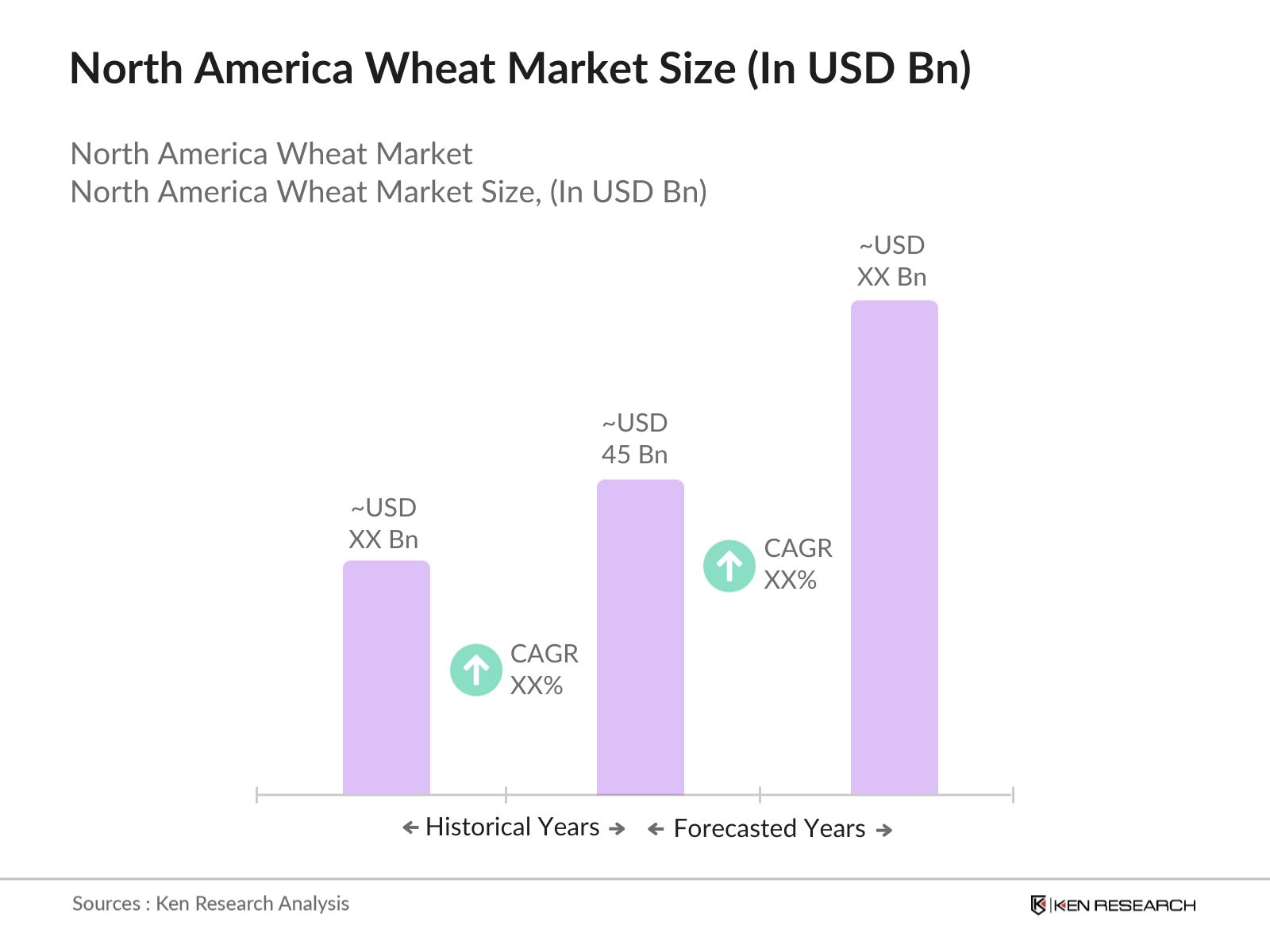
- The North America wheat market is valued at USD 45 billion, driven by rising demand for wheat-based products in both the food and feed sectors. Significant drivers include increasing consumption of bakery products, pasta, and noodles, alongside growing interest in organic and specialty wheat products. Technological advancements in farming, improved crop yields, and government support for wheat farmers also bolster the market's growth.
- The United States dominates the North America wheat market due to its advanced farming technologies, large-scale production capacity, and strong export position. Canada also plays a key role, being a top exporter of premium quality wheat, especially durum wheat used in pasta production. Mexico, while smaller in wheat production, remains a critical consumer and importer of North American wheat.
- The U.S. Farm Bill of 2023 continues to play a pivotal role in shaping the wheat industry by providing crop insurance and financial assistance to wheat farmers. In 2024, over 80% of wheat farmers in the U.S. participated in crop insurance programs, protecting them against yield losses due to weather extremes. The policy also offers financial incentives for adopting conservation practices, supporting the long-term sustainability of wheat farming in North America.
North America Wheat Market Segmentation
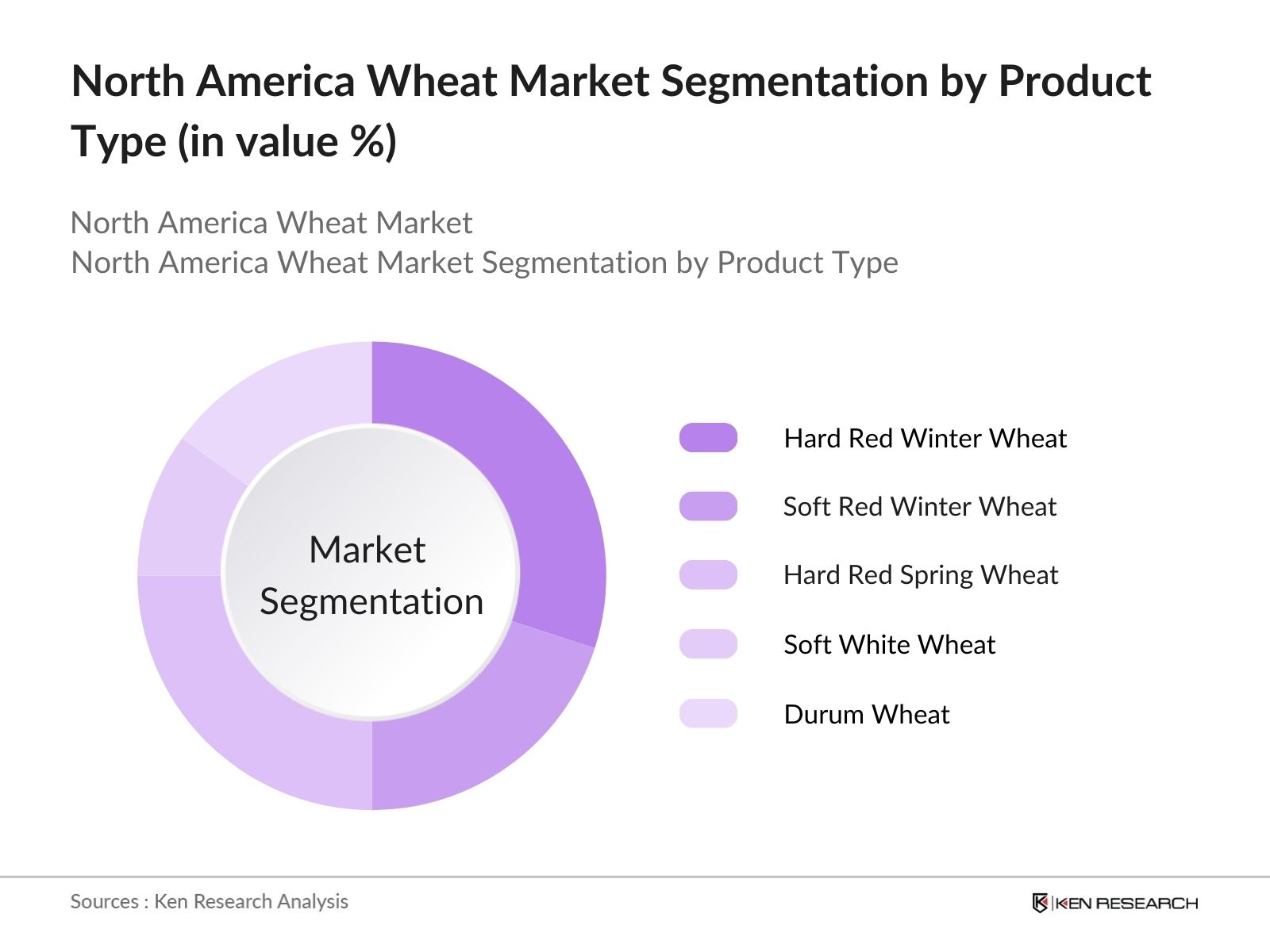
By Product Type: The North America wheat market is segmented by product type into hard red winter wheat, soft red winter wheat, hard red spring wheat, soft white wheat, and durum wheat. Hard red winter wheat holds a dominant market share due to its versatility in baking, high protein content, and extensive use in bread production. This wheat type is a staple for many commercial bakeries, contributing to its widespread use.
By Application:
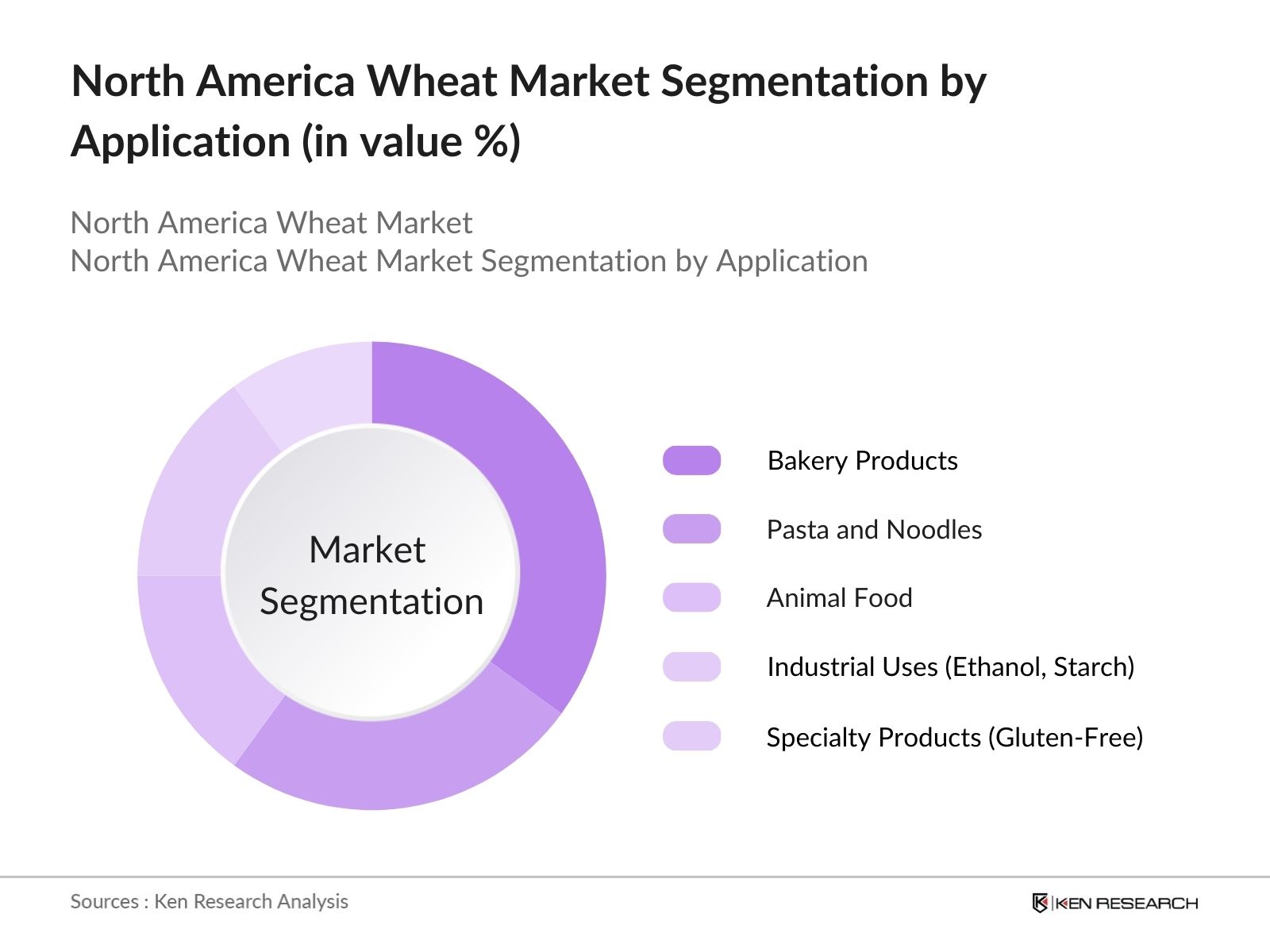
The market is further segmented by application into bakery products, pasta and noodles, animal feed, industrial uses (ethanol, starch), and specialty products (gluten-free, organic). Bakery products dominate the market due to their consistent demand in both retail and food service sectors. Wheat's critical role in the production of bread, cakes, pastries, and other baked goods ensures this segment's substantial market share.
North America Wheat Market Competitive Landscape
The North America wheat market is dominated by a combination of large multinational corporations and regional players. These companies have developed strong supply chains, advanced production techniques, and innovative strategies to ensure their continued leadership in the market.
"The North America wheat market is highly consolidated, with key players such as Cargill, Inc., Archer Daniels Midland Company, and General Mills, Inc. playing pivotal roles. These companies benefit from robust distribution networks, advanced agricultural technologies, and strong relationships with farmers, which enables them to maintain their market leadership."
|
Company |
Establishment Year |
Headquarters |
Market Capitalization |
Production Capacity |
R&D Investment |
Global Presence |
Sustainability Efforts |
Wheat Procurement |
Export Market Share |
|
Cargill, Inc. |
1865 |
Minneapolis, Minnesota |
- |
- |
- |
- |
- |
- |
- |
|
Archer Daniels Midland Company |
1902 |
Chicago, Illinois |
- |
- |
- |
- |
- |
- |
- |
|
General Mills, Inc. |
1928 |
Minneapolis, Minnesota |
- |
- |
- |
- |
- |
- |
- |
|
Bay State Milling Company |
1899 |
Quincy, Massachusetts |
- |
- |
- |
- |
- |
- |
- |
|
Ardent Mills |
2014 |
Denver, Colorado |
- |
- |
- |
- |
- |
- |
- |
North America Wheat Market Analysis
Growth Drivers
- Increase in Wheat-Based Product Demand: The demand for wheat-based products has surged due to population growth and increased consumer preferences for affordable staple foods. The combined production from the U.S. and Canada is estimated to be closer to84 million metric tons, primarily driven by demand for various wheat-based products such as bread and pasta. With the growing trend of convenience foods and ready-to-eat meals, the demand for wheat-based products is expected to rise, driving the wheat market in North America.
- Advancements in Farming Technologies: Technological advancements, including precision agriculture, have significantly enhanced wheat yield and efficiency. In 2024, precision agriculture techniques such as satellite monitoring, soil sensors, and GPS-guided machinery were adopted by over 60% of large-scale wheat farmers in North America, improving productivity and resource utilization. These technologies reduce wastage and optimize crop inputs like water and fertilizers.
- Growth of Export Opportunities: The demand for wheat exports from North America has significantly increased, with 22.5 million metric tons of wheat exported from the U.S. in 2024. Canada also exported 20.5 million metric tons. Key importers, such as Japan, Mexico, and the Philippines, depend heavily on North American wheat due to its quality and consistency. Expanding trade relations with emerging economies and the strengthening of free trade agreements further open new markets for North American wheat, contributing to the industry's growth.
Challenges
- Volatile Wheat Prices: Wheat prices in North America have been highly volatile due to global market fluctuations, affected by geopolitical tensions and economic instability. As of mid-September 2024, wheat prices have been reported at approximately$574.45 per metric ton(equivalent to around$520 per ton). This volatility can lead to uneven profit margins for farmers and unpredictability in the supply chain, making price stabilization a major challenge in the wheat market.
- Declining Arable Land: The availability of arable land for wheat farming is decreasing due to urbanization and soil degradation. Between2017 and 2022, the U.S. lost approximately20.1 million acresof farmland, which is equivalent to an area about the size of Maine. Furthermore, soil depletion from over-farming practices reduces land productivity. This shrinking availability of arable land challenges farmers to maximize production on limited resources, necessitating better land management and farming practices.
North America Wheat Future Market Outlook
Over the next five years, the North America wheat market is expected to experience steady growth driven by increasing consumer demand for wheat-based products and advancements in farming technology. Government incentives supporting wheat production, along with the rising demand for specialty wheat products such as gluten-free and organic options, will further enhance market dynamics. The export potential for high-quality wheat to emerging markets is another crucial factor likely to drive growth in the coming years.
Market Opportunities
- Rising Demand for Organic Wheat: The demand for organic wheat is rising, fueled by consumer preferences for natural and sustainable products. Organic wheat is primarily used in specialty bread, cereals, and bakery products, catering to health-conscious consumers. With increasing consumer awareness about the environmental and health benefits of organic food, the demand for organic wheat is expected to continue growing, providing a lucrative opportunity for farmers transitioning to organic production.
- Technological Integration (Precision Agriculture, Drone Usage): The integration of technology, such as precision agriculture and drone usage, is creating opportunities for optimizing wheat production. By leveraging data-driven insights, farmers can enhance planting strategies, irrigation, and pest control, leading to cost reductions and higher output. These innovations provide a competitive edge for wheat farmers, helping to address challenges related to climate and resource management.
Scope of the Report
|
Products
Key Target Audience
Food and Beverage Manufacturers
Animal Feed Producers
Industrial Users (Ethanol, Starch Manufacturers)
Agribusiness Companies
Agricultural Equipment Manufacturers
Government and Regulatory Bodies (USDA, CFIA, Mexicos SAGARPA)
Investors and Venture Capitalist Firms
Companies
Major Players
Cargill, Inc.
Archer Daniels Midland Company
General Mills, Inc.
Bay State Milling Company
Ardent Mills
Richardson International Limited
Grain Craft
North Dakota Mill & Elevator
Italgrani USA
King Milling Company
Table of Contents
1. North America Wheat Market Overview 1.1. Definition and Scope
1.2. Market Taxonomy
1.3. Market Size Overview (USD 45 Billion)
1.4. Key Market Developments and Trends
1.5. Key Drivers, Challenges, and Opportunities
2. North America Wheat Market Size (USD Billion)
2.1. Historical Market Size
2.2. Year-On-Year Growth Analysis
2.3. Contribution of Major Countries (United States, Canada, Mexico)
2.4. Market Value Chain Analysis
3. North America Wheat Market Analysis
3.1. Growth Drivers
3.1.1. Rising Demand for Wheat-Based Products
3.1.2. Technological Advancements in Wheat Cultivation
3.1.3. Growth of Export Opportunities
3.1.4. Government Support through Policies (e.g., U.S. Farm Bill)
3.2. Challenges
3.2.1. Volatile Wheat Prices
3.2.2. Declining Arable Land
3.2.3. Pest Infestation and Disease Outbreaks
3.3. Opportunities
3.3.1. Rising Demand for Organic and Specialty Wheat
3.3.2. Integration of Precision Agriculture
3.3.3. Expanding Export Potential to Emerging Markets
3.4. Trends
3.4.1. Increased Use of Sustainable Farming Practices
3.4.2. Adoption of Digital and AI Technologies in Agriculture
3.4.3. Development of Gluten-Free Wheat Products
3.5. Regulatory Landscape
3.5.1. Key Agricultural Policies in North America
3.5.2. Trade Agreements Impacting Wheat Market
3.5.3. Food Safety and Sustainability Standards
4. North America Wheat Market Segmentation
4.1. By Product Type (in Value %)
4.1.1. Hard Red Winter Wheat
4.1.2. Soft Red Winter Wheat
4.1.3. Hard Red Spring Wheat
4.1.4. Soft White Wheat
4.1.5. Durum Wheat
4.2. By Application (in Value %)
4.2.1. Bakery Products
4.2.2. Pasta and Noodles
4.2.3. Animal Feed
4.2.4. Industrial Uses (Ethanol, Starch)
4.2.5. Specialty Products (Gluten-Free, Organic)
4.3. By Distribution Channel (in Value %)
4.3.1. Supermarkets and Hypermarkets
4.3.2. Specialty Stores
4.3.3. Online Retail
4.3.4. Direct-to-Consumer
4.3.5. Food Service Channels
4.4. By Region (in Value %)
4.4.1. United States
4.4.2. Canada
4.4.3. Mexico
4.4.4. Other North American Countries
5. Competitive Landscape
5.1. Competitive Structure
5.2. Cross Comparison Parameters (Number of Employees, Headquarters, Market Capitalization, Production Capacity, Sustainability Efforts)
5.3. Major Players’ Profiles
5.3.1. Cargill, Inc.
5.3.2. Archer Daniels Midland Company
5.3.3. General Mills, Inc.
5.3.4. Bay State Milling Company
5.3.5. Ardent Mills
5.3.6. Richardson International Limited
5.3.7. Grain Craft
5.3.8. North Dakota Mill & Elevator
5.3.9. Italgrani USA
5.3.10. King Milling Company
5.3.11. Mennel Milling Company
5.3.12. ConAgra Brands, Inc.
5.3.13. The Andersons, Inc.
5.3.14. P&H Milling Group
5.3.15. Bunge North America, Inc.
5.4. Market Share Analysis
5.5. Strategic Initiatives (Partnerships, Mergers, and Acquisitions)
5.6. Investments and Innovations
6. Future Market Outlook
6.1. Future Market Size Projections (in USD Billion)
6.2. Growth Opportunities in Organic and Specialty Wheat
6.3. Impact of Emerging Technologies on Market Dynamics
7. Analysts’ Recommendations
7.1. TAM/SAM/SOM Analysis
7.2. Marketing and Distribution Strategy
7.3. White Space Opportunity Analysis
Disclaimer
Contact Us
Research Methodology
Step 1: Identification of Key Variables
The first step involves mapping the ecosystem of the North America wheat market, identifying all major stakeholders such as farmers, food manufacturers, distributors, and regulatory bodies. Extensive desk research was conducted to gather data from secondary sources, including industry reports, databases, and proprietary sources.
Step 2: Market Analysis and Construction
Historical data related to wheat production, exports, and consumer demand were compiled and analyzed. Additionally, supply chain dynamics and technological trends in farming were evaluated. This step helped to assess market penetration, pricing fluctuations, and production output.
Step 3: Hypothesis Validation and Expert Consultation
Consultations with industry experts, including wheat farmers and manufacturers, were carried out to validate the market data and hypotheses. These experts provided insights into production challenges, opportunities for technological integration, and future trends in wheat demand.
Step 4: Research Synthesis and Final Output
The final phase involved synthesizing the research findings and preparing the final report. Data was verified through interactions with multiple wheat processors and distributors, ensuring that the market estimates are accurate and reflect current trends.
Frequently Asked Questions
01. How big is the North America Wheat Market?
The North America wheat market is valued at USD 45 billion, driven by the increasing demand for wheat-based products such as bread, pasta, and animal feed. This market has seen steady growth due to both domestic consumption and strong export demand.
02. What are the challenges in the North America Wheat Market?
Challenges in the market include volatile wheat prices due to fluctuating global demand, unpredictable weather patterns affecting crop yields, and increasing competition from alternative grains such as quinoa and barley. Additionally, pest infestations and disease outbreaks pose risks to wheat production.
03. Who are the major players in the North America Wheat Market?
Major players in the market include Cargill, Inc., Archer Daniels Midland Company, General Mills, Inc., Bay State Milling Company, and Ardent Mills. These companies dominate the market due to their production capacity, extensive distribution networks, and innovation in wheat-based products.
04. What are the growth drivers of the North America Wheat Market?
The market is driven by increasing consumer demand for bakery and pasta products, technological advancements in wheat farming, and government support for wheat production. Additionally, rising exports of high-quality wheat to developing countries is a key growth factor.
Why Buy From Us?

What makes us stand out is that our consultants follows Robust, Refine and Result (RRR) methodology. i.e. Robust for clear definitions, approaches and sanity checking, Refine for differentiating respondents facts and opinions and Result for presenting data with story

We have set a benchmark in the industry by offering our clients with syndicated and customized market research reports featuring coverage of entire market as well as meticulous research and analyst insights.

While we don't replace traditional research, we flip the method upside down. Our dual approach of Top Bottom & Bottom Top ensures quality deliverable by not just verifying company fundamentals but also looking at the sector and macroeconomic factors.

With one step in the future, our research team constantly tries to show you the bigger picture. We help with some of the tough questions you may encounter along the way: How is the industry positioned? Best marketing channel? KPI's of competitors? By aligning every element, we help maximize success.

Our report gives you instant access to the answers and sources that other companies might choose to hide. We elaborate each steps of research methodology we have used and showcase you the sample size to earn your trust.

If you need any support, we are here! We pride ourselves on universe strength, data quality, and quick, friendly, and professional service.