Ken Research Logo

Saudi Arabia Antibiotics Market Outlook to 2030

Region:Middle East

Author(s):Sanjeev

Product Code:KROD3671

Published On

December 2024

Total pages

83

About the Report

Saudi Arabia Antibiotics Market Overview

  • The Saudi Arabia antibiotics market is valued at USD 1 billion, driven by increasing healthcare expenditure and the rising prevalence of bacterial infections across the region. The market is supported by the Kingdoms Vision 2030, which emphasizes strengthening healthcare infrastructure and services. As a result, the consumption of antibiotics has surged due to an increase in the population and the growing prevalence of infections. Furthermore, the Saudi government is investing heavily in modernizing healthcare systems, ensuring broader access to medications, including antibiotics, across urban and rural areas.
  • Cities such as Riyadh, Jeddah, and Dammam dominate the antibiotics market due to their high population density, better access to healthcare facilities, and advanced medical infrastructure. Riyadh, being the capital and the largest city, is home to several major hospitals and medical institutions, contributing to a large portion of antibiotic demand. Additionally, these cities are centers of economic activity, making them key areas for healthcare investments, thus driving the consumption of antibiotics. Jeddah and Dammam also have robust healthcare systems, making them significant contributors to the market.
  • The Saudi Food and Drug Authority (SFDA) enforces strict regulations on the approval, distribution, and sale of antibiotics in 2024. Pharmaceutical companies are required to meet rigorous safety and efficacy standards, ensuring that only approved antibiotics are available in the market. The SFDA also monitors antibiotic imports to prevent the sale of unregulated or counterfeit drugs, ensuring patient safety and drug quality. market overviews

Saudi Arabia Antibiotics Market Segmentation

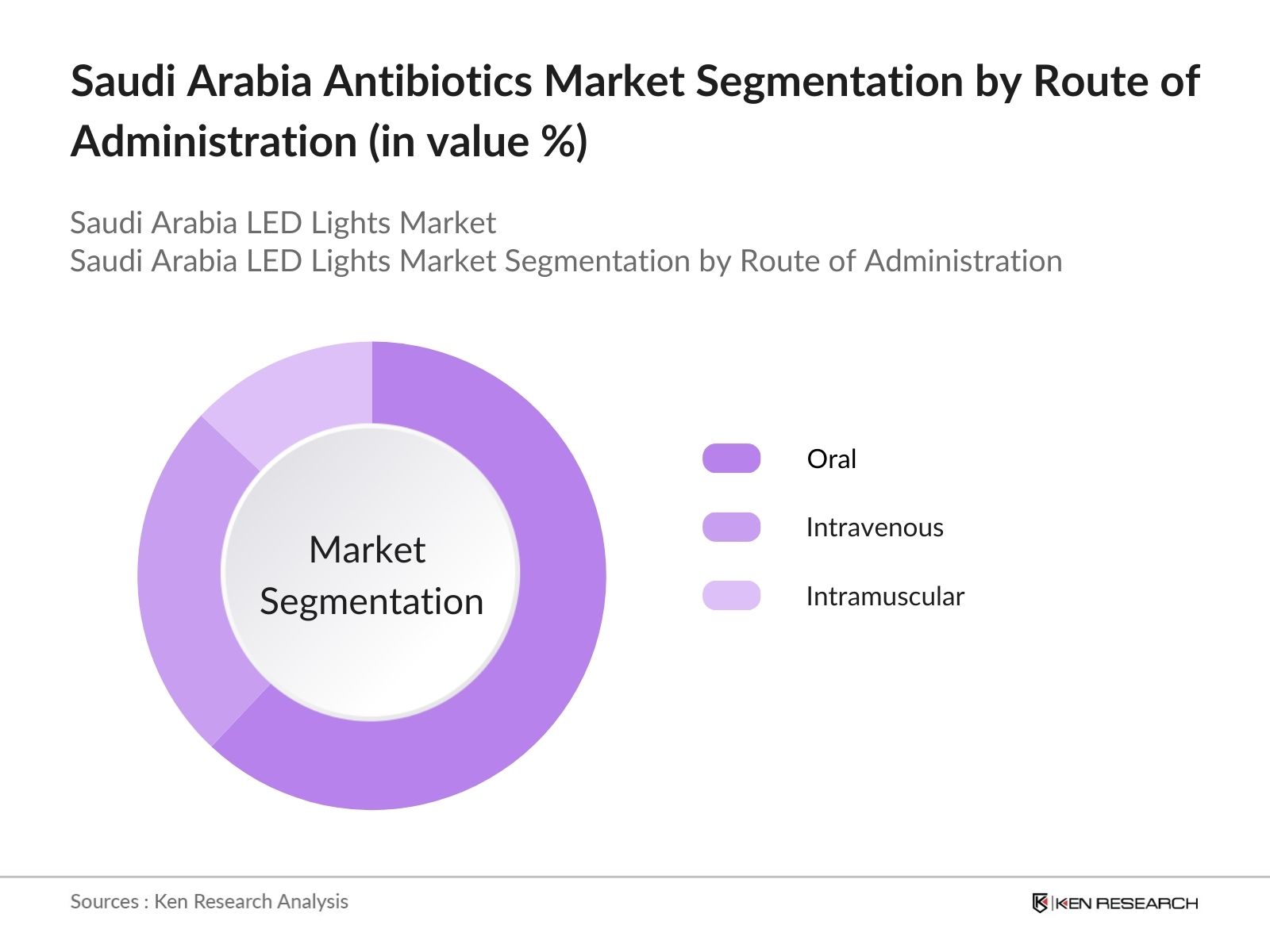
The Saudi Arabia antibiotics market is segmented by drug class and by route of administration.

  • By Drug Class: The Saudi Arabia antibiotics market is segmented by drug class into penicillin, cephalosporins, macrolides, fluoroquinolones, and tetracyclines. Among these, penicillin holds the dominant market share due to its widespread use in treating a variety of bacterial infections. Penicillin-based antibiotics, including amoxicillin, have a long-established presence in the Saudi healthcare system and are preferred for their efficacy and lower cost compared to newer drug classes. Its effectiveness in treating common bacterial infections, such as respiratory tract infections, further cements its dominance in the market.market overviews
  • By Route of Administration: The market is segmented by route of administration into oral, intravenous, and intramuscular antibiotics. Oral antibiotics hold the largest share in the Saudi market, accounting for 62% in 2023. This is primarily due to the convenience and non-invasive nature of oral administration, making it a preferred choice for outpatient treatments. Oral antibiotics are widely prescribed in primary care settings for common bacterial infections, driving their high consumption. Moreover, oral formulations are more accessible and affordable, contributing to their dominance.

market overviews

Saudi Arabia Antibiotics Market Competitive Landscape

The Saudi antibiotics market is dominated by a mix of multinational pharmaceutical companies and local players. The market is largely consolidated, with key players controlling a significant portion of the market. These companies leverage their extensive R&D capabilities and established distribution networks to maintain their dominance in the market. The presence of both global giants and well-established local firms enables a competitive yet stable market environment. The competitive landscape reflects a strong consolidation with major players like Pfizer and Sanofi dominating the market through their well-established global presence and diverse antibiotic portfolios.

Company Name

Establishment Year

Headquarters

Key Products

Market Reach

Manufacturing Facilities

Pfizer Inc.

1849

New York, USA


GlaxoSmithKline plc (GSK)

2000

London, UK


Hikma Pharmaceuticals

1978

Amman, Jordan


Tabuk Pharmaceuticals

1994

Riyadh, Saudi Arabia


Sanofi S.A.

1973

Paris, France


Saudi Arabia Antibiotics Market Analysis

Growth Drivers

  • Rising Prevalence of Infectious Diseases: In Saudi Arabia, the rising prevalence of infectious diseases, particularly respiratory and gastrointestinal infections, is driving the demand for antibiotics. In 2024, respiratory infections account for over 40% of all infectious disease cases in the Kingdom, with a significant rise in hospitalizations. According to the Ministry of Health, more than 3 million people are affected by such infections annually, emphasizing the need for effective antibiotic treatments. The World Health Organization (WHO) reports an increased burden of bacterial infections globally, further contributing to the rising need for antibiotics in Saudi Arabia.
  • Expanding Healthcare Infrastructure: Saudi Arabia's Vision 2030 is heavily investing in healthcare infrastructure, increasing the number of hospitals and healthcare facilities nationwide. As of 2024, the Kingdom has more than 500 hospitals, including new facilities being developed to cater to a growing population of over 35 million. The expansion of healthcare services facilitates the availability and accessibility of antibiotics for various infections. Additionally, the government's allocation of more than SAR 180 billion in the 2024 budget for healthcare demonstrates its commitment to improving medical infrastructure and access to essential medicines like antibiotics.
  • Increased Government Healthcare Spending: In 2024, the Saudi government increased its healthcare spending to SAR 180 billion, representing a significant portion of the total national budget. This financial boost ensures greater access to essential medicines, including antibiotics, and supports the development of advanced medical technologies for disease management. The Ministry of Finance's focus on health security, particularly for combating bacterial infections, is a key growth driver for the antibiotic market. These budgetary allocations enhance the efficiency of healthcare delivery, addressing the rising burden of infectious diseases in the Kingdom.

Market Challenges

  • Antibiotic Resistance (Impact on Drug Efficacy): Antibiotic resistance is a growing challenge in Saudi Arabia, with the WHO reporting that resistance levels in certain bacteria like E. coli and K. pneumoniae are at 30% to 50% in 2024. This resistance reduces the efficacy of commonly used antibiotics, driving the need for newer, more potent drugs. Antibiotic resistance also leads to increased hospital stays and higher medical costs, adding pressure to the healthcare system. The national antimicrobial resistance strategy aims to curb this issue by promoting responsible use of antibiotics.
  • Stringent Regulatory Requirements (Saudi FDA, WHO Guidelines): In 2024, the Saudi Food and Drug Authority (SFDA) continues to enforce stringent regulations on the import, sale, and distribution of antibiotics. Compliance with SFDA and WHO guidelines requires extensive clinical data, which can slow down the introduction of new antibiotics to the market. This regulatory landscape ensures drug safety but poses challenges for pharmaceutical companies in meeting these high standards. Moreover, lengthy approval processes affect market penetration and delay patient access to essential antibiotics.

Saudi Arabia Antibiotics Market Future Outlook

Over the next five years, the Saudi Arabia antibiotics market is expected to witness significant growth, driven by continuous government efforts to expand healthcare access and increase investments in local pharmaceutical production. The Kingdoms emphasis on achieving healthcare self-sufficiency, coupled with the increasing incidence of bacterial infections and antibiotic resistance, will further boost demand for advanced antibiotics. Additionally, technological advancements in drug formulation and increasing healthcare expenditure are expected to create favorable conditions for market expansion.

Future Market Opportunities

  • Introduction of Next-Generation Antibiotics: In 2024, Saudi Arabia's growing pharmaceutical sector presents opportunities for the introduction of next-generation antibiotics that target resistant bacterial strains. The Ministry of Industry and Mineral Resources has announced plans to boost local R&D capabilities in collaboration with international pharmaceutical companies. This focus on innovation aligns with the country's Vision 2030 strategy, offering a fertile ground for advanced antibiotic therapies to be developed and commercialized. These new treatments aim to address the rising issue of antibiotic resistance and ensure better clinical outcomes for patients.
  • Public-Private Partnerships in R&D: The Saudi government's Vision 2030 initiative encourages public-private partnerships (PPPs) in pharmaceutical R&D. In 2024, several collaborations between local research institutions and multinational pharmaceutical companies are focusing on the development of novel antibiotics. These partnerships are supported by the government's financial and regulatory incentives, facilitating the introduction of new therapies in the local market. PPPs are expected to enhance innovation, speed up regulatory approvals, and ensure the availability of advanced antibiotics.

Scope of the Report

By Drug Class

Penicillin

Cephalosporins

Macrolides

Fluoroquinolones

Tetracyclines

By Route of Administration

Oral

Intravenous

Intramuscular

By End User

Hospitals

Retail Pharmacies

Clinics, Online Pharmacies

By Spectrum of Activity

Broad-Spectrum Antibiotics

Narrow-Spectrum Antibiotics

By Region

North

East

West

South

Products

Key Target Audience

  • Pharmaceuticals Manufacturers

  • Antibiotics Distributors and Wholesalers

  • Hospitals and Clinics

  • Government and Regulatory Bodies (Saudi Food and Drug Authority, Ministry of Health)

  • Pharmaceutical Importers

  • Retail Pharmacies

  • Investors and Venture Capitalist Firms

  • Medical Research Institutes

  • Banks and Financial Institutes

Companies

Players Mention in the Report:

  • Pfizer Inc.

  • GlaxoSmithKline plc (GSK)

  • Merck & Co., Inc.

  • Novartis AG

  • Sanofi S.A.

  • Johnson & Johnson

  • AstraZeneca

  • Abbott Laboratories

  • Bayer AG

  • F. Hoffmann-La Roche Ltd

  • Hikma Pharmaceuticals PLC

  • Tabuk Pharmaceuticals

  • SPIMACO

  • Aurobindo Pharma

  • Al Razi Pharmaceutical Co.

Table of Contents

1. Saudi Arabia Antibiotics Market Overview

1.1. Definition and Scope

1.2. Market Taxonomy

1.3. Market Growth Rate

1.4. Market Segmentation Overview

2. Saudi Arabia Antibiotics Market Size (In USD Bn)

2.1. Historical Market Size
2.2. Year-On-Year Growth Analysis
2.3. Key Market Developments and Milestones

3. Saudi Arabia Antibiotics Market Analysis

3.1. Growth Drivers
3.1.1. Rising Prevalence of Infectious Diseases
3.1.2. Expanding Healthcare Infrastructure
3.1.3. Increased Government Healthcare Spending
3.1.4. Public Awareness and Health Campaigns
3.2. Market Challenges
3.2.1. Antibiotic Resistance (Impact on Drug Efficacy)
3.2.2. Stringent Regulatory Requirements (Saudi FDA, WHO Guidelines)
3.2.3. High Costs of Novel Antibiotics
3.2.4. Counterfeit Medicines in the Market
3.3. Opportunities
3.3.1. Introduction of Next-Generation Antibiotics
3.3.2. Public-Private Partnerships in R&D
3.3.3. Increased Focus on Hospital Infection Control
3.3.4. Expansion of Local Pharmaceutical Manufacturing
3.4. Trends
3.4.1. Growth in Use of Broad-Spectrum Antibiotics
3.4.2. Shift Toward Oral Antibiotics (Versus Injectable Forms)
3.4.3. Digital Healthcare Platforms (E-Prescriptions for Antibiotics)
3.5. Government Regulations
3.5.1. Saudi FDA Regulations on Antibiotics
3.5.2. Antibiotic Stewardship Programs
3.5.3. Import Restrictions on Unapproved Antibiotics
3.5.4. National Antimicrobial Resistance (AMR) Strategy
3.6. SWOT Analysis
3.7. Stakeholder Ecosystem
3.8. Porters Five Forces
3.9. Competition Ecosystem

4. Saudi Arabia Antibiotics Market Segmentation

4.1. By Drug Class (In Value %)
4.1.1. Penicillin
4.1.2. Cephalosporins
4.1.3. Macrolides
4.1.4. Fluoroquinolones
4.1.5. Tetracyclines
4.2. By Route of Administration (In Value %)
4.2.1. Oral
4.2.2. Intravenous
4.2.3. Intramuscular
4.3. By End User (In Value %)
4.3.1. Hospitals
4.3.2. Retail Pharmacies
4.3.3. Clinics
4.3.4. Online Pharmacies
4.4. By Spectrum of Activity (In Value %)
4.4.1. Broad-Spectrum Antibiotics
4.4.2. Narrow-Spectrum Antibiotics
4.5. By Region (In Value %)
4.5.1. North
4.5.2. East
4.5.3. West
4.5.4. South

5. Saudi Arabia Antibiotics Market Competitive Analysis

5.1. Detailed Profiles of Major Companies
5.1.1. Pfizer Inc.
5.1.2. GlaxoSmithKline plc (GSK)
5.1.3. Merck & Co., Inc.
5.1.4. Novartis AG
5.1.5. Sanofi S.A.
5.1.6. Johnson & Johnson
5.1.7. AstraZeneca
5.1.8. Abbott Laboratories
5.1.9. Bayer AG
5.1.10. F. Hoffmann-La Roche Ltd
5.1.11. Hikma Pharmaceuticals PLC
5.1.12. Tabuk Pharmaceuticals
5.1.13. SPIMACO
5.1.14. Aurobindo Pharma
5.1.15. Al Razi Pharmaceutical Co.
5.2. Cross Comparison Parameters (Revenue, Antibiotic Portfolio Size, Distribution Networks, Manufacturing Footprint, Local Market Share, Partnerships, Government Tenders Won, R&D Investments)
5.3. Market Share Analysis
5.4. Strategic Initiatives
5.5. Mergers and Acquisitions
5.6. Investment Analysis
5.7. Venture Capital Funding
5.8. Government Grants
5.9. Private Equity Investments

6. Saudi Arabia Antibiotics Market Regulatory Framework

6.1. Saudi FDA Antibiotic Approval Process
6.2. Antibiotic Import and Export Policies
6.3. Pricing Controls and Reimbursement Policies
6.4. Compliance with Global Antimicrobial Resistance Protocols

7. Saudi Arabia Antibiotics Future Market Size (In USD Bn)

7.1. Future Market Size Projections
7.2. Key Factors Driving Future Market Growth

8. Saudi Arabia Antibiotics Future Market Segmentation

8.1. By Drug Class (In Value %)
8.2. By Route of Administration (In Value %)
8.3. By End User (In Value %)
8.4. By Spectrum of Activity (In Value %)
8.5. By Region (In Value %)

9. Saudi Arabia Antibiotics Market Analysts Recommendations

9.1. TAM/SAM/SOM Analysis
9.2. Customer Cohort Analysis
9.3. Marketing Initiatives
9.4. White Space Opportunity Analysis

Disclaimer Contact Us

Research Methodology

Step 1: Identification of Key Variables

The initial phase involved constructing an ecosystem map encompassing all major stakeholders within the Saudi Arabia antibiotics market. This step is underpinned by extensive desk research, utilizing a combination of secondary and proprietary databases to gather comprehensive industry-level information. The primary objective is to identify and define the critical variables that influence market dynamics.

Step 2: Market Analysis and Construction

In this phase, we compiled and analyzed historical data pertaining to the Saudi Arabia antibiotics market. This included assessing market penetration, the ratio of marketplaces to service providers, and the resultant revenue generation. An evaluation of service quality statistics was also conducted to ensure the reliability and accuracy of the revenue estimates.

Step 3: Hypothesis Validation and Expert Consultation

Market hypotheses were developed and subsequently validated through computer-assisted telephone interviews (CATIs) with industry experts representing a diverse array of companies. These consultations provided valuable operational and financial insights directly from industry practitioners, which were instrumental in refining and corroborating the market data.

Step 4: Research Synthesis and Final Output

The final phase involved direct engagement with multiple pharmaceutical companies to acquire detailed insights into product segments, sales performance, consumer preferences, and other pertinent factors. This interaction served to verify and complement the statistics derived from the bottom-up approach, ensuring a comprehensive, accurate, and validated analysis of the Saudi Arabia antibiotics market.

Frequently Asked Questions

01. How big is the Saudi Arabia antibiotics market?

The Saudi Arabia antibiotics market is valued at USD 1 billion, driven by increasing healthcare expenditure and the growing prevalence of bacterial infections across the country.

02. What are the challenges in the Saudi Arabia antibiotics market?

Saudi Arabia antibiotics market Challenges include antibiotic resistance, stringent regulatory requirements, and the high cost of developing next-generation antibiotics. Counterfeit medicines also pose a risk to market growth.

03. Who are the major players in the Saudi Arabia antibiotics market?

Key players in the Saudi Arabia antibiotics market include Pfizer Inc., GlaxoSmithKline plc (GSK), Hikma Pharmaceuticals, Tabuk Pharmaceuticals, and Sanofi S.A. These companies dominate the market due to their extensive product portfolios and distribution networks.

04. What are the growth drivers of the Saudi Arabia antibiotics market?

The Saudi Arabia antibiotics market is propelled by rising healthcare expenditures, increasing infection rates, and government initiatives to improve healthcare access across the country. The expansion of local pharmaceutical manufacturing also plays a role.

05. What is the future outlook for the Saudi Arabia antibiotics market?

The Saudi Arabia antibiotics market is expected to grow steadily over the next five years, driven by advancements in drug formulation, government support, and increasing awareness about antibiotic resistance.

Why Buy From Us?

RRR
Refine Robust Result (RRR) Framework

What makes us stand out is that our consultants follows Robust, Refine and Result (RRR) methodology. i.e. Robust for clear definitions, approaches and sanity checking, Refine for differentiating respondents facts and opinions and Result for presenting data with story

Our Reach Is Unmatched

We have set a benchmark in the industry by offering our clients with syndicated and customized market research reports featuring coverage of entire market as well as meticulous research and analyst insights.

Research
Shifting the Research Paradigm

While we don't replace traditional research, we flip the method upside down. Our dual approach of Top Bottom & Bottom Top ensures quality deliverable by not just verifying company fundamentals but also looking at the sector and macroeconomic factors.

Insite
More Insights-Better Decisions

With one step in the future, our research team constantly tries to show you the bigger picture. We help with some of the tough questions you may encounter along the way: How is the industry positioned? Best marketing channel? KPI's of competitors? By aligning every element, we help maximize success.

Trust
Transparency and Trust

Our report gives you instant access to the answers and sources that other companies might choose to hide. We elaborate each steps of research methodology we have used and showcase you the sample size to earn your trust.

support
Round the Clock Support

If you need any support, we are here! We pride ourselves on universe strength, data quality, and quick, friendly, and professional service.

Why Client Choose Us?

400000+ Reports in repository
150+ Consulting project a year
100+ Analysts
8000+ Client Queries in 2022