
Saudi Arabia Ice Cream Market Outlook to 2030
Region:Saudi Arabia
Author(s):Paribhasha Tiwari
Product Code:KROD4407
Region:Saudi Arabia
Author(s):Paribhasha Tiwari
Product Code:KROD4407
December 2024
90
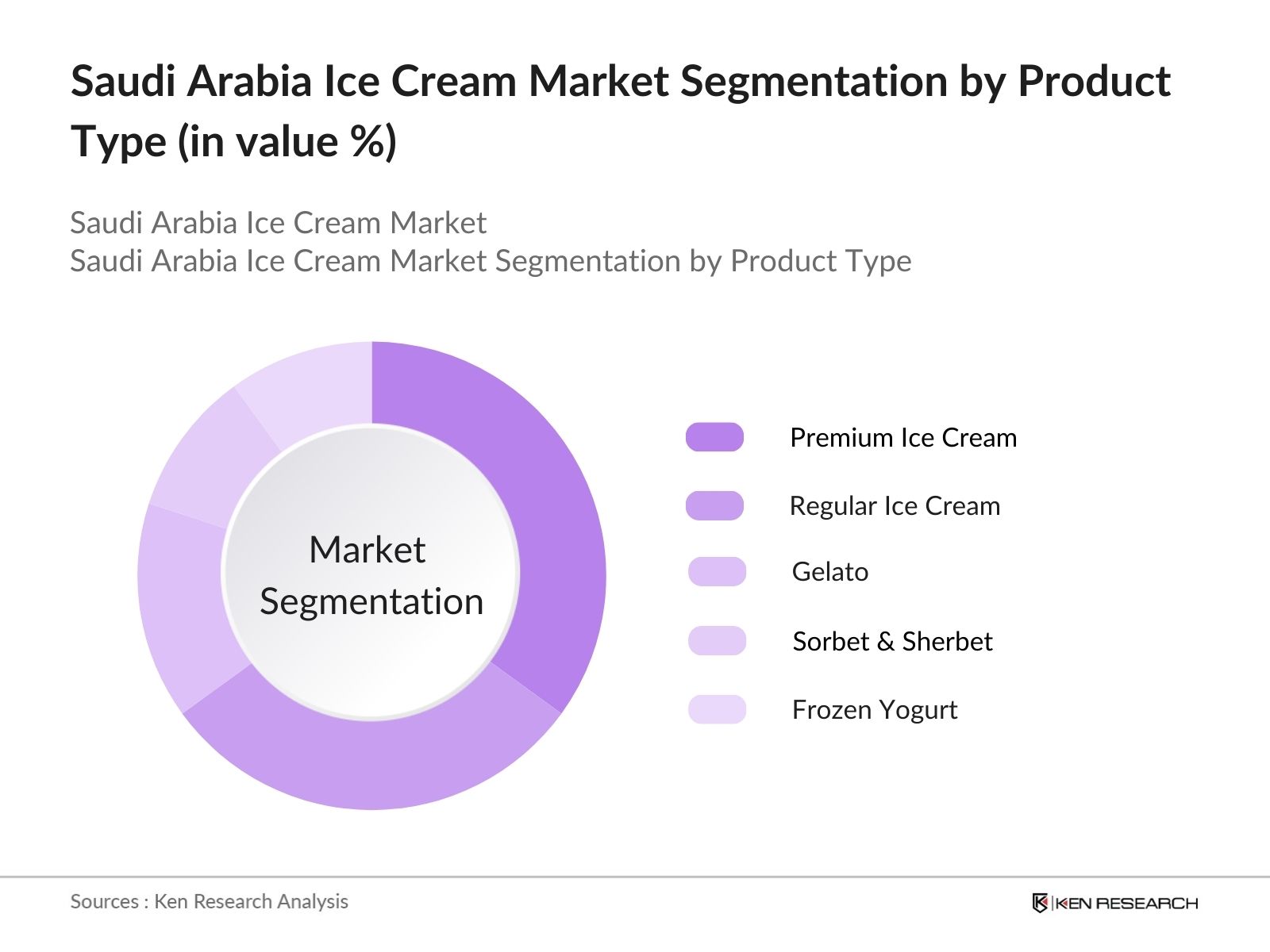
By Product Type: The Saudi Arabia ice cream market is segmented by product type into premium ice cream, regular ice cream, gelato, sorbet & sherbet, and frozen yogurt. Recently, premium ice cream holds a dominant market share due to the rising disposable income and the growing influence of Western lifestyles. Consumers are increasingly seeking out higher-quality ingredients and unique flavors, which has contributed to the success of premium brands. The growing demand for organic and natural products has further driven the market in this segment.
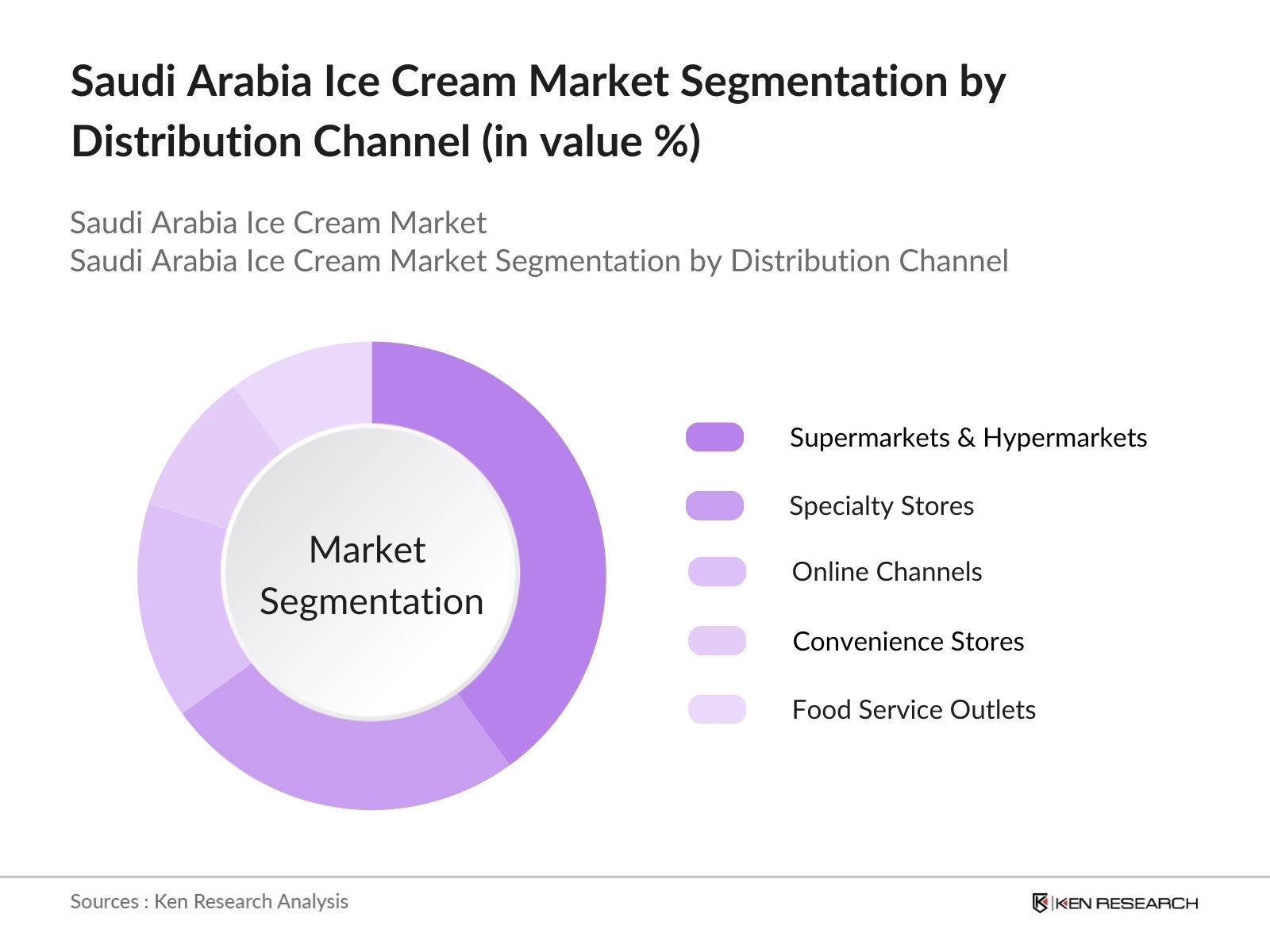
By Distribution Channel: The market is also segmented by distribution channels, including supermarkets & hypermarkets, specialty stores, online channels, convenience stores, and food service outlets. Supermarkets and hypermarkets lead the distribution channel segment, primarily because of their wide product variety and aggressive promotional strategies. Supermarkets offer customers the convenience of purchasing a range of brands and types of ice creams in bulk, often at discounted rates, which makes them the preferred choice for families and large buyers.
The Saudi Arabia ice cream market is dominated by several key players, including both local and international brands. These companies leverage their established presence, product innovation, and strategic partnerships to maintain a competitive edge.
|
Company |
Establishment Year |
Headquarters |
Product Range |
Market Penetration |
Retail Presence |
Local Manufacturing |
Distribution Network |
Sustainability Initiatives |
|
Almarai |
1977 |
Riyadh, KSA |
- | - | - | - | - | - |
|
SADAFCO |
1976 |
Jeddah, KSA |
- | - | - | - | - | - |
|
Baskin Robbins KSA |
1945 |
Canton, MA, USA |
- | - | - | - | - | - |
|
Mars GCC |
1911 |
McLean, VA, USA |
- | - | - | - | - | - |
|
Nestl KSA |
1867 |
Vevey, Switzerland |
- | - | - | - | - | - |
Over the next five years, the Saudi Arabia ice cream market is expected to experience significant growth driven by several key factors. The expanding young population, combined with an increasing preference for premium and healthier ice cream options, will fuel market expansion. Additionally, technological advancements in refrigeration and supply chain efficiency will ensure wider product availability across regions. The governments initiatives to support local production will likely encourage more domestic players to enter the market, enhancing competition.
|
By Product Type |
Premium Ice Cream Regular Ice Cream Gelato Sorbet & Sherbet Frozen Yogurt |
|
By Flavor Type |
Vanilla, Chocolate Fruit-Based Nut-Based Others (Caramel, Cookies & Cream) |
|
By Distribution Channel |
Supermarkets & Hypermarkets Specialty Stores Online Channels Convenience Stores Food Service Channels |
|
By Ingredient Type |
Dairy-Based Non-Dairy Based Organic Ingredients Plant-Based |
|
By Region |
Riyadh Jeddah Eastern Province Mecca Province Others (Al-Madinah, Al-Qassim, etc.) |
1.1. Definition and Scope
1.2. Market Taxonomy
1.3. Market Dynamics Overview
1.4. Saudi Arabia Ice Cream Consumption Patterns
1.5. Market Segmentation Overview
2.1. Historical Market Size
2.2. Year-On-Year Growth Analysis
2.3. Key Market Developments and Milestones
3.1. Growth Drivers (Consumer Preferences, Disposable Income)
3.1.1. Shift Toward Premium Ice Creams
3.1.2. Increased Demand for Healthier Variants
3.1.3. Rising Disposable Income
3.1.4. Expanding Retail Sector
3.2. Market Challenges (Operational Barriers, Regulatory Hurdles)
3.2.1. Price Sensitivity Among Consumers
3.2.2. Seasonal Demand Fluctuations
3.2.3. Regulatory Compliance for Food Safety Standards
3.2.4. High Supply Chain Costs
3.3. Opportunities (Product Innovation, Expanding Consumer Base)
3.3.1. Expansion in Vegan and Low-Calorie Ice Cream Segments
3.3.2. Growth of E-Commerce Channels
3.3.3. Introduction of Novel Flavors
3.3.4. Opportunities for Expansion in Secondary Cities
3.4. Trends (Consumer Preferences, Industry Initiatives)
3.4.1. Rise of Private Label Ice Creams
3.4.2. Increase in Demand for Single-Serve and On-the-Go Formats
3.4.3. Collaborations with Restaurants and Cafs
3.4.4. Growth in Customizable Ice Cream Products
3.5. Government Regulation (Food Quality, Health Standards)
3.5.1. Saudi Food and Drug Authority (SFDA) Guidelines
3.5.2. Import Regulations and Tariffs on Dairy Products
3.5.3. Local Production Regulations
3.5.4. Standards for Natural and Artificial Ingredients
3.6. SWOT Analysis
3.7. Competitive Landscape
3.8. Porters Five Forces Analysis
3.9. Consumer Behavior and Purchasing Patterns
4.1. By Product Type (In Value %)
4.1.1. Premium Ice Cream
4.1.2. Regular Ice Cream
4.1.3. Gelato
4.1.4. Sorbet & Sherbet
4.1.5. Frozen Yogurt
4.2. By Flavor Type (In Value %) 4.2.1. Vanilla
4.2.2. Chocolate
4.2.3. Fruit-Based Flavors
4.2.4. Nut-Based Flavors
4.2.5. Others (Caramel, Cookies & Cream, etc.)
4.3. By Distribution Channel (In Value %)
4.3.1. Supermarkets & Hypermarkets
4.3.2. Specialty Stores
4.3.3. Online Channels
4.3.4. Convenience Stores
4.3.5. Food Service Channels
4.4. By Ingredient Type (In Value %)
4.4.1. Dairy-Based
4.4.2. Non-Dairy Based
4.4.3. Organic Ingredients
4.4.4. Plant-Based
4.5. By Region (In Value %)
4.5.1. Riyadh
4.5.2. Jeddah
4.5.3. Eastern Province
4.5.4. Mecca Province
4.5.5. Others (Al-Madinah, Al-Qassim, etc.)
5.1. Detailed Profiles of Major Companies
5.1.1. Almarai
5.1.2. SADAFCO (Saudi Dairy and Foodstuff Company)
5.1.3. Baskin Robbins KSA
5.1.4. Mars GCC
5.1.5. Nestl KSA
5.1.6. Unilever (Walls)
5.1.7. Haagen-Dazs
5.1.8. Gulf West Company
5.1.9. Americana Group
5.1.10. Hagen-Dazs Saudi Arabia
5.1.11. Ice Cap
5.1.12. Frostys
5.1.13. Ice Land Factory
5.1.14. Kwality Walls
5.1.15. Magnum
5.2. Cross Comparison Parameters (Market Share, Distribution Network, Product Range, Local Manufacturing Presence, Innovation Capabilities, Pricing Strategy, Consumer Preference Alignment, Sustainability Initiatives)
5.3. Market Share Analysis
5.4. Strategic Initiatives
5.5. Mergers and Acquisitions
5.6. Investment and Expansion Initiatives
5.7. Venture Capital and Funding
5.8. Government Incentives for Local Production
6. Saudi Arabia Ice Cream Market Regulatory Framework
6.1. SFDA Food Safety Standards
6.2. Compliance and Labeling Requirements
6.3. Import Regulations on Dairy Products
6.4. Organic Certification and Health Labeling
7. Saudi Arabia Ice Cream Future Market Size (In USD Bn)
7.1. Future Market Size Projections
7.2. Key Factors Driving Future Market Growth
8. Saudi Arabia Ice Cream Future Market Segmentation
8.1. By Product Type (In Value %)
8.2. By Flavor Type (In Value %)
8.3. By Distribution Channel (In Value %)
8.4. By Ingredient Type (In Value %)
8.5. By Region (In Value %)
9. Saudi Arabia Ice Cream Market Analysts Recommendations
9.1. Market Entry Strategies
9.2. Consumer Targeting Initiatives
9.3. White Space Analysis
9.4. Innovation and R&D Strategies
The initial phase of the research involved identifying key variables that influence the Saudi Arabia Ice Cream Market. This was achieved by conducting comprehensive desk research, reviewing secondary data from government reports, market studies, and proprietary databases.
To validate our market findings, consultations were conducted with industry experts through computer-assisted telephone interviews (CATIs). These discussions helped refine the market hypotheses and offered deeper insights into the operational and financial aspects of the ice cream market.
To validate our market findings, consultations were conducted with industry experts through computer-assisted telephone interviews (CATIs). These discussions helped refine the market hypotheses and offered deeper insights into the operational and financial aspects of the ice cream market.
In the final phase, detailed discussions were held with ice cream manufacturers and distributors to cross-verify the data obtained through the bottom-up approach. The final report was synthesized to provide an accurate, comprehensive analysis of the Saudi Arabia Ice Cream Market.
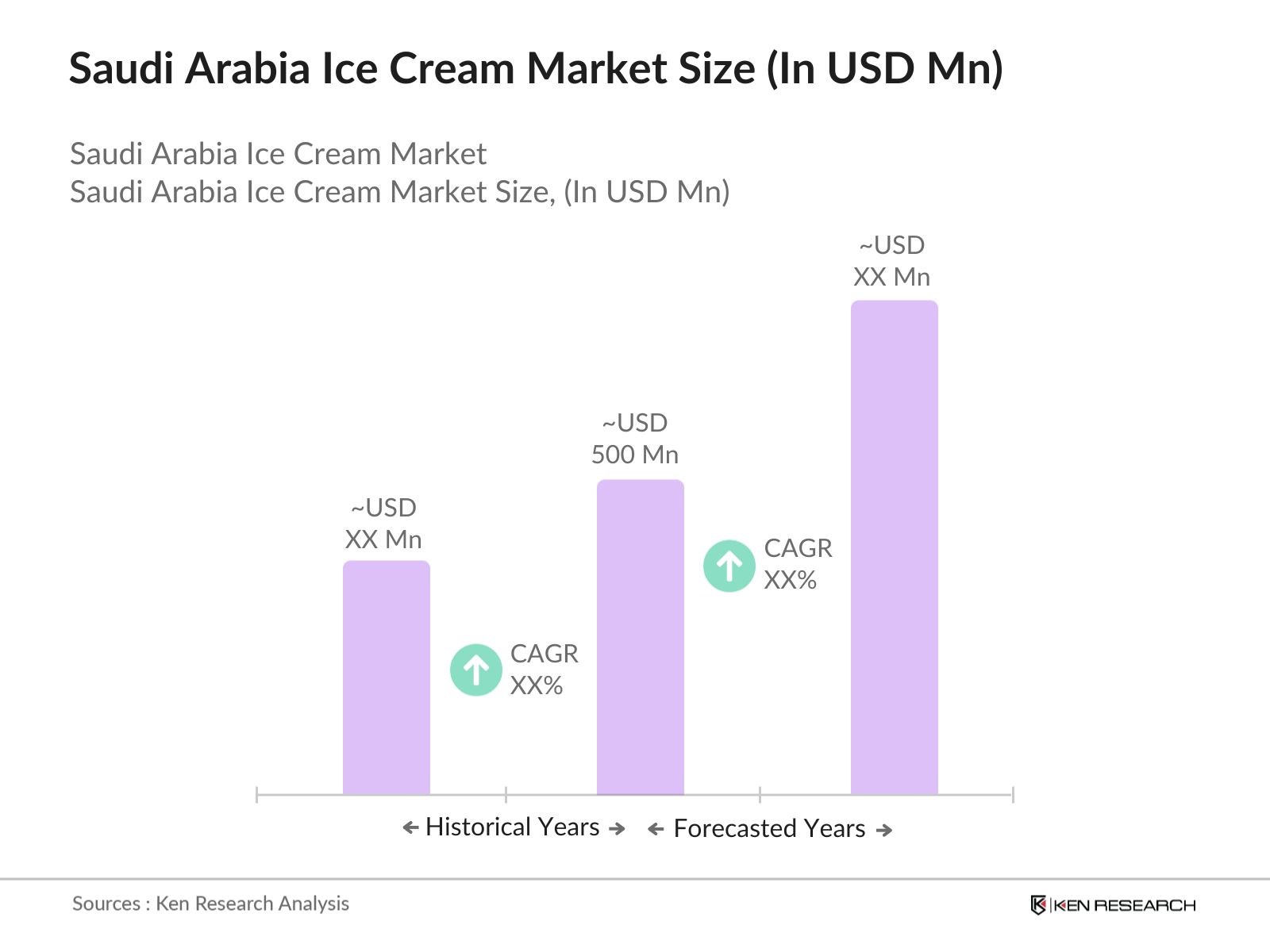
The Saudi Arabia ice cream market is valued at USD 500 million, driven by rising disposable incomes, a growing young population, and increasing demand for premium ice cream products.
Challenges in the Saudi ice cream market include seasonal demand fluctuations, price sensitivity among consumers, and high supply chain costs. Moreover, stringent regulatory compliance for food safety standards presents operational barriers for manufacturers.
Key players in the Saudi Arabia ice cream market include Almarai, SADAFCO, Baskin Robbins KSA, Mars GCC, and Nestlé KSA, which dominate due to their strong brand presence and extensive distribution networks.
The Saudi Arabia ice cream market is primarily driven by rising disposable income, increasing health consciousness, and the growing demand for premium ice cream products. Additionally, innovations in flavor and packaging have contributed to market expansion.

What makes us stand out is that our consultants follows Robust, Refine and Result (RRR) methodology. i.e. Robust for clear definitions, approaches and sanity checking, Refine for differentiating respondents facts and opinions and Result for presenting data with story

We have set a benchmark in the industry by offering our clients with syndicated and customized market research reports featuring coverage of entire market as well as meticulous research and analyst insights.

While we don't replace traditional research, we flip the method upside down. Our dual approach of Top Bottom & Bottom Top ensures quality deliverable by not just verifying company fundamentals but also looking at the sector and macroeconomic factors.

With one step in the future, our research team constantly tries to show you the bigger picture. We help with some of the tough questions you may encounter along the way: How is the industry positioned? Best marketing channel? KPI's of competitors? By aligning every element, we help maximize success.

Our report gives you instant access to the answers and sources that other companies might choose to hide. We elaborate each steps of research methodology we have used and showcase you the sample size to earn your trust.

If you need any support, we are here! We pride ourselves on universe strength, data quality, and quick, friendly, and professional service.