
Saudi Arabia In-Vitro Diagnostics Market Outlook to 2030
Region:Saudi Arabia
Author(s):Sanjeev
Product Code:KROD8567
Region:Saudi Arabia
Author(s):Sanjeev
Product Code:KROD8567
December 2024
83
Listen to the audio summary
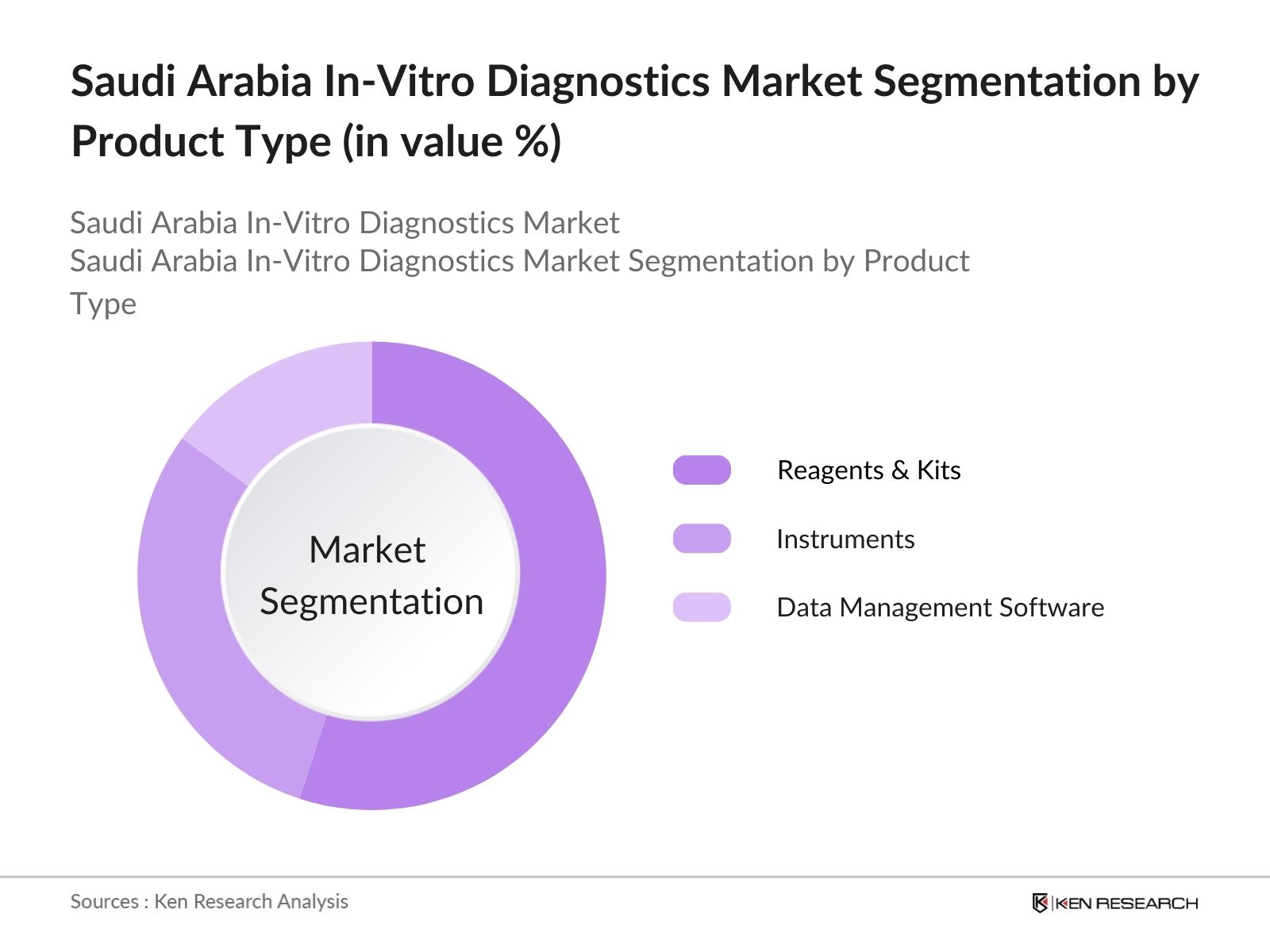
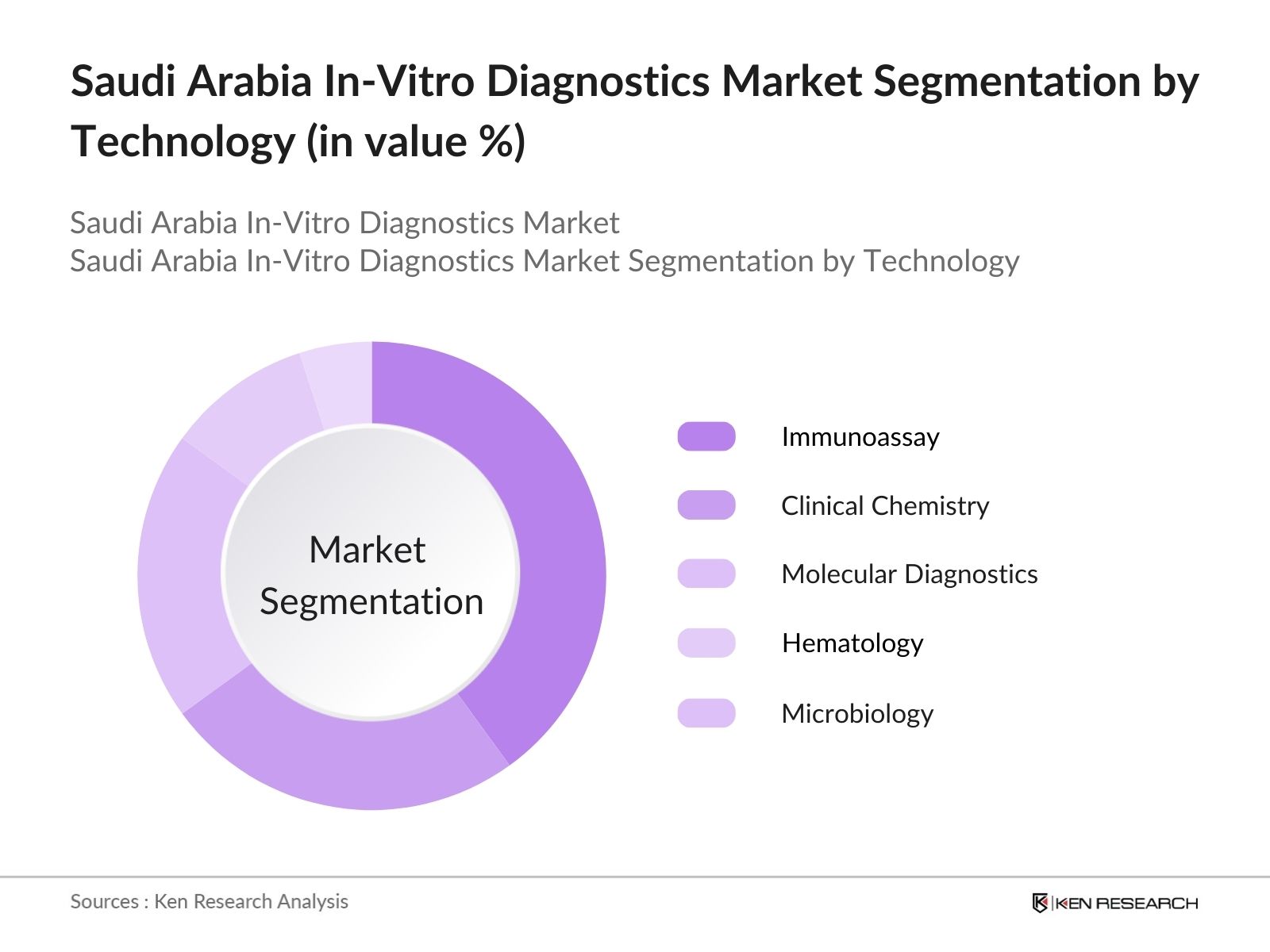
The Saudi Arabia IVD market is segmented by product type and by technology.
???????
The Saudi Arabia IVD market is characterized by a few dominant global and regional players who are well-established and recognized for their technological advancements and market reach. This consolidation showcases the impact of these major players within the diagnostic landscape.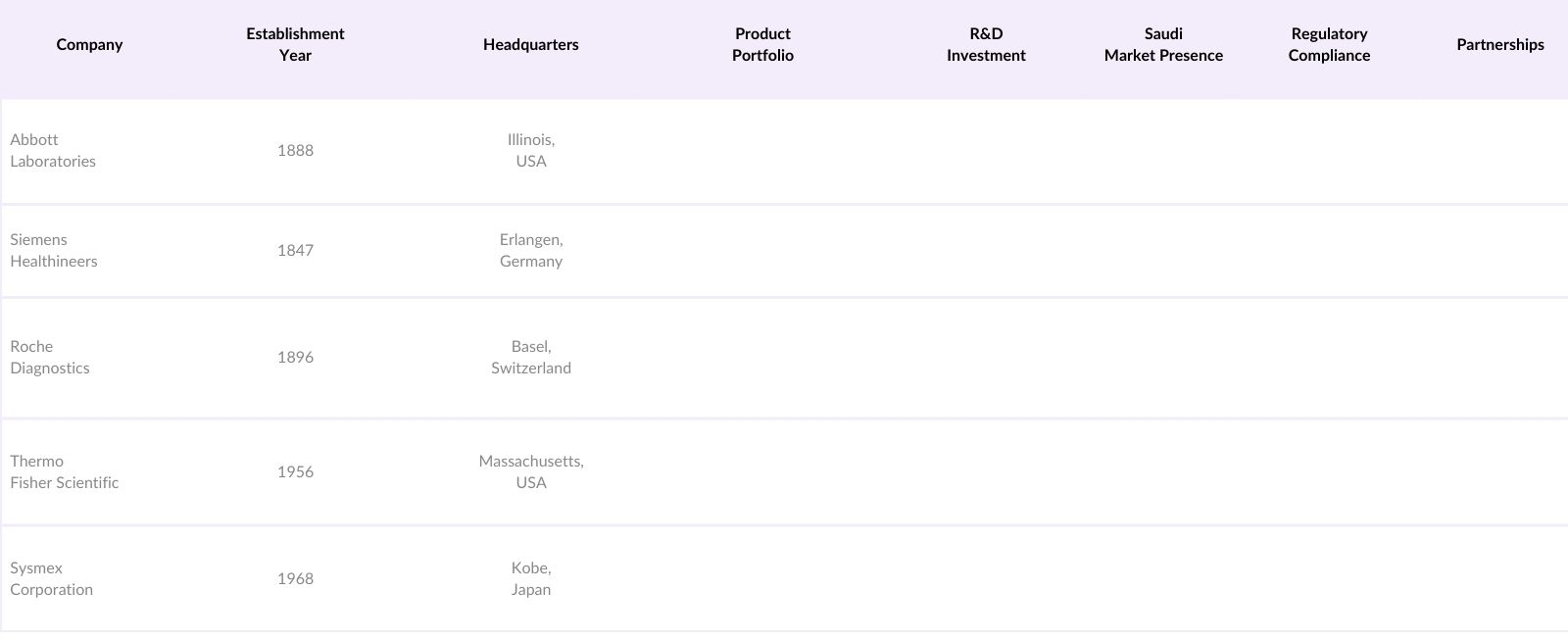
Over the next five years, the Saudi Arabia IVD market is expected to experience strong growth propelled by factors such as rising demand for personalized diagnostics, expanding healthcare infrastructure, and continued investments in advanced diagnostic technology. Additionally, the ongoing efforts under the Vision 2030 framework are expected to bolster this sector by enhancing local manufacturing and diagnostic capabilities.
|
Reagents & Kits Instruments Data Management Software |
|
|
By Technology |
Immunoassay Clinical Chemistry Molecular Diagnostics Hematology Microbiology |
|
By Application |
Infectious Diseases Diabetes Oncology Cardiology Nephrology |
|
By End-User |
Hospitals Laboratories Point-of-Care Testing Centers Research Institutes |
|
By Region |
North East West South |
1.1. Definition and Scope
1.2. Market Taxonomy
1.3. Market Growth Rate
1.4. Market Segmentation Overview
2.1. Historical Market Size
2.2. Year-On-Year Growth Analysis
2.3. Key Market Developments and Milestones
3.1. Growth Drivers
- 3.1.1. Increased Prevalence of Chronic Diseases
- 3.1.2. Growing Demand for Early Diagnostics
- 3.1.3. Advancements in Diagnostic Technologies
- 3.1.4. Favorable Government Initiatives
3.2. Market Challenges
- 3.2.1. High Cost of Diagnostic Devices
- 3.2.2. Regulatory Constraints
- 3.2.3. Lack of Skilled Workforce
3.3. Opportunities
- 3.3.1. Expansion of Private Healthcare Sector
- 3.3.2. Rise in Personalized Medicine
- 3.3.3. Growing Adoption of Digital Pathology
3.4. Trends
- 3.4.1. Point-of-Care Testing (POCT) Integration
- 3.4.2. Shift towards Molecular Diagnostics
- 3.4.3. Adoption of AI in Diagnostics
3.5. Government Regulation
- 3.5.1. Saudi Food and Drug Authority (SFDA) Standards
- 3.5.2. Import Regulations
- 3.5.3. Healthcare Transformation Initiatives
3.6. SWOT Analysis
3.7. Stakeholder Ecosystem
3.8. Porters Five Forces Analysis
3.9. Competition Landscape
4.1. By Product Type (In Value %)
- 4.1.1. Reagents & Kits
- 4.1.2. Instruments
- 4.1.3. Data Management Software
4.2. By Technology (In Value %)
- 4.2.1. Immunoassay
- 4.2.2. Clinical Chemistry
- 4.2.3. Molecular Diagnostics
- 4.2.4. Hematology
- 4.2.5. Microbiology
4.3. By Application (In Value %)
- 4.3.1. Infectious Diseases
- 4.3.2. Diabetes
- 4.3.3. Oncology
- 4.3.4. Cardiology
- 4.3.5. Nephrology
4.4. By End-User (In Value %)
- 4.4.1. Hospitals
- 4.4.2. Laboratories
- 4.4.3. Point-of-Care Testing Centers
- 4.4.4. Research Institutes
4.5. By Region (In Value %)
- 4.5.1. North
- 4.5.2. East
- 4.5.3. West
- 4.5.4. South
5.1. Detailed Profiles of Major Competitors
- 5.1.1. Abbott Laboratories
- 5.1.2. Siemens Healthineers
- 5.1.3. Roche Diagnostics
- 5.1.4. Bio-Rad Laboratories
- 5.1.5. Becton, Dickinson and Company
- 5.1.6. Danaher Corporation
- 5.1.7. Thermo Fisher Scientific
- 5.1.8. Sysmex Corporation
- 5.1.9. PerkinElmer Inc.
- 5.1.10. Agilent Technologies
- 5.1.11. Hologic, Inc.
- 5.1.12. Ortho Clinical Diagnostics
- 5.1.13. Cepheid
- 5.1.14. Qiagen N.V.
- 5.1.15. Grifols, S.A.
5.2. Cross Comparison Parameters (Annual Revenue, Employee Count, Headquarters, R&D Investment, Product Range, Regional Presence, Regulatory Approvals, Key Partnerships)
5.3. Market Share Analysis
5.4. Strategic Initiatives
5.5. Mergers and Acquisitions
5.6. Investment Trends
5.7. Government and Private Funding
5.8. Emerging Startups
6.1. SFDA Compliance Standards
6.2. Clinical Trial Approval Process
6.3. Import and Export Regulations
6.4. ISO Certification Requirements
7.1. Future Market Size Projections
7.2. Key Factors Influencing Future Growth
8.1. By Product Type (In Value %)
8.2. By Technology (In Value %)
8.3. By Application (In Value %)
8.4. By End-User (In Value %)
8.5. By Region (In Value %)
9.1. TAM/SAM/SOM Analysis
9.2. Market Penetration Strategies
9.3. Product Portfolio Optimization
9.4. Emerging White Space Opportunities
Disclaimer Contact Us
This step involves mapping out key stakeholders, from healthcare providers to diagnostic technology developers. Extensive desk research and proprietary databases are used to gather in-depth industry insights, focusing on identifying factors influencing market dynamics.
Historical data analysis is performed to evaluate IVD market growth drivers and challenges. This includes assessing the demand for diagnostic tests, regional segmentation, and advancements in diagnostic technologies to estimate market revenues accurately.
Through direct interviews and surveys with industry experts, we validate assumptions and obtain insights on trends and strategic approaches. This consultation phase ensures our findings align with the current industry climate and stakeholders' views.
Data synthesis involves combining qualitative and quantitative insights to generate a holistic view of the Saudi Arabia IVD market. This phase includes preparing detailed insights and projections based on cross-verification with industry players.
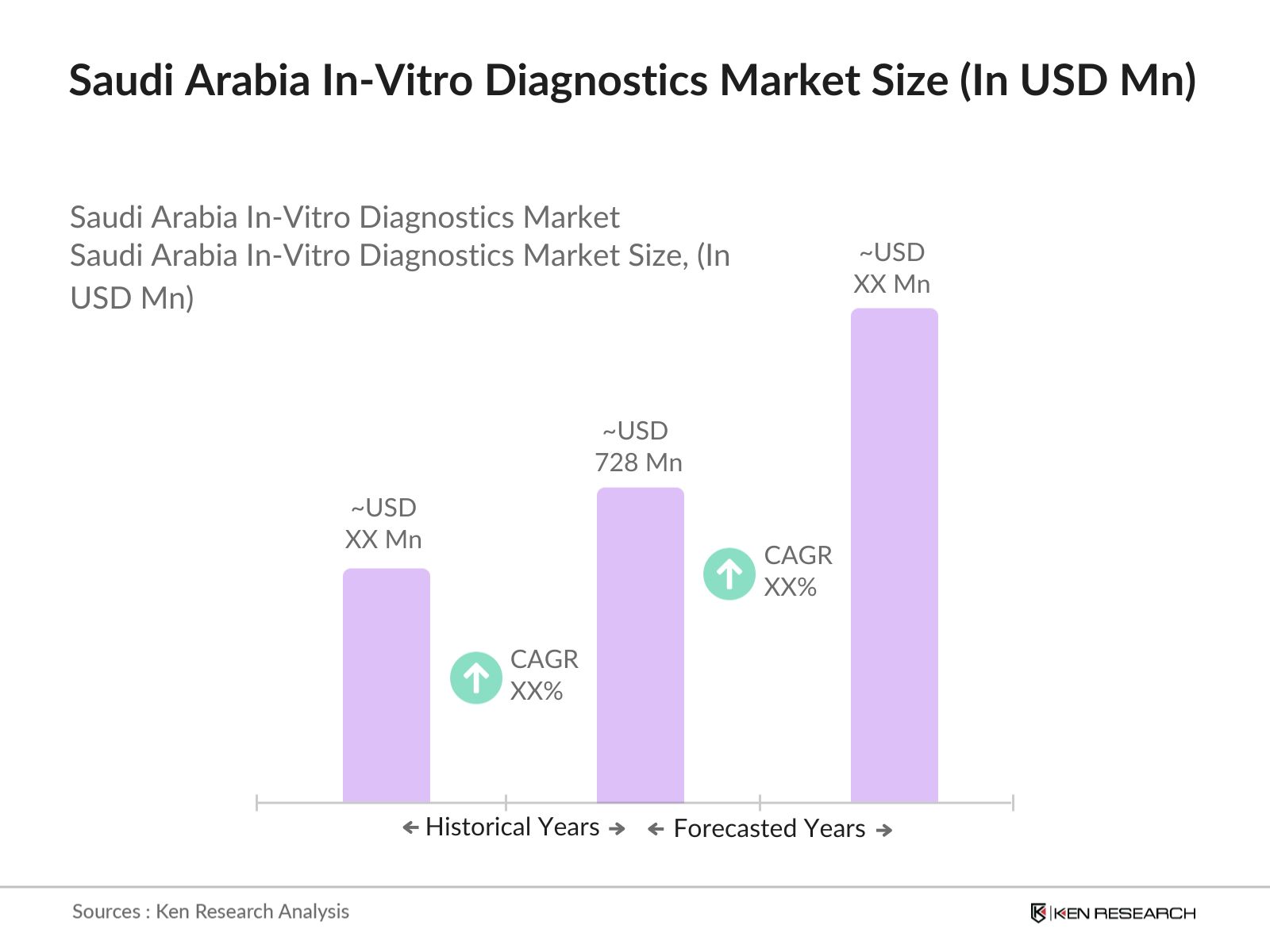
The Saudi Arabia In-Vitro Diagnostics Market is valued at USD 728 million, driven by a strong healthcare infrastructure and increased demand for diagnostic services.
Challenges in Saudi Arabia In-Vitro Diagnostics Market include high costs associated with advanced diagnostic equipment, stringent regulatory compliance, and the need for skilled professionals to handle sophisticated technologies.
Key players in Saudi Arabia In-Vitro Diagnostics Market include Abbott Laboratories, Siemens Healthineers, Roche Diagnostics, Thermo Fisher Scientific, and Sysmex Corporation, known for their extensive product portfolios and market presence.
Key drivers in Saudi Arabia In-Vitro Diagnostics Market include the rising prevalence of chronic diseases, increased government spending on healthcare, and the Vision 2030 initiative, which supports healthcare innovation.
Immunoassay and molecular diagnostics are widely popular due to their applications in detecting infectious diseases, chronic conditions, and the precision they offer.

What makes us stand out is that our consultants follows Robust, Refine and Result (RRR) methodology. i.e. Robust for clear definitions, approaches and sanity checking, Refine for differentiating respondents facts and opinions and Result for presenting data with story

We have set a benchmark in the industry by offering our clients with syndicated and customized market research reports featuring coverage of entire market as well as meticulous research and analyst insights.

While we don't replace traditional research, we flip the method upside down. Our dual approach of Top Bottom & Bottom Top ensures quality deliverable by not just verifying company fundamentals but also looking at the sector and macroeconomic factors.

With one step in the future, our research team constantly tries to show you the bigger picture. We help with some of the tough questions you may encounter along the way: How is the industry positioned? Best marketing channel? KPI's of competitors? By aligning every element, we help maximize success.

Our report gives you instant access to the answers and sources that other companies might choose to hide. We elaborate each steps of research methodology we have used and showcase you the sample size to earn your trust.

If you need any support, we are here! We pride ourselves on universe strength, data quality, and quick, friendly, and professional service.