















Saudi Arabia Lipid Disorder Therapeutics Market Outlook to 2030
Region:Middle East
Author(s):Sanjeev
Product Code:KROD9171
December 2024
86
About the Report
Saudi Arabia Lipid Disorder Therapeutics Market Overview
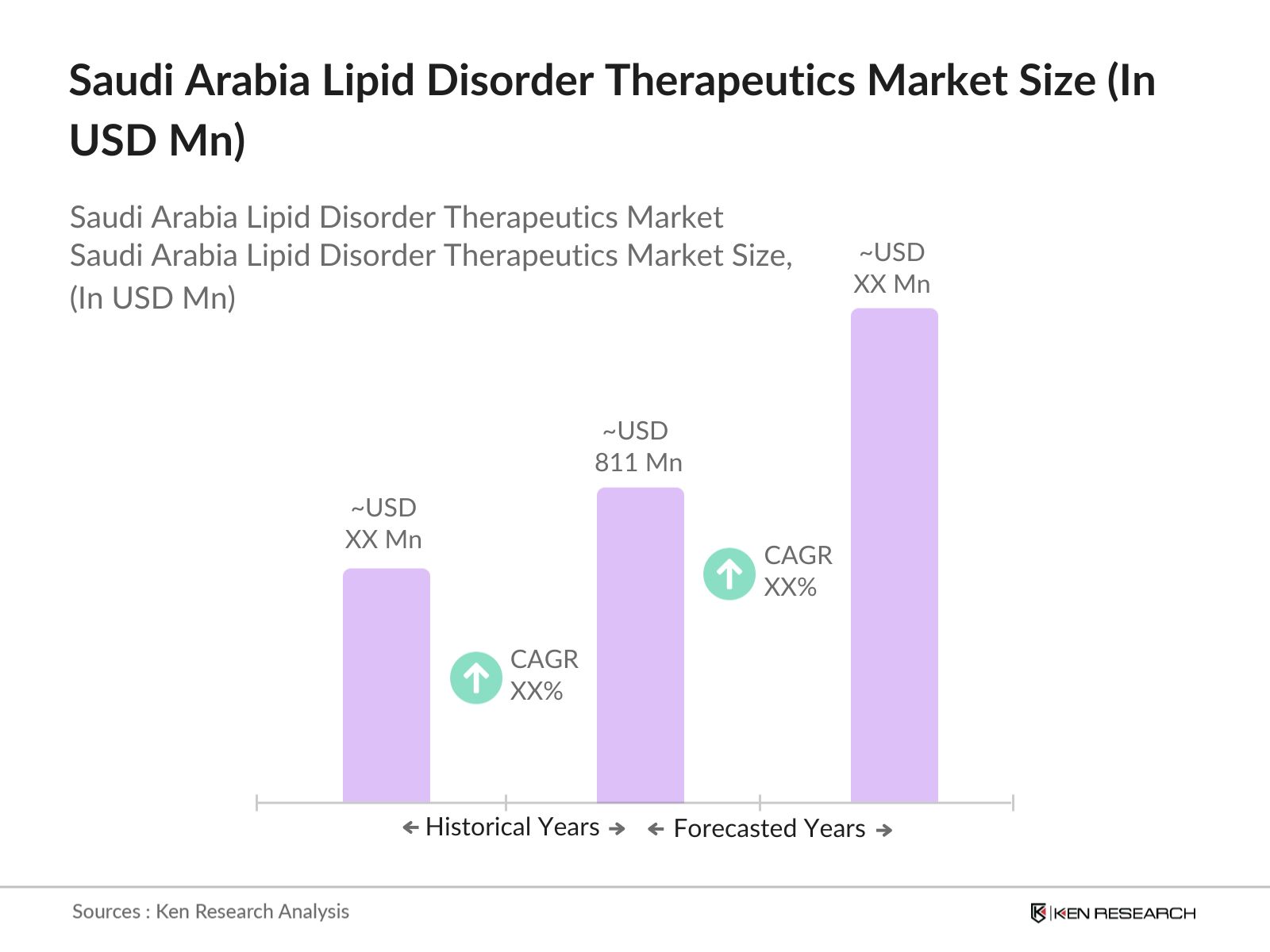
- The Saudi Arabia Lipid Disorder Therapeutics market is valued at USD 811 million, reflecting increased awareness and healthcare investment targeting cardiovascular health, the primary concern linked to lipid disorders. This valuation aligns with a five-year historical analysis of rising healthcare expenditures and improved diagnostic capabilities across the region. Government programs and private sector investments focusing on cardiovascular disease prevention have supported this growth, as well as enhanced access to healthcare facilities within major urban centers.
- Riyadh and Jeddah are leading in Saudi Arabias lipid disorder therapeutics market due to their advanced healthcare infrastructure and greater access to specialized lipid management services. Riyadh's focus on healthcare modernization under Vision 2030 and Jeddah's established network of hospitals and private clinics foster these cities dominance, facilitating access to advanced treatments and promoting patient adherence through comprehensive care systems.
- Saudi Arabias Vision 2030 health initiatives aim to reduce the prevalence of lifestyle-related diseases, including lipid disorders. SAR 45 billion has been allocated to preventive health initiatives in 2024, fostering a supportive regulatory environment for lipid disorder therapies. This government focus on preventive healthcare directly aids in addressing lipid disorders, reinforcing the markets regulatory support.
Saudi Arabia Lipid Disorder Therapeutics Market Segmentation
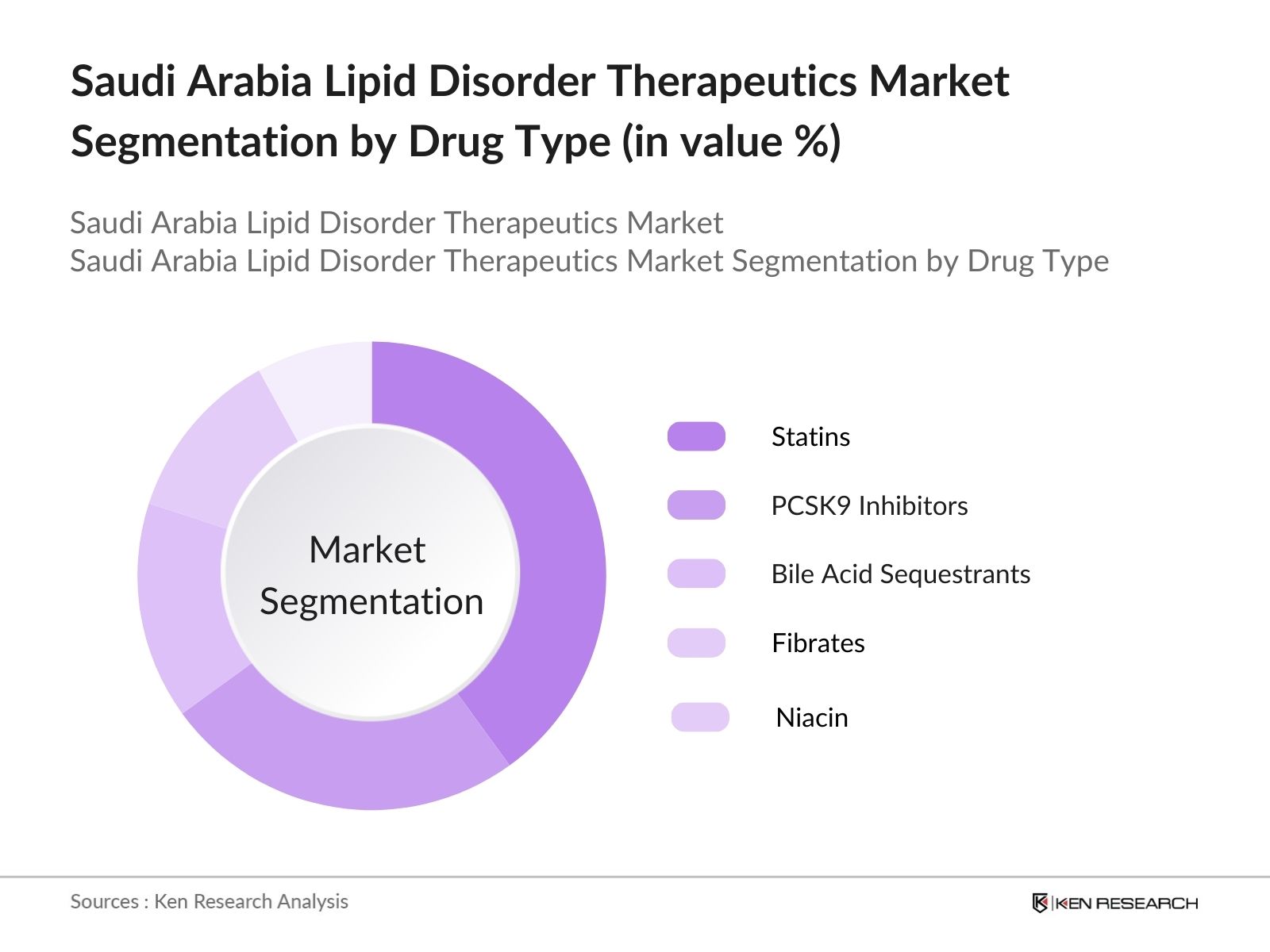
Saudi Arabia's lipid disorder therapeutics market is segmented by drug type and by mode of administration.
- By Drug Type: Saudi Arabia's lipid disorder therapeutics market is segmented by drug type into statins, PCSK9 inhibitors, bile acid sequestrants, fibrates, and niacin. Statins dominate due to their established efficacy in reducing LDL cholesterol levels, supported by extensive clinical research. This segment benefits from high physician and patient acceptance due to its proven outcomes and manageable side effect profile, making it a primary treatment option for lipid disorders.
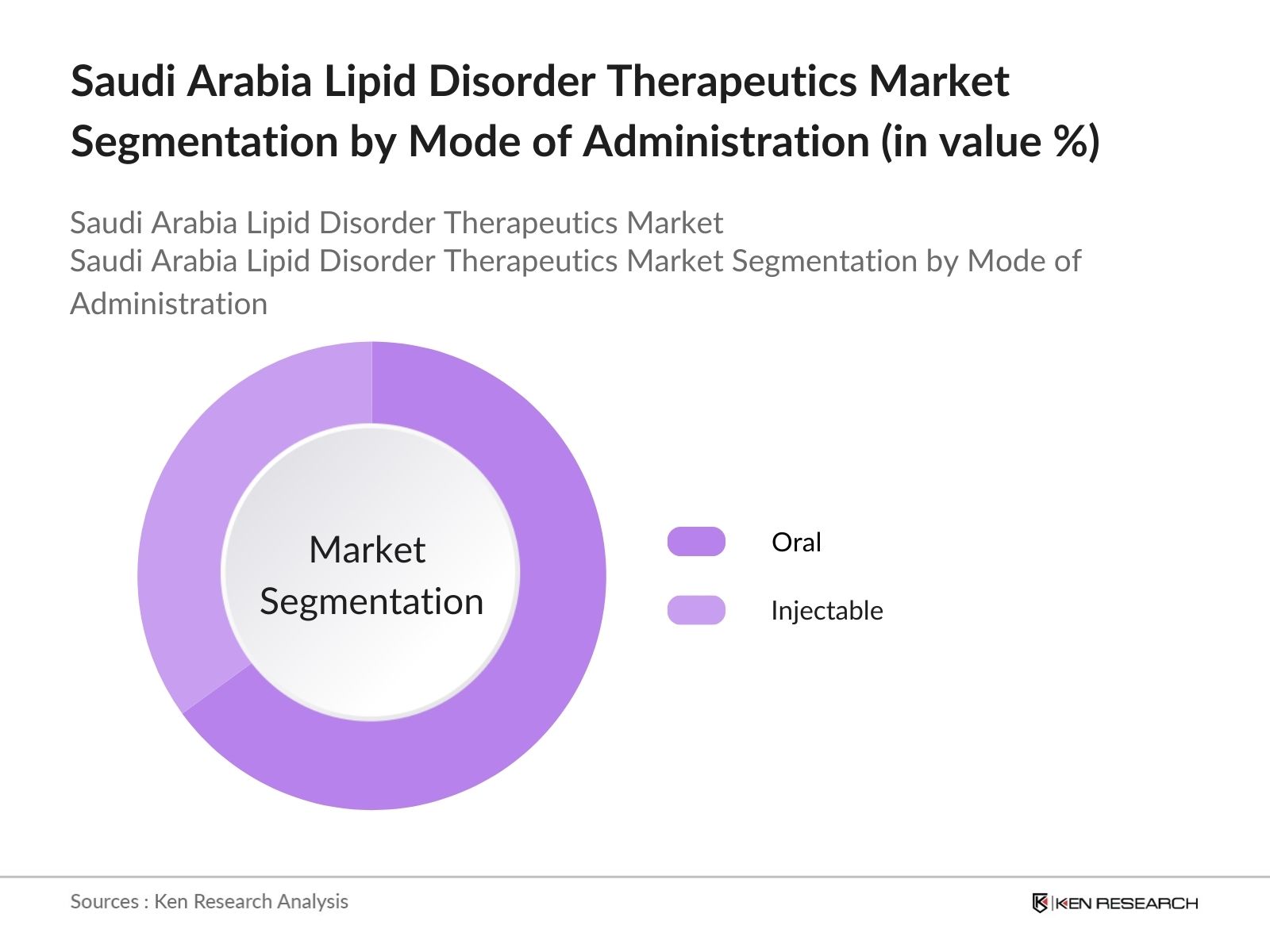
- By Mode of Administration: In the Saudi Arabia lipid disorder therapeutics market, segmentation by mode of administration includes oral and injectable. Oral administration leads due to patient preference for non-invasive treatments, especially within outpatient settings, making it convenient for chronic lipid disorder management. This dominance is reinforced by high patient adherence rates and cost-effectiveness, positioning oral treatments as the most popular choice among healthcare providers.
Saudi Arabia Lipid Disorder Therapeutics Market Competitive Landscape
The Saudi Arabia Lipid Disorder Therapeutics market is characterized by key players who maintain strong market positions through specialized portfolios and strategic collaborations. The market is dominated by leading pharmaceutical companies focusing on cardiovascular disease management and innovative drug development. The Saudi Arabia lipid disorder therapeutics market is consolidated, with multinational corporations leading through established distribution networks, substantial R&D investments, and partnerships across the healthcare ecosystem.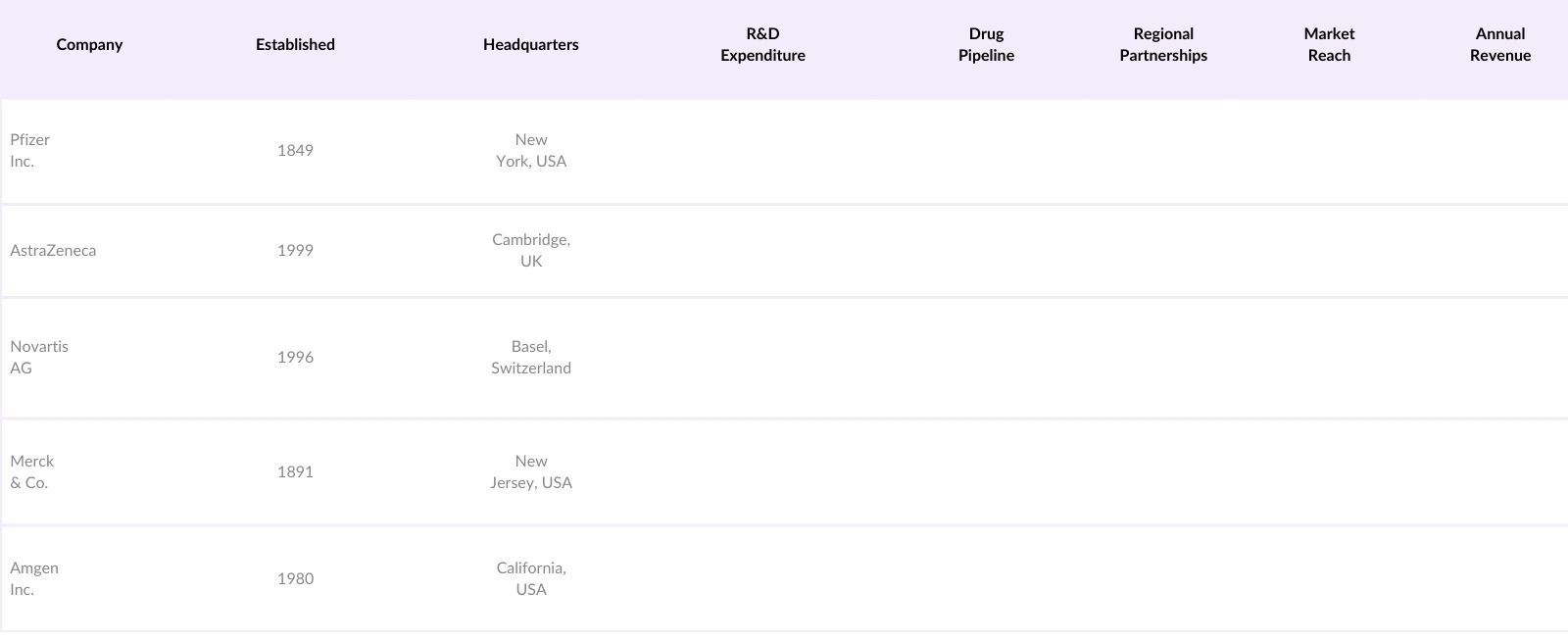
Saudi Arabia Lipid Disorder Therapeutics Industry Analysis
Growth Drivers
- Increased Prevalence of Lipid Disorders: The prevalence of lipid disorders in Saudi Arabia has surged, driven by a sedentary lifestyle and dietary habits. As of 2023, approximately 20% of Saudi adults suffer from hyperlipidemia, a significant risk factor for cardiovascular diseases (Ministry of Health, Saudi Arabia). The World Health Organization (WHO) data also indicates a 17% increase in lipid disorder-related health issues since 2022 due to urbanization and increased consumption of processed foods. This growing prevalence has intensified the need for effective lipid-lowering therapeutics, directly impacting market demand.
- Government Health Initiatives: Saudi Arabia's government has prioritized tackling lipid disorders through its Vision 2030 health initiatives, aiming to improve national health outcomes. The National Transformation Program (NTP) includes specific targets for reducing lifestyle diseases, with SAR 45 billion allocated in 2024 for healthcare improvements, particularly in preventive measures and awareness campaigns (Ministry of Health, Saudi Arabia). These initiatives are fostering an environment that supports the availability of lipid disorder therapies and related healthcare services.
- Rising Healthcare Expenditure: Saudi Arabia's healthcare expenditure rose to SAR 180 billion in 2024, up from SAR 170 billion in 2023, reflecting increased government focus on healthcare infrastructure and treatment capabilities (Ministry of Finance, Saudi Arabia). With lipid disorders accounting for a significant portion of cardiovascular health concerns, higher spending directly supports the development and procurement of lipid-lowering drugs and therapies, facilitating market growth.
Market Challenges
- High Treatment Costs: The cost of lipid disorder treatments remains high, with average annual treatment expenses reaching SAR 7,500 per patient in 2024, placing a financial burden on patients and the healthcare system (Ministry of Health, Saudi Arabia). The high-cost limits access for lower-income groups and has constrained market expansion. This challenge remains significant, as affordability continues to be a key factor in patient adherence to prescribed therapies.
-
Limited Access to Specialized Care: Saudi Arabias healthcare infrastructure is primarily concentrated in urban areas, leaving rural regions underserved in terms of specialized lipid disorder treatments. According to the Saudi Ministry of Health, only 28% of rural health facilities offer cardiovascular care, impacting the accessibility of lipid-lowering drugs and treatments for rural populations. This urban-rural healthcare disparity remains a challenge for market penetration and therapeutic access across the country.
Saudi Arabia Lipid Disorder Therapeutics Market Future Outlook
The Saudi Arabia Lipid Disorder Therapeutics market is expected to advance with sustained growth, driven by an increasing emphasis on cardiovascular disease prevention, investments in telemedicine, and ongoing improvements in healthcare infrastructure under the Kingdoms Vision 2030. Expanding healthcare access, coupled with growing awareness of lipid disorder risks, will likely enhance market demand and broaden the range of treatment options available.
Market Opportunities
- Expansion in Rural Healthcare Access: Saudi Arabia's commitment to healthcare expansion includes SAR 55 billion allocated in 2024 for rural health facility upgrades (Ministry of Finance, Saudi Arabia). These improvements are anticipated to facilitate access to lipid disorder therapeutics in remote areas, increasing market reach and addressing the underserved rural populations healthcare needs. Improved access directly supports growth in the lipid disorder therapeutics market by reaching previously inaccessible patient segments.
- Growth of Biosimilars and Generic Drugs: Saudi Arabia has seen a rise in the approval of biosimilars and generic drugs, aiming to reduce the cost burden associated with branded lipid-lowering medications. In 2024, the Saudi Food and Drug Authority (SFDA) approved 15 new generic lipid-lowering drugs, making treatments more affordable and accessible. This shift towards cost-effective alternatives provides a substantial growth opportunity by expanding patient access to necessary therapies.
Scope of the Report
Products
Key Target Audience
Healthcare Providers (Hospitals and Clinics)
Lipid Disorder Specialists and Cardiologists
Pharmaceutical Distributors and Wholesalers
Insurance and Reimbursement Providers
Government and Regulatory Bodies (Saudi Food and Drug Authority)
Research and Development Institutions
Investors and Venture Capitalist Firms
Pharmaceutical Manufacturers
Companies
Major Players in Saudi Arabia Lipid Disorder Therapeutics Market
Pfizer Inc.
AstraZeneca
Novartis AG
Merck & Co.
Amgen Inc.
Sanofi S.A.
Abbott Laboratories
Eli Lilly and Company
Boehringer Ingelheim
Roche Holding AG
Takeda Pharmaceuticals
GlaxoSmithKline
Bayer AG
Dr. Reddy's Laboratories
Cipla Ltd.
Table of Contents
1. Saudi Arabia Lipid Disorder Therapeutics Market Overview
1.1. Definition and Scope
1.2. Market Taxonomy
1.3. Market Structure and Dynamics
1.4. Market Segmentation Overview
2. Saudi Arabia Lipid Disorder Therapeutics Market Size (In SAR Bn)
2.1. Historical Market Size
2.2. Year-On-Year Growth Analysis
2.3. Key Market Developments and Milestones (Treatment Advancements, Policy Impacts)
3. Saudi Arabia Lipid Disorder Therapeutics Market Analysis
3.1. Growth Drivers
3.1.1. Increased Prevalence of Lipid Disorders
3.1.2. Government Health Initiatives
3.1.3. Rising Healthcare Expenditure
3.1.4. Increased Awareness of Cardiovascular Health
3.2. Market Challenges
3.2.1. High Treatment Costs
3.2.2. Limited Access to Specialized Care
3.2.3. Adherence and Compliance Issues
3.3. Opportunities
3.3.1. Expansion in Rural Healthcare Access
3.3.2. Growth of Biosimilars and Generic Drugs
3.3.3. International Partnerships and Investments
3.4. Trends
3.4.1. Rise in Telemedicine and Remote Monitoring
3.4.2. Increased Use of Personalized Medicine
3.4.3. Integration of AI in Diagnosis and Treatment
3.5. Government Regulation
3.5.1. Saudi Health Vision 2030 Initiatives
3.5.2. Drug Approval and Pricing Regulations
3.5.3. Reimbursement Policies and Subsidies
3.6. SWOT Analysis
3.7. Patient Ecosystem and Care Pathways
3.8. Porters Five Forces
3.9. Competitive Landscape and Market Share Analysis
4. Saudi Arabia Lipid Disorder Therapeutics Market Segmentation
4.1. By Drug Type (In Value %)
4.1.1. Statins
4.1.2. PCSK9 Inhibitors
4.1.3. Bile Acid Sequestrants
4.1.4. Fibrates
4.1.5. Niacin
4.2. By Mode of Administration (In Value %)
4.2.1. Oral
4.2.2. Injectable
4.3. By Patient Age Group (In Value %)
4.3.1. Pediatric
4.3.2. Adult
4.3.3. Geriatric
4.4. By Distribution Channel (In Value %)
4.4.1. Hospitals and Clinics
4.4.2. Retail Pharmacies
4.4.3. Online Pharmacies
4.5. By Region (In Value %)
4.5.1. Riyadh Region
4.5.2. Jeddah Region
4.5.3. Makkah Region
4.5.4. Eastern Province
4.5.5. Other Regions
5. Saudi Arabia Lipid Disorder Therapeutics Market Competitive Analysis
5.1. Profiles of Major Companies
5.1.1. Pfizer Inc.
5.1.2. AstraZeneca
5.1.3. Novartis AG
5.1.4. Merck & Co.
5.1.5. Amgen Inc.
5.1.6. Sanofi S.A.
5.1.7. Abbott Laboratories
5.1.8. Eli Lilly and Company
5.1.9. Boehringer Ingelheim
5.1.10. Roche Holding AG
5.1.11. Takeda Pharmaceuticals
5.1.12. GlaxoSmithKline
5.1.13. Bayer AG
5.1.14. Dr. Reddy's Laboratories
5.1.15. Cipla Ltd.
5.2. Cross Comparison Parameters (Number of Employees, Headquarters, Revenue, Market Share, R&D Focus, Drug Pipeline, M&A Activity, Regional Market Presence)
5.3. Market Share Analysis (By Company)
5.4. Strategic Initiatives
5.5. Mergers and Acquisitions
5.6. Investment Analysis
5.7. Government Grants and Partnerships
5.8. Funding and Venture Capital Activity
6. Saudi Arabia Lipid Disorder Therapeutics Market Regulatory Framework
6.1. Health and Safety Standards
6.2. Compliance and Licensing Requirements
6.3. Reimbursement Policies and Regulatory Support
7. Saudi Arabia Lipid Disorder Therapeutics Future Market Size (In SAR Bn)
7.1. Future Market Size Projections
7.2. Factors Influencing Future Growth
8. Saudi Arabia Lipid Disorder Therapeutics Future Market Segmentation
8.1. By Drug Type (In Value %)
8.2. By Mode of Administration (In Value %)
8.3. By Patient Age Group (In Value %)
8.4. By Distribution Channel (In Value %)
8.5. By Region (In Value %)
9. Saudi Arabia Lipid Disorder Therapeutics Market Analysts Recommendations
9.1. Market Expansion Strategies
9.2. Targeted Marketing Initiatives
9.3. Strategic Partnerships and Alliances
9.4. Innovation and Product Development Opportunities
Disclaimer Contact UsResearch Methodology
Step 1: Identification of Key Variables
This phase involved mapping the ecosystem of the Saudi Arabia Lipid Disorder Therapeutics market, identifying major stakeholders and relevant market variables through extensive desk research. Proprietary databases and secondary sources provided detailed insights into industry dynamics.
Step 2: Market Analysis and Data Collection
Historical data, regulatory changes, and revenue trends were collected to understand the market structure. This included market penetration rates, provider data, and patient demographics to assess current market size accurately.
Step 3: Hypothesis Validation and Industry Consultation
Initial hypotheses were tested and validated through interviews with healthcare experts and executives in the lipid disorder therapeutics field. These consultations offered primary insights into operational and financial trends, adding depth to the analysis.
Step 4: Synthesis and Final Analysis
Final synthesis involved verification with key manufacturers and stakeholders, providing refined statistics that incorporate both quantitative and qualitative insights, ensuring a comprehensive, data-validated report.
Frequently Asked Questions
01. How big is the Saudi Arabia Lipid Disorder Therapeutics Market?
The Saudi Arabia Lipid Disorder Therapeutics market was valued at SAR 1.25 billion, with growth driven by rising health awareness and investment in cardiovascular care.
02. What are the challenges in the Saudi Arabia Lipid Disorder Therapeutics Market?
Challenges include high treatment costs, limited access to specialized care in rural areas, and adherence issues, which impact patient outcomes and market expansion.
03. Who are the major players in the Saudi Arabia Lipid Disorder Therapeutics Market?
Key players in the market include Pfizer Inc., AstraZeneca, Novartis AG, Merck & Co., and Amgen Inc., which dominate due to strong brand portfolios and extensive R&D.
04. What are the growth drivers for the Saudi Arabia Lipid Disorder Therapeutics Market?
The market is propelled by increasing awareness, government initiatives, and rising healthcare investments aimed at reducing cardiovascular risks.
05. What are the latest trends in the Saudi Arabia Lipid Disorder Therapeutics Market?
Notable trends include the adoption of telemedicine, AI in healthcare for personalized medicine, and the integration of advanced diagnostic technologies to improve treatment outcomes.
Why Buy From Us?

What makes us stand out is that our consultants follows Robust, Refine and Result (RRR) methodology. i.e. Robust for clear definitions, approaches and sanity checking, Refine for differentiating respondents facts and opinions and Result for presenting data with story

We have set a benchmark in the industry by offering our clients with syndicated and customized market research reports featuring coverage of entire market as well as meticulous research and analyst insights.

While we don't replace traditional research, we flip the method upside down. Our dual approach of Top Bottom & Bottom Top ensures quality deliverable by not just verifying company fundamentals but also looking at the sector and macroeconomic factors.

With one step in the future, our research team constantly tries to show you the bigger picture. We help with some of the tough questions you may encounter along the way: How is the industry positioned? Best marketing channel? KPI's of competitors? By aligning every element, we help maximize success.

Our report gives you instant access to the answers and sources that other companies might choose to hide. We elaborate each steps of research methodology we have used and showcase you the sample size to earn your trust.

If you need any support, we are here! We pride ourselves on universe strength, data quality, and quick, friendly, and professional service.