Ken Research Logo

Saudi Arabia Red Meat Market Outlook to 2030

Region:Middle East

Author(s):Sanjeev

Product Code:KROD10042

Published On

December 2024

Total pages

91

About the Report

Saudi Arabia Red Meat Market Overview

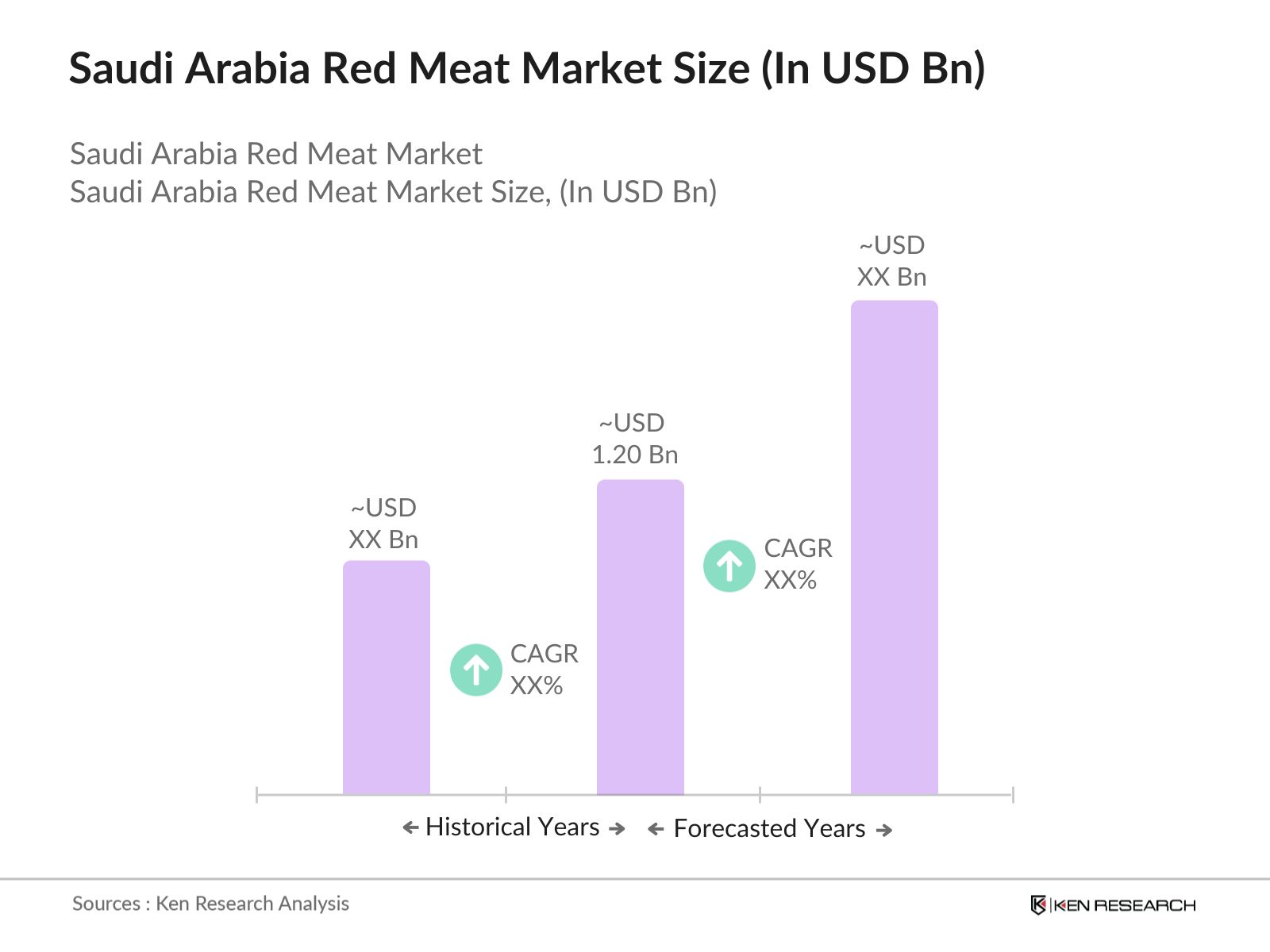
  • The Saudi Arabia red meat market is a substantial component of the country's food industry, driven by both local production and imports. The market is valued at 1.20 billion, according to recent reports. This valuation is primarily driven by increasing disposable income, cultural preferences, and the growth of organized retail sectors in the region. Saudi Arabia's Vision 2030, with its emphasis on boosting local food production, further enhances the growth of the red meat market. Local production is supported by initiatives such as subsidies and investment in agritech, but imports still play a significant role due to the high demand.
  • The red meat market in Saudi Arabia is primarily dominated by major cities such as Riyadh, Jeddah, and Dammam. These cities not only serve as consumption hubs due to their large urban populations but also benefit from advanced cold chain infrastructure and organized retail formats. Jeddah's strategic location as a port city also makes it a crucial point for imports, particularly of frozen and processed red meat. Riyadh, being the capital and economic center, drives significant demand through its high-income consumers and the thriving foodservice industry.
  • Under Saudi Vision 2030, the government has introduced several policies to support agricultural diversification and food security. The 2024 regulations prioritize local meat production, with specific incentives for livestock farmers, including subsidies and tax breaks. The Agricultural Development Fund has played a critical role in financing sustainable farming projects that align with the kingdoms broader economic diversification goals. These policies aim to reduce the countrys reliance on imported meat and enhance the self-sufficiency of the domestic red meat sector. market overviews

Saudi Arabia Red Meat Market Segmentation

The Saudi Arabia red meat market is segmented by meat type and by distribution channel.
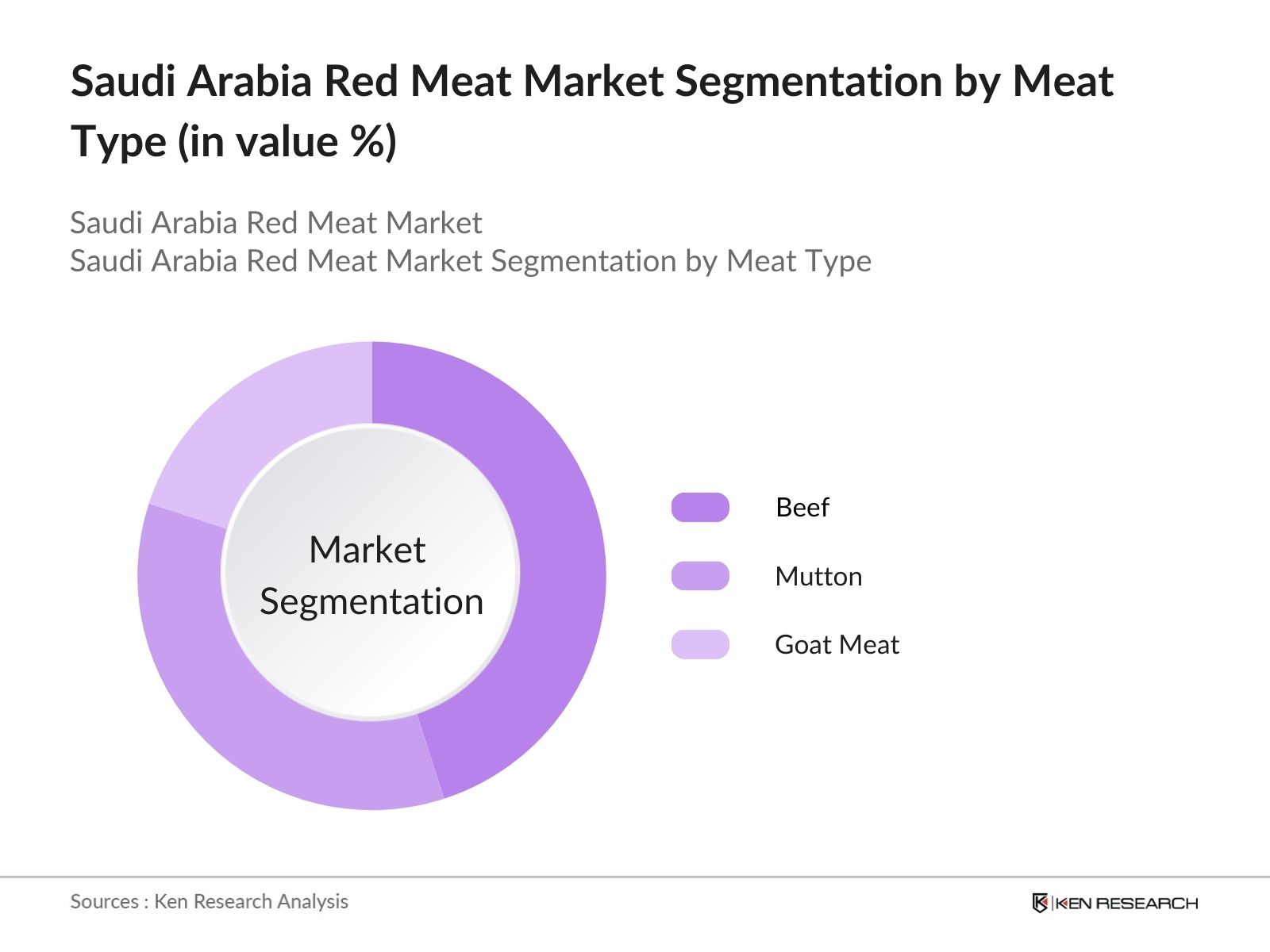
  • By Meat Type: The Saudi Arabia red meat market is segmented by meat type into beef, mutton, and goat meat. Among these, beef holds the dominant share in the market, accounting for around 45% of the total market. The preference for beef is largely attributed to its widespread use in foodservice industries, such as hotels and restaurants, and its popularity among consumers in urban areas. Beef's versatility in different cuisines and its appeal to a diverse consumer base further cement its leading position. The growing demand for premium cuts of beef and organic beef is also contributing to this segments growth.market overviews
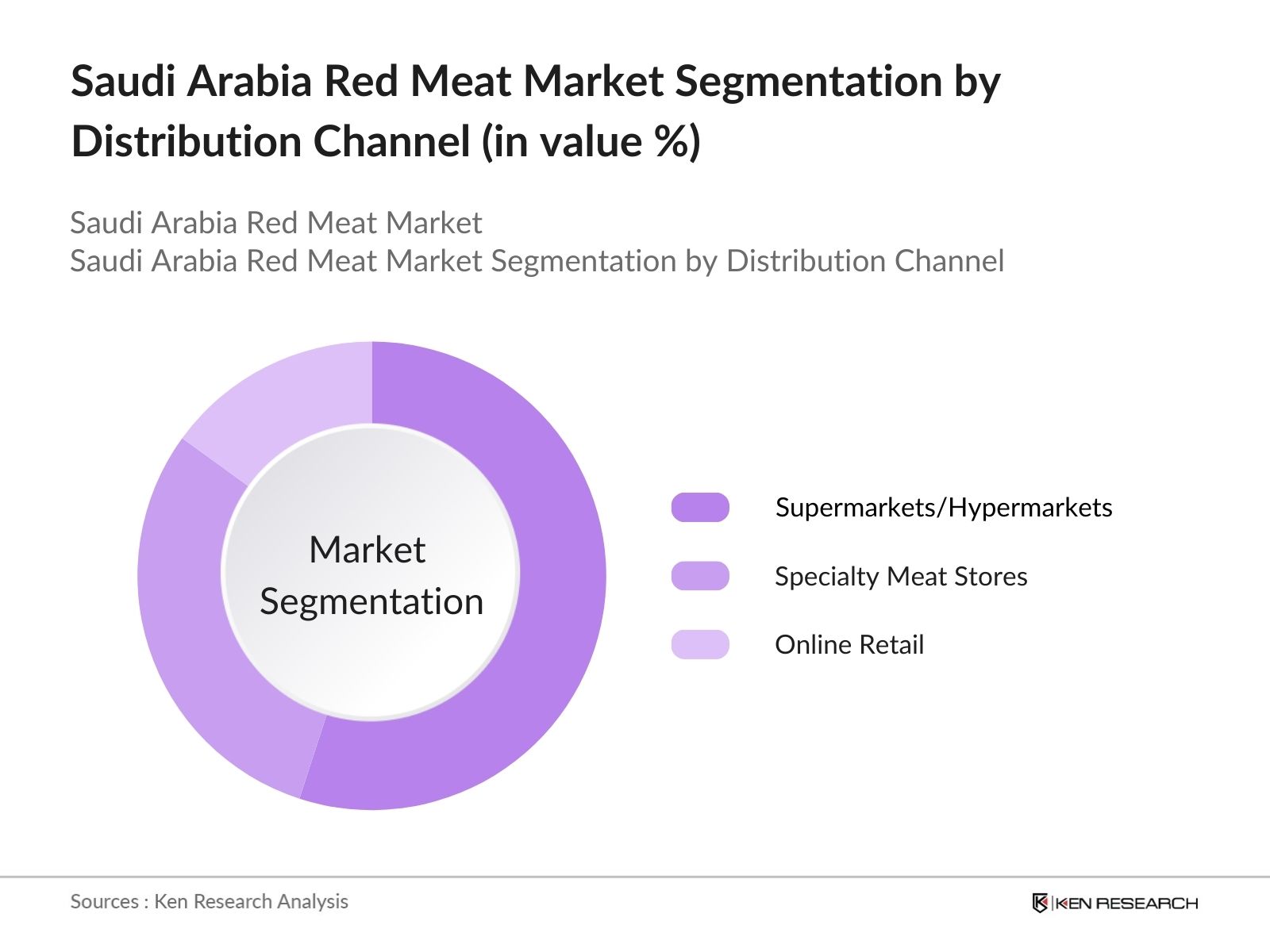
  • By Distribution Channel: The market is segmented by distribution channel into supermarkets/hypermarkets, specialty meat stores, and online retail. Supermarkets and hypermarkets dominate the distribution channel, with a market share of 55% in 2023. This is primarily because of the convenience they offer, as well as the assurance of meat quality and freshness, which are important factors for Saudi consumers. Additionally, the rise of large retail chains has made it easier for consumers to access a wide variety of fresh and frozen red meat products, contributing to the dominance of this distribution channel.market overviews

Saudi Arabia Red Meat Market Competitive Landscape

The Saudi Arabia red meat market is characterized by a combination of local and international players. The market is dominated by key domestic players like Almarai and Tanmiah, as well as international firms like BRF Sadia and Hormel Foods. These companies maintain a competitive edge through their extensive distribution networks, investments in advanced farming and processing technologies, and the ability to meet the growing demand for premium and halal-certified products. The competitive landscape is also influenced by strong government support for local meat producers as part of the Saudi Vision 2030, which aims to reduce import dependency.

Company Name

Establishment Year

Headquarters

Product Range

Processing Capacity

Distribution Network

Almarai

1977

Riyadh, Saudi Arabia


Tanmiah

1962

Jeddah, Saudi Arabia


Al Kabeer Group

1972

Dubai, UAE


BRF Sadia

1934

So Paulo, Brazil


Hormel Foods International

1891

Minnesota, USA


Saudi Arabia Red Meat Industry Analysis

Growth Drivers

  • Rising Disposable Income (per capita income growth): Saudi Arabia's red meat market is supported by a steady increase in disposable income, with the country's gross national income (GNI) per capita reaching USD 25,000 in 2024. This growth has allowed consumers to allocate more resources to higher-quality protein sources like red meat. The Saudi economy has remained strong due to high oil revenues, creating wealth that supports consumer spending habits, especially in the food and beverage sector. Higher disposable income levels also reflect in urban households' increasing consumption of beef and lamb as primary protein sources.
  • Cultural Preference for Meat-Based Diet (food habits): Saudi Arabia has one of the highest meat consumption rates in the Gulf region, with red meat deeply embedded in the local diet. On average, a Saudi consumer eats over 50 kilograms of meat annually, with a significant portion coming from beef and lamb. Cultural and religious practices, such as celebrations and social gatherings, emphasize the importance of meat in meals. The demand is expected to be stable due to the country's preference for meat-heavy dishes like Mandi, making red meat consumption a consistent part of the local food culture.
  • Population Growth and Urbanization (demographics): Saudi Arabias population has grown to over 36 million in 2024, with more than 84% living in urban areas, significantly increasing the demand for red meat in cities like Riyadh, Jeddah, and Dammam. Urbanization has transformed food consumption patterns, with urban households preferring convenient, high-protein foods like beef and lamb. Additionally, the influx of expatriates from meat-eating cultures has further driven the demand for red meat, adding to the growth in the market. The populations growth trajectory and urban lifestyle contribute to higher meat consumption per capita. Source: Saudi General Authority for Statistics, 2024.

Market Challenges

  • High Production Costs (input costs like feed and water): Red meat production in Saudi Arabia faces high input costs, particularly for feed and water, as the country imports over 80% of its livestock feed. Water scarcity further escalates production costs, with the country relying on energy-intensive desalination processes for agriculture. In 2024, the average cost of meat production in Saudi Arabia remained high compared to global standards, making local products less competitive against imported alternatives. This challenge constrains the profitability of local farmers and reduces the affordability of red meat for consumers. Source: Saudi Ministry of Environment, Water, and Agriculture, 2024
  • Supply Chain Inefficiencies (cold chain logistics): Saudi Arabias red meat supply chain faces inefficiencies, particularly in cold chain logistics. The country's infrastructure for cold storage and transportation remains underdeveloped, leading to higher food waste and increased operational costs. As of 2024, an estimated 20% of perishable goods, including red meat, are lost during transportation due to inadequate cold chain management. This inefficiency limits the reach of high-quality red meat to remote areas, thereby curbing market growth and leading to higher consumer prices

Saudi Arabia Red Meat Market Future Outlook

Over the next five years, the Saudi Arabia red meat market is expected to experience steady growth driven by the increasing consumer preference for premium meat products and the expansion of foodservice industries. The government's emphasis on enhancing local food security through investments in agriculture and livestock farming will further contribute to the growth of the domestic meat sector. Furthermore, the rising demand for organic and halal-certified red meat, as well as the development of more efficient supply chains, will open new opportunities for both local and international market players.

Market Opportunities

  • Investment in Modern Farming Techniques (agritech investments): There is significant potential for agritech investment in Saudi Arabia, particularly in the red meat sector. Government-led initiatives like the National Transformation Program have attracted foreign investment in modern farming techniques, including automated feeding systems, livestock monitoring, and water-saving technologies. In 2024, the government allocated SAR 5 billion for agricultural technology projects aimed at improving the efficiency and sustainability of meat production. These investments are expected to reduce production costs and improve the quality of locally produced red meat. Source: Saudi Vision 2030, 2024
  • Growth of Organic and Halal Meat Segments (premium segments): The organic and halal meat segments are growing rapidly in Saudi Arabia. In 2024, the demand for premium meat products increased by 15%, driven by higher consumer awareness of health and religious considerations. Organic meat, free from synthetic inputs, has gained popularity among health-conscious consumers, while halal certification ensures compliance with religious dietary laws, making it a critical factor for many buyers. These segments provide opportunities for local producers to tap into higher-margin products and distinguish themselves from international competitors.

Scope of the Report

By Meat Type

Beef

Mutton

Goat Meat

By Distribution Channel

Supermarkets/Hypermarkets

Specialty Meat Stores

Online Retail

By Product Type

Fresh Meat

Frozen Meat

Processed Meat

By End-User

Households

Foodservice (Hotels, Restaurants, Catering)

By Region

North

East

West

South

Products

Key Target Audience

  • Investments and Venture Capital Firms

  • Government and Regulatory Bodies (Saudi Food and Drug Authority - SFDA)

  • Meat Processing Companies

  • Retailers (Supermarkets and Hypermarkets)

  • Cold Chain Logistics Providers

  • Organic and Halal Meat Suppliers

  • Foodservice Providers (Hotels, Restaurants, and Catering)

  • Livestock Farmers

Companies

Players Mention in the Report:

  • Almarai

  • Tanmiah

  • Al Kabeer Group

  • BRF Sadia

  • Hormel Foods International

  • Savola Group

  • National Food Industries Company

  • Al Watania Agriculture

  • Halwani Brothers

  • Gulf International Meat Factory

  • Sidco Foods

  • Arabian Farms

  • Al Ain Farms

  • Al Rabie

  • Al Islami Foods

Table of Contents

1. Saudi Arabia Red Meat Market Overview

1.1. Definition and Scope
1.2. Market Taxonomy
1.3. Market Growth Rate
1.4. Market Segmentation Overview

2. Saudi Arabia Red Meat Market Size (In SAR Mn)

2.1. Historical Market Size
2.2. Year-On-Year Growth Analysis
2.3. Key Market Developments and Milestones

3. Saudi Arabia Red Meat Market Analysis

3.1. Growth Drivers
3.1.1. Rising Disposable Income (per capita income growth)
3.1.2. Cultural Preference for Meat-Based Diet (food habits)
3.1.3. Population Growth and Urbanization (demographics)
3.1.4. Government Policies Supporting Local Meat Production (local production initiatives)

3.2. Market Challenges
3.2.1. High Production Costs (input costs like feed and water)
3.2.2. Supply Chain Inefficiencies (cold chain logistics)
3.2.3. Increasing Competition from Imported Meat (import dependency)

3.3. Opportunities
3.3.1. Investment in Modern Farming Techniques (agritech investments)
3.3.2. Growth of Organic and Halal Meat Segments (premium segments)
3.3.3. Expansion into Export Markets (regional trade opportunities)

3.4. Trends
3.4.1. Rise in Meat Alternatives and Processed Red Meat (consumer preferences)
3.4.2. Increase in Animal Welfare Concerns (sustainable practices)
3.4.3. Adoption of Automation in Meat Processing (industry 4.0 in slaughterhouses)

3.5. Government Regulation
3.5.1. Saudi Vision 2030 Agriculture Policies (sector-specific regulations)
3.5.2. Food Safety and Quality Standards (SFDA regulations)
3.5.3. Import Quotas and Tariffs (import duty structures)

3.6. SWOT Analysis
3.7. Stakeholder Ecosystem
3.8. Porters Five Forces
3.8.1. Threat of New Entrants
3.8.2. Bargaining Power of Suppliers
3.8.3. Bargaining Power of Buyers
3.8.4. Threat of Substitutes
3.8.5. Industry Rivalry

3.9. Competitive Landscape

4. Saudi Arabia Red Meat Market Segmentation

4.1. By Type (In Value %)
4.1.1. Beef
4.1.2. Mutton
4.1.3. Goat Meat

4.2. By Distribution Channel (In Value %)
4.2.1. Supermarkets/Hypermarkets
4.2.2. Specialty Meat Stores
4.2.3. Online Retail

4.3. By Product Type (In Value %)
4.3.1. Fresh Meat
4.3.2. Frozen Meat
4.3.3. Processed Meat

4.4. By End-User (In Value %)
4.4.1. Households
4.4.2. Foodservice (Hotels, Restaurants, Catering)

4.5. By Region (In Value %)
4.5.1. Riyadh
4.5.2. Jeddah
4.5.3. Dammam
4.5.4. Makkah
4.5.5. Madinah

5. Saudi Arabia Red Meat Market Competitive Analysis

5.1 Detailed Profiles of Major Competitors
5.1.1. Almarai
5.1.2. Tanmiah
5.1.3. Al Ain Farms
5.1.4. Al-Rabie
5.1.5. Gulf International Meat Factory
5.1.6. Al Kabeer Group
5.1.7. National Food Industries Company
5.1.8. Savola Group
5.1.9. Sidco Foods
5.1.10. Halwani Brothers
5.1.11. Arabian Farms
5.1.12. BRF Sadia
5.1.13. Al Watania Agriculture
5.1.14. Al Islami Foods
5.1.15. Hormel Foods International

5.2 Cross Comparison Parameters (No. of Employees, Headquarters, Inception Year, Revenue, Product Portfolio, Processing Capacity, Distribution Network, Brand Recognition)
5.3. Market Share Analysis
5.4. Strategic Initiatives
5.5. Mergers and Acquisitions
5.6. Investment Analysis
5.7. Venture Capital Funding
5.8. Government Grants
5.9. Private Equity Investments

6. Saudi Arabia Red Meat Market Regulatory Framework

6.1. Agricultural Subsidies and Incentives
6.2. Compliance with SFDA Regulations
6.3. Halal Certification Processes
6.4. Import Quotas and Tariff Structures

7. Saudi Arabia Red Meat Future Market Size (In SAR Mn)

7.1. Future Market Size Projections
7.2. Key Factors Driving Future Market Growth

8. Saudi Arabia Red Meat Future Market Segmentation

8.1. By Type (In Value %)
8.2. By Distribution Channel (In Value %)
8.3. By Product Type (In Value %)
8.4. By End-User (In Value %)
8.5. By Region (In Value %)

9. Saudi Arabia Red Meat Market Analysts Recommendations

9.1. TAM/SAM/SOM Analysis
9.2. Consumer Cohort Analysis
9.3. Marketing Initiatives
9.4. White Space Opportunity Analysis

Disclaimer Contact Us

Research Methodology

Step 1: Identification of Key Variables

The first phase involved mapping the ecosystem of the Saudi Arabia red meat market by analyzing the roles of various stakeholders, including producers, distributors, and consumers. A combination of secondary and proprietary databases was used to gather relevant market information. Critical variables such as meat production capacity, import volumes, and consumer preferences were identified.

Step 2: Market Analysis and Construction

In this step, historical data related to the Saudi Arabia red meat market was compiled and analyzed. The analysis focused on understanding consumption trends, the growth of distribution channels, and market penetration of different meat types. Market segmentation and distribution data were analyzed to ensure an accurate understanding of market dynamics.

Step 3: Hypothesis Validation and Expert Consultation

Market hypotheses were developed and validated through consultations with industry experts. These consultations provided insights into consumer behavior, regulatory challenges, and competitive strategies. Interviews were conducted with meat processors, retailers, and distributors to cross-validate the data.

Step 4: Research Synthesis and Final Output

The final step involved synthesizing the data collected from various sources and presenting a detailed analysis of the market. The output included forecasts, recommendations, and an understanding of consumer preferences, which was verified by engaging with multiple meat producers and distributors.

Frequently Asked Questions

01. How big is the Saudi Arabia Red Meat Market?

The Saudi Arabia red meat market is valued at 1.20 billion, driven by a combination of local production and imports. Increasing consumer demand for premium meat products is a key factor fueling the market's growth.

02. What are the challenges in the Saudi Arabia Red Meat Market?

Saudi Arabia red meat market Challenges include high production costs due to the arid climate, which makes animal farming expensive, and reliance on imports to meet growing demand. Additionally, supply chain inefficiencies, particularly in cold chain logistics, pose hurdles to the market.

03. Who are the major players in the Saudi Arabia Red Meat Market?

Key players in Saudi Arabia red meat market include Almarai, Tanmiah, BRF Sadia, Hormel Foods International, and Al Kabeer Group. These companies dominate the market through their established distribution networks, brand recognition, and investments in processing technologies.

04. What are the growth drivers of the Saudi Arabia Red Meat Market?

The Saudi Arabia red meat market is propelled by factors such as rising disposable incomes, urbanization, and government initiatives like Vision 2030, which encourages local food production. The expansion of the foodservice industry also plays a crucial role in driving demand for red meat.

05. What are the dominant distribution channels in the Saudi Arabia Red Meat Market?

Supermarkets and hypermarkets dominate the distribution channels due to their wide reach and consumer trust in the quality and freshness of the products. Specialty meat stores also have a significant share, particularly for premium meat products.

Why Buy From Us?

RRR
Refine Robust Result (RRR) Framework

What makes us stand out is that our consultants follows Robust, Refine and Result (RRR) methodology. i.e. Robust for clear definitions, approaches and sanity checking, Refine for differentiating respondents facts and opinions and Result for presenting data with story

Our Reach Is Unmatched

We have set a benchmark in the industry by offering our clients with syndicated and customized market research reports featuring coverage of entire market as well as meticulous research and analyst insights.

Research
Shifting the Research Paradigm

While we don't replace traditional research, we flip the method upside down. Our dual approach of Top Bottom & Bottom Top ensures quality deliverable by not just verifying company fundamentals but also looking at the sector and macroeconomic factors.

Insite
More Insights-Better Decisions

With one step in the future, our research team constantly tries to show you the bigger picture. We help with some of the tough questions you may encounter along the way: How is the industry positioned? Best marketing channel? KPI's of competitors? By aligning every element, we help maximize success.

Trust
Transparency and Trust

Our report gives you instant access to the answers and sources that other companies might choose to hide. We elaborate each steps of research methodology we have used and showcase you the sample size to earn your trust.

support
Round the Clock Support

If you need any support, we are here! We pride ourselves on universe strength, data quality, and quick, friendly, and professional service.

Why Client Choose Us?

400000+ Reports in repository
150+ Consulting project a year
100+ Analysts
8000+ Client Queries in 2022