
SEA Used Car Market Outlook to 2028
Region:Indonesia
Author(s):Khushi Khatreja
Product Code:KR1464
Region:Indonesia
Author(s):Khushi Khatreja
Product Code:KR1464
December 2024
85
Listen to the audio summary
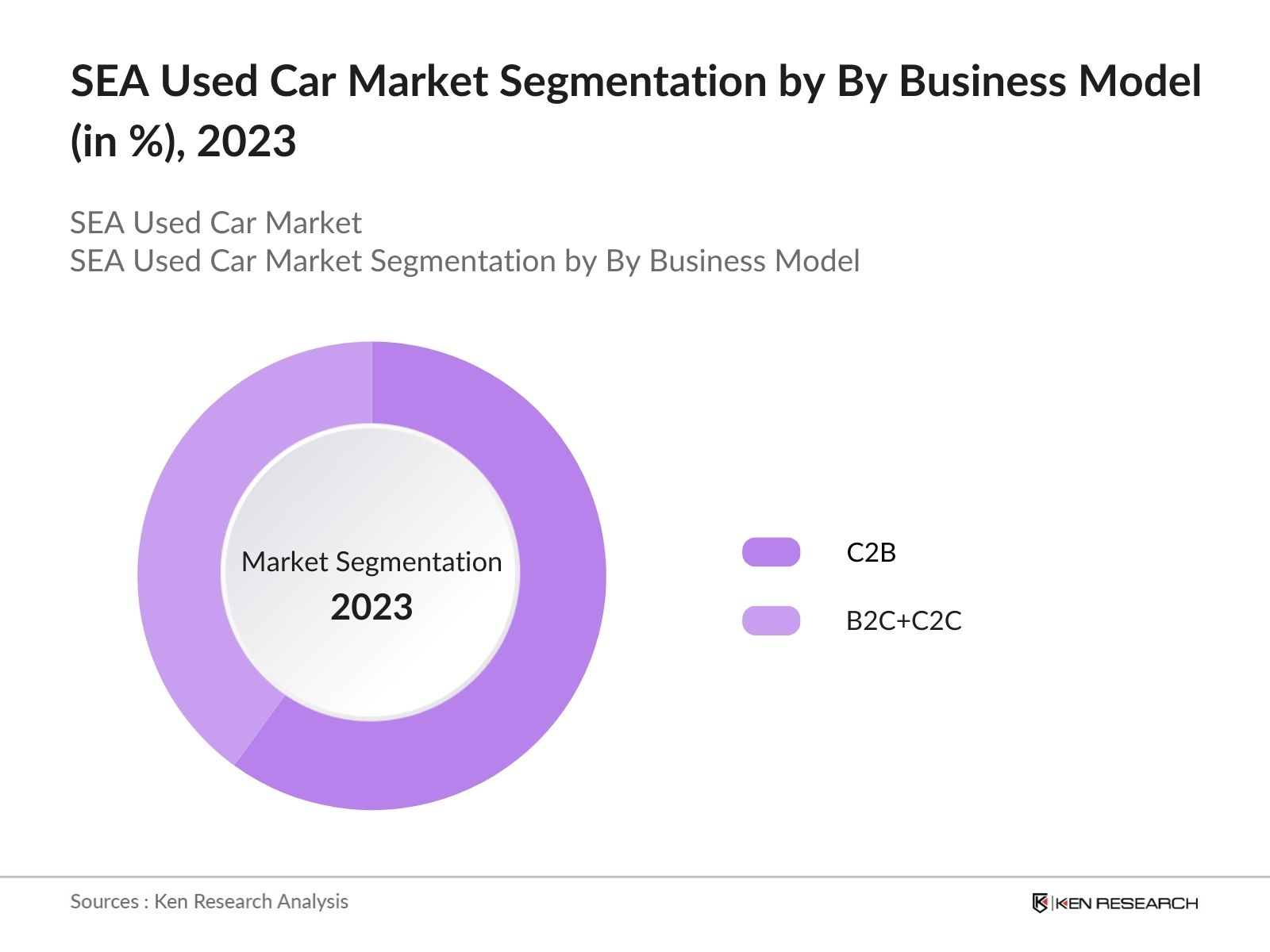
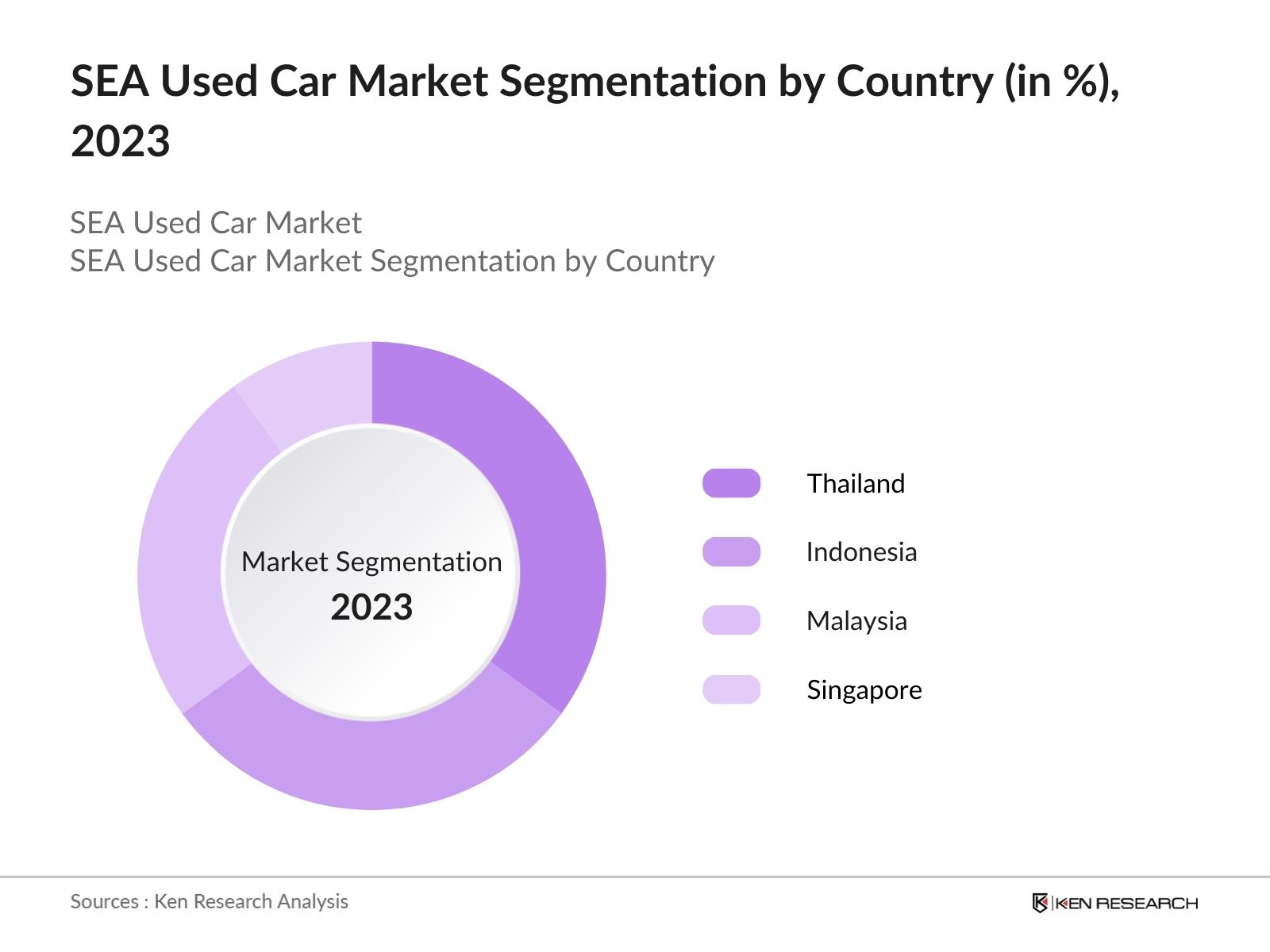
SEA Used Car Market is segmented by business model and country:
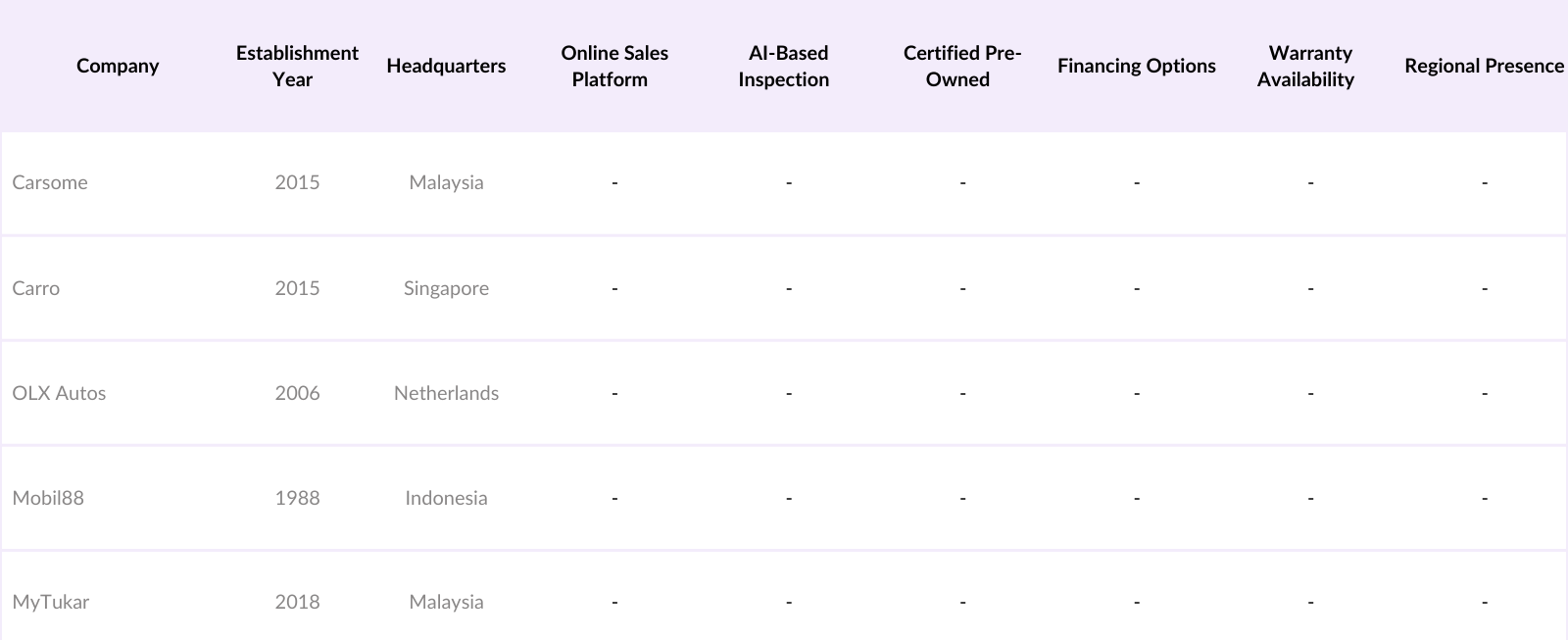
The market is characterized by the presence of established players such as Carsome, Carro, and OLX Autos, alongside local dealerships and unorganized vendors. These players dominate through strong online platforms, partnerships with banks for financing, and AI-enabled tools for vehicle inspections, making the buying and selling process seamless.
Market Growth Drivers
Market Challenges
Over the next five years, the Southeast Asia used car market is expected to experience significant growth, due to rapid urbanization, growing acceptance of online platforms, and increased preference for sustainable transportation alternatives. The rise in demand for electric and hybrid pre-owned vehicles and government support for emission reduction will also propel market growth. Emerging markets in Vietnam and the Philippines are expected to play a vital role in expanding the market.
Future Market Opportunities
|
Segment |
Sub-Segments |
|
Vehicle Type |
Hatchback- Sedan- Sports Utility Vehicle (SUV) Multi-Purpose Vehicle (MPV) |
|
Sales Channel |
Online Offline |
|
Presence in Market |
Retail Wholesale |
|
Business Model |
C2B (Consumer-to-Business) B2C (Business-to-Consumer) C2C (Consumer-to-Consumer) |
|
Vehicle Source |
Trade-ins Fleet Sales Individual Sellers |
|
Fuel Type |
Gasoline Diesel Electric Hybrid |
|
Country |
Indonesia Thailand Malaysia Singapore |
|
Vehicle Age |
Less than 3 years 35 years More than 5 years |
|
End User |
Private Buyers Fleet Operators |
|
Inspection Type |
Certified pre-owned Non-Certified |
1.1. Definition and Scope
1.2. Market Taxonomy
1.3. Market Growth Rate
1.4. Market Segmentation Overview
2.1. Historical Market Size
2.2. Year-On-Year Growth Analysis
2.3. Key Market Developments and Milestones
3.1. Growth Drivers
3.1.1. Growing Preference for Private Transportation
3.1.2. Impact of Online Platforms and Digital Transactions
3.1.3. Economic Growth and Expanding Middle Class
3.1.4. Availability of Financing Options
3.2. Market Challenges
3.2.1. Unorganized Market Structure
3.2.2. Lack of Regularization and Consumer Protection
3.2.3. Competition from New Car Sales
3.3. Opportunities
3.3.1. Shift from Two-Wheelers to Four-Wheelers
3.3.2. Growing Demand for Eco-Friendly Vehicles
3.3.3. Expansion into Emerging Markets
3.4. Trends
3.4.1. Integration of AI in Online Platforms
3.4.2. Subscription-Based Ownership Models
3.4.3. Increased Focus on Certified Pre-Owned Vehicles
3.5. Government Regulations
3.5.1. Import Policies for Used Vehicles
3.5.2. Emission Standards Compliance
3.5.3. Taxation Policies Affecting Used Cars
3.6. SWOT Analysis
3.7. Stakeholder Ecosystem
3.8. Porters Five Forces Analysis
3.9. Competitive Landscape
4.1. By Vehicle Type (In Value %)
4.1.1. Hatchback
4.1.2. Sedan
4.1.3. Sports Utility Vehicle (SUV)
4.1.4. Multi-Purpose Vehicle (MPV)
4.2. By Vendor Type (In Value %)
4.2.1. Organized
4.2.2. Unorganized
4.3. By Fuel Type (In Value %)
4.3.1. Gasoline
4.3.2. Diesel
4.3.3. Electric
4.3.4. Hybrid
4.4. By Sales Channel (In Value %)
4.4.1. Online
4.4.2. Offline
4.5. By Country (In Value %)
4.5.1. Indonesia
4.5.2. Thailand
4.5.3. Malaysia
4.5.4. Singapore
5.1. Detailed Profiles of Major Companies
5.1.1. Carsome
5.1.2. Carro
5.1.3. OLX Autos
5.1.4. MUV
5.1.5. Mobil88
5.1.6. Mobil123
5.1.7. MyMotor
5.1.8. MyTukar
5.1.9. Carmudi
5.1.10. AutoDeal
5.1.11. Carlist.my
5.1.12. iCar Asia
5.1.13. BeliMobilGue.co.id
5.1.14. One2Car
5.1.15. Chobrod
5.2. Cross Comparison Parameters (Number of Employees, Headquarters, Inception Year, Revenue, Market Share, Online Presence, Service Offerings, Customer Reviews)
5.3. Market Share Analysis
5.4. Strategic Initiatives
5.5. Mergers and Acquisitions
5.6. Investment Analysis
5.7. Venture Capital Funding
5.8. Government Grants
5.9. Private Equity Investments
6. SEA Used Car Market Regulatory Framework
6.1. Environmental Standards
6.2. Compliance Requirements
6.3. Certification Processes
7.1. Future Market Size Projections
7.2. Key Factors Driving Future Market Growth
8.1. By Vehicle Type (In Value %)
8.2. By Vendor Type (In Value %)
8.3. By Fuel Type (In Value %)
8.4. By Sales Channel (In Value %)
8.5. By Country (In Value %)
9.1. Total Addressable Market (TAM)/Serviceable Available Market (SAM)/Serviceable Obtainable Market (SOM) Analysis
9.2. Customer Cohort Analysis
9.3. Marketing Initiatives
9.4. White Space Opportunity Analysis
Disclaimer Contact UsIdentification of key players in the Southeast Asia (SEA) used car market, including OEMs (Original Equipment Manufacturers), online marketplaces (e.g., Carsome, OLX, Carro), dealerships, and auction platforms. Categorization of their product offerings by vehicle type (e.g., passenger cars, SUVs, commercial vehicles, and luxury vehicles), source (e.g., certified pre-owned (CPO), non-CPO, direct sellers), end-user (e.g., individual buyers, fleet operators, ride-hailing services), and age of vehicle (<3 years, 35 years, >5 years). Market size is calculated using credible sources such as government reports, industry associations (e.g., ASEAN Automotive Federation), and corporate filings. Additional insights are obtained from automotive market research reports, trade publications, and online platforms to ensure comprehensive product mapping and competitive analysis.
Conduct CATIs with key stakeholders, including executives from used car marketplaces, dealerships, fleet operators, ride-hailing service representatives, and financial institutions offering car loans and insurance. These interviews aim to uncover market dynamics across SEA countries (e.g., Indonesia, Thailand, Malaysia, Vietnam, Philippines), consumer behavior, pricing trends, residual value analysis, financing options, and the impact of online platforms. Stakeholders also provide insights into regional demand variations, adoption of CPO programs, and preferences for specific brands and vehicle types.
A Bottom-Up approach is employed to analyze market segmentation by vehicle type, source, and end-user categories. Data from market research reports, government publications, and trade associations (e.g., local automotive boards) is utilized to refine segmentation shares. Secondary research also evaluates trends in EV penetration, digital marketplace growth, and online sales adoption in the used car market. Regional factors such as economic growth, urbanization, regulatory policies, and cultural preferences are incorporated. Import/export records and vehicle registration statistics are analyzed for additional validation.
Market size estimation and segmentation shares are calculated using a Bottom-Up methodology. Validation includes interviews with industry experts, dealership managers, and online marketplace executives to cross-check findings. Proxy variables such as vehicle ownership rates per 1,000 people, urban population growth, disposable income trends, and financing penetration rates are incorporated. Market drivers and restraints are analyzed, considering factors such as increasing digital adoption, affordability concerns, taxation policies, and competition from informal sellers. Demographic, economic, and automotive sector indicators are integrated to align market size projections with industry trends and macroeconomic conditions.
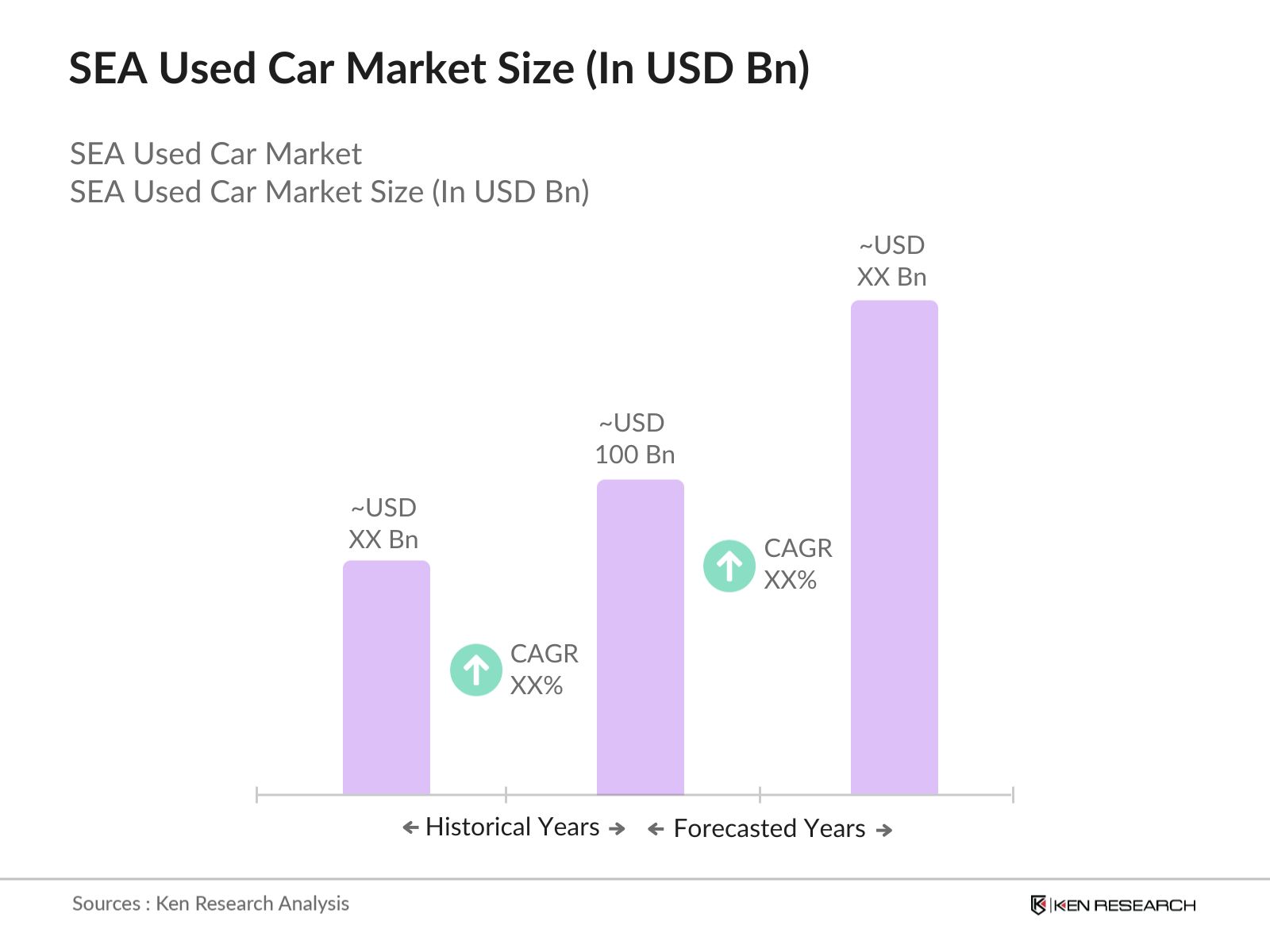
The Southeast Asia used car market is valued at USD 100 billion, driven by increasing affordability and the rise of online platforms offering convenient and transparent transactions.
Challenges in Southeast Asia used car market include lack of transparency in pricing for offline channels, competition from new car sales, and regulatory variations across countries.
Key players in Southeast Asia used car market include Carsome, Carro, OLX Autos, Mobil88, and MyTukar, known for their robust online platforms and customer-focused services.
Growth in Southeast Asia used car market is propelled by rising middle-class income, digitalization of transactions, and increased demand for affordable pre-owned vehicles.
SUVs are currently the most popular in Southeast Asia used car market due to their spacious interiors and ability to perform on varied terrains, appealing to families and professionals alike.

What makes us stand out is that our consultants follows Robust, Refine and Result (RRR) methodology. i.e. Robust for clear definitions, approaches and sanity checking, Refine for differentiating respondents facts and opinions and Result for presenting data with story

We have set a benchmark in the industry by offering our clients with syndicated and customized market research reports featuring coverage of entire market as well as meticulous research and analyst insights.

While we don't replace traditional research, we flip the method upside down. Our dual approach of Top Bottom & Bottom Top ensures quality deliverable by not just verifying company fundamentals but also looking at the sector and macroeconomic factors.

With one step in the future, our research team constantly tries to show you the bigger picture. We help with some of the tough questions you may encounter along the way: How is the industry positioned? Best marketing channel? KPI's of competitors? By aligning every element, we help maximize success.

Our report gives you instant access to the answers and sources that other companies might choose to hide. We elaborate each steps of research methodology we have used and showcase you the sample size to earn your trust.

If you need any support, we are here! We pride ourselves on universe strength, data quality, and quick, friendly, and professional service.