
UAE Adhesives Market Outlook to 2030
Region:United Arab Emirates
Author(s):Vijay Kumar
Product Code:KROD5178
Region:United Arab Emirates
Author(s):Vijay Kumar
Product Code:KROD5178
December 2024
97
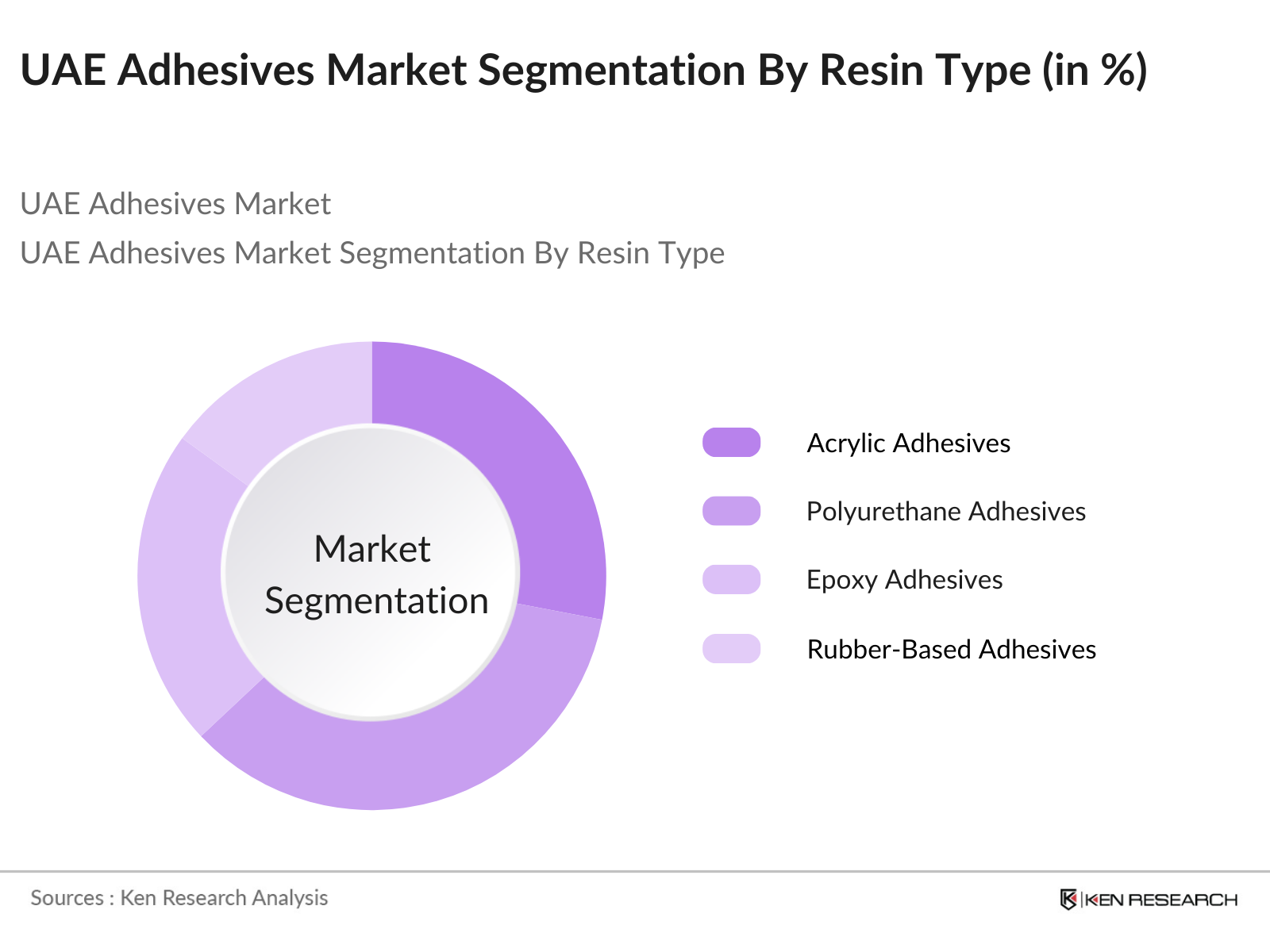
By Resin Type: The market is segmented by resin type into acrylic adhesives, polyurethane adhesives, epoxy adhesives, rubber-based adhesives, and silicone adhesives. Recently, polyurethane adhesives have shown a dominant market share within this segmentation. The rise in demand for these adhesives is largely due to their excellent durability, flexibility, and heat resistance, making them ideal for use in construction and automotive applications.
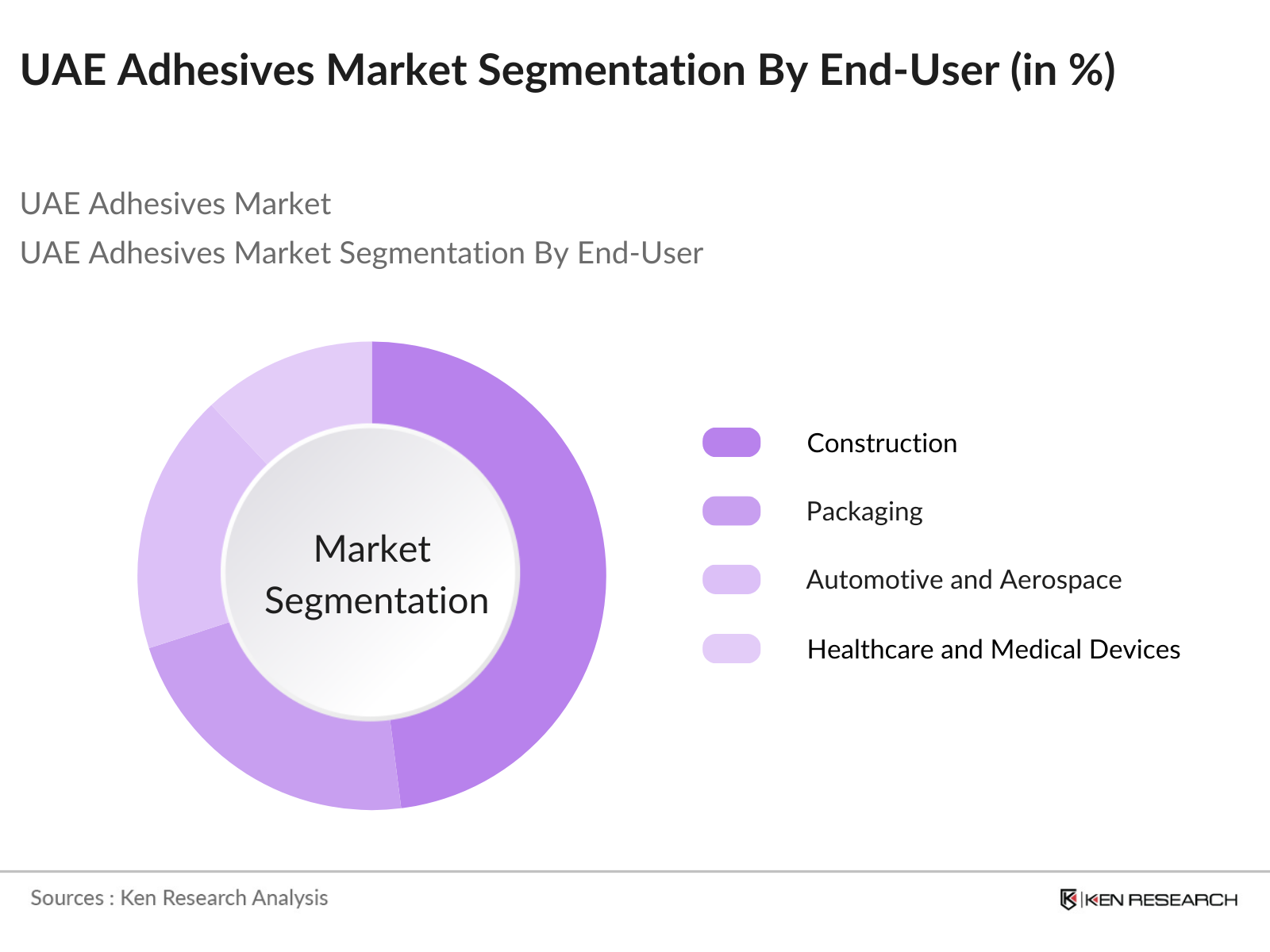
By End-Use Industry: The market is also segmented by end-use industry into construction, packaging, automotive and aerospace, healthcare, and electronics. The construction industry holds the largest share in this segmentation. The rapid urbanization and massive investments in infrastructure development across Dubai, Abu Dhabi, and other emirates drive the demand for adhesives in flooring, roofing, insulation, and other structural applications.
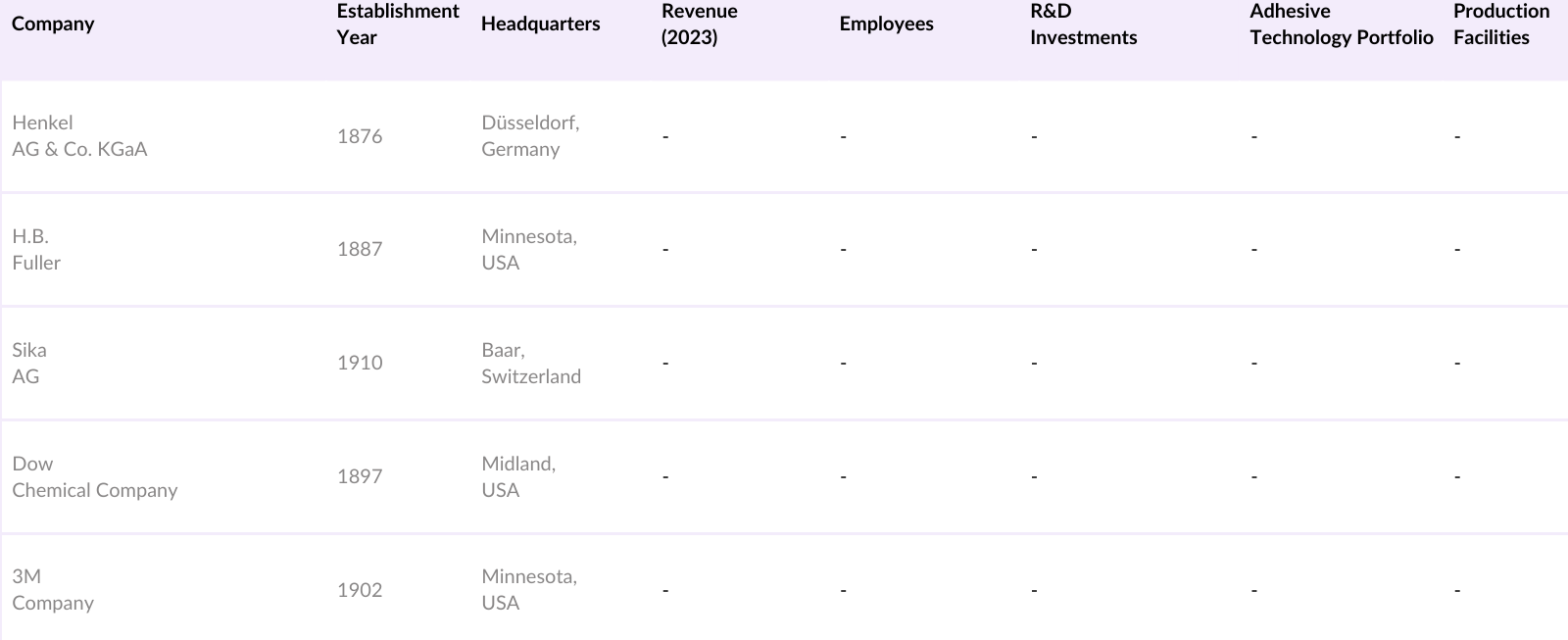
The UAE adhesives market is characterized by the presence of both global and regional players, including multinational giants like Henkel and 3M, as well as local manufacturers such as RAK Ceramics. The industry is highly competitive, with companies vying for market dominance through innovations in adhesive technology, expanding product lines, and offering sustainable solutions. Companies such as Sika AG and H.B. Fuller have invested heavily in research and development to offer high-performance, eco-friendly adhesives tailored to the construction and automotive sectors.
Over the next five years, the UAE adhesives market is expected to experience significant growth, driven by ongoing advancements in adhesive technologies, increased demand from the construction and automotive industries, and the introduction of eco-friendly and sustainable adhesive solutions. As Dubai and Abu Dhabi continue to witness massive infrastructural development projects, demand for high-performance adhesives in structural applications is likely to surge. Moreover, the government's push toward sustainable construction practices and local manufacturing will foster a conducive environment for growth in this market.
|
Resin Type |
Acrylic Adhesives Polyurethane Adhesives Epoxy Adhesives Rubber-Based Adhesives Silicone Adhesives |
|
Technology |
Solvent-Based Water-Based Hot Melt Reactive |
|
End-Use Industry |
Construction Packaging Automotive and Aerospace Healthcare and Medical Devices Electronics and Appliances |
|
Application |
Structural Adhesives Non-Structural Adhesives Pressure-Sensitive Adhesives Flooring and Tiling Adhesives |
|
Region |
Dubai Abu Dhabi Sharjah Northern Emirates |
1.1. Definition and Scope
1.2. Market Taxonomy
1.3. Market Growth Rate
1.4. Market Segmentation Overview
2.1. Historical Market Size
2.2. Year-On-Year Growth Analysis
2.3. Key Market Developments and Milestones
3.1. Growth Drivers
3.1.1. Rapid Urbanization and Infrastructure Development
3.1.2. Increased Demand in the Automotive and Aerospace Sectors
3.1.3. Rise in Packaging and Construction Activities
3.1.4. Government Initiatives Supporting Local Manufacturing
3.2. Market Challenges
3.2.1. Volatile Raw Material Prices (Petrochemical-Derived Inputs)
3.2.2. Environmental Regulations (VOC Content in Adhesives)
3.2.3. Technological Gaps in Adhesive Application Processes
3.3. Opportunities
3.3.1. Growth of Eco-Friendly Adhesives
3.3.2. Adoption of Advanced Adhesive Technologies (Reactive and Hot Melt)
3.3.3. Partnerships with Sustainable Packaging Manufacturers
3.3.4. Expansion of the Healthcare Adhesive Segment
3.4. Trends
3.4.1. Increasing Use of Bio-Based Adhesives
3.4.2. Shift Towards Lightweight Adhesive Solutions in Automotives
3.4.3. Demand for High-Performance Adhesives in Electronics
3.4.4. Rising Adoption of Smart Adhesive Technologies
3.5. Government Regulations
3.5.1. UAE Environmental Protection Regulations
3.5.2. Emirates Quality Mark Certification for Adhesive Products
3.5.3. Restrictions on Hazardous Chemicals in Adhesive Manufacturing
3.6. SWOT Analysis
3.7. Stakeholder Ecosystem (Manufacturers, Distributors, End-Users)
3.8. Porters Five Forces Analysis
3.9. Competitive Ecosystem
4.1. By Resin Type (In Value %)
4.1.1. Acrylic Adhesives
4.1.2. Polyurethane Adhesives
4.1.3. Epoxy Adhesives
4.1.4. Rubber-Based Adhesives
4.1.5. Silicone Adhesives
4.2. By Technology (In Value %)
4.2.1. Solvent-Based
4.2.2. Water-Based
4.2.3. Hot Melt
4.2.4. Reactive
4.3. By End-Use Industry (In Value %)
4.3.1. Construction
4.3.2. Packaging
4.3.3. Automotive and Aerospace
4.3.4. Healthcare and Medical Devices
4.3.5. Electronics and Appliances
4.4. By Application (In Value %)
4.4.1. Structural Adhesives
4.4.2. Non-Structural Adhesives
4.4.3. Pressure-Sensitive Adhesives
4.4.4. Flooring and Tiling Adhesives
4.5. By Region (In Value %)
4.5.1. Dubai
4.5.2. Abu Dhabi
4.5.3. Sharjah
4.5.4. Northern Emirates
5.1 Detailed Profiles of Major Companies
5.1.1. H.B. Fuller
5.1.2. Henkel AG & Co. KGaA
5.1.3. Sika AG
5.1.4. 3M Company
5.1.5. Huntsman Corporation
5.1.6. Bostik (Arkema Group)
5.1.7. Avery Dennison Corporation
5.1.8. Ashland Global Holdings Inc.
5.1.9. Dow Chemical Company
5.1.10. Wacker Chemie AG
5.1.11. ITW Performance Polymers
5.1.12. BASF SE
5.1.13. Pidilite Industries
5.1.14. Lord Corporation
5.1.15. Eastman Chemical Company
5.2 Cross Comparison Parameters (No. of Employees, Revenue, R&D Investments, Adhesive Technology Portfolio, Production Facilities, Sustainability Initiatives, Global Presence, Certifications)
5.3. Market Share Analysis
5.4. Strategic Initiatives
5.5. Mergers and Acquisitions
5.6. Investment Analysis
5.7. Venture Capital Funding
5.8. Government Incentives and Support
6.1. Compliance with Environmental and Safety Standards
6.2. Certification Processes for Industrial and Consumer Adhesives
6.3. Local Content Requirements for Adhesive Manufacturing
7.1. Future Market Size Projections
7.2. Key Factors Driving Future Market Growth
8.1. By Resin Type (In Value %)
8.2. By Technology (In Value %)
8.3. By End-Use Industry (In Value %)
8.4. By Application (In Value %)
8.5. By Region (In Value %)
9.1. TAM/SAM/SOM Analysis
9.2. Emerging Market Trends and Technologies
9.3. Marketing and Distribution Strategies
9.4. White Space Opportunity Analysis
The research process began with identifying the primary stakeholders in the UAE adhesives market, such as adhesive manufacturers, end-users in various industries, and regulatory authorities. Extensive secondary research was conducted to map the ecosystem and pinpoint the major factors driving market dynamics, including technological innovations and regulatory requirements.
In this phase, we gathered and analyzed historical data from proprietary databases and public sources to evaluate the market size, revenue generation, and industry trends. Particular attention was paid to the distribution channels and key end-use industries, ensuring that the final output reflected a comprehensive understanding of the market landscape.
To validate our hypotheses, interviews were conducted with industry experts, including adhesive manufacturers and distributors, who provided insights into the latest market developments and future trends. Their feedback helped refine our projections and added depth to the qualitative data collected during the research process.
The final phase involved compiling all the data into a cohesive report that accurately represented the state of the UAE adhesives market. Insights from both the bottom-up and top-down approaches were integrated to ensure the findings were both detailed and accurate. Additionally, primary data gathered through expert consultations was cross-referenced to validate market trends and growth drivers.
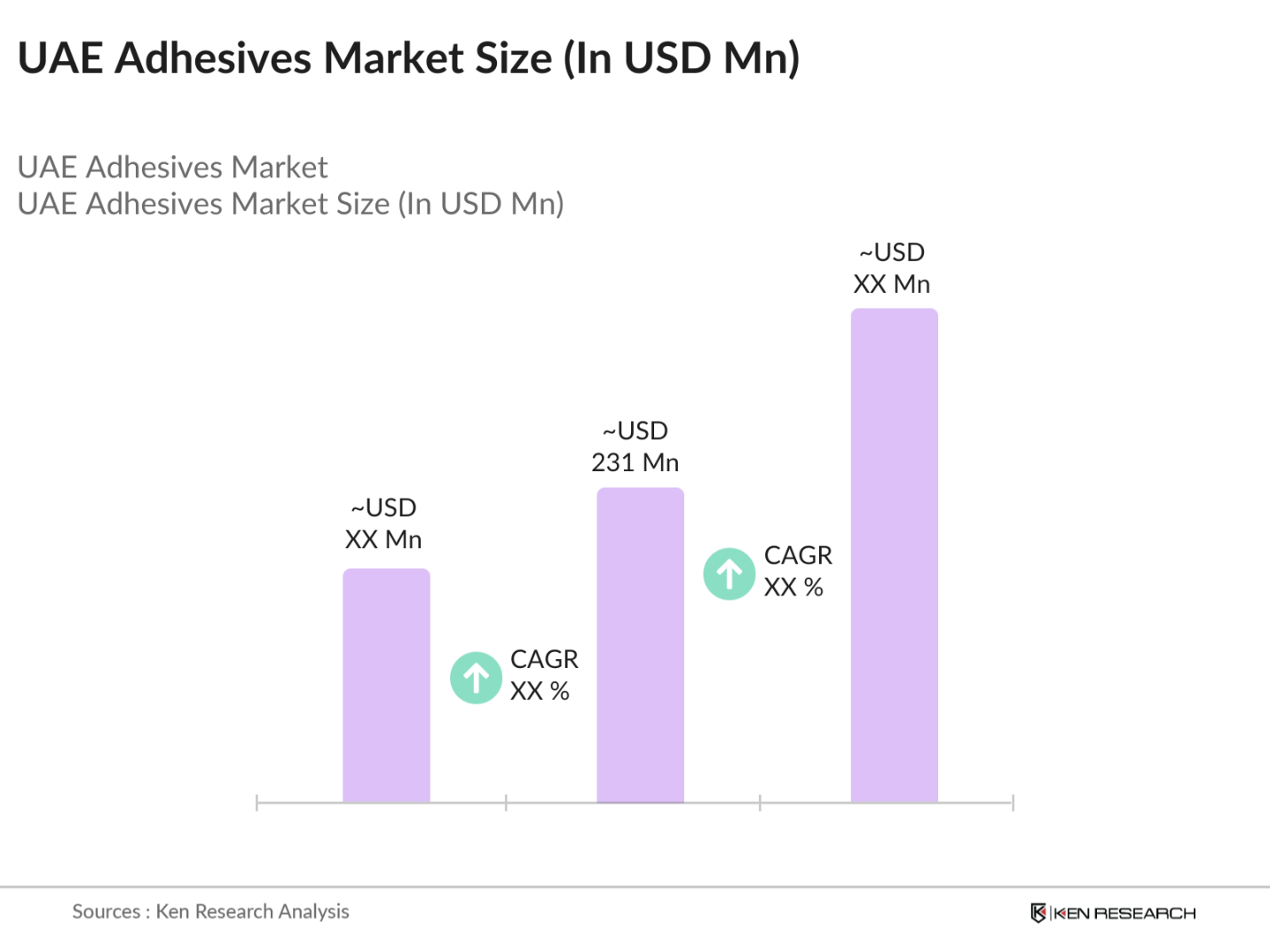
The UAE Adhesives market is valued at USD 231 million, based on a five-year historical analysis. This market is primarily driven by the growing demand from the construction and automotive industries, fueled by large-scale infrastructure projects and the increasing use of adhesives in automotive manufacturing for lightweighting and durability.
Challenges in the UAE adhesives market include volatile raw material prices, environmental regulations related to VOC emissions, and technological gaps in advanced adhesive applications. These factors impact production costs and compliance requirements for manufacturers.
Key players in the UAE adhesives market include Henkel AG & Co. KGaA, H.B. Fuller, Sika AG, Dow Chemical Company, and 3M. These companies dominate due to their extensive product portfolios, R&D investments, and global reach.
The market is driven by the rapid development of the construction sector, increasing demand for lightweight materials in automotive and aerospace industries, and advancements in eco-friendly adhesive technologies.

What makes us stand out is that our consultants follows Robust, Refine and Result (RRR) methodology. i.e. Robust for clear definitions, approaches and sanity checking, Refine for differentiating respondents facts and opinions and Result for presenting data with story

We have set a benchmark in the industry by offering our clients with syndicated and customized market research reports featuring coverage of entire market as well as meticulous research and analyst insights.

While we don't replace traditional research, we flip the method upside down. Our dual approach of Top Bottom & Bottom Top ensures quality deliverable by not just verifying company fundamentals but also looking at the sector and macroeconomic factors.

With one step in the future, our research team constantly tries to show you the bigger picture. We help with some of the tough questions you may encounter along the way: How is the industry positioned? Best marketing channel? KPI's of competitors? By aligning every element, we help maximize success.

Our report gives you instant access to the answers and sources that other companies might choose to hide. We elaborate each steps of research methodology we have used and showcase you the sample size to earn your trust.

If you need any support, we are here! We pride ourselves on universe strength, data quality, and quick, friendly, and professional service.