
UAE AI Engineering Market Outlook to 2030
Region:United Arab Emirates
Author(s):Mukul
Product Code:KROD5025
Region:United Arab Emirates
Author(s):Mukul
Product Code:KROD5025
October 2024
82
The UAE AI Engineering market is consolidated with the presence of major global and regional players. The competitive landscape is marked by key players such as Microsoft UAE, IBM Middle East, and Google Cloud MENA, all of which offer a wide range of AI solutions tailored to the needs of the region. These companies have established strong partnerships with government bodies and private enterprises, solidifying their market dominance. Meanwhile, local players like DarkMatter Group focus on cybersecurity-related AI solutions, creating a competitive edge in the digital security space.
|
Company Name |
Establishment Year |
Headquarters |
AI Specialization |
Revenue |
R&D Investment |
Regional Offices |
Key Partnerships |
AI Ethics Compliance |
Employee Strength |
|
Microsoft UAE |
1991 |
Dubai |
|||||||
|
IBM Middle East |
1947 |
Dubai |
|||||||
|
Google Cloud MENA |
2010 |
Dubai |
|||||||
|
DarkMatter Group |
2015 |
Abu Dhabi |
|||||||
|
Accenture Middle East |
1996 |
Dubai |
Market Growth Drivers
Market Restraints
Over the next five years, the UAE AI Engineering market is expected to experience substantial growth due to continued government support, increasing AI adoption across industries, and advancements in machine learning, robotics, and data analytics. The UAE governments proactive approach to AI adoption, coupled with its aim to lead the region in AI development, will drive industry expansion and create opportunities for both established companies and emerging startups.
Market Opportunities
|
By AI Technology |
- Machine Learning |
|
By End-Use Industry |
- BFSI |
|
By Deployment Model |
- On-premise |
|
By Enterprise Size |
- Small and Medium Enterprises (SMEs) |
|
By Region |
- Dubai |
1.1. Definition and Scope
1.2. Market Taxonomy
1.3. Market Growth Rate (CAGR, Revenue Contribution, Industry Impact)
1.4. Market Segmentation Overview (End-Use Industries, AI Technologies, Deployment Models, Enterprise Size, Regions)
2.1. Historical Market Size
2.2. Year-On-Year Growth Analysis (Revenue, Demand Growth, Key Developments)
2.3. Key Market Developments and Milestones (AI Adoption Milestones, Investments, Regulatory Changes)
3.1. Growth Drivers
3.1.1. Government Initiatives (UAE National AI Strategy 2031, Smart Dubai Initiatives)
3.1.2. Increasing Investment in AI Technologies (Public & Private Sector Investments)
3.1.3. Digital Transformation across Industries (Banking, Healthcare, Transportation)
3.1.4. Demand for AI-powered Automation (RPA, NLP, Machine Learning Solutions)
3.2. Market Challenges
3.2.1. Data Privacy and Security Regulations (GDPR Compliance, Local Data Laws)
3.2.2. Shortage of AI Talent and Expertise (Skills Gap, Lack of Local Talent)
3.2.3. High Initial Investment Costs (AI Infrastructure Costs, ROI Concerns)
3.2.4. Integration with Legacy Systems (Technical Challenges in AI Integration)
3.3. Opportunities
3.3.1. Expansion of AI in SME Sectors (Government Grants, SME-focused AI Solutions)
3.3.2. AI in Healthcare and Smart Cities (AI in Diagnostics, Urban AI Innovations)
3.3.3. Cross-industry AI Collaboration (Partnerships Between Tech Firms and Traditional Industries)
3.4. Trends
3.4.1. Adoption of AI Ethics Frameworks (AI Governance, Ethical AI Practices)
3.4.2. Use of AI in Predictive Analytics (AI for Business Intelligence, Risk Assessment)
3.4.3. AI-as-a-Service (Cloud-based AI Solutions, Pay-as-you-go Models)
3.4.4. AI and IoT Convergence (AI-powered IoT Solutions, Smart Infrastructure)
3.5. Government Regulation
3.5.1. UAE AI Ethics Policy
3.5.2. AI Licensing Framework (AI Development Guidelines, Licensing Requirements)
3.5.3. National AI Legislation (Data Governance, AI-related Intellectual Property)
3.5.4. Cross-border AI Partnerships (International AI Collaboration, Trade Deals)
3.6. SWOT Analysis
3.7. Stakeholder Ecosystem (Tech Firms, Government Agencies, Private Investors)
3.8. Porters Five Forces (Supplier Bargaining Power, Threat of New Entrants, Competitive Rivalry)
3.9. Competitive Ecosystem
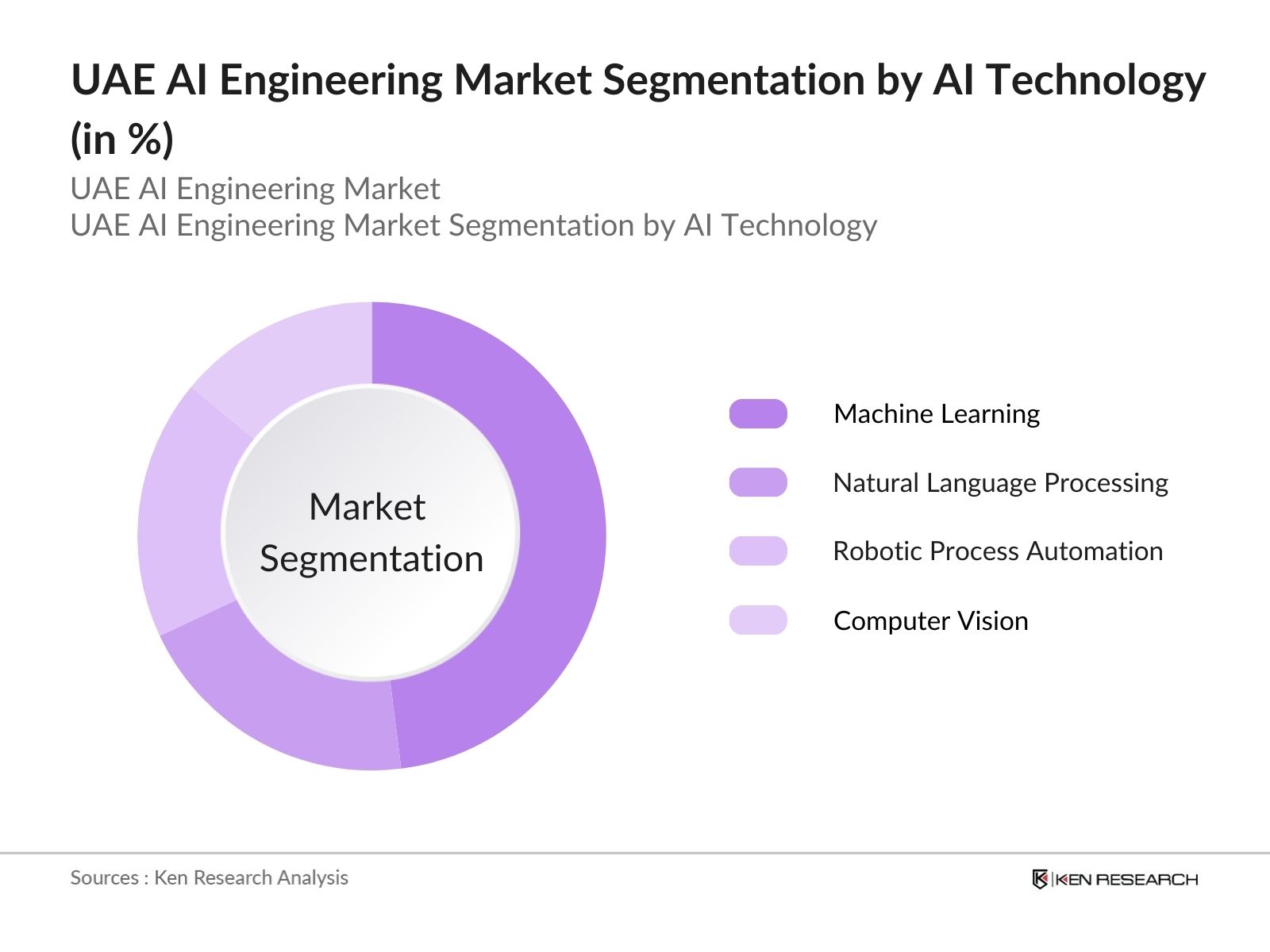
4.1. By AI Technology (In Value %)
4.1.1. Machine Learning
4.1.2. Natural Language Processing (NLP)
4.1.3. Robotic Process Automation (RPA)
4.1.4. Computer Vision
4.1.5. Deep Learning
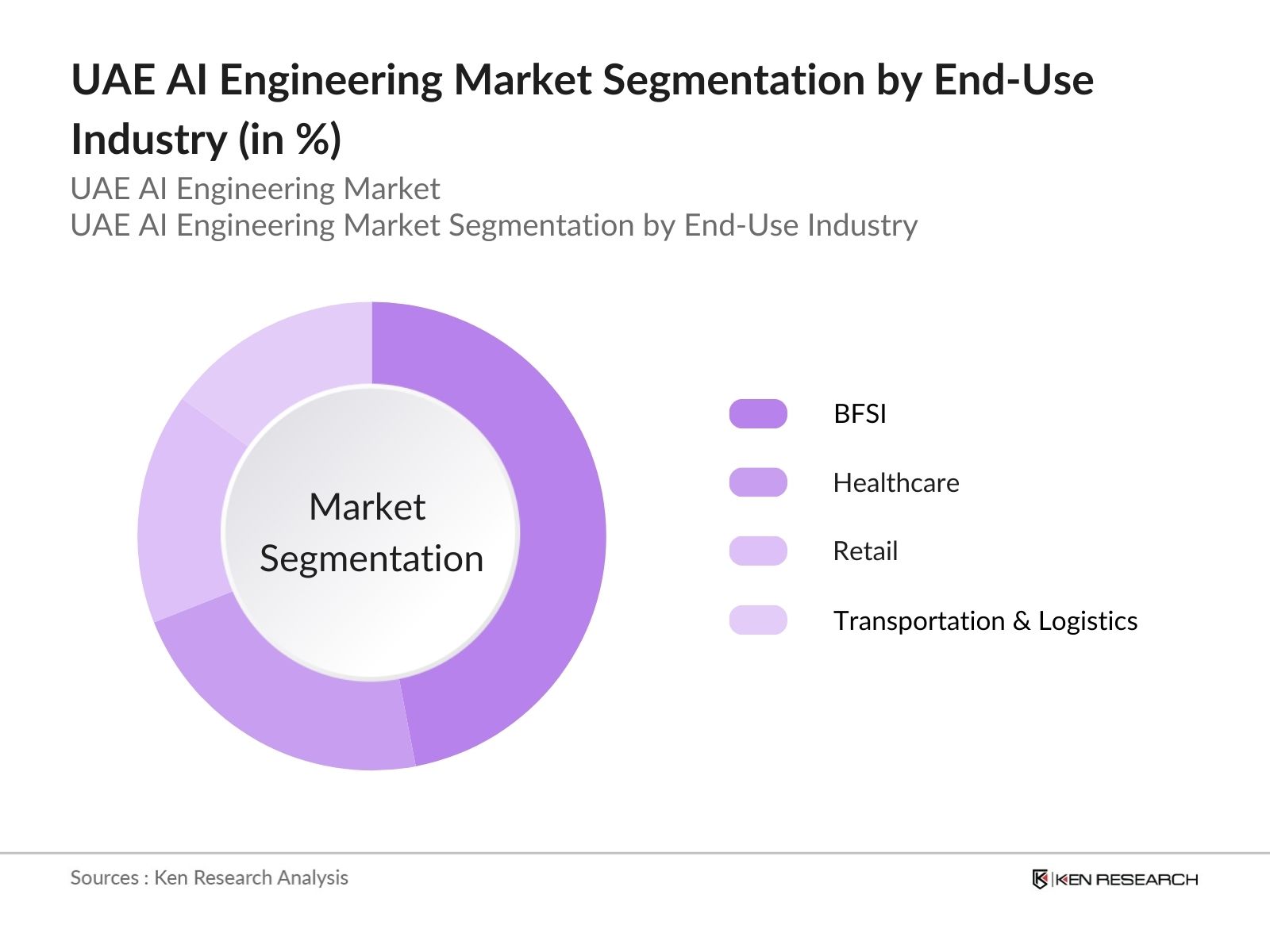
4.2. By End-Use Industry (In Value %)
4.2.1. Banking, Financial Services, and Insurance (BFSI)
4.2.2. Healthcare
4.2.3. Retail
4.2.4. Transportation & Logistics
4.2.5. Telecommunications
4.3. By Deployment Model (In Value %)
4.3.1. On-premise
4.3.2. Cloud-based
4.4. By Enterprise Size (In Value %)
4.4.1. Small and Medium Enterprises (SMEs)
4.4.2. Large Enterprises
4.5. By Region (In Value %)
4.5.1. Dubai
4.5.2. Abu Dhabi
4.5.3. Sharjah
4.5.4. Northern Emirates
5.1 Detailed Profiles of Major Companies
5.1.1. Microsoft UAE
5.1.2. IBM Middle East
5.1.3. Google Cloud MENA
5.1.4. Amazon Web Services (AWS) MENA
5.1.5. Accenture Middle East
5.1.6. PwC AI and Data Analytics
5.1.7. SAP MENA
5.1.8. Oracle Middle East
5.1.9. Huawei UAE
5.1.10. DarkMatter Group
5.1.11. Abu Dhabi AI Labs
5.1.12. SAS Middle East
5.1.13. Cognizant UAE
5.1.14. Infosys MENA
5.1.15. Wipro MENA
5.2 Cross Comparison Parameters (Revenue, Headquarters, Inception Year, Market Presence, AI Expertise, Industry Focus, Key Solutions, No. of Employees)
5.3 Market Share Analysis (Top Players Market Share, Competitive Landscape)
5.4 Strategic Initiatives (Product Launches, AI Research Collaborations, Strategic Partnerships)
5.5 Mergers and Acquisitions (Recent Deals, Market Impact, Consolidation)
5.6 Investment Analysis (AI Investments in the Region, Startups and Venture Capital)
5.7 Government Grants (AI Research Funding, Innovation Support)
5.8 Private Equity Investments (PE Firm Involvement, AI Company Investments)
6.1 AI Ethics Standards (Government Policies, Industry Guidelines)
6.2 Compliance Requirements (Data Protection Laws, Industry Certifications)
6.3 Certification Processes (ISO, AI Governance Certifications, Local Compliance)
7.1 Future Market Size Projections (Revenue Forecasts, AI Adoption Growth)
7.2 Key Factors Driving Future Market Growth (Government Initiatives, AI Advancements, Industry 4.0)
8.1. By AI Technology (In Value %)
8.2. By End-Use Industry (In Value %)
8.3. By Deployment Model (In Value %)
8.4. By Enterprise Size (In Value %)
8.5. By Region (In Value %)
9.1 TAM/SAM/SOM Analysis
9.2 Customer Cohort Analysis
9.3 Marketing Initiatives (AI-Specific Targeting, Industry Events)
9.4 White Space Opportunity Analysis (Niche Markets, Untapped Sectors)
The initial phase involves mapping out all key stakeholders within the UAE AI Engineering market, including government agencies, private firms, and AI service providers. Extensive desk research is conducted using secondary sources such as government reports, market databases, and company financials to establish key market variables such as AI adoption rates and revenue generation.
This phase focuses on collecting historical market data, including AI penetration across sectors, the rise in AI-driven services, and revenue generation within different segments. Market saturation and the competitiveness of local versus international AI players are also assessed, ensuring a comprehensive market analysis.
Hypotheses on market growth and potential disruptions are formulated and validated via industry expert interviews, including AI solution providers, local startups, and government representatives. Insights from these consultations refine the market data and help in creating a more nuanced report.
The final stage involves synthesizing the findings from both primary and secondary research to produce a comprehensive analysis of the UAE AI Engineering market. This includes detailed forecasts, segmentation analysis, and actionable insights to assist stakeholders in making data-driven decisions.
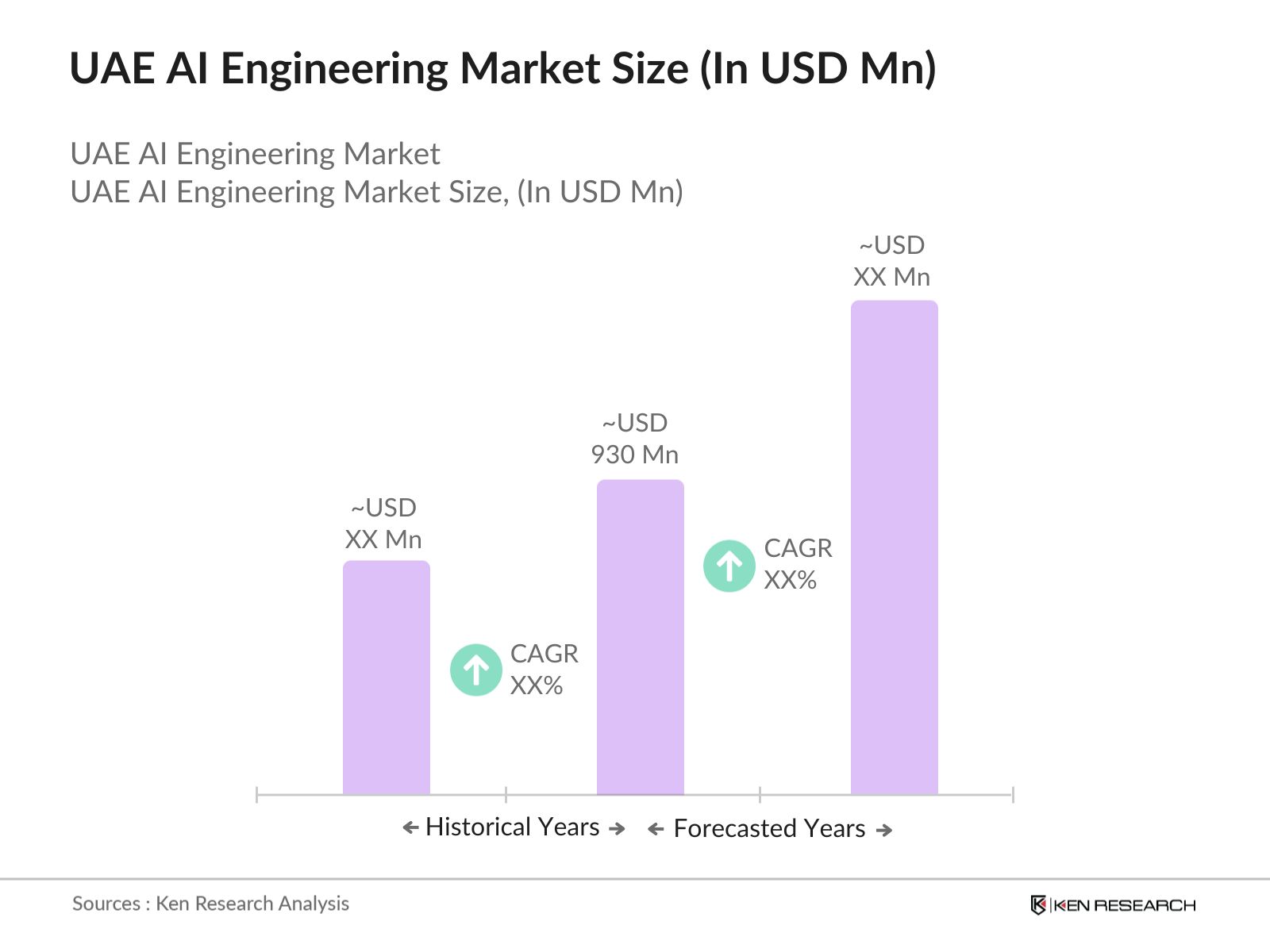
The UAE AI Engineering market was valued at USD 930 million and continues to grow due to significant governmental support and private sector investments, establishing the country as a leader in AI adoption in the region.
Key challenges include the shortage of skilled AI professionals, high initial implementation costs, and navigating strict data privacy and security regulations, which can hinder the full-scale deployment of AI solutions.
Major players include Microsoft UAE, IBM Middle East, Google Cloud MENA, Amazon Web Services (AWS) MENA, and DarkMatter Group. These companies dominate the market through strategic partnerships, strong AI capabilities, and extensive regional presence.
Growth drivers include government initiatives such as the UAE National AI Strategy 2031, the increasing use of AI in smart city projects, and widespread AI adoption across industries like healthcare, finance, and logistics.

What makes us stand out is that our consultants follows Robust, Refine and Result (RRR) methodology. i.e. Robust for clear definitions, approaches and sanity checking, Refine for differentiating respondents facts and opinions and Result for presenting data with story

We have set a benchmark in the industry by offering our clients with syndicated and customized market research reports featuring coverage of entire market as well as meticulous research and analyst insights.

While we don't replace traditional research, we flip the method upside down. Our dual approach of Top Bottom & Bottom Top ensures quality deliverable by not just verifying company fundamentals but also looking at the sector and macroeconomic factors.

With one step in the future, our research team constantly tries to show you the bigger picture. We help with some of the tough questions you may encounter along the way: How is the industry positioned? Best marketing channel? KPI's of competitors? By aligning every element, we help maximize success.

Our report gives you instant access to the answers and sources that other companies might choose to hide. We elaborate each steps of research methodology we have used and showcase you the sample size to earn your trust.

If you need any support, we are here! We pride ourselves on universe strength, data quality, and quick, friendly, and professional service.