
UAE Architectural Lighting Market Outlook to 2030
Region:United Arab Emirates
Author(s):Meenakshi Bisht
Product Code:KROD5146
Region:United Arab Emirates
Author(s):Meenakshi Bisht
Product Code:KROD5146
December 2024
86
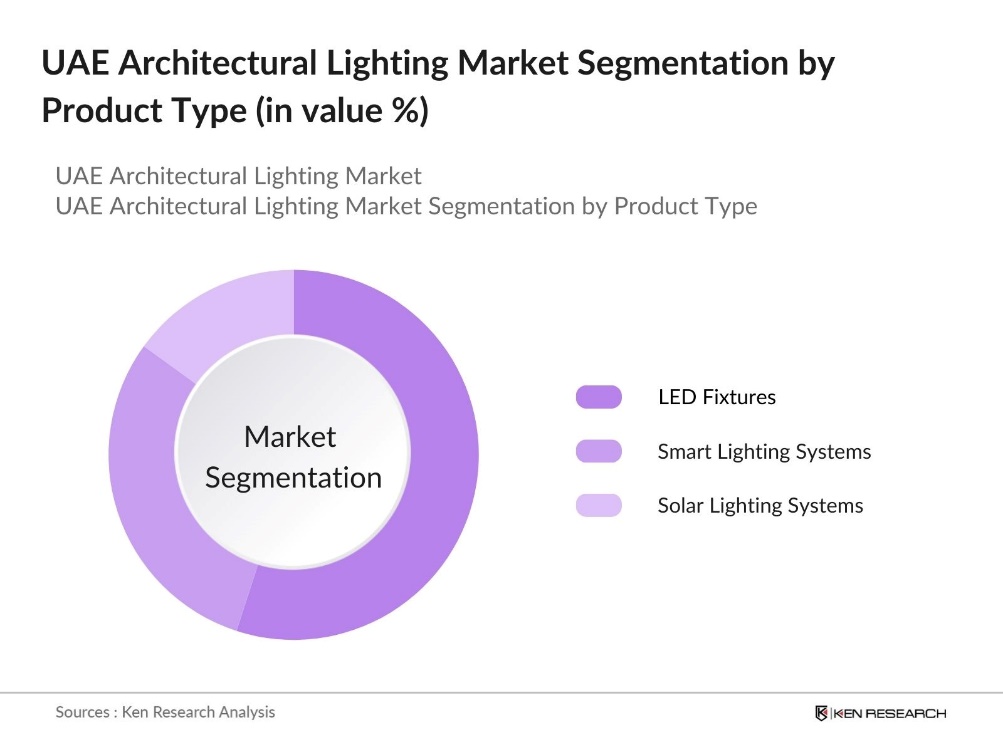
By Product Type: The UAE architectural lighting market is segmented by product type into LED fixtures, smart lighting systems, and solar lighting systems. Recently, LED fixtures have had a dominant market share in the UAE architectural lighting market. This dominance is primarily due to their energy efficiency, longer lifespan, and lower environmental impact compared to traditional lighting systems. Moreover, the government's focus on sustainability and green building certifications has incentivized the adoption of LED lighting in both public and private projects.
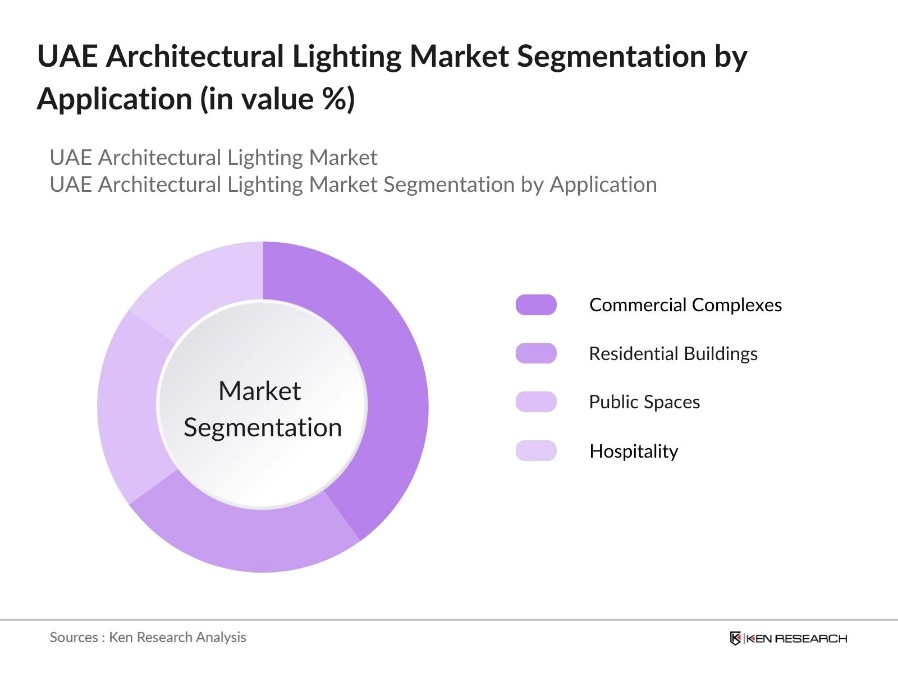
By Application: The UAE architectural lighting market is segmented by application into residential buildings, commercial complexes, public spaces, and hospitality. Commercial complexes hold the largest share in the market due to ongoing infrastructural developments and high demand for modernized, energy-efficient architectural lighting solutions in office buildings and shopping malls. The increasing number of commercial real estate projects across Dubai and Abu Dhabi, in line with the UAEs Vision 2030, has further cemented this segment's dominance.
The market is dominated by a combination of international and regional players that offer a wide range of lighting solutions. Global companies such as Philips Lighting and Osram GmbH are key players, offering cutting-edge technologies and smart lighting solutions. These companies are known for their strong distribution networks, innovative products, and high-quality standards. The competition is further intensified by the presence of regional players who specialize in local market needs and government projects.
|
Company Name |
Establishment Year |
Headquarters |
Product Range |
R&D Investment |
Sustainability Initiatives |
Market Penetration |
Key Clients |
Regional Projects |
|
Philips Lighting |
1891 |
Amsterdam, Netherlands |
||||||
|
Osram GmbH |
1919 |
Munich, Germany |
||||||
|
Zumtobel Group |
1950 |
Dornbirn, Austria |
||||||
|
Fagerhult Group |
1945 |
Habo, Sweden |
||||||
|
Signify N.V. |
2018 |
Eindhoven, Netherlands |
The UAE Architectural Lighting Market is expected to witness steady growth over the next five years, driven by several key factors. These include continued government investments in smart city projects, increasing adoption of energy-efficient and sustainable lighting systems, and the expansion of both residential and commercial infrastructure. The integration of smart technologies like IoT in lighting solutions will play a pivotal role in enhancing energy management and reducing costs, further contributing to the growth of the market.
|
Product Type |
LED Fixtures Smart Lighting Systems Solar Lighting Systems |
|
Application |
Residential Buildings Commercial Complexes Public Spaces Hospitality |
|
Technology |
LED Technology Fluorescent Technology Halogen Technology |
|
Installation Type |
Interior Lighting Exterior Lighting |
|
Region |
Abu Dhabi Dubai Sharjah Northern Emirates |
1.1. Definition and Scope
1.2. Market Taxonomy
1.3. Architectural Lighting Systems and Components Overview
1.4. Industry and Market Growth Rate
1.5. Market Segmentation Overview
2.1. Historical Market Size
2.2. Year-On-Year Growth Analysis
2.3. Key Market Developments and Milestones
3.1. Growth Drivers (Urbanization, Infrastructure Development, Smart Cities)
3.1.1. Rise in Smart City Initiatives
3.1.2. Government Infrastructure Projects
3.1.3. Increasing Demand for Energy-Efficient Lighting
3.2. Market Challenges (High Initial Costs, Supply Chain Issues, Lack of Standardization)
3.2.1. High Installation Costs
3.2.2. Regulatory Challenges
3.2.3. Technological Limitations
3.3. Opportunities (Sustainability, Green Building Certification, Smart Lighting Systems)
3.3.1. Green Buildings and Sustainability Certifications
3.3.2. Growing Demand for Smart Architectural Lighting
3.3.3. Integration with IoT
3.4. Trends (LEDs, Smart Lighting, Minimalist Design, Solar Integration)
3.4.1. Adoption of LED-based Solutions
3.4.2. Solar-Powered Lighting Systems
3.4.3. Smart Architectural Lighting Integration
3.5. Government Regulations (Energy Efficiency Standards, Building Codes)
3.5.1. UAE Energy Efficiency Lighting Regulations
3.5.2. Green Building Regulations
3.5.3. Regulatory Standards for Public Lighting Projects
3.6. Competitive Landscape
3.6.1. Key Competitors Overview
3.6.2. Porters Five Forces Analysis
4.1. By Product Type (In Value %)
4.1.1. LED Fixtures
4.1.2. Smart Lighting Systems
4.1.3. Solar Lighting Systems
4.2. By Application (In Value %)
4.2.1. Residential Buildings
4.2.2. Commercial Complexes
4.2.3. Public Spaces
4.2.4. Hospitality
4.3. By Technology (In Value %)
4.3.1. LED Technology
4.3.2. Fluorescent Technology
4.3.3. Halogen Technology
4.4. By Installation Type (In Value %)
4.4.1. Interior Lighting
4.4.2. Exterior Lighting
4.5. By Region (In Value %)
4.5.1. Abu Dhabi
4.5.2. Dubai
4.5.3. Sharjah
4.5.4. Northern Emirates
5.1. Detailed Profiles of Major Companies
5.1.1. Philips Lighting
5.1.2. Zumtobel Group
5.1.3. Osram GmbH
5.1.4. Fagerhult Group
5.1.5. General Electric
5.1.6. Acuity Brands Lighting
5.1.7. Cree Inc.
5.1.8. Hubbell Lighting
5.1.9. Thorlux Lighting
5.1.10. Signify N.V.
5.1.11. Eagle Lighting
5.1.12. Ligman Lighting
5.1.13. Trilux Lighting
5.1.14. Schreder Group
5.1.15. NVC Lighting Technology
5.2. Cross Comparison Parameters (Revenue, No. of Employees, Headquarters, Product Range, Innovation Capabilities, Client Base, Market Presence, Sustainability Initiatives)
5.3. Market Share Analysis
5.4. Strategic Initiatives
5.5. Mergers and Acquisitions
5.6. Investment and Expansion Analysis
5.7. Private Equity Investments
5.8. Government Contracts and Tenders
6.1. Energy Efficiency Standards
6.2. Certification Processes
6.3. Regulatory Approvals for New Installations
7.1. Market Size Projections
7.2. Key Factors Driving Future Market Growth
8.1. By Product Type (In Value %)
8.2. By Application (In Value %)
8.3. By Technology (In Value %)
8.4. By Installation Type (In Value %)
8.5. By Region (In Value %)
9.1. Customer Cohort Analysis
9.2. Strategic Marketing Initiatives
9.3. Competitive Positioning Recommendations
9.4. White Space Opportunity Analysis
The first step involves identifying key variables influencing the UAE Architectural Lighting Market. This is achieved through extensive desk research and a thorough examination of government regulations, key players, and industry stakeholders to understand the market dynamics.
In this phase, we analyze historical market data for the UAE Architectural Lighting Market, including sales revenue, the penetration rate of energy-efficient lighting systems, and technological advancements. We also study the markets segmentation to understand the competitive landscape.
Key market hypotheses will be validated through consultations with industry experts. Telephone interviews and surveys are conducted with professionals in the architectural lighting industry, allowing us to cross-validate the data collected.
The final phase consolidates the gathered data, with inputs from lighting manufacturers and distributors in the UAE. This ensures that the data on market size, segmentation, and key trends are accurate and actionable for business decisions.
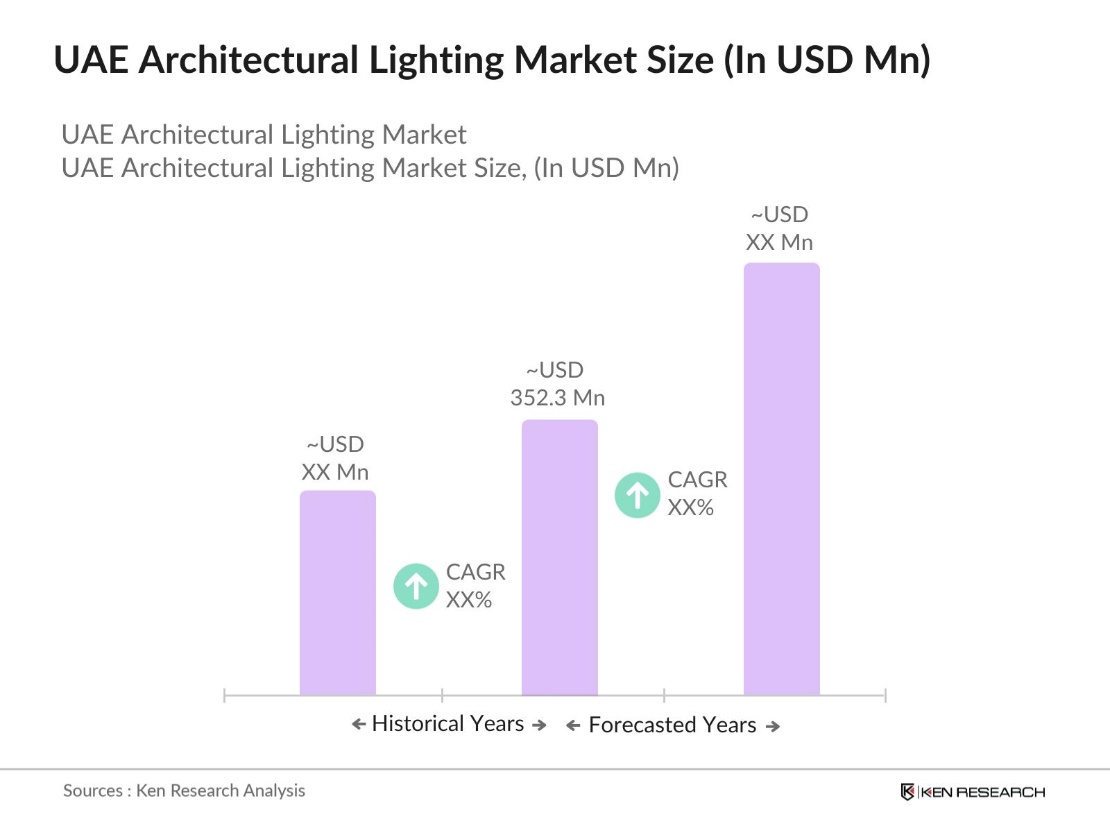
The UAE Architectural Lighting Market is valued at USD 352.3 million, driven by large-scale government infrastructure projects and the rising demand for energy-efficient and smart lighting solutions.
Challenges in UAE Architectural Lighting Market include the high installation costs of energy-efficient systems, regulatory hurdles in building codes, and the complexities of integrating smart lighting technologies into existing infrastructure.
Major players in UAE Architectural Lighting Market include Philips Lighting, Osram GmbH, Fagerhult Group, Zumtobel Group, and Signify N.V. These companies lead the market due to their innovation in energy efficiency and smart lighting technologies.
The UAE Architectural Lighting Market is propelled by government investments in smart city projects, increasing adoption of LED lighting, and growing awareness of sustainable building solutions.

What makes us stand out is that our consultants follows Robust, Refine and Result (RRR) methodology. i.e. Robust for clear definitions, approaches and sanity checking, Refine for differentiating respondents facts and opinions and Result for presenting data with story

We have set a benchmark in the industry by offering our clients with syndicated and customized market research reports featuring coverage of entire market as well as meticulous research and analyst insights.

While we don't replace traditional research, we flip the method upside down. Our dual approach of Top Bottom & Bottom Top ensures quality deliverable by not just verifying company fundamentals but also looking at the sector and macroeconomic factors.

With one step in the future, our research team constantly tries to show you the bigger picture. We help with some of the tough questions you may encounter along the way: How is the industry positioned? Best marketing channel? KPI's of competitors? By aligning every element, we help maximize success.

Our report gives you instant access to the answers and sources that other companies might choose to hide. We elaborate each steps of research methodology we have used and showcase you the sample size to earn your trust.

If you need any support, we are here! We pride ourselves on universe strength, data quality, and quick, friendly, and professional service.