
UAE Virtual Reality Market Outlook 2030
Region:United Arab Emirates
Author(s):Shivani Mehra
Product Code:KROD11468
Region:United Arab Emirates
Author(s):Shivani Mehra
Product Code:KROD11468
November 2024
90
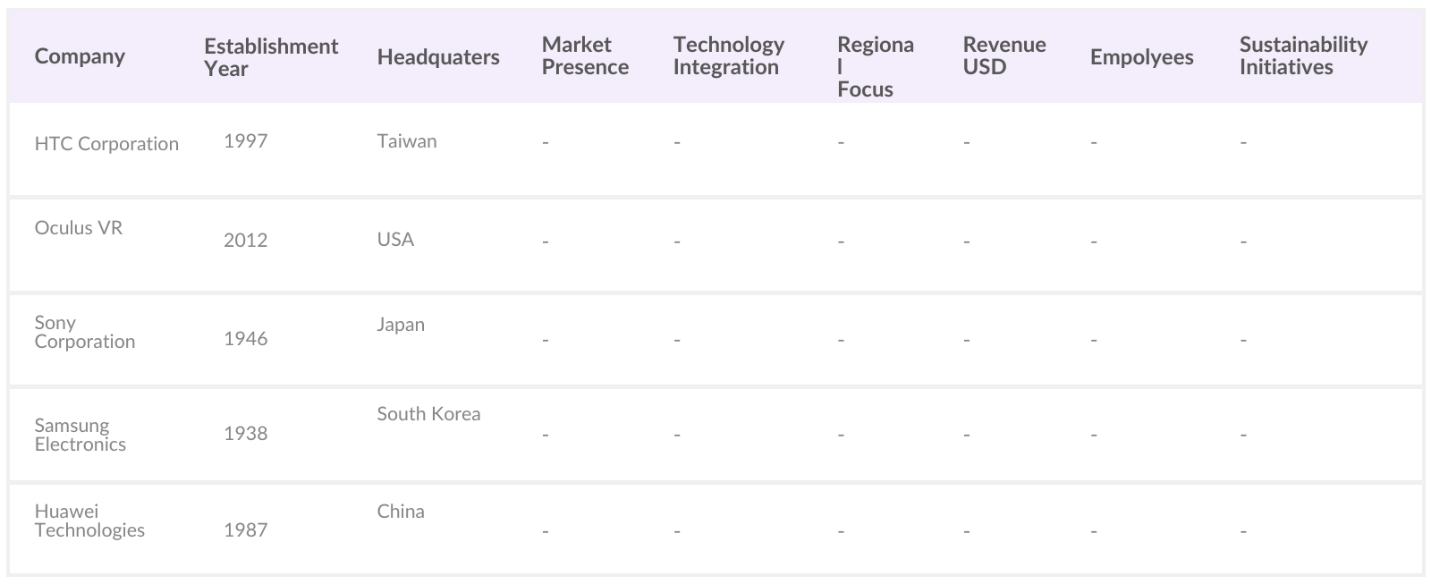
The UAE Virtual Reality market is shaped by a few major players, including global tech giants and regional innovators. This competitive landscape underscores the strong influence of these companies in setting standards and innovating within the VR sector.
Market Growth Drivers
Market Challenges:
Over the next few years, the UAE Virtual Reality market is set to expand significantly, propelled by ongoing government initiatives, technological advances, and an expanding user base in commercial and educational applications. The VR markets growth trajectory reflects increasing VR adoption across various sectors, with considerable interest in leveraging VR for enhanced user engagement in the UAEs major cities.
Market Opportunities:
|
By Component |
Hardware |
|
By Application |
Gaming and Entertainment |
|
By Technology |
Non-Immersive VR Semi-Immersive VR Fully Immersive VR |
|
By End-User |
Individual Consumers |
|
By Region |
North-East Midwest West Coast Southern States |
1.1. Definition and Scope
1.2. Market Taxonomy
1.3. Market Growth Rate and Dynamics
1.4. Market Segmentation Overview
2.1. Historical Market Size
2.2. Year-On-Year Growth Analysis
2.3. Key Market Developments and Milestones
3.1. Growth Drivers
3.1.1. Government Initiatives and Smart City Projects
3.1.2. Increasing Investments in VR Technology
3.1.3. Rise in Demand for Immersive Entertainment and Education (VR Adoption Rate)
3.1.4. Growth of Tourism and Virtual Experiences
3.2. Market Challenges
3.2.1. High Hardware and Implementation Costs
3.2.2. Technical Complexity and Skill Gap
3.2.3. Limited Content Development for Regional Needs
3.3. Opportunities
3.3.1. Advancement in VR-AR Integration (Augmented Reality)
3.3.2. Expansion in Healthcare, Retail, and Real Estate Sectors
3.3.3. Potential for Collaboration with Education and Training
3.4. Trends
3.4.1. Adoption of VR in Remote Work Solutions
3.4.2. Increased Utilization in VR-Enhanced Marketing and Advertising
3.4.3. Growth in Wearable VR Devices
3.5. Regulatory Environment
3.5.1. Data Privacy and Cybersecurity Policies
3.5.2. Content and User Experience Standards
3.5.3. Compliance with Safety Regulations
3.6. SWOT Analysis
3.7. Stakeholder Ecosystem
3.8. Porters Five Forces
3.9. Competitive Ecosystem
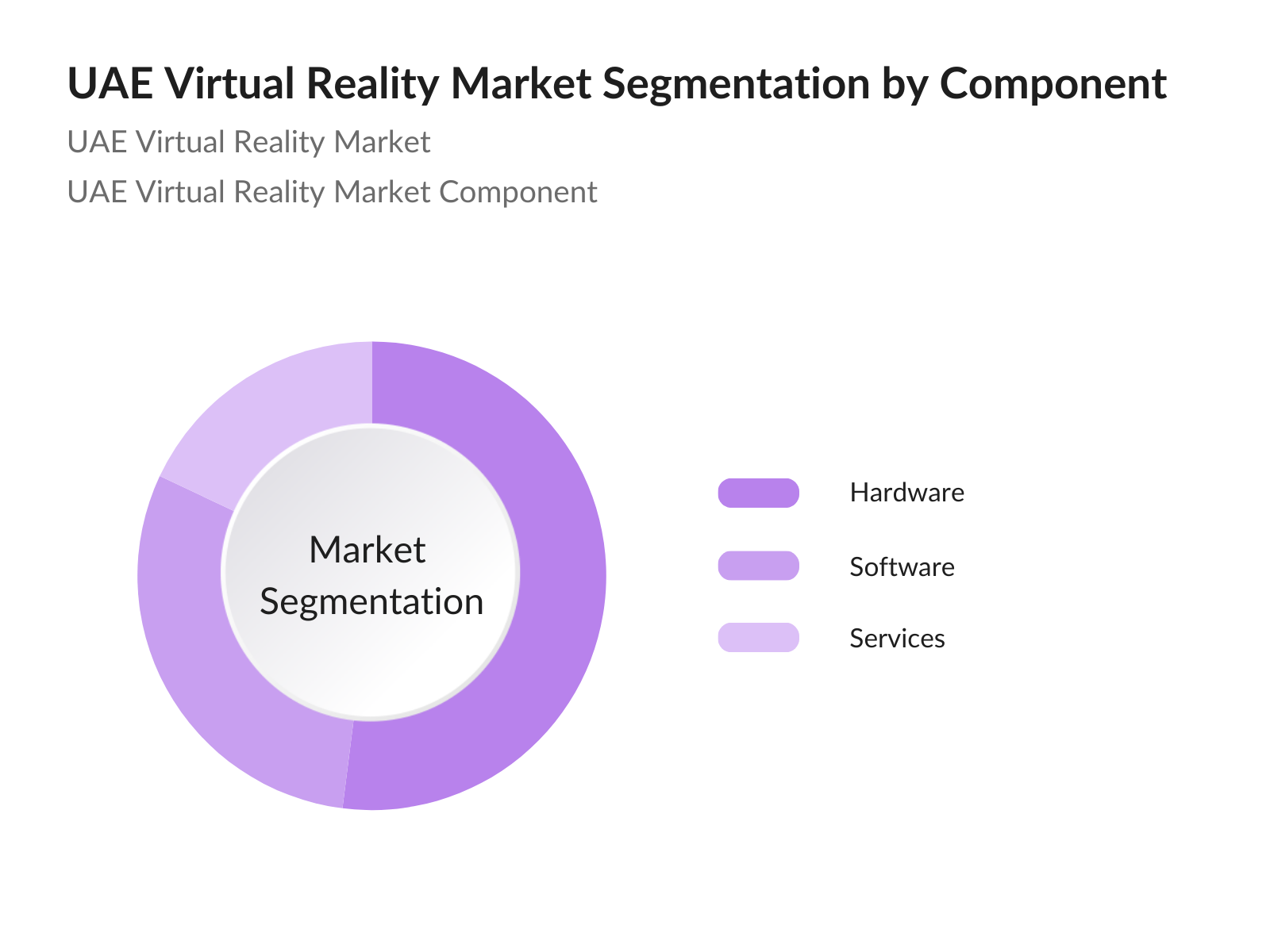
4.1. By Component (in Value %)
4.1.1. Hardware
4.1.2. Software
4.1.3. Services
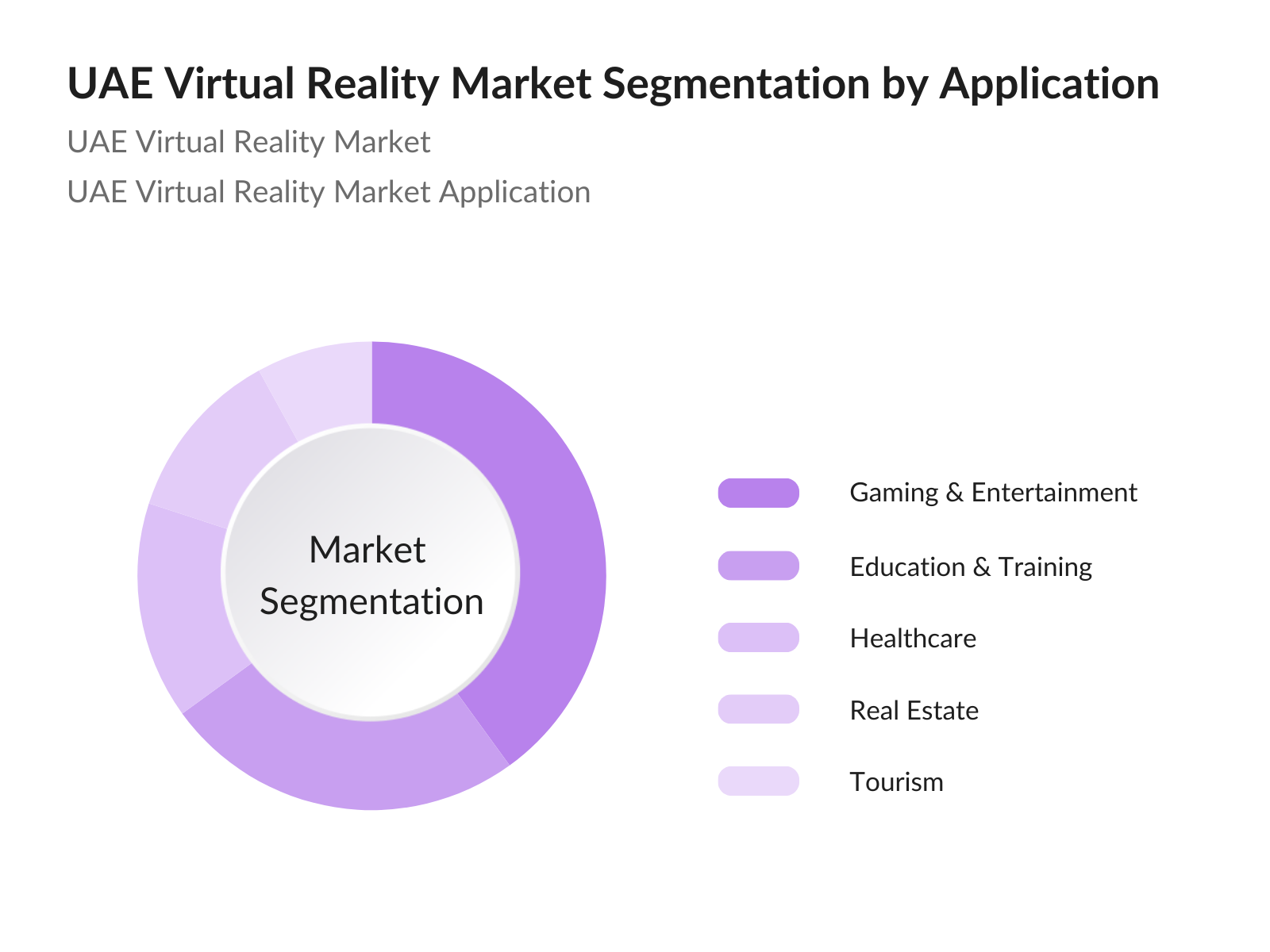
4.2. By Application (in Value %)
4.2.1. Gaming and Entertainment
4.2.2. Education and Training
4.2.3. Healthcare and Therapy
4.2.4. Real Estate and Retail
4.2.5. Tourism and Hospitality
4.3. By Technology (in Value %)
4.3.1. Non-Immersive VR
4.3.2. Semi-Immersive VR
4.3.3. Fully Immersive VR
4.4. By End-User (in Value %)
4.4.1. Individual Consumers
4.4.2. Commercial Entities
4.4.3. Industrial Users
4.5. By Distribution Channel (in Value %)
4.5.1. Online
4.5.2. Offline Retail
5.1. Detailed Profiles of Major Companies
5.1.1. HTC Corporation
5.1.2. Oculus VR
5.1.3. Google LLC
5.1.4. Sony Corporation
5.1.5. Samsung Electronics
5.1.6. Microsoft Corporation
5.1.7. Magic Leap Inc.
5.1.8. EON Reality
5.1.9. Huawei Technologies
5.1.10. Varjo Technologies
5.1.11. DPVR
5.1.12. Unity Technologies
5.1.13. Lenovo
5.1.14. Pimax Technology
5.1.15. Cyberith GmbH
5.2. Cross Comparison Parameters (Market Share, No. of Employees, Regional Presence, Product Innovation, Technology Expertise, Partnerships)
5.3. Market Share Analysis
5.4. Strategic Initiatives
5.5. Mergers and Acquisitions
5.6. Investment Analysis
5.7. Government Grants and Subsidies
5.8. Venture Capital and Private Equity Investments
6.1. National VR Adoption Policies
6.2. Certification and Compliance Standards
6.3. Consumer Protection Regulations
7.1. Future Market Size Projections
7.2. Key Factors Driving Future Market Growth
8.1. By Component (in Value %)
8.2. By Application (in Value %)
8.3. By Technology (in Value %)
8.4. By End-User (in Value %)
8.5. By Distribution Channel (in Value %)
9.1. Target Addressable Market (TAM) Analysis
9.2. Market Segmentation Strategy
9.3. Go-to-Market Strategy Recommendations
9.4. White Space and Innovation Opportunities
Disclaimer Contact UsIn the initial phase, the ecosystem for the UAE VR market is mapped to include all stakeholders, leveraging proprietary and secondary databases to obtain comprehensive information on the market landscape.
This step involves analyzing historical data, examining VR penetration rates across sectors, and evaluating the growth in the adoption of VR technology. Revenue patterns are cross-validated to ensure data reliability.
Hypotheses are refined through expert consultations with industry professionals. These discussions offer essential insights into market dynamics, which help validate research data and assumptions.
The final step synthesizes findings from direct interviews with VR companies and users, adding depth to the analysis and reinforcing conclusions drawn from data.
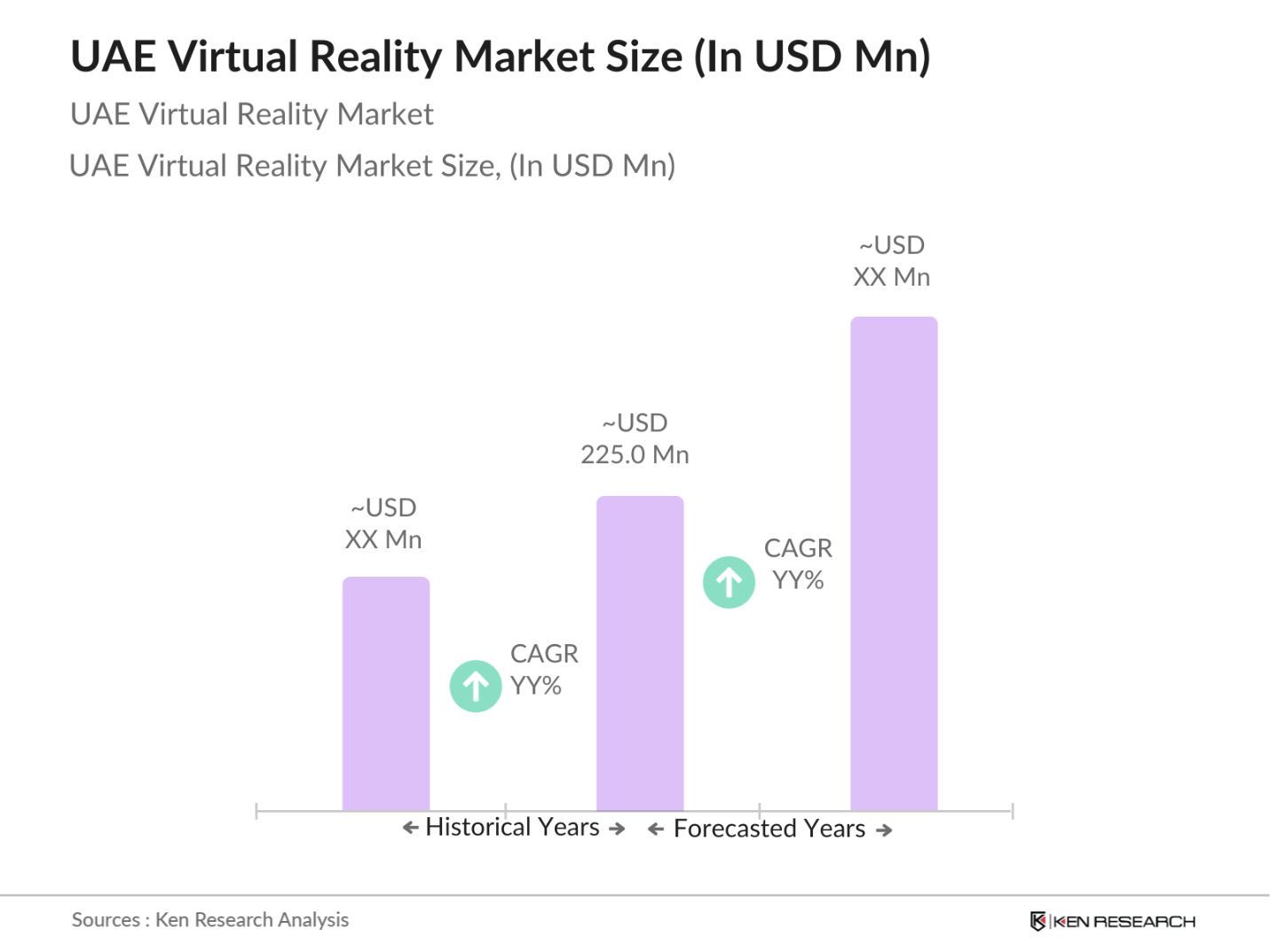
The UAE Virtual Reality market is valued at USD 225.0 million, driven by advancements in VR technology and growing consumer interest across diverse applications.
Key challenges include high hardware costs, a need for skilled professionals, and the technical complexity of VR implementation, which could hinder wider adoption.
Top players include HTC Corporation, Oculus VR, Sony Corporation, Samsung Electronics, and Huawei Technologies, each bringing unique capabilities to the market.
Growth is fueled by digitalization efforts, government-backed initiatives, and the demand for immersive experiences in sectors such as tourism and education.

What makes us stand out is that our consultants follows Robust, Refine and Result (RRR) methodology. i.e. Robust for clear definitions, approaches and sanity checking, Refine for differentiating respondents facts and opinions and Result for presenting data with story

We have set a benchmark in the industry by offering our clients with syndicated and customized market research reports featuring coverage of entire market as well as meticulous research and analyst insights.

While we don't replace traditional research, we flip the method upside down. Our dual approach of Top Bottom & Bottom Top ensures quality deliverable by not just verifying company fundamentals but also looking at the sector and macroeconomic factors.

With one step in the future, our research team constantly tries to show you the bigger picture. We help with some of the tough questions you may encounter along the way: How is the industry positioned? Best marketing channel? KPI's of competitors? By aligning every element, we help maximize success.

Our report gives you instant access to the answers and sources that other companies might choose to hide. We elaborate each steps of research methodology we have used and showcase you the sample size to earn your trust.

If you need any support, we are here! We pride ourselves on universe strength, data quality, and quick, friendly, and professional service.