
United States Cannabis Market Outlook to 2030
Region:United States
Author(s):Sanjeev
Product Code:KROD7167
Region:United States
Author(s):Sanjeev
Product Code:KROD7167
October 2024
94
The U.S. cannabis market is dominated by several key players, each contributing to the rapid evolution of the industry. Leading companies have built strong brands, extensive cultivation facilities, and sophisticated distribution networks to maintain their edge in this competitive landscape. Companies such as Canopy Growth and Curaleaf have invested heavily in research and development, furthering product innovation and expanding into new territories.
The market is highly competitive, with both domestic companies and international brands vying for a larger share. Vertical integration, which allows companies to control the entire supply chain from cultivation to retail, has become a key competitive strategy, ensuring consistent product quality and supply reliability.
|
Company |
Establishment Year |
Headquarters |
No. of Dispensaries |
Cultivation Facilities |
Revenue (2023) |
Product Lines |
Geographical Reach |
Market Strategy |
R&D Investments |
|
Canopy Growth |
2013 |
Smiths Falls, ON |
|||||||
|
Curaleaf Holdings |
2010 |
Wakefield, MA |
|||||||
|
Green Thumb |
2014 |
Chicago, IL |
|||||||
|
Trulieve Cannabis |
2015 |
Quincy, FL |
|||||||
|
Charlottes Web |
2014 |
Boulder, CO |
Over the next five years, the U.S. cannabis market is expected to see expansion, driven by increasing state-level legalization and federal policy shifts that could pave the way for broader decriminalization. The market will likely witness continued growth in product innovation, particularly in edibles and wellness products like CBD, catering to an increasingly health-conscious consumer base. Additionally, advancements in cultivation technologies, including sustainable farming practices and automation, will reduce production costs and enhance scalability.
The expected entry of large consumer goods companies into the market will also shape future trends, with partnerships between cannabis brands and mainstream retailers becoming more common.
|
Cigarettes Cigars Smokeless Tobacco Roll-Your-Own (RYO) Tobacco E-cigarettes and Vaping Products
|
|
|
By Distribution Channel |
Online Retail Supermarkets/Hypermarkets Tobacco Specialty Stores Convenience Stores Duty-Free Retail |
|
By Consumer Age Group |
18-24 Years 25-34 Years 35-44 Years 45+ Years |
|
By Nicotine Content |
Low Nicotine Medium Nicotine High Nicotine |
|
By Region |
North East West South |
1.1. Definition and Scope
1.2. Market Taxonomy
1.3. Market Growth Rate
1.4. Market Segmentation Overview
2.1. Historical Market Size
2.2. Year-On-Year Growth Analysis
2.3. Key Market Developments and Milestones
3.1. Growth Drivers (Legislation, Market Demand, Medical Use, Recreational Use, Tax Revenue)
3.1.1. Federal and State Legalization
3.1.2. Rising Medical Cannabis Approvals
3.1.3. Recreational Use Trends
3.1.4. Increased Cannabis Tourism
3.2. Market Challenges (Federal Restrictions, Banking Limitations, High Taxation, Regulatory Compliance)
3.2.1. Federal Banking Restrictions
3.2.2. Black Market Competition
3.2.3. Regulatory Fragmentation
3.2.4. Marketing and Advertising Restrictions
3.3. Opportunities (Expansion into New States, Product Innovation, Edibles and Beverages, Health and Wellness)
3.3.1. New Recreational States
3.3.2. Rise in Cannabis-Infused Products
3.3.3. Partnerships with Health and Wellness Brands
3.3.4. Growth in CBD-Related Products
3.4. Trends (Mergers & Acquisitions, Vertical Integration, Sustainability Practices, Digital Transformation)
3.4.1. Increase in Vertical Integration Strategies
3.4.2. Adoption of Sustainable Cultivation Practices
3.4.3. Digital and Online Sales Growth
3.4.4. Strategic Mergers & Acquisitions in Cannabis Industry
3.5. Government Regulation (Federal Law, State Laws, Licensing, Interstate Trade, Compliance Costs)
3.5.1. Federal vs. State Discrepancies
3.5.2. License Types and Regulatory Overviews
3.5.3. Taxation Frameworks by State
3.5.4. Compliance and Monitoring Costs
3.6. SWOT Analysis
3.7. Stake Ecosystem (Growers, Dispensaries, Regulatory Agencies, Consumers)
3.8. Porter’s Five Forces (Market Dynamics)
3.9. Competition Ecosystem
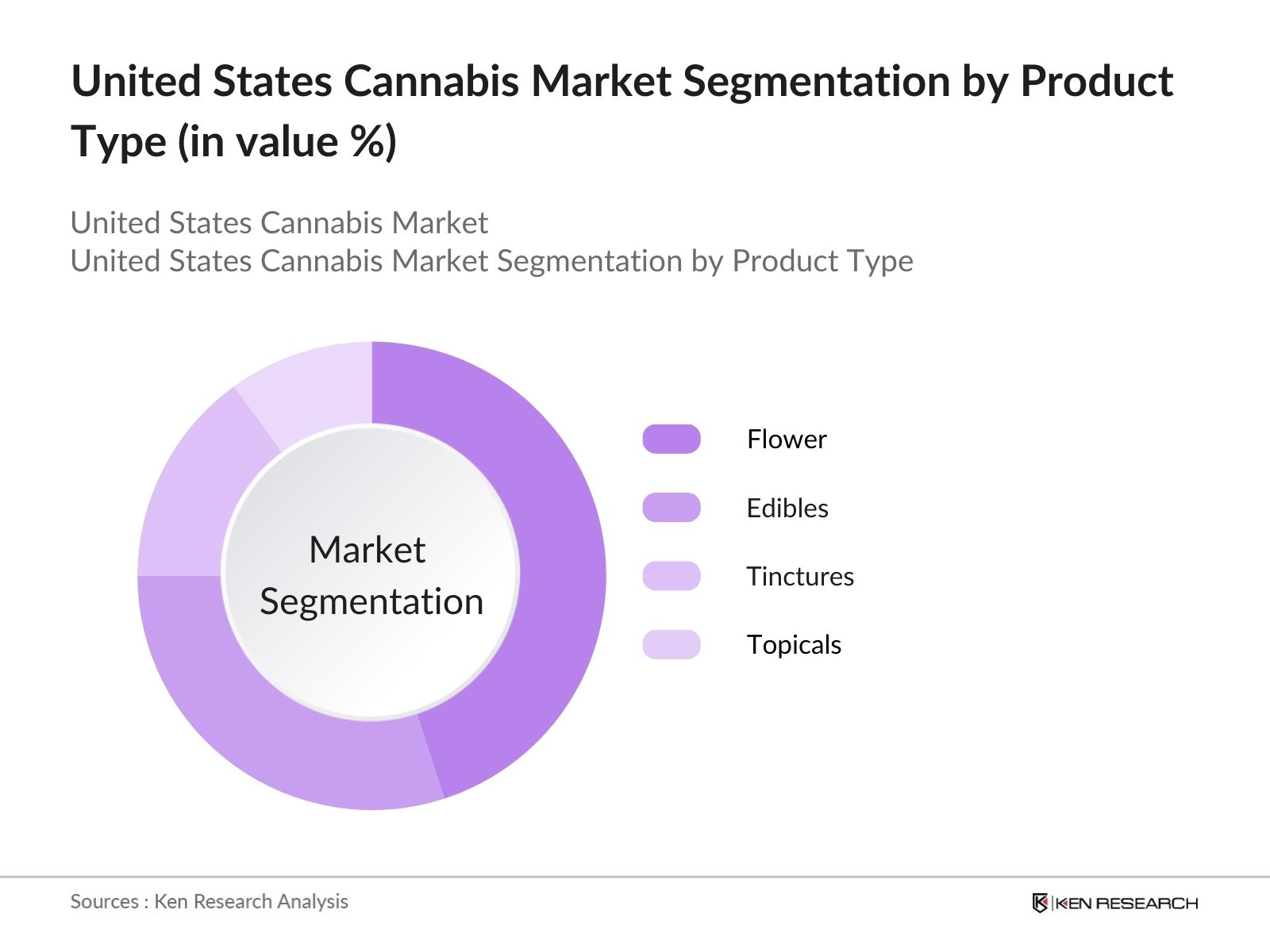
4.1. By Product Type (In Value %)
4.1.1. Flower
4.1.2. Edibles
4.1.3. Oils & Tinctures
4.1.4. Topicals
4.2. By Application (In Value %)
4.2.1. Recreational
4.2.2. Medical
4.2.3. Industrial Hemp
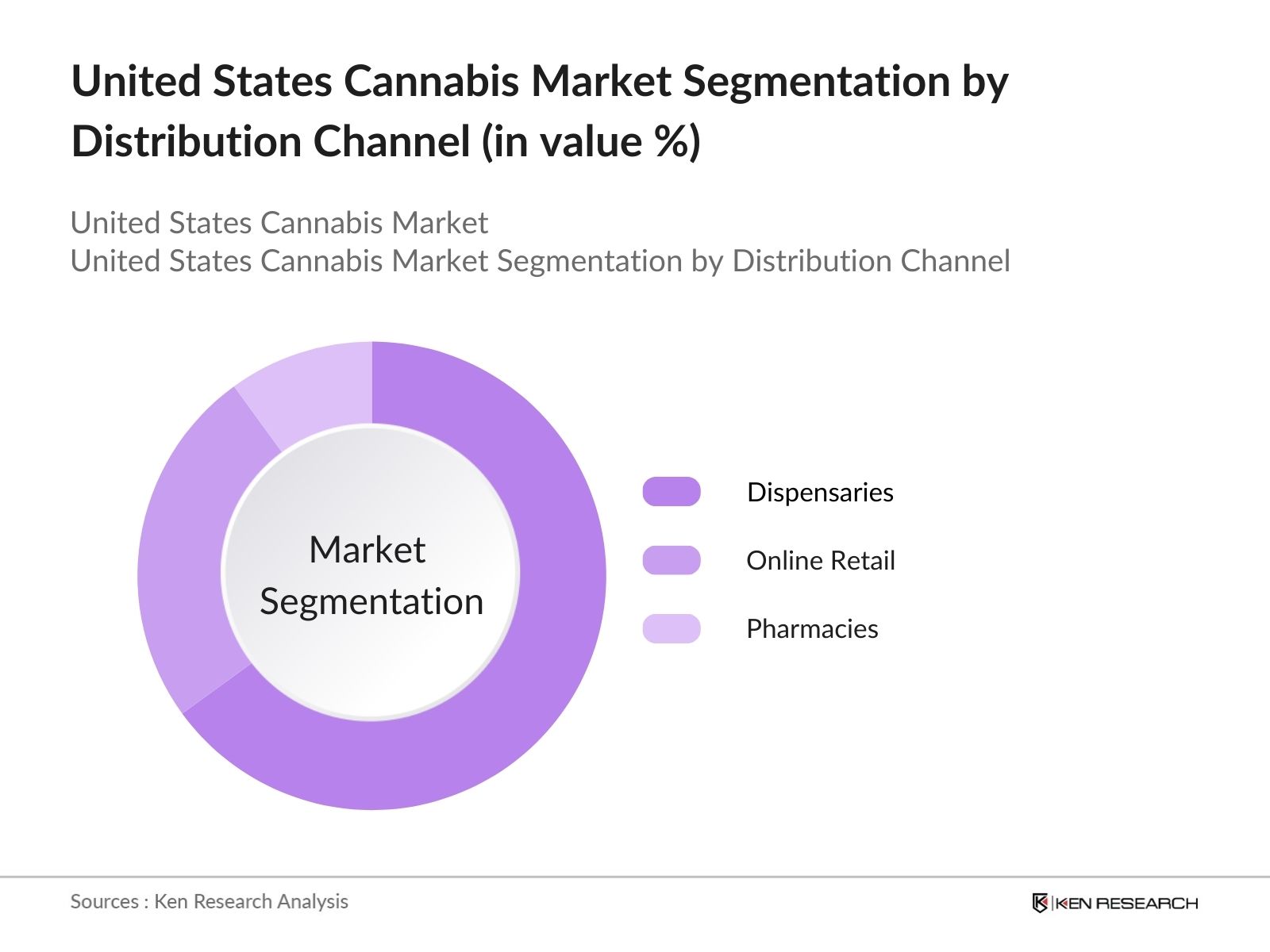
4.3. By Distribution Channel (In Value %)
4.3.1. Dispensaries
4.3.2. Online Retail
4.3.3. Pharmacies (For Medical Use)
4.4. By Consumer Group (In Value %)
4.4.1. Adult Consumers
4.4.2. Medical Patients
4.4.3. Seniors
4.5. By Region (In Value %)
4.5.1. North
4.5.2. South
4.5.3. West
4.5.4. East
5.1. Detailed Profiles of Major Companies
5.1.1. Canopy Growth
5.1.2. Curaleaf Holdings
5.1.3. Green Thumb Industries
5.1.4. Trulieve Cannabis Corp
5.1.5. Cresco Labs
5.1.6. Charlotte’s Web
5.1.7. Tilray Inc.
5.1.8. MedMen Enterprises
5.1.9. Aurora Cannabis
5.1.10. Aphria Inc.
5.1.11. Harvest Health & Recreation
5.1.12. Acreage Holdings
5.1.13. Columbia Care
5.1.14. TerrAscend Corp
5.1.15. Ayr Wellness
5.2. Cross Comparison Parameters (Revenue, Product Portfolio, Retail Footprint, Legal Presence, Licenses, No. of Employees, Headquarters, Profit Margins)
5.3. Market Share Analysis
5.4. Strategic Initiatives
5.5. Mergers And Acquisitions
5.6. Investment Analysis
5.7 Venture Capital Funding
5.8. Government Grants
5.9. Private Equity Investments
6.1. Federal and State Regulations
6.2. Licensing Process
6.3. Compliance Requirements
6.4. Environmental Regulations
7.1. Future Market Size Projections
7.2. Key Factors Driving Future Market Growth
8.1. By Product Type (In Value %)
8.2. By Application (In Value %)
8.3. By Distribution Channel (In Value %)
8.4. By Consumer Group (In Value %)
8.5. By Region (In Value %)
9.1. TAM/SAM/SOM Analysis
9.2. Customer Cohort Analysis
9.3. Marketing Initiatives
9.4. White Space Opportunity Analysis
The initial phase of research involves mapping the entire ecosystem of the U.S. cannabis market, identifying major stakeholders such as cultivators, dispensaries, regulatory bodies, and consumers. Extensive desk research, supported by proprietary databases, is employed to gather detailed industry insights. Key variables, including legal frameworks, consumer demographics, and product segments, are identified as crucial market influencers.
Historical data on the cannabis market is analyzed to assess penetration rates, consumer behavior, and product demand across different states. Market analysis includes evaluating revenue generation from product segments such as flower, edibles, and CBD products. Data collected ensures accurate projections for future market development.
In this phase, hypotheses are formed around market drivers, challenges, and growth opportunities, and validated through consultations with industry experts. These interviews provide firsthand insights into operational strategies, consumer trends, and regulatory impacts.
The final stage synthesizes data from manufacturers, retailers, and other market players, providing a comprehensive overview of the U.S. cannabis market. This analysis, combining top-down and bottom-up approaches, ensures a validated and well-rounded market report.
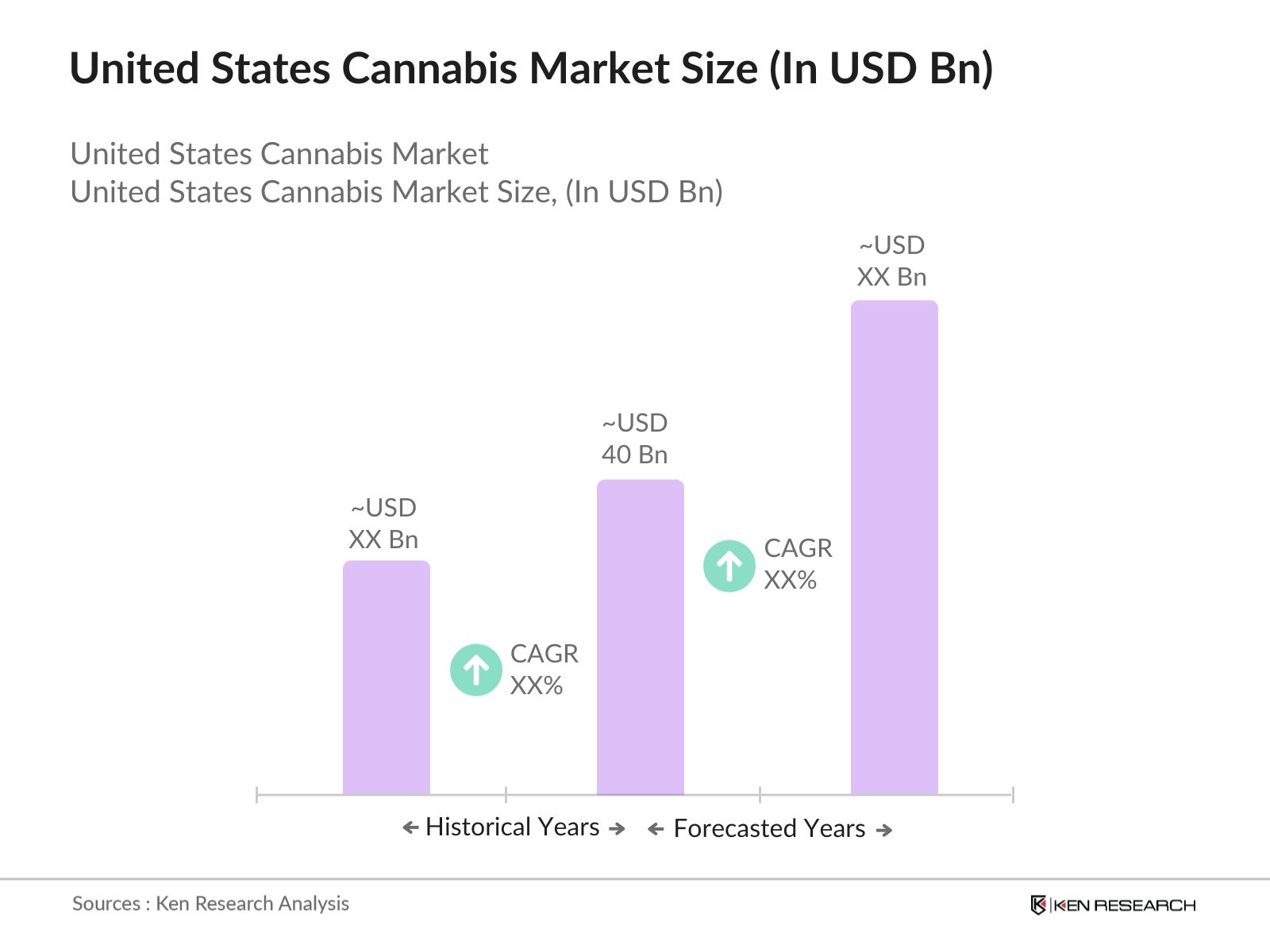
The U.S. cannabis market is valued at USD 40 billion, driven by increasing legalization, consumer demand for cannabis-based products, and advancements in medical research supporting cannabis use.
Challenges in the U.S. cannabis market include regulatory fragmentation between states, federal banking restrictions, and high taxation, which complicates market operations and creates barriers for smaller businesses.
Key players in the U.S. cannabis market include Canopy Growth, Curaleaf Holdings, Green Thumb Industries, Trulieve Cannabis Corp, and Charlottes Web, dominating through vertical integration and large-scale cultivation facilities.
Growth drivers in U.S. cannabis market include increasing legalization for medical and recreational use, rising consumer interest in CBD-infused products, and growing acceptance of cannabis for therapeutic purposes.
The U.S. cannabis market is expected to expand , with potential federal legalization on the horizon, increased product innovation, and greater market penetration through online sales and partnerships with mainstream retailers.

What makes us stand out is that our consultants follows Robust, Refine and Result (RRR) methodology. i.e. Robust for clear definitions, approaches and sanity checking, Refine for differentiating respondents facts and opinions and Result for presenting data with story

We have set a benchmark in the industry by offering our clients with syndicated and customized market research reports featuring coverage of entire market as well as meticulous research and analyst insights.

While we don't replace traditional research, we flip the method upside down. Our dual approach of Top Bottom & Bottom Top ensures quality deliverable by not just verifying company fundamentals but also looking at the sector and macroeconomic factors.

With one step in the future, our research team constantly tries to show you the bigger picture. We help with some of the tough questions you may encounter along the way: How is the industry positioned? Best marketing channel? KPI's of competitors? By aligning every element, we help maximize success.

Our report gives you instant access to the answers and sources that other companies might choose to hide. We elaborate each steps of research methodology we have used and showcase you the sample size to earn your trust.

If you need any support, we are here! We pride ourselves on universe strength, data quality, and quick, friendly, and professional service.