
United States E-Bike Market Outlook to 2030
Region:North America
Author(s):Sanjeev
Product Code:KROD8245
Region:North America
Author(s):Sanjeev
Product Code:KROD8245
December 2024
87
The United States E-Bike market is characterized by a few major players who have consolidated their market position through innovation, brand loyalty, and strong distribution networks. The landscape includes a mix of traditional bicycle manufacturers, EV companies, and newer startups focusing solely on e-bikes. Companies such as Trek Bicycle Corporation and Rad Power Bikes have led the market due to their established customer base and consistent product innovations. New entrants like Aventon Bikes and Juiced Bikes continue to gain traction through their focus on affordability and style.
|
Company |
Establishment Year |
Headquarters |
Battery Technology |
Motor Power Range |
|
Trek Bicycle Corporation |
1976 |
Waterloo, Wisconsin |
||
|
Rad Power Bikes |
2007 |
Seattle, Washington |
||
|
Specialized Bicycle Components |
1974 |
Morgan Hill, California |
||
|
Aventon Bikes |
2012 |
Ontario, California |
||
|
Juiced Bikes |
2009 |
Chula Vista, California |
Over the next five years, the United States E-Bike market is expected to witness significant growth. This can be attributed to increased government support through tax credits, advancing battery technologies, and a rise in consumer awareness regarding eco-friendly transportation. E-bikes are increasingly seen as a viable alternative to cars for urban commuting, reducing both traffic congestion and carbon emissions. Moreover, improvements in battery life and motor efficiency will further drive adoption, especially in cities where e-bikes can be integrated with public transport systems.
|
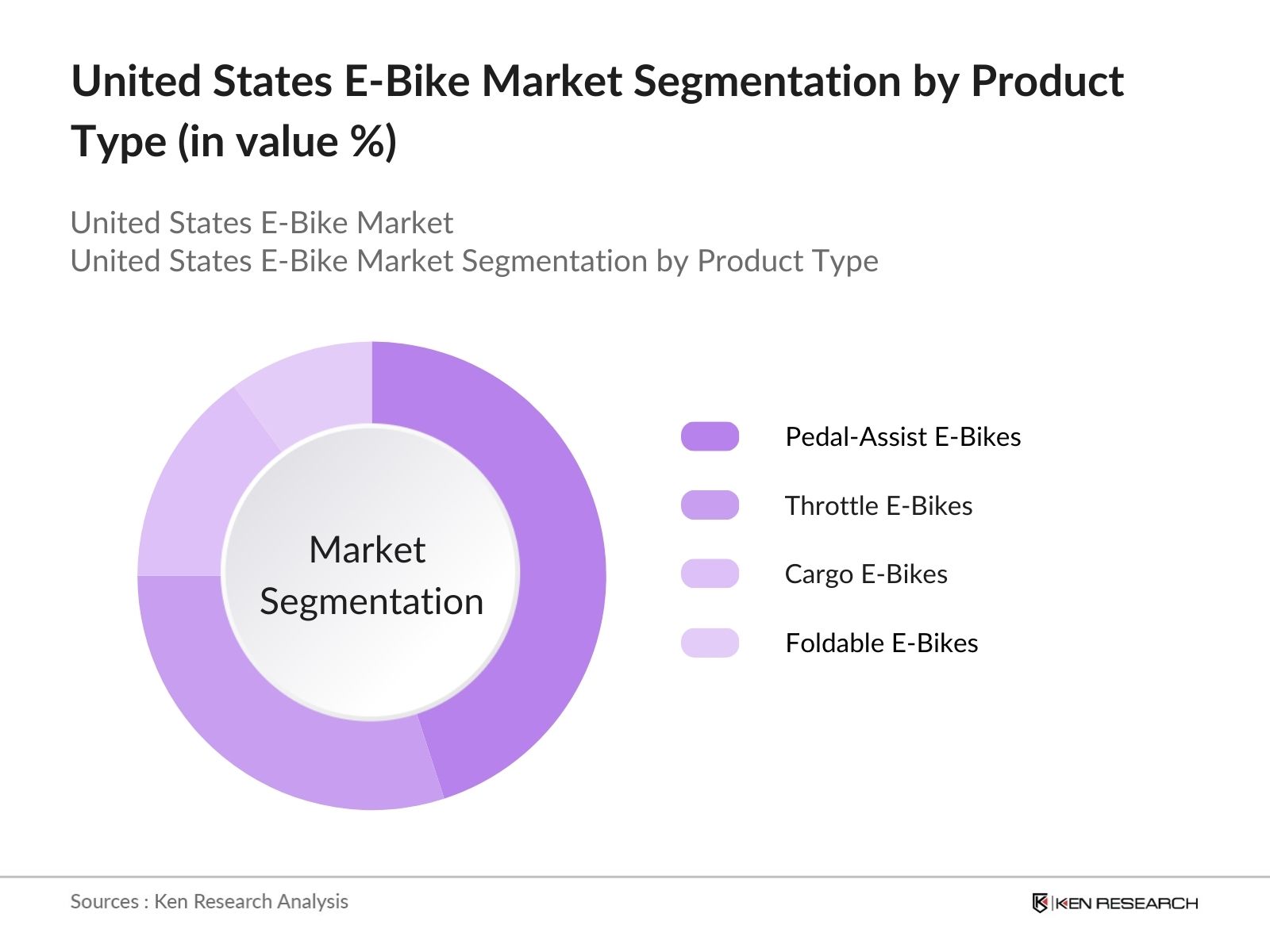
Pedal-Assist E-Bikes Throttle E-Bikes Cargo E-Bikes Foldable E-Bikes |
|
|
By Battery Type |
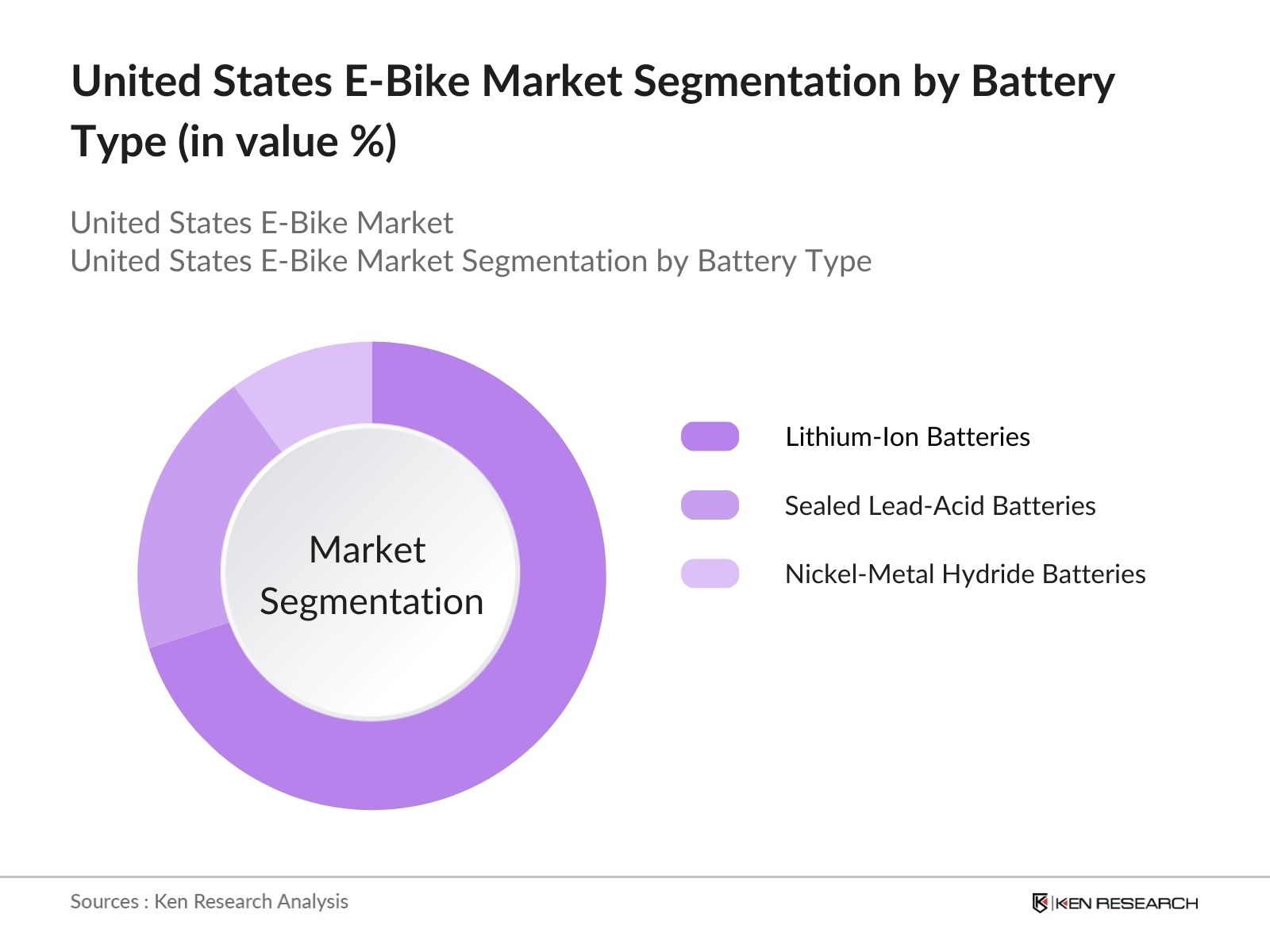
Lithium-Ion Batteries Sealed Lead-Acid Batteries Nickel-Metal Hydride Batteries |
|
By Consumer Age Group |
Personal Commuting E-Commerce Deliveries Tourism and Recreational Use Ride-Sharing Services |
|
By Nicotine Content |
Below 250W 250W to 500W Above 500W |
|
By Region |
North East West South |
1.1. Definition and Scope
1.2. Market Taxonomy
1.3. Market Growth Rate
1.4. Market Segmentation Overview
2.1. Historical Market Size
2.2. Year-On-Year Growth Analysis
2.3. Key Market Developments and Milestones
3.1. Growth Drivers (Electric Mobility Demand, Sustainability Goals, Infrastructure Developments)
3.1.1. Urban Mobility Shift
3.1.2. Government Incentives for EV Adoption
3.1.3. Rise in Environmental Consciousness
3.1.4. Expansion of Dedicated Bike Lanes and Paths
3.2. Market Challenges (Battery Technology, Supply Chain, Infrastructure Gaps)
3.2.1. High Initial Costs
3.2.2. Limited Charging Infrastructure
3.2.3. Battery Recycling Challenges
3.2.4. Component Shortages
3.3. Opportunities (Technological Innovation, Aftermarket Expansion, Global Partnerships)
3.3.1. Advancements in Battery Technology
3.3.2. Rising Interest in Subscription Models
3.3.3. Opportunities in Rural and Suburban Markets
3.3.4. Growth in Fleet Management Services
3.4. Trends (Connected E-Bikes, Lightweight Materials, Ride-Sharing Platforms)
3.4.1. Integration of Smart Features (IoT, GPS)
3.4.2. Use of Carbon Fiber for Frame Construction
3.4.3. Rise of E-Bike Sharing Services
3.5. Government Regulation (Subsidies, Emission Standards, Urban Planning)
3.5.1. Federal Tax Credits for E-Bike Purchases
3.5.2. Emissions Reduction Targets for Urban Areas
3.5.3. Infrastructure Projects for Sustainable Transport
3.5.4. Public-Private Partnerships for Green Mobility
4.1. By Product Type (In Value %)
4.1.1. Pedal-Assist E-Bikes
4.1.2. Throttle E-Bikes
4.1.3. Cargo E-Bikes
4.1.4. Foldable E-Bikes
4.2. By Battery Type (In Value %)
4.2.1. Lithium-Ion Batteries
4.2.2. Sealed Lead-Acid Batteries
4.2.3. Nickel-Metal Hydride Batteries
4.3. By Application (In Value %)
4.3.1. Personal Commuting
4.3.2. E-Commerce Deliveries
4.3.3. Tourism and Recreational Use
4.3.4. Ride-Sharing Services
4.4. By Motor Power (In Value %)
4.4.1. Below 250W
4.4.2. 250W to 500W
4.4.3. Above 500W
4.5. By Region (In Value %)
4.5.1. North
4.5.2. West
4.5.3. South
4.5.4. East
5.1. Detailed Profiles of Major Companies
5.1.1. Trek Bicycle Corporation
5.1.2. Giant Bicycles Inc.
5.1.3. Pedego Electric Bikes
5.1.4. Rad Power Bikes
5.1.5. Aventon Bikes
5.1.6. Specialized Bicycle Components
5.1.7. Juiced Bikes
5.1.8. Cannondale
5.1.9. Brompton Bicycle Ltd.
5.1.10. Yamaha Motor Corporation
5.1.11. Gazelle Bicycles
5.1.12. Bosch eBike Systems
5.1.13. Bafang Electric
5.1.14. Shimano Inc.
5.1.15. Riese & Mller
5.2. Cross Comparison Parameters (Battery Capacity, Motor Power, Production Capacity, Innovation Index, Distribution Channels, Revenue, Global Footprint, R&D Spending)
5.3. Market Share Analysis
5.4. Strategic Initiatives
5.5. Mergers And Acquisitions
5.6. Investment Analysis
5.7. Venture Capital Funding
5.8. Government Grants
5.9. Private Equity Investments
6.1. Road Safety Regulations
6.2. Federal & State Compliance
6.3. Industry Certification Standards (UL, EN Standards)
6.4. Licensing and Registration Requirements
7.1. Future Market Size Projections
7.2. Key Factors Driving Future Market Growth
8.1. By Product Type (In Value %)
8.2. By Battery Type (In Value %)
8.3. By Application (In Value %)
8.4. By Motor Power (In Value %)
8.5. By Region (In Value %)
9.1. TAM/SAM/SOM Analysis
9.2. Customer Cohort Analysis
9.3. Marketing Initiatives
9.4. White Space Opportunity Analysis
The initial phase involves mapping the e-bike ecosystem in the United States. This includes identifying key variables such as consumer preferences, government policies, and technology innovations that impact market dynamics. Primary research, supplemented by secondary data from proprietary databases, helps in creating a comprehensive market overview.
During this phase, historical data on the market is compiled, including key metrics such as market size, product penetration, and geographic reach. This analysis focuses on factors such as product innovation and demand across different regions, ensuring reliable revenue estimation.
Market hypotheses are then validated through interviews with industry experts from leading companies in the e-bike space. These consultations offer insights into the latest trends, challenges, and market opportunities, ensuring a well-rounded analysis.
The final phase involves synthesizing the research insights obtained through primary and secondary sources. A bottom-up approach is used to validate the market size and growth drivers, ensuring a complete and accurate analysis of the United States E-Bike market.
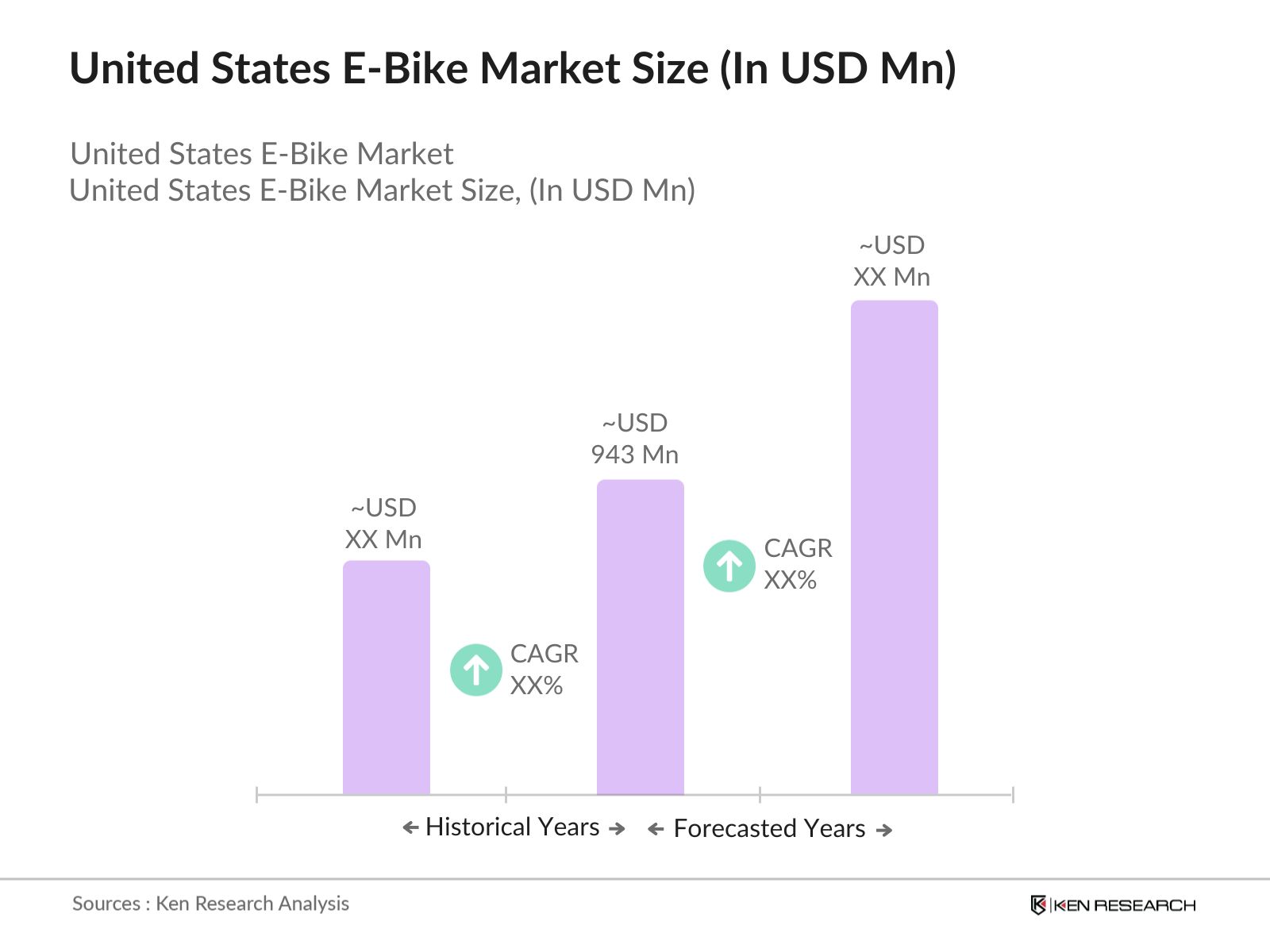
The United States E-Bike market is valued at USD 943 million. This growth is driven by an increase in urban mobility needs, rising environmental awareness, and the implementation of government subsidies for electric vehicles.
The primary drivers of the United States E-Bike market include government incentives for electric mobility, advances in battery technology, and the rising popularity of e-bikes for short-distance commuting in urban areas.
Challenges in the United States E-Bike market include high initial costs, limited charging infrastructure, and issues related to battery recycling. Additionally, there is a lack of widespread consumer awareness in rural areas.
Major players in the market include Trek Bicycle Corporation, Rad Power Bikes, Specialized Bicycle Components, Aventon Bikes, and Juiced Bikes. These companies dominate due to their innovation, strong brand presence, and extensive distribution networks.
The integration of IoT technology into e-bikes, the use of lightweight materials such as carbon fiber for frames, and the rise of e-bike sharing services are key trends shaping the United States E-Bike market.
Opportunities in the market include the expansion of e-bike fleet services, advancements in battery technology, and growth in suburban and rural markets as e-bikes become more accessible and affordable.

What makes us stand out is that our consultants follows Robust, Refine and Result (RRR) methodology. i.e. Robust for clear definitions, approaches and sanity checking, Refine for differentiating respondents facts and opinions and Result for presenting data with story

We have set a benchmark in the industry by offering our clients with syndicated and customized market research reports featuring coverage of entire market as well as meticulous research and analyst insights.

While we don't replace traditional research, we flip the method upside down. Our dual approach of Top Bottom & Bottom Top ensures quality deliverable by not just verifying company fundamentals but also looking at the sector and macroeconomic factors.

With one step in the future, our research team constantly tries to show you the bigger picture. We help with some of the tough questions you may encounter along the way: How is the industry positioned? Best marketing channel? KPI's of competitors? By aligning every element, we help maximize success.

Our report gives you instant access to the answers and sources that other companies might choose to hide. We elaborate each steps of research methodology we have used and showcase you the sample size to earn your trust.

If you need any support, we are here! We pride ourselves on universe strength, data quality, and quick, friendly, and professional service.