
United States Gaming Market Outlook to 2030
Region:United States
Author(s):Sanjeev
Product Code:KROD10210
Region:United States
Author(s):Sanjeev
Product Code:KROD10210
October 2024
85
The United States Gaming Market is valued at USD 54 billion, driven by strong consumer demand for mobile, console, and PC gaming, as well as the rapid expansion of cloud gaming services. The markets consistent growth is fueled by technological advancements such as 5G and the widespread availability of high-speed internet, providing smoother online gameplay experiences and driving higher consumer spending on games and related in-game content.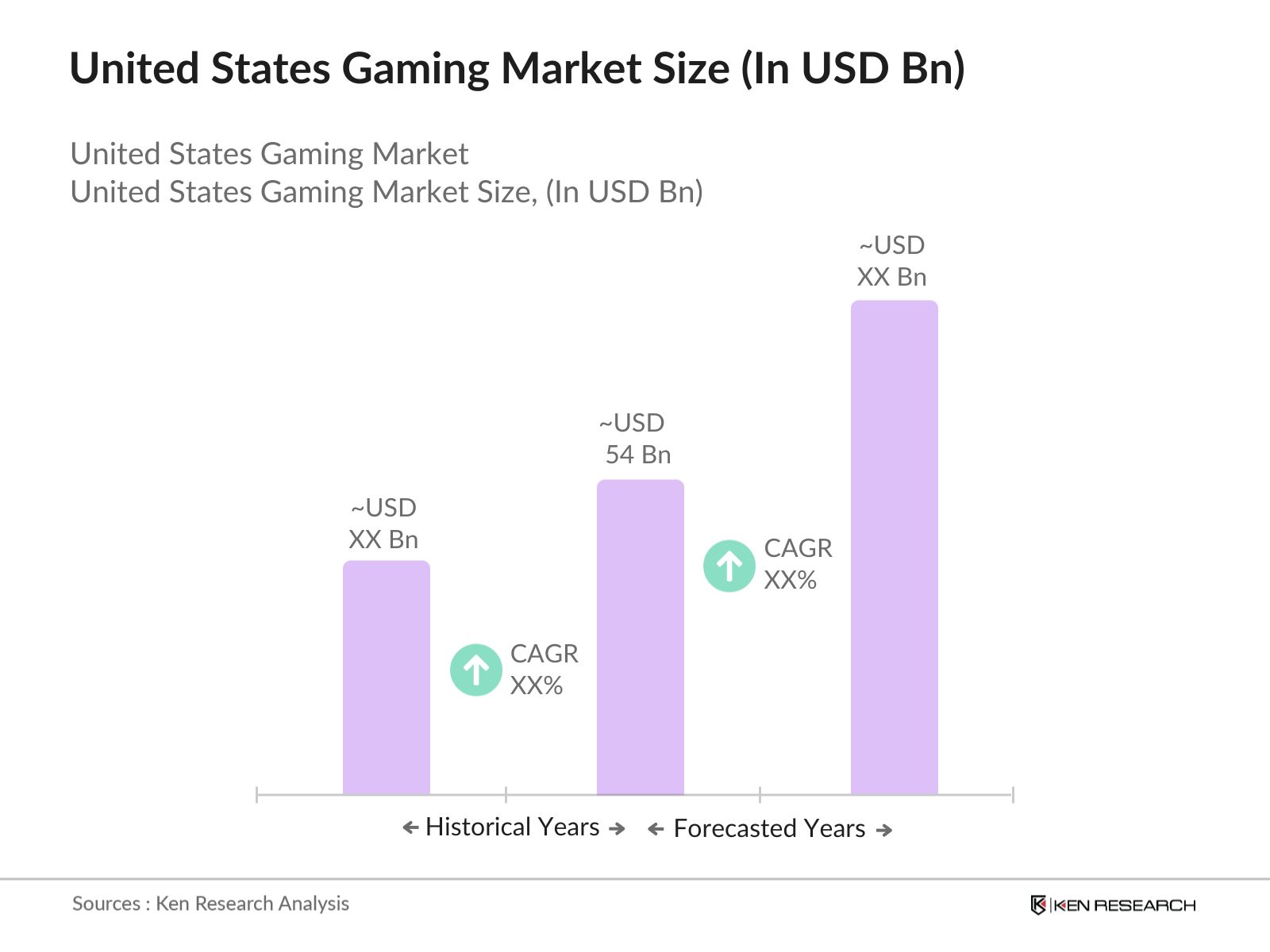
The dominant regions in the U.S. gaming market include cities like San Francisco, Los Angeles, and New York, which benefit from being home to major gaming developers, esports organizations, and technology hubs. These cities provide an environment rich in talent and resources, contributing to their leadership in gaming innovation and content production. The presence of major gaming companies such as Electronic Arts, Activision Blizzard, and Riot Games further consolidates their dominance in the industry. The Entertainment Software Rating Board (ESRB) is the primary body responsible for content rating standards in the U.S., ensuring that video games are appropriately labeled based on their content. Under federal law, games featuring explicit content (violence, language, etc.) are required to display ESRB ratings clearly on packaging and digital storefronts. As of 2023, 96% of all games sold in the U.S. comply with ESRB ratings, with the "Mature" category covering 23% of all sales. Non-compliance can result in retail bans and heavy penalties for developers and publishers. The Federal Communications Commission (FCC) also monitors broadcasted gaming content for compliance with ESRB standards.
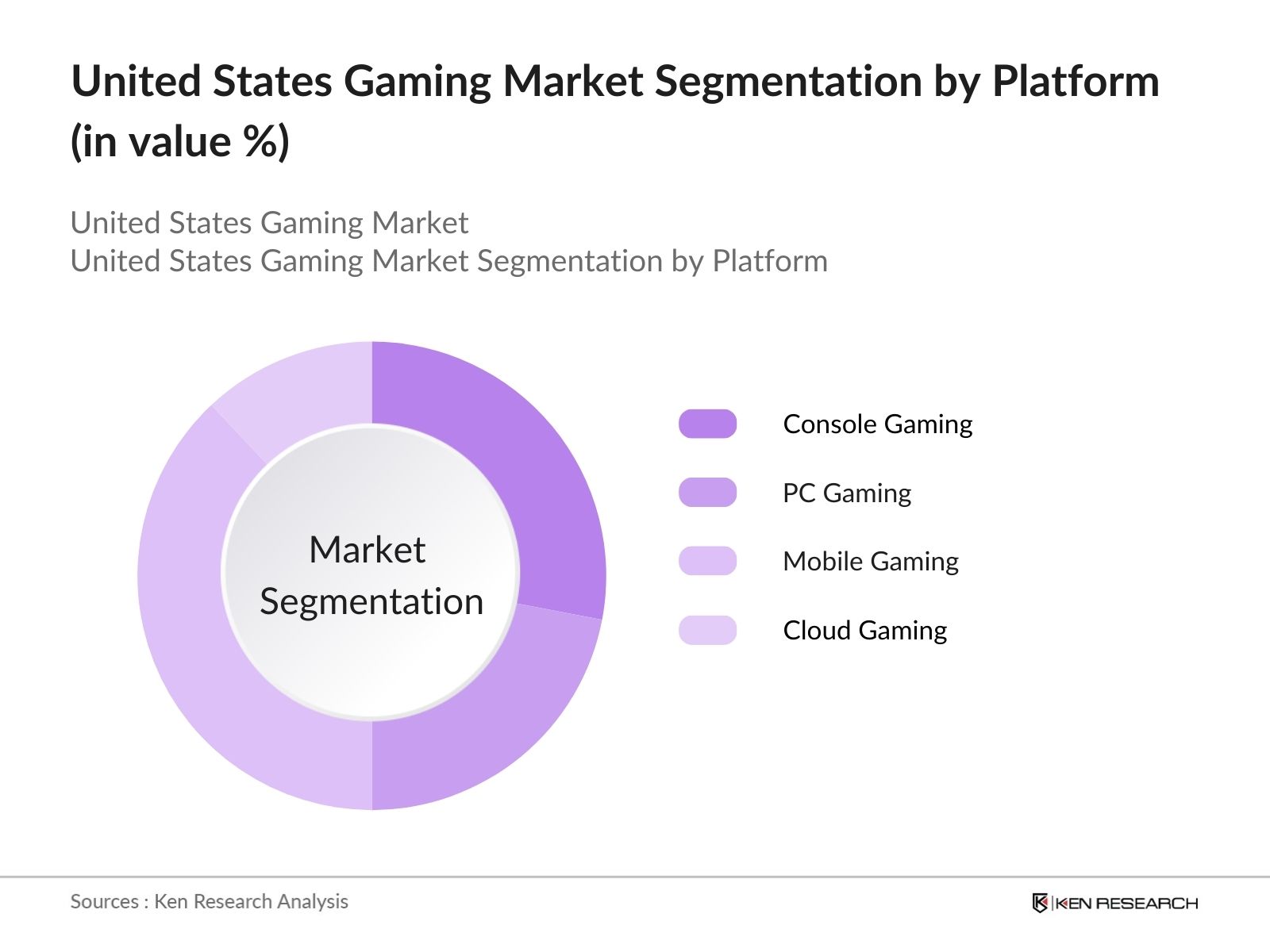
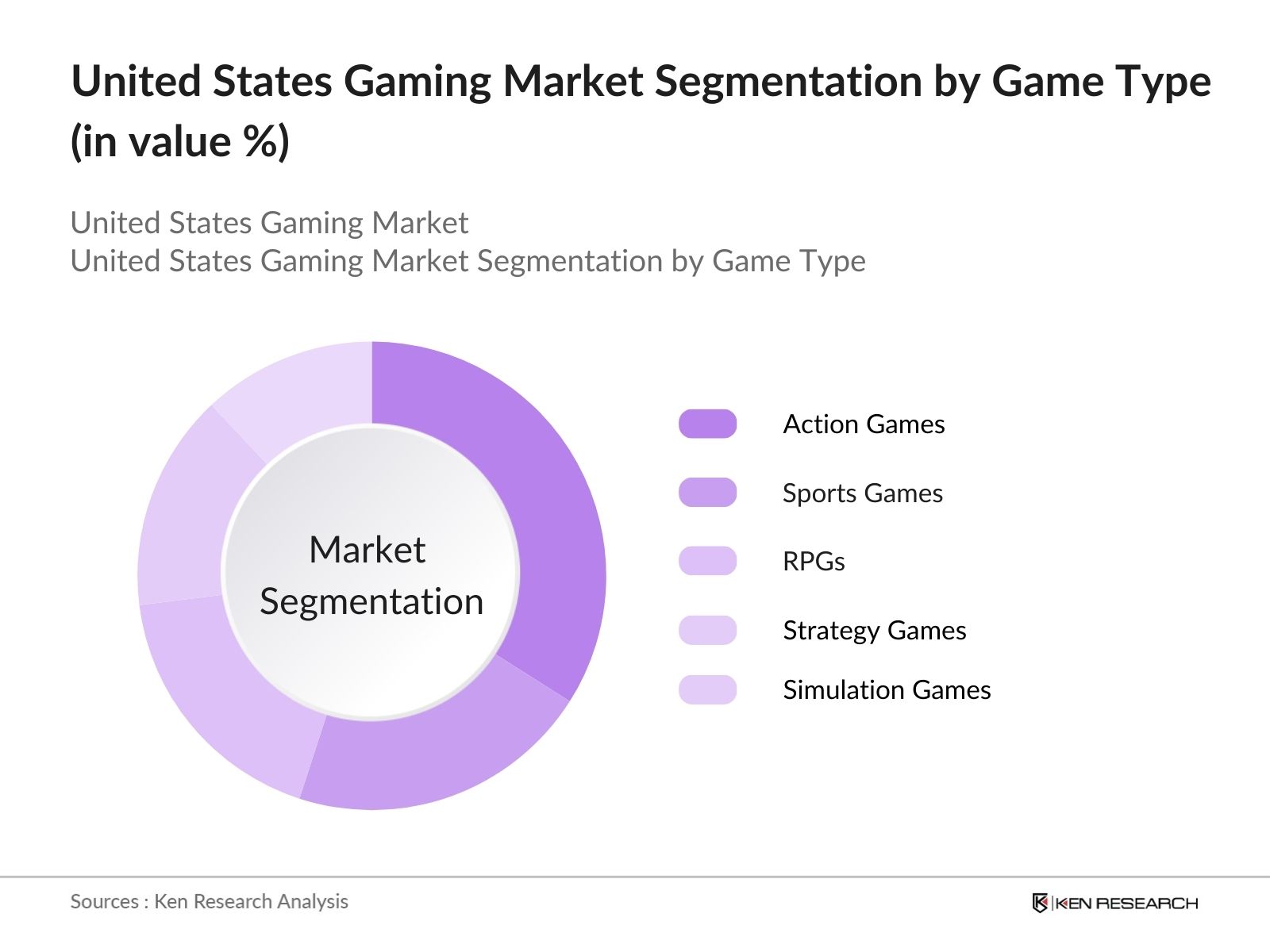
The United States gaming market is segmented by platform and by game type.
The U.S. gaming market is highly competitive, with key players occupying significant market positions. These companies lead the industry due to their innovative game development, robust distribution networks, and strong brand recognition.
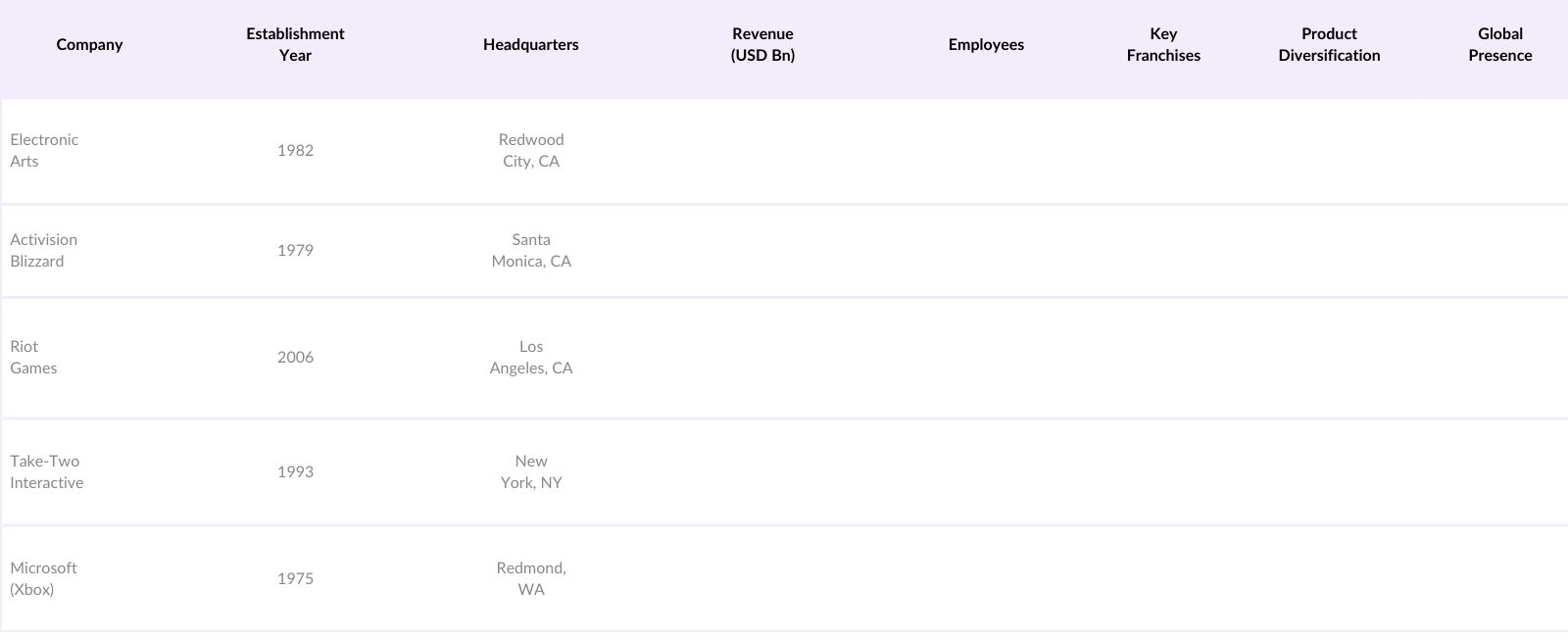
The competitive landscape features established giants such as Electronic Arts, Activision Blizzard, Riot Games, and Take-Two Interactive, all of which are heavily involved in console, PC, and mobile gaming. These companies are continuously investing in game development, esports, and live-service models to sustain their market presence and expand their customer base.
Growth Drivers
Market Challenges
The U.S. gaming market is expected to witness significant growth over the next five years, driven by advancements in game streaming technology, increased adoption of 5G, and the rise of cross-platform gaming experiences. As cloud gaming infrastructure matures, more consumers are likely to shift towards subscription-based models, while the increasing popularity of esports will further drive revenue growth and community engagement in the gaming sector. Additionally, as virtual reality and augmented reality technologies advance, the immersive gaming experience will evolve, opening new monetization opportunities for developers and hardware manufacturers.
Market Opportunities
|
||
|
By Game Type |
Action Games Sports Games RPG Strategy Games Simulation Games |
|
|
By Distribution Channel |
Digital Downloads Physical Sales Subscription Services |
|
|
By Device |
Smartphones and Tablets PCs and Laptops Gaming Consoles VR Devices |
|
|
By Region |
North East West South |
1.1. Definition and Scope
1.2. Market Taxonomy
1.3. Market Growth Rate
1.4. Market Segmentation Overview
2.1. Historical Market Size
2.2. Year-on-Year Growth Analysis
2.3. Key Market Developments and Milestones
3.1. Growth Drivers
3.1.1. Expansion of Cloud Gaming
3.1.2. Growth in Mobile Gaming Adoption
3.1.3. Rise in E-Sports Popularity
3.1.4. Increased Penetration of High-Speed Internet
3.2. Market Challenges
3.2.1. High Game Development Costs
3.2.2. Regulatory Restrictions on Microtransactions
3.2.3. Data Privacy and Security Concerns
3.2.4. Intense Competitive Pressure from International Developers
3.3. Opportunities
3.3.1. Monetization of Virtual Reality (VR) and Augmented Reality (AR) Gaming
3.3.2. Expansion of Gaming Subscriptions
3.3.3. Collaborations with Entertainment Media for Game Licensing
3.3.4. Growth in Indie Game Development
3.4. Trends
3.4.1. Cross-Platform Gaming Integration
3.4.2. In-Game Advertising and Sponsorship Deals
3.4.3. Live Streaming and Game Streaming Growth
3.4.4. Blockchain-based Gaming
3.5. Government Regulations
3.5.1. Regulations on Loot Boxes and Microtransactions
3.5.2. Content Rating Standards (ESRB)
3.5.3. Data Security Mandates for Gaming Platforms
3.5.4. E-Sports Licensing and Betting Laws
3.6. SWOT Analysis
3.7. Ecosystem Analysis (Developers, Distributors, Platforms)
3.8. Porters Five Forces Analysis
3.9. Competition Ecosystem
4.1. By Platform (In Value %)
4.1.1. Console Gaming
4.1.2. PC Gaming
4.1.3. Mobile Gaming
4.1.4. Cloud Gaming
4.2. By Game Type (In Value %)
4.2.1. Action Games
4.2.2. Sports Games
4.2.3. Role-Playing Games (RPG)
4.2.4. Strategy Games
4.2.5. Simulation Games
4.3. By Distribution Channel (In Value %)
4.3.1. Digital Downloads
4.3.2. Physical Sales
4.3.3. Subscription Services
4.4. By Device (In Value %)
4.4.1. Smartphones and Tablets
4.4.2. PCs and Laptops
4.4.3. Gaming Consoles
4.4.4. Virtual Reality Devices
4.5. By Region (In Value %)
4.5.1. North
4.5.2. East
4.5.3. West
4.5.4. South
5.1. Detailed Profiles of Major Companies
5.1.1. Activision Blizzard
5.1.2. Electronic Arts
5.1.3. Take-Two Interactive
5.1.4. Epic Games
5.1.5. Microsoft Corporation (Xbox)
5.1.6. Sony Interactive Entertainment (PlayStation)
5.1.7. Tencent Holdings (Riot Games)
5.1.8. Valve Corporation
5.1.9. Zynga Inc.
5.1.10. Ubisoft Entertainment
5.1.11. Bandai Namco
5.1.12. Nintendo Co., Ltd.
5.1.13. NetEase Games
5.1.14. Square Enix Holdings
5.1.15. Roblox Corporation
5.2. Cross Comparison Parameters
(Revenue, Market Share, Product Portfolio, Development Strategy, Partnerships, Innovation Index, Market Capitalization, Regional Presence)
5.3. Market Share Analysis
5.4. Strategic Initiatives
5.5. Mergers and Acquisitions
5.6. Investment Analysis
5.7. Venture Capital and Private Equity Investments
5.8. Government Grants and Subsidies
6.1. Data Security and Privacy Laws
6.2. Content Moderation and Rating Systems
6.3. Online Gambling and E-Sports Regulations
6.4. Intellectual Property Protections
7.1. Future Market Size Projections
7.2. Key Factors Driving Future Market Growth
8.1. By Platform (In Value %)
8.2. By Game Type (In Value %)
8.3. By Distribution Channel (In Value %)
8.4. By Device (In Value %)
8.5. By Region (In Value %)
9.1. Total Addressable Market (TAM), Serviceable Available Market (SAM), Serviceable Obtainable Market (SOM)
9.2. Key Consumer Trends Analysis
9.3. Expansion and Marketing Strategies
9.4. White Space Opportunity Analysis
The first step involves creating an ecosystem map that encompasses all stakeholders in the U.S. gaming market. This process is supported by extensive desk research utilizing proprietary databases and secondary sources, aimed at identifying critical variables such as user demographics, technology adoption rates, and game genres that influence market trends.
This step involves analyzing historical market data from the U.S. gaming sector. This includes reviewing market penetration rates for various platforms, analyzing revenue generated by different game genres, and assessing the impact of subscription services and free-to-play models. This analysis is used to construct accurate revenue forecasts.
Market hypotheses are validated through interviews with gaming industry experts, including developers, publishers, and esports organizers. These consultations provide insights into the operational challenges, emerging opportunities, and consumer behavior trends that are shaping the market.
In this phase, data from interviews and secondary research are synthesized into actionable insights, including detailed analysis of market segments, growth drivers, and competitive dynamics. This ensures that the final output provides a comprehensive and accurate picture of the U.S. gaming market.
The U.S. gaming market was valued at USD 54 billion, driven by high consumer spending across mobile, console, and PC platforms, as well as the expansion of cloud gaming services.
Challenges in U.S. gaming market include high development costs, regulatory hurdles related to microtransactions, and the increasingly competitive landscape as international companies seek to enter the U.S. market.
Key players in the U.S. gaming market include Electronic Arts, Activision Blizzard, Riot Games, Take-Two Interactive, and Microsoft (Xbox), each dominating due to their strong franchises and deep market penetration.
Key growth drivers in U.S. gaming market include advancements in 5G technology, the proliferation of mobile gaming, the rise of esports, and the increasing popularity of subscription-based cloud gaming services.
Esports is a major growth area, with increasing investment from both game developers and sponsors, driving significant engagement from younger audiences and contributing to higher in-game spending.

What makes us stand out is that our consultants follows Robust, Refine and Result (RRR) methodology. i.e. Robust for clear definitions, approaches and sanity checking, Refine for differentiating respondents facts and opinions and Result for presenting data with story

We have set a benchmark in the industry by offering our clients with syndicated and customized market research reports featuring coverage of entire market as well as meticulous research and analyst insights.

While we don't replace traditional research, we flip the method upside down. Our dual approach of Top Bottom & Bottom Top ensures quality deliverable by not just verifying company fundamentals but also looking at the sector and macroeconomic factors.

With one step in the future, our research team constantly tries to show you the bigger picture. We help with some of the tough questions you may encounter along the way: How is the industry positioned? Best marketing channel? KPI's of competitors? By aligning every element, we help maximize success.

Our report gives you instant access to the answers and sources that other companies might choose to hide. We elaborate each steps of research methodology we have used and showcase you the sample size to earn your trust.

If you need any support, we are here! We pride ourselves on universe strength, data quality, and quick, friendly, and professional service.