
US Aromatherapy Diffuser Market Outlook 2030
Region:North America
Author(s):Shivani Mehra
Product Code:KROD11470
December 2024
89
About the Report
US Aromatherapy Diffuser Market Overview
- The US Aromatherapy Diffuser Market is valued at USD 424.6million, based on a five-year historical analysis. This market is driven by increasing consumer demand for natural health solutions and wellness products. The rising awareness of the therapeutic benefits of essential oils, particularly for stress relief, relaxation, and overall well-being, is a key factor. Additionally, the growing trend of home wellness practices, along with the adoption of aromatherapy in healthcare, spas, and wellness centers, is contributing to the expansion of this market.

- In the United States, cities like Los Angeles, New York, and Miami dominate the aromatherapy diffuser market. These cities have a high concentration of wellness centers, spas, and affluent consumers who are willing to invest in high-end aromatherapy products. The growing urbanization and hectic lifestyles in these cities have resulted in increased demand for stress-relief solutions, thus driving the popularity of aromatherapy diffusers. Additionally, regions such as California and Florida have higher environmental consciousness, further driving the demand for eco-friendly and natural products like essential oil diffusers.
- The FDA regulates essential oils used in aromatherapy, especially when marketed for therapeutic purposes. Products making health claims must comply with the FDA's labeling requirements, and failure to do so can result in product recalls or fines. In 2023, the FDA issued updated guidelines on the use of essential oils in consumer products, particularly those marketed for pain relief or respiratory health. Manufacturers must comply with these stringent regulations, adding to the operational complexities of producing compliant aromatherapy products.
US Aromatherapy Diffuser Market Segmentation
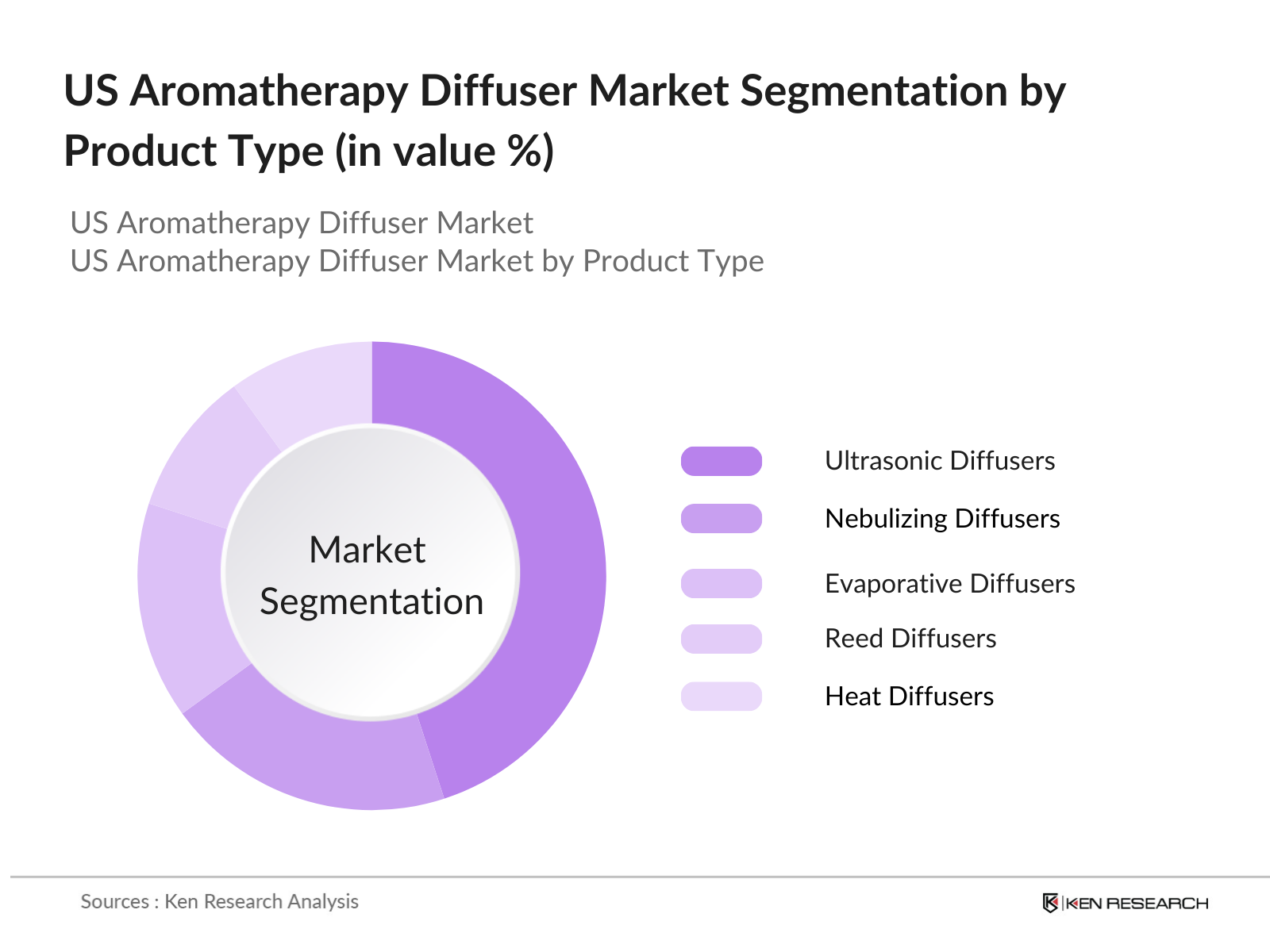
- By Product Type: The US Aromatherapy Diffuser market is segmented by product type into Nebulizing Diffusers, Ultrasonic Diffusers, Heat Diffusers, Evaporative Diffusers, and Reed Diffusers. Recently, Ultrasonic Diffusers have been leading in this category due to their ability to disperse essential oils without heating, which preserves the therapeutic properties of the oils. They are also energy-efficient and operate quietly, making them the preferred choice for home and office use.
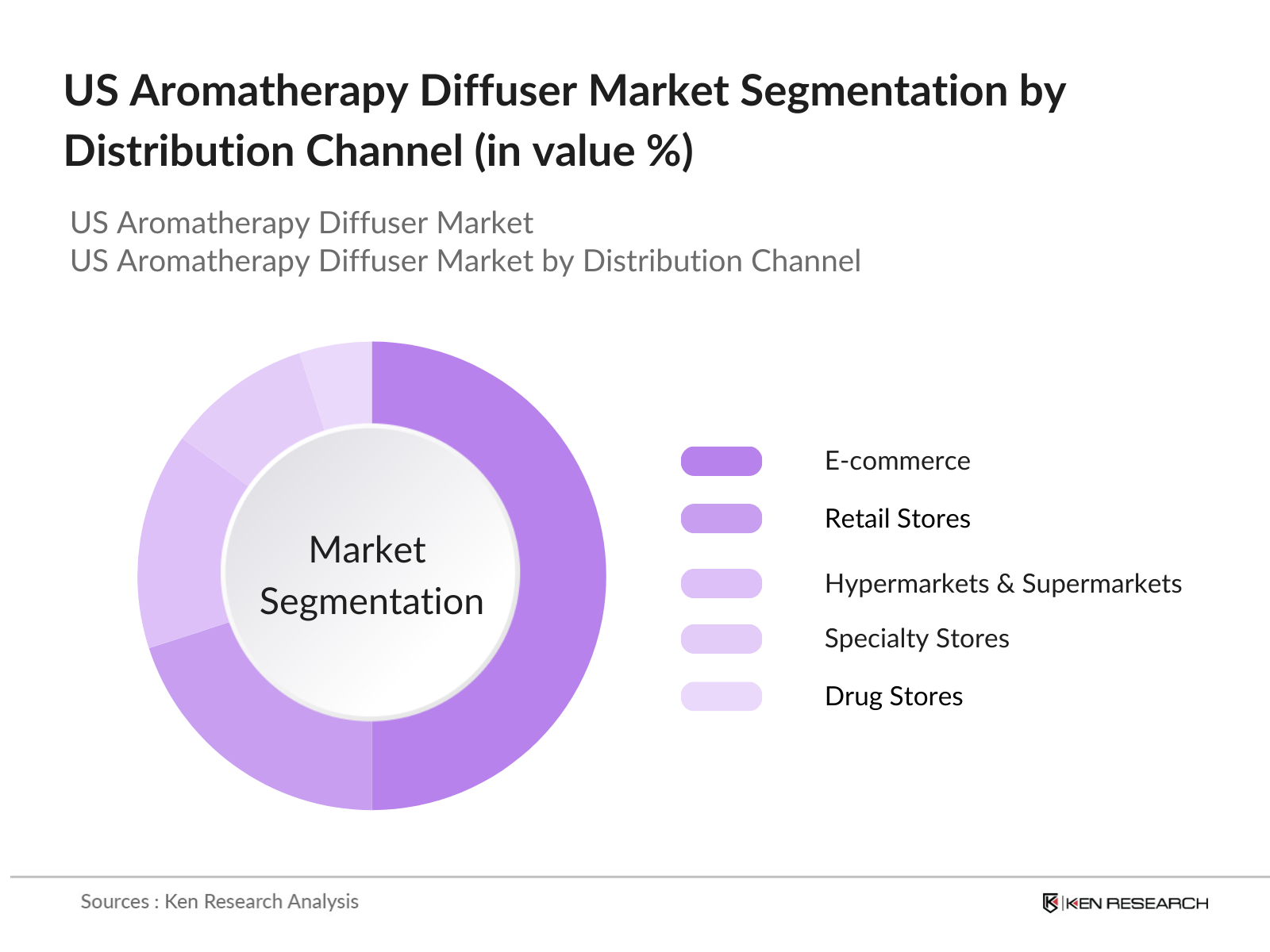
- By Distribution Channel: The US Aromatherapy Diffuser market is segmented by distribution channel into E-commerce, Retail Stores, Specialty Stores, Hypermarkets & Supermarkets, and Drug Stores. Recently, E-commerce has dominated this segment due to the convenience it offers consumers, allowing them to browse through various diffuser options, compare prices, and read reviews from the comfort of their homes. The rise of health and wellness-focused e-commerce platforms has further boosted the appeal of online shopping, especially with the post-pandemic shift towards digital purchasing habits.
US Aromatherapy Diffuser Market Competitive Landscape
The US Aromatherapy Diffuser Market is competitive, with key players such as Young Living, doTERRA, and InnoGear dominating the market. These companies benefit from established distribution networks, strong brand loyalty, and continuous innovation in product offerings, such as smart diffusers. The presence of local manufacturers as well as international brands creates a dynamic competitive landscape.
|
Company |
Establishment Year |
Headquarters |
Market Position |
Product Innovation |
Eco-friendly Products |
Distribution Network |
Consumer Base |
Online Presence |
|
Young Living |
1993 |
Lehi, Utah |
_ |
_ |
_ |
_ |
_ |
_ |
|
doTERRA |
2008 |
Pleasant Grove, Utah |
_ |
_ |
_ |
_ |
_ |
_ |
|
InnoGear |
2011 |
China |
_ |
_ |
_ |
_ |
_ |
_ |
|
GreenAir Inc. |
2009 |
Ohio |
_ |
_ |
_ |
_ |
_ |
_ |
|
URPOWER |
2013 |
China |
_ |
_ |
_ |
_ |
_ |
_ |
US Aromatherapy Diffuser Market Analysis
Market Growth Drivers
- Health & Wellness Trends (Consumer Preference for Natural Remedies, Wellness Products): The U.S. has seen an increasing focus on health and wellness, with over 83 million households incorporating self-care products such as aromatherapy diffusers into their daily routines in 2023. This shift has been driven by the preference for natural remedies, as consumers look for alternatives to synthetic products. Aromatherapy products, particularly those using essential oils, have become a preferred choice for stress relief and improved air quality. The U.S. Environmental Protection Agency (EPA) reports that indoor air pollution levels are significantly higher in urban households, which has further fueled demand for aromatherapy diffusers.
- Rise in Disposable Income (Household Spending on Self-Care): Disposable income in the U.S. rose to over $18 trillion in 2023, leading to increased consumer spending on self-care and wellness products, including aromatherapy diffusers. Middle-income households, in particular, have shown a stronger inclination toward purchasing wellness and lifestyle products as part of their everyday expenditure. As disposable income increases, consumers tend to prioritize personal health and invest more in products like diffusers, which contribute to home environment improvements. According to the U.S. Bureau of Economic Analysis (BEA), personal consumption expenditures on health and wellness products saw a marked rise from 2022 to 2024.
- Urbanization & Increased Air Quality Concerns: Urbanization has rapidly progressed, with a significant portion of the U.S. population now living in urban areas. This has led to increased concerns about indoor air quality, especially in densely populated cities. The U.S. Environmental Protection Agency (EPA) has reported rising pollution levels in urban homes, prompting consumers to seek solutions like aromatherapy diffusers to maintain better air quality indoors. These devices are increasingly seen as part of broader household air improvement measures, which have gained traction among urban dwellers looking to combat the effects of pollution.
Market Challenges
- High Cost of Premium Diffusers (Price Competition): Premium aromatherapy diffusers often come with advanced features such as smart connectivity and customizable settings, which makes them more expensive. The U.S. market has seen significant price competition, with consumers often opting for cheaper alternatives. According to the U.S. Department of Commerce, average household spending on premium diffusers has been outpaced by sales of lower-cost options, creating a challenge for manufacturers who focus on higher-end products. While there is demand for premium devices, their high cost remains a barrier for many middle-income households.
- Regulatory Constraints on Essential Oils (FDA Regulations, Certification Standards): The U.S. Food and Drug Administration (FDA) has strict regulations on the sale and marketing of essential oils, which are integral to aromatherapy diffusers. As of 2024, essential oils sold for therapeutic use must meet specific FDA standards, creating a regulatory hurdle for manufacturers. These regulations also impose additional costs related to certification and compliance. The enforcement of strict labeling guidelines and the need for clinical trials to substantiate health claims have slowed the entry of new products into the U.S. market, complicating product development cycles.
US Aromatherapy Diffuser Market Future Outlook
Over the next five years, the US Aromatherapy Diffuser market is anticipated to see substantial growth driven by consumer demand for natural health remedies, advancements in diffuser technology, and the increasing popularity of smart diffusers integrated with IoT. The eco-friendly product trend is likely to shape the market as more consumers become environmentally conscious. As the wellness industry grows, the adoption of aromatherapy diffusers in both personal and commercial settings is expected to rise significantly.
Market Opportunities:
- Increased Consumer Interest in Organic Essential Oils: The demand for organic essential oils has risen, with U.S. sales of organic wellness products reaching $62 billion in 2023. Consumers are increasingly opting for oils that are certified organic due to concerns over pesticide residues and synthetic additives. The U.S. Department of Agriculture (USDA) has seen a rise in the number of certifications for organic essential oils, as manufacturers strive to meet this growing consumer demand. Organic products are perceived as safer and more environmentally friendly, aligning with broader wellness trends.
- Multi-Functionality: Humidifiers Combined with Diffusers: Consumers are increasingly looking for multi-functional products, and humidifier-diffuser combinations have gained popularity. These devices provide both air moisture and aroma diffusion, making them attractive to health-conscious buyers. As of 2024, more than 10 million households in the U.S. have adopted such multi-functional devices, as reported by the U.S. Energy Information Administration (EIA). These products appeal to consumers seeking space-saving, cost-effective solutions for indoor air quality management.
Scope of the Report
|
By Product Type |
Nebulizing Diffusers Ultrasonic Diffusers Heat Diffusers Evaporative Diffusers Reed Diffusers |
|
By Distribution Channel |
E-commerce Retail Stores Specialty Stores Hypermarkets & Supermarkets Drug Stores |
|
By Technology |
IoT-enabled Diffusers Battery-Powered Diffusers Electric-Powered Diffusers |
|
By Material Type |
Plastic Ceramic Glass Wood |
|
By Region |
North-East Midwest West Coast Southern States |
Products
Key Target Audience
Aromatherapy Product Manufacturers
Essential Oil Producers
Wellness Centers & Spas
E-commerce Platforms
Retailers & Specialty Stores
Investments and Venture Capital Firms
Government and Regulatory Bodies (FDA, EPA)
Consumer Electronics Manufacturers (for smart diffusers)
Companies
Players menrtioned in the Report
Young Living
doTERRA
InnoGear
GreenAir Inc.
URPOWER
VicTsing
SpaRoom
Stadler Form
Organic Aromas
Smiley Daisy
Vitruvi
Ellia (HoMedics)
Rocky Mountain Oils
Saje Natural Wellness
Pilgrim Collection
Table of Contents
1. U.S. Automotive Service Market Overview
1.1 Definition and Scope
1.2 Market Taxonomy
1.3 Market Growth Rate
1.4 Market Segmentation Overview
2. U.S. Automotive Service Market Size (In USD Bn)
2.1 Historical Market Size
2.2 Year-On-Year Growth Analysis
2.3 Key Market Developments and Milestones
3. U.S. Automotive Service Market Analysis
3.1 Growth Drivers
3.1.1 Increasing Vehicle Age (average vehicle lifespan, component wear)
3.1.2 Technological Advancements (diagnostic tools, telematics, EV integration)
3.1.3 Demand for Preventive Maintenance (proactive vehicle care, fluid replacements)
3.1.4 Government Emission Standards (impact on service demand)
3.2 Market Challenges
3.2.1 Labor Shortages (skilled technician availability)
3.2.2 Economic Fluctuations (inflation, repair costs)
3.2.3 Supply Chain Disruptions (spare parts and automotive chips)
3.3 Opportunities
3.3.1 Rise of Electric Vehicles (EV service demand)
3.3.2 AI-Based Maintenance (predictive diagnostics)
3.3.3 Expansion of Aftermarket Services (accessories, maintenance)
3.4 Trends
3.4.1 Growing Use of Digital Tools (software-driven maintenance)
3.4.2 Subscription-Based Services (monthly maintenance packages)
3.4.3 Shared Mobility (increased maintenance frequency for fleets)
3.5 Regulatory Framework
3.5.1 Automotive Repair Laws (state-specific regulations)
3.5.2 Emission Reduction Policies (vehicle inspections)
3.5.3 Certifications and Compliance Requirements
4. U.S. Automotive Service Market Segmentation
4.1 By Vehicle Type (In Value %)
4.1.1 Passenger Cars
4.1.2 Light Commercial Vehicles
4.1.3 Heavy Commercial Vehicles
4.1.4 Electric Vehicles
4.1.5 Hybrid Vehicles
4.2 By Service Type (In Value %)
4.2.1 Mechanical Services (repairs, engine work)
4.2.2 Maintenance Services (oil changes, tire rotations)
4.2.3 Exterior and Structural Services (collision repair)
4.3 By Propulsion Type (In Value %)
4.3.1 Internal Combustion Engine (ICE)
4.3.2 Battery Electric Vehicles (BEVs)
4.3.3 Hybrid Electric Vehicles (HEVs)
4.4 By Ownership (In Value %)
4.4.1 Private Vehicles
4.4.2 Fleet Vehicles (rental, commercial fleets)
4.5 By Region (In Value %)
4.5.1 Northeast
4.5.2 Midwest
4.5.3 South
4.5.4 West
5. U.S. Automotive Service Market Competitive Analysis
5.1 Detailed Profiles of Major Companies
5.1.1 Monro Inc.
5.1.2 Firestone Complete Auto Care
5.1.3 Jiffy Lube International, Inc.
5.1.4 Midas International, LLC
5.1.5 Meineke Car Care Centers, LLC
5.1.6 Safelite Group
5.1.7 AutoNation Inc.
5.1.8 Valvoline Inc.
5.1.9 Pep Boys
5.1.10 Goodyear Auto Service
5.1.11 FullSpeed Automotive (Grease Monkey)
5.1.12 Tesla Service Centers
5.1.13 Bridgestone Americas
5.1.14 SpeeDee Oil Change & Auto Service
5.1.15 Sears Auto Centers
5.2 Cross Comparison Parameters (Revenue, Service Footprint, Digital Integration, Sustainability Initiatives, Customer Base, Market Share, Technological Expertise, Strategic Alliances)
5.3 Market Share Analysis
5.4 Strategic Initiatives
5.5 Mergers and Acquisitions
5.6 Investment Analysis
5.7 Venture Capital Funding
5.8 Private Equity Investments
6. U.S. Automotive Service Market Regulatory Framework
6.1 Vehicle Safety Regulations
6.2 Emission Testing Standards
6.3 Licensing and Certification for Service Centers
7. U.S. Automotive Service Future Market Size (In USD Bn)
7.1 Future Market Size Projections
7.2 Key Factors Driving Future Market Growth
8. U.S. Automotive Service Future Market Segmentation
8.1 By Vehicle Type (In Value %)
8.2 By Service Type (In Value %)
8.3 By Propulsion Type (In Value %)
8.4 By Ownership (In Value %)
8.5 By Region (In Value %)
9. U.S. Automotive Service Market Analysts' Recommendations
9.1 Customer Cohort Analysis
9.2 Marketing Initiatives
9.3 White Space Opportunity Analysis
Disclaimer Contact UsResearch Methodology
Step 1: Identification of Key Variables
The initial phase involves constructing an ecosystem map encompassing all major stakeholders within the US Aromatherapy Diffuser Market. This step is underpinned by extensive desk research, utilizing a combination of secondary and proprietary databases to gather comprehensive industry-level information. The primary objective is to identify and define the critical variables that influence market dynamics.
Step 2: Market Analysis and Construction
In this phase, we will compile and analyze historical data pertaining to the US Aromatherapy Diffuser Market. This includes assessing market penetration, the ratio of marketplaces to service providers, and the resultant revenue generation. Furthermore, an evaluation of service quality statistics will be conducted to ensure the reliability and accuracy of the revenue estimates.
Step 3: Hypothesis Validation and Expert Consultation
Market hypotheses will be developed and subsequently validated through computer-assisted telephone interviews (CATIs) with industry experts representing a diverse array of companies. These consultations will provide valuable operational and financial insights directly from industry practitioners, which will be instrumental in refining and corroborating the market data.
Step 4: Research Synthesis and Final Output
The final phase involves direct engagement with multiple aromatherapy diffuser manufacturers to acquire detailed insights into product segments, sales performance, consumer preferences, and other pertinent factors. This interaction will serve to verify and complement the statistics derived from the bottom-up approach, thereby ensuring a comprehensive, accurate, and validated analysis of the US Aromatherapy Diffuser market.
Frequently Asked Questions
01. How big is the US Aromatherapy Diffuser Market?
The US Aromatherapy Diffuser market is valued at USD 424.6million, driven by growing consumer demand for wellness products and increasing awareness of the benefits of essential oils.
02. What are the challenges in the US Aromatherapy Diffuser Market?
Challenges in the US market include the high cost of premium diffusers, regulatory constraints on the use of essential oils, and the presence of counterfeit products in online channels.
03. Who are the major players in the US Aromatherapy Diffuser Market?
Key players in the market include Young Living, doTERRA, InnoGear, GreenAir Inc., and URPOWER. These companies have a strong presence due to their extensive product portfolios and brand loyalty.
04. What are the growth drivers of the US Aromatherapy Diffuser Market?
Growth drivers include increasing consumer awareness of the therapeutic benefits of essential oils, rising disposable incomes, and the integration of diffusers with smart home technologies.
Why Buy From Us?

What makes us stand out is that our consultants follows Robust, Refine and Result (RRR) methodology. i.e. Robust for clear definitions, approaches and sanity checking, Refine for differentiating respondents facts and opinions and Result for presenting data with story

We have set a benchmark in the industry by offering our clients with syndicated and customized market research reports featuring coverage of entire market as well as meticulous research and analyst insights.

While we don't replace traditional research, we flip the method upside down. Our dual approach of Top Bottom & Bottom Top ensures quality deliverable by not just verifying company fundamentals but also looking at the sector and macroeconomic factors.

With one step in the future, our research team constantly tries to show you the bigger picture. We help with some of the tough questions you may encounter along the way: How is the industry positioned? Best marketing channel? KPI's of competitors? By aligning every element, we help maximize success.

Our report gives you instant access to the answers and sources that other companies might choose to hide. We elaborate each steps of research methodology we have used and showcase you the sample size to earn your trust.

If you need any support, we are here! We pride ourselves on universe strength, data quality, and quick, friendly, and professional service.