
US Aromatherapy Market Outlook to 2030
Region:North America
Author(s):Sanjana
Product Code:KROD2262
October 2024
95
About the Report
US Aromatherapy Market Overview
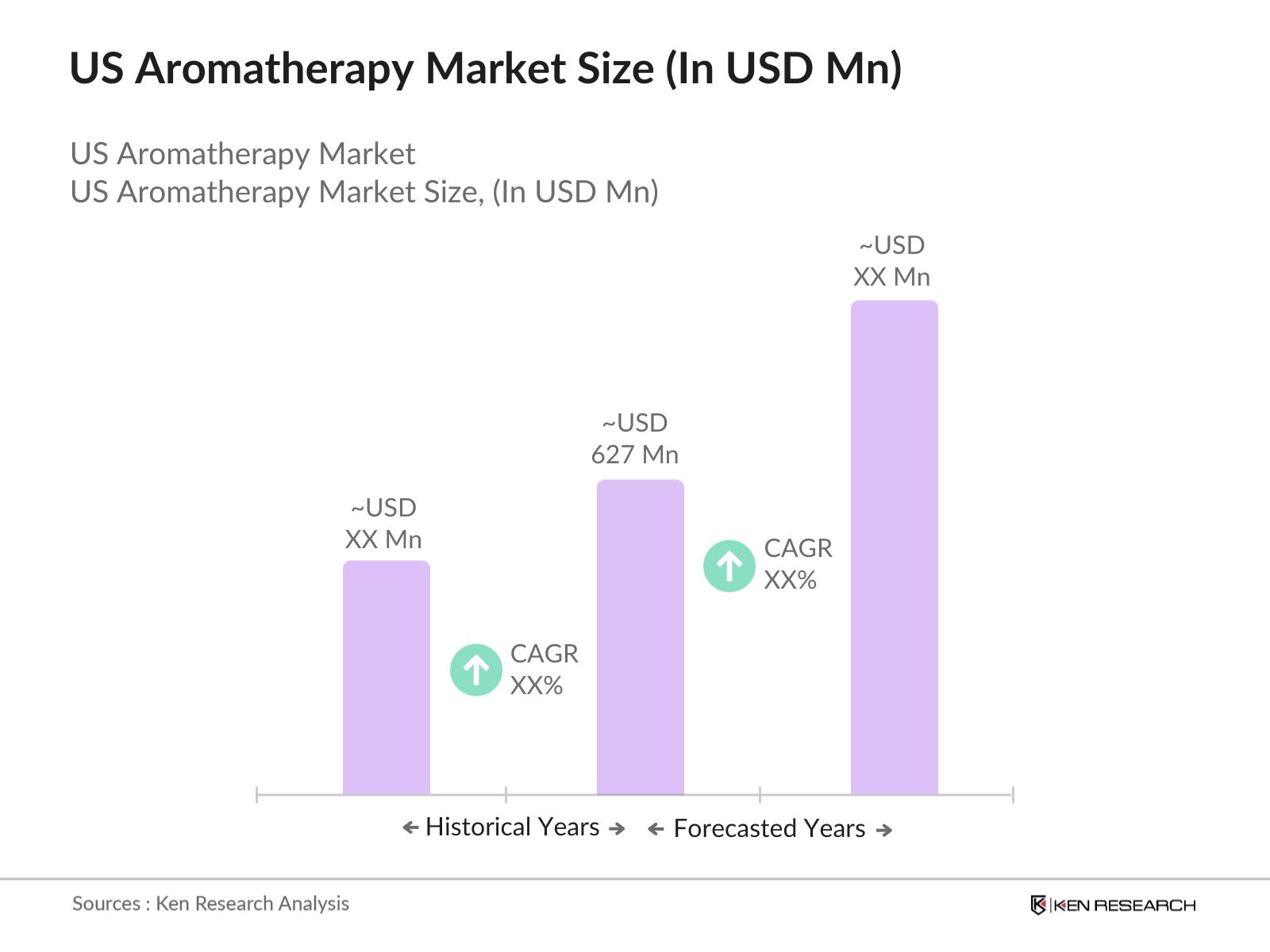
- The US Aromatherapy market was valued at USD 627 million in 2023, driven by a growing consumer preference for natural and holistic health products. This market expansion is fueled by increasing awareness of aromatherapy's benefits for mental and physical well-being, particularly among millennials and health-conscious consumers.
- Prominent companies in the US aromatherapy market include Young Living, doTERRA, Plant Therapy, Edens Garden, and Rocky Mountain Oils. These companies have established themselves as key players through strong branding, extensive product lines, and customer loyalty. They lead the market with their diverse range of essential oils and aromatherapy products.
- In 2023, Plant Therapy introduced several new essential oil blends to cater to the growing demand for aromatherapy products. These include "Stress Relief" and "Sleep Tight" blends, which have been well-received by customers looking for natural solutions to manage stress and improve sleep quality, while also expanding their range to meet diverse wellness needs.
- Cities like New York, Los Angeles, and Miami dominate the US aromatherapy market due to their large, diverse, and health-conscious populations. These metropolitan areas have a high concentration of wellness centers, spas, and specialty stores that offer aromatherapy products. Additionally, the higher disposable incomes and lifestyle trends in these cities, which emphasize holistic and preventive health practices, contribute to the strong demand for aromatherapy products.
US Aromatherapy Market Segmentation
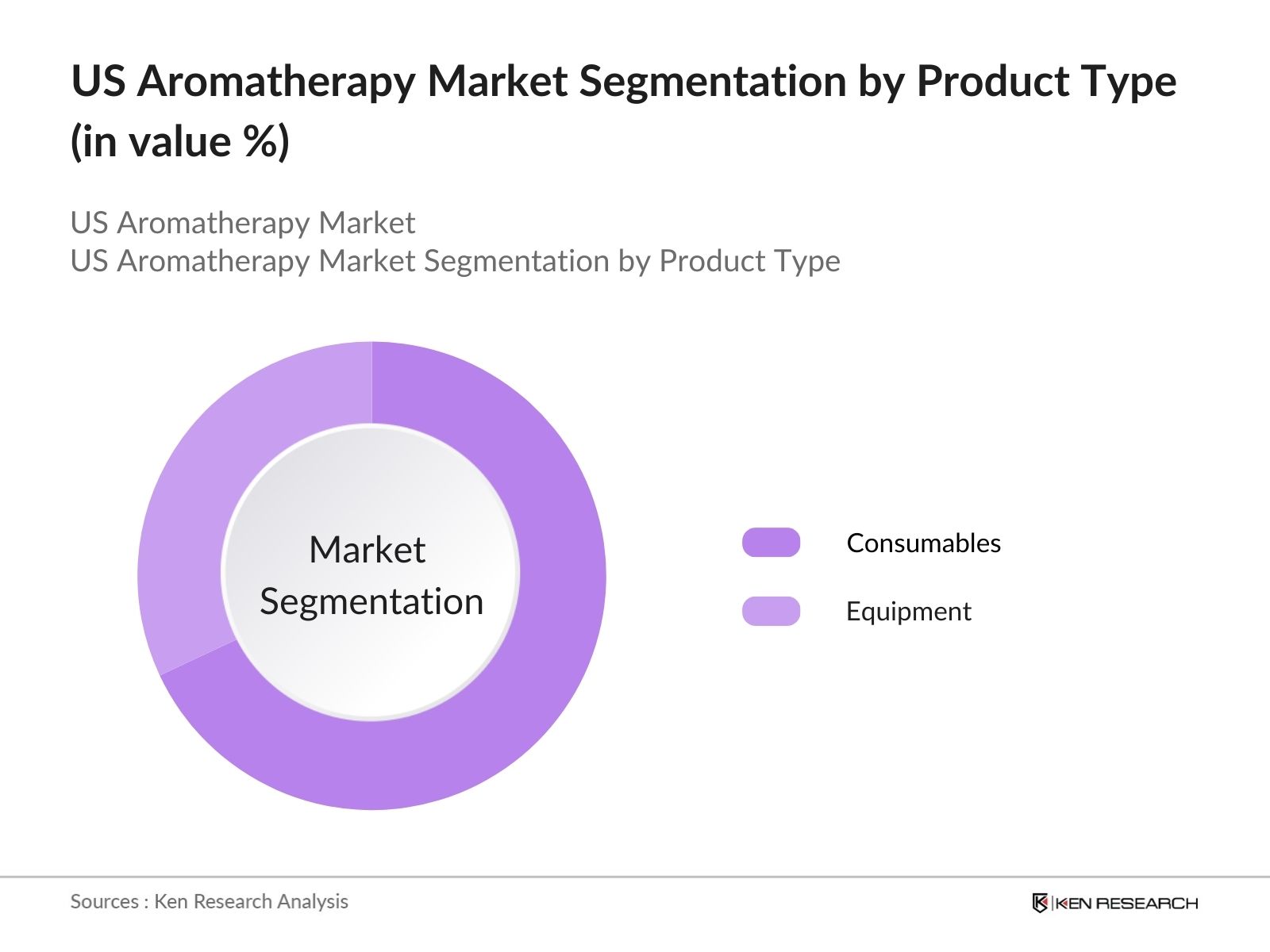
By Product Type: US Aromatherapy Market is segmented by product into consumables and equipment. In 2023, consumables, which include essential oils, carrier oils, and blends, dominated the market share. This segment's prominence is due to the high demand for essential oils for personal use, therapeutic applications, and household cleaning products. Consumers prefer these products for their versatility and easy incorporation into daily routines.
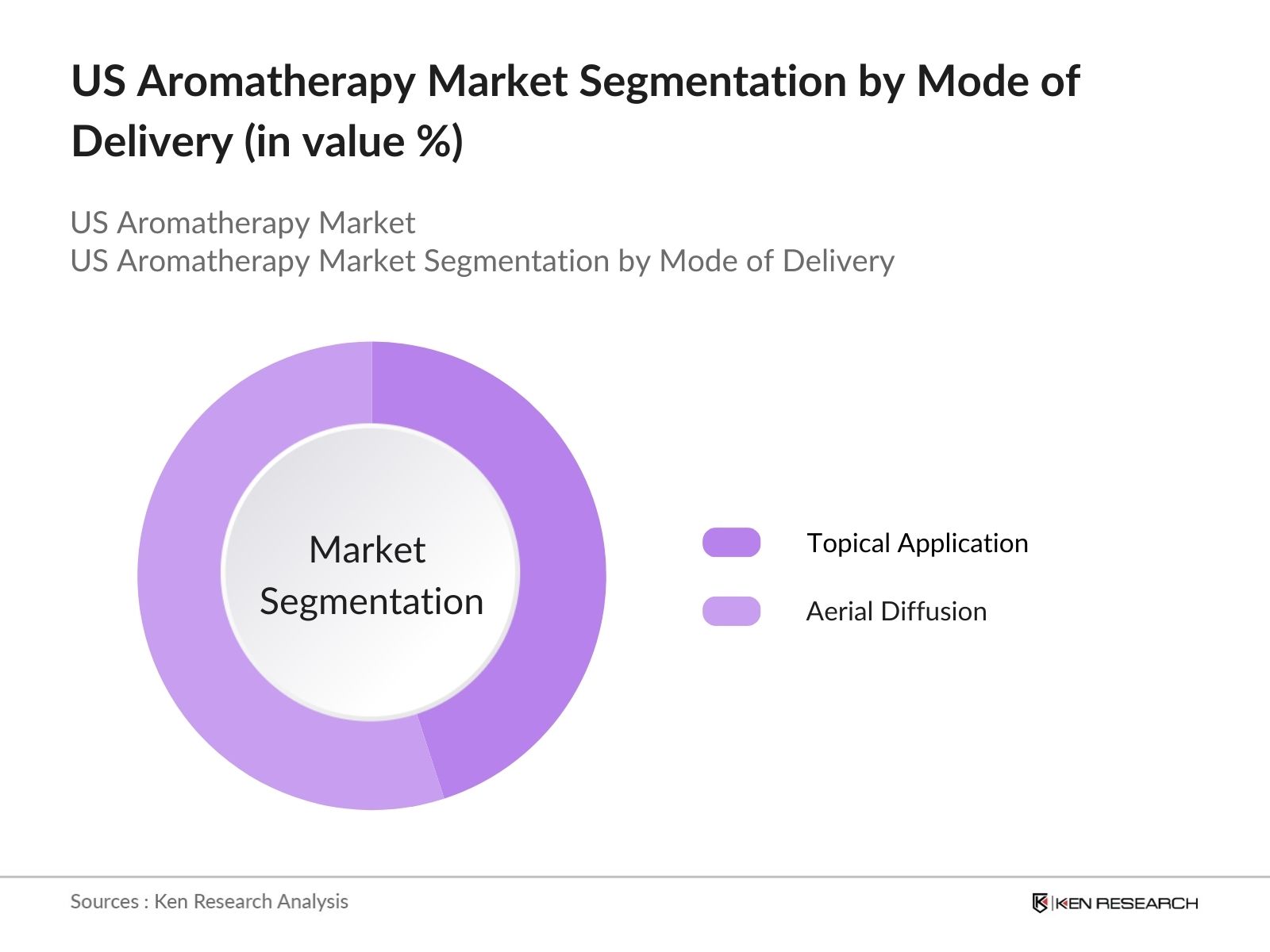
By Mode of Delivery: The market is also segmented by mode of delivery into topical application and aerial diffusion. In 2023, aerial diffusion, which includes products like diffusers, air fresheners, and humidifiers, held a dominant market share. This is largely due to the increasing popularity of essential oil diffusers, which offer an easy and effective way to enjoy the benefits of aromatherapy in homes and offices.
By Region: The market is segmented into North East, West, Midwest, and South. In 2023, the West region, particularly California, led the market with the highest share. This dominance is attributed to the strong wellness culture prevalent in the region, characterized by a high concentration of health-conscious consumers and a robust network of wellness centers and spas.
US Aromatherapy Market Competitive Landscape
|
Company Name |
Establishment Year |
Headquarters |
|
Young Living |
1993 |
Lehi, Utah |
|
doTERRA |
2008 |
Pleasant Grove, Utah |
|
Plant Therapy |
2011 |
Twin Falls, Idaho |
|
Edens Garden |
2009 |
San Clemente, California |
|
Rocky Mountain Oils |
2004 |
Orem, Utah |
- doTERRA: In 2023, doTERRA introduced Birch oil as a new addition to its product lineup. This oil is notable for being sourced from the company's newly established commercial-scale birch distillery, ensuring it is 100% pure and sustainably produced. The launch of Birch oil emphasizes doTERRA's commitment to quality and environmental responsibility.
- Young Living: In 2022, Young Living launched two new essential oil diffusers designed for the holiday season. These diffusers incorporate advanced features such as Bluetooth capabilities, allowing users to play soothing music and control the device via a mobile app. This innovation aligns with the growing trend of integrating technology into wellness products, making aromatherapy more accessible and enjoyable for consumers.
US Aromatherapy Industry Analysis
Growth Drivers:
- Increasing Adoption of Aromatherapy in Healthcare Settings: In recent years, the adoption of aromatherapy in healthcare settings such as hospitals, clinics, and nursing homes has significantly increased. hospitals in the United States, including leading institutions like the Cleveland Clinic and Mayo Clinic, have integrated aromatherapy into patient care programs to manage symptoms like anxiety, stress, and pain. There are currently 1,401 studies listed in PubMed that include the term "aromatherapy," reflecting a significant increase in research and interest in clinical applications.
- Rising Popularity of Natural and Organic Products: A significant portion of consumers is willing to pay a premium for organic products, with health consciousness being a primary motivator. This trend is particularly strong among younger consumers, who often prioritize organic options for their perceived health benefits. Additionally, online platforms have seen a surge in searches for organic essential oils, further reflecting consumer trends towards natural health solutions.
- Expansion of E-commerce and Online Retailing: The expansion of e-commerce and online retailing has significantly contributed to the growth of the aromatherapy market. In 2022, the e-commerce segment accounted for over 30% of the total U.S. aromatherapy market revenue. This growth is attributed to the convenience of online shopping, detailed product descriptions, customer reviews, and the availability of a wider range of products.
Challenges:
- Regulatory Hurdles and Quality Control Issues: The aromatherapy market faces significant challenges related to regulatory standards and quality control. There were cases of adverse reactions related to essential oils. These incidents have raised concerns about product safety and the authenticity of claims made by some manufacturers. Regulatory uncertainty also poses a challenge for manufacturers seeking to navigate compliance while ensuring product integrity and consumer safety.
- Supply Chain Disruptions and Resource Scarcity: Supply chain disruptions have emerged as a significant challenge for the aromatherapy market, particularly due to the reliance on imported raw materials. Additionally, climate change has affected the availability and quality of aromatic plants, with regions experiencing unpredictable weather patterns and reduced crop yields. These supply chain issues have resulted in price fluctuations and scarcity of certain essential oils, impacting manufacturers and consumers alike.
Government Initiatives:
- FDA Guidelines on Aromatherapy Products: Aromatherapy products are regulated by the U.S. Food and Drug Administration (FDA) based on their intended use, which can classify them as either cosmetics, drugs, or sometimes both. Subsequent updates and clarifications, such as the Modernization of Cosmetics Regulation Act (MoCRA), which was signed into law in December 2022, have further refined the regulatory landscape for cosmetics, including aromatherapy products. These regulations ensure that aromatherapy products meet safety standards, labeling requirements, and proper marketing practices, reflecting their intended therapeutic or cosmetic purposes.
- Clean Air Act: The Clean Air Act has been amended several times. The 2022 amendments to the Clean Air Act made through the Inflation Reduction Act (IRA) amends the Clean Air Act to provide $27 billion in grants through the new Greenhouse Gas Reduction Fund. This funding will be competitively awarded to green banks and other entities to provide financing for projects that reduce greenhouse gas emissions, with a focus on low-income and disadvantaged communities. Thus, encouraging the development of low-emission, environmentally friendly aromatherapy products.
US Aromatherapy Future Market Outlook
US Aromatherapy Market is poised for continued growth over the next five years, driven by several key factors. By 2028, the market is expected to benefit from increasing consumer awareness about the therapeutic benefits of essential oils, particularly for stress relief, sleep enhancement, and mood improvement.
Future Trends
- Increased Use of Aromatherapy in Mental Health Treatment: In the coming years, there will be a growing trend towards the use of aromatherapy as a complementary approach in mental health treatments. This trend will likely lead to the development of specialized blends targeting mental wellness, catering to a growing demand for natural alternatives in mental health care.
- Rise of Personalized Aromatherapy Products: The future of the US aromatherapy market will see a rise in personalized aromatherapy products, driven by advancements in AI and data analytics. Companies will increasingly offer customization options, allowing consumers to create their own essential oil blends based on their unique needs and preferences. This personalization will not only enhance the consumer experience but also foster greater brand loyalty as customers seek tailored solutions for their wellness goals.
Scope of the Report
|
US Aromatherapy Market Segmentation |
|
|
By Product Type |
Diagnostic Equipment Therapeutic Equipment Auxiliary Equipment |
|
By End-User |
Dental Hospitals and Clinics Dental Laboratories Academic and Research Institutes |
|
By Region |
North South East West |
Products
Key Target Audience Organizations and Entities who can benefit by Subscribing This Report:
Aromatherapy Product Manufacturers
Retail Chains and Online Retailers
Wellness Centers and Spas
Hospitals and Healthcare Facilities
Aromatherapy Practitioners and Therapists
Home Care and Cleaning Product Companies
Investments and Venture Capitalist Firms
Government and Regulatory Bodies (US Department of Agriculture, US Food and Drug Administration)
Time Period Captured in the Report:
Historical Period: 2018-2023
Base Year: 2023
Forecast Period: 2023-2028
Companies
Players Mentioned in the Report:
Young Living
doTERRA
Plant Therapy
Edens Garden
Rocky Mountain Oils
Aura Cacia
NOW Foods
ArtNaturals
Radha Beauty
Vitruvi
Table of Contents
1. US Aromatherapy Market Overview
1.1. Definition and Scope
1.2. Market Taxonomy (Consumables, Equipment, Mode of Delivery, Region, End-User)
1.3. Market Growth Rate (CAGR, Absolute Growth, Market Size Projections)
1.4. Market Segmentation Overview
1.5. Key Market Statistics (Market Value, Volume, Market Share by Key Players)
2. US Aromatherapy Market Size and Forecast
2.1. Historical Market Size (USD, Units Sold)
2.2. Current Market Size Analysis (USD, Units Sold, Market Penetration)
2.3. Year-on-Year Growth Analysis
2.4. Market Size Projections (2024-2028)
2.5. Key Market Developments and Milestones
3. US Aromatherapy Market Dynamics
3.1. Growth Drivers
3.1.1. Increasing Consumer Awareness of Health and Wellness
3.1.2. Rising Adoption in Healthcare Settings (Hospitals, Clinics, Nursing Homes)
3.1.3. Expansion of E-commerce and Online Retailing
3.1.4. Increasing Popularity of Natural and Organic Products
3.2. Market Restraints
3.2.1. Regulatory Hurdles and Quality Control Issues
3.2.2. Supply Chain Disruptions and Resource Scarcity
3.2.3. High Product Costs and Price Sensitivity
3.3. Market Opportunities
3.3.1. Technological Innovations in Diffusers and Delivery Systems
3.3.2. Growth in Personalized Aromatherapy Products
3.3.3. Expansion into Emerging Markets and Underserved Regions
3.4. Market Trends
3.4.1. Increased Use in Mental Health Treatments
3.4.2. Integration of Aromatherapy with Smart Home Devices
3.4.3. Rise in Subscription-Based Models for Essential Oils
3.5. SWOT Analysis
3.6. Stakeholder Ecosystem (Manufacturers, Distributors, Retailers, End-Users)
3.7. Competitive Landscape
4. US Aromatherapy Market Segmentation
4.1. By Product Type (in Value and Volume)
4.1.1. Consumables (Essential Oils, Carrier Oils, Blends)
4.1.2. Equipment (Diffusers, Air Fresheners, Humidifiers)
4.2. By Mode of Delivery (in Value and Volume)
4.2.1. Topical Application
4.2.2. Aerial Diffusion
4.3. By End-User (in Value and Volume)
4.3.1. Residential
4.3.2. Commercial (Spas, Wellness Centers, Hotels)
4.3.3. Healthcare (Hospitals, Clinics, Nursing Homes)
4.4. By Region (in Value and Volume)
4.4.1. Northeast
4.4.2. West
4.4.3. Midwest
4.4.4. South
4.5. By Distribution Channel (in Value and Volume)
4.5.1. Online Retail
4.5.2. Offline Retail (Supermarkets, Specialty Stores)
5. US Aromatherapy Market Cross Comparison
5.1. Detailed Profiles of Major Companies
5.1.1. Young Living
5.1.2. doTERRA
5.1.3. Plant Therapy
5.1.4. Edens Garden
5.1.5. Rocky Mountain Oils
5.1.6. Aura Cacia
5.1.7. Mountain Rose Herbs
5.1.8. Revive Essential Oils
5.1.9. NOW Foods
5.1.10. Natures Truth
5.1.11. ArtNaturals
5.1.12. Saje Natural Wellness
5.1.13. Vitruvi
5.1.14. Healing Solutions
5.1.15. Plant Guru
5.2. Cross Comparison Parameters (Establishment Year, Headquarters, Revenue, Market Share, Product Portfolio, Distribution Network)
6. US Aromatherapy Market Competitive Landscape
6.1. Market Share Analysis (by Company, by Product Type, by Region)
6.2. Strategic Initiatives (Partnerships, Product Launches, Expansion Strategies)
6.3. Mergers and Acquisitions
6.4. Investment Analysis
6.4.1. Venture Capital Funding
6.4.2. Government Grants
6.4.3. Private Equity Investments
6.5. Innovation and Product Development
7. US Aromatherapy Market Regulatory Framework
7.1. FDA Guidelines on Aromatherapy Products
7.2. Clean Air Act and Environmental Regulations
7.3. Compliance Requirements (Labeling, Safety Standards, Marketing Practices)
7.4. Certification Processes and Standards
7.5. Impact of Regulations on Market Dynamics
8. US Aromatherapy Future Market Outlook
8.1. Future Market Size Projections (2024-2028)
8.2. Key Factors Driving Future Market Growth
8.3. Future Market Segmentation
8.3.1. By Product Type (in Value and Volume)
8.3.2. By Mode of Delivery (in Value and Volume)
8.3.3. By End-User (in Value and Volume)
8.3.4. By Region (in Value and Volume)
8.4. Emerging Trends and Innovations
9. US Aromatherapy Market Analysts Recommendations
9.1. TAM/SAM/SOM Analysis (Total Addressable Market, Serviceable Available Market, Serviceable Obtainable Market)
9.2. Customer Cohort Analysis (Demographics, Psychographics, Behavioral Patterns)
9.3. Marketing Initiatives and Strategies
9.4. White Space Opportunity Analysis
9.5. Recommendations for New Entrants and Established Players
10. Appendix
10.1. Research Methodology
10.2. Assumptions and Limitations
10.3. List of Abbreviations
10.4. References
11. Contact Us
11.1. Company Information
11.2. Analyst Contacts
11.3. Report Purchase Information
Research Methodology
Step 1: Identifying Key Variables:
Ecosystem creation for all the major entities and referring to multiple secondary and proprietary databases to perform desk research around market to collate industry level information.
Step 2: Market Building:
Collating statistics on US Aromatherapy Market over the years, penetration of marketplaces and service providers ratio to compute revenue generated for US Aromatherapy Market. We will also review service quality statistics to understand revenue generated which can ensure accuracy behind the data points shared.
Step 3: Validating and Finalizing:
Building market hypothesis and conducting CATIs with industry experts belonging to different companies to validate statistics and seek operational and financial information from company representatives.
Step 4: Research output:
Our team will approach multiple Aromatherapy companies and understand nature of product segments and sales, consumer preference and other parameters, which will support us validate statistics derived through bottom to top approach from Aromatherapy companies.
Frequently Asked Questions
01 How big is US Aromatherapy Market?
US Aromatherapy market was valued at USD 627 million in 2023, driven by a growing consumer preference for natural and holistic health products. This market expansion is fueled by increasing awareness of aromatherapy's benefits for mental and physical well-being, particularly among millennials and health-conscious consumers.
02. What are the growth drivers of the US Aromatherapy Market?
The US aromatherapy market is driven by the rising adoption of aromatherapy in healthcare and wellness settings, increasing consumer preference for natural and organic products, and the expansion of e-commerce platforms that enhance product accessibility.
03 What are the challenges in US Aromatherapy Market?
Challenges in the US aromatherapy market include regulatory hurdles due to limited FDA oversight, quality control issues with essential oils, supply chain disruptions affecting raw material availability, and intense competition among numerous brands.
04 Who are the major players in the US Aromatherapy Market?
Key players in the US aromatherapy market include Young Living, doTERRA, Plant Therapy, Edens Garden, and Rocky Mountain Oils. These companies lead the market with extensive product lines, strong brand loyalty, and significant market presence across various retail channels.
Why Buy From Us?

What makes us stand out is that our consultants follows Robust, Refine and Result (RRR) methodology. i.e. Robust for clear definitions, approaches and sanity checking, Refine for differentiating respondents facts and opinions and Result for presenting data with story

We have set a benchmark in the industry by offering our clients with syndicated and customized market research reports featuring coverage of entire market as well as meticulous research and analyst insights.

While we don't replace traditional research, we flip the method upside down. Our dual approach of Top Bottom & Bottom Top ensures quality deliverable by not just verifying company fundamentals but also looking at the sector and macroeconomic factors.

With one step in the future, our research team constantly tries to show you the bigger picture. We help with some of the tough questions you may encounter along the way: How is the industry positioned? Best marketing channel? KPI's of competitors? By aligning every element, we help maximize success.

Our report gives you instant access to the answers and sources that other companies might choose to hide. We elaborate each steps of research methodology we have used and showcase you the sample size to earn your trust.

If you need any support, we are here! We pride ourselves on universe strength, data quality, and quick, friendly, and professional service.