















U.S. Blood Ketone Meter Market Outlook to 2030
Region:North America
Author(s):Sanjeev
Product Code:KROD9720
November 2024
95
About the Report
U.S. Blood Ketone Meter Market Overview
- The U.S. blood ketone meter market is valued at USD 400 million. The markets growth is propelled by the increasing prevalence of diabetes and the rising adoption of ketogenic diets for weight loss and therapeutic purposes. Additionally, advancements in monitoring technologies, such as smartphone-integrated devices and wearable ketone monitors, have significantly expanded the consumer base. Growing health awareness and the increasing demand for self-monitoring solutions among individuals managing metabolic disorders further support the markets expansion.
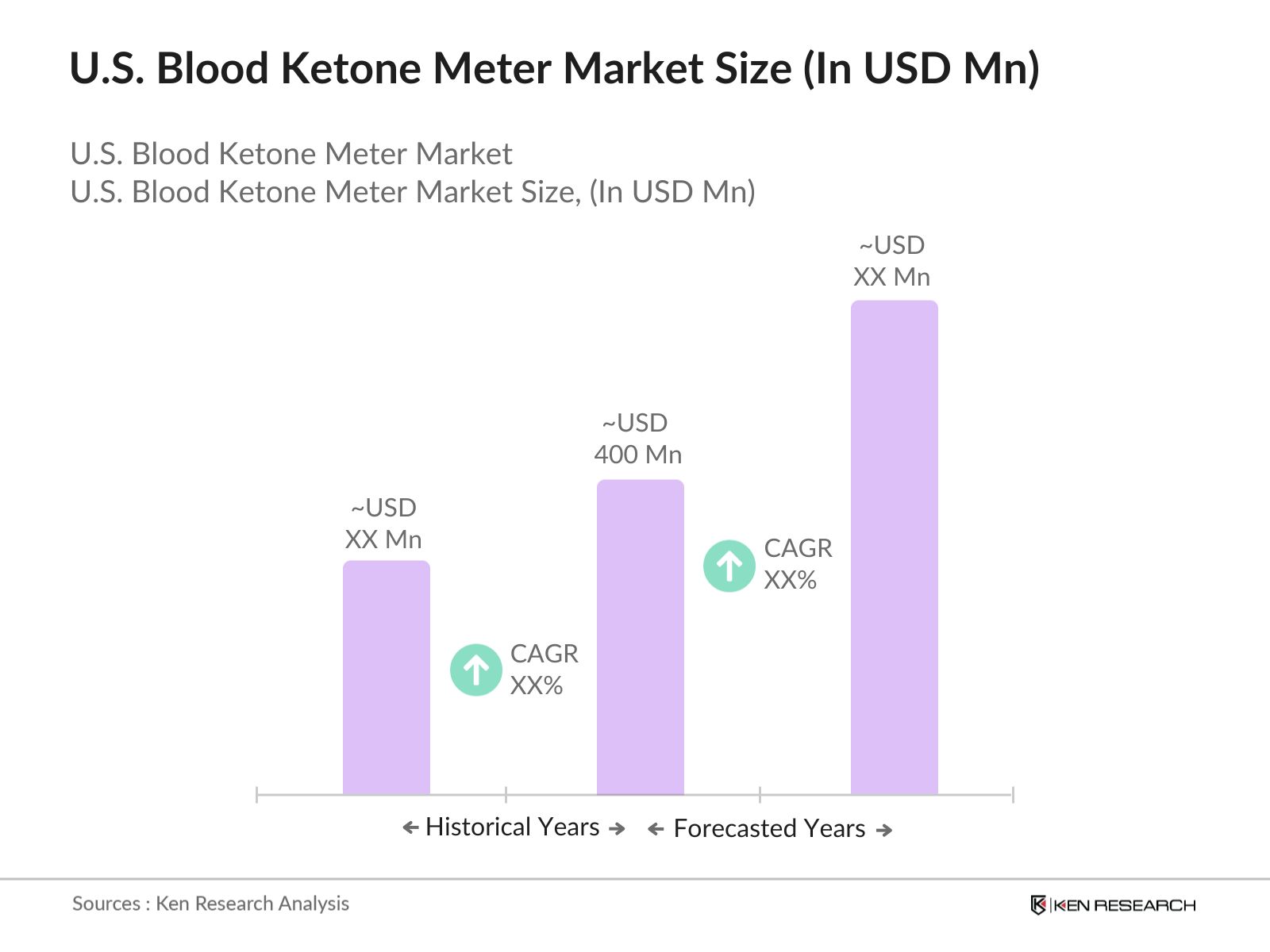
- Major cities like New York, Los Angeles, and Chicago dominate the market due to their robust healthcare infrastructure, high prevalence of metabolic disorders, and widespread consumer awareness. These regions are also characterized by higher disposable incomes, which support the adoption of advanced monitoring devices. Additionally, well-established retail and e-commerce networks ensure easy accessibility of ketone meters, contributing to their dominance.
- The FDA plays a pivotal role in ensuring the safety and efficacy of monitoring devices. In 2023 alone, the FDA approved 53 medical devices related to diabetes and metabolic health, signaling regulatory support for innovation in this sector. Compliance with these guidelines is essential for manufacturers to maintain credibility and gain consumer trust.
U.S. Blood Ketone Meter Market Segmentation
The U.S. blood ketone meter market is segmented by product type and by end-use.
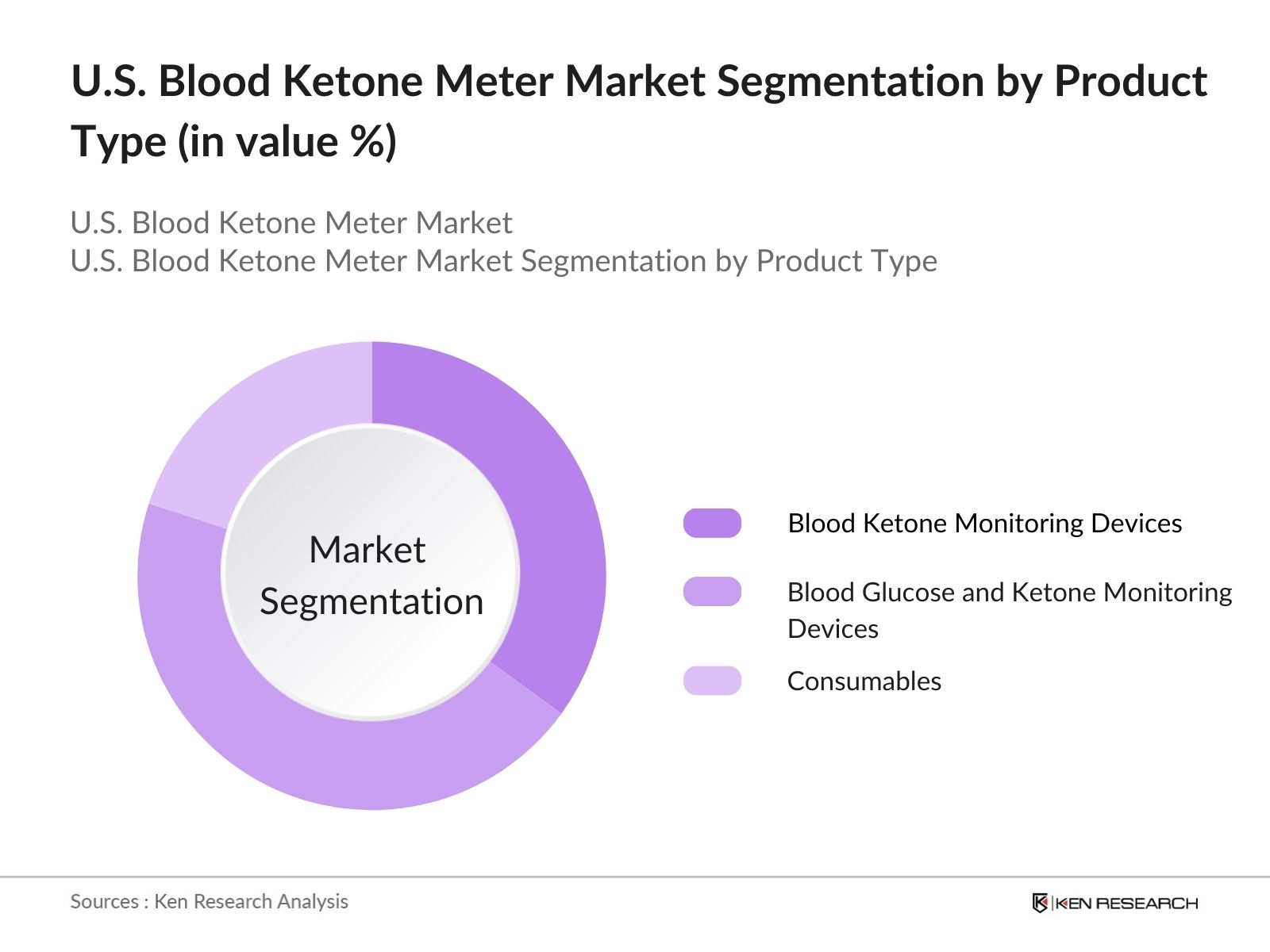
- By Product Type: The U.S. blood ketone meter market is segmented by product type into Blood Ketone Monitoring Devices, Blood Glucose and Ketone Monitoring Devices, Consumables (Test Strips, Lancets). Blood Glucose and Ketone Monitoring Devices dominate this segment due to their dual functionality, allowing users to track both glucose and ketone levels simultaneously. This feature is especially beneficial for diabetic patients and individuals on ketogenic diets who require frequent monitoring. These devices have gained popularity for their convenience and cost-effectiveness, as they eliminate the need for separate meters. Additionally, innovations in technology have resulted in improved accuracy and ease of use, further solidifying their market position.
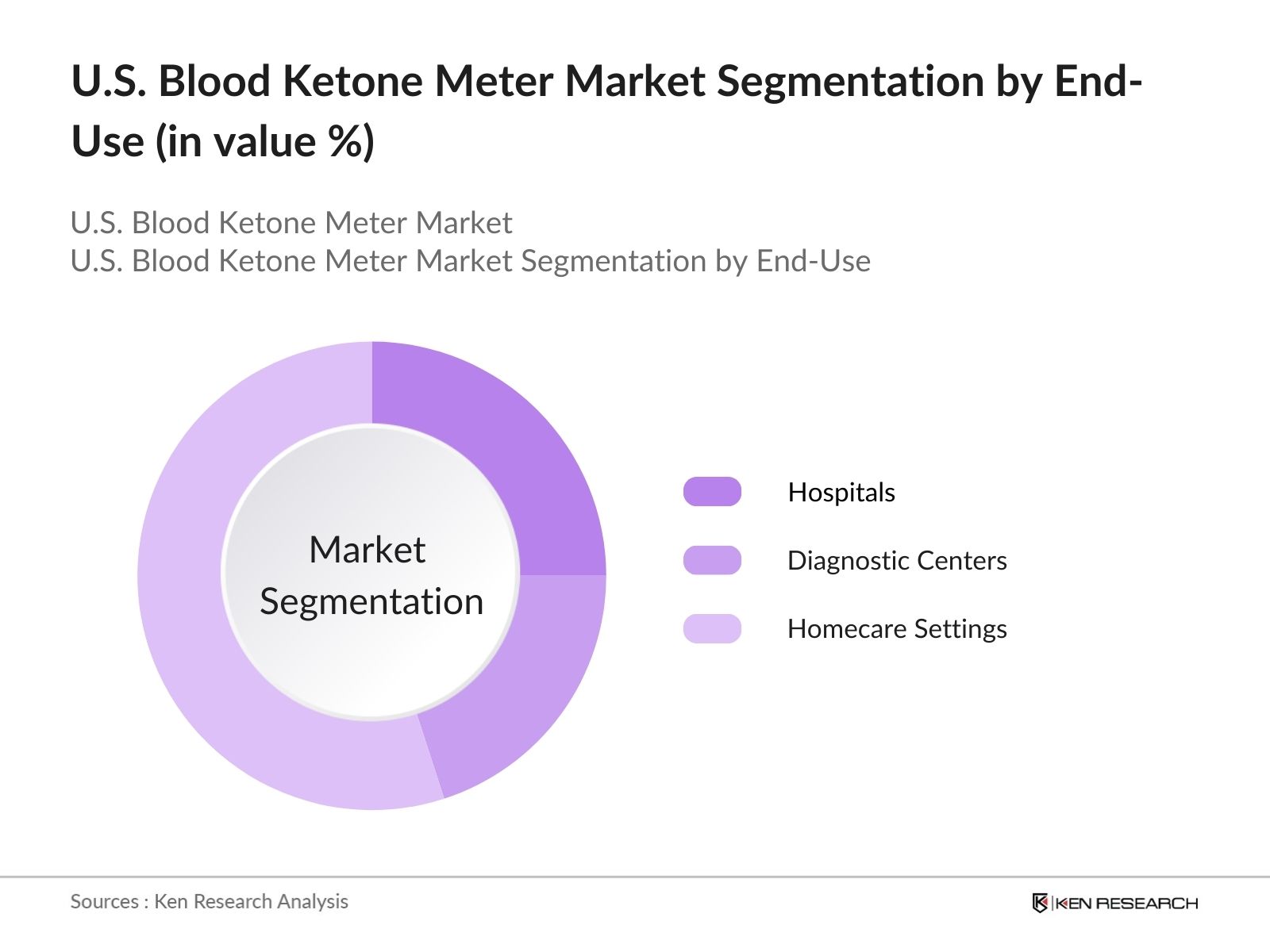
- By End-Use: The market is segmented by end-use into Hospitals, Diagnostic Centers, Homecare Settings. Homecare Settings hold the largest market share due to the growing trend of self-monitoring and the increasing availability of user-friendly devices. These settings cater to individuals seeking cost-effective and convenient solutions for managing diabetes and other metabolic conditions. Home monitoring devices have also gained traction during the pandemic, as patients preferred to avoid hospital visits. Moreover, the integration of advanced features such as mobile apps and data tracking capabilities enhances their appeal.
U.S. Blood Ketone Meter Market Competitive Landscape
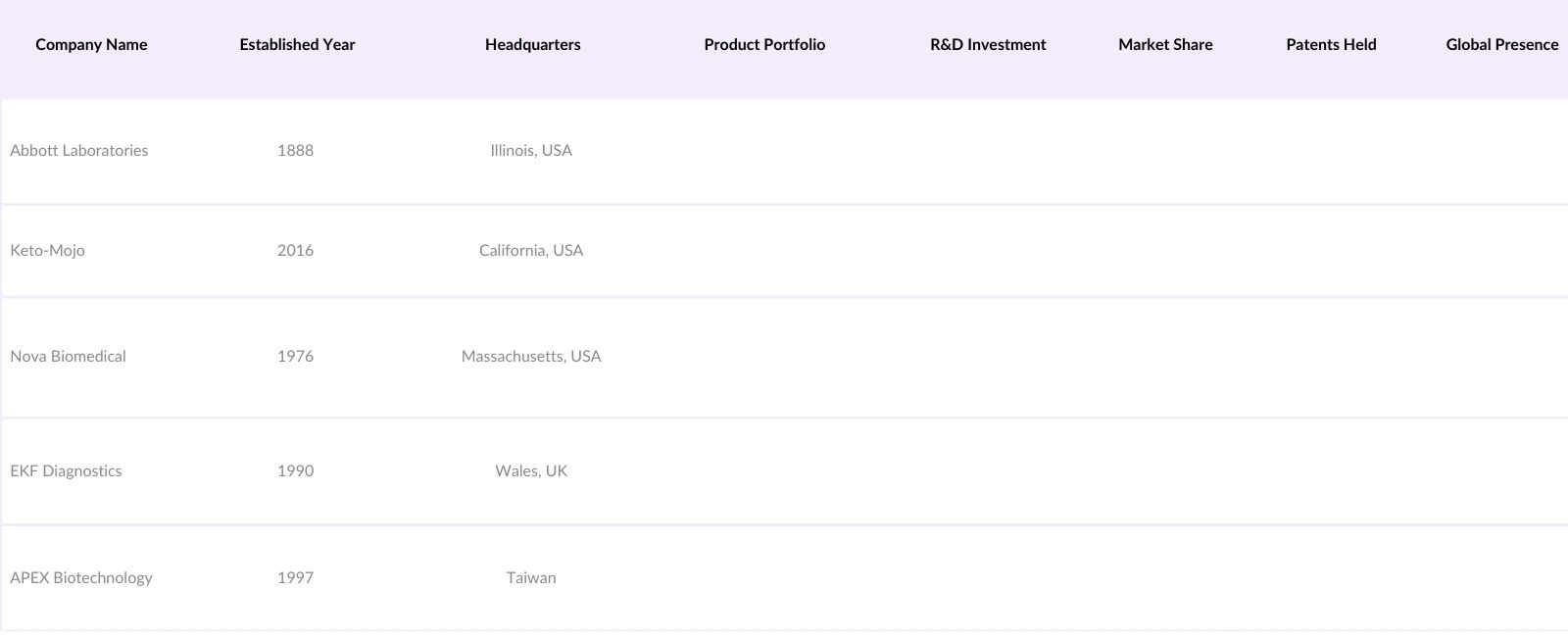
The U.S. blood ketone meter market is competitive, with a mix of global giants and specialized companies. Players in the market focus on innovation, strategic collaborations, and expanding their distribution networks to maintain their positions. Companies are increasingly investing in research and development to create non-invasive and smartphone-compatible solutions, catering to the tech-savvy consumer base.
U.S. Blood Ketone Meter Market Analysis
Growth Drivers
- Increasing Prevalence of Diabetes: The global prevalence of diabetes has been rising sharply, with 537 million adults aged 20-79 diagnosed in 2021, and over 6.7 million diabetes-related deaths reported that year. This health crisis has intensified the demand for advanced tools to monitor glucose and ketone levels. Developed nations report significant healthcare expenditures related to diabetes, with over $966 billion spent on diabetes management globally in 2021. This upward trend reflects both increasing patient awareness and growing market opportunities for solutions targeting metabolic health.
- Rising Adoption of Ketogenic Diets: The ketogenic diet has become a mainstream approach to weight loss and metabolic health, supported by a growing body of research emphasizing its benefits for conditions such as type 2 diabetes and obesity. As of 2023, ketogenic-focused food products generated $8.8 billion in global sales, signaling robust consumer interest. This adoption is further supported by endorsements from healthcare providers, driving the need for devices that assist in maintaining ketosis through continuous monitoring.
- Technological Advancements in Monitoring Devices: Rapid advancements in wearable and handheld monitoring devices have revolutionized metabolic health management. For example, devices now integrate advanced biosensors capable of providing real-time feedback on glucose and ketone levels. These devices leverage cloud-based platforms to analyze patient data and offer actionable insights. Such technologies not only enhance user compliance but also enable early detection of metabolic imbalances, aligning with global healthcare strategies emphasizing preventive care.
Market Challenges
- High Cost of Devices: Advanced glucose and ketone monitoring devices remain expensive, often ranging between $500 and $1,000 for consumer-grade models. This cost is a significant barrier, especially in low- and middle-income countries where healthcare spending per capita is significantly lower. For instance, healthcare expenditure per capita in Sub-Saharan Africa averaged only $83 in 2021 compared to $12,318 in high-income countries. This disparity underscores the urgent need for affordable solutions.
- Limited Awareness Among Non-Diabetic Users: While diabetic patients are generally aware of the benefits of continuous glucose and ketone monitoring, the broader population often lacks knowledge of these tools. A 2023 survey by a public health agency revealed that only 18% of non-diabetic respondents were familiar with the concept of ketone monitoring, highlighting a significant educational gap. Without targeted awareness campaigns, the adoption rate among this demographic will likely remain limited.
U.S. Blood Ketone Meter Market Future Outlook
Over the next five years, the U.S. blood ketone meter market is poised for significant growth, driven by the increasing demand for digital health solutions, rising awareness about metabolic health, and advancements in monitoring technologies. The adoption of non-invasive ketone testing methods and the integration of mobile health apps with wearable devices are expected to create new opportunities. Additionally, the expanding scope of these devices for veterinary applications and chronic disease management underscores the market's potential.
Market Opportunities
- Integration with Digital Health Platforms: The global push toward digital health has created significant opportunities for the integration of monitoring devices with platforms like electronic health records (EHRs) and telemedicine apps. In 2022, over 1.7 billion people used mobile health apps worldwide, indicating a massive market for solutions that seamlessly sync with these tools. This integration not only enhances patient care but also enables data-driven decision-making for healthcare providers. (Source)
- Expansion into Veterinary Applications: Veterinary medicine is emerging as a promising market for glucose and ketone monitoring technologies. In 2023, global spending on pet healthcare surpassed $200 billion, driven by growing consumer interest in preventive care for animals. With rising rates of obesity and diabetes among pets, these monitoring devices can address a critical unmet need, opening new revenue streams for manufacturers.
Scope of the Report
|
By Product Type |
Blood Ketone Monitoring Devices |
|
By Application |
Human |
|
By End-Use |
Hospitals |
|
By Technology |
Electrochemical Testing |
|
By Distribution Channel |
Offline Sales |
Products
Key Target Audience
Manufacturers of Blood Ketone Monitoring Devices
Ketogenic Diet Companies
Hospitals and Diagnostic Centers
Homecare Device Providers
Investments firms and Venture Capital Firms
Government and Regulatory Bodies (e.g., FDA, HHS)
E-commerce Platforms
Health and Wellness Industry Leaders
Companies
Players Mention in the Report:
Abbott Laboratories
Keto-Mojo
Nova Biomedical
EKF Diagnostics
APEX Biotechnology
Roche Diagnostics
Siemens Healthineers
TaiDoc Technology
Omron Healthcare
PortaCheck
Stanbio Laboratory
Nipro Diagnostics
Diet Doctor
AmVenture
MED TRUST
Table of Contents
Market Overview
Definition and Scope
Market Taxonomy
Market Growth Rate
Market Segmentation Overview
Market Size (USD Million)
Historical Market Size
Year-On-Year Growth Analysis
Key Market Developments and Milestones
Market Analysis
Growth Drivers
Increasing Prevalence of Diabetes
Rising Adoption of Ketogenic Diets
Technological Advancements in Monitoring Devices
Growing Awareness of Metabolic Health
Market Challenges
High Cost of Devices
Limited Awareness Among Non-Diabetic Users
Regulatory Hurdles
Opportunities
Integration with Digital Health Platforms
Expansion into Veterinary Applications
Development of Non-Invasive Monitoring Technologies
Trends
Adoption of Continuous Ketone Monitoring Systems
Integration with Mobile Health Applications
Personalized Health Monitoring Solutions
Government Regulations
FDA Approvals and Guidelines
Reimbursement Policies
Health Information Privacy Laws
SWOT Analysis
Stakeholder Ecosystem
Porters Five Forces Analysis
Competitive Landscape
Market Segmentation
By Product Type (Value %)
Blood Ketone Monitoring Devices
Blood Glucose and Ketone Monitoring Devices
Consumables (Test Strips, Lancets)
By Application (Value %)
Human
Veterinary
By End-Use (Value %)
Hospitals
Diagnostic Centers
Homecare Settings
Others
By Technology (Value %)
Electrochemical Testing
Photometric Testing
Spectroscopy
By Distribution Channel (Value %)
Offline Sales
Hospital Pharmacies
Retail Pharmacies
Online Sales
Company Websites
E-commerce Platforms
Competitive Analysis
Detailed Profiles of Major Companies
Abbott Laboratories
Keto-Mojo
Nova Biomedical
EKF Diagnostics
TaiDoc Technology
PortaCheck
Stanbio Laboratory
APEX Biotechnology Corporation
MED TRUST
AmVenture
Diet Doctor
Nipro Diagnostics
Omron Healthcare
Roche Diagnostics
Siemens Healthineers
Cross Comparison Parameters (Number of Employees, Headquarters, Inception Year, Revenue, Product Portfolio, Market Share, R&D Investment, Regional Presence)
Market Share Analysis
Strategic Initiatives
Mergers and Acquisitions
Investment Analysis
Venture Capital Funding
Government Grants
Private Equity Investments
Regulatory Framework
FDA Approval Processes
Compliance Requirements
Certification Processes
Future Market Size (USD Million)
Future Market Size Projections
Key Factors Driving Future Market Growth
Future Market Segmentation
By Product Type (Value %)
By Application (Value %)
By End-Use (Value %)
By Technology (Value %)
By Distribution Channel (Value %)
Analysts Recommendations
Total Addressable Market (TAM), Serviceable Available Market (SAM), Serviceable Obtainable Market (SOM) Analysis
Customer Cohort Analysis
Marketing Initiatives
White Space Opportunity Analysis
Disclaimer Contact UsResearch Methodology
Step 1: Identification of Key Variables
The research process begins by identifying major stakeholders in the U.S. blood ketone meter market. Extensive desk research is conducted using secondary and proprietary databases to understand market drivers, challenges, and trends.
Step 2: Market Analysis and Construction
Historical and current market data are analyzed to evaluate growth patterns and segmentation. Statistical models are applied to ensure reliable revenue estimates and validate market penetration metrics.
Step 3: Hypothesis Validation and Expert Consultation
Key market hypotheses are tested through expert consultations, including in-depth interviews with manufacturers, distributors, and healthcare professionals. These insights are instrumental in refining the analysis and corroborating data points.
Step 4: Research Synthesis and Final Output
The final phase involves synthesizing data to generate comprehensive insights. This includes market forecasts, segmentation analysis, and competitive dynamics to deliver actionable recommendations.
Frequently Asked Questions
01. How big is the U.S. Blood Ketone Meter Market?
The U.S. blood ketone meter market is valued at USD 400 million, fueled by advancements in technology and increasing health awareness among consumers.
02. What challenges does the U.S. Blood Ketone Meter Market face?
Challenges include high costs of devices, limited awareness among non-diabetic users, and stringent regulatory requirements for product approvals.
03. Who are the major players in the U.S. Blood Ketone Meter Market?
Key players include Abbott Laboratories, Keto-Mojo, Nova Biomedical, EKF Diagnostics, and APEX Biotechnology. These companies dominate through innovation and strategic partnerships.
04. What drives growth in the U.S. Blood Ketone Meter Market?
Growth is driven by the rising adoption of ketogenic diets, the increasing prevalence of diabetes, and the integration of digital health solutions with ketone meters.
05. Which regions dominate the U.S. Blood Ketone Meter Market?
Cities like New York, Los Angeles, and Chicago dominate due to their advanced healthcare infrastructure, high diabetic population, and strong consumer awareness.
Why Buy From Us?

What makes us stand out is that our consultants follows Robust, Refine and Result (RRR) methodology. i.e. Robust for clear definitions, approaches and sanity checking, Refine for differentiating respondents facts and opinions and Result for presenting data with story

We have set a benchmark in the industry by offering our clients with syndicated and customized market research reports featuring coverage of entire market as well as meticulous research and analyst insights.

While we don't replace traditional research, we flip the method upside down. Our dual approach of Top Bottom & Bottom Top ensures quality deliverable by not just verifying company fundamentals but also looking at the sector and macroeconomic factors.

With one step in the future, our research team constantly tries to show you the bigger picture. We help with some of the tough questions you may encounter along the way: How is the industry positioned? Best marketing channel? KPI's of competitors? By aligning every element, we help maximize success.

Our report gives you instant access to the answers and sources that other companies might choose to hide. We elaborate each steps of research methodology we have used and showcase you the sample size to earn your trust.

If you need any support, we are here! We pride ourselves on universe strength, data quality, and quick, friendly, and professional service.