
U.S. Hard Seltzer Market Outlook 2030
Region:North America
Author(s):Shivani Mehra
Product Code:KROD11452
November 2024
97
About the Report
U.S. Hard Seltzer Market Overview
- The U.S. Hard Seltzer market is valued at USD 6.52 billion. This markets growth is driven by a combination of shifting consumer preferences towards low-calorie, gluten-free alcoholic beverages and an increased focus on health-conscious consumption. Brands in this sector leverage diverse flavors and innovate continuously to attract millennial consumers, significantly boosting demand.
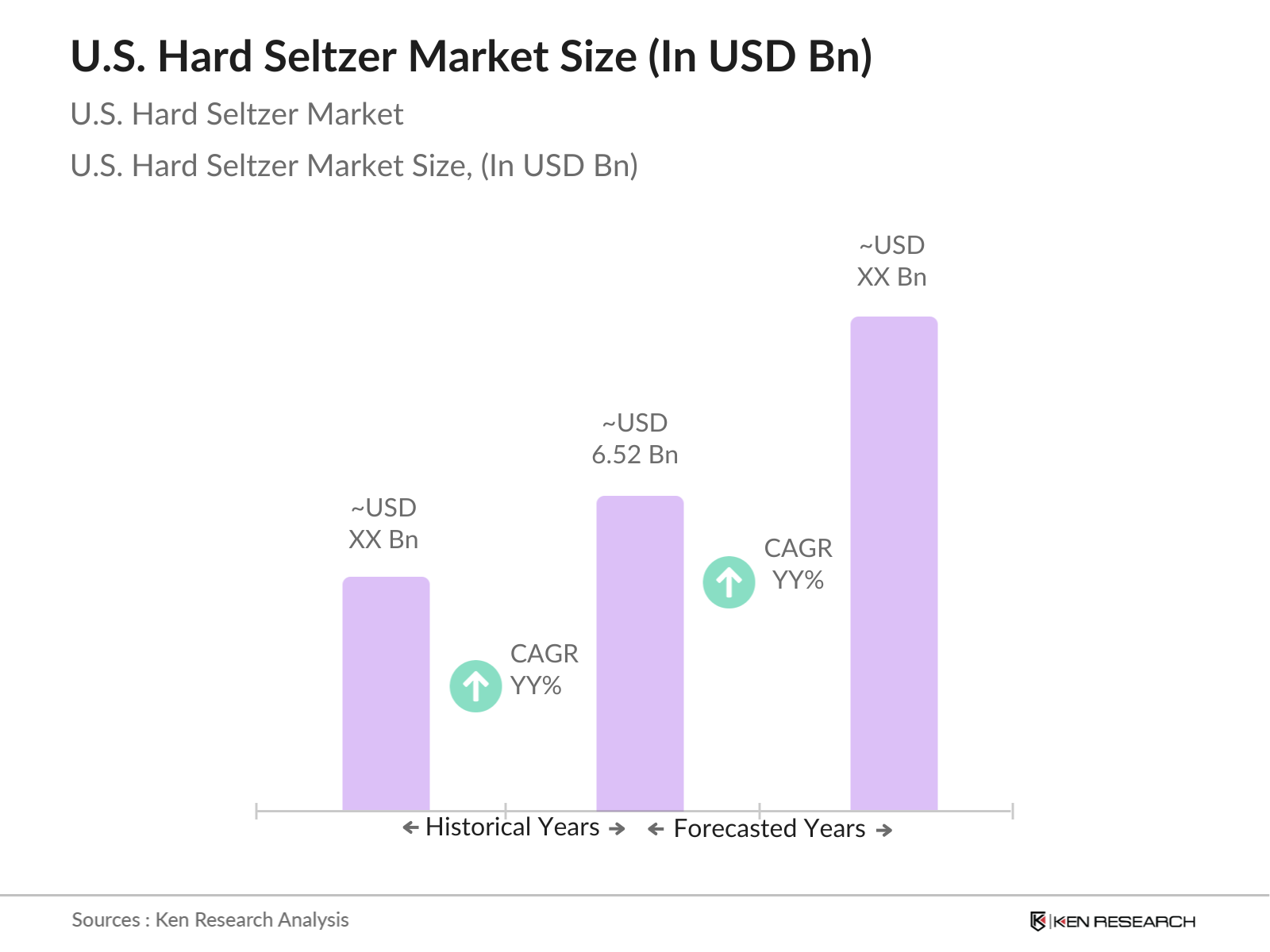
- Key cities driving the hard seltzer market include Los Angeles, New York, and Miami, regions known for high disposable income, younger demographics, and a vibrant lifestyle culture that emphasizes social drinking. These urban centers have rapidly adopted hard seltzers, supported by extensive on-trade channels, a receptive audience, and robust retail networks.
- The U.S. Environmental Protection Agency (EPA) has implemented the Sustainable Materials Management (SMM) program to encourage businesses to reduce environmental impacts through better packaging practices. The program provides resources and guidelines to support industries, including beverage companies, in adopting recyclable and sustainable packaging. Hard seltzer brands are aligning with these guidelines to increase their use of aluminum and recyclable materials, benefiting from government-led support in reducing waste.
U.S. Hard Seltzer Market Segmentation
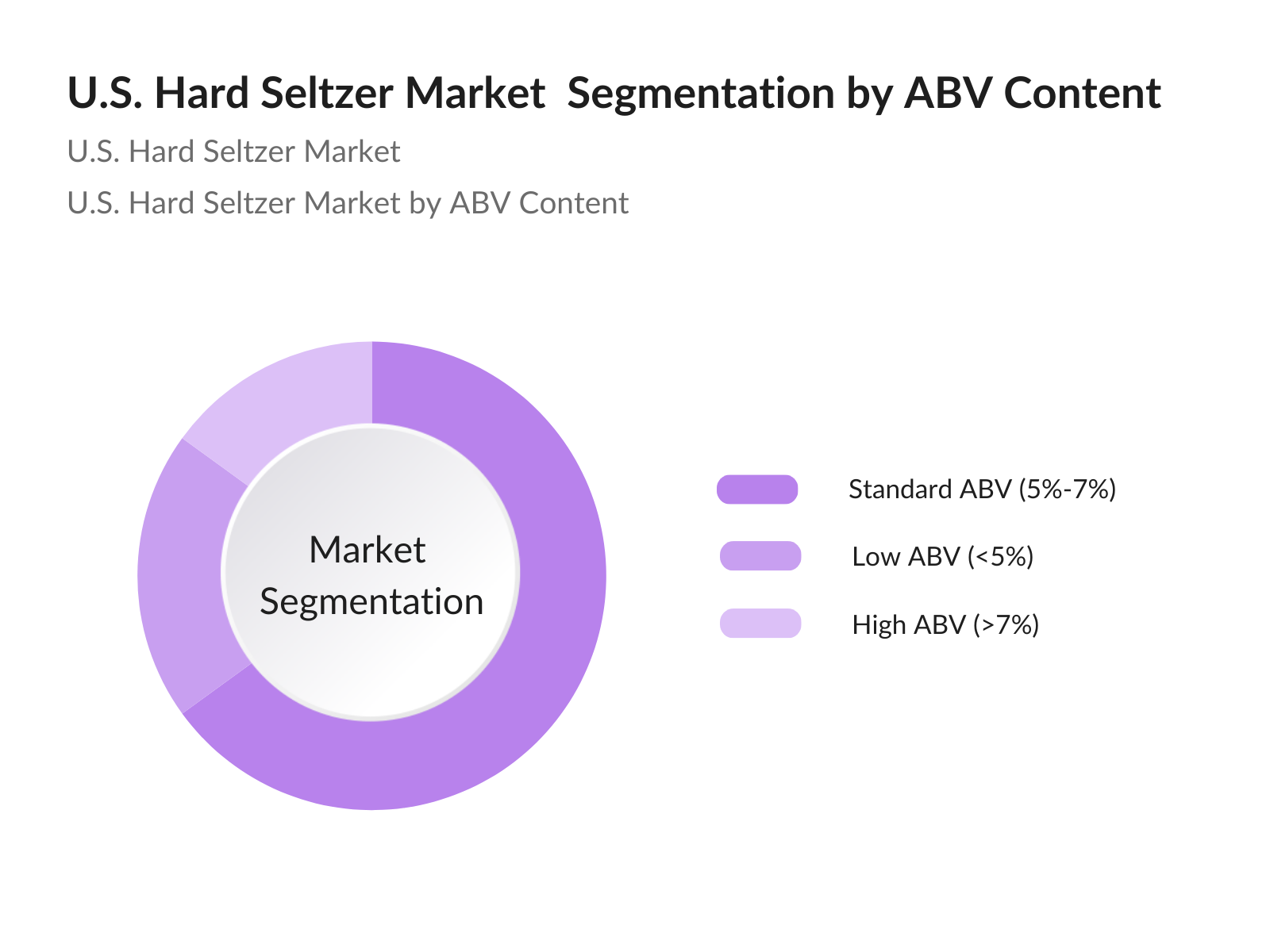
- By ABV Content: The U.S. Hard Seltzer market is segmented by ABV content into low ABV (below 5%), standard ABV (5%-7%), and high ABV (above 7%). The standard ABV (5%-7%) segment currently holds the largest market share due to its appeal as a moderate-alcohol option suitable for casual social consumption. Standard ABV hard seltzers cater to the taste preferences of consumers seeking a balanced alcoholic beverage without high intoxication levels.
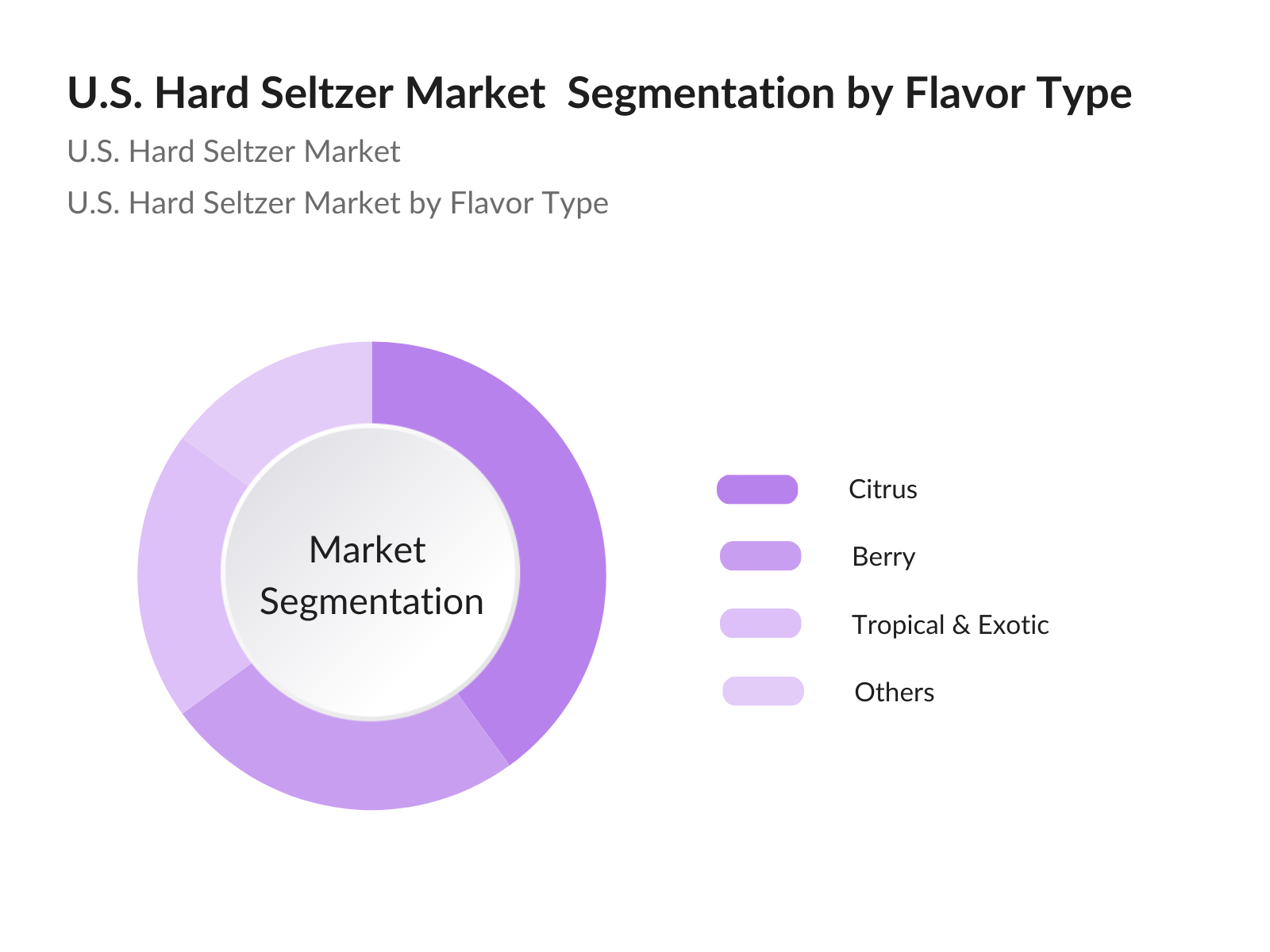
- By Flavor Type: The market is further segmented by flavor type into citrus, berry, tropical and exotic, and other flavors such as herbal and botanical. Citrus flavors dominate this segment, supported by the popularity of light, refreshing taste profiles that resonate well with the health-conscious and flavor-seeking consumer base. Leading brands have capitalized on citrus as a core offering, which remains a crowd favorite among millennial and Gen Z consumers.
U.S. Hard Seltzer Market Competitive Landscape
The U.S. Hard Seltzer market is primarily consolidated, with significant contributions from major beverage companies that leverage their brand reach, innovative marketing, and distribution networks.
|
Company Name |
Establishment Year |
Headquarters |
Distribution Channels |
Product Portfolio |
Sustainability Initiatives |
ABV Range |
Core Flavors |
Consumer Perception |
Marketing Strategy |
|
Anheuser-Busch InBev |
1852 |
Leuven, Belgium |
- | - | - | - | - | - | - |
|
Boston Beer Company (Truly) |
1984 |
Boston, MA, USA |
- | - | - | - | - | - | - |
|
Mark Anthony Brands (White Claw) |
1972 |
Vancouver, Canada |
- | - | - | - | - | - | - |
|
Molson Coors Beverage Company (Vizzy) |
1786 |
Chicago, IL, USA |
- | - | - | - | - | - | - |
|
Heineken N.V. |
1864 |
Amsterdam, Netherlands |
- | - | - | - | - | - | - |
U.S. Hard Seltzer Market Analysis
Market Growth Drivers
- Increasing Preference for Low-Calorie Beverages: The demand for low-calorie beverages has surged, especially among health-conscious consumers in the U.S., with government health data revealing an annual increase in low-calorie beverage purchases in 2023 by nearly 15 million liters. This shift is influenced by growing awareness of obesity and diabetes, as many American adults are actively seeking beverages under 100 calories per serving. This trend aligns with USDA dietary guidelines that encourage reduced calorie intake, positioning hard seltzers favorably in a market increasingly focused on calorie-conscious choices.
- Rising Demand Among Millennials: In 2023, millennials, who comprise 72 million of the U.S. population, have shown a heightened interest in hard seltzers as a refreshing alternative to beer and spirits. Data from the U.S. Census Bureau shows that millennials allocate a significant portion of their disposable income to social and leisure activities, including alcohol consumption. Hard seltzer brands targeting this demographic have observed growth, driven by millennials' preference for flavored, convenient, and low-sugar alcoholic options.
- Health and Wellness Trends: The health and wellness market in the U.S. has grown significantly, with a notable number of consumers choosing alcohol options perceived as healthier. Data from the CDC indicates that many Americans increasingly prefer low-sugar, gluten-free beverages, which influences their alcoholic beverage choices. Hard seltzers, typically offering low sugar and gluten-free options, appeal strongly to this segment, reinforcing their place in a wellness economy valued at $1.4 trillion.
Market Challenges:
- Regulatory Hurdles (Alcoholic Content Standards): The Alcohol and Tobacco Tax and Trade Bureau (TTB) enforces strict alcoholic content standards, requiring compliance for hard seltzers with alcohol levels often around ABV. Non-compliance could lead to fines up to $20,000 per violation. This regulatory framework presents a challenge, especially for brands experimenting with flavors and alcohol levels to capture diverse preferences.
- High Competition from Traditional Alcoholic Beverages: Traditional alcoholic beverages, notably beer and spirits, hold a dominant market share, with the Beer Institute reporting 12 billion liters of beer sold annually in the U.S. Hard seltzers face strong competition from these established brands, which creates a barrier to expanding consumer loyalty. Although hard seltzers have experienced growth, their consumption still accounts for a relatively small portion of the total alcohol sales volume.
U.S. Hard Seltzer Market Future Outlook
Over the next five years, the U.S. Hard Seltzer market is poised for substantial growth, fueled by rising health trends, continuous product innovation, and an expanding consumer base interested in unique, low-calorie alcoholic beverages. Key drivers include a surge in demand among younger demographics, increased marketing investments from top beverage brands, and more retail channels embracing hard seltzer offerings.
Market Opportunities:
- Expansion in Retail and Online Distribution: The surge in e-commerce alcohol sales, particularly in urban areas, has significantly facilitated the reach of hard seltzers. Statista data shows a notable increase in online alcohol sales in the U.S. in 2023, with hard seltzers contributing a significant share to this growth. Retail chains are also reporting increased shelf space allocations for hard seltzers, capitalizing on their quick turnover rate.
- Sustainable Packaging Initiatives: Growing environmental consciousness among U.S. consumers is encouraging brands to adopt recyclable packaging for hard seltzers. EPA data indicates an increase in the recycling rate of aluminum cans, a trend that hard seltzer companies are aligning with through sustainable packaging commitments. Brands that implement such packaging report stronger loyalty from environmentally-conscious consumers.
Scope of the Report
|
By Product Type |
Dimming Systems Color Tuning Systems Occupancy Sensing Systems Daylight Harvesting Systems |
|
By Technology |
Wired Adaptive Lighting Wireless Adaptive Lighting Hybrid Systems |
|
By Application |
Residential Commercial Industrial Outdoor |
|
By End-User |
Governmental Corporate Educational Institutions Entertainment Venues |
|
By Region |
North-East Midwest West Coast Southern States |
Products
Key Target Audience
Beverage Retail Chains
On-Trade Channels (Bars, Restaurants, Pubs)
E-Commerce Platforms for Alcoholic Beverages
Packaging and Can Manufacturers
Ingredient Suppliers (Flavors, Sweeteners)
Health and Wellness Brands for Collaborations
Companies
Players mentioned in the report
Anheuser-Busch InBev
Boston Beer Company (Truly)
Mark Anthony Brands (White Claw)
Molson Coors Beverage Company (Vizzy)
Heineken N.V.
The Coca-Cola Company (Topo Chico Hard Seltzer)
Constellation Brands
Diageo (Smirnoff Seltzers)
Pabst Brewing Co.
Bon & Viv
Crook & Marker
Press Premium Alcohol Seltzer
Bud Light Seltzer
REZ Hard Seltzer
New Belgium Brewing Company
Table of Contents
1. U.S. Hard Seltzer Market Overview
1.2. Market Dynamics and Growth Drivers
1.3. Regional Insights and Key Markets
1.4. Regulatory Influence on Packaging and Sustainability
2. U.S. Hard Seltzer Market Size (USD Bn)
2.1. Current Market Valuation
2.2. Historical Market Size
2.3. Year-on-Year Growth Analysis
2.4. Key Developments and Milestones
3. U.S. Hard Seltzer Market Segmentation
3.1. By ABV Content
3.1.1. Low ABV (<5%)
3.1.2. Standard ABV (5%-7%)
3.1.3. High ABV (>7%)
3.2. By Flavor Type
3.2.1. Citrus
3.2.2. Berry
3.2.3. Tropical & Exotic
3.2.4. Other Flavors (Herbal & Botanical)
4. U.S. Hard Seltzer Market Competitive Landscape
4.1. Profiles of Key Players
4.1.1. Anheuser-Busch InBev
4.1.2. Boston Beer Company (Truly)
4.1.3. Mark Anthony Brands (White Claw)
4.1.4. Molson Coors Beverage Company (Vizzy)
4.1.5. Heineken N.V.
4.2. Market Share Analysis
4.3. Competitive Strategies and Brand Differentiation
4.4. Sustainability Initiatives and Packaging Innovations
5. U.S. Hard Seltzer Market Analysis
5.1. Market Growth Drivers
5.1.1. Shift Toward Low-Calorie Beverages
5.1.2. Demand Among Millennials and Younger Consumers
5.1.3. Health and Wellness Trends
5.2. Market Challenges
5.2.1. Regulatory Compliance for Alcohol Content Standards
5.2.2. Competition from Traditional Alcoholic Beverages
5.3. Market Opportunities
5.3.1. Expansion in Retail and E-commerce Distribution
5.3.2. Sustainable Packaging Initiatives
6. U.S. Hard Seltzer Market Future Outlook
6.1. Projections and Future Market Size
6.2. Key Growth Drivers for 2028
6.3. Consumer Preference Shifts and Product Innovations
Research Methodology
Step 1: Identification of Key Variables
We initiate by mapping the ecosystem, identifying critical stakeholders, including beverage producers, retailers, and regulatory agencies. This step includes exhaustive desk research utilizing secondary databases and proprietary sources.
Step 2: Market Analysis and Construction
Historical data is analyzed to assess penetration rates, product uptake, and consumer preferences, focusing on the revenue generated by on-trade and off-trade channels. The gathered data helps in estimating reliable market metrics.
Step 3: Hypothesis Validation and Expert Consultation
Market hypotheses are formulated based on data trends, subsequently validated via computer-assisted telephone interviews (CATI) with key industry representatives, ensuring data precision through firsthand insights.
Step 4: Research Synthesis and Final Output
We engage directly with hard seltzer brands to refine our segmentation, sales performance, and consumer data. This synthesis ensures the final analysis represents a comprehensive and validated U.S. Hard Seltzer market landscape.
Frequently Asked Questions
01. How big is the U.S. Hard Seltzer Market?
The U.S. Hard Seltzer market is valued at USD 6.52 billion, driven by the increasing demand for low-calorie alcoholic alternatives and a preference for gluten-free beverages.
02. What are the main challenges in the U.S. Hard Seltzer Market?
Key challenges include high competition from established alcoholic beverage segments and regulatory standards concerning alcohol labeling, which could impact marketing strategies.
03. Who are the dominant players in the U.S. Hard Seltzer Market?
Dominant players include Anheuser-Busch InBev, Boston Beer Company (Truly), and Mark Anthony Brands (White Claw), known for their extensive distribution networks and strong consumer appeal.
04. Why are citrus flavors popular in the U.S. Hard Seltzer Market?
Citrus flavors are popular due to their refreshing taste and compatibility with health-focused trends, catering to consumer demand for lighter, flavorful alcoholic options.
Why Buy From Us?

What makes us stand out is that our consultants follows Robust, Refine and Result (RRR) methodology. i.e. Robust for clear definitions, approaches and sanity checking, Refine for differentiating respondents facts and opinions and Result for presenting data with story

We have set a benchmark in the industry by offering our clients with syndicated and customized market research reports featuring coverage of entire market as well as meticulous research and analyst insights.

While we don't replace traditional research, we flip the method upside down. Our dual approach of Top Bottom & Bottom Top ensures quality deliverable by not just verifying company fundamentals but also looking at the sector and macroeconomic factors.

With one step in the future, our research team constantly tries to show you the bigger picture. We help with some of the tough questions you may encounter along the way: How is the industry positioned? Best marketing channel? KPI's of competitors? By aligning every element, we help maximize success.

Our report gives you instant access to the answers and sources that other companies might choose to hide. We elaborate each steps of research methodology we have used and showcase you the sample size to earn your trust.

If you need any support, we are here! We pride ourselves on universe strength, data quality, and quick, friendly, and professional service.