
U.S. Household Appliances Market Outlook 2030
Region:North America
Author(s):Shivani
Product Code:KROD7021
Region:North America
Author(s):Shivani
Product Code:KROD7021
November 2024
99
U.S. Household Appliances Market Overview
U.S. Household Appliances Market Segmentation
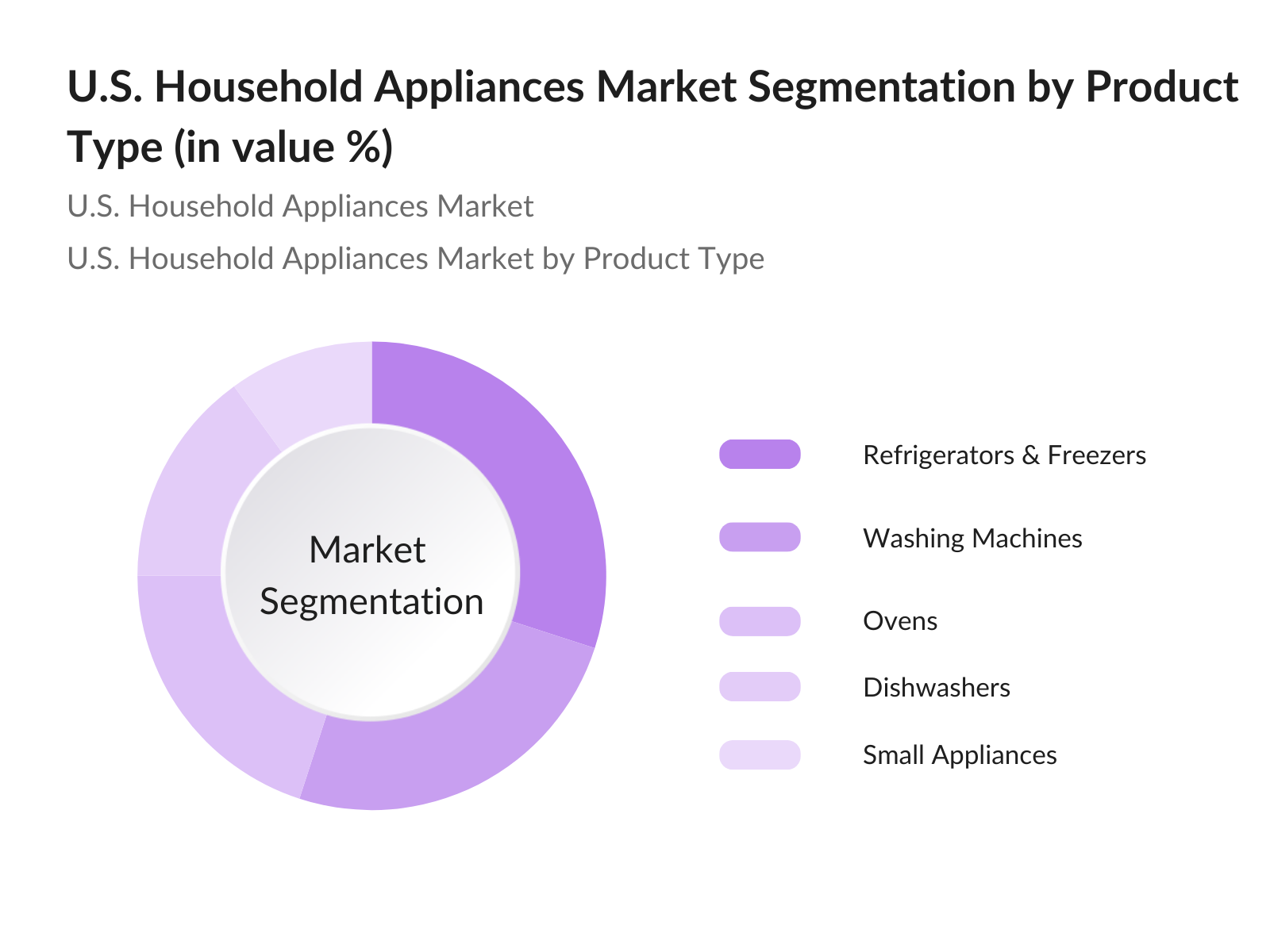
By Product Type: The U.S. household appliances market is segmented into refrigerators and freezers, washing machines, dishwashers, ovens, and small appliances such as vacuum cleaners and coffee makers. Among these, refrigerators and freezers hold the dominant share, driven by technological advancements like multi-door smart refrigerators with enhanced energy efficiency. Smart refrigerators, capable of interacting with other home devices and offering customized user experiences, are gaining significant popularity among tech-conscious consumers.
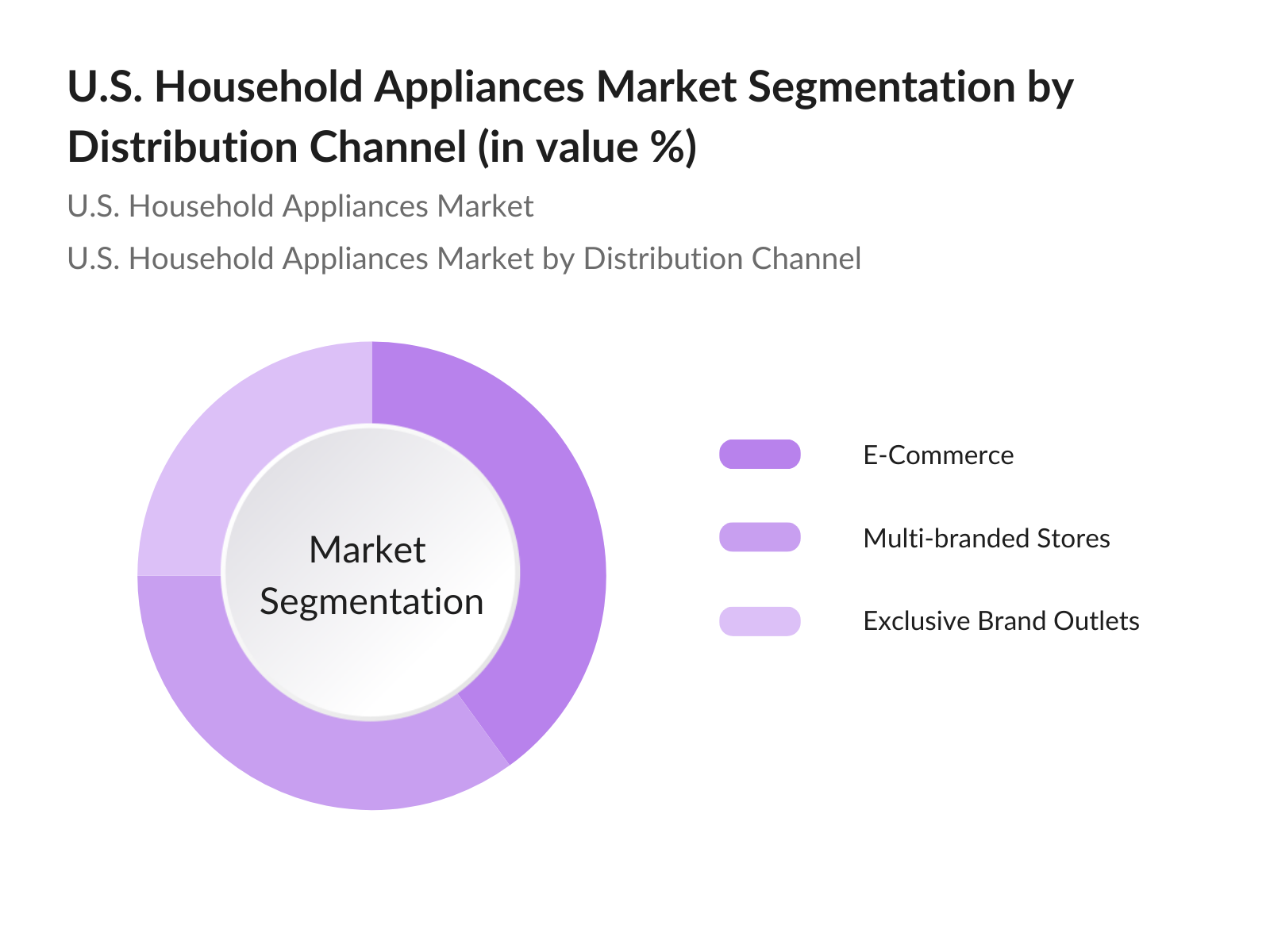
By Distribution Channel: Distribution channels for household appliances in the U.S. include multi-branded stores, exclusive brand outlets, and e-commerce platforms. E-commerce leads in market share as online shopping continues to grow rapidly, driven by the convenience of home delivery and competitive pricing. Additionally, exclusive brand outlets play a crucial role, offering customized and high-end product ranges that appeal to premium consumers.
U.S. Household Appliances Market Competitive Landscape
The U.S. household appliances market is consolidated, with key players holding a dominant presence through extensive R&D investments, smart technology integration, and product psortfolio expansions. These companies have built strong brand recognition and cater to diverse consumer needs ranging from affordability to high-end luxury appliances.
|
Company |
Established |
Headquarters |
Market-Specific Parameters |
|
Whirlpool |
1911 |
Michigan, USA |
- |
|
LG Electronics |
1958 |
Seoul, South Korea |
- |
|
Samsung Electronics |
1969 |
Suwon, South Korea |
- |
|
Haier Group |
1984 |
Qingdao, China |
- |
|
Bosch |
1886 |
Stuttgart, Germany |
- |
U.S. Household Appliances Market Analysis
Market Growth Drivers
Market Challenges:
U.S. Household Appliances Market Future Outlook
Over the next few years, the U.S. household appliances market is expected to witness significant growth, primarily driven by the increasing adoption of smart appliances, environmental sustainability concerns, and ongoing technological advancements. With rising consumer awareness around energy consumption, major players are expected to focus more on creating energy-efficient products that cater to both luxury and affordability segments.
Market Opportunities:
|
By Product Type |
Refrigerators Freezers Washing Machines Ovens Dishwashers Air Conditioners Small Appliances |
|
By Distribution Channel |
Multi-branded Stores Exclusive Outlets E-Commerce |
|
By Application |
Residential Commercial |
|
By End-User |
Smart Appliances Traditional Appliances Energy-Efficient Appliances |
|
By Region |
North-East Midwest West Coast Southern States |
Key Target Audience
1.1 Definition and Scope
1.2 Market Taxonomy
1.3 Market Growth Rate
1.4 Overview of Key Segments
2.1 Historical Market Size
2.2 Current Market Size Analysis
2.3 Key Developments Impacting Market Size
3.1 Market Drivers (Consumer Preferences, Innovation, Sustainability)
3.1.1 Rise in Disposable Income
3.1.2 Increasing Demand for Smart Home Solutions
3.1.3 Energy Efficiency and Sustainability Trends
3.2 Market Restraints (Supply Chain, Regulatory Compliance)
3.2.1 Supply Chain Disruptions (Semiconductor Shortages)
3.2.2 High Cost of Product Maintenance
3.3 Opportunities (Technology, Partnerships)
3.3.1 Growth of E-Commerce Platforms
3.3.2 Advancements in Smart Technologies and IoT
3.4 Trends (Smart Homes, Multi-functional Appliances)
3.4.1 Integration with AI and IoT
3.4.2 Consumer Shift to Sustainable Appliances
4.1 By Product Type
4.1.1 Refrigerators and Freezers
4.1.2 Dishwashers
4.1.3 Washing Machines
4.1.4 Air Conditioners
4.1.5 Ovens and Cooktops
4.1.6 Small Appliances (Coffee Makers, Vacuum Cleaners)
4.2 By Distribution Channel
4.2.1 Multi-branded Stores
4.2.2 Exclusive Brand Outlets
4.2.3 E-Commerce Platforms
5.1 Major Companies (Profile, Product Offerings, Competitive Strategies)
Whirlpool Corporation
Haier Group Corporation
LG Electronics
Samsung Electronics
Bosch
Panasonic Corporation
Midea Group
Electrolux AB
GE Appliances
Hitachi Ltd.
Gorenje Group
Arelik AS
BSH Hausgerte
Viking Range, LLC
Sub-Zero Group, Inc.
5.2 Cross-Comparison Parameters (Product Portfolio, Market Share, Innovation Index, R&D Investments, Pricing Strategy, Geographic Reach, Revenue Growth, ESG Initiatives)
5.3 Market Share Analysis
5.4 Recent Strategic Initiatives (Mergers, Partnerships, Technological Advancements)
6.1 Energy Efficiency Standards (ENERGY STAR, CEE)
6.2 Compliance Requirements
6.3 Certification Processes (UL, ETL, FCC)
7.1 Market Forecast Analysis
7.2 Growth Potential of Key Segments (Smart Appliances, Energy-efficient Appliances)
8.1 By Product Type
8.2 By Distribution Channel
8.3 By Application (Residential, Commercial)
9.1 TAM/SAM/SOM Analysis (Total Available Market, Serviceable Available Market, Serviceable Obtainable Market)
9.2 Customer Cohort Analysis
9.3 White Space Opportunities
9.4 Marketing and Sales Strategy Recommendations
Disclaimer Contact Us
The first step in the research process involves identifying key variables within the U.S. household appliances market, focusing on energy efficiency, smart technologies, and consumer preferences. These insights are gathered through extensive desk research using secondary databases and proprietary resources.
In this phase, we analyze historical data and market penetration for major product categories, estimating growth through a detailed bottom-up approach. The assessment includes examining the impact of smart home integration and energy efficiency trends on the market.
We validate our research through consultations with industry experts and key stakeholders, using computer-assisted interviews to gain insights into product innovations and industry trends. This allows us to refine our market data and ensure a reliable forecast.
The final stage involves synthesizing the collected data with insights from market players, leading to an accurate and comprehensive outlook on the U.S. household appliances market.
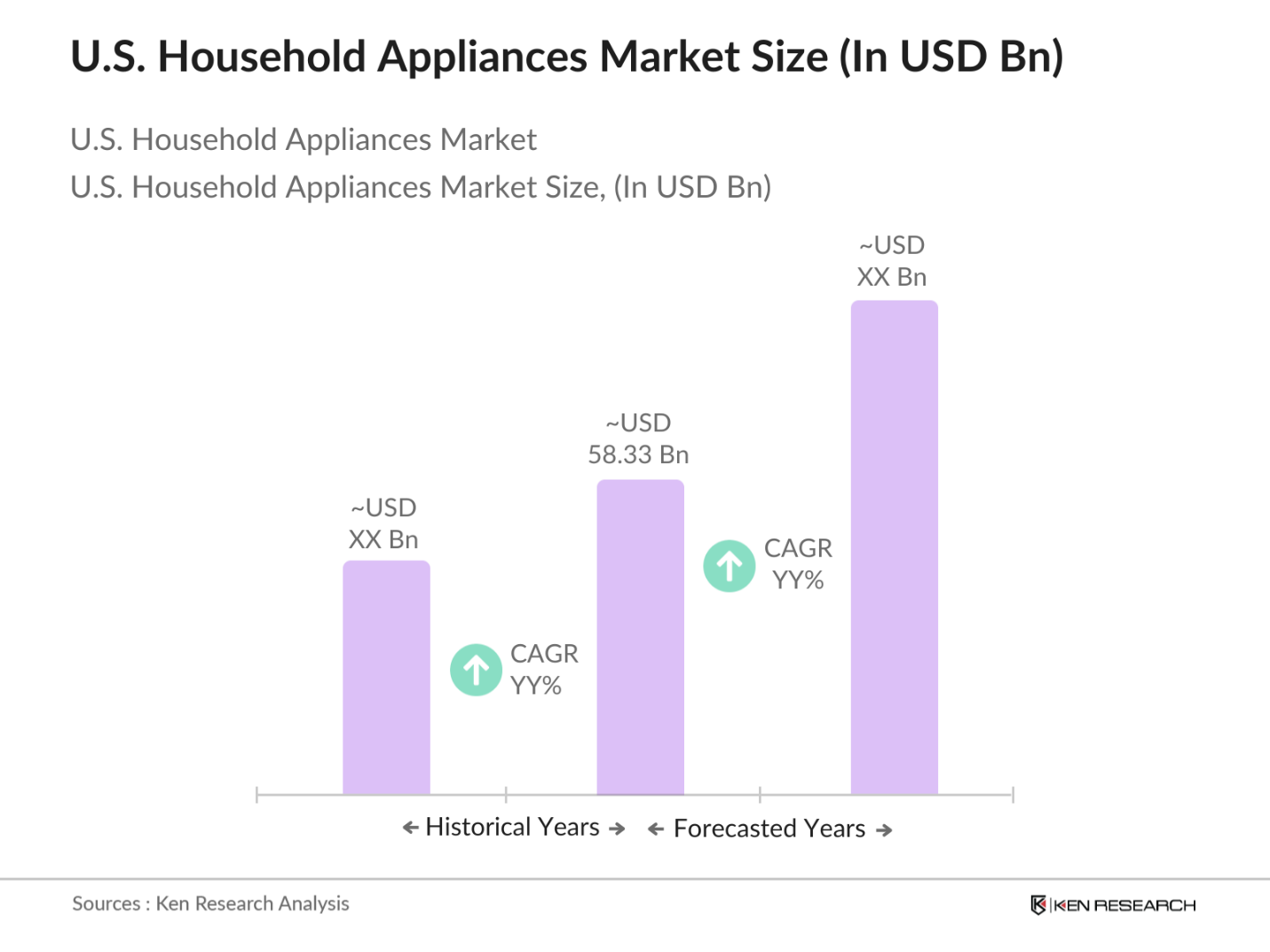
The U.S. household appliances market is valued at USD 58.33 billion, driven by increased demand for smart, energy-efficient products, especially in urban centers with tech-savvy consumers.
Supply chain disruptions, particularly in sourcing semiconductors for smart appliances, and high costs of production and maintenance pose significant challenges for manufacturers.
Key players include Whirlpool, LG Electronics, Samsung Electronics, Haier Group, and Bosch, who dominate through innovations in smart technology, energy efficiency, and extensive distribution networks.
Technological advancements in smart appliances, rising disposable income, and increased consumer awareness of energy-efficient solutions are driving market growth.

What makes us stand out is that our consultants follows Robust, Refine and Result (RRR) methodology. i.e. Robust for clear definitions, approaches and sanity checking, Refine for differentiating respondents facts and opinions and Result for presenting data with story

We have set a benchmark in the industry by offering our clients with syndicated and customized market research reports featuring coverage of entire market as well as meticulous research and analyst insights.

While we don't replace traditional research, we flip the method upside down. Our dual approach of Top Bottom & Bottom Top ensures quality deliverable by not just verifying company fundamentals but also looking at the sector and macroeconomic factors.

With one step in the future, our research team constantly tries to show you the bigger picture. We help with some of the tough questions you may encounter along the way: How is the industry positioned? Best marketing channel? KPI's of competitors? By aligning every element, we help maximize success.

Our report gives you instant access to the answers and sources that other companies might choose to hide. We elaborate each steps of research methodology we have used and showcase you the sample size to earn your trust.

If you need any support, we are here! We pride ourselves on universe strength, data quality, and quick, friendly, and professional service.