















U.S. POS Market Outlook 2030
Region:North America
Author(s):Shivani Mehra
Product Code:KROD11458
November 2024
98
About the Report
U.S. POS Market Overview
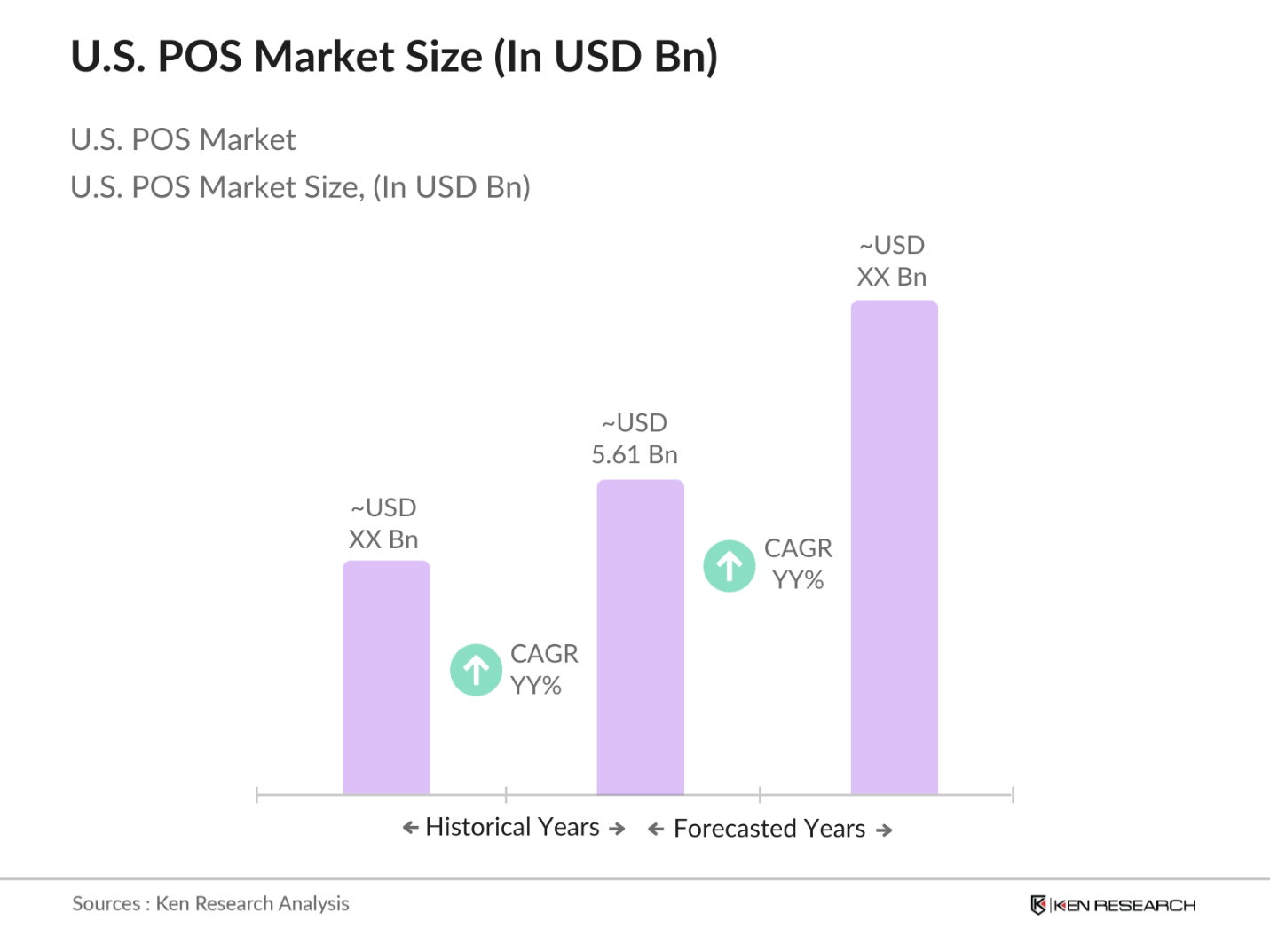
- The U.S. Point of Sale (POS) market has shown consistent growth, with a valuation of approximately USD 5.61 billion. This growth is primarily driven by the increasing adoption of digital payment solutions and the integration of POS systems with customer relationship management (CRM) tools, inventory management, and data analytics. The adoption of cloud-based POS systems, offering enhanced functionality, scalability, and lower upfront costs, has significantly contributed to this market's expansion.
- Dominant regions in the U.S. POS market include cities like New York, Los Angeles, and Chicago, where high retail activity, extensive restaurant networks, and high consumer spending contribute to increased demand for advanced POS systems. Additionally, the growing trend of mobile POS (mPOS) adoption in small and medium enterprises (SMEs) across these metropolitan areas further strengthens their dominance in the market.
- The U.S. POS market is subject to various regulatory requirements, such as PCI (Payment Card Industry) compliance and security mandates to safeguard consumer data. In 2023, the U.S. Federal Trade Commission (FTC) enforced $200 million in fines for non-compliance with PCI regulations, urging businesses to adopt secure payment practices. Moreover, the U.S. Department of the Treasury has introduced stricter guidelines around data encryption and fraud prevention measures for POS systems, necessitating regular updates and security audits for all payment processing equipment. These regulations ensure that businesses are held accountable for protecting customer information.
U.S. POS Market Segmentation
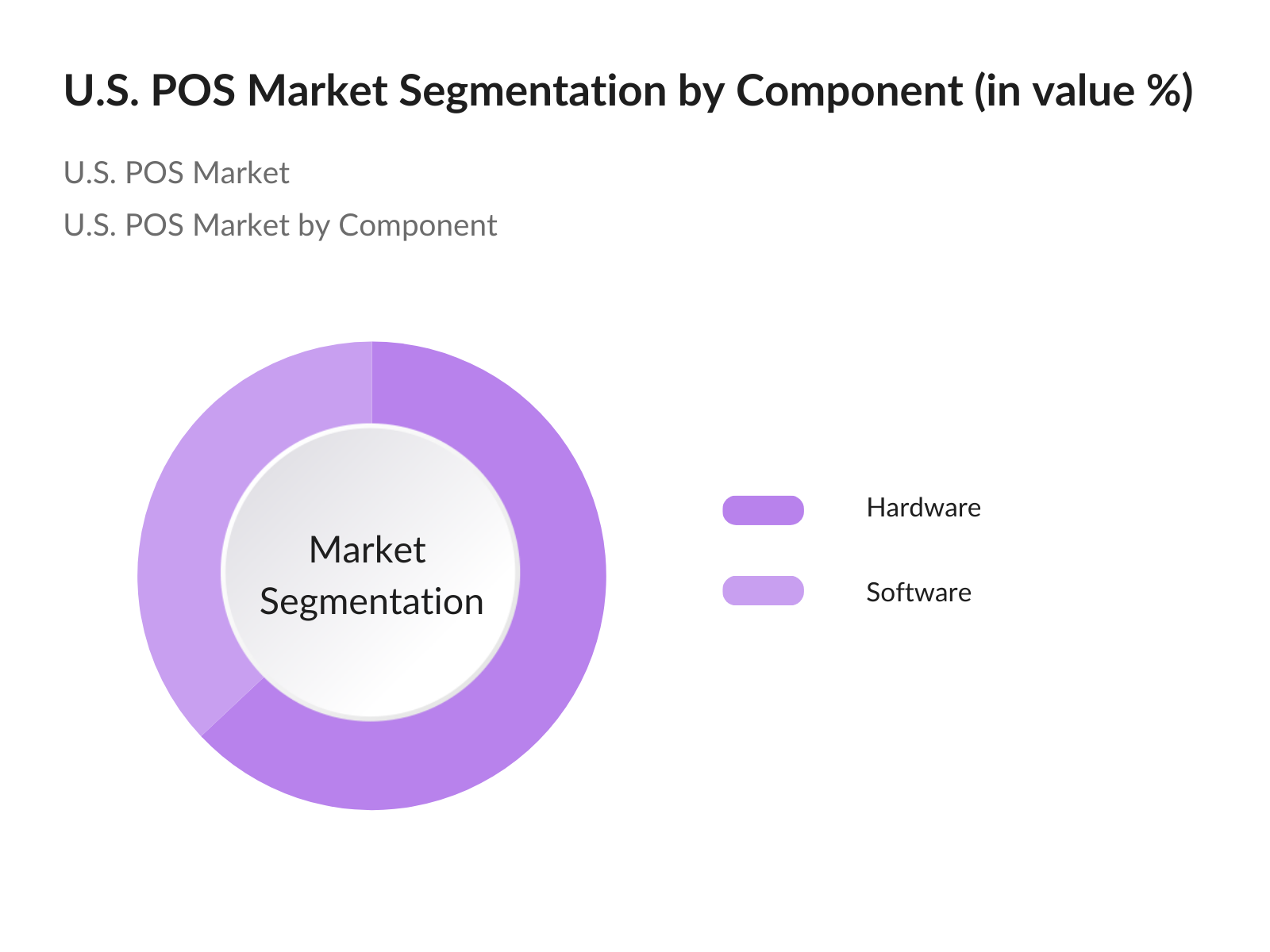
- By Component: The U.S. POS market is segmented by component into hardware and software. In 2023, hardware components, including terminals, barcode scanners, and receipt printers, held a dominant share of the market. This is attributed to the critical role these devices play in processing sales transactions and enhancing operational efficiency across retail and hospitality sectors. Despite the growing popularity of cloud-based solutions, hardware remains integral to the POS ecosystem due to its necessity in physical transactions.
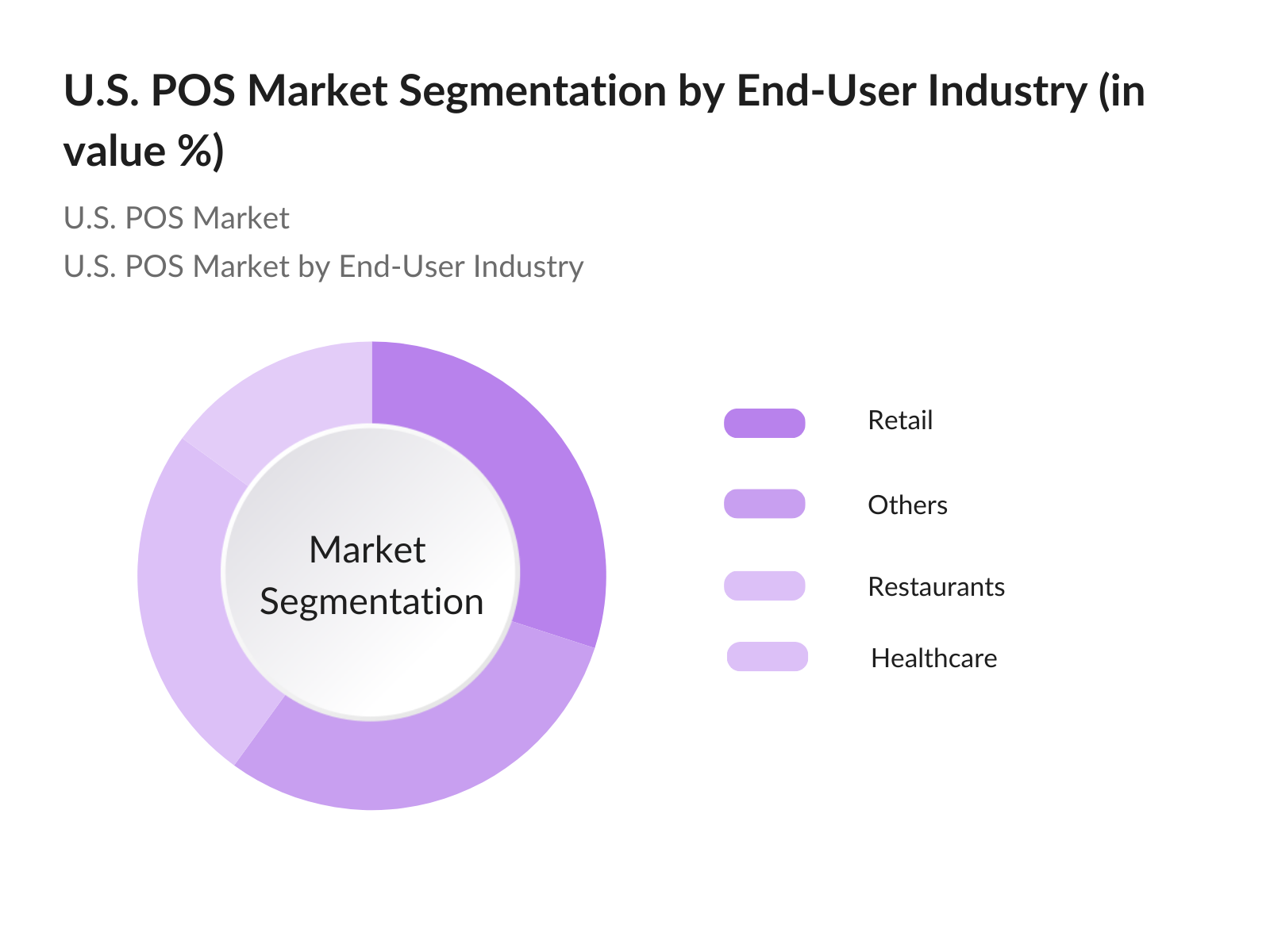
- By End-User Industry: The market is also segmented by end-user into retail, restaurants, healthcare, and others. The retail industry held the largest market share in 2023, driven by a resurgence in brick-and-mortar retail activities, along with the increasing integration of POS systems with CRM, inventory, and merchandising tools. Retailers, from supermarkets to specialty stores, use POS systems for quick and accurate transactions, minimizing customer waiting times and enhancing the overall shopping experience.
U.S. POS Market Competitive Landscape
The U.S. POS market is dominated by several key players who leverage mergers, acquisitions, and technological advancements to maintain their competitive edge. Companies like NCR Corporation and Verifone Systems lead the market due to their robust portfolios of hardware and software solutions, as well as strong partnerships with cloud service providers
|
Company Name |
Established Year |
Headquarters |
Revenue (USD Bn) |
Employees |
Major Product Line |
Global Reach |
Tech Innovation |
Partnerships |
Cybersecurity Focus |
|
NCR Corporation |
1884 |
Atlanta, USA |
7.16 |
- |
- |
- |
- |
- |
- |
|
Verifone Systems Inc. |
1981 |
San Jose, USA |
3.4 |
- |
- |
- |
- |
- |
- |
|
Square Inc. |
2009 |
San Francisco |
17.66 |
- |
- |
- |
- |
- |
- |
|
Toast Inc. |
2011 |
Boston, USA |
2.7 |
- |
- |
- |
- |
- |
- |
|
BBPOS Limited |
2008 |
Hong Kong |
1.1 |
- |
- |
- |
- |
- |
- |
U.S. POS Market Analysis
Market Growth Drivers
- Adoption of Contactless Payment: The adoption of contactless payments in the U.S. POS market is driven by the proliferation of Near Field Communication (NFC)-enabled terminals and the rising penetration of mobile wallets such as Apple Pay and Google Pay. According to the Federal Reserve, the number of mobile payment transactions in the U.S. exceeded 8 billion in 2023, showing a significant shift toward cashless transactions. The growth is further supported by the U.S. Department of Commerce, which reported a notable implementation of NFC-enabled POS systems in retail stores by 2023, ensuring faster and more secure transactions across the retail and hospitality sectors.
- Expansion of Retail Sector: The U.S. retail sector has been experiencing a revival in brick-and-mortar stores, contributing to the expansion of POS terminal installations. In 2023, the National Retail Federation (NRF) reported that approximately 60,000 new retail establishments were launched, boosting demand for POS systems that integrate with inventory and customer management tools. This resurgence is due to consumers seeking in-person shopping experiences after pandemic lockdowns. Additionally, U.S. Census Bureau data indicates a 3.7% rise in retail sales across the sector, enhancing the necessity for advanced POS terminals to accommodate the growing volume of transactions.
- Integration with CRM Systems: Modern POS systems are increasingly being integrated with Customer Relationship Management (CRM) platforms, offering cross-functional capabilities such as customer data tracking, personalized promotions, and inventory management. According to the International Data Corporation (IDC), 85% of retailers in the U.S. upgraded their POS systems in 2023 to incorporate CRM features, aiming to enhance customer engagement and streamline operations. This shift is driving the demand for all-in-one POS solutions that can improve customer retention and satisfaction, especially as businesses prioritize data-driven insights for improving their services.
Market Challenges:
- Cybersecurity Threats: As the U.S. POS market grows, so do concerns over cybersecurity threats, particularly data breaches. The Federal Trade Commission (FTC) reported that over 650,000 data breaches were recorded in 2023, a considerable portion of which targeted POS systems in the retail and hospitality industries. This has led to increased investments in encryption technologies and multi-factor authentication, though businesses continue to face challenges in fully safeguarding customer data. Moreover, the U.S. Cybersecurity and Infrastructure Security Agency (CISA) has issued guidelines for POS vendors to mitigate the risks of cyberattacks, stressing the need for robust cybersecurity measures.
- High Initial Costs: The high upfront costs associated with procuring POS hardware, software installation, and employee training remain a significant challenge for small and medium-sized enterprises (SMEs). According to the U.S. Small Business Administration, businesses often face initial capital expenditures ranging between $5,000 to $15,000 for a full-fledged POS setup, which can strain operating budgets, especially for smaller retailers. While these costs are often mitigated by the long-term benefits of efficiency and sales tracking, many businesses delay adopting POS systems due to the financial burden of installation and necessary training.
U.S. POS Market Future Outlook
Over the next five years, the U.S. POS market is expected to experience significant growth. This expansion will be driven by continued innovation in mobile and cloud-based POS solutions, increasing demand for contactless payments, and advancements in integration with CRM and data analytics systems. Retailers and restaurants, in particular, are likely to continue embracing these systems to improve operational efficiency and customer experience. The growing trend of digital payments and consumer preference for faster, safer transactions will further propel the market.
Market Opportunities:
- SaaS-based POS Solutions: The rise of Software-as-a-Service (SaaS) POS solutions presents a significant opportunity for the U.S. market, as businesses increasingly adopt cloud-based systems for their flexibility and scalability. According to a report by the U.S. Bureau of Economic Analysis, spending on cloud computing in the retail sector increased by $12 billion in 2023. This shift is driven by the need for POS solutions that can be easily updated, maintained, and integrated with other cloud-based tools, reducing the need for costly on-site hardware. SaaS-based POS systems offer lower upfront costs, making them particularly appealing to small and medium enterprises.
- Expanding mPOS Market: The market for mobile Point of Sale (mPOS) systems is rapidly expanding, particularly among small and medium-sized businesses that prioritize portability and ease of use. The U.S. Department of Commerce reports that over 3 million small businesses adopted mPOS solutions in 2023, allowing them to accept payments in a variety of settings, from pop-up shops to delivery services. This has been especially critical for businesses looking to offer flexible payment options during and post-pandemic, as consumer demand for cashless and contactless payment methods continues to rise.
Scope of the Report
|
By Component |
Hardware Software |
|
By Type |
Fixed POS mPOS |
|
By End-User |
Retail Restaurants Hospitality |
|
By Deployment |
Cloud-Based On-Premise |
|
By Region |
North-East Midwest West Coast Southern States |
Products
Key Target Audience
Retail and Hospitality Chains
Restaurants (Quick-Service, Full-Service)
Payment Gateway Providers
Fintech Companies
Hardware Manufacturers (Barcode Scanners, Terminals)
Software Providers (Cloud-based POS)
Investment and Venture Capitalist Firms
Government and Regulatory Bodies (PCI-DSS, Federal Reserve)
Companies
Players mentioned in the report
NCR Corporation
Verifone Systems Inc.
Square Inc.
Toast Inc.
BBPOS Limited (Stripe)
Ingenico (Worldline)
Clover Network Inc.
Revel Systems
Heartland Payment Systems
PAX Technology Ltd
Shopify Inc.
PayPal (POS division)
Lightspeed POS Inc.
Samsung Electronics Co. Ltd
Castles Technology
Table of Contents
1. U.S. POS Market Overview
1.1 Definition and Scope
1.2 Market Taxonomy
1.3 Growth Rate Analysis (influencing factors like technological adoption, consumer behavior, payment method evolution)
1.4 Overview of Key Market Segmentation
2. U.S. POS Market Size (in USD Bn)
2.1 Historical Market Size
2.2 Growth Trends and Key Developments (in-store and e-commerce POS integration)
2.3 Key Market Milestones (expansion of mPOS and cloud-based systems)
3. U.S. POS Market Dynamics
3.1 Growth Drivers
3.1.1 Adoption of Contactless Payment (NFC-enabled POS terminals, mobile wallet penetration)
3.1.2 Expansion of Retail Sector (impact of brick-and-mortar retail revival)
3.1.3 Integration with CRM Systems (cross-functional capabilities of modern POS)
3.2 Market Challenges
3.2.1 Cybersecurity Threats (data breaches and mitigation strategies)
3.2.2 High Initial Costs (hardware procurement, installation, training)
3.3 Opportunities
3.3.1 SaaS-based POS Solutions (growth of cloud computing in POS)
3.3.2 Expanding mPOS Market (small and medium business adoption)
3.3.3 Integration with Analytics for Personalized Customer Experience
3.4 Market Trends
3.4.1 Mobile POS Systems (growth driven by consumer demand for fast transactions)
3.4.2 Omni-Channel Payment Solutions (e-commerce and in-store payment convergence)
3.5 Regulatory Impact on the Market (PCI compliance, security mandates)
3.6 SWOT Analysis
3.7 Stakeholder Ecosystem
3.8 Porters Five Forces Analysis (specific to POS terminals)
4. U.S. POS Market Segmentation
4.1 By Component (In Value %)
4.1.1 Hardware (Terminals, Barcode Scanners, Receipt Printers)
4.1.2 Software (Cloud-Based, On-Premise)
4.2 By Type (In Value %)
4.2.1 Fixed POS
4.2.2 Mobile POS (mPOS)
4.3 By End-User Industry (In Value %)
4.3.1 Retail (Supermarkets, Specialty Stores, Convenience Stores)
4.3.2 Restaurants (Quick Service, Full-Service)
4.3.3 Hospitality (Hotels, Resorts)
4.3.4 Healthcare (Hospital Payment Systems)
4.4 By Deployment (In Value %)
4.4.1 Cloud-Based POS
4.4.2 On-Premise POS
5. U.S. POS Market Competitive Landscape
5.1 Profiles of Major Competitors
5.1.1 NCR Corporation
5.1.2 Toast, Inc.
5.1.3 Square Inc.
5.1.4 Shopify Inc.
5.1.5 Verifone Systems Inc.
5.1.6 Ingenico (Worldline)
5.1.7 BBPOS Limited (Stripe)
5.1.8 Lightspeed POS Inc.
5.1.9 PAX Technology Ltd
5.1.10 Clover Network Inc.
5.1.11 Heartland Payment Systems Inc.
5.1.12 Revel Systems Inc.
5.1.13 Samsung Electronics Co. Ltd
5.1.14 Castles Technology
5.1.15 PayPal (POS division)
5.2 Cross Comparison Parameters (Headquarters, Number of Employees, Revenue, Technology Portfolio, Global Reach, Partnerships)
5.3 Market Share Analysis
5.4 Mergers, Acquisitions, and Partnerships
5.5 Innovation and Strategic Initiatives
5.6 Investment and Funding Analysis
6. U.S. POS Market Regulatory Framework
6.1 Compliance Standards (PCI-DSS, EMV Chip Adoption)
6.2 Security Guidelines (Cybersecurity mandates, encryption protocols)
7. U.S. POS Market Future Growth Outlook
7.1 Projections for Market Expansion (in USD Bn)
7.2 Factors Driving Future Growth (tech advancement, consumer preferences, security enhancements)
8. U.S. POS Market Analysts Recommendations
8.1 White Space Opportunity Analysis
8.2 TAM/SAM/SOM Analysis
8.3 Strategic Marketing Insights
Disclaimer Contact UsResearch Methodology
Step 1: Identification of Key Variables
The initial phase involves mapping the U.S. POS market's ecosystem, encompassing major stakeholders such as hardware manufacturers, payment providers, and retailers. Data collection relies on secondary research from credible databases and proprietary sources to identify the critical variables that influence market growth.
Step 2: Market Analysis and Construction
In this phase, historical data related to POS adoption across various industries are analyzed. The focus is on identifying trends in retail and restaurant sectors, understanding the deployment of cloud-based versus on-premise solutions, and quantifying the growth of mobile POS systems.
Step 3: Hypothesis Validation and Expert Consultation
Key market hypotheses are tested through interviews with industry experts, including POS solution providers and retail industry leaders. Insights from these stakeholders help validate trends and future projections.
Step 4: Research Synthesis and Final Output
The final phase integrates insights from interviews and secondary research to produce a comprehensive analysis of the U.S. POS market. The research includes detailed segmentation, competitive analysis, and market growth projections, ensuring an accurate and actionable report.
Frequently Asked Questions
01. How big is the U.S. POS market?
The U.S. POS market is valued at USD 5.61 billion, driven by the rise of contactless payments, the adoption of cloud-based systems, and a resurgence in retail and hospitality sectors.
02. What are the challenges in the U.S. POS market?
Challenges include cybersecurity risks, high installation and hardware costs, and the need for regulatory compliance, particularly with PCI-DSS standards. Data breaches pose a significant threat to consumer confidence.
03. Who are the major players in the U.S. POS market?
Key players in the U.S. POS market include NCR Corporation, Verifone Systems Inc., Square Inc., Toast Inc., and Ingenico (Worldline). These companies dominate due to their extensive portfolios and technological advancements.
04. What are the growth drivers of the U.S. POS market?
The market is driven by the rise of contactless payments, increasing consumer demand for fast and secure transactions, and the adoption of cloud-based solutions. Retail and restaurant industries are major contributors to this growth.
Why Buy From Us?

What makes us stand out is that our consultants follows Robust, Refine and Result (RRR) methodology. i.e. Robust for clear definitions, approaches and sanity checking, Refine for differentiating respondents facts and opinions and Result for presenting data with story

We have set a benchmark in the industry by offering our clients with syndicated and customized market research reports featuring coverage of entire market as well as meticulous research and analyst insights.

While we don't replace traditional research, we flip the method upside down. Our dual approach of Top Bottom & Bottom Top ensures quality deliverable by not just verifying company fundamentals but also looking at the sector and macroeconomic factors.

With one step in the future, our research team constantly tries to show you the bigger picture. We help with some of the tough questions you may encounter along the way: How is the industry positioned? Best marketing channel? KPI's of competitors? By aligning every element, we help maximize success.

Our report gives you instant access to the answers and sources that other companies might choose to hide. We elaborate each steps of research methodology we have used and showcase you the sample size to earn your trust.

If you need any support, we are here! We pride ourselves on universe strength, data quality, and quick, friendly, and professional service.