
U.S. Snack Bar Market Outlook to 2030
Region:North America
Author(s):Sanjeev
Product Code:KROD1034
November 2024
100
About the Report
U.S. Snack Bar Market Overview
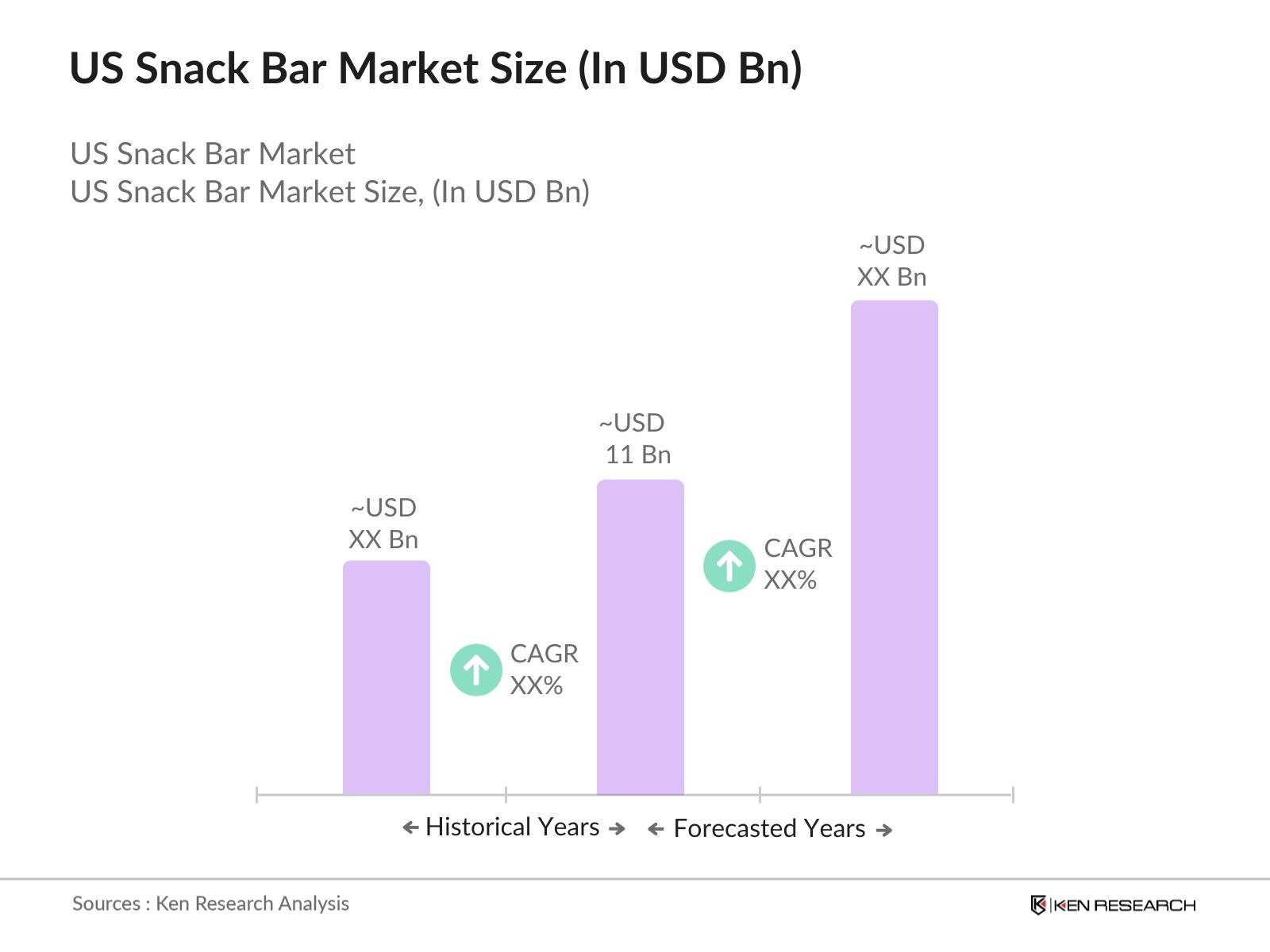
- The U.S. Snack Bar Market reached a valuation of USD 11 billion. This market is driven by shifting consumer preferences towards healthier on-the-go snack options, with increased demand for protein-rich and functional snack bars. Rising awareness about nutrition and fitness among consumers also fuels this growth, especially as snack bars have become convenient sources of energy and nutrients for busy lifestyles.
- Major cities, including New York, Los Angeles, and Chicago, dominate the U.S. Snack Bar Market due to high urbanization and concentration of health-conscious populations. These cities are also at the forefront of evolving food trends, such as organic, non-GMO, and high-protein bars, further reinforcing their dominant position in this market.
- The U.S. Food and Drug Administration (FDA) mandates that snack bars include comprehensive nutritional labeling, detailing calories, fats, sugars, proteins, and other essential nutrients. The FDA enforces strict criteria for any nutrient content claims (e.g., "low-fat" or "high-protein") to ensure they meet regulatory definitions. Non-compliance can result in product recalls, fines, and penalties. Snack bars must also list allergens like peanuts and soy if present, as per the Food Allergen Labeling and Consumer Protection Act (FALCPA).
U.S. Snack Bar Market Segmentation
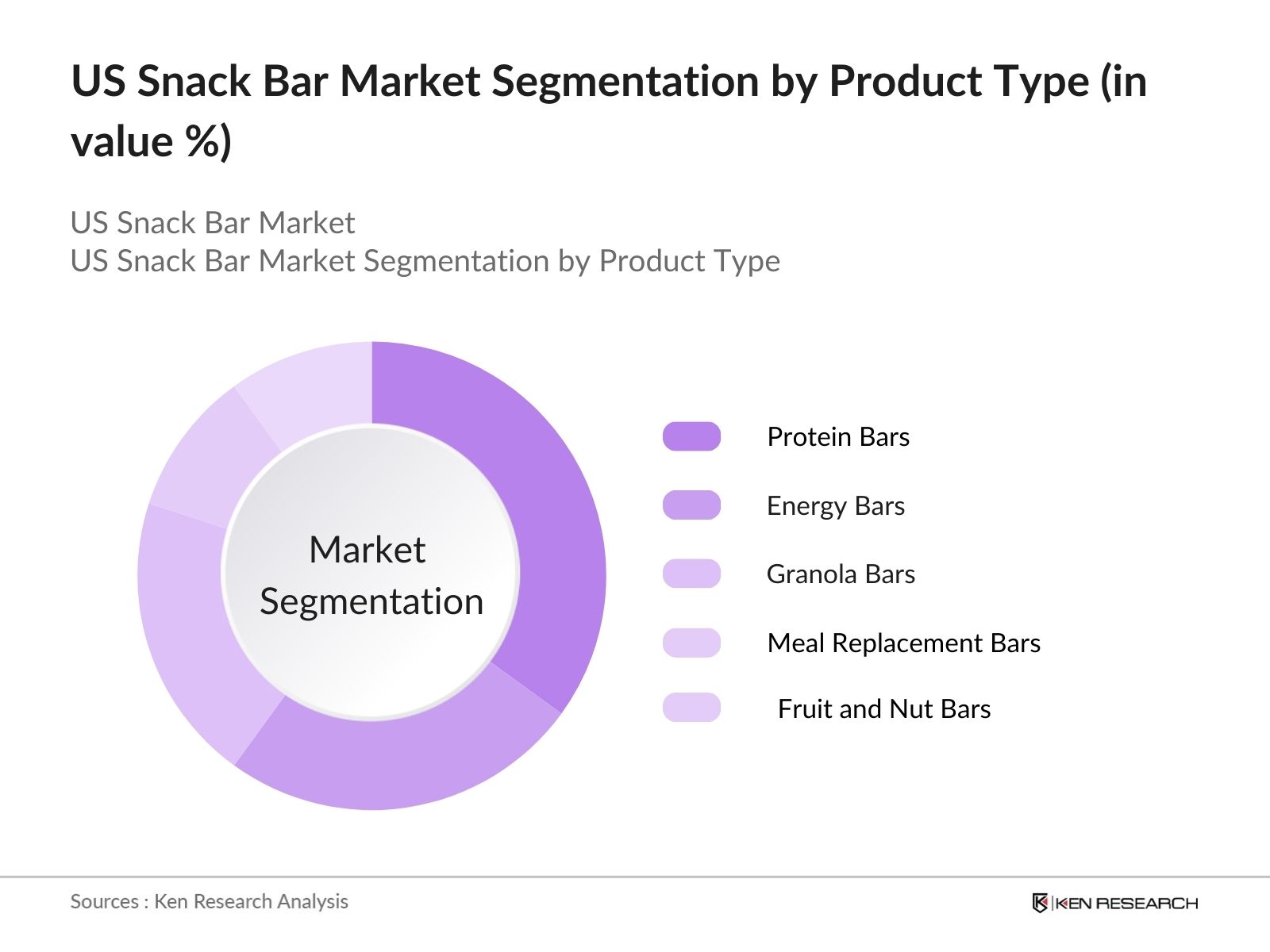
- By Product Type: The market is segmented by product type into protein bars, energy bars, granola bars, meal replacement bars, and fruit and nut bars. Protein bars hold a dominant share in this segmentation as they cater to a wide demographic seeking high-protein and low-sugar options. Consumers increasingly choose protein bars for post-workout recovery, fueling their popularity in fitness-focused segments and among health enthusiasts.
- By Distribution Channel: The market is further segmented by distribution channel into supermarkets/hypermarkets, convenience stores, online retail, specialty stores, and drug stores. Supermarkets and hypermarkets hold a dominant share due to their accessibility and variety. These channels allow consumers to choose from a wide range of snack bar brands and flavors, providing the convenience and in-person shopping experience that many U.S. consumers prefer.

U.S. Snack Bar Market Competitive Landscape
The U.S. Snack Bar Market is dominated by key players who leverage strong brand equity, distribution networks, and innovation to maintain their positions. These companies constantly introduce new flavors and ingredients to align with consumer trends, further solidifying their market hold.
U.S. Snack Bar Market Analysis
Growth Drivers
- Health and Wellness Trends (Influence of Dietary Trends)
The shift in dietary preferences among U.S. consumers, particularly the increasing focus on health and wellness, has driven demand for nutrient-rich snack bars. 68% of Americans express interest in healthier snack options, with the USDA noting a national increase in awareness surrounding low-sugar and high-fiber foods in 2024. Additionally, the Centers for Disease Control and Prevention (CDC) reports a 25% rise in dietary-related health awareness, bolstering demand for snack bars positioned as healthier alternatives to traditional snacks. This trend is expected to fuel the preference for functional and low-calorie snack bars with high nutritional value. - Increasing Demand for On-the-Go Foods (Impact on Distribution Channels)
A significant increase in the workforce has resulted in heightened demand for convenient, portable foods. The Bureau of Labor Statistics reports that approximately 161 million individuals in the U.S. are part of the workforce, creating opportunities for on-the-go snack bar options. The U.S. Department of Agriculture (USDA) noted a 12% increase in single-serve and ready-to-eat food sales, which has led to substantial growth in vending machine, convenience store, and online distribution channels for snack bars. These channels cater to busy consumers looking for nutritious and portable snacks. - Rise in Functional and Protein Bars (Consumer Preferences for Nutritional Benefits): Consumer preference for protein-rich and functional snacks continues to shape the U.S. snack bar market. The Food and Drug Administration (FDA) indicates a 30% increase in demand for protein-enhanced snacks, attributed to the rise in fitness culture. This shift aligns with data from the U.S. Department of Health and Human Services, showing a surge in awareness around muscle recovery and sustained energy, particularly among the 18-34 age demographic, fostering demand for protein-centric products.
Market Challenges
- High Competition from Traditional Snacks (Brand Positioning Strategies): Traditional snack segments, including chips and confectionery, continue to hold significant market share, competing heavily with snack bars. According to USDAs Economic Research Service, traditional snacks contribute to 50% of the U.S. snack industrys total retail sales, presenting a major challenge for snack bars. The need for snack bars to differentiate through unique flavors, nutritional benefits, and brand positioning is essential to gain consumer attention in this competitive environment.
- Price Sensitivity and Premium Product Affordability (Consumer Price Perception): The affordability of premium snack bars is a critical challenge, particularly as inflation has affected consumer spending habits. According to the Bureau of Labor Statistics, the consumer price index for food increased by 6% from 2022 to 2023, impacting discretionary spending on higher-priced snack options. Consumers price sensitivity influences demand for premium snack bars, which face difficulty in justifying higher prices against traditional snacks. Brands need to carefully balance affordability and premium positioning.
U.S. Snack Bar Market Future Outlook
Over the next five years, the U.S. Snack Bar Market is expected to experience substantial growth driven by a continued emphasis on health and wellness, increasing demand for plant-based and organic ingredients, and innovations in product offerings. Expanding distribution channels, especially e-commerce, will also play a pivotal role in broadening consumer access to a variety of snack bars.
Market Opportunities
- 3.3.1 Product Innovations in Functional Ingredients (New Flavor and Ingredient Launches): Functional ingredients, such as adaptogens and superfoods, present significant opportunities for innovation in the U.S. snack bar market. USDA research indicates that 37% of U.S. consumers are interested in trying new flavors and health-promoting ingredients in snack bars. The FDA reports a 9% increase in consumer preference for products featuring unique, functional ingredients like turmeric and chia seeds, which support immunity and overall well-being, indicating a strong growth area in product innovation.
- Expansion into E-Commerce (Growth in Online Sales Channels): E-commerce has become a vital channel for snack bar sales, as online grocery shopping surged by 15% in 2023, per the U.S. Department of Commerce. E-commerce platforms offer snack bar brands access to broader audiences and the opportunity for direct consumer interaction. Online sales channels, driven by convenience and availability, support the snack bar market's expansion, with consumers favoring options to order directly from brands or major e-commerce platforms.
Scope of the Report
|
Cereal and Granola Bars Protein Bars Energy Bars Fruit and Nut Bars Meal Replacement Bars |
|
|
By Distribution Channel |
Supermarkets and Hypermarkets Convenience Stores Online Retail Specialty Stores Drug Stores and Pharmacies |
|
By Ingredient Type |
Conventional Ingredients Organic Ingredients Functional Ingredients |
|
By Consumer Demographics |
Millennials Gen Z Baby Boomers Health Enthusiasts |
|
By Region |
North East West South |
Products
Key Target Audience
Snack Manufacturers
Investors and Venture Capitalist Firms
Nutritional and Health Food Retailers
Government and Regulatory Bodies (FDA, USDA)
Raw Material Suppliers
Fitness and Wellness Centers
Online Retail Platforms
Supermarkets and Hypermarkets
Companies
Players Mention in the Report:
General Mills
Clif Bar & Company
Kellogg Company
Mondelez International
Quest Nutrition
RXBAR (Kellogg's)
The Nature's Bounty Co.
Mars, Inc. (GoMacro)
Built Brands LLC
Premier Nutrition Corporation
Health Warrior Inc.
Perfect Bar LLC
PepsiCo Inc.
Atkins Nutritionals
KIND LLC
Table of Contents
1. U.S. Snack Bar Market Overview
1.1. Definition and Scope
1.2. Market Taxonomy
1.3. Market Growth Rate
1.4. Market Segmentation Overview
2. U.S. Snack Bar Market Size (in USD Million)
2.1. Historical Market Size
2.2. Year-on-Year Growth Analysis
2.3. Key Market Developments and Milestones
3. U.S. Snack Bar Market Analysis
3.1. Growth Drivers
3.1.1. Health and Wellness Trends (influence of dietary trends)
3.1.2. Increasing Demand for On-the-Go Foods (impact on distribution channels)
3.1.3. Rise in Functional and Protein Bars (consumer preferences for nutritional benefits)
3.1.4. Expansion of Plant-Based Ingredients (growth in alternative protein sources)
3.2. Market Challenges
3.2.1. High Competition from Traditional Snacks (brand positioning strategies)
3.2.2. Price Sensitivity and Premium Product Affordability (consumer price perception)
3.2.3. Regulatory Compliance on Nutritional Content Claims (FDA and labeling standards)
3.3. Opportunities
3.3.1. Product Innovations in Functional Ingredients (new flavor and ingredient launches)
3.3.2. Expansion into E-Commerce (growth in online sales channels)
3.3.3. Targeting Specialty Diet Segments (e.g., Keto, Paleo, Gluten-Free)
3.4. Trends
3.4.1. Rise of Organic and Non-GMO Snack Bars
3.4.2. Growth in Small-Sized and Portable Packaging (appeal to convenience-seekers)
3.4.3. Customization and Personalized Nutrition Trends
3.5. Consumer Behavior Analysis
3.5.1. Demand for Low-Sugar and High-Protein Options
3.5.2. Preferences in Packaging and Sustainability (eco-friendly materials)
3.6. Industry Standards and Regulatory Compliance
3.6.1. FDA Nutritional Content Requirements
3.6.2. Clean Labeling Initiatives
3.6.3. USDA Organic Certification
3.7. SWOT Analysis
3.8. Value Chain Analysis
3.9. Porters Five Forces
4. U.S. Snack Bar Market Segmentation
4.1. By Product Type (in Value %)
4.1.1. Cereal and Granola Bars
4.1.2. Protein Bars
4.1.3. Energy Bars
4.1.4. Fruit and Nut Bars
4.1.5. Meal Replacement Bars
4.2. By Distribution Channel (in Value %)
4.2.1. Supermarkets and Hypermarkets
4.2.2. Convenience Stores
4.2.3. Online Retail
4.2.4. Specialty Stores
4.2.5. Drug Stores and Pharmacies
4.3. By Ingredient Type (in Value %)
4.3.1. Conventional Ingredients
4.3.2. Organic Ingredients
4.3.3. Functional Ingredients
4.4. By Consumer Demographics (in Value %)
4.4.1. Millennials
4.4.2. Gen Z
4.4.3. Baby Boomers
4.4.4. Health Enthusiasts
4.5. By Region (in Value %)
4.5.1. North
4.5.2. East
4.5.3. South
4.5.4. West
5. U.S. Snack Bar Market Competitive Analysis
5.1. Profiles of Major Competitors
5.1.1. General Mills
5.1.2. Clif Bar & Company
5.1.3. Kellogg Company
5.1.4. The Natures Bounty Co.
5.1.5. Kind LLC
5.1.6. Mondelez International
5.1.7. PepsiCo Inc.
5.1.8. Quest Nutrition LLC
5.1.9. Atkins Nutritionals
5.1.10. RXBAR (Kelloggs)
5.1.11. Mars, Inc. (GoMacro)
5.1.12. Premier Nutrition Corporation
5.1.13. Built Brands LLC
5.1.14. Health Warrior Inc.
5.1.15. Perfect Bar LLC
5.2. Cross Comparison Parameters (Revenue, Market Share, Product Portfolio, Innovation Capabilities, Target Demographics, Nutritional Claims, Ingredient Sourcing, Packaging Sustainability)
5.3. Market Share Analysis (by Competitor)
5.4. Strategic Initiatives
5.5. Mergers and Acquisitions
5.6. Investment Analysis
5.7. Product Launch and Innovation Trends
6. U.S. Snack Bar Market Regulatory Framework
6.1. Nutritional Labeling Standards
6.2. FDA Regulations on Health Claims
6.3. USDA Organic Certification Guidelines
6.4. Compliance with Allergen Labeling Regulations
7. U.S. Snack Bar Future Market Size (in USD Million)
7.1. Future Market Size Projections
7.2. Key Factors Driving Future Market Growth
8. U.S. Snack Bar Future Market Segmentation
8.1. By Product Type (in Value %)
8.2. By Distribution Channel (in Value %)
8.3. By Ingredient Type (in Value %)
8.4. By Consumer Demographics (in Value %)
8.5. By Region (in Value %)
9. U.S. Snack Bar Market Analysts Recommendations
9.1. TAM/SAM/SOM Analysis
9.2. Customer Cohort Analysis
9.3. Marketing Initiatives
9.4. White Space Opportunity Analysis
Disclaimer Contact UsResearch Methodology
Step 1: Identification of Key Variables
The initial phase focuses on constructing an ecosystem map of stakeholders in the U.S. Snack Bar Market. This involves desk research and secondary databases to capture industry-wide insights, including market size, trends, and competitive dynamics.
Step 2: Market Analysis and Construction
This stage compiles historical data to analyze product penetration, revenue generation by segment, and consumption trends. The data collection also includes evaluation of various distribution channels to understand consumer preferences and behavior.
Step 3: Hypothesis Validation and Expert Consultation
Market assumptions are validated through interviews with industry professionals. These consultations provide direct insights into the financial and operational aspects of the snack bar industry, helping to refine market estimates.
Step 4: Research Synthesis and Final Output
The final phase synthesizes primary insights from industry leaders with statistical data derived from a bottom-up approach. This ensures a comprehensive, accurate, and validated analysis for the U.S. Snack Bar Market.
Frequently Asked Questions
01. How big is the U.S. Snack Bar Market?
The U.S. Snack Bar Market is valued at USD 11 billion, driven by increasing consumer interest in health-conscious, on-the-go food options.
02. What are the challenges in the U.S. Snack Bar Market?
Challenges in U.S. Snack Bar Market include high competition, regulatory compliance related to nutritional claims, and rising costs of natural and organic ingredients, impacting pricing strategies.
03. Who are the major players in the U.S. Snack Bar Market?
Major players in U.S. Snack Bar Market include General Mills, Clif Bar & Company, Kellogg Company, and Mondelez International, each known for their extensive product portfolios and established market presence.
04. What are the growth drivers of the U.S. Snack Bar Market?
U.S. Snack Bar Market Growth is driven by the rising health and wellness trend, increasing demand for high-protein and functional snacks, and the expanding popularity of plant-based and organic options.
05. How is the distribution channel landscape changing in the U.S. Snack Bar Market?
There is a notable shift towards online retail and specialty stores, as these channels offer convenience and cater to niche consumer demands, such as for organic and diet-specific snacks.
Why Buy From Us?

What makes us stand out is that our consultants follows Robust, Refine and Result (RRR) methodology. i.e. Robust for clear definitions, approaches and sanity checking, Refine for differentiating respondents facts and opinions and Result for presenting data with story

We have set a benchmark in the industry by offering our clients with syndicated and customized market research reports featuring coverage of entire market as well as meticulous research and analyst insights.

While we don't replace traditional research, we flip the method upside down. Our dual approach of Top Bottom & Bottom Top ensures quality deliverable by not just verifying company fundamentals but also looking at the sector and macroeconomic factors.

With one step in the future, our research team constantly tries to show you the bigger picture. We help with some of the tough questions you may encounter along the way: How is the industry positioned? Best marketing channel? KPI's of competitors? By aligning every element, we help maximize success.

Our report gives you instant access to the answers and sources that other companies might choose to hide. We elaborate each steps of research methodology we have used and showcase you the sample size to earn your trust.

If you need any support, we are here! We pride ourselves on universe strength, data quality, and quick, friendly, and professional service.