
US Telehealth Market Outlook to 2030
Region:United States
Author(s):Shubham Kashyap
Product Code:KROD1336
Region:United States
Author(s):Shubham Kashyap
Product Code:KROD1336
October 2024
90
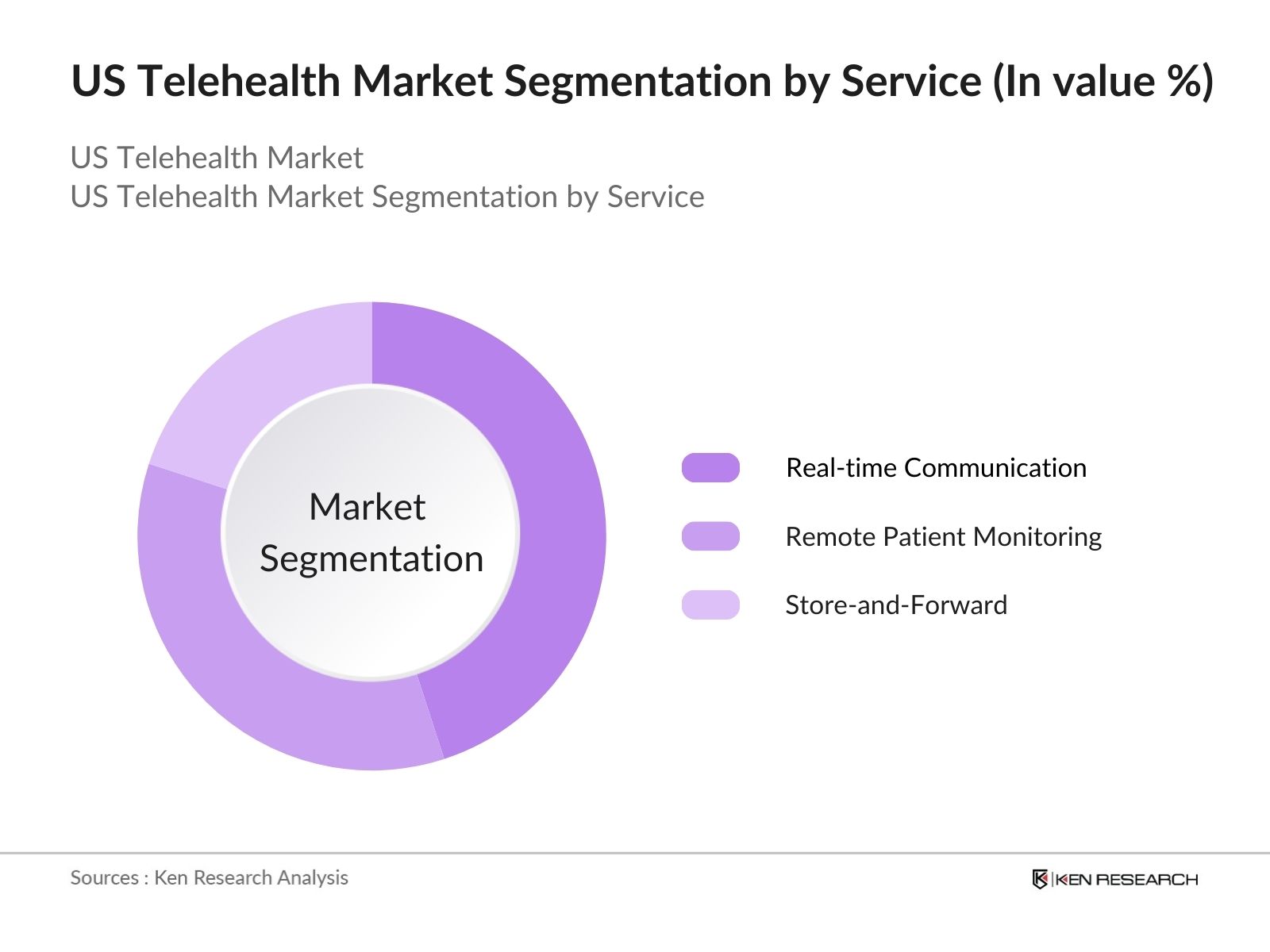
The US Telehealth market is segmented by various factors like service type, application, and region.
By Service Type: The market is segmented by service type into real-time communication, remote patient monitoring, and store-and-forward. In 2023, real-time communication held the dominant market share due to its widespread use in urgent care and primary consultations. Real-time communication services include video conferencing, which is essential for providing timely care, especially in rural areas. Leading providers like Amwell and Doctor on Demand have established a strong presence in this segment, contributing to its dominance.

|
Company |
Establishment Year |
Headquarters |
|
Teladoc Health |
2002 |
Purchase, New York |
|
Amwell |
2006 |
Boston, Massachusetts |
|
MDLIVE |
2009 |
Miramar, Florida |
|
Doctor on Demand |
2012 |
San Francisco, California |
|
American Well Corporation |
2006 |
Boston, Massachusetts |
Increasing Healthcare Costs: The rising cost of healthcare in the US has led to the adoption of telehealth as a cost-effective alternative. Telehealth services reduce the need for in-person visits, cutting down on travel costs and time for patients. The shift towards value-based care, which focuses on outcomes rather than services, further supports the growth of telehealth. Telehealth has been associated with average cost savings of USD 147 to USD 186 per visit for patients, as found in a study analyzing nearly 25,500 telehealth visits for cancer patients by national cancer institute.
Regulatory and Reimbursement Issues: One of the important challenges facing the US telehealth market is the regulatory landscape, which varies by state. Differences in licensure requirements, reimbursement policies, and privacy laws create complexities for telehealth providers. In 2023, changes in reimbursement policies by Medicare led to uncertainties in payment structures, impacting provider participation in telehealth programs. Addressing these regulatory hurdles is essential for sustaining market growth.
The CARES Act 2023: The CARES Act, passed in March 2020, initially provided USD 200 million in funding for telehealth expansion, particularly aimed at improving access in rural areas. This funding was directed through the Federal Communications Commission (FCC) to support healthcare providers in delivering connected care services during the COVID-19 pandemic. The Act also included provisions to enhance broadband access, which is essential for telehealth services
The US telehealth market is poised for substantial growth, driven by advancements in telemedicine technology, expanding access to healthcare services, and favorable government policies.
Expansion of AI in Telehealth: By 2028, AI and machine learning are expected to play an important role in the telehealth market, particularly in predictive analytics, diagnostics, and personalized medicine. The integration of AI will enable more accurate diagnoses and better patient outcomes, driving substantial investments in telehealth technology.
|
By Service |
Real-Time Communication Remote Patient Monitoring Store-and-Forward |
|
By Application |
Teleconsultation Telemedicine Telemonitoring Telesurgery |
|
By Region |
North South East West |
1.1 Definition and Scope
1.2 Market Taxonomy
1.3 Market Valuation and Historical Performance
1.4 Key Market Trends and Developments
1.5 Market Segmentation Overview
2.1 Historical Market Size
2.2 Year-on-Year Growth Analysis
2.3 Key Market Developments and Milestones
3.1 Growth Drivers
3.1.1 Increased Utilization of Telehealth Services Due to Aging Population
3.1.2 Rising Prevalence of Chronic Diseases
3.1.3 Government Policies Supporting Telehealth Expansion
3.2 Challenges
3.2.1 Regulatory Variability Across States
3.2.2 Digital Divide Impacting Telehealth Access
3.2.3 Healthcare Provider Resistance to Telehealth Adoption
3.3 Opportunities
3.3.1 Expansion of Telehealth in Behavioral Health Services
3.3.2 Growth of Telehealth in Rural Areas
3.3.3 Increasing Integration with Wearable Health Devices
3.4 Trends
3.4.1 Increased Adoption of Remote Patient Monitoring (RPM)
3.4.2 Telehealth Integration with Electronic Health Records (EHR)
3.4.3 Expansion of Telehealth in Behavioral Health Services
3.5 Government Initiatives
3.5.1 Telehealth Extension and Evaluation Act of 2023
3.5.2 FCCs Rural Digital Opportunity Fund (RDOF)
3.5.3 Medicare Telehealth Expansion Initiative
3.6 SWOT Analysis
3.7 Stakeholder Ecosystem
3.8 Competition Ecosystem
4.1 By Service Type (in Value %)
4.1.1 Real-Time Communication
4.1.2 Remote Patient Monitoring
4.1.3 Store-and-Forward
4.2 By Application (in Value %)
4.2.1 Teleconsultation
4.2.2 Telemedicine
4.2.3 Telemonitoring
4.2.4 Telesurgery
4.3 By Region (in Value %)
4.3.1 North US
4.3.2 South US
4.3.3 East US
4.3.4 West US
5.1 Detailed Profiles of Major Companies
5.1.1 Teladoc Health
5.1.2 Amwell
5.1.3 MDLIVE
5.1.4 Doctor on Demand
5.1.5 American Well Corporation
5.2 Cross Comparison Parameters (No. of Employees, Headquarters, Inception Year, Revenue)
6.1 Market Share Analysis
6.2 Strategic Initiatives
6.3 Mergers and Acquisitions
6.4 Investment Analysis
6.4.1 Venture Capital Funding
6.4.2 Government Grants
6.4.3 Private Equity Investments
7.1 Telehealth Extension and Evaluation Act of 2023
7.2 Medicare Telehealth Expansion Initiative
7.3 Compliance Requirements and Certification Processes
8.1 Future Market Size Projections
8.2 Key Factors Driving Future Market Growth
8.3 Future Market Segmentation
8.3.1 By Service Type (in Value %)
8.3.2 By Application (in Value %)
8.3.3 By Region (in Value %)
9.1 TAM/SAM/SOM Analysis
9.2 Customer Cohort Analysis
9.3 Marketing Initiatives
9.4 White Space Opportunity Analysis
Ecosystem creation for all the major entities and referring to multiple secondary and proprietary databases to perform desk research around market to collate industry level information.
Collating statistics on USA telehealth market over the years, penetration of marketplaces and service providers ratio to compute revenue generated for USA telehealth market. We will also review service quality statistics to understand revenue generated which can ensure accuracy behind the data points shared.
Building market hypothesis and conducting CATIs with industry experts belonging to different companies to validate statistics and seek operational and financial information from company representatives.
Our team will approach multiple essential telehealth companies and understand nature of product segments and sales, consumer preference and other parameters, which will support us validate statistics derived through bottom to top approach from telehealth companies.
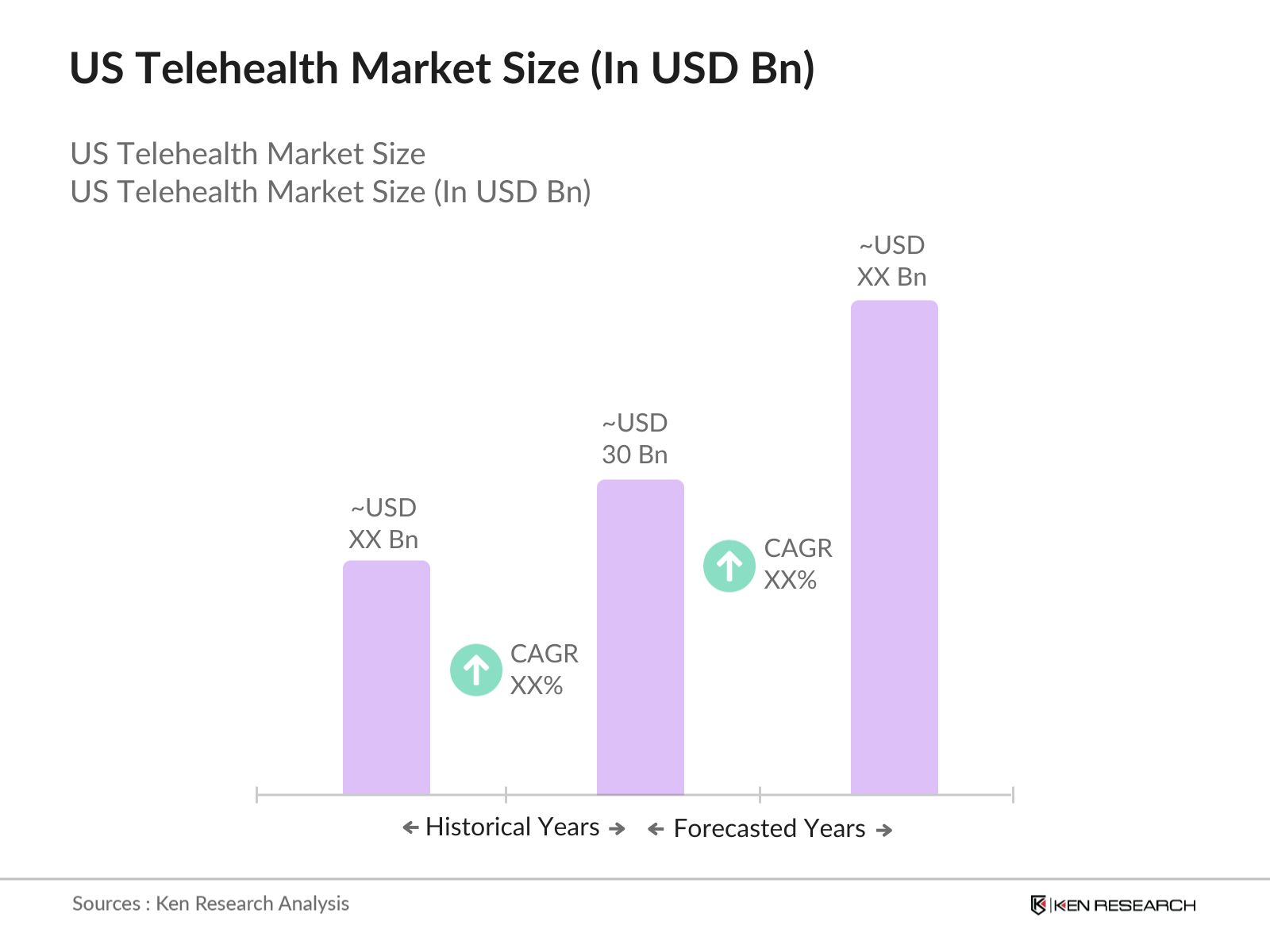
The US Telehealth Market was valued at USD 30 billion in 2023, driven by increasing healthcare costs, technological advancements, and the need for improved access to healthcare services. The ongoing shift towards value-based care and the convenience offered by telehealth services have significantly boosted market growth.
Challenges in the US Telehealth Market include regulatory variability across states, digital divide issues affecting access, and resistance among healthcare providers to fully adopt telehealth technologies.
Key players in the US Telehealth Market include Teladoc Health, Amwell, MDLIVE, Doctor on Demand, and American Well Corporation. These companies lead the market with their comprehensive service offerings and strong technological infrastructure.
The growth of the US Telehealth Market is driven by the increasing prevalence of chronic diseases, the aging population, and government policies that support the expansion of telehealth services.

What makes us stand out is that our consultants follows Robust, Refine and Result (RRR) methodology. i.e. Robust for clear definitions, approaches and sanity checking, Refine for differentiating respondents facts and opinions and Result for presenting data with story

We have set a benchmark in the industry by offering our clients with syndicated and customized market research reports featuring coverage of entire market as well as meticulous research and analyst insights.

While we don't replace traditional research, we flip the method upside down. Our dual approach of Top Bottom & Bottom Top ensures quality deliverable by not just verifying company fundamentals but also looking at the sector and macroeconomic factors.

With one step in the future, our research team constantly tries to show you the bigger picture. We help with some of the tough questions you may encounter along the way: How is the industry positioned? Best marketing channel? KPI's of competitors? By aligning every element, we help maximize success.

Our report gives you instant access to the answers and sources that other companies might choose to hide. We elaborate each steps of research methodology we have used and showcase you the sample size to earn your trust.

If you need any support, we are here! We pride ourselves on universe strength, data quality, and quick, friendly, and professional service.