
USA Aerostat Market Outlook to 2030
Region:United States
Author(s):Meenakshi Bisht
Product Code:KROD7847
Region:United States
Author(s):Meenakshi Bisht
Product Code:KROD7847
December 2024
92
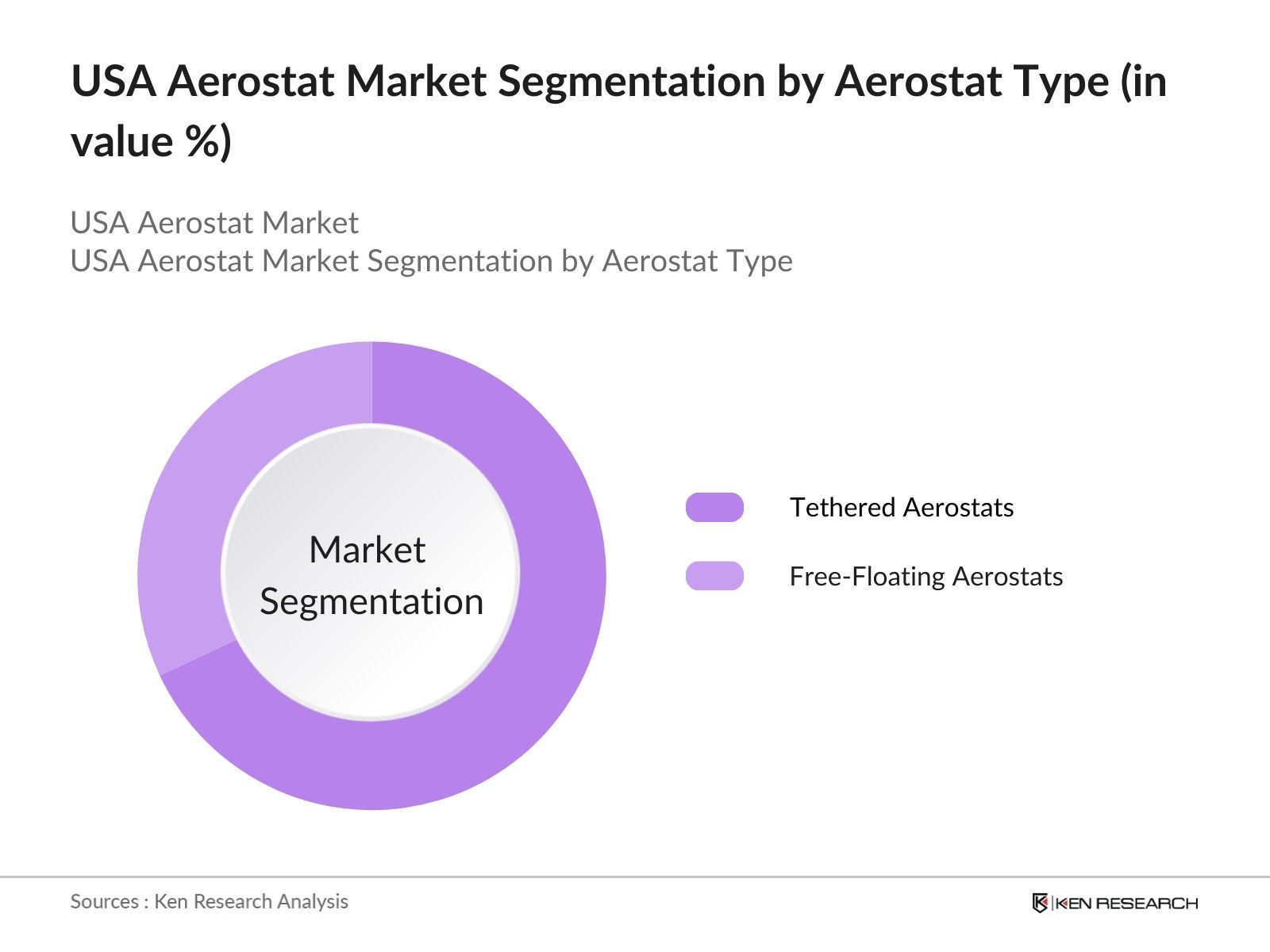
By Aerostat Type: The USA Aerostat market is segmented by aerostat type into tethered aerostats and free-floating aerostats. The tethered aerostats have maintained a dominant market share under the aerostat type segment, largely due to their reliability and long endurance capabilities. These aerostats are often used for border surveillance and military applications where continuous monitoring is crucial. Their stability and ability to carry heavier payloads, such as surveillance radars and communication systems, have made them an essential tool for government agencies.
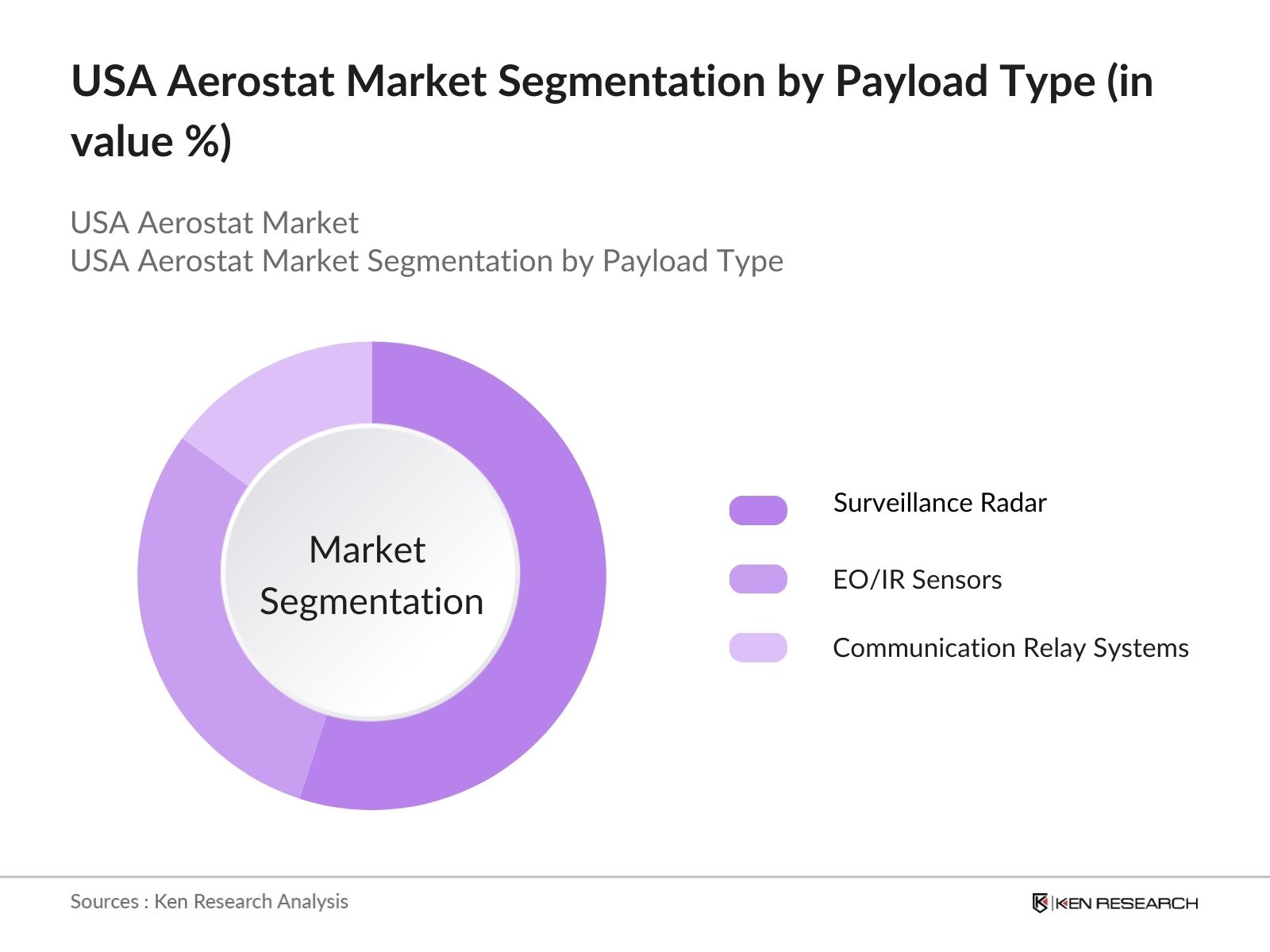
 By Payload Type: In the USA Aerostat market, payload types are divided into surveillance radar, electro-optical/infrared sensors (EO/IR), and communication relay systems. The surveillance radar segment leads the market, as these systems are indispensable for real-time monitoring of large areas. They are especially vital for military surveillance and border security, enabling the detection of ground movement and aerial threats. Their extensive range and precision capabilities make them the preferred choice for defense and homeland security applications.
The market is dominated by key players that lead in innovation and technological advancements. The competitive landscape is primarily shaped by defense contractors and specialized aerostat manufacturers who focus on government and military contracts. This market consolidation underscores the critical role of aerostat systems in defense and homeland security operations. Companies like Lockheed Martin and TCOM, L.P., have invested heavily in research and development, leading to the production of more efficient and versatile aerostat systems.
|
Company Name |
Establishment Year |
Headquarters |
Employee Strength |
R&D Expenditure |
Patents Held |
Key Contracts |
Regional Presence |
Product Portfolio |
Revenue |
|
Lockheed Martin |
1912 |
Bethesda, MD |
|||||||
|
TCOM, L.P. |
1971 |
Columbia, MD |
|||||||
|
Raytheon Technologies |
1922 |
Waltham, MA |
|||||||
|
Raven Industries |
1956 |
Sioux Falls, SD |
|||||||
|
Drone Aviation Holding |
2009 |
Jacksonville, FL |
Over the next five years, the USA Aerostat market is expected to show significant growth driven by increasing investments in defense and homeland security. Government agencies are likely to continue prioritizing aerostat systems for border surveillance, disaster monitoring, and critical infrastructure protection. Additionally, advancements in lightweight materials and longer-endurance systems will contribute to the adoption of aerostats in commercial sectors such as telecommunications and environmental monitoring.
|
By Aerostat Type |
Tethered Aerostats Free-Floating Aerostats |
|
By Payload Type |
Surveillance Radar EO/IR Sensors Communication Relay Systems |
|
By Application |
Military Surveillance Border Security Environmental Monitoring |
|
By End-User |
Defense Commercial Civil Government |
|
By Region |
North America Europe Asia-Pacific Middle East & Africa |
1.1. Definition and Scope
1.2. Market Taxonomy (Market Size, Operational Height, Payload Capacity)
1.3. Market Growth Rate (Technological Advancements, Defense Applications)
1.4. Market Segmentation Overview (Applications, Payloads, End-Users)
2.1. Historical Market Size
2.2. Year-On-Year Growth Analysis
2.3. Key Market Developments and Milestones (Defense Contracts, Homeland Security Initiatives)
3.1. Growth Drivers (Defense Expenditure, Border Surveillance Needs)
3.1.1. Increasing Defense Spending
3.1.2. Need for Persistent Surveillance
3.1.3. Homeland Security Investments
3.1.4. Rising Interest in Environmental Monitoring
3.2. Market Challenges (Weather Sensitivity, High Initial Investment)
3.2.1. Operational Limitations in Adverse Weather
3.2.2. High Maintenance Costs
3.2.3. Regulatory Barriers
3.3. Opportunities (Commercial Applications, Maritime Surveillance)
3.3.1. Expansion into Commercial Applications
3.3.2. Increasing Demand for Maritime Surveillance
3.3.3. Technological Advancements in Lightweight Materials
3.4. Trends (Miniaturization, Real-Time Data Transmission)
3.4.1. Integration with UAV Systems
3.4.2. Demand for Long-Endurance Aerostats
3.4.3. Real-Time Data Collection for Environmental Monitoring
3.5. Government Regulations (FAA Guidelines, Defense Standards)
3.5.1. FAA Regulations for Airborne Platforms
3.5.2. Homeland Security Procurement Norms
3.5.3. DoD Testing and Certification Requirements
3.6. SWOT Analysis
3.7. Stakeholder Ecosystem (Government Agencies, Private Contractors)
3.8. Porters Five Forces (Bargaining Power of Suppliers, Industry Rivalry)
3.9. Competition Ecosystem
4.1. By Aerostat Type (In Value %)
4.1.1. Tethered Aerostats
4.1.2. Free-Floating Aerostats
4.2. By Payload Type (In Value %)
4.2.1. Surveillance Radar
4.2.2. Electro-Optical/Infrared Sensors (EO/IR)
4.2.3. Communication Relay Systems
4.3. By Application (In Value %)
4.3.1. Military Surveillance
4.3.2. Border Security
4.3.3. Environmental Monitoring
4.4. By End-User (In Value %)
4.4.1. Defense
4.4.2. Commercial
4.4.3. Civil Government
4.5. By Region (In Value %)
4.5.1. North America
4.5.2. Europe
4.5.3. Asia-Pacific
4.5.4. Middle East & Africa
5.1. Detailed Profiles of Major Companies
5.1.1. Lockheed Martin Corporation
5.1.2. TCOM, L.P.
5.1.3. Raytheon Company
5.1.4. Raven Industries
5.1.5. Aerostar International
5.1.6. ILC Dover
5.1.7. RT Aerostat Systems
5.1.8. Drone Aviation Holding Corp
5.1.9. Israel Aerospace Industries (IAI)
5.1.10. Augur RosAeroSystems
5.1.11. Lindstrand Technologies
5.1.12. Global Near Space Services
5.1.13. Northrop Grumman
5.1.14. Airbus Defense and Space
5.1.15. Zodiac Aerospace
5.2. Cross Comparison Parameters (Employee Strength, R&D Expenditure, Headquarters, Revenue, Strategic Partnerships, Regional Presence, Product Portfolio, Patents Held)
5.3. Market Share Analysis
5.4. Strategic Initiatives (Defense Contracts, New Product Development)
5.5. Mergers and Acquisitions
5.6. Investment Analysis (Private Equity, Venture Capital)
5.7. Government Grants and Funding
6.1. Defense Procurement Standards
6.2. FAA Regulations for Airspace Use
6.3. Homeland Security Compliance
6.4. Environmental Monitoring Regulations
7.1. Future Market Size Projections
7.2. Key Factors Driving Future Growth
8.1. By Aerostat Type (In Value %)
8.2. By Payload Type (In Value %)
8.3. By Application (In Value %)
8.4. By End-User (In Value %)
8.5. By Region (In Value %)
9.1. TAM/SAM/SOM Analysis
9.2. White Space Opportunity Analysis
9.3. Strategic Market Penetration
9.4. Innovation Opportunities
Disclaimer Contact UsThe initial phase involved constructing a comprehensive ecosystem map encompassing all major stakeholders within the USA Aerostat Market. This step was supported by extensive desk research, leveraging a combination of secondary and proprietary databases to gather industry-level insights. The goal was to identify and define the critical variables influencing market dynamics.
During this phase, historical data was compiled and analyzed, focusing on aerostat market penetration and the balance between service providers and end-users. The assessment included analyzing revenue generation, as well as service quality statistics, to ensure accurate market estimations.
Market hypotheses were developed and validated through consultations with industry experts. These included computer-assisted telephone interviews (CATIs) with key professionals in defense and commercial sectors, providing critical operational insights.
The final phase involved direct engagement with multiple aerostat manufacturers to obtain detailed insights into product segments, sales performance, and customer preferences. This process was essential for verifying the statistics derived from the bottom-up approach and ensuring a validated analysis of the USA Aerostat Market.
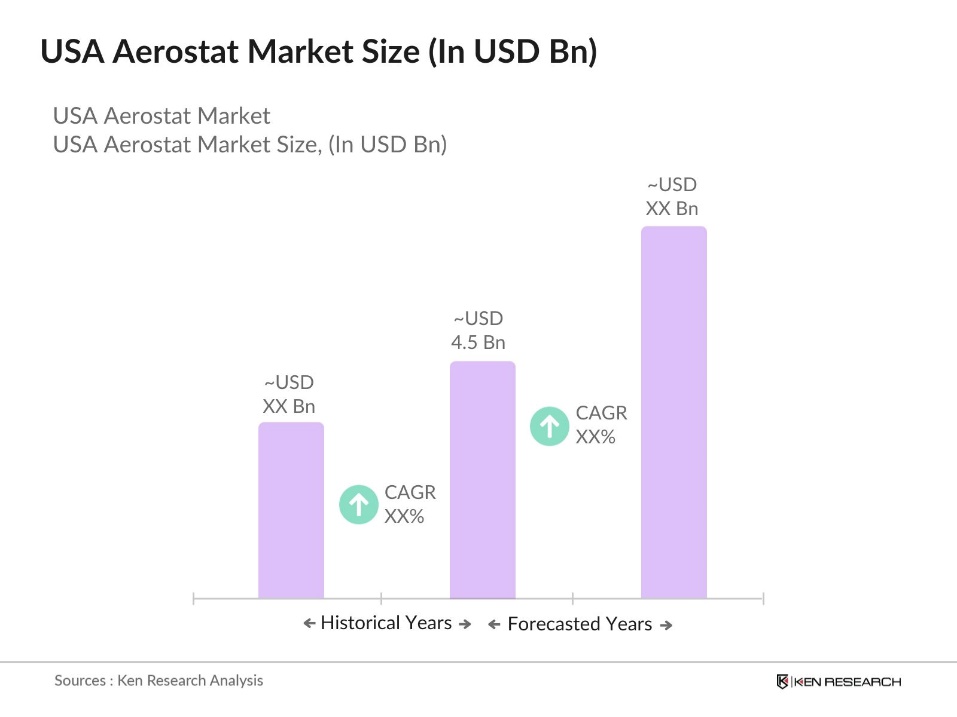
The USA Aerostat Market is valued at USD 4.5 billion, driven by growing demand for persistent surveillance and government investment in border security and defense.
Challenges USA Aerostat Market include operational limitations in adverse weather conditions, high maintenance costs, and regulatory barriers for aerial surveillance in certain regions.
Major players in USA Aerostat Market include Lockheed Martin, TCOM, L.P., Raytheon Technologies, Raven Industries, and Drone Aviation Holding Corp, which dominate due to their extensive R&D efforts and defense contracts.
Key growth drivers in USA Aerostat Market include increasing defense spending, heightened demand for border surveillance, and the adoption of aerostat systems in environmental monitoring.

What makes us stand out is that our consultants follows Robust, Refine and Result (RRR) methodology. i.e. Robust for clear definitions, approaches and sanity checking, Refine for differentiating respondents facts and opinions and Result for presenting data with story

We have set a benchmark in the industry by offering our clients with syndicated and customized market research reports featuring coverage of entire market as well as meticulous research and analyst insights.

While we don't replace traditional research, we flip the method upside down. Our dual approach of Top Bottom & Bottom Top ensures quality deliverable by not just verifying company fundamentals but also looking at the sector and macroeconomic factors.

With one step in the future, our research team constantly tries to show you the bigger picture. We help with some of the tough questions you may encounter along the way: How is the industry positioned? Best marketing channel? KPI's of competitors? By aligning every element, we help maximize success.

Our report gives you instant access to the answers and sources that other companies might choose to hide. We elaborate each steps of research methodology we have used and showcase you the sample size to earn your trust.

If you need any support, we are here! We pride ourselves on universe strength, data quality, and quick, friendly, and professional service.