















USA Agricultural Inoculants Market Outlook to 2030
Region:North America
Author(s):Vijay Kumar
Product Code:KROD9746
November 2024
92
About the Report
USA Agricultural Inoculants Market Overview
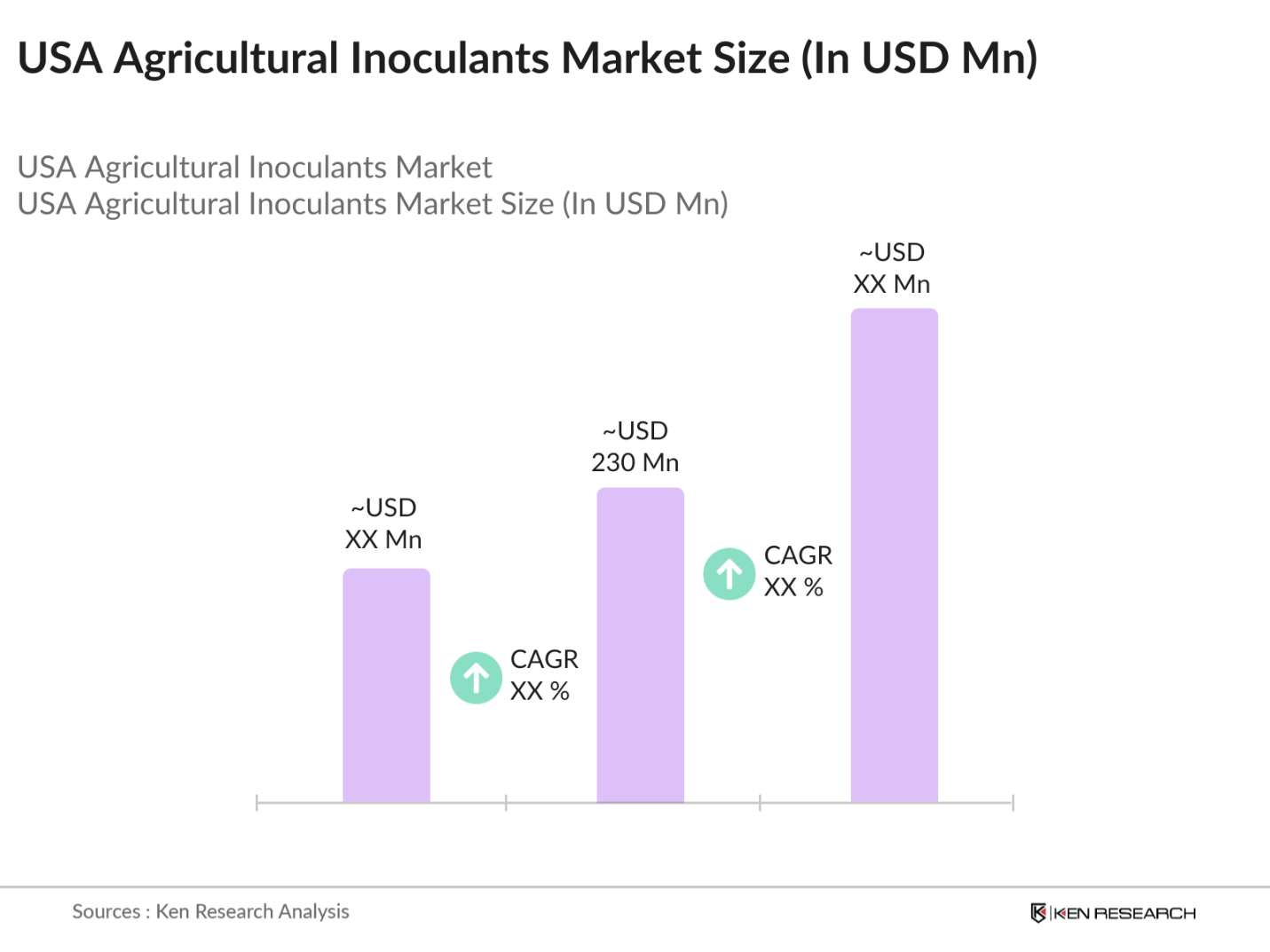
- The USA Agricultural Inoculants Market is valued at USD 230 million, based on a five-year historical analysis. This market is driven by increasing adoption of sustainable farming practices and the rising need for bio-based fertilizers as alternatives to chemical inputs. Regulatory support and technological advancements in microbial soil treatments further fuel growth, with inoculants playing a critical role in enhancing crop yield and soil health, especially in large-scale farms across key agricultural regions.
- California and the Midwest dominate the USA Agricultural Inoculants Market, primarily due to their extensive agricultural infrastructure, technological advancements, and favorable soil conditions for crops requiring inoculants. Californias progressive regulatory environment supporting organic and sustainable farming, combined with high crop yields in the Midwest, have led to these regions dominance, creating strong demand for inoculant applications across various crop types.
- The USDA has set guidelines for the use of bio-inoculants within sustainable practices. These guidelines, updated under the 2024 conservation programs, aim to ensure inoculant efficacy and safety, emphasizing application methods that align with organic and regenerative agriculture practices. USDAs EQIP and CSP programs guide farmers on integrating inoculants to enhance soil health within regulatory compliance.
USA Agricultural Inoculants Market Segmentation
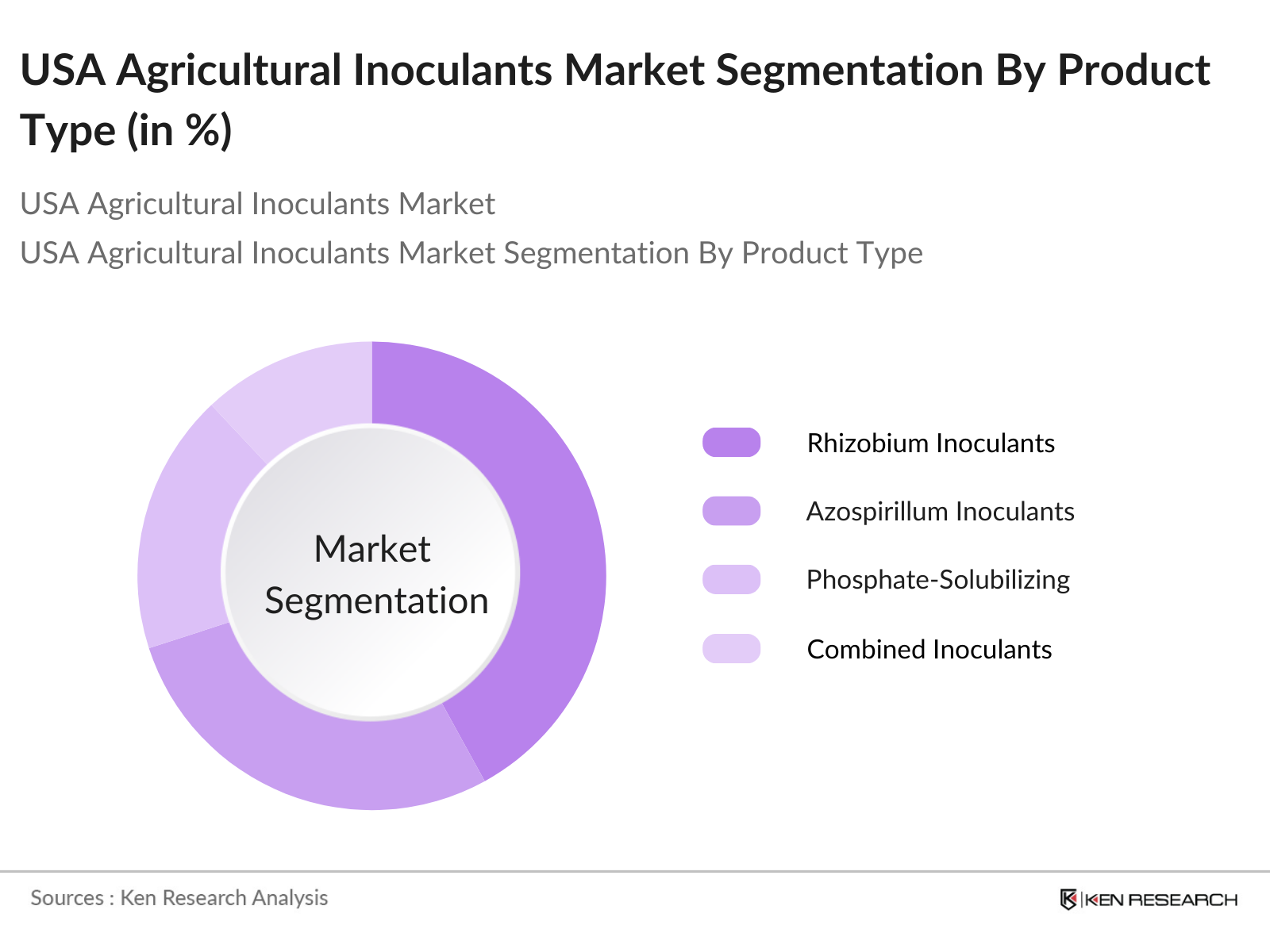
By Product Type: The USA Agricultural Inoculants Market is segmented by product type into Rhizobium Inoculants, Azospirillum Inoculants, Phosphate-Solubilizing Inoculants, and Combined Inoculants. Recently, Rhizobium Inoculants have gained a dominant market share in the U.S. under this segmentation. This is due to their proven efficacy in enhancing nitrogen fixation in leguminous crops, which are widely cultivated across the Midwest and California.
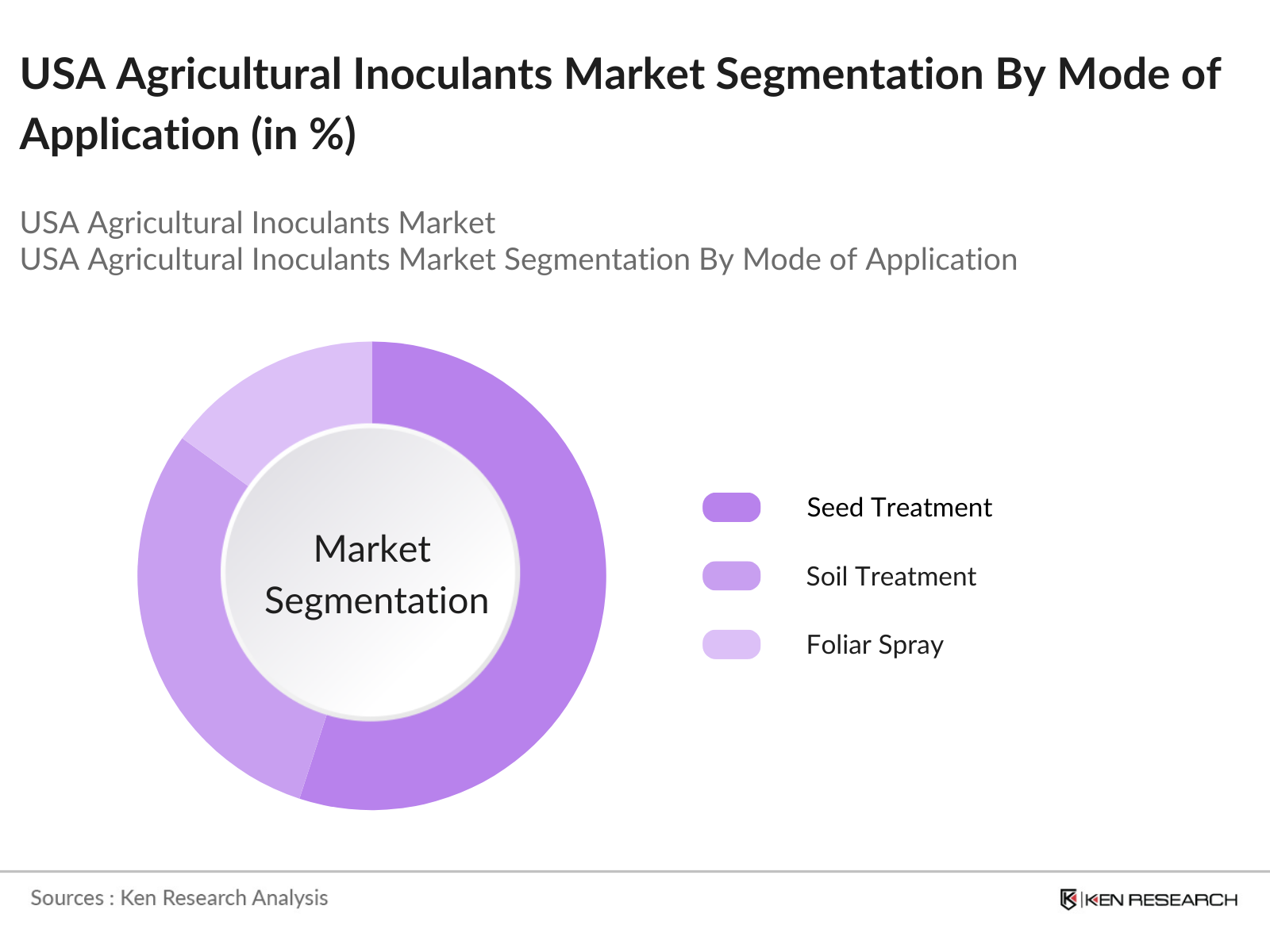
By Mode of Application: The market is segmented by mode of application into Seed Treatment, Soil Treatment, and Foliar Spray. Seed Treatment has a dominant market share in this segmentation. The preference for seed treatment inoculants is primarily due to their ability to deliver targeted microbial solutions directly to seeds, enhancing crop germination and resilience. Additionally, seed treatment allows for consistent application across large areas, making it cost-effective and preferred by large-scale farms in regions like the Midwest.
USA Agricultural Inoculants Market Competitive Landscape
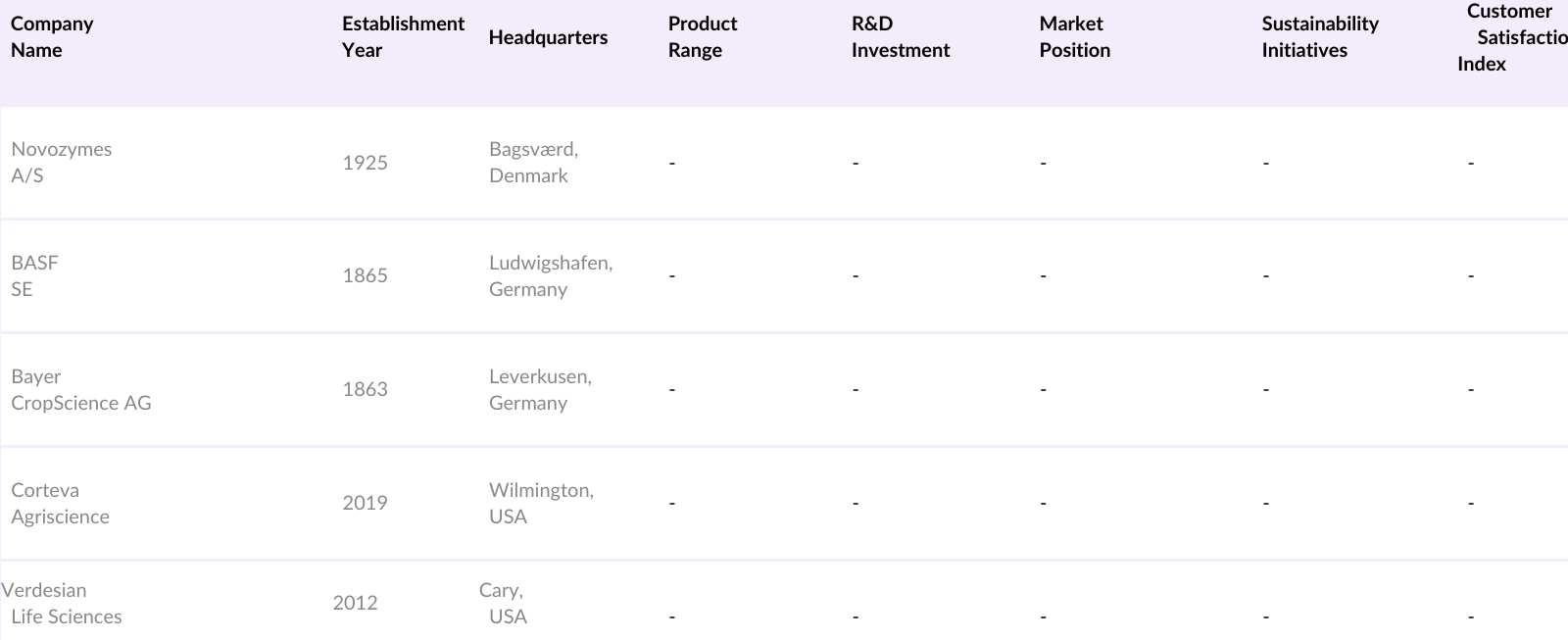
The USA Agricultural Inoculants Market is led by prominent players who focus on innovation, partnerships, and geographical expansion to strengthen their market presence. Key players include Novozymes, BASF SE, and Bayer CropScience AG, whose investments in R&D and market-specific solutions have consolidated their positions.
USA Agricultural Inoculants Industry Analysis
Growth Drivers
- Increase in Sustainable Farming Practices: In 2024, federal funding supporting sustainable agriculture reached historic levels with the USDA providing $3 billion under the Inflation Reduction Act for climate-smart agricultural practices. This funding assists thousands of U.S. farmers in integrating sustainable methods such as cover cropping, rotational grazing, and soil conservation techniques across millions of acres. The focus on sustainable farming has accelerated interest in bio-based inoculants, which contribute to soil health and reduce reliance on chemical inputs. As of 2023, nearly 5,300 farmers participated in USDA programs aimed at sustainability, reflecting a robust push for eco-friendly practices nationwide.
- Rising Demand for Bio-Based Fertilizers: The shift towards bio-based fertilizers, including inoculants, is increasingly prominent as part of the USDAs $19.5 billion allocated for climate-smart agricultural initiatives from 2023-2025. This demand correlates with the USDAs goal of improving soil health, carbon sequestration, and ecosystem resilience. Bio-inoculants like Rhizobium and mycorrhizae play a key role in promoting plant growth and nitrogen fixation, reducing chemical fertilizer needs. These inoculants align with conservation goals by bolstering yields while mitigating environmental impact, with adoption facilitated by record investments in conservation programs.
- Regulatory Push for Reduced Chemical Usage: The USDAs Natural Resources Conservation Service (NRCS) expanded funding for environmental quality programs in 2024, targeting reductions in chemical fertilizer and pesticide usage across farms nationwide. This regulatory shift includes supporting farmers to adopt microbial inoculants, which are alternatives to synthetic agrochemicals, especially in high-yield crops like soy and wheat. In 2024, the NRCS committed over $1.65 billion to its Environmental Quality Incentives Program (EQIP) for practices that promote soil health, which aligns with reducing chemical dependency.
Market Challenges
- High Initial Costs of Inoculants: The cost of microbial inoculants remains a barrier, with high initial investment requirements and specialized storage conditions posing challenges for farmers, especially those in lower-income brackets. Despite substantial government support, inoculants application costs can deter widespread use, particularly among smallholder farms. The USDAs increased funding for conservation programs in 2024 addresses these cost barriers partially, yet ongoing affordability issues persist, limiting rapid adoption among resource-constrained farmers.
- Limited Shelf-Life and Storage Constraints: Microbial inoculants are sensitive to environmental conditions and have a limited shelf life, which poses storage and transport challenges, especially for remote or less-developed areas. The requirement for specific temperature and moisture conditions for optimal inoculant viability limits their accessibility. Despite increased funding for climate-smart practices, current infrastructure often lacks adequate cold storage solutions, complicating inoculant preservation and usage across all farming regions.
USA Agricultural Inoculants Market Future Outlook
Over the next five years, the USA Agricultural Inoculants Market is anticipated to grow steadily, driven by increased investments in sustainable agriculture, advances in microbial research, and supportive regulatory frameworks for eco-friendly farming practices. Rising consumer awareness about organic produce and the positive environmental impact of agricultural inoculants are expected to fuel the demand for bio-inoculant solutions.
Market Opportunities
- Expansion of Organic Agriculture: The USDA reports that demand for organic products is at an all-time high, with over $121 million allocated in 2024 for research supporting organic and specialty crops. Organic farmings rise amplifies opportunities for microbial inoculants as they fit well with organic standards and enhance crop health without synthetic chemicals. Organic producers increasingly adopt inoculants to enhance yield, conserve soil nutrients, and meet consumer demands for organic food.
- Technological Advancements in Soil Health (Biotechnological Integration): Advances in biotechnological methods are enhancing inoculant strains, increasing their viability and effectiveness. Investments in genomic and microbiome research through federal programs are paving the way for improved inoculant formulations. By 2024, USDAs NIFA initiated several programs aimed at developing superior inoculant strains, providing an opportunity for the inoculants market to leverage these innovations for better crop resilience and productivity.
Scope of the Report
|
Product Type |
Rhizobium Inoculants Azospirillum Inoculants Phosphate-Solubilizing Inoculants Combined Inoculants |
|
Crop Type |
Cereals & Grains Oilseeds & Pulses Fruits & Vegetables Others |
|
Mode of Application |
Seed Treatment Soil Treatment Foliar Spray |
|
Microbial Type |
Bacterial Inoculants Fungal Inoculants Others |
|
Region |
Northeast Midwest South West |
Products
Key Target Audience
Farmers and Agricultural Cooperatives
Crop Management and Soil Health Companies
Bio-Based Product Distributors
Agricultural Research Organizations
Organic Farming Associations
Government and Regulatory Bodies (USDA, FDA)
Investments and Venture Capital Firms
Environmental and Sustainability Organizations
Companies
Players Mentioned in the Report
Novozymes A/S
BASF SE
Bayer CropScience AG
Corteva Agriscience
Verdesian Life Sciences
BioWorks Inc.
Advanced Biological Marketing
Premier Tech Ltd.
Rizobacter Argentina S.A.
Chr. Hansen
Table of Contents
1. USA Agricultural Inoculants Market Overview
1.1. Definition and Scope
1.2. Market Taxonomy
1.3. Market Growth Rate
1.4. Market Segmentation Overview
2. USA Agricultural Inoculants Market Size (In USD Mn)
2.1. Historical Market Size
2.2. Year-On-Year Growth Analysis
2.3. Key Developments and Technological Advancements (Biological Innovation, R&D)
3. USA Agricultural Inoculants Market Analysis
3.1. Growth Drivers
3.1.1. Increase in Sustainable Farming Practices
3.1.2. Rising Demand for Bio-Based Fertilizers
3.1.3. Regulatory Push for Reduced Chemical Usage
3.2. Market Challenges
3.2.1. High Initial Costs of Inoculants
3.2.2. Limited Shelf-Life and Storage Constraints
3.2.3. Awareness Gaps in Emerging Markets
3.3. Opportunities
3.3.1. Expansion of Organic Agriculture
3.3.2. Technological Advancements in Soil Health (Biotechnological Integration)
3.3.3. Strategic Partnerships with Agri-Tech Firms
3.4. Trends
3.4.1. Microbial Research and Strain Optimization
3.4.2. Integration of Precision Agriculture
3.4.3. Rising Adoption of Rhizobia-Based Inoculants
3.5. Regulatory Framework
3.5.1. US Department of Agriculture Guidelines
3.5.2. FDA Regulations on Bio-Inoculants
3.5.3. Standards for Organic Certification
3.6. SWOT Analysis
3.7. Industry Stakeholder Ecosystem
3.8. Porters Five Forces
3.9. Competitive Landscape Overview
4. USA Agricultural Inoculants Market Segmentation
4.1. By Product Type (In Value %)
4.1.1. Rhizobium Inoculants
4.1.2. Azospirillum Inoculants
4.1.3. Phosphate-Solubilizing Inoculants
4.1.4. Combined Inoculants
4.2. By Crop Type (In Value %)
4.2.1. Cereals & Grains
4.2.2. Oilseeds & Pulses
4.2.3. Fruits & Vegetables
4.2.4. Others
4.3. By Mode of Application (In Value %)
4.3.1. Seed Treatment
4.3.2. Soil Treatment
4.3.3. Foliar Spray
4.4. By Microbial Type (In Value %)
4.4.1. Bacterial Inoculants
4.4.2. Fungal Inoculants
4.4.3. Others
4.5. By Region (In Value %)
4.5.1. Northeast
4.5.2. Midwest
4.5.3. South
4.5.4. West
5. USA Agricultural Inoculants Competitive Analysis
5.1. Detailed Profiles of Major Companies
5.1.1. Novozymes A/S
5.1.2. BASF SE
5.1.3. Bayer CropScience AG
5.1.4. Corteva Agriscience
5.1.5. Verdesian Life Sciences
5.1.6. BioWorks Inc.
5.1.7. Advanced Biological Marketing
5.1.8. Premier Tech Ltd.
5.1.9. Rizobacter Argentina S.A.
5.1.10. Chr. Hansen
5.1.11. Symborg SL
5.1.12. Brettyoung Seeds
5.1.13. Lallemand Inc.
5.1.14. XiteBio Technologies
5.1.15. Agricen
5.2. Cross-Comparison Parameters (Product Range, Market Position, R&D Investment, Product Innovation, Key Patents, Global Reach, Sustainability Initiatives, Customer Satisfaction Index)
5.3. Market Share Analysis
5.4. Strategic Initiatives
5.5. Mergers and Acquisitions
5.6. Investment Analysis
5.7. Venture Capital Funding
5.8. Government Grants
5.9. Private Equity Investments
6. USA Agricultural Inoculants Market Regulatory Framework
6.1. Environmental Standards
6.2. Compliance and Certification Requirements
6.3. Regional Variance in Regulatory Approvals
7. USA Agricultural Inoculants Future Market Size (In USD Mn)
7.1. Future Market Size Projections
7.2. Key Factors Driving Future Market Growth
8. USA Agricultural Inoculants Market Segmentation
8.1. By Product Type (In Value %)
8.2. By Crop Type (In Value %)
8.3. By Mode of Application (In Value %)
8.4. By Microbial Type (In Value %)
8.5. By Region (In Value %)
9. USA Agricultural Inoculants Market Analysts' Recommendations
9.1. TAM/SAM/SOM Analysis
9.2. Marketing Strategy Insights
9.3. White Space Opportunities
Disclaimer Contact UsResearch Methodology
Step 1: Identification of Key Variables
The initial phase involves developing an ecosystem map that identifies key stakeholders, regulatory requirements, and market influencers specific to the USA Agricultural Inoculants Market. Secondary research methods, including industry databases, are utilized to define the primary market dynamics.
Step 2: Market Analysis and Construction
This phase involves collecting and analyzing historical data on agricultural inoculant penetration rates, production metrics, and revenue generation. A detailed assessment of product application areas is also performed to construct an accurate market structure.
Step 3: Hypothesis Validation and Expert Consultation
Formulated hypotheses on market trends and growth drivers are validated through interviews with key industry experts and agricultural firms. These consultations provide insights on market dynamics, aiding in the refinement of market projections.
Step 4: Research Synthesis and Final Output
The concluding phase involves synthesizing primary and secondary data, validated by feedback from agricultural inoculant manufacturers. This ensures a reliable and comprehensive analysis, delivering an accurate picture of the USA Agricultural Inoculants Market.
Frequently Asked Questions
01. How big is the USA Agricultural Inoculants Market?
The USA Agricultural Inoculants Market is valued at USD 230 million, based on a five-year historical analysis. This market is driven by increasing adoption of sustainable farming practices and the rising need for bio-based fertilizers as alternatives to chemical inputs.
02. What are the challenges in the USA Agricultural Inoculants Market?
Key challenges include high costs, limited shelf-life, and awareness gaps, which can impact market adoption rates and overall growth.
03. Who are the major players in the USA Agricultural Inoculants Market?
Leading companies include Novozymes, BASF SE, and Bayer CropScience AG, which hold significant market influence due to strong brand presence and extensive R&D efforts.
04. What are the growth drivers of the USA Agricultural Inoculants Market?
Growth is propelled by regulatory support for sustainable practices, advances in microbial research, and consumer preference for eco-friendly agricultural inputs.
Why Buy From Us?

What makes us stand out is that our consultants follows Robust, Refine and Result (RRR) methodology. i.e. Robust for clear definitions, approaches and sanity checking, Refine for differentiating respondents facts and opinions and Result for presenting data with story

We have set a benchmark in the industry by offering our clients with syndicated and customized market research reports featuring coverage of entire market as well as meticulous research and analyst insights.

While we don't replace traditional research, we flip the method upside down. Our dual approach of Top Bottom & Bottom Top ensures quality deliverable by not just verifying company fundamentals but also looking at the sector and macroeconomic factors.

With one step in the future, our research team constantly tries to show you the bigger picture. We help with some of the tough questions you may encounter along the way: How is the industry positioned? Best marketing channel? KPI's of competitors? By aligning every element, we help maximize success.

Our report gives you instant access to the answers and sources that other companies might choose to hide. We elaborate each steps of research methodology we have used and showcase you the sample size to earn your trust.

If you need any support, we are here! We pride ourselves on universe strength, data quality, and quick, friendly, and professional service.