















USA Appliance Market outlook to 2030
Region:North America
Author(s):Dev Chawla
Product Code:KRO019
June 2025
90
About the Report
USA Appliance Market Overview
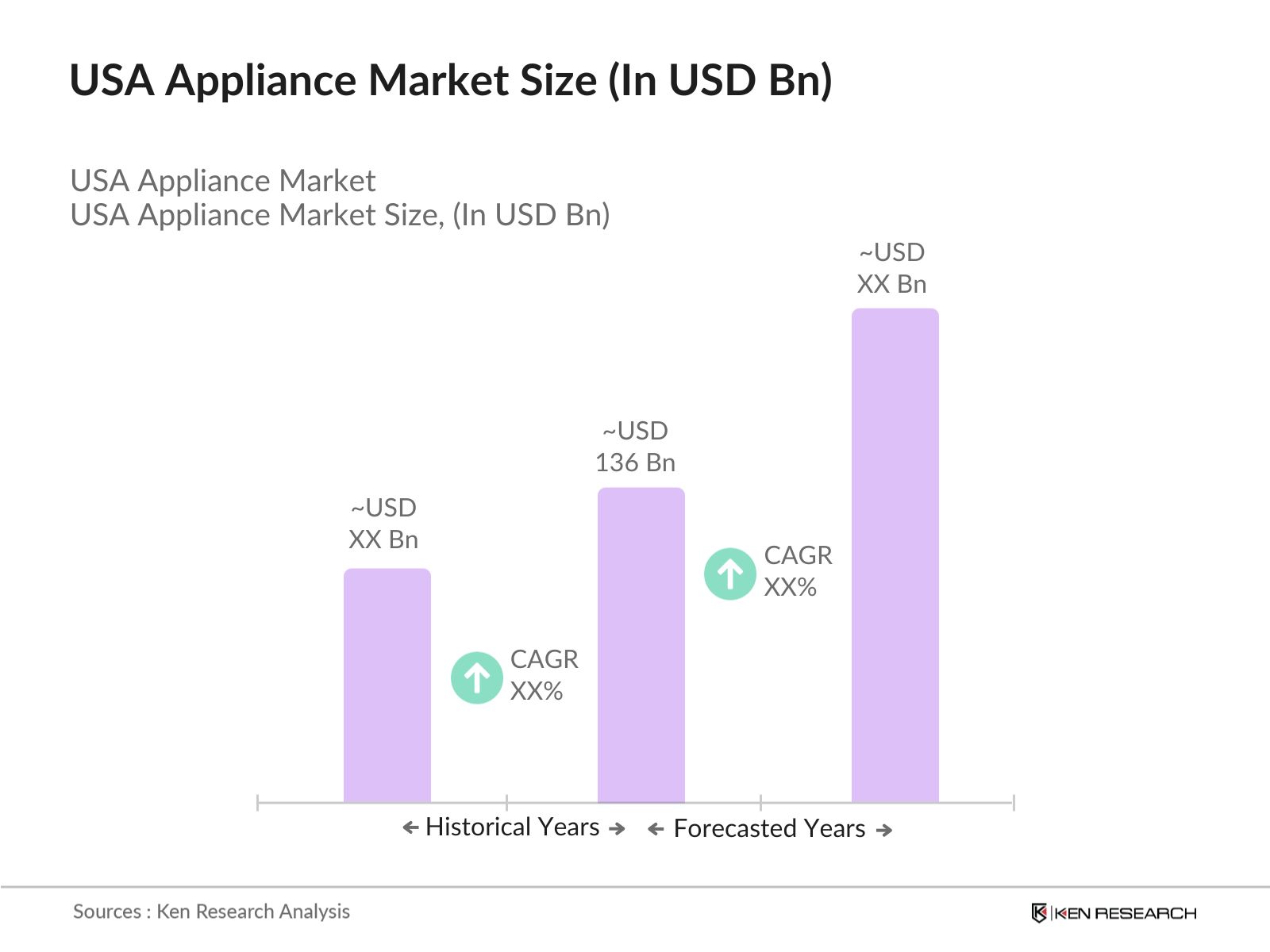
- The USA Appliance Market was valued at USD 136 billion, based on a five-year historical analysis. This growth is primarily driven by increasing consumer demand for energy-efficient appliances, technological advancements, and a shift toward smart home solutions. The market has seen a surge in the adoption of connected devices, which enhance convenience and energy management for consumers.
- Key cities dominating the market include New York, Los Angeles, and Chicago, primarily due to their large populations and high disposable incomes. These urban centers are also hubs for innovation and technology, leading to a greater acceptance of advanced appliances. The presence of major retailers and a diverse consumer base further contribute to their market dominance.
- In 2023, the U.S. government implemented new energy efficiency standards for household appliances, mandating that all new appliances meet specific energy consumption criteria. This regulation aims to reduce energy usage and greenhouse gas emissions, encouraging manufacturers to innovate and produce more energy-efficient products, thereby benefiting consumers and the environment.
USA Appliance Market Segmentation
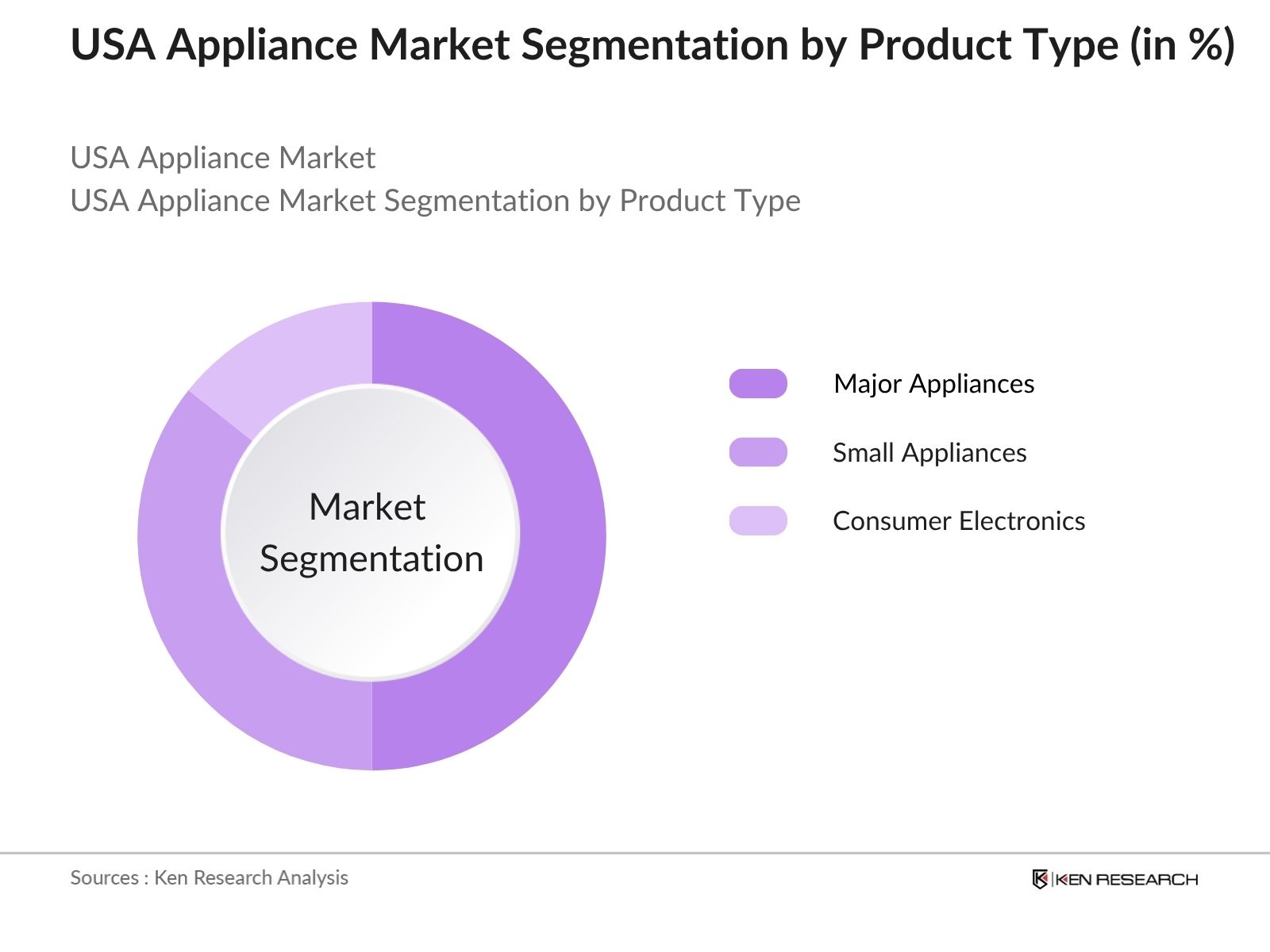
By Product Type: The appliance market can be segmented into major appliances, small appliances, and consumer electronics. Major appliances dominate the market, driven by strong demand for essential household products like refrigerators, washing machines, and ovens. Consumers prioritize durability, energy efficiency, and smart features in these high-investment items. Small appliances, such as microwaves and coffee makers, are also gaining popularity due to convenience and lifestyle trends. Consumer electronics are expanding steadily, supported by technological advancements and the integration of smart home systems.
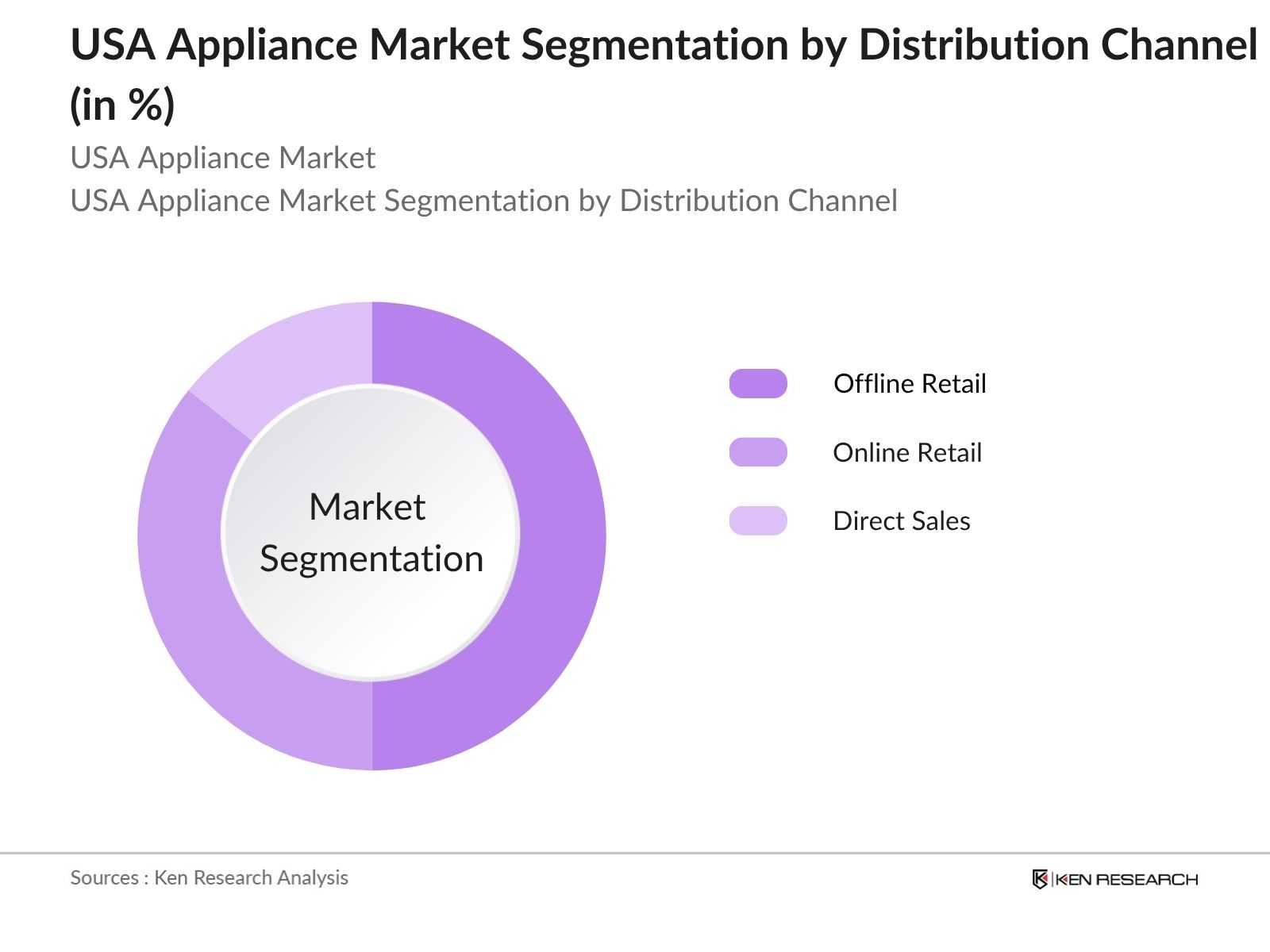
By Distribution Channel: The market is segmented into online retail, offline retail, and direct sales. Offline retail remains the dominant channel, as consumers value the hands-on experience, expert guidance, and immediate product availability offered by physical stores. Major retail chains and local dealers continue to attract strong foot traffic. Online retail is growing rapidly due to the convenience of home delivery, competitive pricing, and diverse product offerings. Direct sales, though smaller in share, are emerging through brand-exclusive stores and websites, enabling manufacturers to build direct relationships with customers.
USA Appliance Market Competitive Landscape
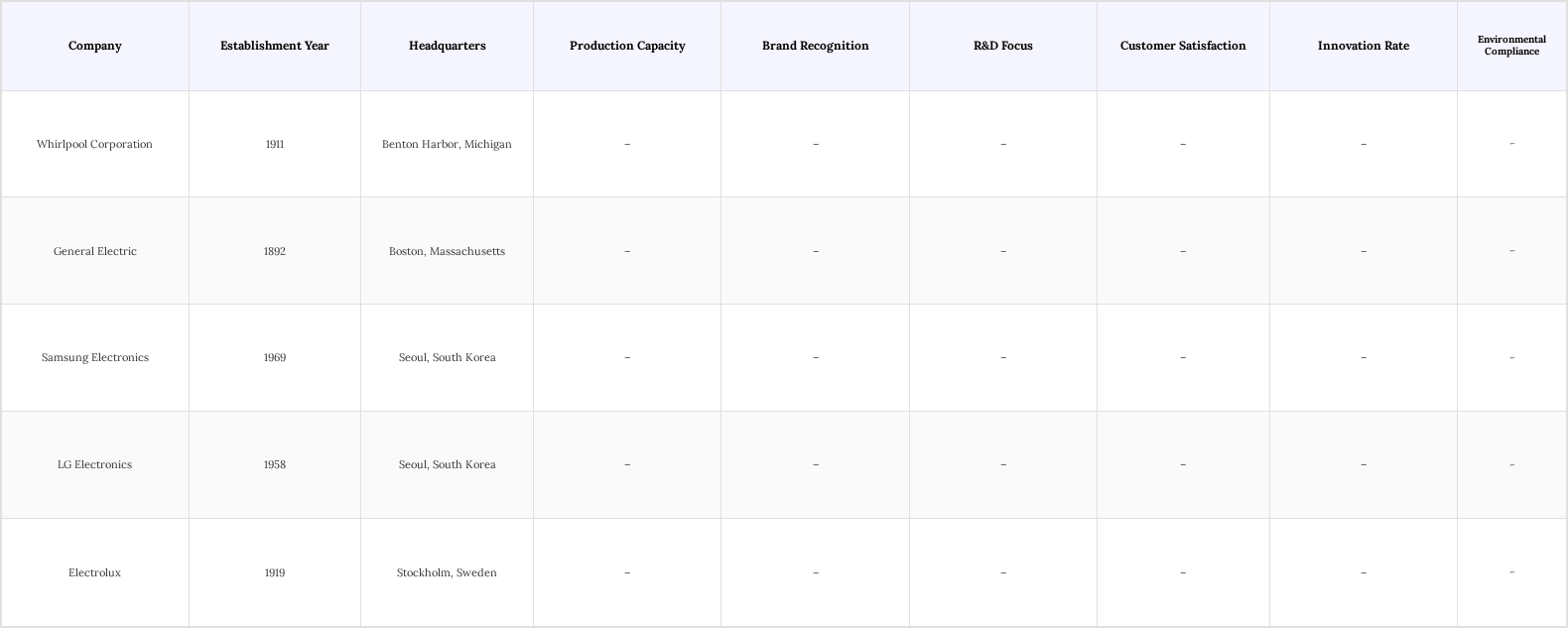
The USA Appliance Market is characterized by intense competition among key players such as Whirlpool Corporation, General Electric, Samsung Electronics, LG Electronics, and Electrolux. These companies are focusing on innovation, sustainability, and customer satisfaction to maintain their market positions. The competitive dynamics are shaped by technological advancements, product differentiation, and strategic partnerships.
USA Appliance Market Industry Analysis
Growth Drivers
- Increasing Consumer Demand for Energy-Efficient Appliances: The USA appliance market is witnessing a significant shift towards energy-efficient products, driven by consumer awareness and government incentives. The energy-efficient appliance segment is projected to reach $25 billion. This growth is supported by the U.S. Department of Energy's initiatives, which aim to reduce energy consumption, encouraging consumers to invest in eco-friendly appliances.
- Technological Advancements in Smart Home Solutions: The integration of smart technology in appliances is revolutionizing the market, with smart appliances expected to account for $20 billion in sales. This growth is fueled by advancements in IoT, allowing appliances to connect and communicate, enhancing user convenience. According to the Consumer Technology Association, 75% of U.S. households are projected to own at least one smart appliance, driving demand for innovative solutions.
- Rising Disposable Income and Urbanization Trends: As disposable income in the USA rises, projected to reach an average of $65,000 per household, consumers are increasingly willing to invest in high-quality appliances. Urbanization is also contributing to this trend, with over 85% of the population expected to live in urban areas by 2025. This demographic shift is driving demand for modern, efficient appliances that cater to the needs of urban dwellers, further propelling market growth.
Market Challenges
- Supply Chain Disruptions and Material Shortages: The USA appliance market faces significant challenges due to ongoing supply chain disruptions, exacerbated by global events such as the COVID-19 pandemic. Manufacturers are experiencing rising material costs, which impact production timelines and pricing strategies. These disruptions hinder the ability to meet consumer demand, leading to potential revenue losses and decreased market competitiveness.
- Intense Competition and Price Wars: The appliance market is characterized by fierce competition, with numerous players vying for market share. While market concentration among the top companies is relatively low, the resulting aggressive pricing strategies intensify competition. This landscape pressures profit margins and compels companies to innovate continuously while managing costs effectively. The challenge lies in maintaining quality and brand loyalty amidst price wars, which can erode consumer trust.
USA Appliance Market Future Outlook
The USA appliance market is poised for transformative growth, driven by technological advancements and evolving consumer preferences. As smart home technology becomes more integrated into daily life, the demand for connected appliances is expected to surge. Additionally, sustainability will play a crucial role, with consumers increasingly prioritizing eco-friendly options. Companies that adapt to these trends and invest in innovation will likely capture significant market share, positioning themselves favorably for the future.
Market Opportunities
- Expansion of E-commerce Platforms for Appliance Sales: The shift towards online shopping presents a substantial opportunity for appliance manufacturers. The e-commerce sales in the appliance sector are expected driven by consumer preference for convenience and competitive pricing. Companies that enhance their online presence and optimize logistics can tap into this growing market segment effectively.
- Growing Interest in Sustainable and Eco-Friendly Products: As consumers become more environmentally conscious, the demand for sustainable appliances is on the rise. The market for eco-friendly appliances is expected to grow exponentially, driven by consumer willingness to pay a premium for sustainable options. Companies that prioritize sustainability in their product offerings can differentiate themselves and attract a loyal customer base.
Scope of the Report
| By Product Type |
Major Appliances Small Appliances Consumer Electronics |
| By Distribution Channel |
Online Retail Offline Retail Direct Sales |
| By End User |
Residential Commercial Industrial |
| By Region |
Northeast Midwest South West |
| By Price Range |
Low-End Appliances Mid-Range Appliances High-End Appliances |
Products
Key Target Audience
Investors and Venture Capitalist Firms
Government and Regulatory Bodies (e.g., U.S. Department of Energy, U.S. Environmental Protection Agency)
Manufacturers and Producers
Distributors and Retailers
Home Improvement and Appliance Retail Chains
Technology Providers
Industry Associations (e.g., Association of Home Appliance Manufacturers)
Financial Institutions
Companies
Players Mentioned in the Report:
Whirlpool Corporation
General Electric
Samsung Electronics
LG Electronics
Electrolux
EcoAppliance Innovations
SmartHome Solutions
Apex Appliance Group
NextGen Appliances
PureTech Home Systems
Table of Contents
1. USA Appliance Market Overview
1.1. Definition and Scope
1.2. Market Taxonomy
1.3. Market Growth Rate
1.4. Market Segmentation Overview
2. USA Appliance Market Size (In USD Mn)
2.1. Historical Market Size
2.2. Year-On-Year Growth Analysis
2.3. Key Market Developments and Milestones
3. USA Appliance Market Analysis
3.1. Growth Drivers
3.1.1. Increasing Consumer Demand for Energy-Efficient Appliances
3.1.2. Technological Advancements in Smart Home Solutions
3.1.3. Rising Disposable Income and Urbanization Trends
3.2. Market Challenges
3.2.1. Supply Chain Disruptions and Material Shortages
3.2.2. Intense Competition and Price Wars
3.2.3. Regulatory Compliance and Environmental Concerns
3.3. Opportunities
3.3.1. Expansion of E-commerce Platforms for Appliance Sales
3.3.2. Growing Interest in Sustainable and Eco-Friendly Products
3.3.3. Innovations in Appliance Connectivity and Automation
3.4. Trends
3.4.1. Shift Towards Smart Appliances with IoT Integration
3.4.2. Increasing Popularity of Multi-Functional Appliances
3.4.3. Focus on Aesthetic Design and Customization Options
3.5. Government Regulation
3.5.1. Energy Efficiency Standards and Labeling Requirements
3.5.2. Safety Regulations for Appliance Manufacturing
3.5.3. Environmental Impact Assessments and Compliance
3.5.4. Incentives for Energy-Efficient Appliance Purchases
3.6. SWOT Analysis
3.7. Stake Ecosystem
3.8. Porter’s Five Forces
3.9. Competition Ecosystem
4. USA Appliance Market Segmentation
4.1. By Product Type
4.1.1. Major Appliances
4.1.2. Small Appliances
4.1.3. Consumer Electronics
4.2. By Distribution Channel
4.2.1. Online Retail
4.2.2. Offline Retail
4.2.3. Direct Sales
4.3. By End User
4.3.1. Residential
4.3.2. Commercial
4.3.3. Industrial
4.4. By Region
4.4.1 Northeast
4.4.2 Midwest
4.4.3 South
4.4.4 West
4.5. By Price Range
4.5.1. Low-End Appliances
4.5.2. Mid-Range Appliances
4.5.3. High-End Appliances
5. USA Appliance Market Competitive Analysis
5.1. Detailed Profiles of Major Companies
5.1.1. Whirlpool Corporation
5.1.2. General Electric
5.1.3. Samsung Electronics
5.1.4. LG Electronics
5.1.5. Electrolux
5.1.6. EcoAppliance Innovations
5.1.7. SmartHome Solutions
5.1.8. Apex Appliance Group
5.1.9. NextGen Appliances
5.1.10. PureTech Home Systems
5.2. Cross Comparison Parameters
5.2.1. Market Share by Company
5.2.2. Product Range and Innovation
5.2.3. Pricing Strategies
5.2.4. Distribution Network Efficiency
5.2.5. Customer Satisfaction Ratings
5.2.6. Brand Recognition and Loyalty
5.2.7. Sustainability Initiatives
5.2.8. Financial Performance Metrics
6. USA Appliance Market Regulatory Framework
6.1. Environmental Standards
6.2. Compliance Requirements
6.3. Certification Processes
7. USA Appliance Market Future Market Size (In USD Mn)
7.1. Future Market Size Projections
7.2. Key Factors Driving Future Market Growth
8. USA Appliance Market Future Market Segmentation
8.1. By Product Type
8.1.1. Major Appliances
8.1.2. Small Appliances
8.1.3. Consumer Electronics
8.2. By Distribution Channel
8.2.1. Online Retail
8.2.2. Offline Retail
8.2.3. Direct Sales
8.3. By End User
8.3.1. Residential
8.3.2. Commercial
8.3.3. Industrial
8.4. By Region
8.4.1 Northeast
8.4.2 Midwest
8.4.3 South
8.4.4 West
4.5. By Price Range
4.5.1. Low-End Appliances
4.5.2. Mid-Range Appliances
4.5.3. High-End Appliances
9. USA Appliance Market Analysts’ Recommendations
9.1. TAM/SAM/SOM Analysis
9.2. Customer Cohort Analysis
9.3. Marketing Initiatives
9.4. White Space Opportunity Analysis
Research Methodology
Step 1: Identification of Key Variables
The initial phase involves constructing an ecosystem map encompassing all major stakeholders within the USA Appliance Market. This step is underpinned by extensive desk research, utilizing a combination of secondary and proprietary databases to gather comprehensive industry-level information. The primary objective is to identify and define the critical variables that influence market dynamics.
Step 2: Market Analysis and Construction
In this phase, we will compile and analyze historical data pertaining to the USA Appliance Market. This includes assessing market penetration, the ratio of marketplaces to service providers, and the resultant revenue generation. Furthermore, an evaluation of service quality statistics will be conducted to ensure the reliability and accuracy of the revenue estimates.
Step 3: Hypothesis Validation and Expert Consultation
Market hypotheses will be developed and subsequently validated through computer-assisted telephone interviews (CATIs) with industry experts representing a diverse array of companies. These consultations will provide valuable operational and financial insights directly from industry practitioners, which will be instrumental in refining and corroborating the market data.
Step 4: Research Synthesis and Final Output
The final phase involves direct engagement with multiple manufacturers to acquire detailed insights into product segments, sales performance, consumer preferences, and other pertinent factors. This interaction will serve to verify and complement the statistics derived from the bottom-up approach, thereby ensuring a comprehensive, accurate, and validated analysis of the USA Appliance Market.
Frequently Asked Questions
01. How big is the USA Appliance Market?
The USA Appliance Market is valued at USD 136 billion, driven by factors such as increasing demand, technological advancements, and supportive government initiatives.
02. What are the key challenges in the USA Appliance Market?
Key challenges in the USA Appliance Market include intense competition, regulatory complexities, and infrastructure limitations affecting market dynamics.
03. Who are the major players in the USA Appliance Market?
Major players in the USA Appliance Market include Whirlpool Corporation, General Electric, Samsung Electronics, LG Electronics, and Electrolux, among others.
04. What are the growth drivers for the USA Appliance Market?
The primary growth drivers for the USA Appliance Market are increasing consumer demand, favorable policies, innovation, and substantial investment inflows.
Why Buy From Us?

What makes us stand out is that our consultants follows Robust, Refine and Result (RRR) methodology. i.e. Robust for clear definitions, approaches and sanity checking, Refine for differentiating respondents facts and opinions and Result for presenting data with story

We have set a benchmark in the industry by offering our clients with syndicated and customized market research reports featuring coverage of entire market as well as meticulous research and analyst insights.

While we don't replace traditional research, we flip the method upside down. Our dual approach of Top Bottom & Bottom Top ensures quality deliverable by not just verifying company fundamentals but also looking at the sector and macroeconomic factors.

With one step in the future, our research team constantly tries to show you the bigger picture. We help with some of the tough questions you may encounter along the way: How is the industry positioned? Best marketing channel? KPI's of competitors? By aligning every element, we help maximize success.

Our report gives you instant access to the answers and sources that other companies might choose to hide. We elaborate each steps of research methodology we have used and showcase you the sample size to earn your trust.

If you need any support, we are here! We pride ourselves on universe strength, data quality, and quick, friendly, and professional service.