
USA Athleisure Market Outlook to 2030
Region:United States
Author(s):Meenakshi Bisht
Product Code:KROD6644
Region:United States
Author(s):Meenakshi Bisht
Product Code:KROD6644
December 2024
92

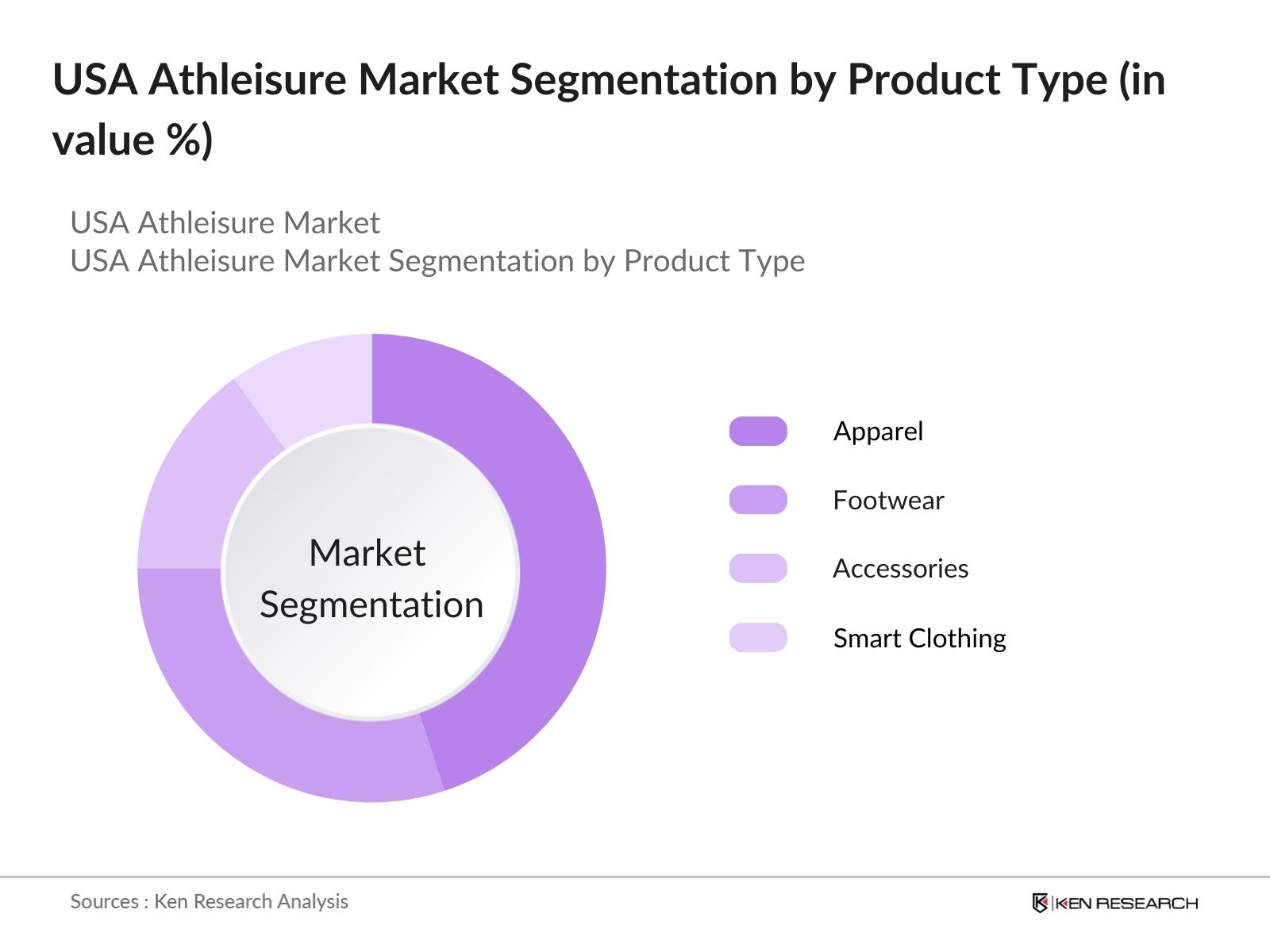
By Product Type: The USA athleisure market is segmented by product type into footwear, apparel, accessories, and smart clothing. Apparel holds the dominant market share due to its widespread use across a variety of consumer activities, including fitness, leisure, and work-from-home wear. This segment is buoyed by the increasing popularity of multipurpose clothing, particularly leggings, joggers, and hoodies, which have become essential wardrobe items for many consumers. Leading brands such as Nike and Lululemon have established strong market positions with their innovative designs and materials.
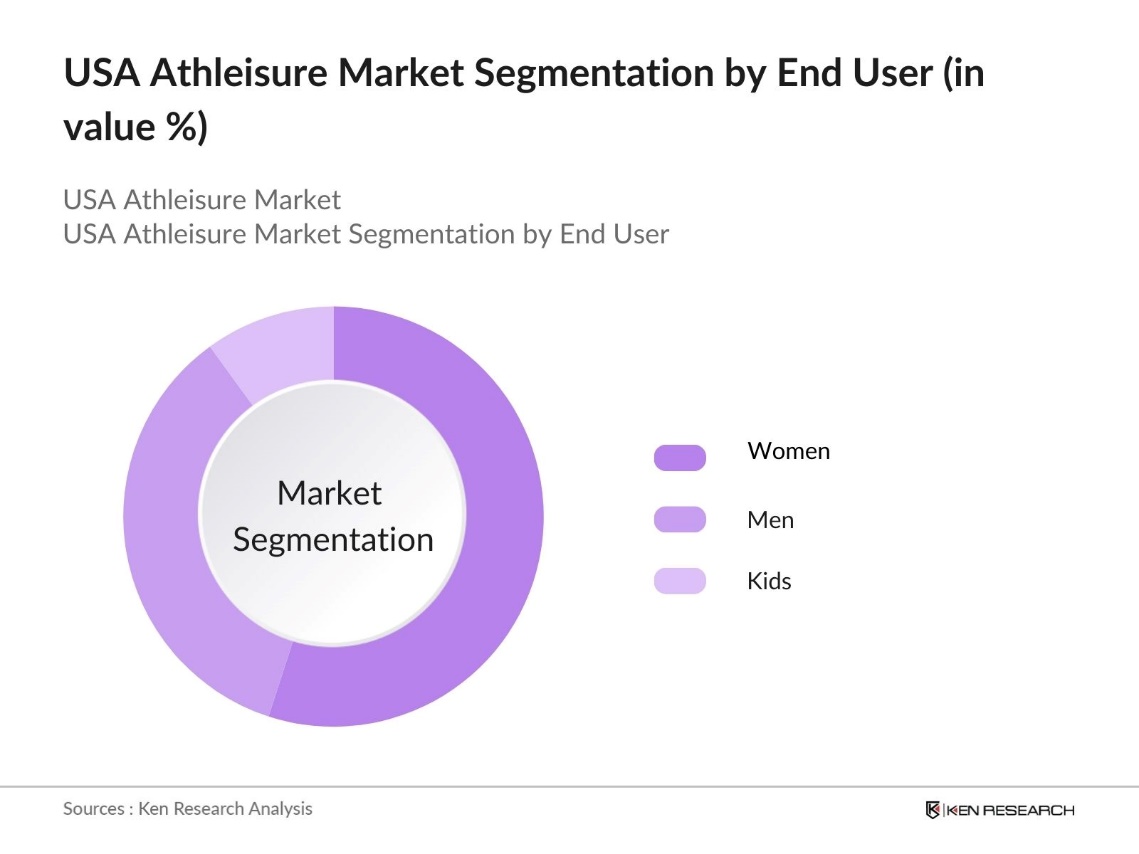
By End User: The USA athleisure market is also segmented by end user into men, women, and kids. The womens segment leads the market, primarily due to the introduction of fashionable and functional apparel targeted specifically at women. This sub-segment has witnessed significant growth as brands such as Athleta and Lululemon design products that cater to women's fitness needs while also offering stylish, comfortable options for daily wear.
The market is dominated by several key players, including both global and local brands. These companies have carved out significant market shares by leveraging innovative product lines, broad distribution networks, and marketing strategies that resonate with the athleisure consumer base. Major players include Nike, Adidas, and Lululemon, who maintain competitive advantages through brand loyalty, technological advancements in fabric, and sustainability initiatives.
|
Company Name |
Established |
Headquarters |
Revenue (USD Bn) |
Key Focus |
E-commerce Strategy |
Sustainability Initiatives |
Product Innovation |
Global Reach |
Brand Endorsements |
|
Nike, Inc. |
1964 |
Beaverton, Oregon |
|||||||
|
Adidas AG |
1949 |
Herzogenaurach, Germany |
|||||||
|
Lululemon Athletica Inc. |
1998 |
Vancouver, Canada |
|||||||
|
Under Armour, Inc. |
1996 |
Baltimore, Maryland |
|||||||
|
Puma SE |
1948 |
Herzogenaurach, Germany |
Over the next several years, the USA athleisure market is expected to continue its upward trajectory, driven by shifting consumer preferences toward health, wellness, and sustainability. The market will see continued demand for multifunctional apparel that offers both performance and style, as well as an increased focus on sustainable materials and ethical manufacturing processes.
|
Product Type |
Footwear Apparel Accessories Smart Clothing |
|
End User |
Men Women Kids |
|
Distribution Channel |
Online Stores Specialty Stores Department Stores Supermarkets and Hypermarkets |
|
Material Type |
Synthetic Natural Sustainable/ Recycled |
|
Region |
Northeast East South West |
1.1. Definition and Scope
1.2. Market Taxonomy
1.3. Market Growth Rate
1.4. Market Segmentation Overview
2.1. Historical Market Size
2.2. Year-On-Year Growth Analysis
2.3. Key Market Developments and Milestones
3.1. Growth Drivers
3.1.1. Rise of Health and Fitness Awareness (Consumer Behavior)
3.1.2. Increased Demand for Versatile and Comfortable Apparel (Lifestyle Changes)
3.1.3. Growth in E-commerce and Omnichannel Retail (Retail Channels)
3.1.4. Sustainability and Ethical Manufacturing Trends (Sustainability Practices)
3.2. Market Challenges
3.2.1. Intense Competition from Global and Local Brands (Competitive Landscape)
3.2.2. High Raw Material Costs (Supply Chain Factors)
3.2.3. Rapidly Changing Fashion Trends (Consumer Preferences)
3.3. Opportunities
3.3.1. Growing Influence of Athleisure in the Workplace (Consumer Adoption)
3.3.2. Expansion into Women's and Kids' Segments (Product Diversification)
3.3.3. Technological Advancements in Fabrics and Smart Apparel (Innovation)
3.4. Trends
3.4.1. Digital Fitness Integration (Tech Influence)
3.4.2. Athleisure as Fashion Statement (Cultural Shift)
3.4.3. Focus on Sustainable and Recycled Materials (Sustainability Trends)
3.5. Government Regulations (Regulatory Environment)
3.5.1. Textile Safety Standards
3.5.2. Fair Trade and Labor Regulations
3.5.3. Environmental Regulations for Apparel Manufacturing
3.6. SWOT Analysis
3.7. Stakeholder Ecosystem
3.8. Porters Five Forces
3.9. Competitive Ecosystem
4.1. By Product Type (In Value %)
4.1.1. Footwear
4.1.2. Apparel
4.1.3. Accessories
4.1.4. Smart Clothing
4.2. By End User (In Value %)
4.2.1. Men
4.2.2. Women
4.2.3. Kids
4.3. By Distribution Channel (In Value %)
4.3.1. Online Stores
4.3.2. Specialty Stores
4.3.3. Department Stores
4.3.4. Supermarkets and Hypermarkets
4.4. By Material Type (In Value %)
4.4.1. Synthetic
4.4.2. Natural
4.4.3. Sustainable/ Recycled
4.5. By Region (In Value %)
4.5.1. North
4.5.2. East
4.5.3. South
4.5.4. West
5.1. Detailed Profiles of Major Companies
5.1.1. Nike, Inc.
5.1.2. Adidas AG
5.1.3. Under Armour, Inc.
5.1.4. Lululemon Athletica Inc.
5.1.5. Puma SE
5.1.6. Reebok International Ltd.
5.1.7. New Balance Athletics, Inc.
5.1.8. Columbia Sportswear Company
5.1.9. The North Face (VF Corporation)
5.1.10. ASICS Corporation
5.1.11. Skechers USA, Inc.
5.1.12. Fabletics, Inc.
5.1.13. Champion (Hanesbrands Inc.)
5.1.14. Athleta (Gap Inc.)
5.1.15. Outdoor Voices
5.2. Cross Comparison Parameters (Revenue, Product Portfolio, Innovation Index, Sustainability Efforts, Brand Reach, Customer Retention, Growth Strategy, Market Penetration)
5.3. Market Share Analysis
5.4. Strategic Initiatives
5.5. Mergers and Acquisitions
5.6. Investment Analysis
5.7. Venture Capital Funding
5.8. Government Grants
5.9. Private Equity Investments
6.1. Apparel Manufacturing Standards
6.2. Health and Safety Regulations
6.3. Sustainability and Environmental Certifications
7.1. Future Market Size Projections
7.2. Key Factors Driving Future Market Growth
8.1. By Product Type (In Value %)
8.2. By End User (In Value %)
8.3. By Distribution Channel (In Value %)
8.4. By Material Type (In Value %)
8.5. By Region (In Value %)
9.1. TAM/SAM/SOM Analysis
9.2. Customer Cohort Analysis
9.3. Marketing Initiatives
9.4. White Space Opportunity Analysis
Disclaimer Contact UsThe first step involves mapping the USA athleisure market by identifying all stakeholders, including manufacturers, distributors, and key consumers. Through desk research and data analysis from industry reports, key variables such as market drivers, growth trends, and consumer behavior are established.
The next step is to gather and analyze historical data on athleisure apparel, looking at market penetration, distribution channels, and revenue generation trends. This includes cross-referencing sales data with consumer preferences and competitive landscape metrics to derive an accurate market overview.
Through interviews and consultations with industry professionals, hypotheses related to consumer trends and market growth are validated. This includes direct input from product managers, sales teams, and market analysts.
The final stage synthesizes all findings into a cohesive report, where data from manufacturers, retail performance, and market drivers are corroborated and presented. This ensures that the analysis reflects real-time market dynamics and consumer behavior, delivering a highly accurate depiction of the USA athleisure market.
The USA Athleisure Market is valued at USD 130.3 billion, driven by the rise in consumer demand for comfortable, versatile clothing that can be worn for both athletic and casual occasions.
Challenges in USA Athleisure Market include high competition from global brands, fluctuating raw material prices, and the need for continuous innovation in fabric technology to stay relevant in a fast-changing market.
Major players in USA Athleisure Market include Nike, Adidas, Lululemon, Under Armour, and Puma. These companies dominate the market due to their strong brand presence, innovation, and extensive distribution networks.
The USA Athleisure Market growth drivers include increased health and fitness awareness, the rise of e-commerce platforms, and the shift toward sustainability in apparel manufacturing.

What makes us stand out is that our consultants follows Robust, Refine and Result (RRR) methodology. i.e. Robust for clear definitions, approaches and sanity checking, Refine for differentiating respondents facts and opinions and Result for presenting data with story

We have set a benchmark in the industry by offering our clients with syndicated and customized market research reports featuring coverage of entire market as well as meticulous research and analyst insights.

While we don't replace traditional research, we flip the method upside down. Our dual approach of Top Bottom & Bottom Top ensures quality deliverable by not just verifying company fundamentals but also looking at the sector and macroeconomic factors.

With one step in the future, our research team constantly tries to show you the bigger picture. We help with some of the tough questions you may encounter along the way: How is the industry positioned? Best marketing channel? KPI's of competitors? By aligning every element, we help maximize success.

Our report gives you instant access to the answers and sources that other companies might choose to hide. We elaborate each steps of research methodology we have used and showcase you the sample size to earn your trust.

If you need any support, we are here! We pride ourselves on universe strength, data quality, and quick, friendly, and professional service.