















USA Automotive Electronics Market Outlook to 2030
Region:North America
Author(s):Yogita Sahu
Product Code:KROD3536
October 2024
100
About the Report
USA Automotive Electronics Market Overview
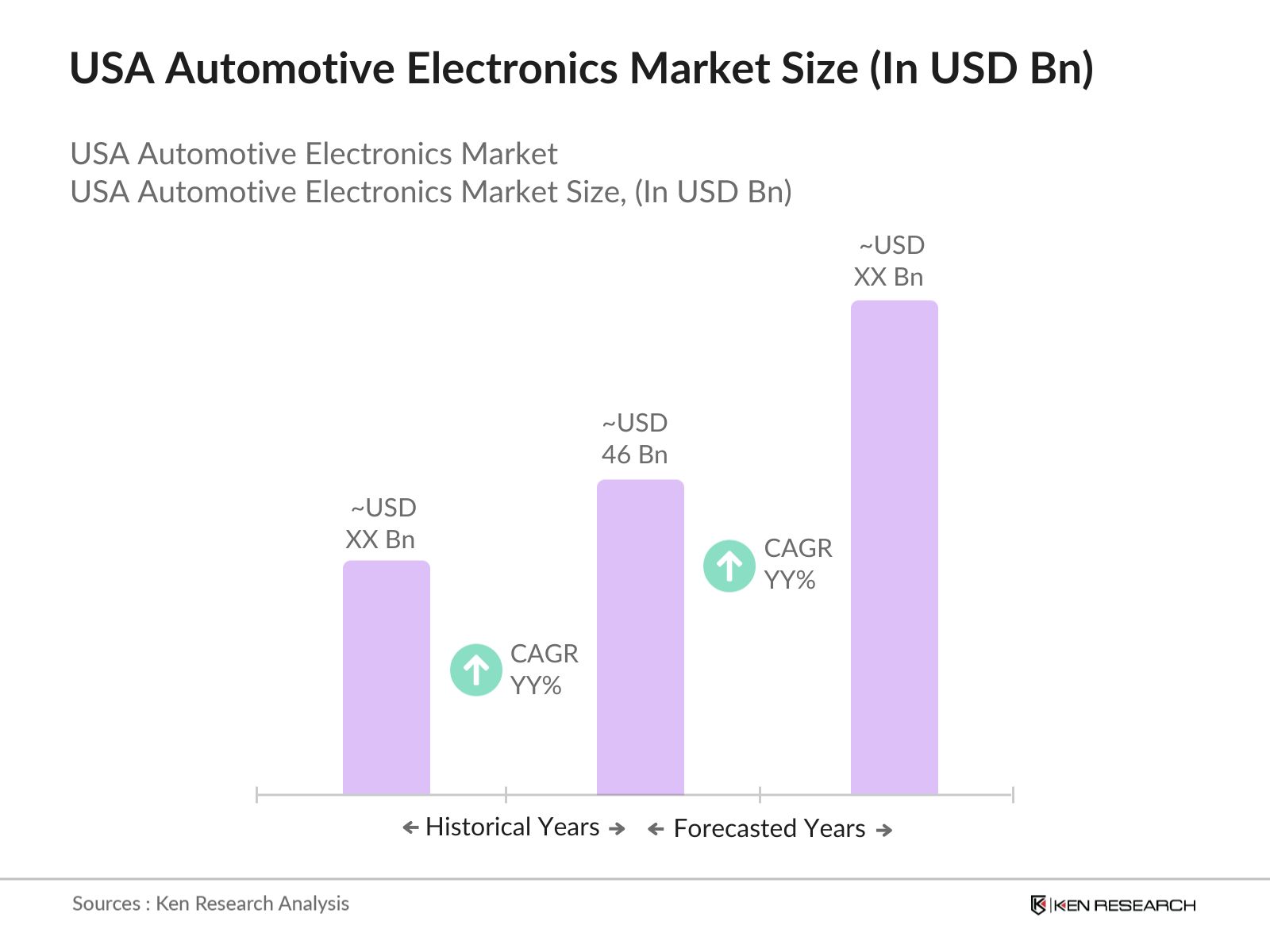
- The USA Automotive Electronics Market is valued at USD 46 billion, driven by rapid advancements in vehicle technology and the increasing electrification of automotive systems. This growth is underpinned by the widespread adoption of Electric Vehicles (EVs), which require sophisticated electronics for battery management, infotainment, and safety systems.
- Cities like Detroit, known as the automotive capital of the USA, play a crucial role in the dominance of the market. Detroit is home to major automotive manufacturers such as General Motors, Ford, and Stellantis, all of which are heavily investing in automotive electronics.
- The U.S. government continues to support the automotive electronics market through federal incentives for EV purchases. In 2024, the federal tax credit provides up to $7,500 per vehicle, boosting EV adoption and, by extension, the demand for automotive electronics such as battery management systems and electric drivetrains.
USA Automotive Electronics Market Segmentation
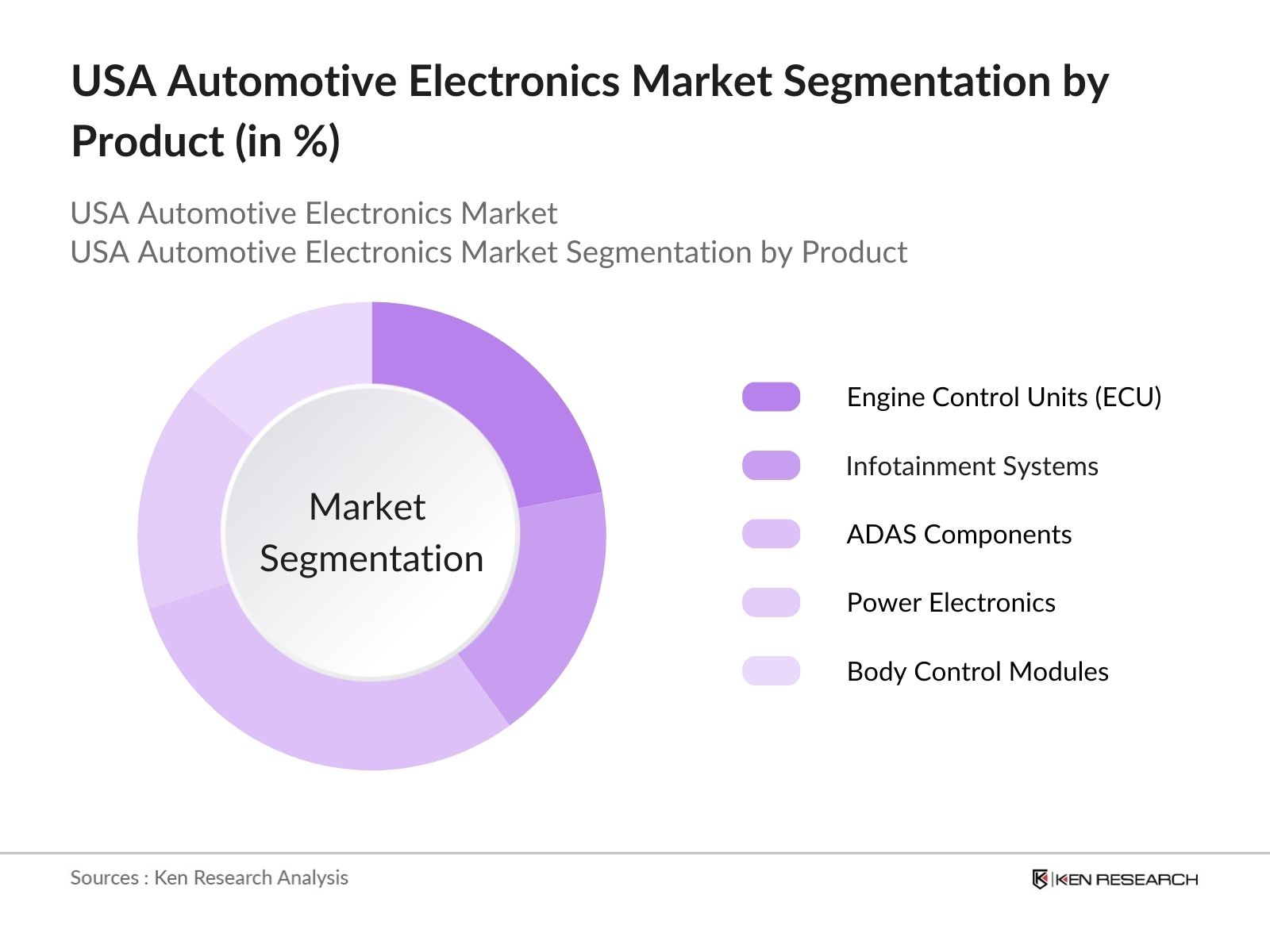
By Product Type: The market is segmented by product type into Engine Control Units (ECU), Infotainment Systems, ADAS Components, Power Electronics, and Body Control Modules. ADAS components have a dominant market share due to the increasing adoption of safety regulations and consumer demand for enhanced vehicle safety features.
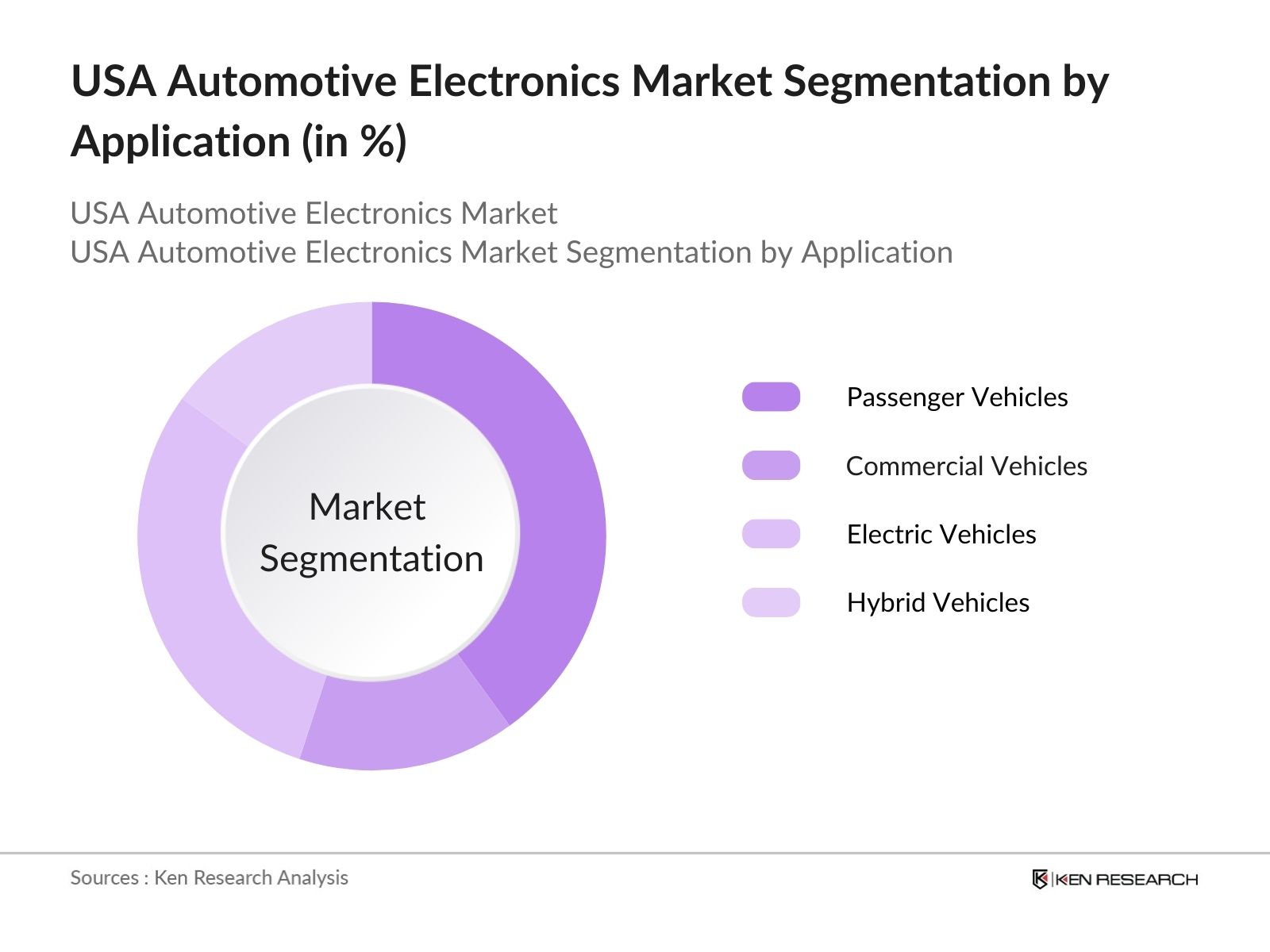
By Application: The market is further segmented by application into Passenger Vehicles, Commercial Vehicles, Electric Vehicles, and Hybrid Vehicles. Electric vehicles hold a major market share, driven by the increasing shift towards cleaner energy alternatives and rising investments in electric vehicle infrastructure. Government initiatives to promote electric vehicles, combined with the growing awareness of environmental sustainability, have led to a surge in demand for electric vehicles in the USA.
USA Automotive Electronics Market Competitive Landscape
The market is dominated by a few major players that have established themselves through strategic investments in research and development, product innovation, and partnerships. The market includes global electronics manufacturers, automotive OEMs, and specialist automotive technology companies.
|
Company |
Establishment Year |
Headquarters |
R&D Investment |
Product Portfolio |
Revenue |
No. of Patents |
Global Footprint |
Strategic Partnerships |
|
Robert Bosch GmbH |
1886 |
Germany |
||||||
|
Continental AG |
1871 |
Germany |
||||||
|
Denso Corporation |
1949 |
Japan |
||||||
|
Aptiv PLC |
2011 |
Ireland |
||||||
|
Texas Instruments Inc. |
1930 |
USA |
USA Automotive Electronics Market Analysis
Market Growth Drivers
- Rise of Electric Vehicles (EVs): The increasing demand for electric vehicles (EVs) is boosting the automotive electronics market. As of 2024, the U.S. has big numbers EVs on its roads, driven by consumer preference for environmentally friendly transportation. With government initiatives like the federal tax credit offering up to $7,500 for EV purchases, automakers are intensifying efforts to innovate in electronic systems, including battery management and vehicle-to-grid communication, to support this growth.
- Autonomous Vehicle Development: The push toward autonomous vehicles (AVs) is a major driver of growth for automotive electronics. Major automakers like Tesla and General Motors are investing billions into AV development, with over 1,400 AV test permits issued by the California DMV as of 2024. The growing investment in sensors, cameras, radar systems, and onboard computing power is accelerating the development of electronics that enable self-driving functionalities. This technological progress is expected to reshape the market for automotive electronics in the near future.
- Advanced Driver Assistance Systems (ADAS): The adoption of Advanced Driver Assistance Systems (ADAS) in vehicles is a key growth driver, with over 30 million vehicles in the U.S. expected to be equipped with ADAS features by 2024 such as lane-keeping assistance, automatic emergency braking, and adaptive cruise control. As regulations by the National Highway Traffic Safety Administration (NHTSA) continue to mandate more safety features, the demand for sophisticated automotive electronics to enable these systems will see continuous growth.
Market Challenges
- Supply Chain Disruptions: The market has faced severe disruptions in the supply of critical electronic components, such as semiconductors. As of 2024, semiconductor shortages have led to a production backlog, with more than 1 million vehicles delayed in manufacturing. This ongoing issue is forcing automakers to re-evaluate sourcing strategies and causing delays in the introduction of new electronic systems, hindering market growth.
- Regulatory Complexity: Navigating the complex regulatory landscape in the U.S. automotive industry remains a challenge for electronics manufacturers. In 2024, stringent safety and emissions regulations, such as Federal Motor Vehicle Safety Standards (FMVSS), require costly modifications to electronic systems to ensure compliance. These regulatory hurdles slow down the time-to-market for new technologies, impacting the pace of innovation and the ability of manufacturers to scale their operations effectively.
USA Automotive Electronics Market Future Outlook
Over the next five years, the USA Automotive Electronics industry is expected to witness growth, driven by the increasing integration of electronics in vehicles and the shift towards electric mobility. As the automotive industry continues to evolve, manufacturers are investing heavily in research and development to enhance the functionality of electronic systems in vehicles.
Future Market Opportunities
- Expansion of EV Charging Networks: Over the next five years, the U.S. will witness an expansion in EV charging networks, driven by public and private investments. By 2029, automakers will increasingly focus on integrating electronics for fast-charging capabilities, enabling EVs to charge in under 30 minutes. The demand for electronics related to battery management and vehicle-to-grid communication will rise as more charging stations become accessible nationwide.
- Growth in Vehicle-to-Everything (V2X) Communication: The development of V2X communication systems, which allow vehicles to interact with other vehicles and infrastructure, will gain momentum by 2029. Automotive electronics will play a crucial role in enabling real-time communication, improving road safety, and reducing traffic congestion. The U.S. government is expected to invest in smart infrastructure projects that will accelerate the adoption of V2X systems, making roads safer and smarter.
Scope of the Report
|
Product Type |
Engine Control Units (ECU) Infotainment Systems ADAS Components Power Electronics Body Control Modules |
|
Application |
Passenger Vehicles Commercial Vehicles Electric Vehicles Hybrid Vehicles |
|
Technology |
Semiconductor Technology AI and Machine Learning Integration IoT-Based Systems Autonomous Driving Solutions |
|
Sales Channel |
OEM Aftermarket |
|
Region |
North East West South |
Products
Key Target Audience Organizations and Entities Who Can Benefit by Subscribing This Report:
Automotive Manufacturers
Electric Vehicle Manufacturers
Banks and Financial Institutions
Government and Regulatory Bodies (National Highway Traffic Safety Administration)
Venture Capital and Investment Firms
Autonomous Vehicle Startups
Semiconductor Manufacturers
Companies
Players Mentioned in the Report:
Robert Bosch GmbH
Continental AG
Denso Corporation
Aptiv PLC
Texas Instruments Inc.
NXP Semiconductors
Renesas Electronics Corporation
Infineon Technologies
Panasonic Corporation
Magna International
Valeo SA
ZF Friedrichshafen AG
Visteon Corporation
Harman International Industries
Lear Corporation
Table of Contents
1. USA Automotive Electronics Market Overview
1.1. Definition and Scope
1.2. Market Taxonomy
1.3. Market Growth Rate
1.4. Market Segmentation Overview
2. USA Automotive Electronics Market Size (In USD Bn)
2.1. Historical Market Size
2.2. Year-On-Year Growth Analysis
2.3. Key Market Developments and Milestones
3. USA Automotive Electronics Market Analysis
3.1. Growth Drivers
3.1.1. Increasing Vehicle Electrification
3.1.2. Growing Demand for Advanced Driver Assistance Systems (ADAS)
3.1.3. Rising Investments in Electric Vehicles (EV)
3.1.4. Technological Advancements in Infotainment Systems
3.2. Market Challenges
3.2.1. High Cost of Electronics and Semiconductor Shortages
3.2.2. Cybersecurity Concerns
3.2.3. Complex Integration of Advanced Technologies
3.3. Opportunities
3.3.1. Adoption of Autonomous Driving Technology
3.3.2. Growing Aftermarket Demand for Automotive Electronics
3.3.3. Increasing Investments in In-car Connectivity and IoT
3.4. Trends
3.4.1. Integration of 5G in Vehicle Electronics
3.4.2. Development of Advanced Battery Management Systems (BMS)
3.4.3. AI-Based Solutions for Vehicle Electronics
3.5. Government Regulations
3.5.1. Regulations on Vehicle Emissions and Electrification
3.5.2. Safety Standards for ADAS and Connected Car Systems
3.5.3. Incentives for Electric Vehicles and Infrastructure
3.6. SWOT Analysis
3.7. Value Chain Analysis
3.8. Stakeholder Ecosystem
3.9. Porters Five Forces
3.10. Competition Ecosystem
4. USA Automotive Electronics Market Segmentation
4.1. By Product Type (In Value %)
4.1.1. Engine Control Units (ECU)
4.1.2. Infotainment Systems
4.1.3. ADAS Components
4.1.4. Power Electronics
4.1.5. Body Control Modules
4.2. By Application (In Value %)
4.2.1. Passenger Vehicles
4.2.2. Commercial Vehicles
4.2.3. Electric Vehicles
4.2.4. Hybrid Vehicles
4.3. By Technology (In Value %)
4.3.1. Semiconductor Technology
4.3.2. AI and Machine Learning Integration
4.3.3. IoT-Based Systems
4.3.4. Autonomous Driving Solutions
4.4. By Sales Channel (In Value %)
4.4.1. OEM
4.4.2. Aftermarket
4.5. By Region (In Value %)
4.5.1. North
4.5.2. West
4.5.3. South
4.5.4. East
5. USA Automotive Electronics Market Competitive Analysis
5.1. Detailed Profiles of Major Companies
5.1.1. Robert Bosch GmbH
5.1.2. Continental AG
5.1.3. Denso Corporation
5.1.4. Aptiv PLC
5.1.5. Texas Instruments Inc.
5.1.6. NXP Semiconductors
5.1.7. Renesas Electronics Corporation
5.1.8. Infineon Technologies
5.1.9. Panasonic Corporation
5.1.10. Magna International
5.1.11. Valeo SA
5.1.12. ZF Friedrichshafen AG
5.1.13. Visteon Corporation
5.1.14. Harman International Industries
5.1.15. Lear Corporation
5.2. Cross Comparison Parameters (R&D Investment, Product Innovation, Strategic Partnerships, Revenue, No. of Patents, Headquarters, Global Footprint, Market Share)
5.3. Market Share Analysis
5.4. Strategic Initiatives
5.5. Mergers and Acquisitions
5.6. Investment Analysis
5.7. Government Grants
5.8. Private Equity and Venture Capital Funding
6. USA Automotive Electronics Market Regulatory Framework
6.1. Environmental and Emissions Standards
6.2. Safety Standards and Compliance
6.3. Certification Processes for ADAS and EV Technologies
7. USA Automotive Electronics Future Market Size (In USD Bn)
7.1. Future Market Size Projections
7.2. Key Factors Driving Future Market Growth
8. USA Automotive Electronics Future Market Segmentation
8.1. By Product Type (In Value %)
8.2. By Application (In Value %)
8.3. By Technology (In Value %)
8.4. By Sales Channel (In Value %)
8.5. By Region (In Value %)
9. USA Automotive Electronics Market Analyst's Recommendations
9.1. TAM/SAM/SOM Analysis
9.2. Customer Cohort Analysis
9.3. White Space Opportunity Analysis
9.4. Marketing and Sales Strategies
Research Methodology
Step 1: Identification of Key Variables
The initial phase involves constructing a stakeholder map for the USA Automotive Electronics Market. This includes detailed desk research to identify key market drivers, challenges, and trends. Proprietary databases and secondary resources are used to collect relevant data.
Step 2: Market Analysis and Construction
In this phase, historical market data is compiled to evaluate market penetration, product segmentation, and revenue generation. The analysis includes a breakdown of market dynamics, such as consumer demand and technological adoption trends.
Step 3: Hypothesis Validation and Expert Consultation
Market hypotheses are validated through consultations with industry experts and executives from key companies. These interviews provide real-time insights and feedback on market forecasts, product demand, and technological innovations.
Step 4: Research Synthesis and Final Output
The final phase involves a synthesis of collected data, including inputs from manufacturers, suppliers, and industry experts. The final report provides an in-depth analysis of the market, product segmentation, and revenue projections.
Frequently Asked Questions
1. How big is the USA Automotive Electronics Market?
The USA Automotive Electronics Market is valued at USD 46 billion, driven by the growing demand for electric vehicles and the integration of advanced technologies like ADAS and autonomous driving systems.
2. What are the challenges in the USA Automotive Electronics Market?
The key challenges in the USA Automotive Electronics Market include the high cost of advanced automotive electronics, semiconductor shortages, and concerns over cybersecurity for connected vehicle systems. Additionally, the complexity of integrating new technologies into traditional vehicle platforms poses difficulties for manufacturers.
3. Who are the major players in the USA Automotive Electronics Market?
Major players in the USA Automotive Electronics Market include Robert Bosch GmbH, Continental AG, Denso Corporation, Aptiv PLC, and Texas Instruments Inc., among others. These companies are leading the market through their investments in R&D and product innovation.
4. What are the growth drivers of the USA Automotive Electronics Market?
The USA Automotive Electronics Market is driven by the rising adoption of electric vehicles, advancements in safety technologies like ADAS, and the growing consumer demand for in-car infotainment and connectivity solutions. Government initiatives promoting clean energy and reduced emissions are also key factors.
5. What is the future outlook for the USA Automotive Electronics Market?
Over the next five years, the USA Automotive Electronics Market is expected to grow due to increasing vehicle electrification, advancements in autonomous driving technology, and regulatory support for emission reductions.
Why Buy From Us?

What makes us stand out is that our consultants follows Robust, Refine and Result (RRR) methodology. i.e. Robust for clear definitions, approaches and sanity checking, Refine for differentiating respondents facts and opinions and Result for presenting data with story

We have set a benchmark in the industry by offering our clients with syndicated and customized market research reports featuring coverage of entire market as well as meticulous research and analyst insights.

While we don't replace traditional research, we flip the method upside down. Our dual approach of Top Bottom & Bottom Top ensures quality deliverable by not just verifying company fundamentals but also looking at the sector and macroeconomic factors.

With one step in the future, our research team constantly tries to show you the bigger picture. We help with some of the tough questions you may encounter along the way: How is the industry positioned? Best marketing channel? KPI's of competitors? By aligning every element, we help maximize success.

Our report gives you instant access to the answers and sources that other companies might choose to hide. We elaborate each steps of research methodology we have used and showcase you the sample size to earn your trust.

If you need any support, we are here! We pride ourselves on universe strength, data quality, and quick, friendly, and professional service.