
USA Behavioral Health EHR Market Outlook to 2030
Region:United States
Author(s):Sanjna Verma
Product Code:KROD8755
Region:United States
Author(s):Sanjna Verma
Product Code:KROD8755
November 2024
91
Listen to the audio summary
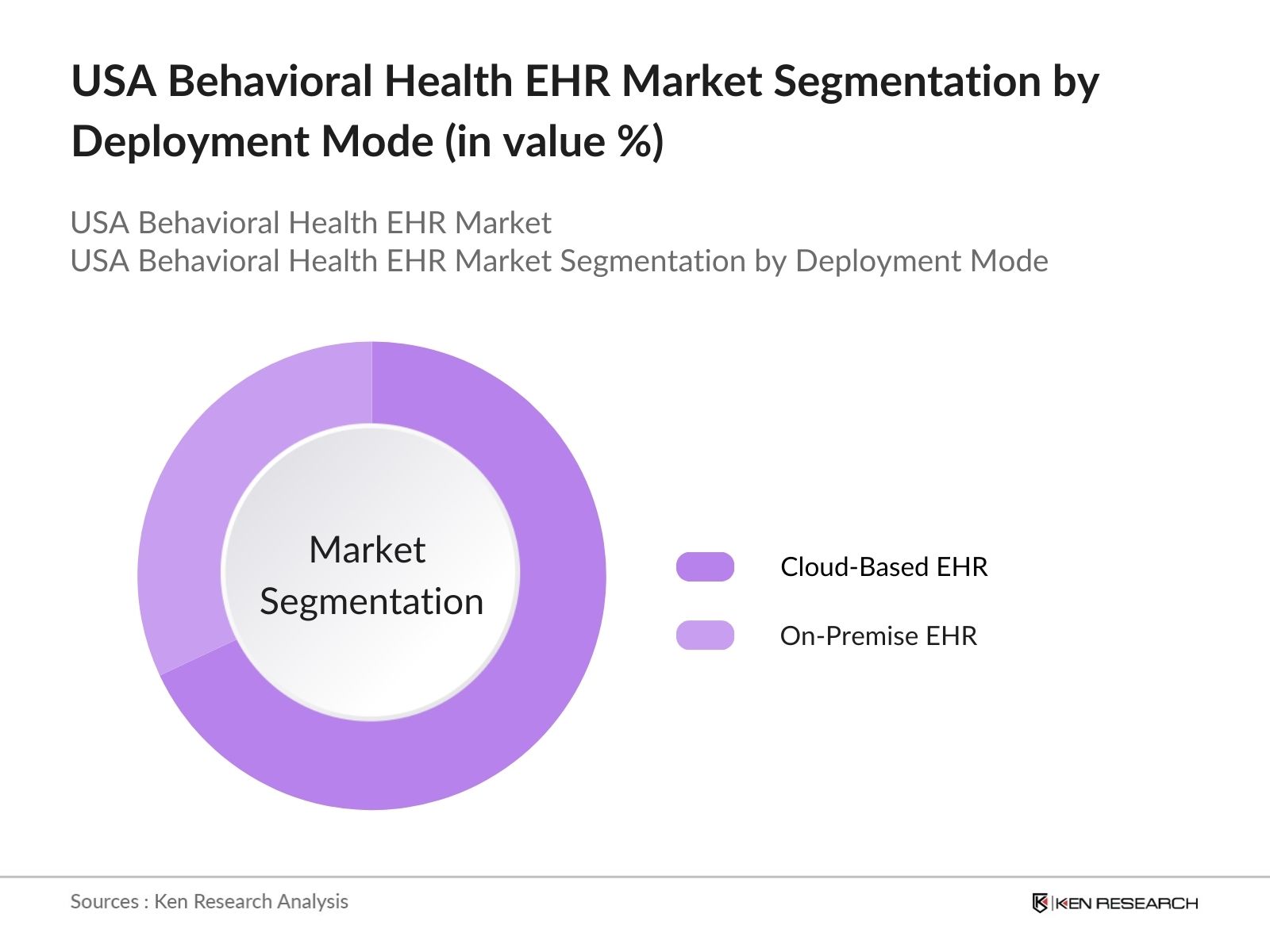
By Deployment Mode: The USA Behavioral Health EHR market is segmented by deployment mode into cloud-based EHR and on-premise EHR. Cloud-based EHR solutions currently dominate the market share due to their flexibility, scalability, and lower initial costs. Behavioral health providers, especially small and medium-sized practices, prefer cloud-based systems because of reduced IT infrastructure requirements and the ability to access patient records from any location, facilitating telehealth services.
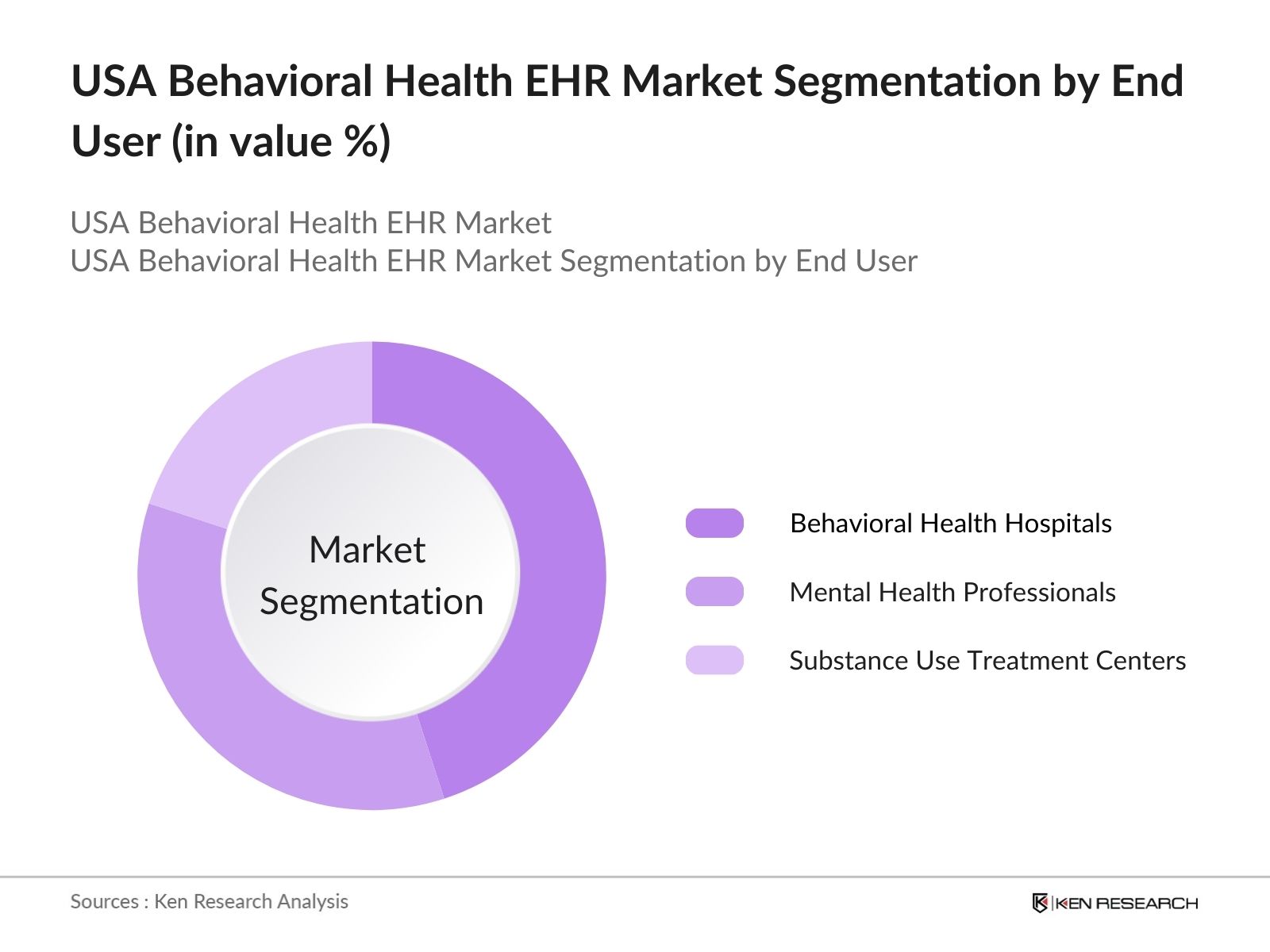
By End-User: The market is segmented by end-user into behavioral health hospitals, mental health professionals, and substance use treatment centers. Behavioral health hospitals hold a dominant market share due to their large-scale patient handling and the need for comprehensive EHR systems to manage complex care pathways. These hospitals require EHR systems that support advanced functionalities such as patient data management, billing integration, and regulatory compliance, making them a key driver in the market.
The USA Behavioral Health EHR market is dominated by several major players offering comprehensive and specialized solutions. Key players include Cerner Corporation, Netsmart Technologies, and Epic Systems Corporation, who offer tailored EHR solutions for behavioral health providers. The market competition is fierce, with players focusing on integration capabilities, compliance with regulatory standards, and innovations in telehealth.
|
Company Name |
Established |
Headquarters |
Core Specialization |
Key Solutions |
Customer Base |
R&D Investment |
Strategic Partnerships |
Product Innovation |
|
Cerner Corporation |
1979 |
Kansas City, MO |
- |
- |
- |
- |
- |
- |
|
Netsmart Technologies |
1968 |
Overland Park, KS |
- |
- |
- |
- |
- |
- |
|
Epic Systems Corporation |
1979 |
Verona, WI |
- |
- |
- |
- |
- |
- |
|
Allscripts Healthcare |
1986 |
Chicago, IL |
- |
- |
- |
- |
- |
- |
|
Kareo, Inc. |
2004 |
Irvine, CA |
- |
- |
- |
- |
- |
- |
Growth Drivers
Challenges
Over the next five years, the USA Behavioral Health EHR market is expected to experience significant growth driven by the increasing demand for integrated behavioral health solutions, government mandates, and technological advancements in EHR systems. Telehealth adoption, AI-driven analytics, and personalized patient care pathways will be key growth factors. Additionally, increased federal funding for mental health services will propel the development and deployment of specialized EHR systems in behavioral health.
Market Opportunities
|
Segment |
Sub-Segment |
|
By Deployment Mode |
Cloud-Based HER On-Premise EHR |
|
By Application |
Hospitals Community Clinics Residential Treatment Centers Private Practices |
|
By End-User |
Behavioral Health Hospitals Mental Health Professionals Substance Use Treatment Centers |
|
By Functionality |
Clinical Data Management Billing and Claims Processing e-Prescribing, Care Coordination |
|
By Region |
Northeast Midwest West South |
1.1. Definition and Scope
1.2. Market Taxonomy
1.3. Market Growth Rate
1.4. Market Segmentation Overview
2.1. Historical Market Size
2.2. Year-On-Year Growth Analysis
2.3. Key Market Developments and Milestones
3.1. Growth Drivers (Adoption of Digital Health Solutions, Integration of AI, Patient Data Management)
3.1.1. Increased Demand for Mental Health Services
3.1.2. Government Regulations Mandating EHR Adoption
3.1.3. Rising Focus on Value-Based Care Models
3.1.4. Integration of Behavioral Health and Primary Care
3.2. Market Challenges (System Interoperability, Data Privacy Regulations)
3.2.1. High Costs of EHR Implementation
3.2.2. Lack of Interoperability Between Systems
3.2.3. Cybersecurity Threats and Data Breaches
3.2.4. Low Adoption in Small Practices
3.3. Opportunities (Telehealth Integration, Customizable EHR Solutions)
3.3.1. Telehealth Expansion and Integration with EHR
3.3.2. Increased Adoption of Cloud-Based Solutions
3.3.3. Customizable EHR for Different Specialties
3.3.4. Government Incentives for EHR Adoption in Behavioral Health
3.4. Trends (AI in Behavioral Health, Remote Patient Monitoring)
3.4.1. AI and Machine Learning for Predictive Behavioral Health
3.4.2. Mobile-Optimized EHR Solutions
3.4.3. Growth of Remote Patient Monitoring Tools
3.4.4. Value-Based Care Transition and EHR Utilization
3.5. Government Regulations (HIPAA Compliance, MACRA Incentives)
3.5.1. HIPAA Compliance and Data Security Requirements
3.5.2. MACRA and MIPS Incentives for EHR Usage
3.5.3. CMS Regulations for Behavioral Health EHR Integration
3.5.4. Government Funding for Behavioral Health Infrastructure
3.6. SWOT Analysis (Specific to Behavioral Health EHR Market)
3.7. Stakeholder Ecosystem (Hospitals, Clinics, Government Agencies, Vendors)
3.8. Porters Five Forces (Buyer Power, Supplier Power, Competitive Rivalry, Threat of New Entrants, Substitution Risk)
3.9. Competition Ecosystem (Major EHR Vendors, Behavioral Health-Specific Players)
4.1. By Deployment Mode (In Value %)
4.1.1. Cloud-Based EHR
4.1.2. On-Premise EHR
4.2. By Application (In Value %)
4.2.1. Hospitals
4.2.2. Community Clinics
4.2.3. Residential Treatment Centers
4.2.4. Private Practices
4.3. By End-User (In Value %)
4.3.1. Behavioral Health Hospitals
4.3.2. Mental Health Professionals
4.3.3. Substance Use Treatment Centers
4.4. By Functionality (In Value %)
4.4.1. Clinical Data Management
4.4.2. Billing and Claims Processing
4.4.3. e-Prescribing
4.4.4. Care Coordination
4.5. By Region (In Value %)
4.5.1. Northeast
4.5.2. Midwest
4.5.3. West
4.5.4. South
5.1. Detailed Profiles of Major Competitors
5.1.1. Cerner Corporation
5.1.2. Epic Systems Corporation
5.1.3. Netsmart Technologies
5.1.4. Meditab Software Inc.
5.1.5. Kareo Inc.
5.1.6. NextGen Healthcare Information Systems, LLC
5.1.7. AdvancedMD Inc.
5.1.8. Valant Inc.
5.1.9. Allscripts Healthcare Solutions Inc.
5.1.10. Credible Behavioral Health Inc.
5.2. Cross Comparison Parameters (Deployment Mode, Integration Features, Interoperability, Client Satisfaction, Market Reach, Customer Support, Data Security, Compliance)
5.3. Market Share Analysis
5.4. Strategic Initiatives (Partnerships, New Product Launches, Strategic Expansions)
5.5. Mergers and Acquisitions (Notable M&A in Behavioral Health EHR Sector)
5.6. Investment Analysis (Venture Capital and Funding Rounds)
5.7. Venture Capital Funding (Major VC Investors in Behavioral Health EHR)
5.8. Government Grants (Behavioral Health IT Modernization Grants)
5.9. Private Equity Investments (Private Equity-Backed Players)
6.1. HIPAA Regulations
6.2. MACRA and MIPS Guidelines
6.3. CMS EHR Certification Requirements
6.4. Data Security and Compliance Policies
7.1. Future Market Size Projections
7.2. Key Factors Driving Future Market Growth
8.1. By Deployment Mode (In Value %)
8.2. By Application (In Value %)
8.3. By End-User (In Value %)
8.4. By Functionality (In Value %)
8.5. By Region (In Value %)
9.1. TAM/SAM/SOM Analysis
9.2. Customer Cohort Analysis
9.3. Marketing Initiatives
9.4. White Space Opportunity Analysis
The first step involves mapping the USA Behavioral Health EHR market ecosystem. This includes a comprehensive review of key stakeholders such as healthcare providers, IT vendors, and regulatory bodies. Secondary research forms the foundation of this step, focusing on identifying key market drivers, challenges, and opportunities.
Historical data on behavioral health EHR adoption and revenue generation is collected and analyzed. Special emphasis is placed on understanding how government regulations have impacted the EHR market. This step also includes an evaluation of the healthcare provider to patient ratio to accurately estimate market size.
In this phase, hypotheses regarding market trends and challenges are tested through expert interviews. These interviews provide insights into user preferences, challenges in EHR system implementation, and future trends such as telehealth integration.
The final stage involves synthesizing insights gathered from interviews and desk research to produce a comprehensive analysis. This phase also incorporates final validations from behavioral health EHR vendors to ensure accuracy and reliability of market size and future outlook projections.
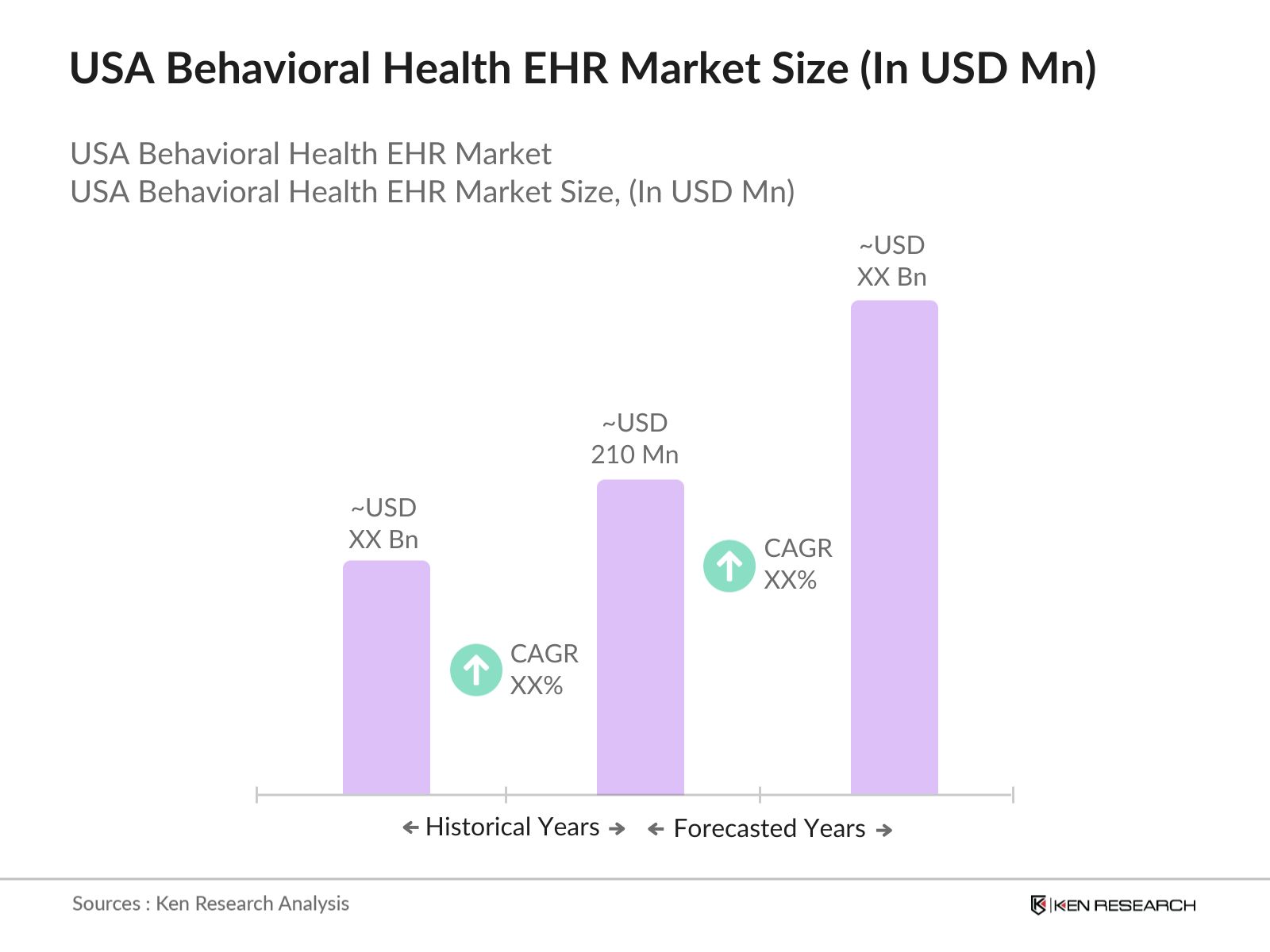
The USA Behavioral Health EHR market was valued at USD 210 million, driven by the growing demand for mental health and substance use disorder services, and enhanced by government regulations promoting the adoption of digital health records.
Challenges in USA Behavioral Health EHR market include high costs of EHR implementation, lack of system interoperability, cybersecurity concerns, and low adoption rates among small practices. These factors limit the full potential of EHR system adoption in behavioral health.
Key players in USA Behavioral Health EHR market include Cerner Corporation, Netsmart Technologies, Epic Systems Corporation, Allscripts Healthcare Solutions, and Kareo Inc., who dominate due to their specialized solutions, comprehensive service offerings, and extensive customer base.
USA Behavioral Health EHR market is driven by increased demand for mental health services, the integration of behavioral health with primary care, government mandates, and the growing adoption of telehealth solutions that rely on robust EHR systems.

What makes us stand out is that our consultants follows Robust, Refine and Result (RRR) methodology. i.e. Robust for clear definitions, approaches and sanity checking, Refine for differentiating respondents facts and opinions and Result for presenting data with story

We have set a benchmark in the industry by offering our clients with syndicated and customized market research reports featuring coverage of entire market as well as meticulous research and analyst insights.

While we don't replace traditional research, we flip the method upside down. Our dual approach of Top Bottom & Bottom Top ensures quality deliverable by not just verifying company fundamentals but also looking at the sector and macroeconomic factors.

With one step in the future, our research team constantly tries to show you the bigger picture. We help with some of the tough questions you may encounter along the way: How is the industry positioned? Best marketing channel? KPI's of competitors? By aligning every element, we help maximize success.

Our report gives you instant access to the answers and sources that other companies might choose to hide. We elaborate each steps of research methodology we have used and showcase you the sample size to earn your trust.

If you need any support, we are here! We pride ourselves on universe strength, data quality, and quick, friendly, and professional service.