















USA Biodiesel Market Outlook to 2030
Region:North America
Author(s):Yogita Sahu
Product Code:KROD3549
October 2024
88
About the Report
USA Biodiesel Market Overview
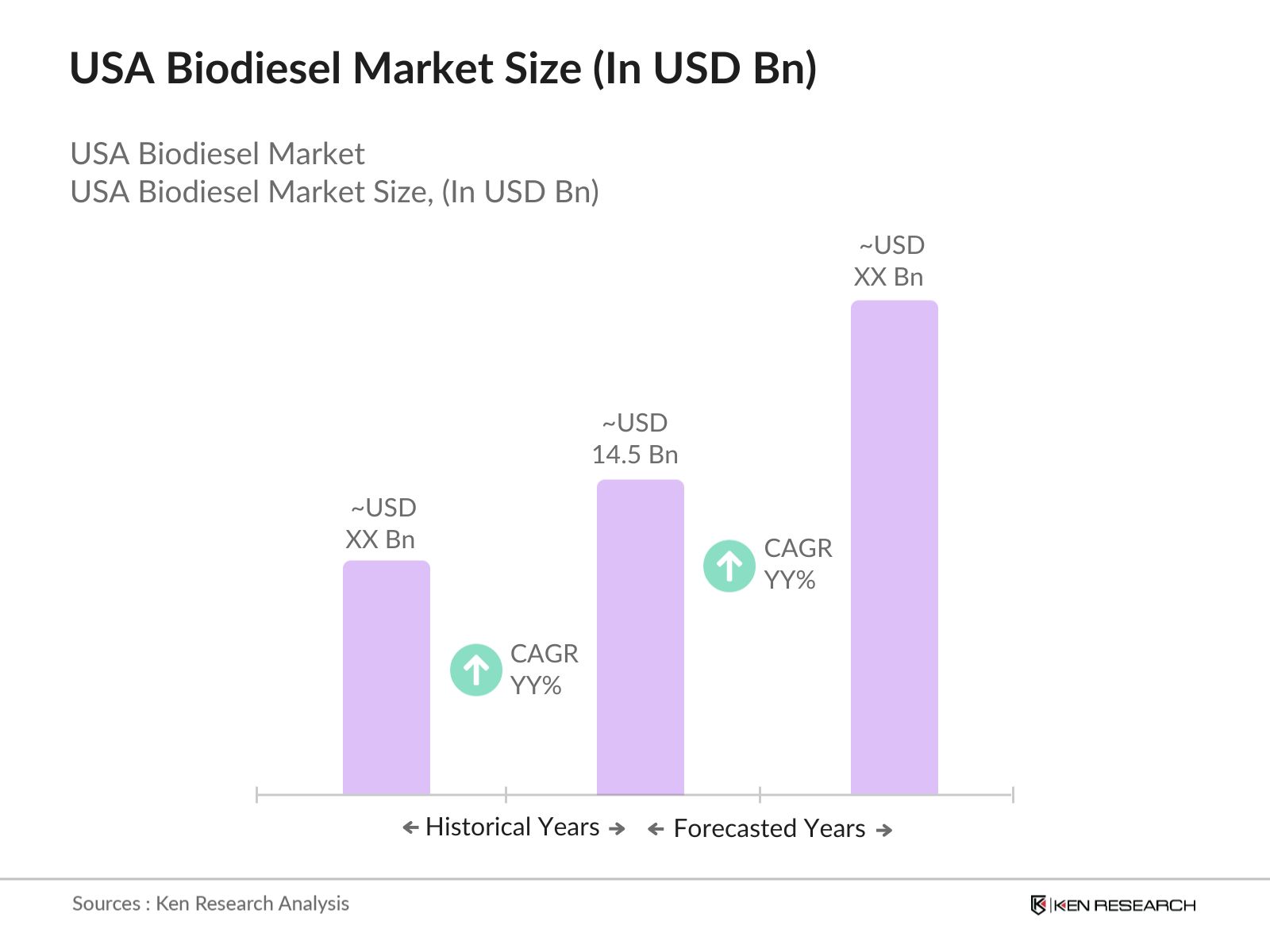
- The USA biodiesel market is valued at USD 14.5 billion, driven by increasing demand for renewable fuel alternatives, government policies, and rising environmental concerns. Based on a historical analysis, the market is experiencing significant growth due to regulations like the Federal Renewable Fuel Standard (RFS), which mandates blending biodiesel with petroleum diesel.
- Key cities and states like California, Illinois, and Texas are dominant in the market. California leads due to the state's stringent Low Carbon Fuel Standard (LCFS) regulations that promote the use of biodiesel. Texas is a major player due to its high production capacity, supported by agricultural feedstock, while Illinois dominates because of its biodiesel production facilities and central location, making it a key hub for distribution across the Midwest.
- The U.S. government has extended the Biodiesel Tax Credit (BTC), a $1 per gallon credit, until the end of 2024. This initiative, managed by the Internal Revenue Service (IRS), provides a direct incentive to biodiesel producers and encourages the blending of biodiesel with traditional fuels. In 2023 alone, the tax credit helped reduce the production cost of nearly 1.9 billion gallons of biodiesel, making it a cost-competitive alternative to diesel fuel.
USA Biodiesel Market Segmentation
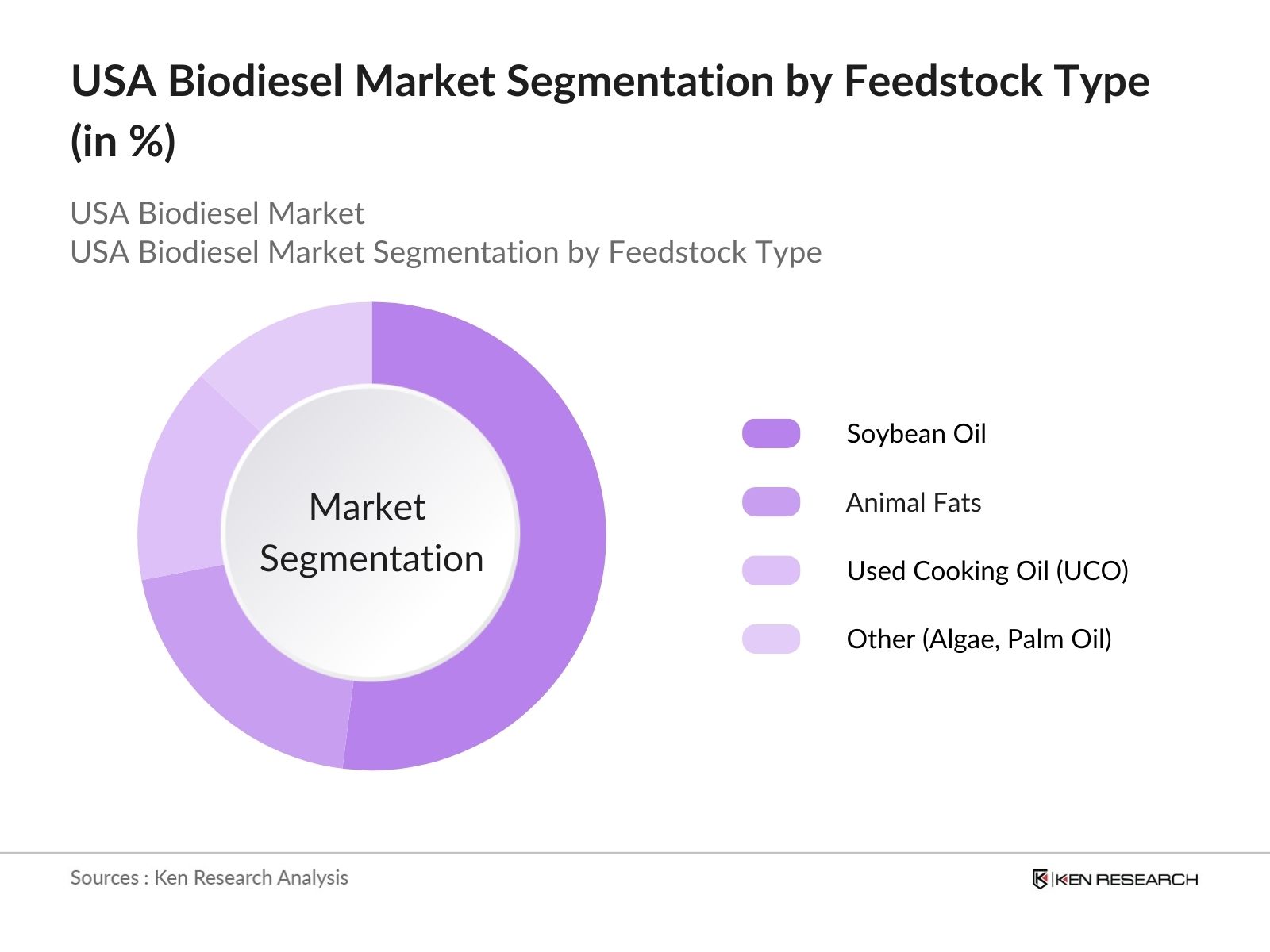
By Feedstock Type: The market is segmented by feedstock type into Soybean Oil, Animal Fats, Used Cooking Oil (UCO), and Other (including Algae and Palm Oil). Soybean oil dominates the feedstock type segmentation, driven by the United States' vast agricultural industry and its role as the largest soybean oil producer. Its availability, cost-effectiveness, and high oil yield make it the preferred choice for biodiesel production.
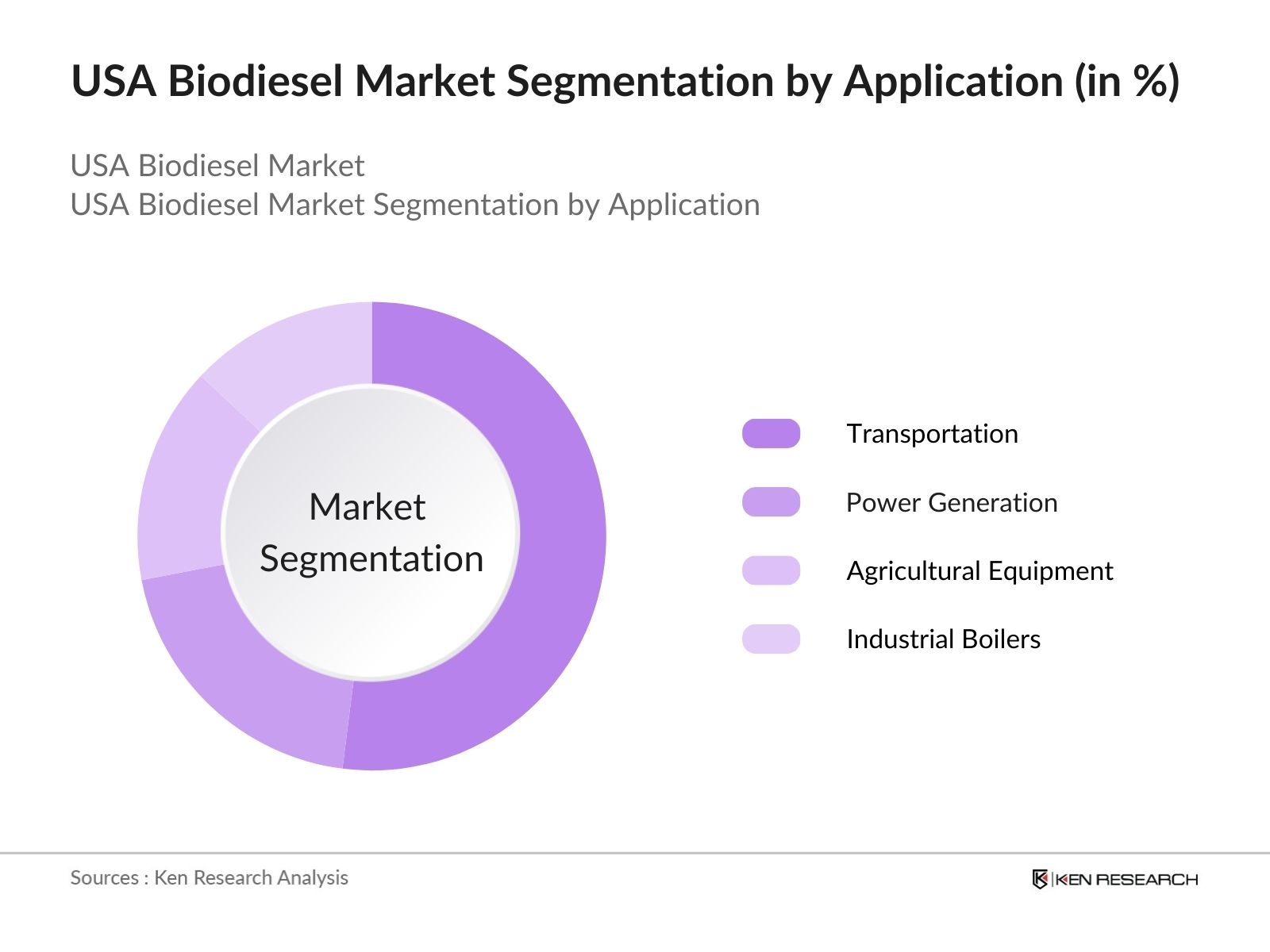
By Application: The market is further segmented by application into Transportation, Power Generation, Agricultural Equipment, and Industrial Boilers. Transportation dominates this segment due to biodiesels widespread use in blending with diesel for trucks, buses, and other commercial vehicles. Its usage reduces greenhouse gas emissions and reliance on petroleum-based fuels, aligning with government sustainability initiatives.
USA Biodiesel Market Competitive Landscape
The market is dominated by several major players, reflecting consolidation within the industry. Companies like Renewable Energy Group and Archer Daniels Midland (ADM) play roles, supported by their robust production capabilities, extensive distribution networks, and strategic partnerships with government programs.
|
Company |
Establishment Year |
Headquarters |
Feedstock Source |
Annual Production Capacity (Million Gallons) |
Regional Presence |
Revenue (USD Billion) |
Key Partnerships |
Certifications |
|
Renewable Energy Group (REG) |
1996 |
Iowa, USA |
||||||
|
Archer Daniels Midland (ADM) |
1902 |
Illinois, USA |
||||||
|
Valero Energy Corporation |
1980 |
Texas, USA |
||||||
|
Neste Corporation |
1948 |
Helsinki, Finland |
||||||
|
Cargill Incorporated |
1865 |
Minnesota, USA |
USA Biodiesel Market Analysis
Market Growth Drivers
- Government Support and Regulatory Push: The U.S. government has implemented multiple policies to encourage the adoption of biodiesel as part of its broader renewable energy agenda. The Renewable Fuel Standard (RFS) mandates that renewable fuel sources, such as biodiesel, are blended into traditional fuels to reduce emissions. According to the Environmental Protection Agency (EPA), the RFS requires the blending of 22.33 billion gallons of renewable fuel by 2025. This regulatory framework ensures sustained demand for biodiesel across various sectors.
- Increasing Adoption in the Transportation Sector: The market is expected to grow due to stringent emission reduction targets set by federal and state governments. In 2023, biodiesel accounted for 1.9 billion gallons of the transportation fuel market, with public fleets adopting it to meet cleaner emission regulations.Increasing demand for environmentally friendly fuels and the high compatibility of biodiesel with existing diesel engines are also driving market growth.
- Demand for Sustainable Alternatives in Agriculture: The U.S. agriculture sector has recognized the environmental benefits of biodiesel, particularly in reducing greenhouse gas emissions. According to the U.S. Department of Agriculture (USDA), the sector consumed around 12.3 billion gallons of diesel in 2023, a portion of which is being gradually replaced by biodiesel to meet sustainability goals. As agriculture is responsible for nearly 10% of U.S. greenhouse gas emissions, biodiesel adoption in tractors and harvesters is projected to increase in the coming years, driven by both environmental concerns and cost efficiency.
Market Challenges
- Limited Distribution Infrastructure: The biodiesel sector in the U.S. faces logistical hurdles due to limited distribution infrastructure. Unlike conventional diesel, biodiesel cannot be transported through pipelines due to its chemical properties, which increase the risk of contamination. Instead, biodiesel is distributed via trucks, rail, and barges, increasing logistical costs. In 2023, the U.S. Department of Transportation estimated that biodiesel transport costs are 10-20% higher than traditional fuels.
- Engine Compatibility Issues: Despite its environmental benefits, biodiesel poses technical challenges when used in conventional diesel engines. Issues such as fuel gelling in cold weather, lower energy content compared to diesel, and potential clogging of fuel filters are common. According to the National Biodiesel Board (NBB), engine manufacturers have expressed concerns about the long-term use of biodiesel, particularly in older engines not designed to handle biofuels.
USA Biodiesel Market Future Outlook
Over the next five years, the USA biodiesel industry is expected to see growth driven by continued regulatory support, increased biodiesel blending mandates, and a growing focus on carbon emission reductions. Advancements in biodiesel technology, including the development of new feedstocks like algae and waste oils, are projected to play a crucial role in diversifying the market.
Future Market Opportunities
- Shift Toward Second-Generation Feedstocks: Over the next five years, biodiesel production in the U.S. will increasingly shift toward second-generation feedstocks, such as waste oils and non-food crops like camelina. This shift will reduce the pressure on food crops like soybeans, which currently dominate biodiesel production. Government incentives and collaborations with agricultural research institutions are expected to accelerate this transition, making biodiesel more sustainable and reducing its environmental footprint.
- Increased Adoption in Aviation: By 2028, the aviation industry is expected to adopt biodiesel as part of its strategy to reduce carbon emissions. The U.S. Department of Transportation (DOT) has announced plans to conduct large-scale biodiesel trials in commercial flights, aiming to integrate biodiesel blends into jet fuel. This trend is driven by the International Air Transport Association's (IATA) goal to reduce aviation emissions by 50% by 2050, with biodiesel playing a critical role.
Scope of the Report
|
By Feedstock Type |
Soybean Oil Animal Fats Used Cooking Oil Canola Oil Other |
|
By Application |
Transportation Power Generation Agricultural Equipment Industrial Boilers |
|
By Blend |
B100 B20 B5 |
|
By End User |
Transportation Sector Industrial Sector Commercial Sector |
|
By Region |
North East West South |
Products
Key Target Audience Organizations and Entities Who Can Benefit by Subscribing This Report:
Biodiesel Producers
Automotive Manufacturers
Agricultural Equipment Manufacturers
Government and Regulatory Bodies (EPA, DOE, CARB)
Banks and Financial Institutions
Investment and Venture Capital Firms
Transportation and Logistics Companies
Companies
Players Mentioned in the Report:
-
Renewable Energy Group (REG)
Archer Daniels Midland (ADM)
Valero Energy Corporation
Neste Corporation
Cargill Incorporated
Louis Dreyfus Company
Marathon Petroleum Corporation
Flint Hills Resources
BASF Corporation
Ag Processing Inc (AGP)
World Energy
Crimson Renewable Energy
Bunge Limited
FutureFuel Corporation
ADM Biodiesel
Table of Contents
1. USA Biodiesel Market Overview
1.1. Definition and Scope
1.2. Market Taxonomy
1.3. Market Growth Rate
1.4. Market Segmentation Overview
2. USA Biodiesel Market Size (In USD Bn)
2.1. Historical Market Size
2.2. Year-On-Year Growth Analysis
2.3. Key Market Developments and Milestones
3. USA Biodiesel Market Analysis
3.1. Growth Drivers
3.1.1. Federal Renewable Fuel Standard (RFS) Program
3.1.2. Rising Demand for Sustainable Fuels
3.1.3. Expansion of Feedstock Sources (Soybean oil, Animal fats)
3.1.4. Reduction in Greenhouse Gas Emissions
3.2. Market Challenges
3.2.1. Volatility in Feedstock Prices
3.2.2. Limited Production Capacity
3.2.3. Competition from Other Renewable Fuels (Renewable Diesel)
3.3. Opportunities
3.3.1. Advanced Biodiesel Technologies
3.3.2. Expansion in Marine and Aviation Sectors
3.3.3. Growth in Export Opportunities (Asia-Pacific, Europe)
3.4. Trends
3.4.1. Increasing Blending Mandates
3.4.2. Development of New Feedstock Sources (Algae, Waste Oils)
3.4.3. Integration with Carbon Reduction Programs
3.5. Government Regulations
3.5.1. Low Carbon Fuel Standards (LCFS)
3.5.2. Incentives and Subsidies (Blenders Tax Credit)
3.5.3. State-Level Mandates (California, Oregon)
3.6. SWOT Analysis
3.7. Stakeholder Ecosystem
3.8. Porters Five Forces
3.9. Competition Ecosystem
4. USA Biodiesel Market Segmentation
4.1. By Feedstock Type (In Value %)
4.1.1. Soybean Oil
4.1.2. Animal Fats
4.1.3. Used Cooking Oil (UCO)
4.1.4. Canola Oil
4.1.5. Other (Algae, Palm Oil)
4.2. By Application (In Value %)
4.2.1. Transportation
4.2.2. Power Generation
4.2.3. Agricultural Equipment
4.2.4. Industrial Boilers
4.3. By Blend (In Value %)
4.3.1. B100 (Pure Biodiesel)
4.3.2. B20 (20% Biodiesel, 80% Petroleum Diesel)
4.3.3. B5 (5% Biodiesel, 95% Petroleum Diesel)
4.4. By End User (In Value %)
4.4.1. Transportation Sector
4.4.2. Industrial Sector
4.4.3. Commercial Sector
4.5. By Region (In Value %)
4.5.1. North
4.5.2. West
4.5.3. East
4.5.4. South
5. USA Biodiesel Market Competitive Analysis
5.1. Detailed Profiles of Major Companies
5.1.1. Renewable Energy Group, Inc.
5.1.2. Archer Daniels Midland Company
5.1.3. Cargill, Incorporated
5.1.4. Louis Dreyfus Company
5.1.5. Valero Energy Corporation
5.1.6. Neste Corporation
5.1.7. Marathon Petroleum Corporation
5.1.8. ADM Biodiesel
5.1.9. Crimson Renewable Energy
5.1.10. Flint Hills Resources
5.1.11. World Energy
5.1.12. Ag Processing Inc. (AGP)
5.1.13. BASF Corporation
5.1.14. Bunge Limited
5.1.15. FutureFuel Corporation
5.2. Cross Comparison Parameters (No. of Employees, Feedstock Source, Revenue, Biodiesel Output Capacity, Headquarters, Production Facilities, Regional Presence, Certifications)
5.3. Market Share Analysis
5.4. Strategic Initiatives
5.5. Mergers And Acquisitions
5.6. Investment Analysis
5.7. Government Grants
5.8. Private Equity Investments
6. USA Biodiesel Market Regulatory Framework
6.1. Environmental Standards
6.2. Compliance Requirements
6.3. Certification Processes (RIN, ISCC)
7. USA Biodiesel Future Market Size (In USD Bn)
7.1. Future Market Size Projections
7.2. Key Factors Driving Future Market Growth
8. USA Biodiesel Future Market Segmentation
8.1. By Feedstock Type (In Value %)
8.2. By Application (In Value %)
8.3. By Blend (In Value %)
8.4. By End User (In Value %)
8.5. By Region (In Value %)
9. USA Biodiesel Market Analysts Recommendations
9.1. TAM/SAM/SOM Analysis
9.2. Marketing Initiatives
9.3. White Space Opportunity Analysis
Research Methodology
Step 1: Identification of Key Variables
The research process starts with identifying the critical variables that shape the USA biodiesel market. This includes feedstock availability, production technologies, and regulatory frameworks. Extensive desk research involving proprietary databases and secondary sources was conducted to map out all key stakeholders in the ecosystem.
Step 2: Market Analysis and Construction
In this stage, historical data related to biodiesel production, application segments, and regulatory impacts were analyzed. The analysis focused on understanding the distribution network of biodiesel manufacturers and the revenue generated through biodiesel sales.
Step 3: Hypothesis Validation and Expert Consultation
Key market hypotheses were validated through interviews and consultations with industry experts, including representatives from major biodiesel producers and policy-making bodies. These discussions provided insights into operational strategies and future market trends.
Step 4: Research Synthesis and Final Output
The final step involves synthesizing the gathered information into a comprehensive market report, using both bottom-up and top-down approaches to ensure accuracy. The output includes in-depth analyses of market segments, competitive dynamics, and future growth prospects.
Frequently Asked Questions
01. How big is the USA Biodiesel Market?
The USA biodiesel market is valued at USD 14.5 billion, driven by increasing regulatory mandates and government support for renewable fuels.
02. What are the challenges in the USA Biodiesel Market?
Challenges in the USA biodiesel market include volatility in feedstock prices, competition from renewable diesel, and the complexity of meeting regulatory standards across different states.
03. Who are the major players in the USA Biodiesel Market?
Major players in the USA biodiesel market include Renewable Energy Group (REG), Archer Daniels Midland (ADM), Valero Energy Corporation, Neste Corporation, and Cargill Incorporated, due to their extensive production capacity and strong regulatory compliance.
04. What are the growth drivers of the USA Biodiesel Market?
Growth drivers in the USA biodiesel market include government regulations like the Federal Renewable Fuel Standard (RFS), the Low Carbon Fuel Standard (LCFS) in states like California, and rising awareness of climate change, leading to increased adoption of biodiesel as an alternative fuel.
05. What trends are shaping the future of the USA Biodiesel Market?
Trends in the USA biodiesel market include the adoption of advanced biodiesel technologies, the use of new feedstocks like algae, and increasing integration with carbon reduction programs at both the state and federal levels.
Why Buy From Us?

What makes us stand out is that our consultants follows Robust, Refine and Result (RRR) methodology. i.e. Robust for clear definitions, approaches and sanity checking, Refine for differentiating respondents facts and opinions and Result for presenting data with story

We have set a benchmark in the industry by offering our clients with syndicated and customized market research reports featuring coverage of entire market as well as meticulous research and analyst insights.

While we don't replace traditional research, we flip the method upside down. Our dual approach of Top Bottom & Bottom Top ensures quality deliverable by not just verifying company fundamentals but also looking at the sector and macroeconomic factors.

With one step in the future, our research team constantly tries to show you the bigger picture. We help with some of the tough questions you may encounter along the way: How is the industry positioned? Best marketing channel? KPI's of competitors? By aligning every element, we help maximize success.

Our report gives you instant access to the answers and sources that other companies might choose to hide. We elaborate each steps of research methodology we have used and showcase you the sample size to earn your trust.

If you need any support, we are here! We pride ourselves on universe strength, data quality, and quick, friendly, and professional service.