
USA Biogas Market Outlook to 2030
Region:North America
Author(s):Naman Rohilla
Product Code:KROD3735
Region:North America
Author(s):Naman Rohilla
Product Code:KROD3735
November 2024
81
The USA biogas market is characterized by the presence of both domestic and international players. Major companies dominate the market by leveraging innovations in biogas purification technologies and securing partnerships with local municipalities and agricultural sectors for consistent feedstock supply. Companies such as FortisBC and Ameresco have secured contracts to supply renewable natural gas (RNG) to grid systems, ensuring a continuous flow of energy into decentralized grids. This consolidation of key players in the market ensures a strong competitive landscape were technological advancements and regulatory compliance drive competition.
|
Company |
Establishment Year |
Headquarters |
No. of Employees |
Feedstock Focus |
Technology Expertise |
Key Projects |
Revenue (USD Mn) |
Global Presence |
|
FortisBC |
1897 |
Vancouver, Canada |
- |
- |
- |
- |
- |
- |
|
Clean Energy Fuels Corp |
2001 |
Newport Beach, CA |
- |
- |
- |
- |
- |
- |
|
Vanguard Renewables |
2014 |
Wellesley, MA |
- |
- |
- |
- |
- |
- |
|
Montauk Energy |
1980 |
Pittsburgh, PA |
- |
- |
- |
- |
- |
- |
|
Brightmark Energy |
2016 |
San Francisco, CA |
- |
- |
- |
- |
- |
- |
Over the next five years, the USA biogas market is expected to see substantial growth driven by technological innovations, particularly in biogas upgrading systems, and the increasing focus on sustainable waste management solutions. Government policies like the Renewable Fuel Standard (RFS) will continue to support the production and utilization of biogas in transportation and industrial applications. In addition, the development of small-scale, modular biogas systems will open up new opportunities in rural and off-grid areas. As public-private partnerships flourish, the market will further benefit from financial backing and investment in infrastructure.
|
By Source |
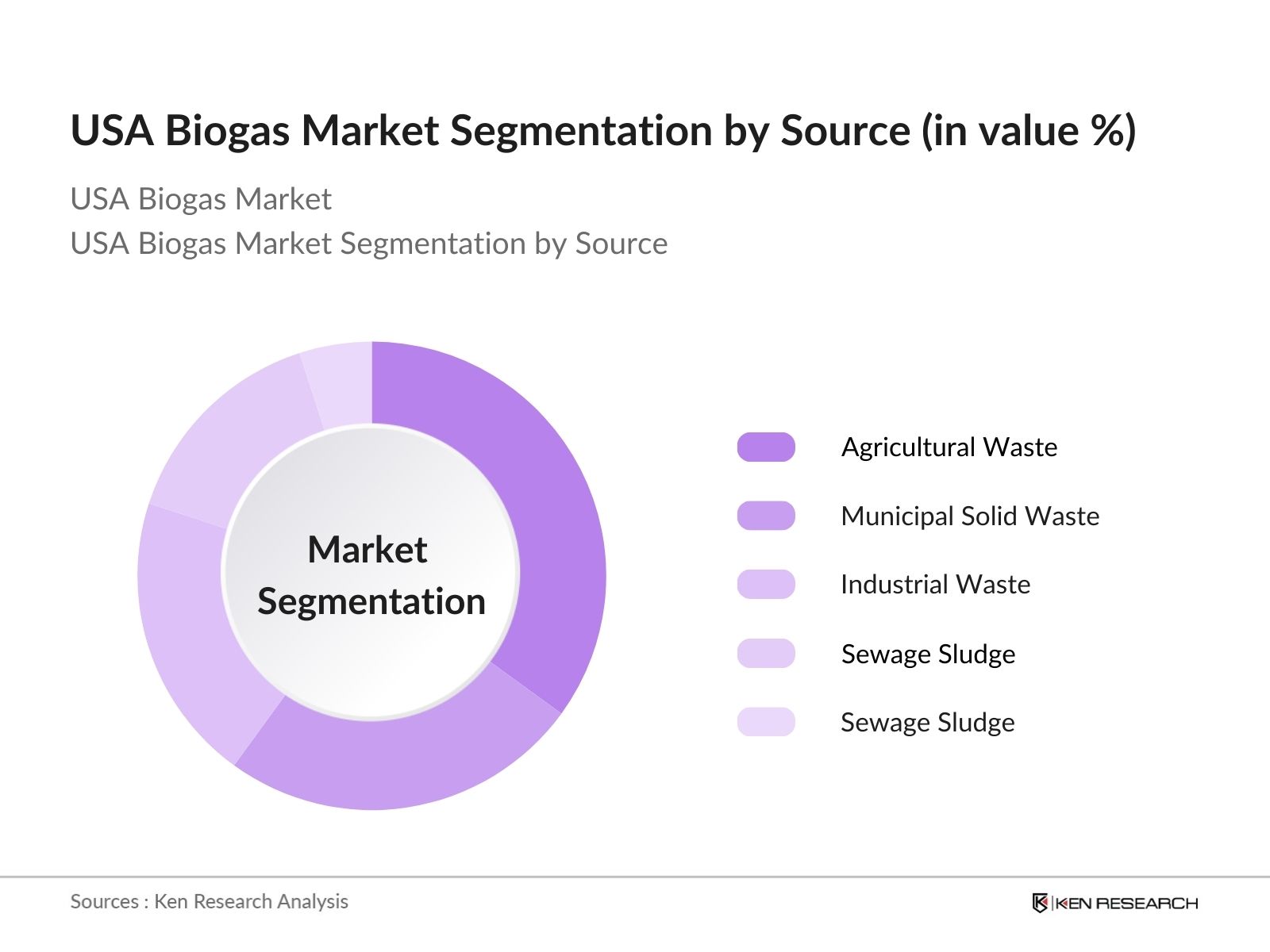
Agricultural Waste Municipal Solid Waste Industrial Waste Sewage Sludge Landfill Gas |
|
By Application |
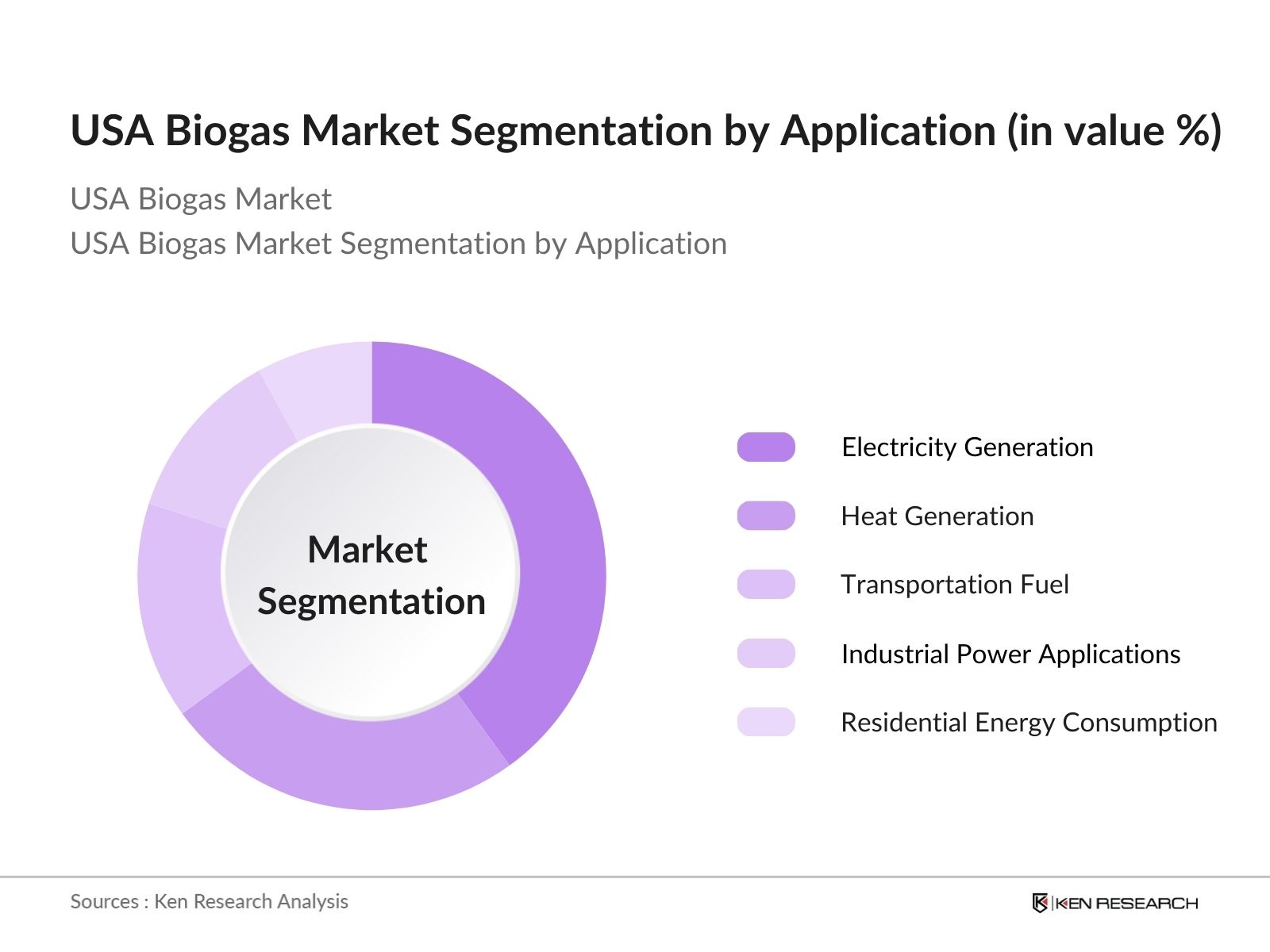
Electricity Generation Heat Generation Transportation Fuel Industrial Power Applications Residential Energy Consumption |
|
By Technology |
Anaerobic Digestion Landfill Gas Recovery Gas Purification Technologies Gasification |
|
By Capacity |
Small-Scale Plants Medium-Scale Plants Large-Scale Plants |
|
By Region |
Northeast Midwest West South |
1.1. Definition and Scope
1.2. Market Taxonomy
1.3. Market Growth Rate
1.4. Market Segmentation Overview
2.1. Historical Market Size
2.2. Year-On-Year Growth Analysis
2.3. Key Market Developments and Milestones
3.1. Growth Drivers
3.1.1. Government Incentives for Renewable Energy (Investment Tax Credits, Renewable Fuel Standard)
3.1.2. Technological Advancements in Anaerobic Digestion (Biogas Upgradation Technologies, Efficient Feedstock Conversion)
3.1.3. Increasing Demand for Waste Management Solutions (Municipal Solid Waste, Agricultural Residue Utilization)
3.1.4. Rising Energy Security Concerns (Decentralized Energy Systems, Energy Independence Goals)
3.2. Market Challenges
3.2.1. High Capital Investment (Plant Infrastructure, Gas Purification Systems)
3.2.2. Regulatory and Policy Uncertainty (Federal Energy Policies, State-Level Incentive Variations)
3.2.3. Feedstock Availability and Logistics (Manure, Agricultural Waste, Food Waste)
3.2.4. Limited Public Awareness (Consumer Awareness, Biogas as Alternative Energy Source)
3.3. Opportunities
3.3.1. Integration with Natural Gas Grids (Renewable Natural Gas Production, Grid Injection Technologies)
3.3.2. Co-generation of Heat and Power (Combined Heat and Power Units, Decentralized Energy Projects)
3.3.3. Emerging Market in Biofuels (Biomethane for Transportation, Hydrogen Production from Biogas)
3.3.4. Carbon Credit Markets (Emissions Reduction Credits, Greenhouse Gas Offsetting)
3.4. Trends
3.4.1. Development of Small-Scale Biogas Plants (Modular Biogas Systems, Off-Grid Energy Solutions)
3.4.2. Increased Adoption of Circular Economy Models (Closed-Loop Systems, Waste-to-Energy Initiatives)
3.4.3. Growth in Biogas-to-Hydrogen Projects (Renewable Hydrogen Production, Power-to-X Technologies)
3.4.4. Public-Private Partnerships in Infrastructure Development (Municipal Biogas Projects, Private Investments)
3.5. Government Regulations
3.5.1. Renewable Portfolio Standards (RPS Compliance, Renewable Energy Credits)
3.5.2. Environmental Protection Agency (EPA) Guidelines (Methane Emission Regulations, Air Quality Standards)
3.5.3. State-Level Incentive Programs (California Low Carbon Fuel Standard, New York Clean Energy Standard)
3.5.4. Federal Tax Incentives (Production Tax Credits, Investment Tax Credits)
3.6. SWOT Analysis
3.7. Stake Ecosystem (Farmers, Municipalities, Industrial Waste Producers, Energy Utilities)
3.8. Porters Five Forces
3.9. Competition Ecosystem
4.1. By Source (In Value %)
4.1.1. Agricultural Waste
4.1.2. Municipal Solid Waste
4.1.3. Industrial Waste
4.1.4. Sewage Sludge
4.1.5. Landfill Gas
4.2. By Application (In Value %)
4.2.1. Electricity Generation
4.2.2. Heat Generation
4.2.3. Transportation Fuel (Biomethane for Vehicles)
4.2.4. Industrial Power Applications
4.2.5. Residential Energy Consumption
4.3. By Technology (In Value %)
4.3.1. Anaerobic Digestion
4.3.2. Landfill Gas Recovery
4.3.3. Gas Purification Technologies (Pressure Swing Adsorption, Membrane Separation)
4.3.4. Gasification
4.4. By Capacity (In Value %)
4.4.1. Small-Scale Plants
4.4.2. Medium-Scale Plants
4.4.3. Large-Scale Plants
4.5. By Region (In Value %)
4.5.1. Northeast
4.5.2. Midwest
4.5.3. West
4.5.4. South
5.1. Detailed Profiles of Major Companies
5.1.1. FortisBC
5.1.2. Clean Energy Fuels Corp
5.1.3. Vanguard Renewables
5.1.4. Ameresco
5.1.5. Montauk Energy
5.1.6. Brightmark Energy
5.1.7. Xebec Adsorption Inc.
5.1.8. DMT International
5.1.9. Quadrogen Power Systems
5.1.10. Aemetis Inc.
5.1.11. Bioenergy DevCo
5.1.12. Enviva Biogas
5.1.13. Greenlane Renewables
5.1.14. Anaergia Inc.
5.1.15. Air Liquide Biogas Solutions
5.2. Cross Comparison Parameters (No. of Employees, Revenue, Global Presence, Key Projects, Feedstock Utilization, Operational Capacity, Technology Focus, Innovation Index)
5.3. Market Share Analysis
5.4. Strategic Initiatives
5.5. Mergers And Acquisitions
5.6. Investment Analysis
5.7. Venture Capital Funding
5.8. Government Grants
5.9. Private Equity Investments
6.1. Environmental Standards (EPA, Federal Clean Air Act)
6.2. Compliance Requirements (Permitting Processes, Gas Injection Guidelines)
6.3. Certification Processes (Renewable Gas Certification, Renewable Fuel Standard Compliance)
7.1. Future Market Size Projections
7.2. Key Factors Driving Future Market Growth
8.1. By Source (In Value %)
8.2. By Application (In Value %)
8.3. By Technology (In Value %)
8.4. By Capacity (In Value %)
8.5. By Region (In Value %)
9.1. TAM/SAM/SOM Analysis
9.2. Customer Cohort Analysis
9.3. Marketing Initiatives
9.4. White Space Opportunity Analysis
The initial phase involves developing a comprehensive map of stakeholders in the USA biogas market, including feedstock suppliers, energy utilities, and government agencies. Extensive desk research from reliable databases and proprietary sources is conducted to pinpoint key market drivers and constraints.
In this stage, we gather historical data on market performance, focusing on major players' market shares, feedstock supply chains, and biogas production levels. This data is cross-referenced with industry reports to ensure accuracy and reliability.
Hypotheses regarding market growth are validated through interviews with industry experts, including plant operators, government regulators, and energy company executives. Their insights contribute to refining our market data and ensuring precise forecasts.
The final phase synthesizes primary and secondary research into a comprehensive report, covering all market dynamics, regulatory frameworks, and competitive landscapes. Additional consultations with industry professionals help ensure that the final report is both accurate and actionable.
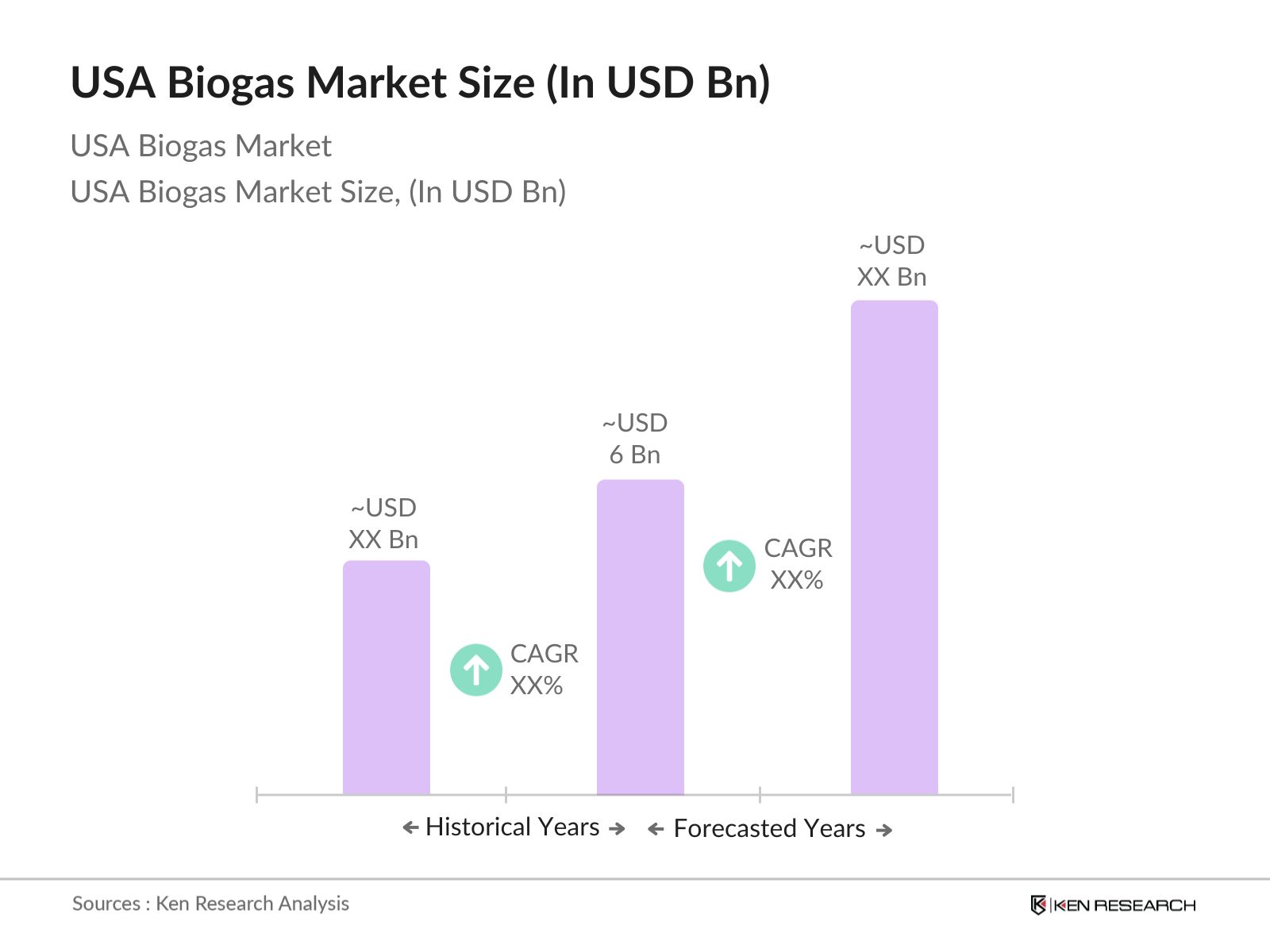
The USA biogas market is valued at USD 6 billion, driven by government policies such as the Renewable Fuel Standard and the increasing need for decentralized energy systems.
Key challenges in the USA biogas market include high capital investment costs, regulatory uncertainty, and limited public awareness regarding biogas as a viable renewable energy source.
Key players in the USA biogas market include FortisBC, Clean Energy Fuels Corp, Vanguard Renewables, Montauk Energy, and Brightmark Energy, all of which have secured large-scale projects and feedstock agreements.
Growth drivers in the USA biogas market include government incentives, advancements in biogas upgrading technologies, and the growing demand for sustainable waste management solutions.

What makes us stand out is that our consultants follows Robust, Refine and Result (RRR) methodology. i.e. Robust for clear definitions, approaches and sanity checking, Refine for differentiating respondents facts and opinions and Result for presenting data with story

We have set a benchmark in the industry by offering our clients with syndicated and customized market research reports featuring coverage of entire market as well as meticulous research and analyst insights.

While we don't replace traditional research, we flip the method upside down. Our dual approach of Top Bottom & Bottom Top ensures quality deliverable by not just verifying company fundamentals but also looking at the sector and macroeconomic factors.

With one step in the future, our research team constantly tries to show you the bigger picture. We help with some of the tough questions you may encounter along the way: How is the industry positioned? Best marketing channel? KPI's of competitors? By aligning every element, we help maximize success.

Our report gives you instant access to the answers and sources that other companies might choose to hide. We elaborate each steps of research methodology we have used and showcase you the sample size to earn your trust.

If you need any support, we are here! We pride ourselves on universe strength, data quality, and quick, friendly, and professional service.