
USA Biosensors Market Outlook to 2030
Region:United States
Author(s):Meenakshi Bisht
Product Code:KROD9714
Region:United States
Author(s):Meenakshi Bisht
Product Code:KROD9714
December 2024
85
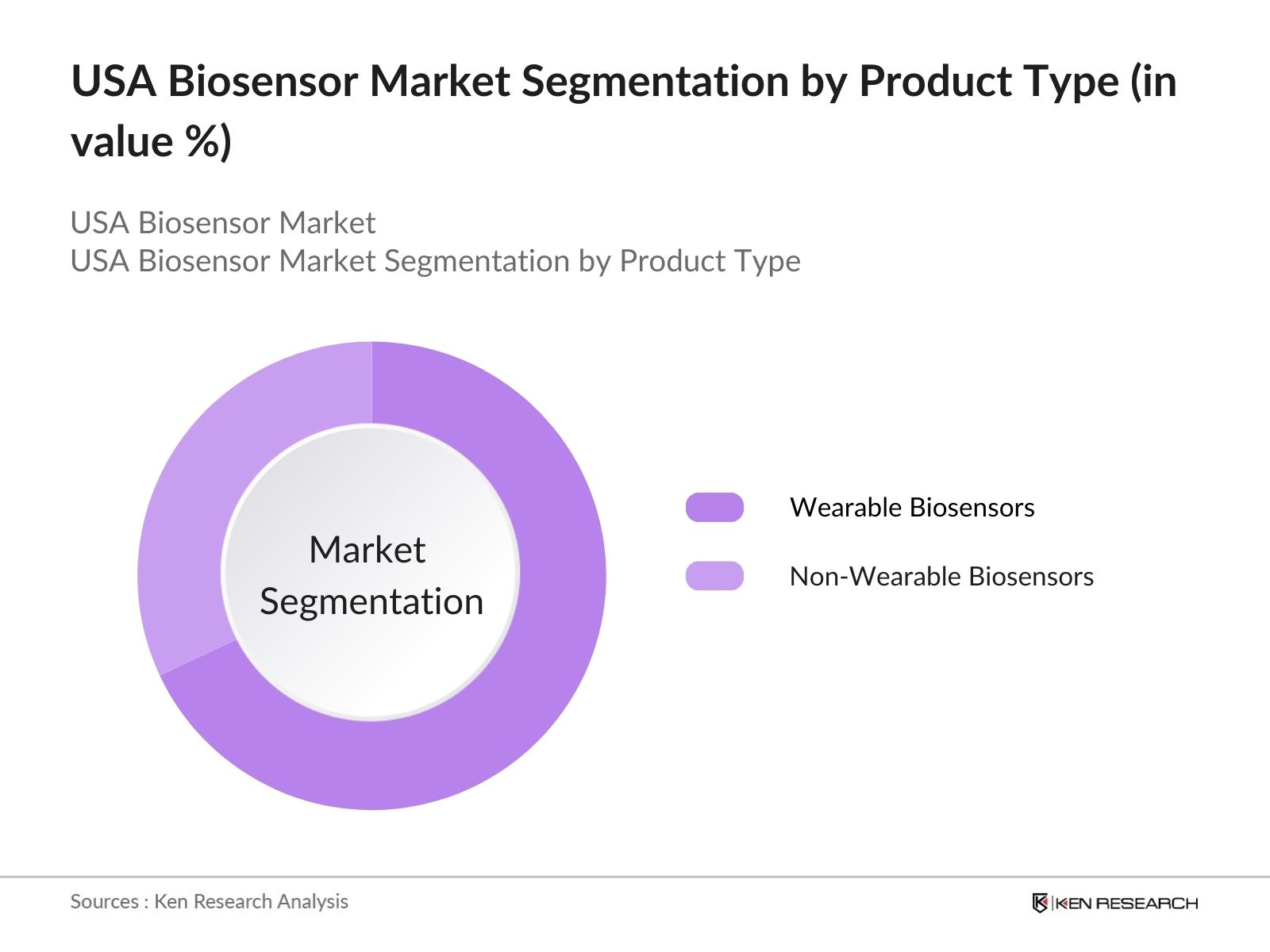
By Product Type: The USA biosensor market is segmented by product type into wearable biosensors and non-wearable biosensors. Wearable biosensors dominate the market due to their rising use in healthcare monitoring, fitness tracking, and early disease detection. The increasing popularity of wearable devices such as smartwatches, fitness bands, and continuous glucose monitors (CGM) drives this segments growth. Companies like Abbott Laboratories and Dexcom have launched advanced CGM systems, which are widely adopted due to their precision, compact size, and real-time monitoring capabilities.
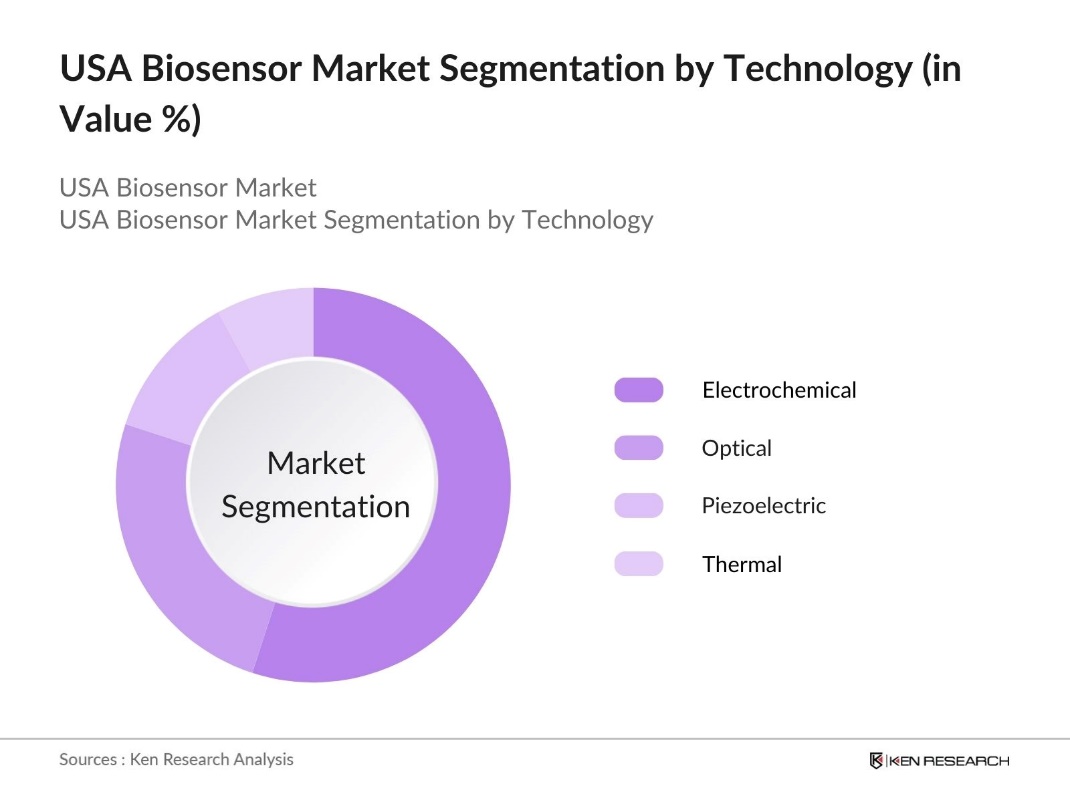
By Technology: The biosensor market is also segmented by technology, including electrochemical, optical, piezoelectric, and thermal biosensors. Electrochemical biosensors hold the largest share within this segment, driven by their application in glucose monitoring and other diagnostic tools. These sensors are highly sensitive, cost-effective, and easy to miniaturize, making them the preferred choice in medical diagnostics. Continuous advancements in electrochemical sensors have allowed their widespread use in wearable devices, further solidifying their dominance.
The USA biosensor market is dominated by major healthcare and technology companies that invest heavily in R&D and have strong distribution networks. The consolidation of these players highlights the importance of scale and innovation in this market.
|
Company |
Establishment Year |
Headquarters |
Revenue |
R&D Investment |
No. of Patents |
Product Portfolio |
Global Presence |
Mergers & Acquisitions |
|
Abbott Laboratories |
1888 |
Illinois, USA |
||||||
|
Medtronic PLC |
1949 |
Minnesota, USA |
||||||
|
Dexcom, Inc. |
1999 |
California, USA |
||||||
|
F. Hoffmann-La Roche Ltd |
1896 |
Basel, Switzerland |
||||||
|
GE Healthcare |
1892 |
Illinois, USA |
Over the next five years, the USA biosensor market is expected to experience robust growth, driven by technological innovations, increasing use of biosensors in medical diagnostics, and growing demand for remote patient monitoring solutions. The rising adoption of wearable health monitoring devices, coupled with advancements in artificial intelligence and data analytics, will propel the market forward.
|
By Product Type |
Wearable Biosensors Non-Wearable Biosensors |
|
By Technology |
Electrochemical Biosensors Optical Biosensors Piezoelectric Biosensors Thermal Biosensors |
|
By Application |
Healthcare Environmental Monitoring Food and Beverage Industry Industrial Process Control |
|
By End-User |
Hospitals and Clinics Home Healthcare Environmental Agencies |
|
By Region |
North-East Midwest Southern Western |
1.1. Definition and Scope
1.2. Market Taxonomy
1.3. Market Growth Rate (Technological advancements, healthcare adoption rates, sensor miniaturization)
1.4. Market Segmentation Overview
2.1. Historical Market Size
2.2. Year-On-Year Growth Analysis
2.3. Key Market Developments and Milestones (Partnerships, technological innovations, FDA approvals)
3.1. Growth Drivers
3.1.1. Rising Demand for Point-of-Care Devices
3.1.2. Advancements in Biotechnology
3.1.3. Growing Adoption in Wearable Devices
3.1.4. Increased Use in Diabetes Management
3.2. Market Challenges
3.2.1. High Development Costs
3.2.2. Regulatory Barriers (FDA approvals, Clinical trials)
3.2.3. Integration with Traditional Healthcare Systems
3.3. Opportunities
3.3.1. Expansion in Non-Medical Applications (Environmental monitoring, food safety)
3.3.2. Collaboration with Tech Giants
3.3.3. Increasing Investment in R&D
3.4. Trends
3.4.1. Growth of Wearable and Implantable Biosensors
3.4.2. Integration with AI and IoT (Internet of Things)
3.4.3. Use of Nanotechnology in Biosensors
3.5. Government Regulation
3.5.1. FDA Regulatory Framework for Biosensors
3.5.2. Healthcare Data Privacy Laws (HIPAA compliance)
3.5.3. Reimbursement Policies
3.6. SWOT Analysis
3.7. Stakeholder Ecosystem (Manufacturers, healthcare providers, tech developers)
3.8. Porters Five Forces
3.9. Competition Ecosystem
4.1. By Product Type (In Value %)
4.1.1. Wearable Biosensors
4.1.2. Non-Wearable Biosensors
4.2. By Technology (In Value %)
4.2.1. Electrochemical Biosensors
4.2.2. Optical Biosensors
4.2.3. Piezoelectric Biosensors
4.2.4. Thermal Biosensors
4.3. By Application (In Value %)
4.3.1. Healthcare
4.3.2. Environmental Monitoring
4.3.3. Food and Beverage Industry
4.3.4. Industrial Process Control
4.4. By End-User (In Value %)
4.4.1. Hospitals and Clinics
4.4.2. Home Healthcare
4.4.3. Environmental Agencies
4.5. By Region (In Value %)
4.5.1. North-East
4.5.2. Midwest
4.5.3. Southern
4.5.4. Western
5.1. Detailed Profiles of Major Companies
5.1.1. Abbott Laboratories
5.1.2. Medtronic PLC
5.1.3. F. Hoffmann-La Roche Ltd
5.1.4. Dexcom, Inc.
5.1.5. Siemens Healthineers AG
5.1.6. GE Healthcare
5.1.7. Nova Biomedical
5.1.8. Bio-Rad Laboratories, Inc.
5.1.9. Lifescan, Inc.
5.1.10. Universal Biosensors
5.1.11. Honeywell International, Inc.
5.1.12. Johnson & Johnson
5.1.13. Sensirion AG
5.1.14. Nemaura Medical
5.1.15. Biovotion AG
5.2. Cross Comparison Parameters (Revenue, Product Portfolio, R&D Investments, Partnerships, Patent Portfolio, No. of Employees, Market Penetration, Global Presence)
5.3. Market Share Analysis
5.4. Strategic Initiatives
5.5. Mergers and Acquisitions
5.6. Investment Analysis
5.7. Venture Capital Funding
5.8. Government Grants
5.9. Private Equity Investments
6.1. Healthcare Standards (ISO certifications, FDA approvals)
6.2. Data Security and Compliance (HIPAA, GDPR)
6.3. Certification Processes
7.1. Future Market Size Projections
7.2. Key Factors Driving Future Market Growth
8.1. By Product Type (In Value %)
8.2. By Technology (In Value %)
8.3. By Application (In Value %)
8.4. By End-User (In Value %)
8.5. By Region (In Value %)
9.1. TAM/SAM/SOM Analysis
9.2. Customer Cohort Analysis
9.3. Marketing Initiatives
9.4. White Space Opportunity Analysis
Disclaimer Contact UsThe first step involved mapping the entire ecosystem of stakeholders in the USA biosensor market, supported by comprehensive desk research and credible databases. The goal was to identify the critical variables that influence the market's growth, including technological trends, regulatory requirements, and market penetration factors.
In this phase, historical data from the biosensor market was compiled and analyzed, focusing on the penetration of medical applications and the subsequent revenue streams generated from diagnostics and wearable technologies. The data was cross-referenced to ensure accuracy in revenue projections.
Market hypotheses were developed based on the initial data, then validated through expert consultations via computer-assisted telephone interviews (CATI). Industry leaders provided financial insights that helped refine market estimations.
In the final stage, direct engagement with major manufacturers of biosensors provided valuable insights into product segmentation, consumer preferences, and sales trends. The findings were synthesized to offer a comprehensive and validated analysis of the USA biosensor market.
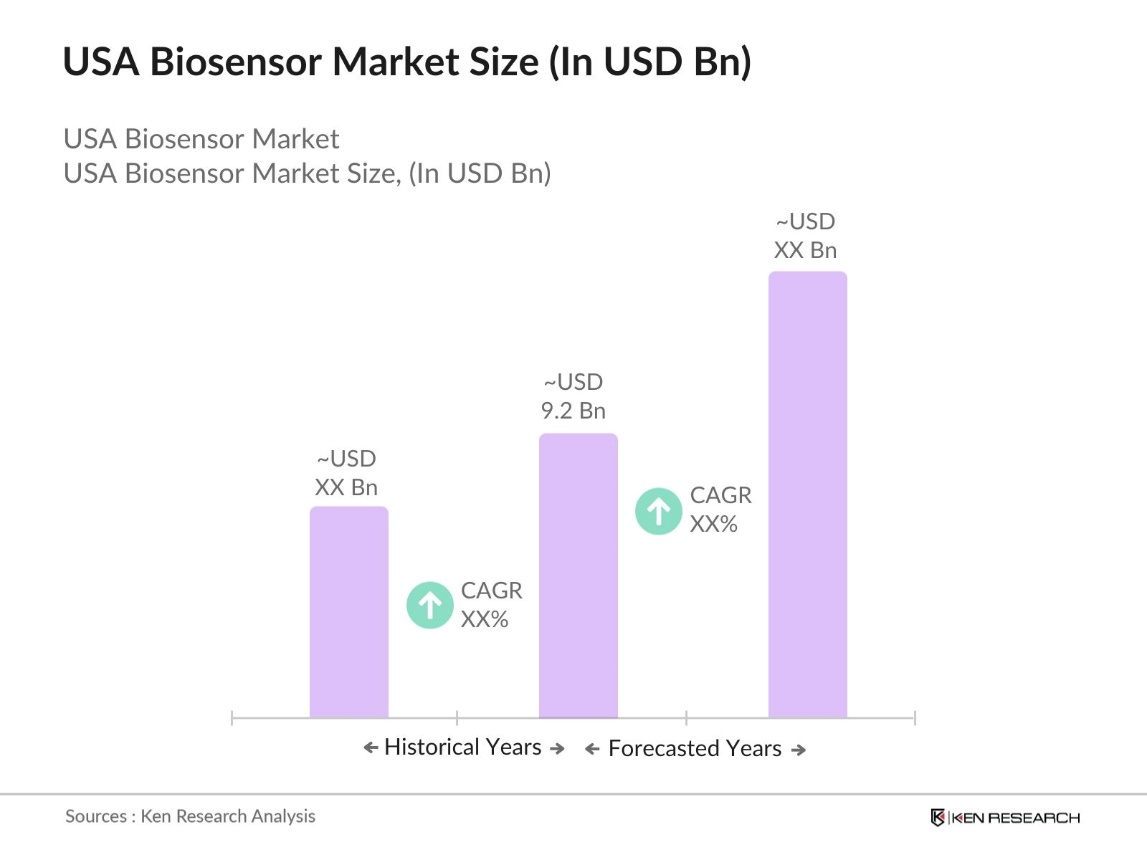
The USA Biosensor Market is valued at USD 9.2 billion, supported by the rising demand for medical diagnostics and wearable technologies in healthcare monitoring.
Challenges in USA Biosensor Market include high R&D costs, strict regulatory approvals, and technical barriers associated with integrating biosensors into healthcare systems.
Key players USA Biosensor Market include Abbott Laboratories, Medtronic PLC, F. Hoffmann-La Roche Ltd, Dexcom, Inc., and Siemens Healthineers AG.
Growth is driven by technological advancements, the increasing prevalence of chronic diseases, and the adoption of wearable health monitoring devices.

What makes us stand out is that our consultants follows Robust, Refine and Result (RRR) methodology. i.e. Robust for clear definitions, approaches and sanity checking, Refine for differentiating respondents facts and opinions and Result for presenting data with story

We have set a benchmark in the industry by offering our clients with syndicated and customized market research reports featuring coverage of entire market as well as meticulous research and analyst insights.

While we don't replace traditional research, we flip the method upside down. Our dual approach of Top Bottom & Bottom Top ensures quality deliverable by not just verifying company fundamentals but also looking at the sector and macroeconomic factors.

With one step in the future, our research team constantly tries to show you the bigger picture. We help with some of the tough questions you may encounter along the way: How is the industry positioned? Best marketing channel? KPI's of competitors? By aligning every element, we help maximize success.

Our report gives you instant access to the answers and sources that other companies might choose to hide. We elaborate each steps of research methodology we have used and showcase you the sample size to earn your trust.

If you need any support, we are here! We pride ourselves on universe strength, data quality, and quick, friendly, and professional service.