
USA Botulinum Toxin Market Outlook to 2030
Region:United States
Author(s):Meenakshi Bisht
Product Code:KROD4149
Region:United States
Author(s):Meenakshi Bisht
Product Code:KROD4149
November 2024
98
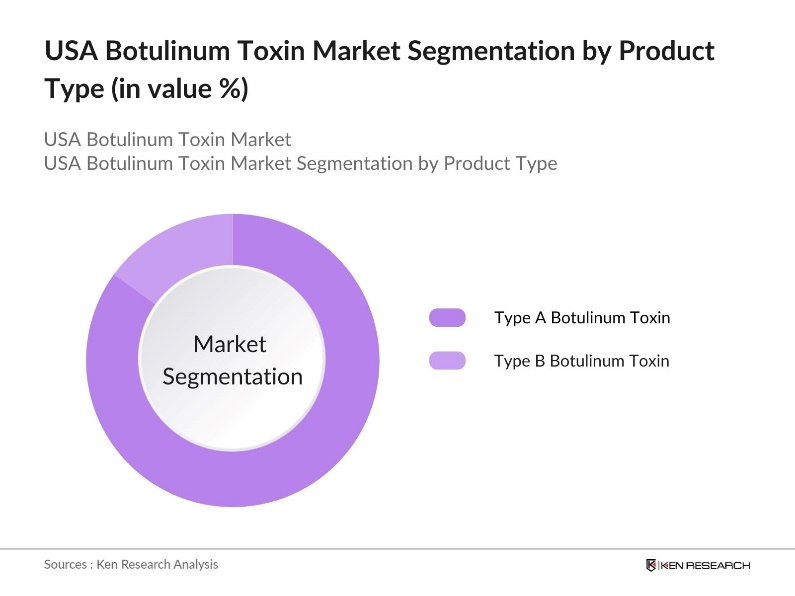
By Product Type: The USA Botulinum Toxin market is segmented into two key product types: Type A and Type B Botulinum Toxin. Type A Botulinum Toxin dominates the market due to its established efficacy and widespread use in both cosmetic and therapeutic procedures. Brands like Botox (by Allergan) have a strong consumer base, particularly for aesthetic treatments. Type A is preferred due to its higher potency and more significant clinical trial data supporting its safety and effectiveness. Moreover, the versatility of Type A Botulinum Toxin in treating multiple indications, from cosmetic wrinkles to muscle spasticity, has cemented its leadership position in the market.
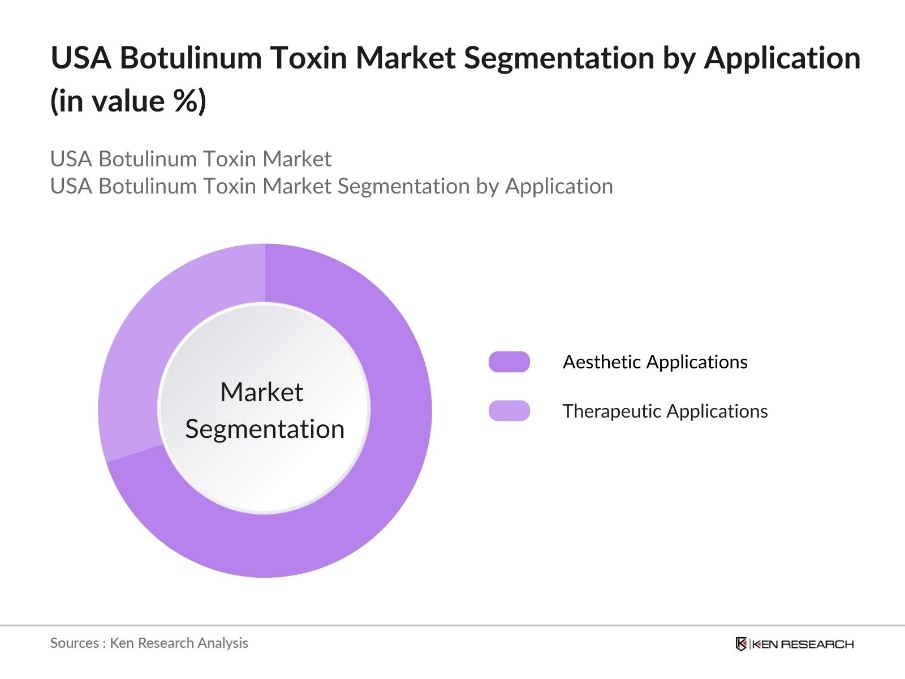
By Application: The USA Botulinum Toxin market is segmented into two primary applications: aesthetic and therapeutic. The aesthetic application segment, which includes treatments for facial wrinkles and fine lines, dominates the market due to the rising demand for minimally invasive procedures and the increasing influence of social media on beauty standards. Consumers, particularly women between the ages of 30 to 50, are opting for botulinum toxin injections to maintain a youthful appearance. Therapeutic applications, though growing steadily, are not as prevalent as the aesthetic sector due to relatively lower consumer awareness and fewer regulatory approvals.
The market is dominated by major pharmaceutical companies, with a few key players holding significant market influence. These companies are known for their extensive R&D investments, strong brand presence, and broad product portfolios. Allergans Botox, for instance, remains a leader due to its widespread adoption and multiple FDA-approved indications. Additionally, international players like Ipsen and Revance Therapeutics are increasing their foothold in the USA, offering competitive alternatives.
|
Company Name |
Establishment Year |
Headquarters |
Market Share |
Key Products |
R&D Investments |
FDA Approvals |
Therapeutic Focus |
Product Portfolio |
Strategic Collaborations |
|
Allergan, Inc. |
1950 |
Dublin, Ireland |
|||||||
|
Ipsen Pharma |
1929 |
Paris, France |
|||||||
|
Merz Pharmaceuticals |
1908 |
Frankfurt, Germany |
|||||||
|
Revance Therapeutics |
1999 |
Newark, California |
|||||||
|
Medytox, Inc. |
2000 |
Seoul, South Korea |
Over the next five years, the USA Botulinum Toxin market is expected to witness substantial growth, driven by continuous demand for aesthetic procedures, increased therapeutic applications, and the introduction of advanced, long-lasting formulations. The growing acceptance of botulinum toxin in treating medical conditions such as chronic migraines, excessive sweating, and muscle disorders will also contribute to market expansion.
|
Product Type |
Type A Botulinum Toxin Type B Botulinum Toxin |
|
Application |
Aesthetic (Facial Wrinkles, Frown Lines, etc.) Therapeutic (Migraines, Spasticity, Hyperhidrosis) |
|
End User |
Hospitals Dermatology Centers Spas |
|
Gender |
Male Female |
|
Distribution Channel |
Direct Purchase Distributors Online Pharmacies |
1.1. Definition and Scope
1.2. Market Taxonomy
1.3. Market Growth Rate
1.4. Market Segmentation Overview
2.1. Historical Market Size
2.2. Year-on-Year Growth Analysis
2.3. Key Market Developments and Milestones
3.1. Growth Drivers
3.1.1. Rising Demand for Aesthetic Procedures (Growth Driver)
3.1.2. Expanding Therapeutic Applications (Therapeutic Applications)
3.1.3. Increasing Aging Population (Demographic Shifts)
3.1.4. High Disposable Income (Socio-Economic Drivers)
3.1.5. Technological Advancements in Drug Delivery (Technology Impact)
3.2. Market Challenges
3.2.1. High Cost of Procedures (Cost Factors)
3.2.2. Regulatory Hurdles (FDA Approvals)
3.2.3. Side Effects and Safety Concerns (Patient Safety and Efficacy)
3.3. Opportunities
3.3.1. Untapped Potential in Non-Invasive Treatments (Expansion Areas)
3.3.2. Rise of Telemedicine for Consultations (Healthcare Technology)
3.3.3. Collaborations Between Dermatology Clinics and Pharmacies (Partnerships and Collaborations)
3.4. Trends
3.4.1. Growth in Non-Surgical Cosmetic Procedures (Cosmetic Preferences)
3.4.2. Increasing Focus on Long-Term Effects (Patient Retention)
3.4.3. Expansion of Therapeutic Indications for Migraine and Hyperhidrosis (Medical Applications)
3.5. Government Regulation
3.5.1. FDA Approval Processes for Botulinum Toxin (Regulatory Framework)
3.5.2. Reimbursement Policies for Therapeutic Use (Healthcare Insurance)
3.5.3. State-Level Regulations on Aesthetic Procedures (State Compliance)
3.6. SWOT Analysis
3.6.1. Strengths (Market Growth)
3.6.2. Weaknesses (Cost and Accessibility)
3.6.3. Opportunities (Emerging Applications)
3.6.4. Threats (Competition and Regulation)
3.7. Stake Ecosystem
3.7.1. Raw Material Suppliers (Supply Chain)
3.7.2. Manufacturers (Production and Distribution)
3.7.3. End Users (Patients and Practitioners)
3.8. Porters Five Forces
3.8.1. Bargaining Power of Suppliers (Raw Material Dependency)
3.8.2. Bargaining Power of Buyers (Pricing Pressures)
3.8.3. Threat of Substitutes (Alternative Treatments)
3.8.4. Threat of New Entrants (Market Entry Barriers)
3.8.5. Industry Rivalry (Competitive Intensity)
3.9. Competition Ecosystem
3.9.1. Patent Landscape (Intellectual Property)
3.9.2. Key Competitors Analysis
4.1. By Product Type (In Value %)
4.1.1. Type A Botulinum Toxin
4.1.2. Type B Botulinum Toxin
4.2. By Application (In Value %)
4.2.1. Aesthetic Applications (Facial Wrinkles, Crows Feet, Frown Lines)
4.2.2. Therapeutic Applications (Migraines, Spasticity, Hyperhidrosis, Muscle Disorders)
4.3. By End User (In Value %)
4.3.1. Hospitals and Clinics
4.3.2. Dermatology and Cosmetology Centers
4.3.3. Spas and Wellness Centers
4.4. By Gender (In Value %)
4.4.1. Male
4.4.2. Female
4.5. By Distribution Channel (In Value %)
4.5.1. Direct Purchase
4.5.2. Distributors and Wholesalers
4.5.3. Online Pharmacies
5.1 Detailed Profiles of Major Companies
5.1.1. Allergan, Inc.
5.1.2. Ipsen Pharma
5.1.3. Merz Pharmaceuticals
5.1.4. Revance Therapeutics
5.1.5. Hugel, Inc.
5.1.6. Medytox, Inc.
5.1.7. Evolus, Inc.
5.1.8. Daewoong Pharmaceuticals
5.1.9. Galderma
5.1.10. Lanzhou Institute of Biological Products
5.1.11. Pfizer, Inc.
5.1.12. Johnson & Johnson
5.1.13. Teijin Pharma Limited
5.1.14. AbbVie
5.1.15. Eisai Co., Ltd.
5.2 Cross Comparison Parameters
5.2.1. Market Presence
5.2.2. Revenue
5.2.3. Market Share
5.2.4. Product Portfolio
5.2.5. R&D Investments
5.2.6. Geographic Reach
5.2.7. Regulatory Approvals
5.2.8. Number of Employees
5.3 Market Share Analysis
5.4 Strategic Initiatives
5.5 Mergers and Acquisitions
5.6 Investment Analysis
5.7 Venture Capital Funding
5.8 Government Grants
5.9 Private Equity Investments
6.1. FDA Approval Processes for New Products
6.2. Compliance with Medical Device Directives
6.3. Reimbursement Policies for Therapeutic Use
7.1. Future Market Size Projections
7.2. Key Factors Driving Future Market Growth
8.1. TAM/SAM/SOM Analysis
8.2. Customer Cohort Analysis
8.3. White Space Opportunity Analysis
The initial phase involved mapping out all major stakeholders within the USA Botulinum Toxin market. Comprehensive desk research was conducted using a combination of secondary sources and proprietary databases to gather relevant industry-level information. Key variables such as pricing, patient demographics, and treatment adoption rates were identified and analyzed.
In this stage, historical data from the USA Botulinum Toxin market was compiled and analyzed. Key focus areas included the adoption rates of botulinum toxin products for aesthetic versus therapeutic use. Service provider-to-patient ratios and revenue data were assessed to ensure the accuracy of market estimates.
Market hypotheses were formulated and validated through consultations with industry experts, including cosmetic surgeons and dermatologists. Expert interviews helped refine our understanding of emerging trends, regulatory hurdles, and consumer preferences, ensuring a reliable analysis of market dynamics.
The final phase involved engaging with leading botulinum toxin manufacturers to verify and complement our data. Sales figures, clinical trial outcomes, and consumer feedback were collected to ensure the accuracy of revenue estimates, treatment efficacy, and long-term market projections.
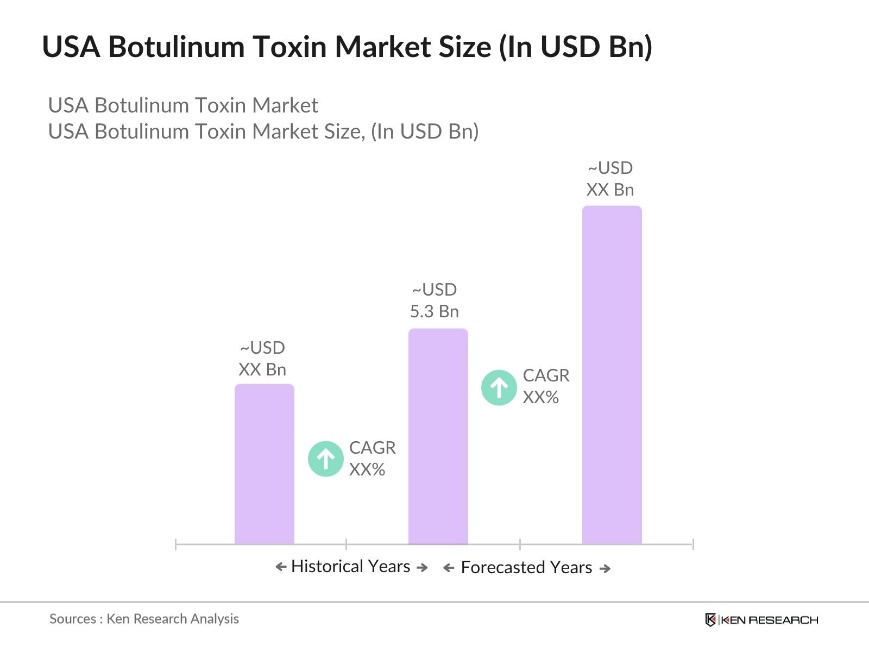
The USA Botulinum Toxin Market is valued at USD 5.3 billion, driven by a high demand for aesthetic procedures and expanding therapeutic applications such as migraine treatment.
Challenges in USA Botulinum Toxin Market include stringent FDA regulatory approvals, potential side effects, and high competition among key players, especially in the aesthetic segment.
Key players in the USA Botulinum Toxin Market include Allergan, Ipsen Pharma, Merz Pharmaceuticals, Revance Therapeutics, and Medytox, Inc. These companies dominate the market due to their R&D investments and strong brand portfolios.
The USA Botulinum Toxin Market is driven by increasing consumer demand for non-invasive cosmetic procedures, expanding therapeutic applications, and FDA approvals of new products.

What makes us stand out is that our consultants follows Robust, Refine and Result (RRR) methodology. i.e. Robust for clear definitions, approaches and sanity checking, Refine for differentiating respondents facts and opinions and Result for presenting data with story

We have set a benchmark in the industry by offering our clients with syndicated and customized market research reports featuring coverage of entire market as well as meticulous research and analyst insights.

While we don't replace traditional research, we flip the method upside down. Our dual approach of Top Bottom & Bottom Top ensures quality deliverable by not just verifying company fundamentals but also looking at the sector and macroeconomic factors.

With one step in the future, our research team constantly tries to show you the bigger picture. We help with some of the tough questions you may encounter along the way: How is the industry positioned? Best marketing channel? KPI's of competitors? By aligning every element, we help maximize success.

Our report gives you instant access to the answers and sources that other companies might choose to hide. We elaborate each steps of research methodology we have used and showcase you the sample size to earn your trust.

If you need any support, we are here! We pride ourselves on universe strength, data quality, and quick, friendly, and professional service.