
USA Brushless DC Motor Market Outlook to 2030
Region:United States
Author(s):Mukul Soni
Product Code:KROD4997
Region:United States
Author(s):Mukul Soni
Product Code:KROD4997
December 2024
97
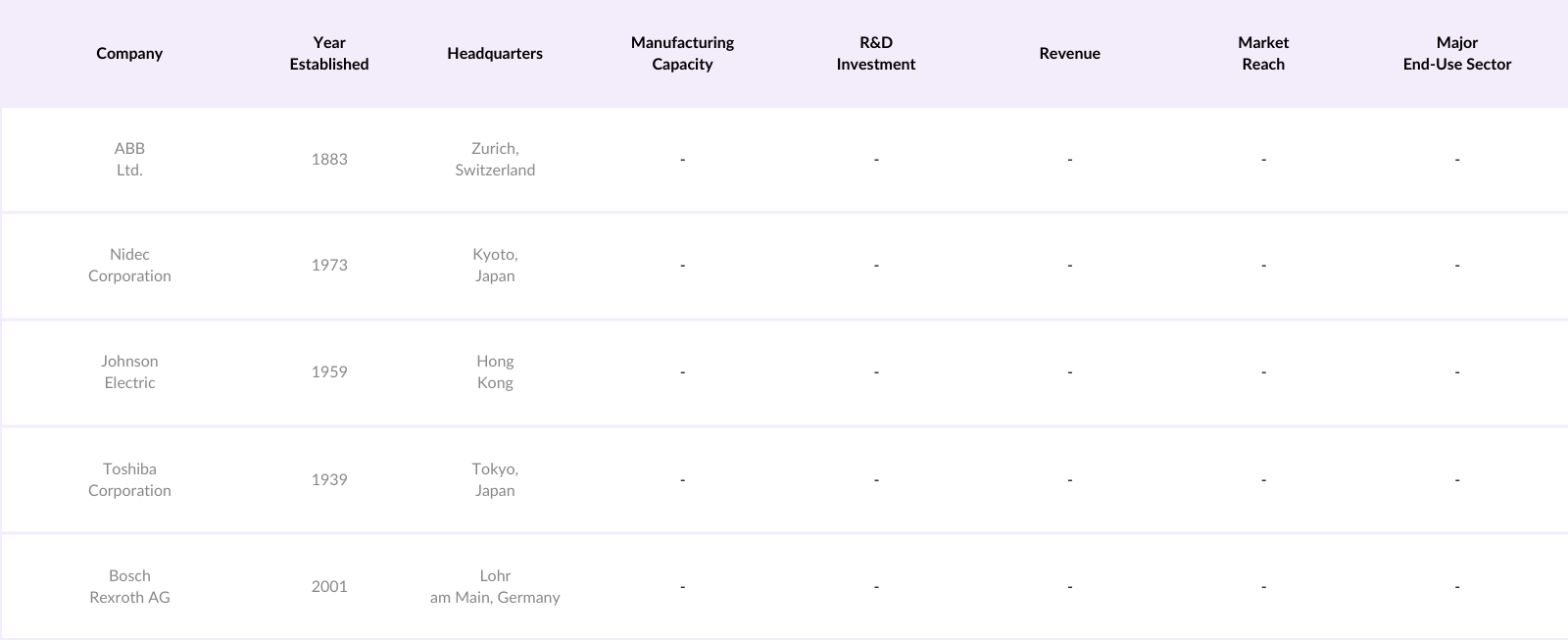
The USA Brushless DC Motor market is dominated by a few established players, with significant contributions from both domestic and international companies. These companies drive market growth through continuous innovation, extensive R&D investment, and expansion of product portfolios.
Growth Drivers
Market Restraints
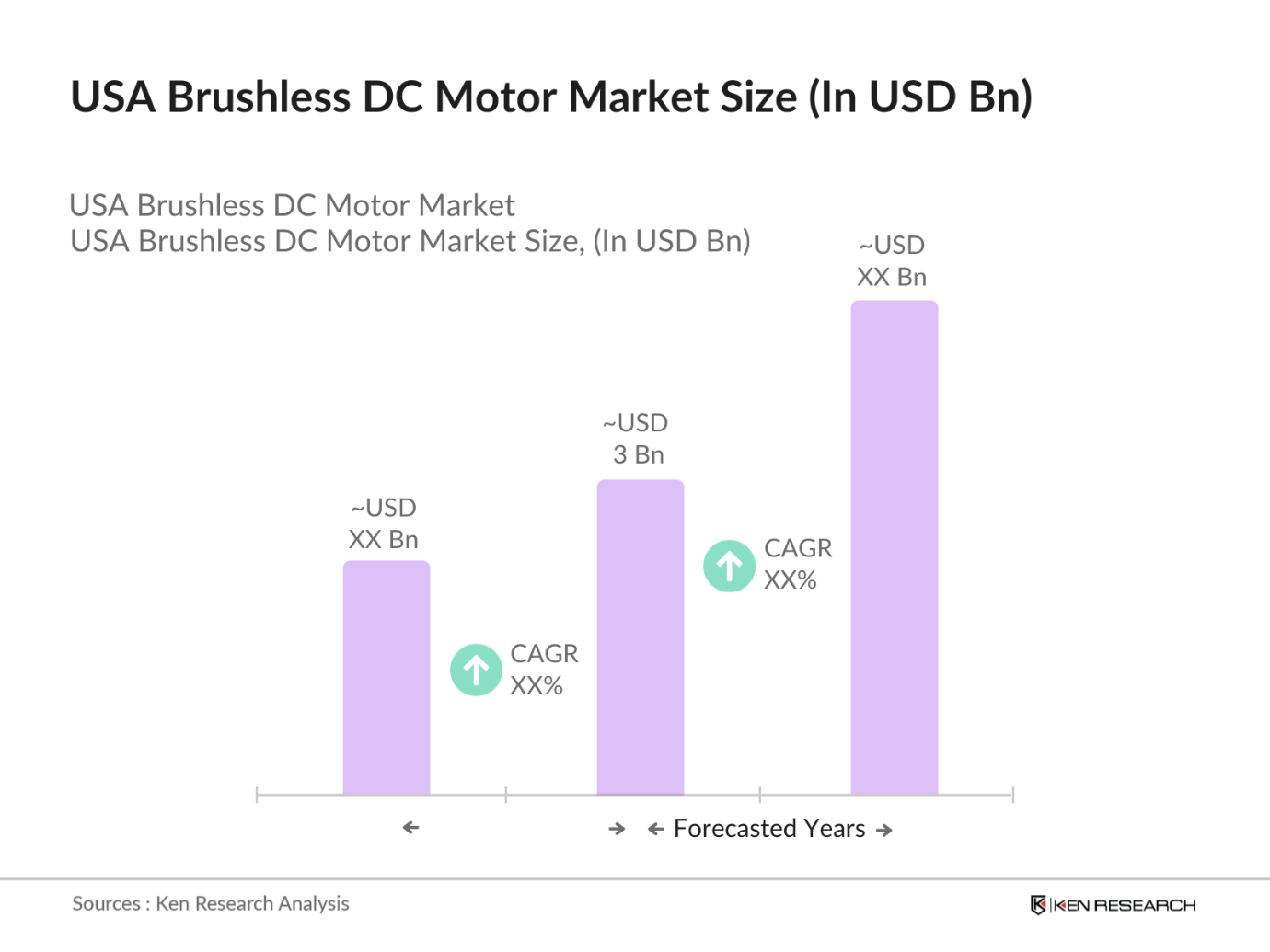
Over the next five years, the USA Brushless DC Motor market is expected to experience steady growth driven by the increasing penetration of electric vehicles, advancements in automation technologies, and rising investments in renewable energy projects. The focus on energy efficiency and government mandates are anticipated to sustain demand, especially in sectors such as automotive and industrial machinery, where energy-saving and compact motors are critical.
Market Opportunities
|
Motor Type |
Inner Rotor Motors |
|
Application |
Automotive |
|
Power Range |
Low Power (<750W) |
|
End-User Industry |
Automotive |
|
Region |
Northeast |
1.1 Definition and Scope
1.2 Market Taxonomy
1.3 Market Growth Rate Analysis
1.4 Market Segmentation Overview
2.1 Historical Market Size
2.2 Year-On-Year Growth Analysis
2.3 Key Market Developments and Technological Milestones
3.1 Growth Drivers
3.1.1 Demand for Energy-Efficient Motors
3.1.2 Government Incentives and Regulations on Energy Conservation
3.1.3 Increasing Automation in Manufacturing (Industrial Automation)
3.1.4 Growing Electric Vehicle (EV) Production (EV Production)
3.2 Market Challenges
3.2.1 High Initial Cost of Brushless DC Motors
3.2.2 Complexity in Control Mechanisms (Technical Challenges)
3.2.3 Market Fragmentation and Competition
3.3 Opportunities
3.3.1 Expansion in Renewable Energy Applications (Renewable Integration)
3.3.2 Rise in Demand from HVAC Applications (HVAC Integration)
3.3.3 Technological Advancements in Motor Efficiency
3.4 Trends
3.4.1 Integration with IoT and Industry 4.0 (IoT Integration)
3.4.2 Increasing Adoption in Robotics and Automation (Automation Usage)
3.4.3 Development of Compact and Lightweight Motors
3.5 Government Regulations
3.5.1 Energy Efficiency Standards and Certifications (Energy Efficiency)
3.5.2 Compliance Requirements (Motor Safety Standards)
3.5.3 Federal and State Energy Policies
3.6 SWOT Analysis
3.7 Industry Stakeholder Ecosystem
3.8 Porters Five Forces Analysis
3.9 Competitive Landscape Analysis
4.1 By Motor Type (In Value %)
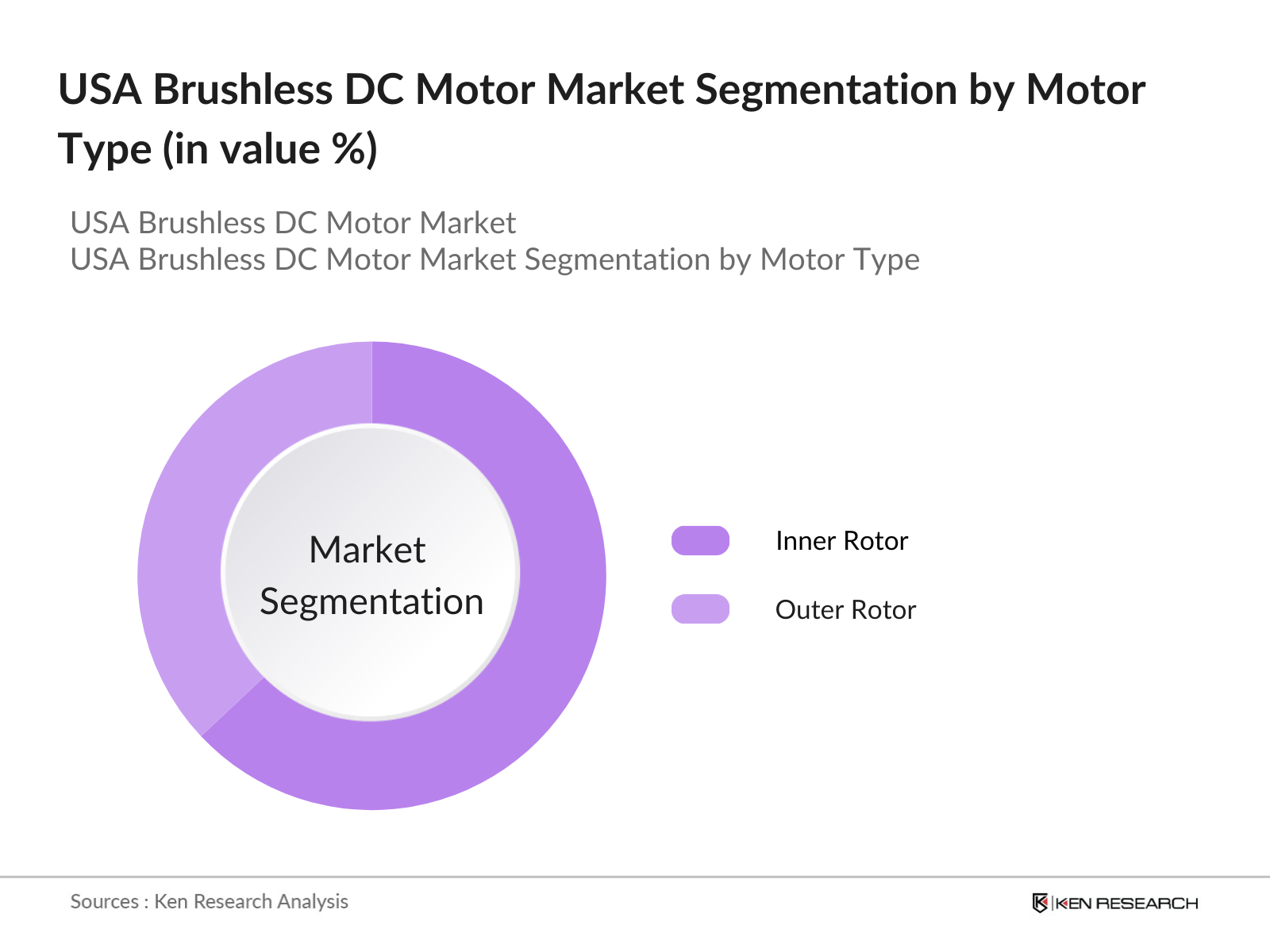
4.1.1 Inner Rotor Motors
4.1.2 Outer Rotor Motors
4.2 By Application (In Value %)
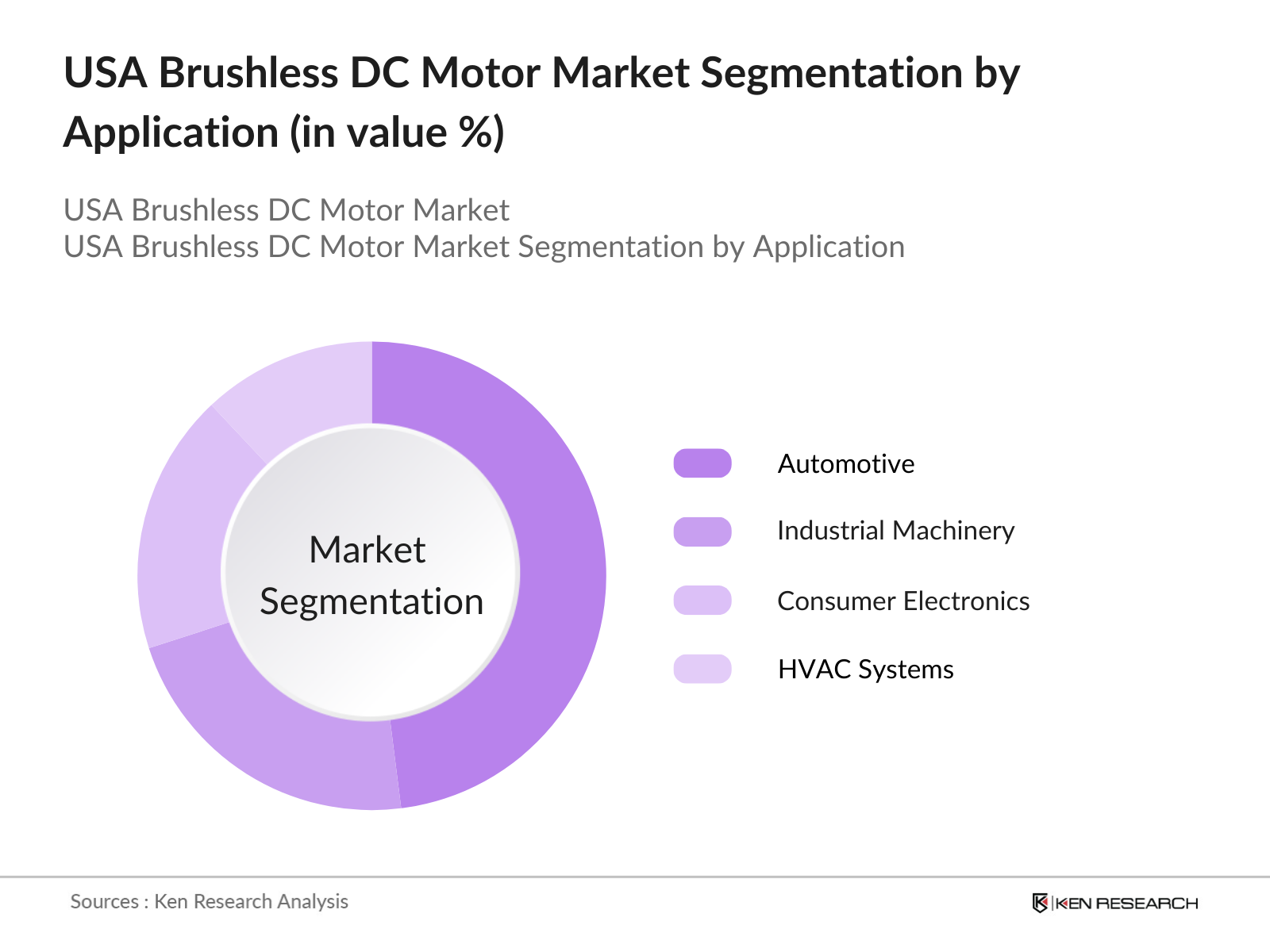
4.2.1 Automotive (Electric Vehicles, Autonomous Vehicles)
4.2.2 Consumer Electronics (Smart Home Appliances)
4.2.3 Industrial Machinery (Manufacturing Automation)
4.2.4 HVAC Systems (Energy Efficient HVAC Solutions)
4.2.5 Aerospace and Defense (Advanced Aircraft Systems)
4.3 By Power Range (In Value %)
4.3.1 Low Power (<750W)
4.3.2 Medium Power (750W-3kW)
4.3.3 High Power (>3kW)
4.4 By End-User Industry (In Value %)
4.4.1 Automotive
4.4.2 Industrial
4.4.3 Healthcare
4.4.4 Aerospace
4.4.5 Consumer Goods
4.5 By Region (In Value %)
4.5.1 Northeast
4.5.2 Midwest
4.5.3 South
4.5.4 West
5.1 Detailed Profiles of Major Companies
5.1.1 ABB Ltd.
5.1.2 Nidec Corporation
5.1.3 AMETEK Inc.
5.1.4 Johnson Electric Holdings Limited
5.1.5 Maxon Motor AG
5.1.6 Allied Motion Technologies Inc.
5.1.7 Toshiba Corporation
5.1.8 WEG S.A.
5.1.9 Bosch Rexroth AG
5.1.10 MinebeaMitsumi Inc.
5.1.11 Moog Inc.
5.1.12 General Electric
5.1.13 Regal Beloit Corporation
5.1.14 Portescap
5.1.15 TECO Electric and Machinery Co., Ltd.
5.2 Cross Comparison Parameters (No. of Employees, Headquarters, Annual Revenue, Product Range, Manufacturing Locations, R&D Investments, Market Presence, Technological Capabilities)
5.3 Market Share Analysis
5.4 Strategic Initiatives
5.5 Mergers and Acquisitions
5.6 Investment Analysis
5.7 Joint Ventures and Partnerships
6.1 Energy Conservation Standards
6.2 Safety Standards and Compliance
6.3 Environmental Regulations (Emissions Standards)
6.4 Certification Processes
7.1 Future Market Size Projections
7.2 Key Factors Driving Future Market Growth
8.1 By Motor Type (In Value %)
8.2 By Application (In Value %)
8.3 By Power Range (In Value %)
8.4 By End-User Industry (In Value %)
8.5 By Region (In Value %)
9.1 TAM/SAM/SOM Analysis
9.2 Customer Cohort Analysis
9.3 Marketing Initiatives
9.4 White Space Opportunity Analysis
Disclaimer Contact UsThis stage involves identifying primary stakeholders in the USA Brushless DC Motor Market, including automotive and industrial manufacturers. Extensive desk research and database analysis are conducted to pinpoint essential variables influencing market trends.
Historical data related to market dynamics, industry-specific penetration, and motor technology adoption are gathered and analyzed to construct a detailed market overview. This analysis helps in validating revenue estimates for the market.
Preliminary market hypotheses are validated through interviews with industry experts and key stakeholders. The insights gathered from these consultations enrich the data accuracy, providing a grounded understanding of the market dynamics.
The final stage synthesizes all insights from bottom-up data collection and direct feedback from motor manufacturers, ensuring comprehensive and validated market statistics. This data is cross-verified to guarantee consistency and accuracy in the market analysis.
The USA Brushless DC Motor Market is valued at USD 3 billion, primarily driven by the demand for energy-efficient solutions in automotive and industrial sectors.
Key challenges include high initial costs, complex motor control mechanisms, and intense competition among established and emerging players, which impact market penetration and profit margins.
Leading players include ABB Ltd., Nidec Corporation, Johnson Electric, Toshiba Corporation, and Bosch Rexroth AG. These companies hold a significant market presence through innovation and extensive product portfolios.
The growth is fueled by increased adoption in electric vehicles, industrial automation, and government policies supporting energy efficiency and reduced carbon emissions.

What makes us stand out is that our consultants follows Robust, Refine and Result (RRR) methodology. i.e. Robust for clear definitions, approaches and sanity checking, Refine for differentiating respondents facts and opinions and Result for presenting data with story

We have set a benchmark in the industry by offering our clients with syndicated and customized market research reports featuring coverage of entire market as well as meticulous research and analyst insights.

While we don't replace traditional research, we flip the method upside down. Our dual approach of Top Bottom & Bottom Top ensures quality deliverable by not just verifying company fundamentals but also looking at the sector and macroeconomic factors.

With one step in the future, our research team constantly tries to show you the bigger picture. We help with some of the tough questions you may encounter along the way: How is the industry positioned? Best marketing channel? KPI's of competitors? By aligning every element, we help maximize success.

Our report gives you instant access to the answers and sources that other companies might choose to hide. We elaborate each steps of research methodology we have used and showcase you the sample size to earn your trust.

If you need any support, we are here! We pride ourselves on universe strength, data quality, and quick, friendly, and professional service.