
USA Car Subscription Market Outlook to 2030
Region:United States
Author(s):Samanyu
Product Code:KROD4623
Region:United States
Author(s):Samanyu
Product Code:KROD4623
November 2024
93
Listen to the audio summary
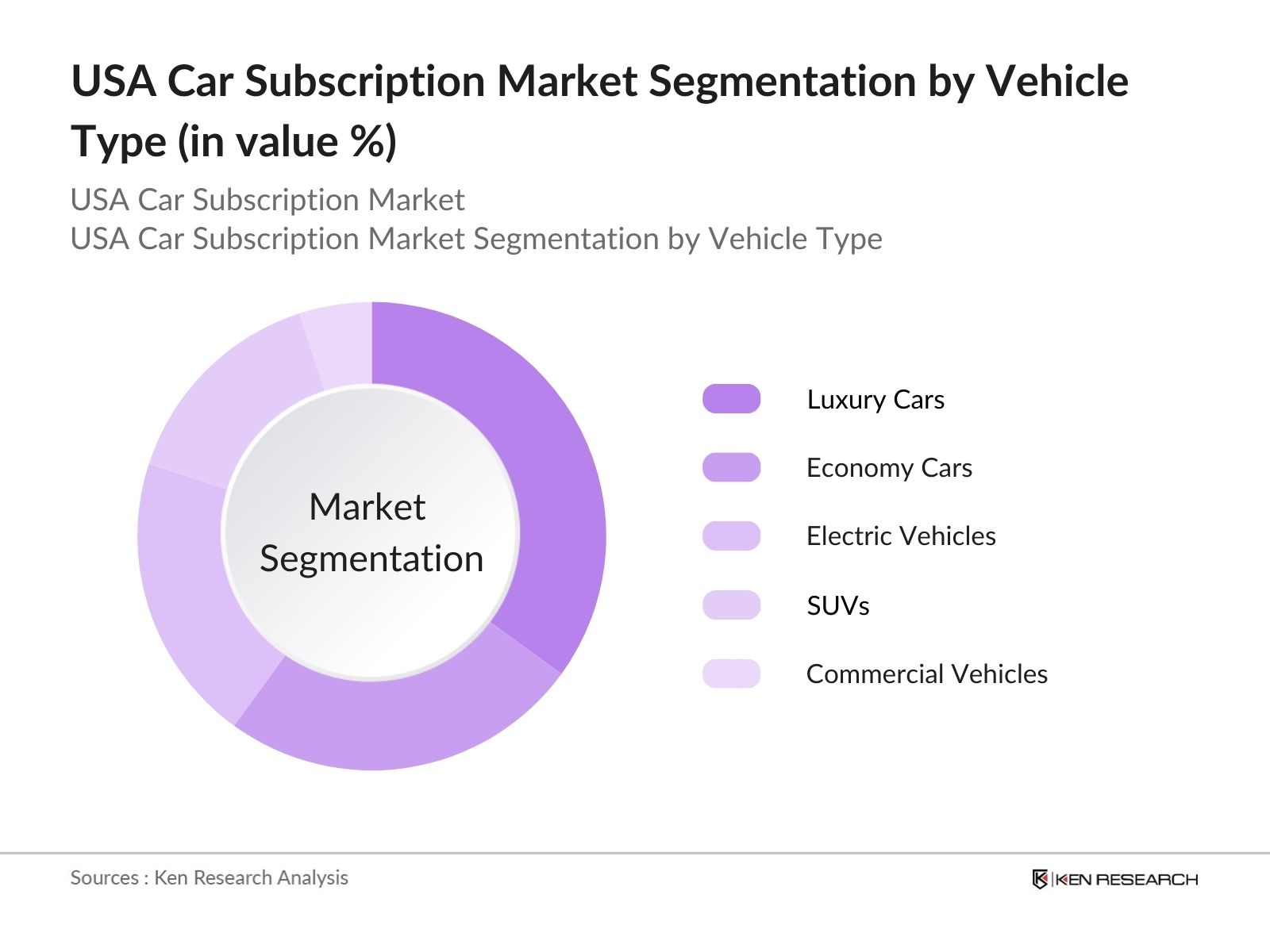
By Vehicle Type: The market is segmented by vehicle type into luxury cars, economy cars, electric vehicles (EVs), SUVs, and commercial vehicles. Luxury cars have recently captured a dominant market share, largely due to the rising demand for high-end, flexible ownership models among affluent consumers. Brands such as Porsche and BMW offer premium subscription plans that allow users to switch between various luxury models, catering to those who prefer access over ownership.
By Subscription Term: The market is also segmented by subscription term into monthly, quarterly, annual, and multi-year plans. Monthly subscriptions are currently the dominant segment, as they offer the highest degree of flexibility. Many users, particularly in urban areas, prefer short-term options that allow them to switch vehicles frequently or even pause subscriptions as needed. This is especially appealing to younger demographics and those in temporary work situations, where flexibility in transportation is crucial.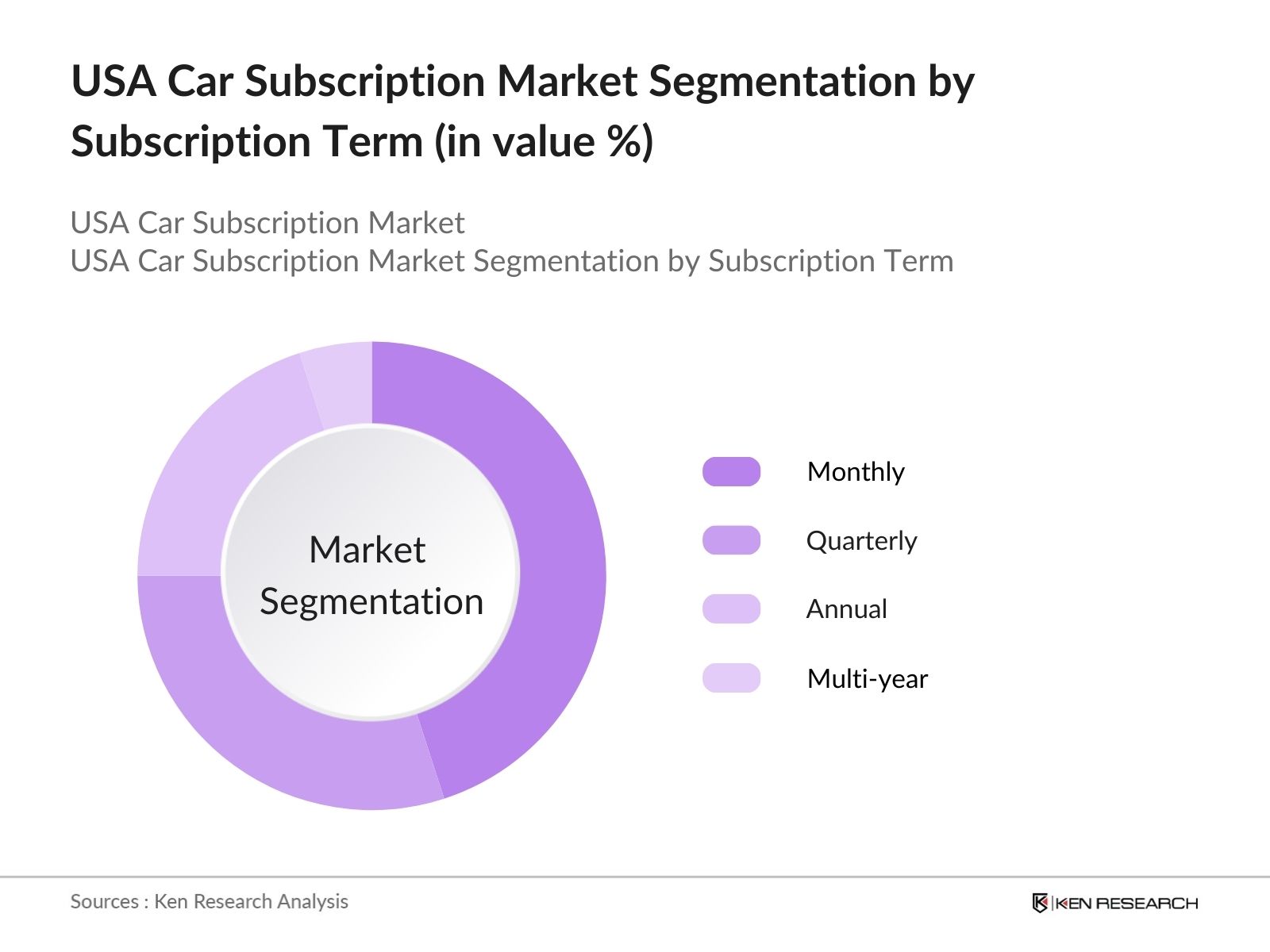
The USA car subscription market is dominated by several key players, including established car rental companies, OEMs (Original Equipment Manufacturers), and new subscription-based service providers. These companies have established significant influence through strategic partnerships, advanced technological platforms, and the expansion of their service offerings.
|
Company Name |
Establishment Year |
Headquarters |
Revenue (2023) |
Employees |
Fleet Size |
EV Subscription |
Key Clients |
Service Network |
|
Hertz |
1918 |
Estero, FL |
||||||
|
Avis |
1946 |
Parsippany, NJ |
||||||
|
Sixt |
1912 |
Pullach, Germany |
||||||
|
Fair |
2016 |
Santa Monica, CA |
||||||
|
Care by Volvo |
2017 |
Gothenburg, Sweden |
Over the next five years, the USA car subscription market is expected to see significant growth driven by the increasing popularity of electric vehicles, ongoing advancements in mobility technologies, and growing consumer demand for flexible transportation solutions. The push towards sustainable mobility, especially in urban areas, will also encourage a greater shift towards car subscriptions, particularly those offering electric and hybrid vehicles.
Subscription services that offer flexibility in vehicle selection, subscription length, and additional services like insurance and maintenance are likely to be the most successful. The integration of AI and IoT for vehicle tracking, personalization, and better service delivery will also be key drivers of market growth.
|
By Vehicle Type |
Luxury Cars Economy Cars Electric Vehicles SUVs and Crossovers Commercial Vehicles |
|
By Customer Type |
Individual Corporate Small Businesses Freelancers/Contractors |
|
By Subscription Term |
Monthly Quarterly Annual Multi-year |
|
By End-User |
Ride-sharing and Rental Platforms Corporate Fleets Personal Use Real Estate Hospitality Services |
|
By Region |
Northeast Midwest South West Coast Rural/Non-urban Regions |
1.1. Definition and Scope (Types of car subscription models, ownership vs subscription, rental vs lease)
1.2. Market Taxonomy (Car segment: luxury, economy, electric; Subscription terms: monthly, annual)
1.3. Market Growth Rate (CAGR for USA car subscription services, Market growth in urban regions)
1.4. Market Segmentation Overview (Vehicle type, Customer type, Service providers, End-user industry)
2.1. Historical Market Size (Prevalence and growth of car subscription services in key regions)
2.2. Year-On-Year Growth Analysis (Tracking growth patterns in car subscriptions across different user demographics)
2.3. Key Market Developments and Milestones (Notable mergers, partnerships, and expansions by subscription service providers)
3.1. Growth Drivers
3.1.1. Shift towards flexible mobility solutions
3.1.2. Increasing preference for on-demand services (consumer preferences, tech penetration)
3.1.3. Rise of electric vehicles (Impact on subscription models for EVs)
3.1.4. Decline in traditional car ownership (Millennials and Gen Z behavioral shifts)
3.2. Restraints
3.2.1. High monthly costs (Cost comparison with leasing and ownership)
3.2.2. Regulatory challenges (Legal frameworks for car subscriptions across states)
3.2.3. Limited market awareness (Lack of consumer understanding of subscription models)
3.3. Opportunities
3.3.1. Technological advancements (AI and IoT integration in subscription management)
3.3.2. Expansion of electric vehicle subscriptions (Growth potential in green mobility)
3.3.3. Subscription as a service for corporate fleets (B2B market)
3.3.4. Cross-industry partnerships (Opportunities with ride-hailing and insurance companies)
3.4. Trends
3.4.1. Increased demand for flexible, pay-as-you-go solutions (Short-term contracts)
3.4.2. Integration of mobile platforms (Apps for managing subscriptions)
3.4.3. EV dominance in subscription models (Impact of electric vehicles on the future of car subscriptions)
3.4.4. Subscription personalization (Data-driven approaches to customize services)
3.5. Regulatory Framework
3.5.1. State-specific regulations (Impact of varying state laws on subscription services)
3.5.2. Insurance and liability concerns (Coverage models, subscription packages)
3.5.3. Emission and environmental policies (Government incentives for EV subscriptions)
3.5.4. Tax implications (Taxation on subscription services vs. ownership)
3.6. SWOT Analysis
3.7. Stakeholder Ecosystem (Service providers, automotive manufacturers, software solution providers)
3.8. Porters Five Forces Analysis
3.9. Competition Ecosystem (New entrants, market fragmentation)
4.1. By Vehicle Type (In Value %)
4.1.1. Luxury Cars
4.1.2. Economy Cars
4.1.3. Electric Vehicles
4.1.4. SUVs and Crossovers
4.1.5. Commercial Vehicles
4.2. By Customer Type (In Value %)
4.2.1. Individual
4.2.2. Corporate
4.2.3. Small Businesses
4.2.4. Freelancers/Contractors
4.3. By Subscription Term (In Value %)
4.3.1. Monthly
4.3.2. Quarterly
4.3.3. Annual
4.3.4. Multi-year
4.4. By End-User Industry (In Value %)
4.4.1. Ride-sharing and Rental Platforms
4.4.2. Corporate Fleets
4.4.3. Personal Use
4.4.4. Real Estate and Hospitality Services (Concierge services)
4.5. By Region (In Value %)
4.5.1. Northeast
4.5.2. Midwest
4.5.3. South
4.5.4. West Coast
4.5.5. Rural/Non-urban Regions
5.1. Detailed Profiles of Major Companies
5.1.1. Hertz
5.1.2. Avis
5.1.3. Sixt
5.1.4. Enterprise CarShare
5.1.5. Fair
5.1.6. Flexdrive
5.1.7. Clutch Technologies
5.1.8. Care by Volvo
5.1.9. CarmaCar
5.1.10. Porsche Passport
5.1.11. BMW Access
5.1.12. Mercedes-Benz Collection
5.1.13. Borrow
5.1.14. Hyundais Mocean
5.1.15. Autonomy
5.2. Cross Comparison Parameters (Subscription Plan Features, Geographic Coverage, Pricing Strategy, Fleet Size, No. of Dealerships, Service Levels, Technology Integration)
5.3. Market Share Analysis
5.4. Strategic Initiatives (Partnerships, Business Expansion, Product Launches)
5.5. Mergers and Acquisitions
5.6. Investment Analysis
5.7. Venture Capital Funding
5.8. Government Grants
5.9. Private Equity Investments
6.1. State and Federal Regulations (Impact on subscription models)
6.2. Compliance Requirements (Licensing, service regulations)
6.3. Certification Processes (Service providers' certification for quality and safety)
7.1. Future Market Size Projections (Long-term projections of market growth)
7.2. Key Factors Driving Future Market Growth (Technological, demographic, and environmental drivers)
8.1. By Vehicle Type (In Value %)
8.2. By Customer Type (In Value %)
8.3. By Subscription Term (In Value %)
8.4. By End-User Industry (In Value %)
8.5. By Region (In Value %)
9.1. TAM/SAM/SOM Analysis
9.2. Customer Cohort Analysis (Segmentation by demographics and subscription preferences)
9.3. Marketing Initiatives (Key marketing strategies for service providers)
9.4. White Space Opportunity Analysis (Potential areas of growth within the market)
Disclaimer Contact Us
The initial phase involves constructing an ecosystem map that includes all major stakeholders within the USA car subscription market. Extensive desk research was conducted to gather data from proprietary databases, as well as publicly available industry reports, to identify key market drivers and variables influencing market growth.
In this phase, historical data pertaining to the USA car subscription market was compiled and analyzed. Key metrics such as market penetration, vehicle utilization rates, and subscription-based revenue generation were evaluated. Market forecasts were constructed based on this analysis, focusing on the future growth trajectory of the market.
Hypotheses regarding market growth, pricing models, and consumer preferences were validated through interviews with industry experts, car subscription service providers, and technology solution vendors. These insights were used to refine the market models and forecast future trends.
The final phase involved synthesizing the research data, validating the market forecasts, and refining the reports conclusions. This included direct engagement with car subscription companies to ensure the accuracy of data regarding vehicle types, subscription durations, and consumer demographics.
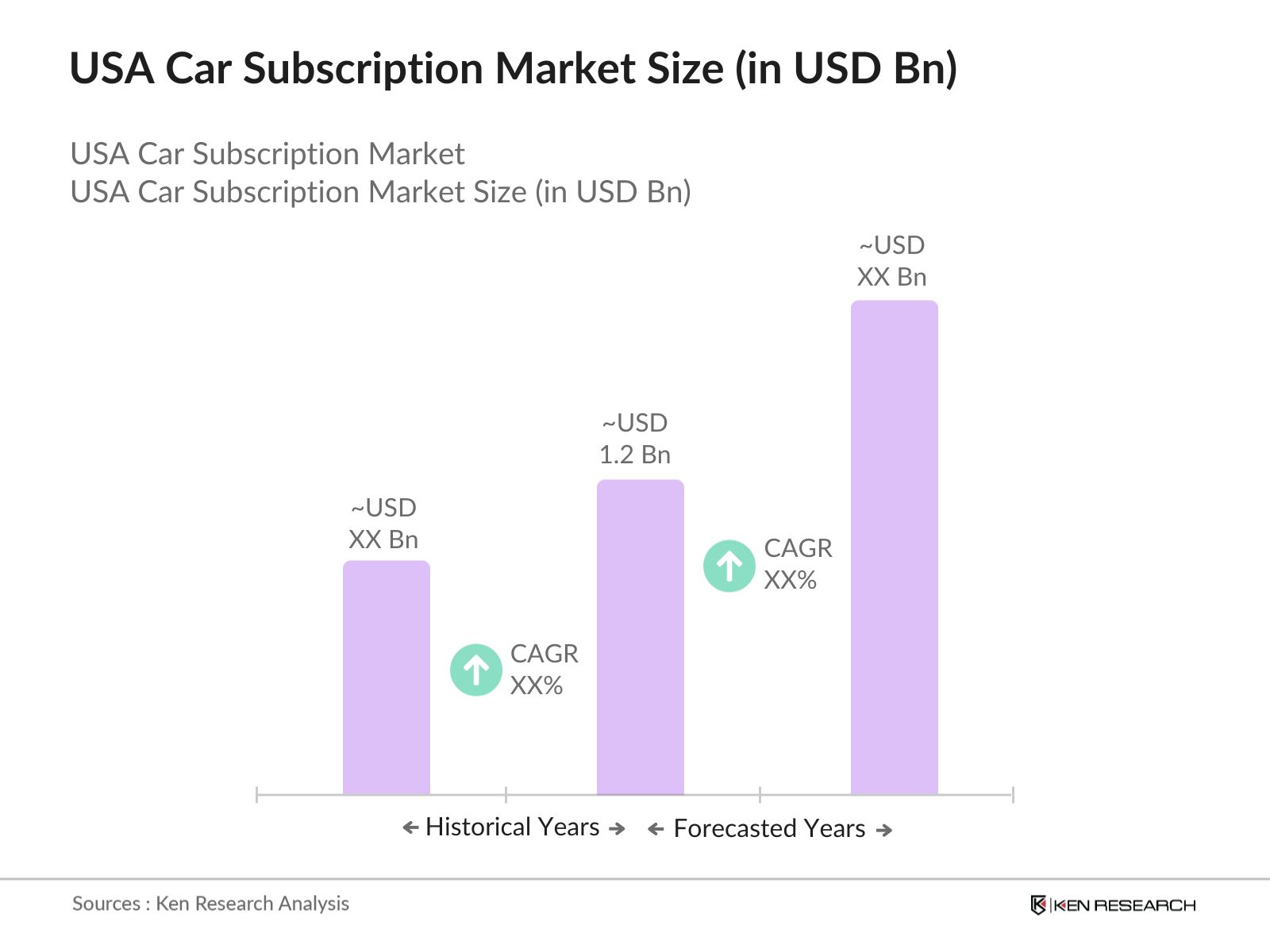
The USA car subscription market, valued at USD 1.2 billion in 2023, has been growing steadily due to the increasing demand for flexible transportation solutions and the rise of electric vehicles under subscription models.
Challenges in USA car subscription market include high costs of subscriptions compared to leasing, limited consumer awareness, and state-specific regulatory hurdles that affect service offerings across different regions.
Key players in USA car subscription market include Hertz, Avis, Sixt, Fair, and Care by Volvo. These companies dominate the market due to their extensive service networks, large vehicle fleets, and partnerships with OEMs.
The growth of USA car subscription market is driven by consumer preference for flexible ownership models, the rise of electric vehicles, and technological advancements in mobility platforms and vehicle management systems.

What makes us stand out is that our consultants follows Robust, Refine and Result (RRR) methodology. i.e. Robust for clear definitions, approaches and sanity checking, Refine for differentiating respondents facts and opinions and Result for presenting data with story

We have set a benchmark in the industry by offering our clients with syndicated and customized market research reports featuring coverage of entire market as well as meticulous research and analyst insights.

While we don't replace traditional research, we flip the method upside down. Our dual approach of Top Bottom & Bottom Top ensures quality deliverable by not just verifying company fundamentals but also looking at the sector and macroeconomic factors.

With one step in the future, our research team constantly tries to show you the bigger picture. We help with some of the tough questions you may encounter along the way: How is the industry positioned? Best marketing channel? KPI's of competitors? By aligning every element, we help maximize success.

Our report gives you instant access to the answers and sources that other companies might choose to hide. We elaborate each steps of research methodology we have used and showcase you the sample size to earn your trust.

If you need any support, we are here! We pride ourselves on universe strength, data quality, and quick, friendly, and professional service.