USA Coconut Water Market Overview
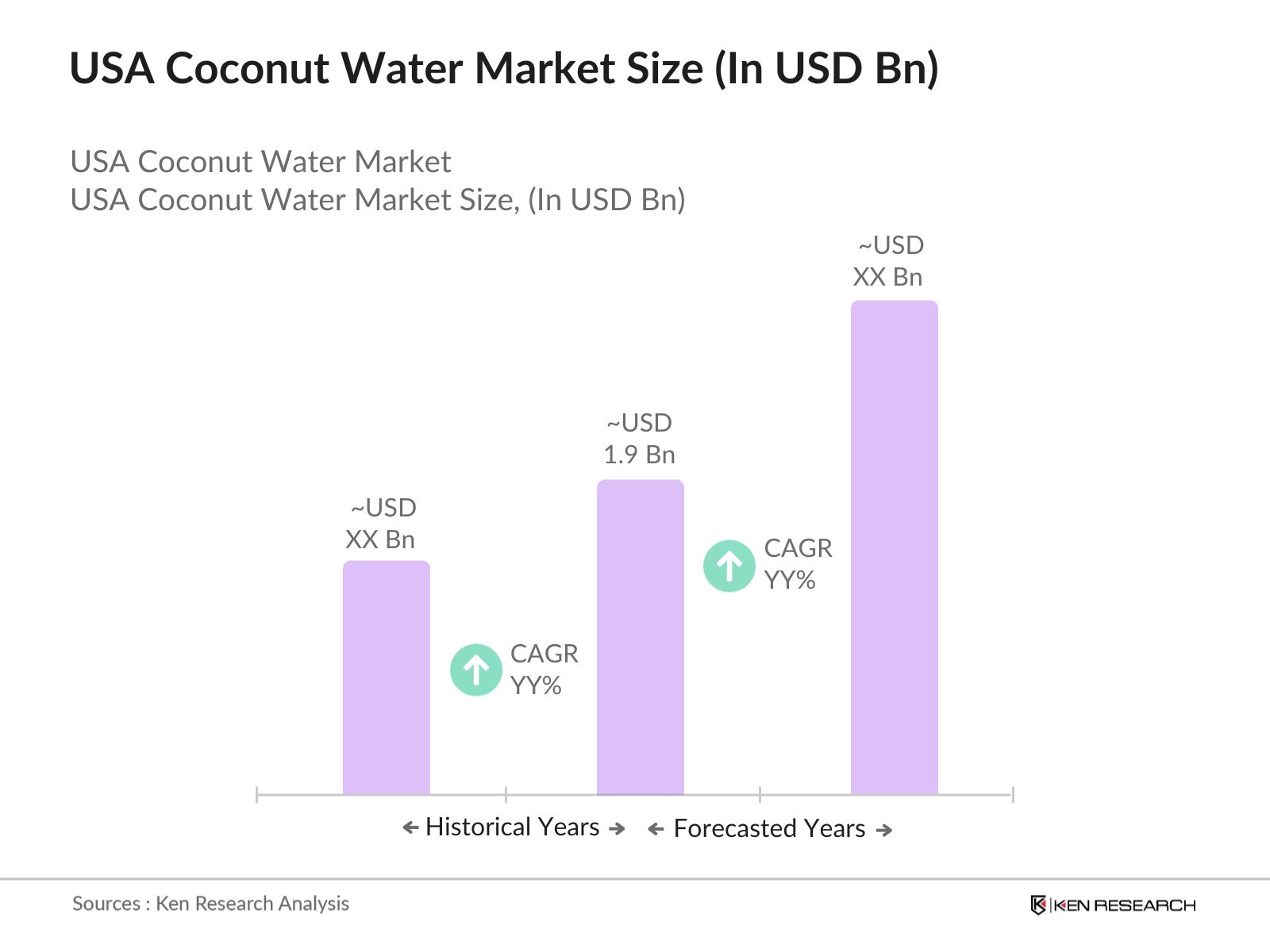
- The USA coconut water market is valued at USD 1.9 billion, supported by the rising consumer demand for healthy, natural beverages and increasing awareness regarding hydration benefits. This market has witnessed substantial growth, driven by the increasing preference for plant-based drinks, particularly among health-conscious consumers. Coconut water's reputation as a low-calorie, nutrient-rich beverage makes it a popular choice, especially in the wellness and fitness sectors, which further contributes to its growth.
- Cities such as New York, Los Angeles, and Miami dominate the market due to their high population density, health trends, and access to premium coconut water brands. These cities are also centers of fitness and wellness movements, contributing to the popularity of natural beverages like coconut water. Additionally, the strong presence of key retail chains and health food stores in these regions ensures widespread availability, bolstering market dominance.
- The U.S. Food and Drug Administration (FDA) regulates the labeling and ingredients of coconut water products. Coconut water companies must comply with the FDA's stringent guidelines on nutrient content claims, ensuring that products meet specific standards for labeling hydration or replenishment benefits. In 2023, the FDA implemented additional guidelines requiring clear labeling of added sugars, an important issue for coconut water brands marketing their products as healthy alternatives. Failure to meet these guidelines can result in fines or product recalls, making compliance critical for market success.

USA Coconut Water Market Segmentation
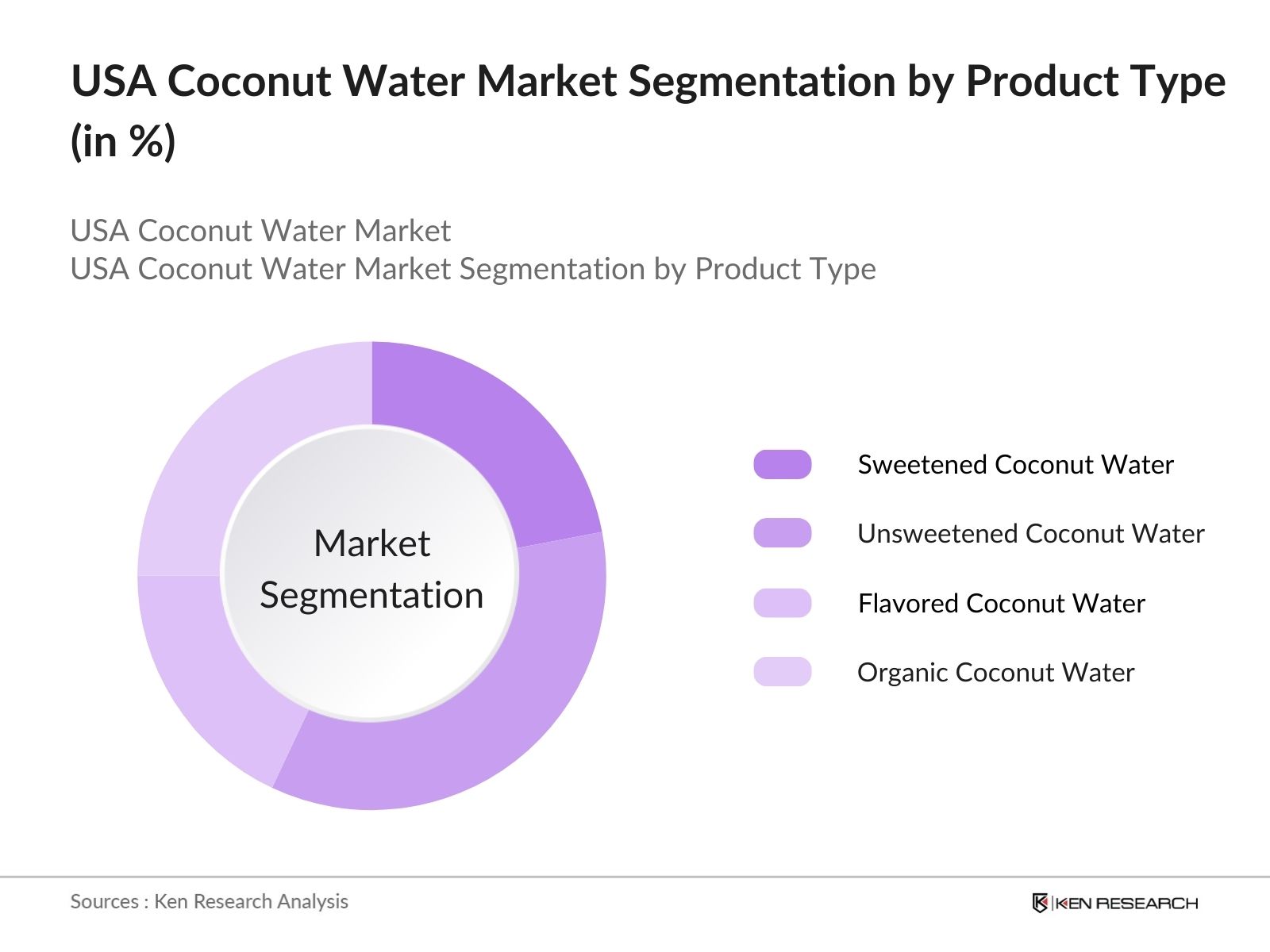
- By Product Type: The USA coconut water market is segmented by product type into sweetened coconut water, unsweetened coconut water, flavored coconut water, and organic coconut water. Recently, unsweetened coconut water has a dominant market share under the product type segment due to its positioning as a healthier alternative, with no added sugars. Consumers, particularly those concerned with calorie intake and artificial ingredients, have shifted toward unsweetened options, aligning with broader health trends. Leading brands highlight the natural hydration benefits of these products, further strengthening their market position.

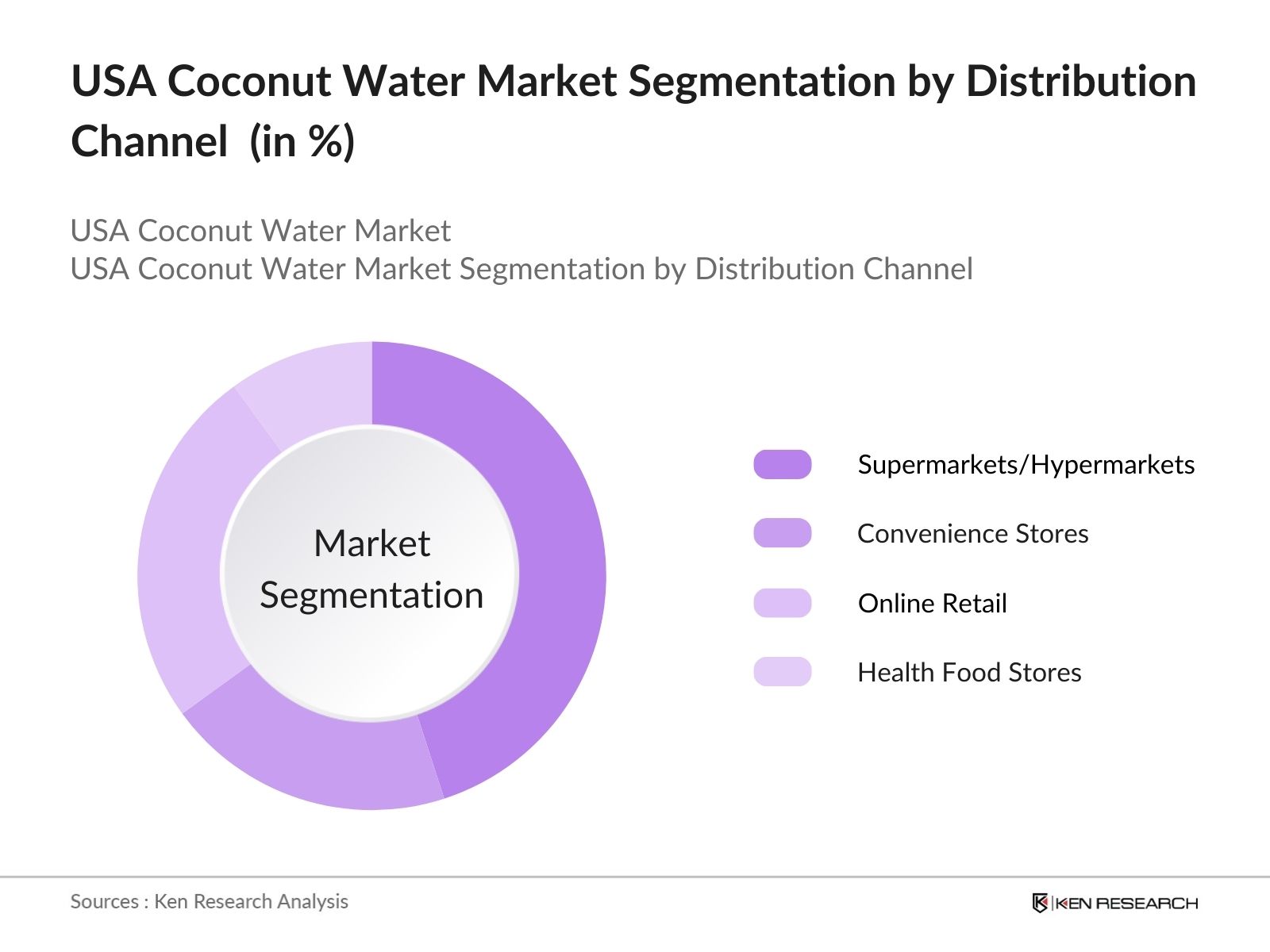
- By Distribution Channel: The market is segmented by distribution channels into supermarkets/hypermarkets, convenience stores, online retail, and health food stores. Supermarkets and hypermarkets lead the market share within this segmentation, accounting for their extensive presence and accessibility to a broad consumer base. The convenience of purchasing from these channels, coupled with regular promotions and deals offered by big chains, makes them the primary point of sale for coconut water products in the USA.

USA Coconut Water Market Competitive Landscape
The USA coconut water market is characterized by intense competition among a few key players. Vita Coco, one of the leading brands, alongside other major companies such as ZICO Beverages and Harmless Harvest, dominate the market. These companies leverage strong distribution networks, high brand recognition, and diverse product offerings to maintain their competitive edge. Moreover, these players invest in innovation, packaging, and flavor variety, allowing them to cater to diverse consumer preferences.
|
Company
|
Established
|
Headquarters
|
Revenue
|
Product Portfolio
|
Organic Certified
|
Distribution Network
|
Sustainability Initiatives
|
|
Vita Coco
|
2004
|
New York, USA
|
-
|
-
|
-
|
-
|
-
|
|
ZICO Beverages
|
2004
|
El Segundo, USA
|
-
|
-
|
-
|
-
|
-
|
|
Harmless Harvest
|
2009
|
San Francisco, USA
|
-
|
-
|
-
|
-
|
-
|
|
PepsiCo (O.N.E. Coconut)
|
2010
|
Purchase, New York
|
-
|
-
|
-
|
-
|
-
|
|
C2O Pure Coconut Water
|
2008
|
Long Beach, USA
|
-
|
-
|
-
|
-
|
-
|
USA Coconut Water Market Analysis
USA Coconut Water Market Growth Drivers
- Increasing Health Consciousness: The rising awareness of health and wellness is a key driver of the coconut water market. In 2024, approximately 70% of U.S. consumers are seeking beverages with functional benefits, such as hydration and nutrient content, with coconut water positioned as a low-calorie, natural source of electrolytes and vitamins. According to a report by the USDA, consumption of low-calorie beverages has surged by 12% from 2022 to 2023, largely driven by the demand for healthier alternatives to sugary and carbonated drinks. This trend is supported by the increasing incidence of lifestyle diseases such as obesity and hypertension.
- Shift from Carbonated Drinks: The global decline in carbonated drink consumption is influencing the U.S. coconut water market. In 2023, carbonated soft drink sales in the U.S. fell by 3%, as noted by the U.S. Beverage Council, reflecting a steady decline that aligns with the rise of more natural beverages like coconut water. This shift is driven by growing concerns over the health effects of sugar and artificial ingredients. As consumers transition away from these drinks, coconut waterseen as a natural and beneficial alternativehas become an increasingly popular choice.
- Growth in Vegan and Natural Product Demand: Veganism and the preference for plant-based products have seen growth in the U.S., with 9.7 million Americans identifying as vegan by 2023, a notable rise from just 1.5 million in 2016. This shift is bolstering the coconut water market, as consumers increasingly seek out plant-based, natural beverages. Coconut water is a popular option due to its alignment with vegan and health-conscious lifestyles. The growth of the natural products industry, which reached $260 billion in 2022, is also indicative of this trend.
USA Coconut Water Market Challenges
- Price Sensitivity: Coconut water's relatively high price compared to other beverages remains a challenge in the U.S. market. While it offers health benefits, the average price per liter is about 1.5 times higher than that of sports drinks and 2.5 times higher than soft drinks. In 2023, the median household income in the U.S. remained stagnant at around $70,000, according to U.S. Census Bureau data, leading price-sensitive consumers to opt for cheaper alternatives. This price disparity is an ongoing issue in the adoption of coconut water as a daily beverage.
- High Competition from Alternative Beverages: Coconut water faces stiff competition from other natural and functional beverages, such as plant-based milks, kombucha, and electrolyte-enhanced water. In 2023, sales of plant-based beverages grew by 17%, with almond milk alone reaching $1.5 billion in annual revenue. This growth highlights the intense competition coconut water faces in the natural beverages category. Additionally, electrolyte-enhanced drinks like Gatorade and Powerade, which are marketed heavily for athletic recovery, continue to dominate this segment, limiting coconut waters market share.
USA Coconut Water Market Future Outlook
Over the next five years, the USA coconut water market is expected to experience notable growth, driven by rising health awareness, the shift toward plant-based beverages, and increasing consumer preference for natural hydration solutions. The trend toward organic and sustainable products, along with innovations in packaging and flavors, is anticipated to further fuel market expansion. Additionally, growing demand in online retail channels and a surge in fitness-conscious consumers will contribute to the market's positive trajectory.
USA Coconut Water Market Opportunities
- Innovations in Flavor and Packaging: In 2024, product innovation continues to drive opportunities in the U.S. coconut water market. New flavors, such as watermelon and pineapple-infused coconut water, have gained popularity, with flavored variants accounting for 28% of total coconut water sales in 2023. Additionally, sustainable packaging solutions, such as Tetra Pak cartons made from renewable materials, are enhancing the appeal of coconut water among eco-conscious consumers. Packaging innovations are helping brands differentiate themselves in a crowded market, with eco-friendly packaging now demanded by 60% of U.S. consumers.
- Growing Trend of Functional Beverages: Functional beverages are becoming mainstream in the U.S., with an expected 8% annual growth in the segment. Coconut water, rich in potassium, magnesium, and electrolytes, fits this category well. The USDA's National Nutrient Database highlights that one cup of coconut water contains 600 mg of potassium, which is approximately 16% of the recommended daily intake, making it an ideal beverage for consumers focused on replenishment and hydration. The demand for functional beverages, including coconut water, is projected to continue rising as consumers seek more health-oriented options.