
USA Collaborative Robots Market Outlook to 2030
Region:United States
Author(s):Shambhavi
Product Code:KROD3416
Region:United States
Author(s):Shambhavi
Product Code:KROD3416
December 2024
91
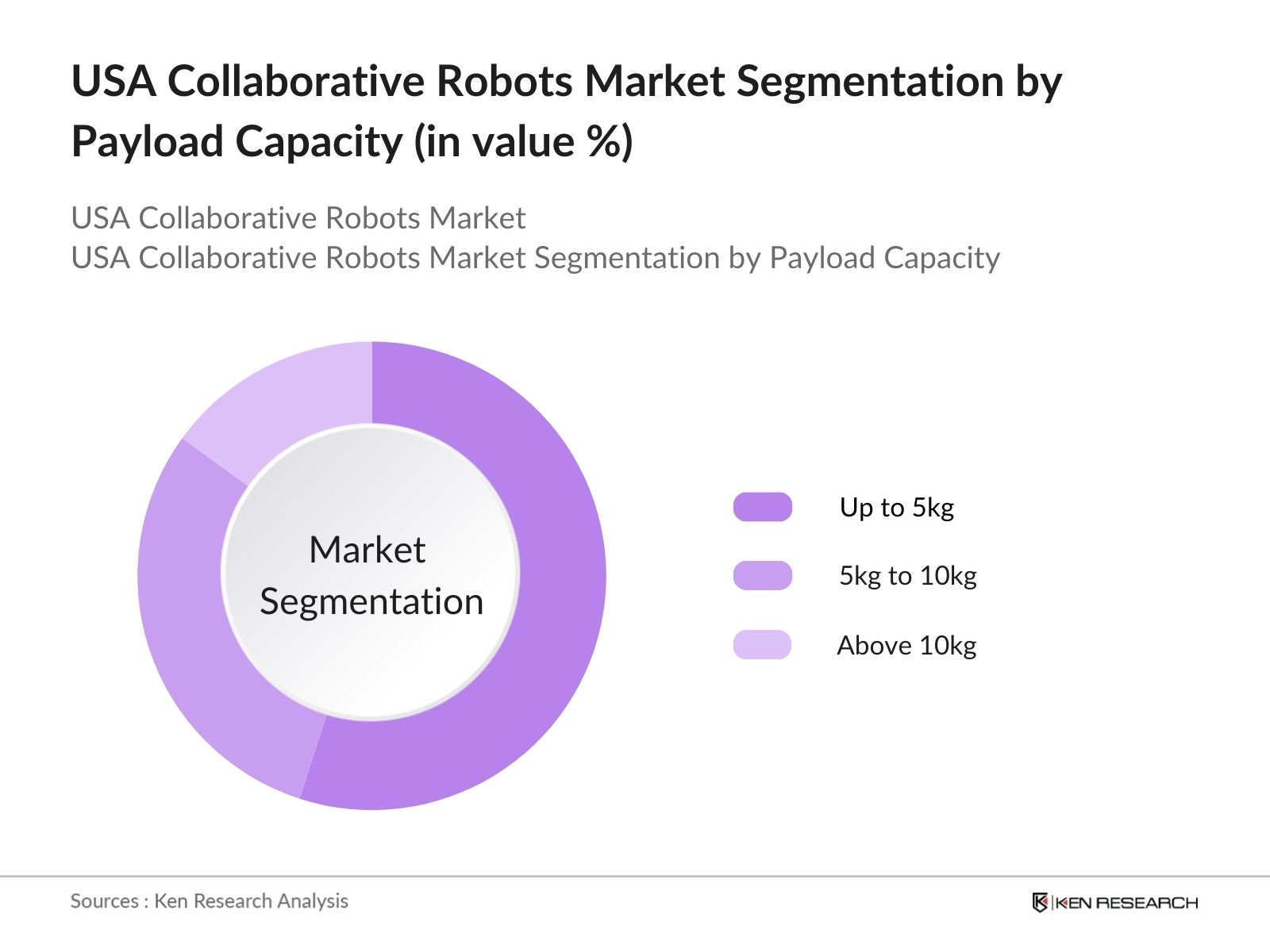
By Payload Capacity: The USA collaborative robot market is segmented by payload capacity into three categories Up to 5kg, 5kg to 10kg and Above 10kg. Cobots with a payload capacity of up to 5kg dominate the market share. These lightweight robots are preferred across various sectors, including electronics, small-scale manufacturing, and medical device production. Their popularity stems from their ease of use, quick deployment, and ability to perform repetitive tasks in confined spaces. SMEs, in particular, benefit from these cobots because they are cost-effective and improve operational efficiency without the need for extensive workforce training.
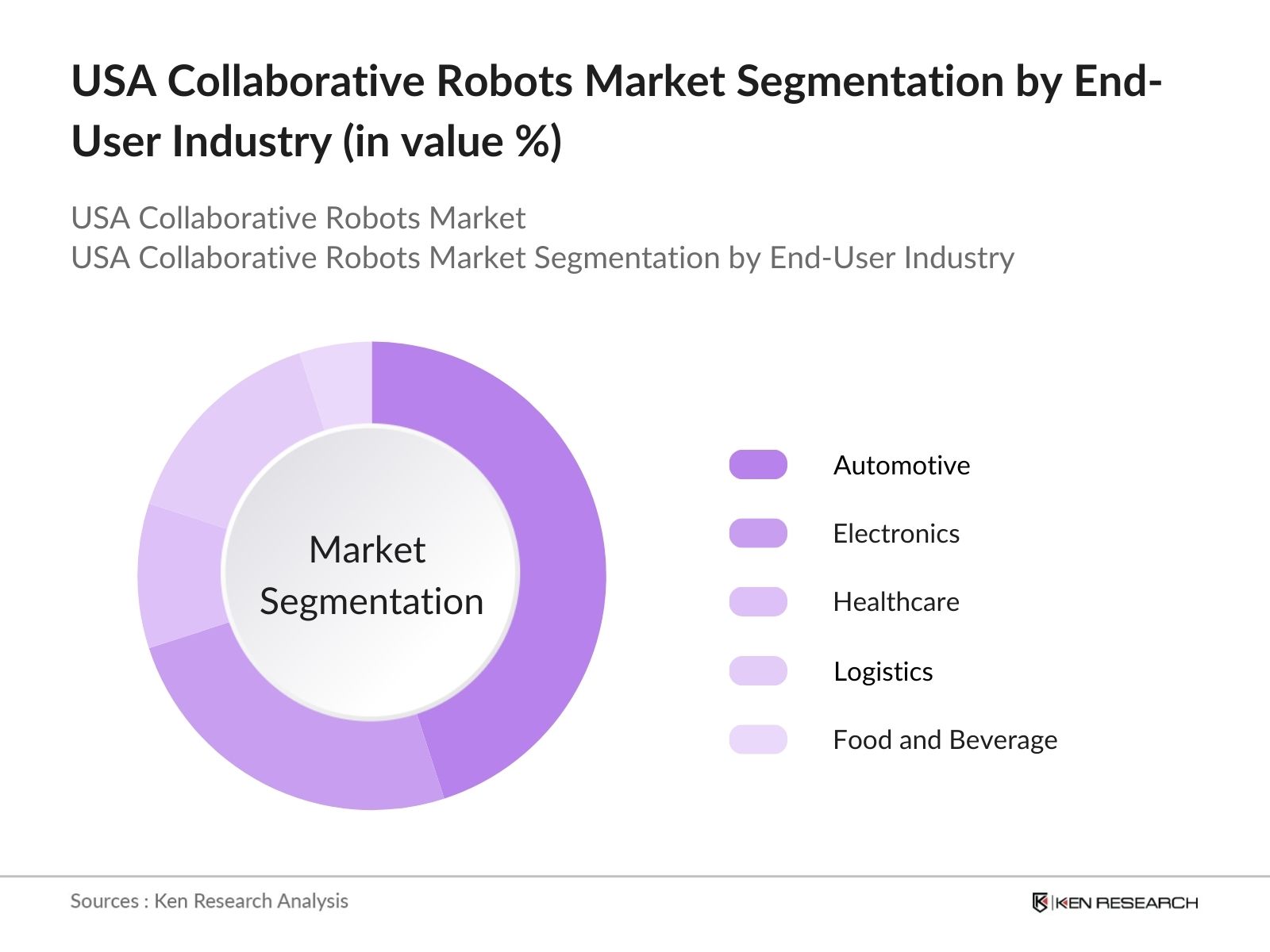
By End-User Industry: The USA collaborative robots market is also segmented by end-user industry into Automotive, Electronics, Healthcare, Logistics and Food and Beverage. The automotive industry holds the largest market share within the collaborative robots market. The rise in demand for automation in assembly lines, machine tending, and quality inspection processes has significantly contributed to the adoption of cobots in automotive manufacturing. With a growing emphasis on efficiency, safety, and precision, the automotive sector continues to invest in these robots to optimize production and reduce human error in repetitive tasks.
The USA collaborative robots market is characterized by the presence of several key players that dominate the landscape due to their technological expertise, market reach, and strategic partnerships. The market is dominated by both global and domestic players, including Universal Robots, which is a leader in the cobot industry. The consolidation of major players within the market has led to a high degree of competitiveness, driven by innovations in robot flexibility, AI integration, and customer service solutions. This market remains lucrative as players continue to expand their product portfolios to cater to diverse industries.

Over the next five years, the USA collaborative robots market is expected to experience robust growth. This expansion will be fueled by continued advancements in robotics technology, particularly in AI and machine learning, enabling more flexible and intelligent cobots. Government initiatives supporting the adoption of automation in various sectors, including manufacturing, healthcare, and logistics, will further contribute to the markets growth. Additionally, the increasing need for cost-effective automation solutions for small and medium-sized enterprises will drive demand for cobots, particularly in non-traditional industries such as agriculture and food processing.
|
Payload Capacity |
Up to 5kg 5kg to 10kg Above 10kg |
|
Application |
Assembly Pick and Place Machine Tending Packaging Quality Inspection |
|
End-User Industry |
Automotive Electronics Healthcare Logistics Food and Beverage |
|
Component |
Robotic Arms Controllers End Effectors Drives and Actuators Sensors |
|
Region |
North-East Mid-West South West |
1.1. Definition and Scope
1.2. Market Taxonomy
1.3. Market Growth Rate
1.4. Market Segmentation Overview
2.1. Historical Market Size
2.2. Year-on-Year Growth Analysis
2.3. Key Market Developments and Milestones
3.1. Growth Drivers
3.1.1. Rising Demand for Automation in Manufacturing
3.1.2. Reducing Costs of Robotic Components
3.1.3. Technological Advancements in AI and Machine Learning
3.1.4. Increasing Adoption in SMEs (Small and Medium Enterprises)
3.2. Market Challenges
3.2.1. Safety and Compliance Regulations
3.2.2. High Initial Investment
3.2.3. Limited Skilled Workforce for Integration
3.3. Opportunities
3.3.1. Expansion in Untapped Markets (e.g., Healthcare, Agriculture)
3.3.2. Growth in E-commerce and Logistics
3.3.3. Development of Flexible Manufacturing Solutions
3.4. Trends
3.4.1. Integration with AI and IoT
3.4.2. Adoption in Non-Manufacturing Sectors (Healthcare, Retail)
3.4.3. Collaborative Robot-as-a-Service (RaaS) Business Model
3.5. Government Regulation
3.5.1. OSHA Regulations and Safety Standards
3.5.2. Tax Incentives for Automation
3.5.3. International Trade Policies Affecting Robotics
3.6. SWOT Analysis
3.7. Stakeholder Ecosystem
3.8. Porters Five Forces
3.9. Competition Ecosystem
4.1. By Payload Capacity (In Value %)
4.1.1. Up to 5kg
4.1.2. 5kg to 10kg
4.1.3. Above 10kg
4.2. By Application (In Value %)
4.2.1. Assembly
4.2.2. Pick and Place
4.2.3. Machine Tending
4.2.4. Packaging
4.2.5. Quality Inspection
4.3. By End-User Industry (In Value %)
4.3.1. Automotive
4.3.2. Electronics
4.3.3. Healthcare
4.3.4. Logistics
4.3.5. Food and Beverage
4.4. By Component (In Value %)
4.4.1. Robotic Arms
4.4.2. Controllers
4.4.3. End Effectors
4.4.4. Drives and Actuators
4.4.5. Sensors
4.5. By Region (In Value %)
4.5.1. North-East
4.5.2. Mid-West
4.5.3. South
4.5.4. West
5.1. Detailed Profiles of Major Competitors
5.1.1. Universal Robots
5.1.2. ABB Robotics
5.1.3. FANUC Corporation
5.1.4. KUKA AG
5.1.5. Rethink Robotics
5.1.6. Techman Robot
5.1.7. AUBO Robotics
5.1.8. Yaskawa Electric Corporation
5.1.9. Doosan Robotics
5.1.10. Precise Automation
5.1.11. Franka Emika
5.1.12. Omron Adept Technologies
5.1.13. Epson Robots
5.1.14. Mitsubishi Electric
5.1.15. Staubli Robotics
5.2. Cross Comparison Parameters (No. of Employees, Headquarters, Inception Year, Revenue, Market Share, Product Portfolio, Technological Capabilities, Global Reach)
5.3. Market Share Analysis
5.4. Strategic Initiatives
5.5. Mergers and Acquisitions
5.6. Investment Analysis
5.7. Venture Capital Funding
5.8. Government Grants
5.9. Private Equity Investments
6.1. Safety Standards (e.g., ISO 10218-1, ISO/TS 15066)
6.2. Labor Laws on Automation Adoption
6.3. Certification Processes
7.1. Future Market Size Projections
7.2. Key Factors Driving Future Market Growth
8.1. By Payload Capacity (In Value %)
8.2. By Application (In Value %)
8.3. By End-User Industry (In Value %)
8.4. By Component (In Value %)
8.5. By Region (In Value %)
9.1. TAM/SAM/SOM Analysis
9.2. Customer Cohort Analysis
9.3. Market Entry and Expansion Strategies
9.4. White Space Opportunity Analysis
Disclaimer Contact Us
In the initial phase, an ecosystem map is created, detailing all major stakeholders within the USA collaborative robots market. The process begins with extensive secondary research and proprietary database analysis to gather in-depth information on market drivers, trends, and challenges. This stage aims to identify the critical variables shaping market dynamics, such as technological advancements, government regulations, and labor force trends.
Historical data on the USA collaborative robots market is compiled and analyzed, focusing on industry penetration and end-user adoption rates. This phase also includes an evaluation of cobot technology implementation in key industries like automotive and electronics, assessing revenue impact and operational efficiency gains.
Market hypotheses, derived from quantitative data, are validated through consultations with industry experts via computer-assisted telephone interviews (CATI). Experts from cobot manufacturers, system integrators, and end-users provide insights into market growth patterns, product demand, and challenges faced in deploying cobots across different sectors.
The final stage involves engaging directly with manufacturers to verify data on cobot shipments, sales volumes, and customer feedback. This ensures that the market estimates are accurate and reflect real-world conditions, supporting the development of an actionable market strategy for stakeholders.
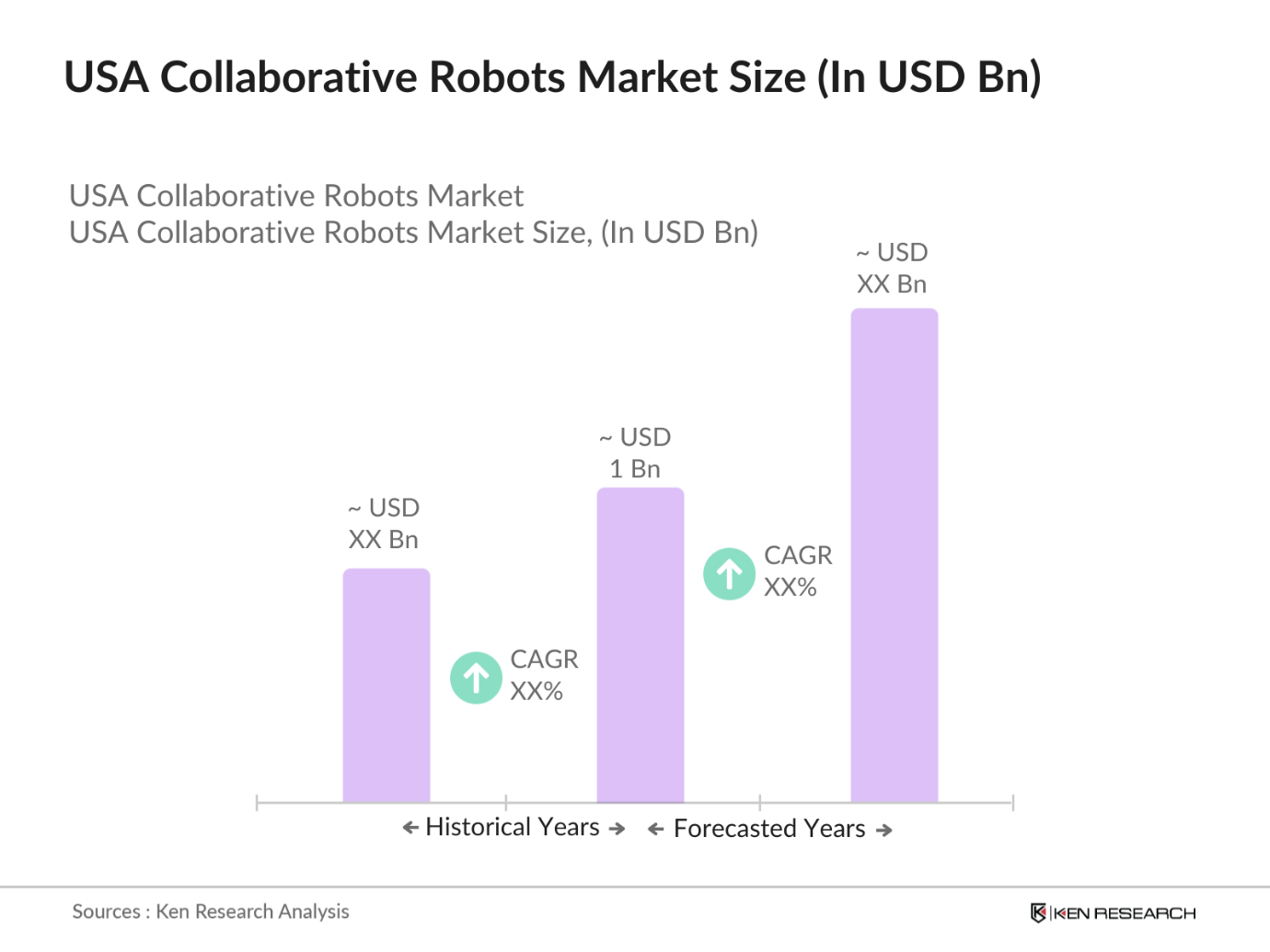
The USA collaborative robots market is valued at USD 1 billion, driven by increasing automation demand in industries such as automotive, electronics, and healthcare.
Key drivers in USA collaborative robot include advancements in AI and machine learning, increasing demand for flexible automation, and a growing emphasis on safety and productivity in manufacturing processes.
Challenges in USA collaborative robot market include high initial costs of adoption, stringent safety and compliance regulations, and a shortage of skilled labor for robot integration.
The major players in USA collaborative robot market include Universal Robots, ABB Robotics, FANUC Corporation, Rethink Robotics, and KUKA AG, dominating the market due to their technological expertise and global reach.
The USA collaborative robot market is expected to grow substantially over the next five years, driven by advancements in AI and machine learning, as well as increased adoption in sectors like healthcare and logistics.

What makes us stand out is that our consultants follows Robust, Refine and Result (RRR) methodology. i.e. Robust for clear definitions, approaches and sanity checking, Refine for differentiating respondents facts and opinions and Result for presenting data with story

We have set a benchmark in the industry by offering our clients with syndicated and customized market research reports featuring coverage of entire market as well as meticulous research and analyst insights.

While we don't replace traditional research, we flip the method upside down. Our dual approach of Top Bottom & Bottom Top ensures quality deliverable by not just verifying company fundamentals but also looking at the sector and macroeconomic factors.

With one step in the future, our research team constantly tries to show you the bigger picture. We help with some of the tough questions you may encounter along the way: How is the industry positioned? Best marketing channel? KPI's of competitors? By aligning every element, we help maximize success.

Our report gives you instant access to the answers and sources that other companies might choose to hide. We elaborate each steps of research methodology we have used and showcase you the sample size to earn your trust.

If you need any support, we are here! We pride ourselves on universe strength, data quality, and quick, friendly, and professional service.