















USA Container Homes Market Outlook to 2030
Region:North America
Author(s):Shubham Kashyap
Product Code:KROD7980
December 2024
89
About the Report
USA Container Homes Market Overview
- The USA Container Homes Market reached a valuation of USD 18 billion, driven by the rising demand for affordable and sustainable housing options, especially in urban areas with high living costs. Container homes offer a cost-effective alternative to traditional housing due to their modular design and the repurposing of used containers. Popular product categories such as single-container and multi-container homes are increasingly favored, offering customization and flexibility for urban and off-grid housing. Environmental awareness and the affordability of container-based housing solutions are key factors supporting this market growth.
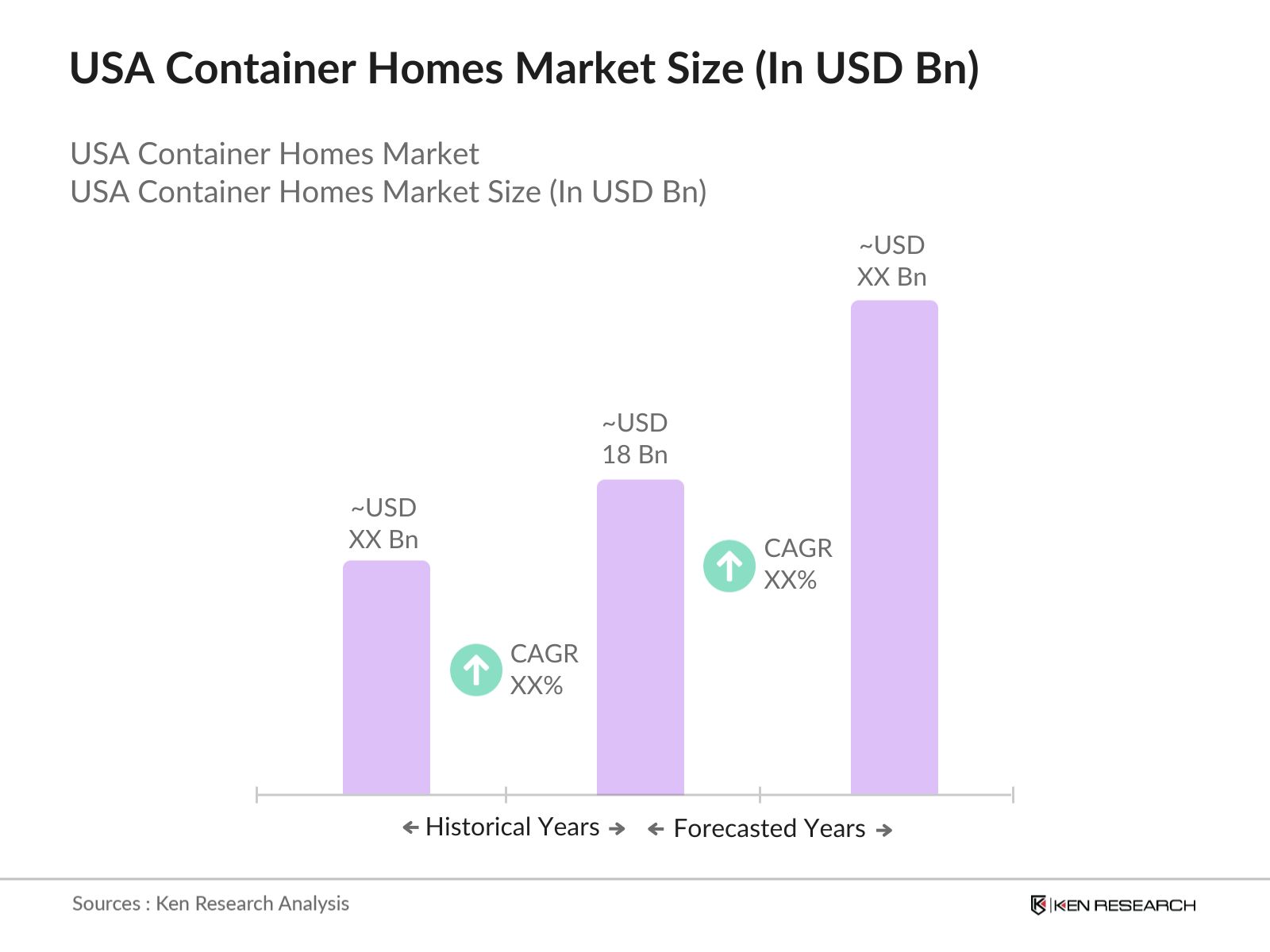
- Dominant regions like California, Texas, and Florida hold significant market shares due to high housing costs, progressive zoning laws, and a growing consumer base interested in alternative housing solutions. These states support the container home market with flexible building codes, expansive urban populations, and a strong eco-conscious demographic. Favorable climates, urban development, and the influence of green housing initiatives further bolster these regions' dominance, making them central to container home demand and adoption.
- HUD has developed standards for container homes under the Manufactured Home Construction and Safety Standards, providing regulatory clarity for modular and alternative housing solutions. These standards, updated in 2023, are aimed at ensuring structural safety and durability, requiring specific insulation and anchoring methods. According to HUD, compliance efforts have resulted in a noteable increase in new container home projects meeting these standards in urban areas, indicating the markets adaptation to regulatory requirements
USA Container Homes Market Segmentation
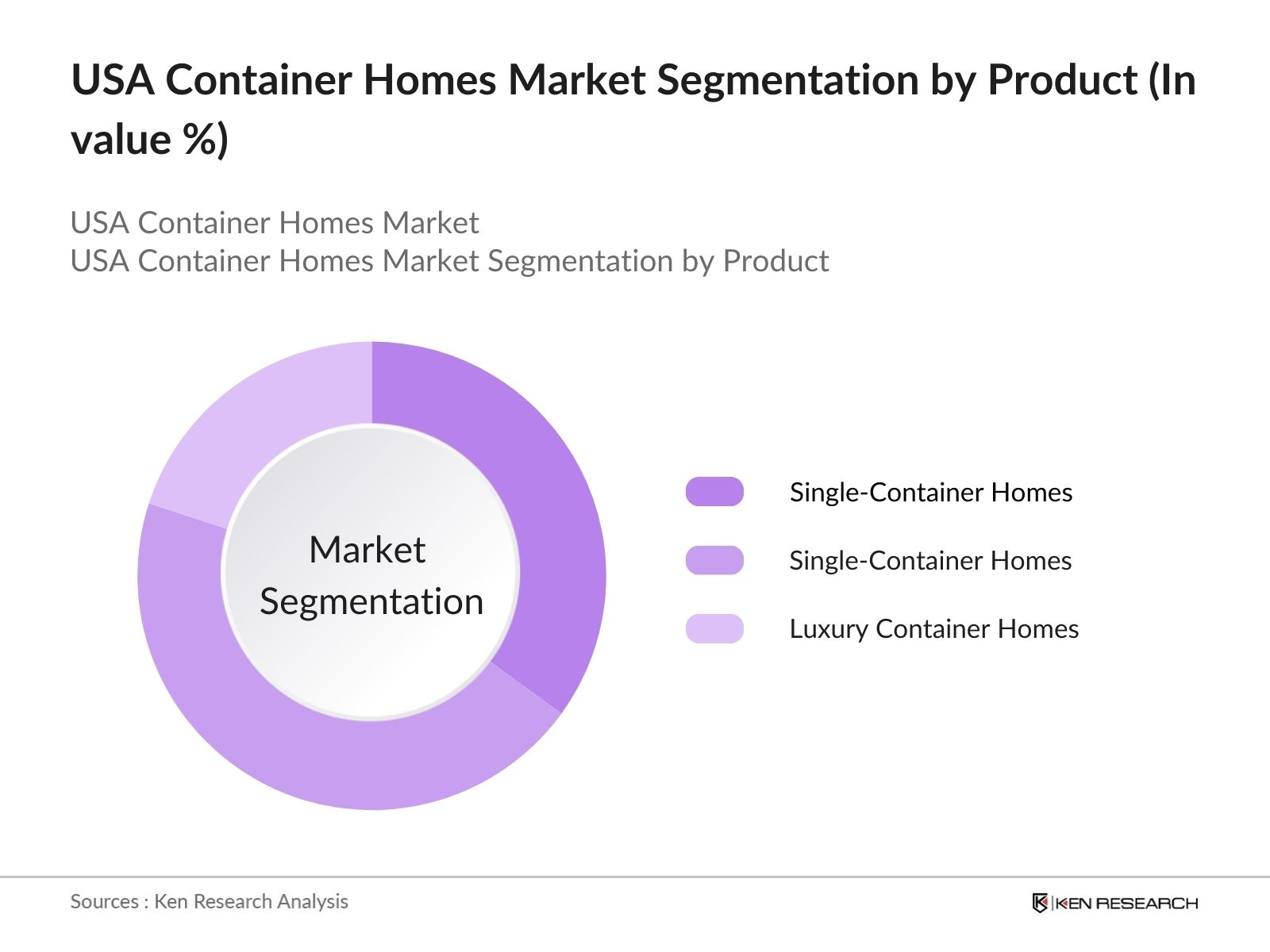
- By Product Type: The Market is segmented by product type into single-container homes, multi-container homes, and luxury container homes. Among these, multi-container homes hold the largest market share due to their ability to offer more spacious and customizable living spaces. The flexibility of multi-container designs makes them popular among urban buyers seeking sustainable housing solutions without compromising on space. Their modular structure allows multiple configurations, enhancing functionality and appeal among eco-conscious consumers who value innovative design.
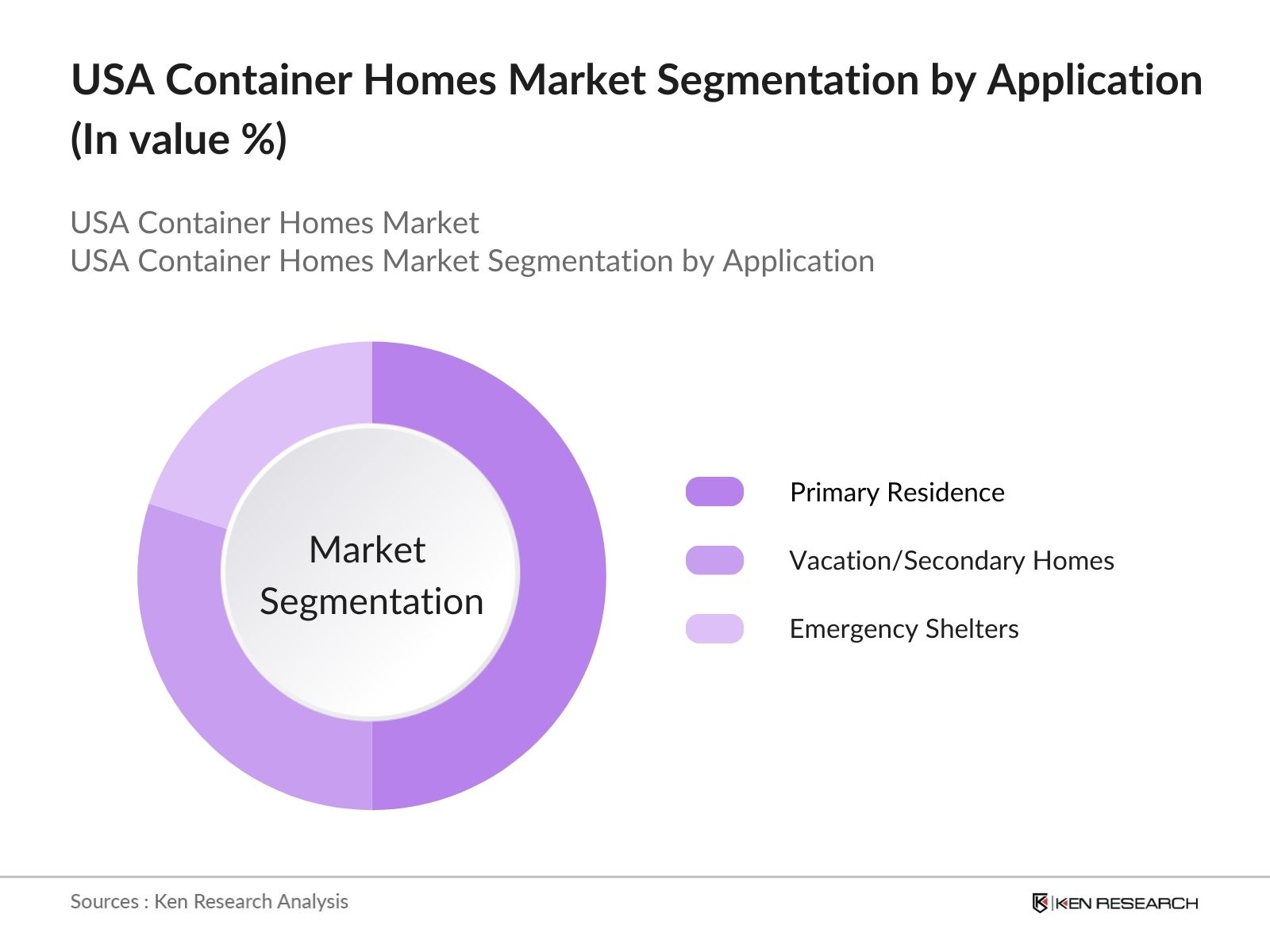
- By Application: The distribution of container homes in the USA spans primary residences, vacation homes, and emergency shelters. Primary residences lead the market, driven by urban demand for affordable, compact housing. The preference for container homes as primary residences reflects their appeal as a viable alternative for cost-conscious individuals, especially in cities where housing affordability is a significant concern. This segment benefits from the sustainable, minimalist living trend that aligns with urban lifestyle preferences and green initiatives.
USA Container Homes Market Competitive Landscape
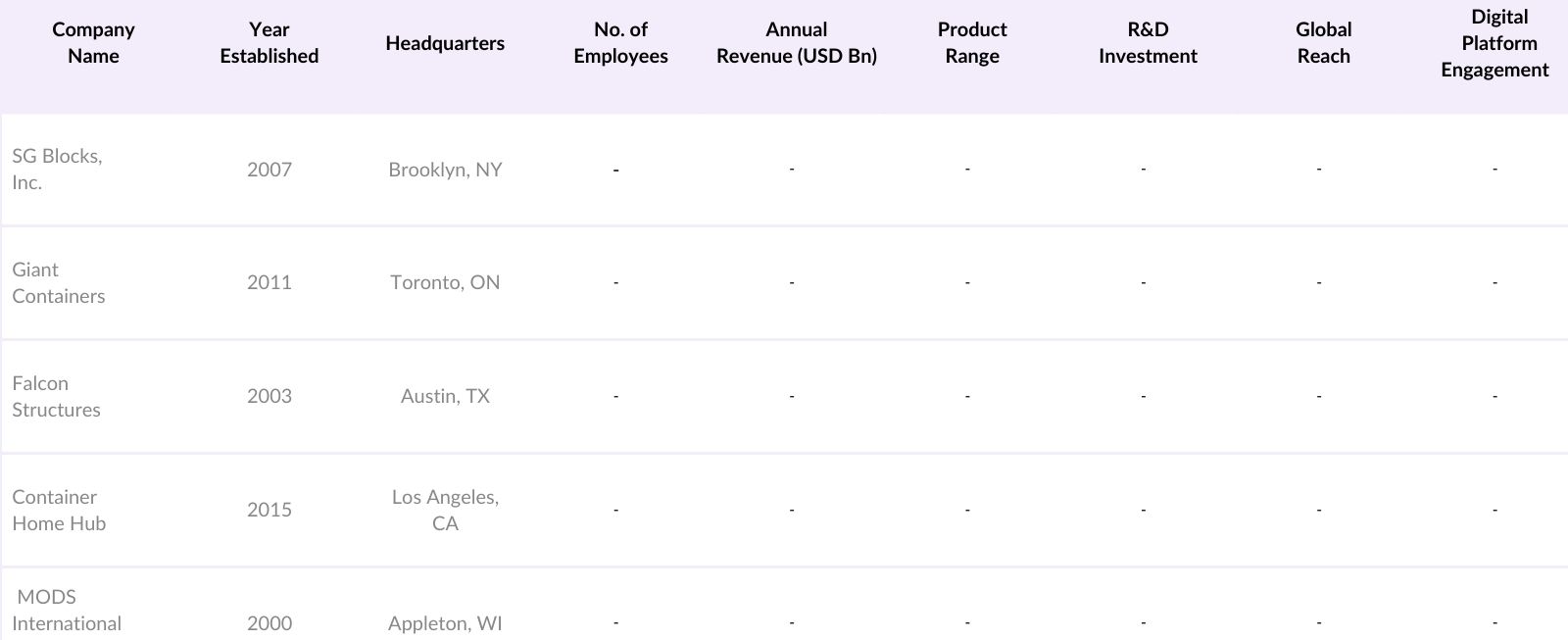
The USA container homes market is dominated by leading companies that specialize in modular housing solutions and sustainable construction practices. These companies leverage strong brand recognition, advanced technology, and custom designs to capture the interest of consumers seeking affordable and eco-friendly housing options.
USA Container Homes Market Analysis
Growth Drivers
- Rising Demand for Sustainable Construction: The USA has witnessed a significant shift towards sustainable construction, spurred by an estimated reduction in greenhouse gas emissions to 4,814 million metric tons as of 2024, per the U.S. Environmental Protection Agency. Container homes, repurposing used shipping containers, align with the sustainable goals by reducing waste. Additionally, the U.S. Department of Energy reports an increase in energy-efficient structures, with thousands of projects registered under LEED certifications, emphasizing eco-friendly building. Container homes utilize fewer new materials, reducing construction waste by an estimated 40 tons per build.
- Cost-Effectiveness of Recycled Containers: Recycled containers minimize construction costs and resource use, avoiding the expenses of traditional raw materials. U.S. Census Bureau data reveals that construction material imports have risen remarkably, underscoring the economic benefits of resource-efficient homes like container homes, which save on primary resources like steel and cement. The U.S. Department of Energy emphasizes the energy savings from these homes as well, estimating annual energy use reductions by nearly 15% compared to traditional construction.
- Flexibility in Design and Customization: Container homes offer architectural flexibility, supporting multi-story configurations and off-grid applications. The U.S. Department of Housing and Urban Development (HUD) emphasizes their customizable nature, aligning with consumer trends favoring modular housing units. An estimated 80,000 modular units were built in 2023 alone, highlighting adaptability in design for a growing segment of buyers. HUD data further indicates a noteable growth in urban modular developments, aligning with sustainability trends and cost-effective housing needs.
Challenges
- Limited Zoning and Building Code Adaptations: The lack of standardization in zoning regulations and building codes poses a significant challenge to the USA container homes market. Certain regions have restrictive codes that limit the feasibility of container homes, leading to higher regulatory compliance costs and limited location options for potential buyers. This regulatory complexity can hinder market expansion in regions with stringent housing regulations.
- Compliance with Local Building Codes: Adhering to local zoning and building regulations is a challenge for container homebuilders. As of 2024, HUD mandates specific structural and safety codes for container homes in urban areas, requiring modifications for compliance. The U.S. Department of Labor highlights that construction project timelines often extend by 15-20% due to regulatory approval processes. This compliance complexity limits container home adoption in certain regions, increasing costs for modifications and inspections.
USA Container Homes Market Future Outlook
The USA Container Homes Market is projected to witness steady growth, driven by increased urbanization, rising interest in sustainable housing, and a growing preference for compact, modular living solutions. Market players are likely to expand their product offerings, focusing on eco-friendly materials and modular designs to cater to consumers' diverse needs. Additionally, advancements in online sales channels are set to improve product accessibility and broaden the customer base, further strengthening the market outlook.
Future Market Opportunities
- Innovations in Modular and Prefabricated Housing Design: Technological advancements in modular housing design create growth opportunities for container homes. The development of prefabricated container units has increased flexibility and cost-efficiency in construction, appealing to consumers interested in customizable housing solutions. Companies focusing on technology-driven innovations will likely attract tech-savvy buyers, supporting growth in the modular housing segment.
- Expansion in Sustainable Community Projects: The rise of sustainable community projects represents a promising opportunity for the container homes market. As developers prioritize eco-friendly housing, container homes are likely to be a preferred choice due to their sustainability and reduced construction time. Large-scale community projects incorporating container homes could contribute significantly to market growth, catering to the demand for green housing developments.
Scope of the Report
|
By Product Type |
Single Container Homes Multi-Container Homes Luxury Container Homes |
|
By Construction Type |
Fixed Container Homes |
|
Portable/Movable Homes |
|
|
By End-User |
Residential Commercial Industrial |
|
By Application |
Primary Residence Vacation/Secondary Home Emergency Shelters |
|
By Region |
Northeast Midwest South West |
Products
Key Target Audience
Real Estate Developers
Construction and Modular Housing Companies
Government Agencies (U.S. Department of Housing and Urban Development)
Urban Planning and Zoning Authorities
Investors and Venture Capitalist Firms
Banks and Financial Institutions
Sustainable Building and Green Certification Organizations
Container Shipping and Logistics Companies
Companies
Players Mentioned in the Report
SG Blocks, Inc.
Giant Containers
Falcon Structures
Container Home Hub
MODS International
Logical Homes
Rhino Cubed
Custom Container Living
Alternative Living Spaces
Container Living Solutions
Cargotecture
Honomobo
Meka Modular
Cocoon Modules
BMarko Structures
Table of Contents
01 USA Container Homes Market Overview
1.1. Definition and Scope
1.2. Market Taxonomy
1.3. Market Growth Rate and Development Indicators
1.4. Market Segmentation Overview
02 USA Container Homes Market Size (In USD Mn)
2.1. Historical Market Size Analysis
2.2. Year-On-Year Growth Assessment
2.3. Key Market Milestones and Developments
03 USA Container Homes Market Dynamics
3.1. Growth Drivers (Sustainability, Affordability)
3.1.1. Rising Demand for Sustainable Construction
3.1.2. Cost-Effectiveness of Recycled Containers
3.1.3. Flexibility in Design and Customization
3.2. Market Challenges (Supply Chain, Local Zoning Laws)
3.2.1. Transportation and Sourcing of Containers
3.2.2. Compliance with Local Building Codes
3.3. Opportunities (Government Initiatives, Affordable Housing)
3.3.1. Increased Government Support for Affordable Housing
3.3.2. Expansion of Modular Construction Techniques
3.4. Trends (Off-Grid Solutions, Smart Homes)
3.4.1. Integration with Smart Home Technologies
3.4.2. Growing Demand for Off-Grid Container Homes
3.5. Government Regulation (Building Codes, Zoning Requirements)
3.5.1. U.S. Department of Housing and Urban Development (HUD) Standards
3.5.2. Local Zoning and Building Code Compliance
3.6. SWOT Analysis
3.7. Stakeholder Ecosystem
3.8. Porters Five Forces Analysis
3.9. Competition Ecosystem
04 USA Container Homes Market Segmentation
4.1. By Product Type (In Value %)
4.1.1. Single Container Homes
4.1.2. Multi-Container Homes
4.1.3. Luxury Container Homes
4.2. By Construction Type (In Value %)
4.2.1. Fixed Container Homes
4.2.2. Portable/Movable Container Homes
4.3. By End-User (In Value %)
4.3.1. Residential
4.3.2. Commercial
4.3.3. Industrial
4.4. By Application (In Value %)
4.4.1. Primary Residence
4.4.2. Vacation/Secondary Home
4.4.3. Emergency Shelters
4.5. By Region (In Value %)
4.5.1. Northeast
4.5.2. Midwest
4.5.3. South
4.5.4. West
05 USA Container Homes Market Competitive Landscape
5.1. Detailed Profiles of Major Competitors
5.1.1. SG Blocks, Inc.
5.1.2. Giant Containers
5.1.3. Falcon Structures
5.1.4. Container Home Hub
5.1.5. MODS International
5.1.6. Logical Homes
5.1.7. Rhino Cubed
5.1.8. Custom Container Living
5.1.9. Alternative Living Spaces
5.1.10. Container Living Solutions
5.1.11. Cargotecture
5.1.12. Honomobo
5.1.13. Meka Modular
5.1.14. Cocoon Modules
5.1.15. BMarko Structures
5.2. Cross Comparison Parameters (Number of Units Built, Average Project Cost, Market Share, Revenue, Lead Time, Construction Type Specialization, Certifications, Customization Options)
5.3. Market Share Analysis
5.4. Strategic Partnerships and Initiatives
5.5. Recent Mergers and Acquisitions
5.6. Investment Landscape and Funding Sources
5.7. Venture Capital and Private Equity Activity
5.8. Key Innovations and Technological Advancements
06 USA Container Homes Market Regulatory Framework
6.1. National Building Code Compliance
6.2. Local Permit and Zoning Requirements
6.3. Energy Efficiency Standards
6.4. Environmental Impact and Waste Reduction Guidelines
07 USA Container Homes Market Future Size (In USD Mn)
7.1. Future Market Size Projections
7.2. Key Factors Expected to Drive Future Market Growth
08 USA Container Homes Future Market Segmentation
8.1. By Product Type (In Value %)
8.2. By Construction Type (In Value %)
8.3. By End-User (In Value %)
8.4. By Application (In Value %)
8.5. By Region (In Value %)
09 USA Container Homes Market Analyst Recommendations
9.1. TAM/SAM/SOM Analysis
9.2. Consumer Behavior Analysis
9.3. Marketing and Distribution Strategies
9.4. White Space Opportunities and Strategic Gaps
Disclaimer Contact UsResearch Methodology
Step 1: Identification of Key Variables
This initial phase involves mapping the ecosystem of stakeholders within the USA container homes market. Extensive desk research and proprietary data sources help identify the critical factors driving market dynamics, such as urbanization, affordability, and sustainability needs.
Step 2: Market Analysis and Construction
Historical data on the container homes market is gathered and analyzed, focusing on adoption trends and regional preferences. Market dynamics such as construction and customization costs are carefully assessed to provide accurate revenue estimates.
Step 3: Hypothesis Validation and Expert Consultation
Market hypotheses are validated through expert interviews with key industry participants, including representatives from major container home companies. These insights refine the market data and ensure an accurate portrayal of market trends.
Step 4: Research Synthesis and Final Output
Final insights are synthesized through interactions with manufacturers and developers, offering direct insights into product types, sales trends, and consumer preferences. This final step ensures a validated, comprehensive analysis.
Frequently Asked Questions
01. How big is the USA Container Homes Market?
The USA container homes market is valued at USD 18 billion, driven by the need for sustainable and affordable housing options, with increasing adoption in urban areas.
02. What are the main challenges in the USA Container Homes Market?
Key challenges in the USA container homes market include navigating complex zoning regulations, the limited availability of containers, and high transportation costs, which impact the construction process.
03. Who are the major players in the USA Container Homes Market?
Leading players in this USA container homes market include SG Blocks, Inc., Giant Containers, Falcon Structures, Container Home Hub, and MODS International, each contributing to the market with innovative container housing solutions.
04. What drives the USA Container Homes Market?
Drivers in the USA container homes market include the demand for eco-friendly living, cost-effective construction, and support for alternative housing solutions in response to housing affordability issues.
Why Buy From Us?

What makes us stand out is that our consultants follows Robust, Refine and Result (RRR) methodology. i.e. Robust for clear definitions, approaches and sanity checking, Refine for differentiating respondents facts and opinions and Result for presenting data with story

We have set a benchmark in the industry by offering our clients with syndicated and customized market research reports featuring coverage of entire market as well as meticulous research and analyst insights.

While we don't replace traditional research, we flip the method upside down. Our dual approach of Top Bottom & Bottom Top ensures quality deliverable by not just verifying company fundamentals but also looking at the sector and macroeconomic factors.

With one step in the future, our research team constantly tries to show you the bigger picture. We help with some of the tough questions you may encounter along the way: How is the industry positioned? Best marketing channel? KPI's of competitors? By aligning every element, we help maximize success.

Our report gives you instant access to the answers and sources that other companies might choose to hide. We elaborate each steps of research methodology we have used and showcase you the sample size to earn your trust.

If you need any support, we are here! We pride ourselves on universe strength, data quality, and quick, friendly, and professional service.