















USA Diabetes Drugs Market Outlook to 2030
Region:North America
Author(s):Sanjna
Product Code:KROD4296
December 2024
84
About the Report
USA Diabetes Drugs Market Overview
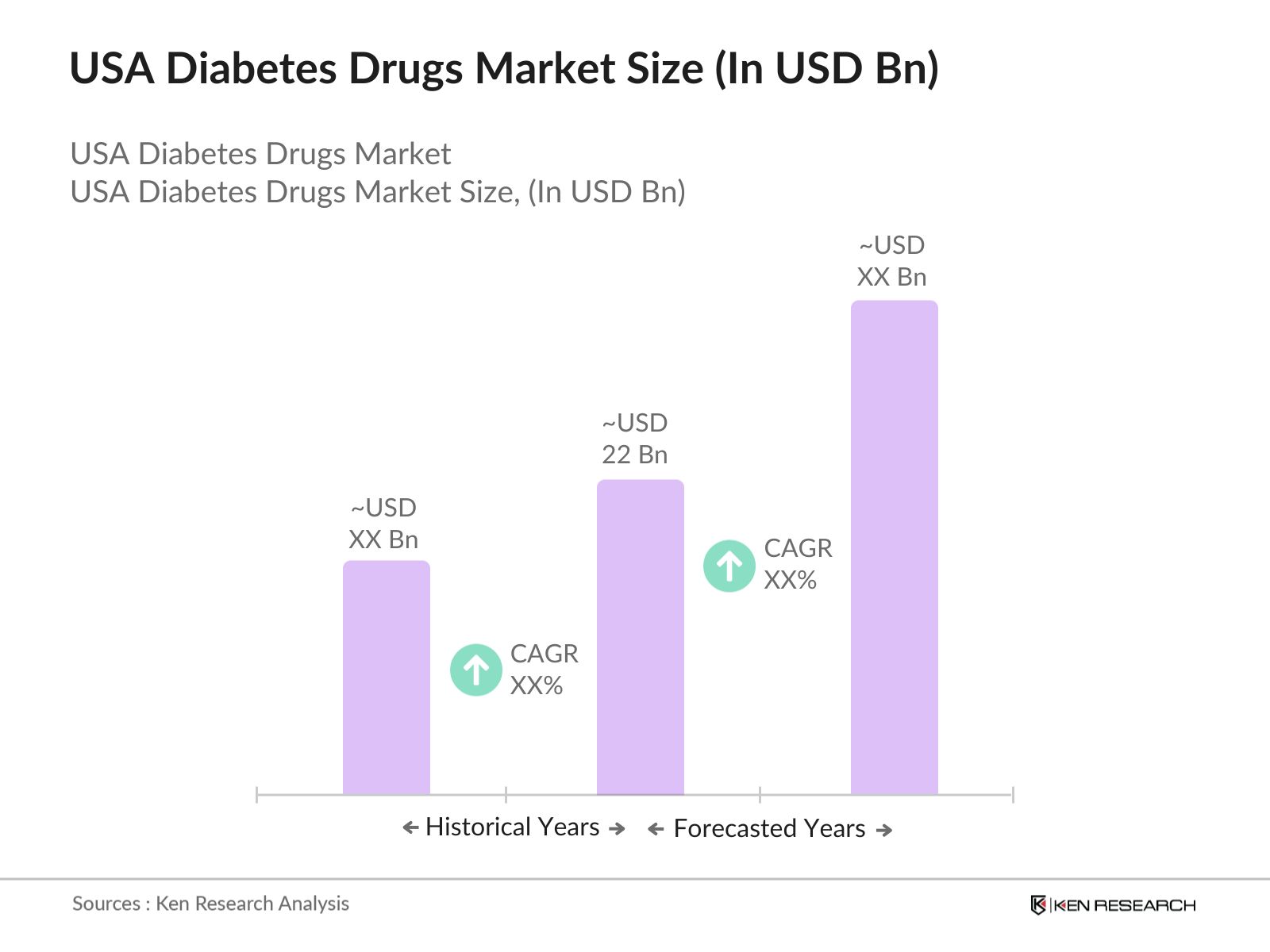
- The USA Diabetes Drugs market is valued at USD 22 billion, driven by factors such as the increasing prevalence of diabetes, technological advancements in diabetes care, and growing awareness regarding diabetes management. The demand for innovative therapies, especially among the aging population and those with Type 2 diabetes, continues to shape the market. Furthermore, increasing healthcare expenditure and supportive government policies also contribute to sustained market growth.
- Key cities in the United States, such as New York, Los Angeles, and Chicago, dominate the diabetes drugs market due to a higher prevalence of diabetes, advanced healthcare infrastructure, and an emphasis on continuous drug innovation. The high concentration of pharmaceutical companies and research institutions in these regions further bolsters their market dominance, enabling access to cutting-edge diabetes medications and treatments.
- The FDAs approval process involves rigorous testing to ensure the safety and efficacy of new diabetes treatments. In 2024, ongoing reforms in the FDAs pathway for accelerated approvals have focused on reducing approval timelines for innovative drugs addressing high-need conditions like diabetes. Recent approvals like Jardiance (empagliflozin) and Synjardy (empagliflozin and metformin) for pediatric type 2 diabetes were granted priority review due to their potential to improve blood sugar control in children who had limited options previously.
USA Diabetes Drugs Market Segmentation
By Drug Type: The USA Diabetes Drugs market is segmented by drug type into insulin, oral antidiabetics, GLP-1 receptor agonists, SGLT-2 inhibitors, and combination drugs. Insulin currently holds a dominant market share under the drug type segmentation. This is primarily due to its critical role in managing Type 1 diabetes, along with its increasing use in advanced Type 2 diabetes cases. Leading companies like Novo Nordisk and Eli Lilly have established significant brand presence and reliability, which supports insulin's stronghold in the market.

By Distribution Channel: The market is segmented by distribution channel into hospital pharmacies, retail pharmacies, and online pharmacies. Hospital pharmacies dominate this segment due to their integration within healthcare facilities, which ensures reliable access to prescribed medications. Additionally, the presence of specialists in hospitals to guide diabetes treatment facilitates medication adherence and contributes to hospital pharmacies' significant share in the diabetes drugs market.

USA Diabetes Drugs Market Competitive Landscape
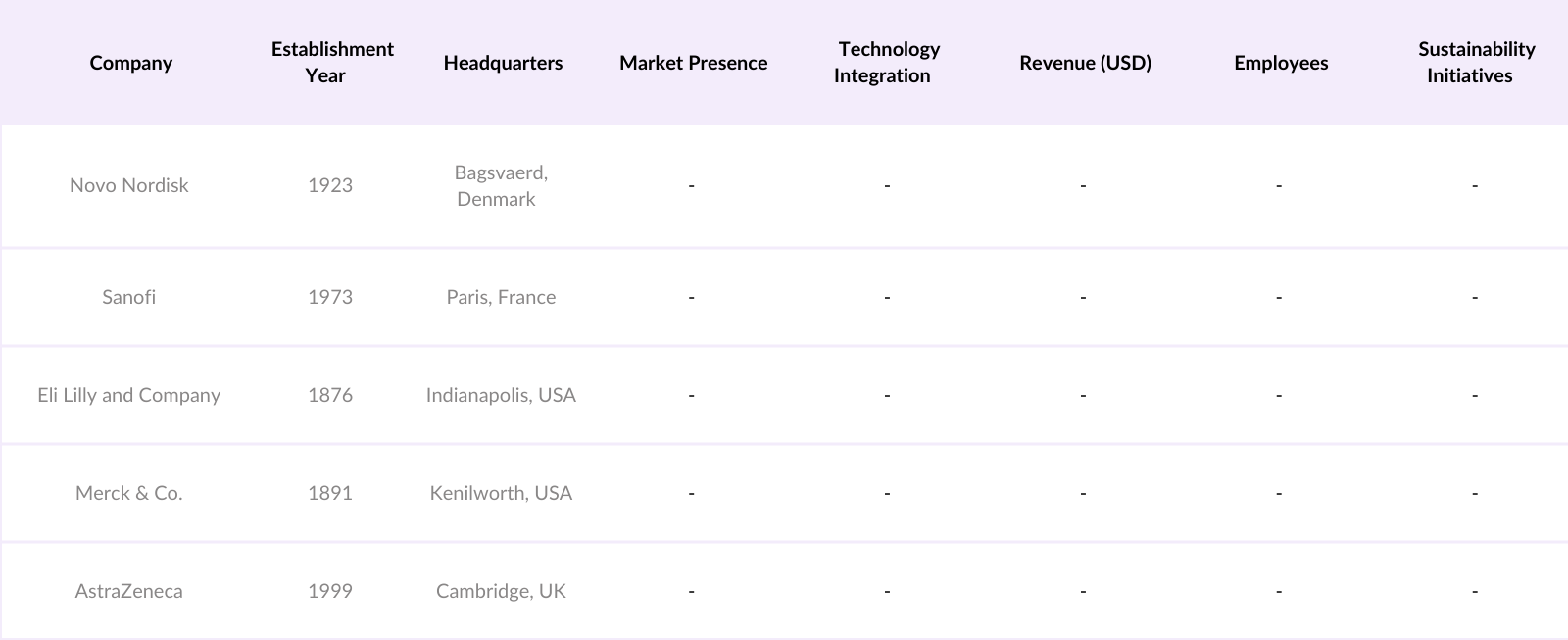
The USA Diabetes Drugs market is dominated by a few major players, including Novo Nordisk, Sanofi, and Eli Lilly, alongside newer entrants focusing on innovative therapies. These key companies leverage established market presence, extensive research capabilities, and a focus on sustainable practices, giving them a competitive edge in the rapidly evolving diabetes drugs market.
USA Diabetes Drugs Market Analysis
Growth Drivers
- Rising Diabetes Prevalence: The prevalence of diabetes in the U.S. has reached concerning levels, affecting around 38.4 million people by 2024, comprising roughly 11.6% of the population, with most cases being type 2 diabetes among adults aged 18 and older. This ongoing rise, fueled by higher obesity rates and other metabolic risk factors, underscores the need for enhanced intervention strategies and novel therapeutics to address this public health challenge.
- Advancements in Drug Delivery Systems: Technological advances in diabetes drug delivery, such as the development of artificial pancreas systems and continuous glucose monitors (CGMs), have significantly improved glycemic management in patients. By 2024, over 400,000 people in the U.S. are expected to benefit from CGMs, providing real-time glucose monitoring linked with automated insulin pumps, thus enhancing therapeutic outcomes. These innovations, supported by the National Institute of Diabetes and Digestive and Kidney Diseases (NIDDK), aim to provide safer and more efficient alternatives to traditional insulin therapy.
- Increase in Government and Private Funding: Federal funding for diabetes research, including NIDDK-backed projects, has been crucial in driving innovation. In 2023, government-funded studies, such as the SEARCH for Diabetes in Youth, have focused on understanding the rapidly increasing incidence of diabetes in adolescents, identifying that over 352,000 young individuals now have diabetes, which places them at lifelong risk of complications. Federal support in diabetes research continues to grow, reflecting the high priority given to addressing this pervasive disease.
Challenges
- High Cost of Innovative Drugs: The direct medical costs associated with diabetes, estimated at $306 billion in 2022, highlight the economic burden on patients and healthcare systems, with a substantial portion attributed to high-priced novel drugs and advanced therapies. Rising costs continue to create financial barriers, limiting access to critical drugs and technologies, particularly for uninsured or low-income populations.
- Complex Regulatory Approval Process: The regulatory approval process for new diabetes drugs in the U.S. remains intricate, with stringent FDA guidelines requiring extensive safety and efficacy trials. For instance, novel insulin analogs and GLP-1 agonists have faced delays due to the need for comprehensive Phase III clinical trials, which can take several years, thereby affecting the pace at which patients receive these advancements.
USA Diabetes Drugs Market Future Outlook
USA Diabetes Drugs market is anticipated to exhibit steady growth, supported by advancements in drug formulation and delivery, heightened research investments, and increased awareness of diabetes prevention and management. The continued integration of digital health solutions into diabetes care and new product innovations will also likely enhance the accessibility and effectiveness of diabetes treatments across diverse patient demographics.
Market Opportunities
- Expansion in Telemedicine and Digital Health Solutions: The increased adoption of telemedicine offers a promising avenue for diabetes management. By mid-2024, more than 20 million U.S. patients with chronic diseases, including diabetes, engaged with telehealth services for routine care. These virtual platforms have expanded healthcare access for patients in remote areas, enabling ongoing glucose monitoring and personalized support from healthcare providers.
- Increased Demand for Oral Antidiabetic Drugs: Oral antidiabetic drugs, particularly for type 2 diabetes, continue to gain favor due to their ease of administration and growing accessibility. Nearly 60% of individuals with type 2 diabetes rely on these medications, spurring research into more effective oral agents and combinations. This trend reflects an expanding market for drug manufacturers focusing on non-insulin-based therapies.
Scope of the Report
|
Segments |
Sub-segments |
|
By Drug Type |
Insulin Oral Antidiabetics GLP-1 Receptor Agonists SGLT-2 Inhibitors Combination Drugs |
|
By Administration Route |
Injectable Oral |
|
By Distribution Channel |
Hospital Pharmacies Retail Pharmacies Online Pharmacies |
|
By Patient Type |
Type 1 Diabetes Type 2 Diabetes |
|
By Region |
Northeast Midwest South West |
Products
Key Target Audience
Pharmaceutical Manufacturers
Healthcare Providers
Endocrinologists and Diabetologists
Hospitals and Clinics
Retail Pharmacies
Diabetes Technology Developers
Investors and Venture Capitalist Firms
Government and Regulatory Bodies (e.g., FDA, CDC)
Companies
Players Mentioned in the Report
Novo Nordisk
Sanofi
Eli Lilly and Company
Merck & Co.
AstraZeneca
Johnson & Johnson
Boehringer Ingelheim
Pfizer Inc.
Novartis AG
GlaxoSmithKline
Table of Contents
1. USA Diabetes Drugs Market Overview
1.1. Definition and Scope
1.2. Market Taxonomy
1.3. Market Growth Rate
1.4. Market Segmentation Overview
2. USA Diabetes Drugs Market Size (In USD Mn)
2.1. Historical Market Size
2.2. Year-On-Year Growth Analysis
2.3. Key Market Developments and Milestones
3. USA Diabetes Drugs Market Analysis
3.1. Growth Drivers
3.1.1. Rising Diabetes Prevalence
3.1.2. Advancements in Drug Delivery Systems
3.1.3. Increase in Government and Private Funding
3.1.4. Shift Toward Personalized Medicine
3.2. Market Challenges
3.2.1. High Cost of Innovative Drugs
3.2.2. Complex Regulatory Approval Process
3.2.3. Competition from Alternative Therapies
3.3. Opportunities
3.3.1. Expansion in Telemedicine and Digital Health Solutions
3.3.2. Increased Demand for Oral Antidiabetic Drugs
3.3.3. Research and Development in Insulin Analogs
3.4. Trends
3.4.1. Growing Adoption of Biosimilar Insulins
3.4.2. Integration with Digital Health Applications
3.4.3. Increased Focus on Injectable GLP-1 Agonists
3.5. Government Regulation
3.5.1. FDA Approval Process
3.5.2. Reimbursement Policies for Diabetes Medications
3.5.3. Import Tariffs on Raw Materials
3.5.4. Compliance with Affordable Care Act
3.6. SWOT Analysis
3.7. Stakeholder Ecosystem
3.8. Porters Five Forces Analysis
3.9. Competitive Landscape
4. USA Diabetes Drugs Market Segmentation
4.1. By Drug Type (In Value %)
4.1.1. Insulin
4.1.2. Oral Antidiabetics
4.1.3. GLP-1 Receptor Agonists
4.1.4. SGLT-2 Inhibitors
4.1.5. Combination Drugs
4.2. By Administration Route (In Value %)
4.2.1. Injectable
4.2.2. Oral
4.3. By Distribution Channel (In Value %)
4.3.1. Hospital Pharmacies
4.3.2. Retail Pharmacies
4.3.3. Online Pharmacies
4.4. By Patient Type (In Value %)
4.4.1. Type 1 Diabetes
4.4.2. Type 2 Diabetes
4.4.3. Gestational Diabetes
4.5. By Region (In Value %)
4.5.1. Northeast
4.5.2. Midwest
4.5.3. South
4.5.4. West
5. USA Diabetes Drugs Market Competitive Analysis
5.1. Detailed Profiles of Major Companies
5.1.1. Novo Nordisk
5.1.2. Sanofi
5.1.3. Eli Lilly and Company
5.1.4. AstraZeneca
5.1.5. Johnson & Johnson
5.1.6. Merck & Co.
5.1.7. Boehringer Ingelheim
5.1.8. Pfizer Inc.
5.1.9. Novartis AG
5.1.10. GlaxoSmithKline
5.2. Cross Comparison Parameters (Revenue, Market Share, Product Portfolio, Market Presence, R&D Investment, Patents, Sales Channels, Strategic Collaborations)
5.3. Market Share Analysis
5.4. Strategic Initiatives
5.5. Mergers and Acquisitions
5.6. Investment Analysis
5.7. Venture Capital and Private Equity Funding
6. USA Diabetes Drugs Market Regulatory Framework
6.1. Regulatory Guidelines for Drug Approval
6.2. Compliance Requirements for Insulin and Other Drugs
6.3. Drug Pricing Regulations
6.4. Intellectual Property and Patent Laws
7. USA Diabetes Drugs Future Market Size (In USD Mn)
7.1. Future Market Size Projections
7.2. Key Factors Driving Future Market Growth
8. USA Diabetes Drugs Future Market Segmentation
8.1. By Drug Type (In Value %)
8.2. By Administration Route (In Value %)
8.3. By Distribution Channel (In Value %)
8.4. By Patient Type (In Value %)
8.5. By Region (In Value %)
9. USA Diabetes Drugs Market Analysts Recommendations
9.1. TAM/SAM/SOM Analysis
9.2. Patient Cohort Analysis
9.3. Marketing Strategy Recommendations
9.4. Identification of White Space Opportunities
Research Methodology
Step 1: Identification of Key Variables
The initial phase involves mapping the USA Diabetes Drugs markets major stakeholders, utilizing extensive desk research from primary and secondary data sources. The objective is to outline critical variables impacting market trends and behaviors.
Step 2: Market Analysis and Construction
This phase compiles historical data on market penetration and customer adoption rates across different segments. Further evaluation of the sales channels and regional distribution is conducted to provide reliable market estimates.
Step 3: Hypothesis Validation and Expert Consultation
Hypotheses on market trends are validated via interviews with industry experts, enabling verification and refinement of data regarding market challenges and growth drivers from a hands-on perspective.
Step 4: Research Synthesis and Final Output
The final phase integrates data from multiple diabetes drug manufacturers to refine insights on product demand, patient preferences, and sales metrics, ensuring a holistic view of the USA Diabetes Drugs market.
Frequently Asked Questions
01. How big is the USA Diabetes Drugs market?
The USA Diabetes Drugs market was valued at USD 22 billion, driven by increasing diabetes prevalence and advancements in drug delivery technologies.
02. What are the challenges in the USA Diabetes Drugs market?
Challenges in USA Diabetes Drugs market include high treatment costs, regulatory complexities, and the presence of low-cost alternatives, which impact market expansion and profitability.
03. Who are the major players in the USA Diabetes Drugs market?
Key players in USA Diabetes Drugs market include Novo Nordisk, Sanofi, Eli Lilly, and AstraZeneca, who dominate through established market presence and innovative product pipelines.
04. What drives growth in the USA Diabetes Drugs market?
USA Diabetes Drugs market's growth is fueled by the rising incidence of diabetes, investment in research, and an increasing focus on patient-centric treatment approaches.
Why Buy From Us?

What makes us stand out is that our consultants follows Robust, Refine and Result (RRR) methodology. i.e. Robust for clear definitions, approaches and sanity checking, Refine for differentiating respondents facts and opinions and Result for presenting data with story

We have set a benchmark in the industry by offering our clients with syndicated and customized market research reports featuring coverage of entire market as well as meticulous research and analyst insights.

While we don't replace traditional research, we flip the method upside down. Our dual approach of Top Bottom & Bottom Top ensures quality deliverable by not just verifying company fundamentals but also looking at the sector and macroeconomic factors.

With one step in the future, our research team constantly tries to show you the bigger picture. We help with some of the tough questions you may encounter along the way: How is the industry positioned? Best marketing channel? KPI's of competitors? By aligning every element, we help maximize success.

Our report gives you instant access to the answers and sources that other companies might choose to hide. We elaborate each steps of research methodology we have used and showcase you the sample size to earn your trust.

If you need any support, we are here! We pride ourselves on universe strength, data quality, and quick, friendly, and professional service.