
USA Digital Music Market outlook to 2030
Region:United States
Author(s):Naman Rohilla
Product Code:KROD5584
Region:United States
Author(s):Naman Rohilla
Product Code:KROD5584
December 2024
95
Listen to the audio summary
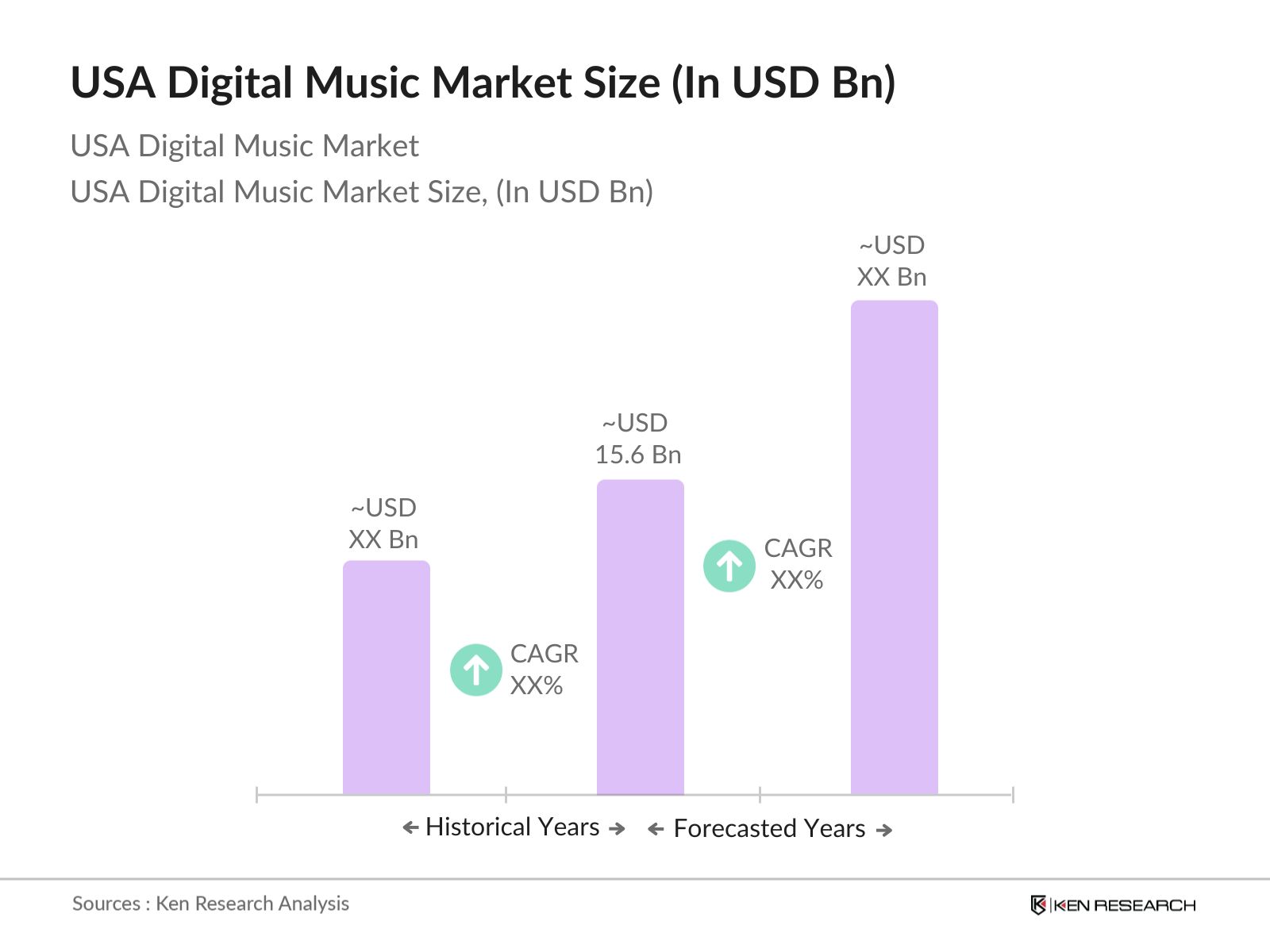
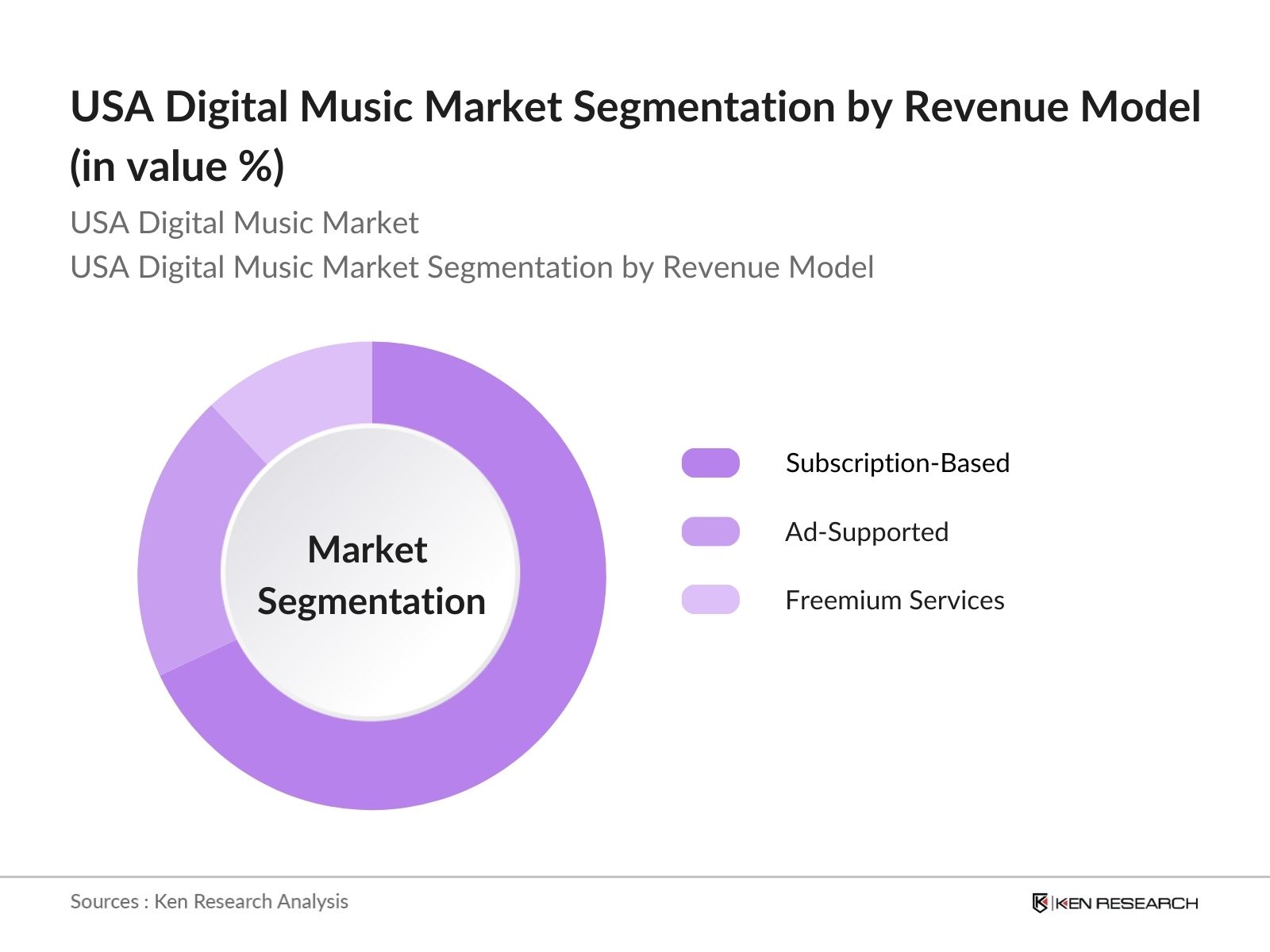
The USA Digital Music Market is dominated by a few key players, including global tech giants and dedicated music streaming platforms. These companies have invested heavily in content acquisition, technological innovation, and user experience optimization, ensuring they remain at the forefront of the industry. Spotify, Apple Music, and Amazon Music are among the top players, leveraging their massive user bases, strong brand presence, and strategic partnerships with artists and record labels.
|
Company Name |
Establishment Year |
Headquarters |
Subscribers (Millions) |
Monthly Active Users |
Revenue (USD Bn) |
Partnerships |
Exclusive Releases |
Global Market Share |
Licensing Agreements |
|
Spotify |
2006 |
Stockholm, Sweden |
- |
- |
- |
- |
- |
- |
- |
|
Apple Music |
2015 |
Cupertino, USA |
- |
- |
- |
- |
- |
- |
- |
|
Amazon Music |
2007 |
Seattle, USA |
- |
- |
- |
- |
- |
- |
- |
|
YouTube Music |
2015 |
San Bruno, USA |
- |
- |
- |
- |
- |
- |
- |
|
Tidal |
2014 |
New York, USA |
- |
- |
- |
- |
- |
- |
- |
The USA Digital Music Market is poised for growth in the coming years, driven by continued innovation in streaming technology, the rise of personalized audio experiences, and increasing consumer demand for high-fidelity music formats. The market is expected to see increased investment in AI-driven recommendation systems, voice-assisted music discovery, and expansion into non-music audio content such as podcasts and audiobooks. Additionally, strategic partnerships between streaming platforms and artists, as well as the integration of music with short-form video content, are anticipated to further accelerate market growth.
|
Music Format |
Streaming Digital Downloads Ringtones Digital Radio |
|
Revenue Model |
Subscription-Based Ad-Supported Freemium Services |
|
Platform |
Smartphones Smart Speakers Desktop Connected Cars |
|
Genre |
Pop Hip-Hop/Rap EDM Country |
|
Region |
Northeast Midwest South West |
1.1. Definition and Scope
1.2. Market Taxonomy
1.3. Market Growth Rate
1.4. Market Segmentation Overview
2.1. Historical Market Size
2.2. Year-On-Year Growth Analysis
2.3. Key Market Developments and Milestones
3.1. Growth Drivers
3.1.1. Increased Music Streaming Adoption
3.1.2. Expanding Subscriber Base (Subscriber Growth Rate, Monthly Active Users)
3.1.3. Rising Demand for High-Fidelity Audio (Subscription Tiers)
3.1.4. Artist & Label Partnerships (Exclusive Releases, Collaborations)
3.2. Market Challenges
3.2.1. Revenue Decline from Digital Downloads (Revenue Per User Decline)
3.2.2. Content Licensing and Royalties (Royalty Payout Rates)
3.2.3. Data Privacy and Security Concerns (Compliance, GDPR)
3.3. Opportunities
3.3.1. Integration of AI & Machine Learning (Personalized Playlists, Recommendation Algorithms)
3.3.2. Monetization of User-Generated Content (UGC Platforms, Emerging Revenue Streams)
3.3.3. Expansion into Non-Music Audio Content (Podcasts, Audiobooks)
3.4. Trends
3.4.1. Rise of Short-Form Video and Music Sync (Cross-Platform Integration)
3.4.2. Growth in Independent Artists & Direct-to-Fan Models (Independent Music Market Share)
3.4.3. Subscription Fatigue & Bundling Options (Bundled Offerings with Video or Gaming)
3.5. Government Regulations
3.5.1. Music Modernization Act (Impact on Mechanical Licensing, Streaming Revenue Share)
3.5.2. Regulatory Oversight on Copyright Infringement (DMCA, Fair Use Laws)
3.6. SWOT Analysis
3.7. Stakeholder Ecosystem
3.8. Porters Five Forces
3.8.1. Bargaining Power of Music Labels
3.8.2. Bargaining Power of Consumers (Consumer Loyalty, Switching Costs)
3.8.3. Threat of New Entrants (Niche Music Streaming Services)
3.8.4. Threat of Substitutes (Music Piracy, Free Platforms)
3.8.5. Industry Rivalry (Subscription-Based vs. Ad-Based Models)
3.9. Competition Ecosystem
4.1. By Music Format (In Value %)
4.1.1. Streaming
4.1.2. Digital Downloads
4.1.3. Ringtones and Ringbacks
4.1.4. Digital Radio
4.2. By Revenue Model (In Value %)
4.2.1. Subscription-Based (Monthly, Annual)
4.2.2. Ad-Supported (CPM, CPA Models)
4.2.3. Freemium Services
4.3. By Platform (In Value %)
4.3.1. Smartphones
4.3.2. Smart Speakers
4.3.3. Desktop & Laptop
4.3.4. Connected Cars
4.4. By Genre (In Value %)
4.4.1. Pop
4.4.2. Hip-Hop/Rap
4.4.3. Electronic Dance Music (EDM)
4.4.4. Country
4.5. By Region (In Value %)
4.5.1. Northeast
4.5.2. Midwest
4.5.3. South
4.5.4. West
5.1. Detailed Profiles of Major Companies
5.1.1. Spotify
5.1.2. Apple Music
5.1.3. Amazon Music
5.1.4. YouTube Music
5.1.5. Tidal
5.1.6. Pandora
5.1.7. Deezer
5.1.8. SoundCloud
5.1.9. Napster
5.1.10. Audiomack
5.1.11. iHeartRadio
5.1.12. Qobuz
5.1.13. Bandcamp
5.1.14. SiriusXM
5.1.15. Tencent Music
5.2. Cross Comparison Parameters (Subscribers, Revenue, Streaming Hours, Licensing Agreements)
5.3. Market Share Analysis
5.4. Strategic Initiatives
5.5. Mergers And Acquisitions
5.6. Investment Analysis
5.7 Venture Capital Funding
5.8 Partnerships with Labels and Artists
6.1. Copyright Law Implications (Digital Millennium Copyright Act, Mechanical Licensing Collective)
6.2. Royalty Compliance (Performance Rights Organizations, SoundExchange)
6.3. Content Licensing Regulations (Global vs. Local Licensing)
7.1. Future Market Size Projections
7.2. Key Factors Driving Future Market Growth
8.1. By Music Format (In Value %)
8.2. By Revenue Model (In Value %)
8.3. By Platform (In Value %)
8.4. By Genre (In Value %)
8.5. By Region (In Value %)
9.1. TAM/SAM/SOM Analysis
9.2. User Engagement Trends
9.3. White Space Opportunities (Emerging Platforms, Niche Music Genres)
The initial phase involves constructing an ecosystem map encompassing all major stakeholders within the USA Digital Music Market. This step is underpinned by extensive desk research, utilizing a combination of secondary and proprietary databases to gather comprehensive industry-level information. The primary objective is to identify and define the critical variables that influence market dynamics.
In this phase, we will compile and analyze historical data pertaining to the USA Digital Music Market. This includes assessing market penetration, the ratio of platforms to subscribers, and the resultant revenue generation. Furthermore, an evaluation of subscription models will be conducted to ensure the reliability and accuracy of the revenue estimates.
Market hypotheses will be developed and subsequently validated through computer-assisted telephone interviews (CATIs) with industry experts representing a diverse array of companies. These consultations will provide valuable operational and financial insights directly from industry practitioners, which will be instrumental in refining and corroborating the market data.
The final phase involves direct engagement with multiple digital music platforms to acquire detailed insights into music formats, user preferences, and revenue streams. This interaction will serve to verify and complement the statistics derived from the bottom-up approach, thereby ensuring a comprehensive, accurate, and validated analysis of the USA Digital Music Market.
The USA Digital Music Market was valued at USD 15.6 billion and is driven by the increasing penetration of streaming services, growing user base, and technological innovations in music delivery.
Challenges in the USA Digital Music Market include content licensing complexities, growing competition among streaming platforms, and increasing consumer demand for lower-cost services.
Key players in the USA Digital Music Market include Spotify, Apple Music, Amazon Music, YouTube Music, and Tidal, with their dominance attributed to strong brand presence, extensive content libraries, and advanced user interfaces.
The USA Digital Music Market is driven by the rise in on-demand streaming, the adoption of AI-based recommendation systems, and increasing investments in exclusive content and artist partnerships.

What makes us stand out is that our consultants follows Robust, Refine and Result (RRR) methodology. i.e. Robust for clear definitions, approaches and sanity checking, Refine for differentiating respondents facts and opinions and Result for presenting data with story

We have set a benchmark in the industry by offering our clients with syndicated and customized market research reports featuring coverage of entire market as well as meticulous research and analyst insights.

While we don't replace traditional research, we flip the method upside down. Our dual approach of Top Bottom & Bottom Top ensures quality deliverable by not just verifying company fundamentals but also looking at the sector and macroeconomic factors.

With one step in the future, our research team constantly tries to show you the bigger picture. We help with some of the tough questions you may encounter along the way: How is the industry positioned? Best marketing channel? KPI's of competitors? By aligning every element, we help maximize success.

Our report gives you instant access to the answers and sources that other companies might choose to hide. We elaborate each steps of research methodology we have used and showcase you the sample size to earn your trust.

If you need any support, we are here! We pride ourselves on universe strength, data quality, and quick, friendly, and professional service.