
USA DNA Sequencing Market Outlook to 2030
Region:North America
Author(s):Sanjna
Product Code:KROD9450
November 2024
82
About the Report
USA DNA Sequencing Market Overview
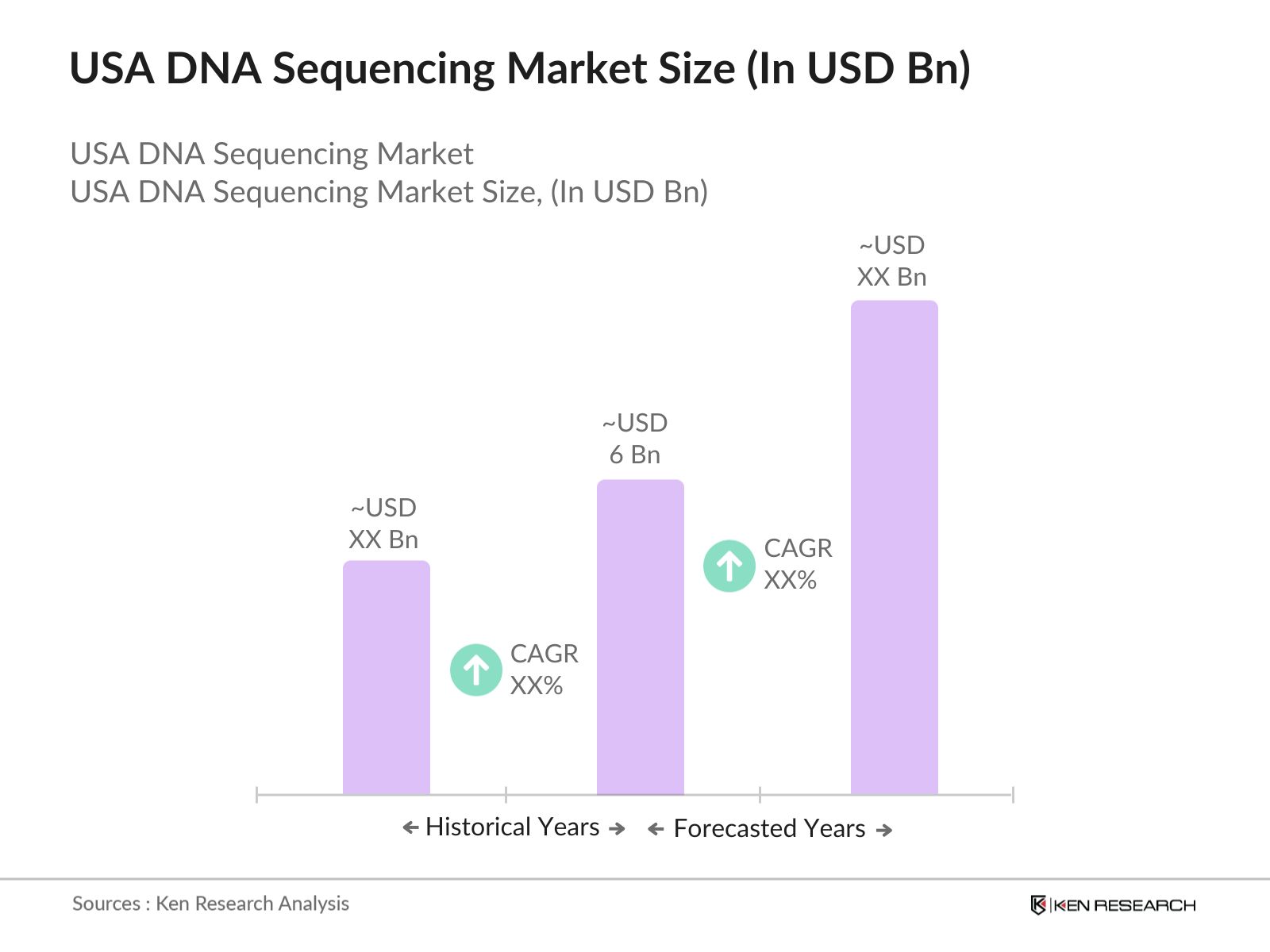
- The USA DNA sequencing market is valued at USD 6 billion, driven by increasing demand for precision medicine and advancements in next-generation sequencing (NGS) technology. The market's growth is supported by significant investments in genomics research, including projects like the All of Us Research Program initiated by the National Institutes of Health (NIH), which aim to sequence one million genomes. The rising need for early diagnosis and treatment of genetic disorders, coupled with the reduction in sequencing costs, is propelling market expansion.
- Major cities and states like California, Massachusetts, and New York dominate the USA DNA sequencing market due to the high concentration of research institutions, biotechnology companies, and academic centers. These regions benefit from a well-established infrastructure for genomic research and significant government funding. In particular, the San Francisco Bay Area is home to key players such as Illumina and Pacific Biosciences, further solidifying its position as a global hub for genomics.
- The U.S. Food and Drug Administration (FDA) regulates clinical DNA sequencing tests through its oversight of laboratory-developed tests (LDTs) and in vitro diagnostic (IVD) devices. In 2023, the FDA issued new guidelines for the regulation of next-generation sequencing (NGS) technologies used in clinical settings. These guidelines aim to ensure the accuracy and reliability of sequencing tests while promoting innovation in the field. As of 2024, over 200 NGS-based tests for cancer and genetic disorders had received FDA approval, with a growing focus on regulatory pathways for precision medicine.
USA DNA Sequencing Market Segmentation
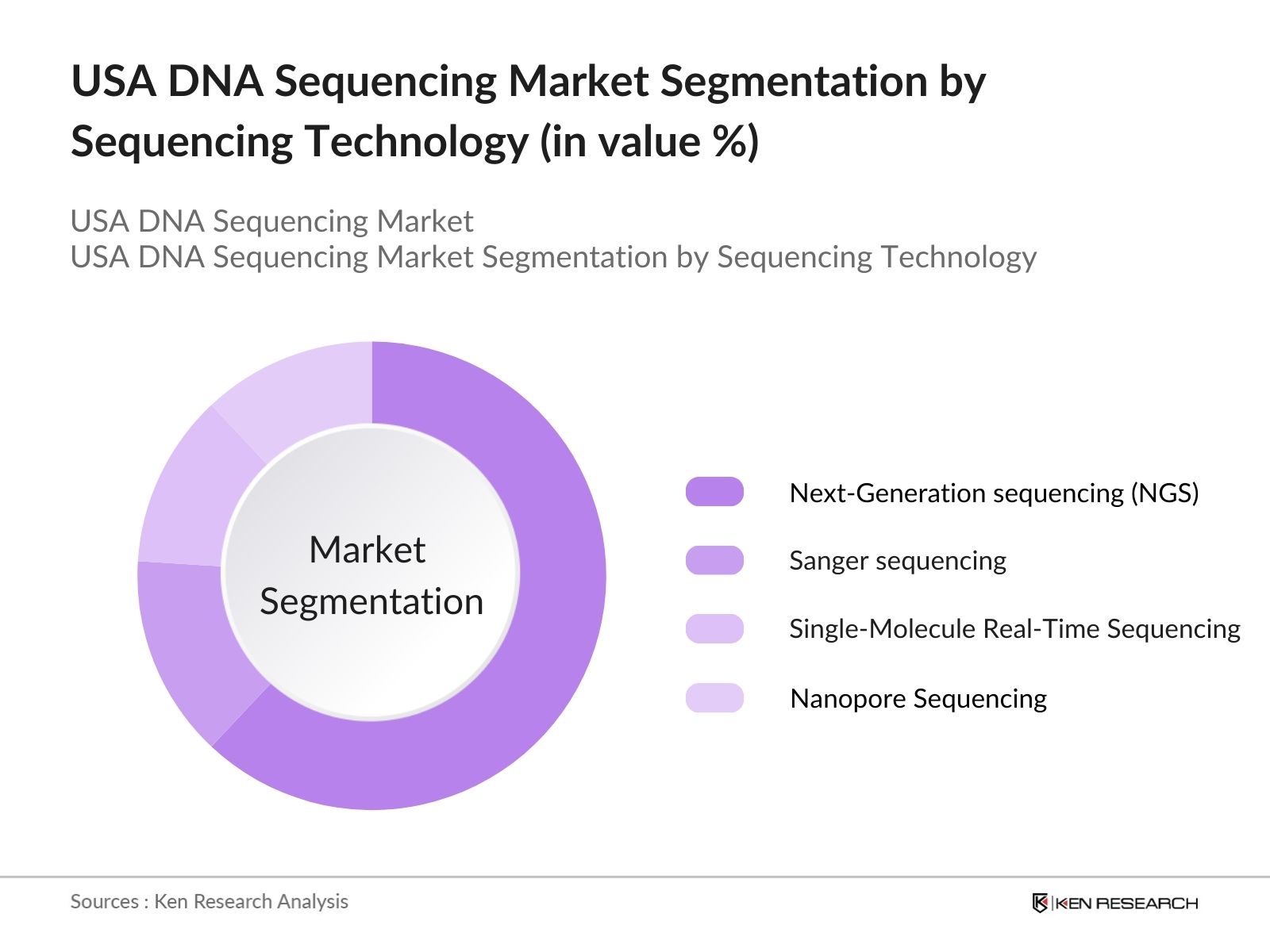
By Sequencing Technology: The USA DNA sequencing market is segmented by technology into Sanger sequencing, next-generation sequencing (NGS), Single-Molecule Real-Time (SMRT) Sequencing, and Nanopore Sequencing. Among these, NGS holds the dominant market share due to its high throughput, accuracy, and decreasing costs per sample. The ability to sequence millions of DNA fragments simultaneously makes NGS a popular choice for a variety of applications, including cancer genomics, genetic testing, and infectious disease research. The rapid adoption of NGS in clinical diagnostics further strengthens its market position.
By Application: The DNA sequencing market in the USA is also segmented by application into clinical diagnostics, drug discovery and development, agricultural genomics, forensics, and environmental testing. Clinical diagnostics holds the largest market share, driven by the increasing application of sequencing technologies in cancer genomics, rare disease diagnosis, and personalized medicine. The ability to provide precise, individualized treatments based on a patients genetic makeup has made DNA sequencing an invaluable tool in modern healthcare.

USA DNA Sequencing Market Competitive Landscape
The USA DNA sequencing market is dominated by a handful of key players, including Illumina, Thermo Fisher Scientific, and Pacific Biosciences, which hold a substantial market share due to their established sequencing technologies and extensive product portfolios. This consolidation highlights the significant influence of these companies, further driven by continued advancements in sequencing platforms, collaborations, and the introduction of cutting-edge sequencing solutions. The competitive landscape remains dynamic, with increasing research and development investments in innovative technologies such as long-read sequencing and single-cell genomics.
Competitive Landscape Table:
|
Company Name |
Establishment Year |
Headquarters |
Sequencing Technology Portfolio |
Revenue (2023) |
No. of Patents |
Partnerships |
Global Reach |
Clinical Applications |
Key Innovations |
|
Illumina, Inc. |
1998 |
San Diego, California |
- |
- |
- |
- |
- |
- |
- |
|
Thermo Fisher Scientific |
1956 |
Waltham, Massachusetts |
- |
- |
- |
- |
- |
- |
- |
|
Pacific Biosciences |
2004 |
Menlo Park, California |
- |
- |
- |
- |
- |
- |
- |
|
Oxford Nanopore Technologies |
2005 |
Oxford, UK |
- |
- |
- |
- |
- |
- |
- |
|
Agilent Technologies |
1999 |
Santa Clara, California |
- |
- |
- |
- |
- |
- |
- |
USA DNA Sequencing Market Analysis
Growth Drivers
- Rising Demand for Personalized Medicine: Genome sequencing plays a crucial role in tailoring treatments for individual patients. In 2023, over 1.2 million whole-genome sequencing tests were conducted in the USA, driven by demand from personalized medicine initiatives. Government investment in precision medicine projects, such as the NIHs All of Us Research Program, has allocated over $500 million for genomic research. Personalized medicine is expected to impact over 50% of clinical decisions in oncology and rare genetic disorders.
- Advancements in Genomics: Advances in next-generation sequencing (NGS) technologies are making DNA sequencing more efficient, with the cost of sequencing a human genome falling to approximately $600 in 2023. Over 20,000 sequencers are currently deployed across research and clinical settings in the USA, further driving adoption. These technologies are vital for research and clinical diagnostics, supported by initiatives like the Cancer Genome Atlas Program, which has sequenced the genomes of over 20,000 primary cancer samples. In 2024, the NIH allocated $800 million towards advancing NGS technologies.
- Government Funding for Genomic Research: In 2024, the NIH budget for genomics research exceeded $3 billion, with funding directed toward initiatives like the Human Genome Project, Precision Medicine Initiative, and other genomic research programs. As a result, the USA remains a leader in genomic innovations, with over 250,000 genomes sequenced under NIH programs, aiding in the development of treatments for cancer, genetic disorders, and infectious diseases.
Challenges
- High Sequencing Costs: In 2024, the cost to sequence a human genome averages around $600 in the USA. While this is a significant reduction from the $2.7 billion cost of sequencing the first human genome in 2003, it remains expensive for many clinical and research applications, particularly in low-resource settings. Furthermore, specialized equipment, such as Illumina sequencers, can cost over $1 million, limiting access for smaller laboratories.
- Data Storage and Management Challenges: In 2024, genomic data in the USA exceeded 40 exabytes, creating significant challenges in terms of storage, processing, and analysis. This has necessitated investment in high-performance computing infrastructures, yet many institutions struggle with the resources needed to manage these vast data sets. Federal programs like the National Institutes of Health Data Commons are addressing these issues with over $100 million invested.
USA DNA Sequencing Market Future Outlook
USA DNA sequencing market is expected to witness significant growth, driven by continuous advancements in sequencing technologies, growing demand for personalized medicine, and increasing investment in genomic research. The integration of artificial intelligence and big data analytics into genomic studies is expected to accelerate the adoption of sequencing technologies in clinical diagnostics and drug discovery.
Market Opportunities
- Development of Portable DNA Sequencing Devices: The development of portable DNA sequencers, such as the MinION by Oxford Nanopore Technologies, offers significant opportunities for expanding the accessibility of DNA sequencing. These portable devices can perform real-time DNA sequencing, with applications in remote regions and resource-limited settings where traditional laboratory infrastructure is unavailable. This technology enables more decentralized genomics research and diagnostics, with applications in agriculture, healthcare, and environmental monitoring.
- Expansion of Direct-to-Consumer Genetic Testing Market: The direct-to-consumer (DTC) genetic testing market has seen rapid growth, with over 40 million Americans using services like 23andMe and Ancestry.com as of 2023. These platforms provide health reports, ancestry insights, and genetic predispositions for various conditions, creating opportunities for expansion in personalized medicine. This trend is supported by FDA guidelines, which enable DTC companies to offer health-related genetic testing with proper regulatory oversight.
Scope of the Report
|
Segments |
Sub-Segments |
|
By Sequencing Technology |
Sanger Sequencing Next-Generation Sequencing (NGS) Single-Molecule Real-Time (SMRT) Sequencing Nanopore Sequencing |
|
By Application |
Clinical Diagnostics Drug Discovery and Development Agricultural Genomics Forensics Environmental Testing |
|
By End-User |
Academic and Research Institutions Hospitals and Clinics Pharmaceutical and Biotechnology Companies Government Research Institutes Contract Research Organizations (CROs) |
|
By Component |
Instruments Reagents and Consumables Services |
|
By Region |
North-East Midwest South West |
Products
Key Target Audience
Biotechnology Companies
Pharmaceutical Companies
Hospitals and Clinical Laboratories
Academic and Research Institutions
DNA Sequencing Service Providers
Genetic Testing Companies
Investors and Venture Capitalist Firms
Government and Regulatory Bodies (FDA, NIH)
Companies
Players Mentioned in the Report
Illumina, Inc.
Thermo Fisher Scientific
Pacific Biosciences
Oxford Nanopore Technologies
Agilent Technologies
BGI Genomics
QIAGEN N.V.
Roche Diagnostics
PerkinElmer Inc.
Macrogen
Table of Contents
1. USA DNA Sequencing Market Overview
1.1. Definition and Scope
1.2. Market Taxonomy
1.3. Market Growth Rate
1.4. Market Segmentation Overview
1.5. DNA Sequencing Methods Overview
2. USA DNA Sequencing Market Size (In USD Mn)
2.1. Historical Market Size
2.2. Year-On-Year Growth Analysis
2.3. Key Market Developments and Milestones
3. USA DNA Sequencing Market Analysis
3.1. Growth Drivers
3.1.1. Rising Demand for Personalized Medicine (Genome Sequencing)
3.1.2. Advancements in Genomics (Next-Generation Sequencing Technology)
3.1.3. Government Funding for Genomic Research (NIH Initiatives)
3.1.4. Increasing Clinical Applications (Cancer Genomics, Infectious Diseases)
3.2. Market Challenges
3.2.1. High Sequencing Costs
3.2.2. Data Storage and Management Challenges (Big Data Analytics in Genomics)
3.2.3. Ethical and Legal Issues (Data Privacy, Genetic Discrimination)
3.2.4. Technical Limitations in Complex Genomic Sequencing
3.3. Opportunities
3.3.1. Development of Portable DNA Sequencing Devices (MinION, Pocket-Sized Sequencers)
3.3.2. Expansion of Direct-to-Consumer Genetic Testing Market (Ancestry, Health Reports)
3.3.3. Rising Demand for Whole-Genome Sequencing (WGS) in Population Genomics
3.3.4. Collaborations and Partnerships in Genomic Research
3.4. Trends
3.4.1. Integration of Artificial Intelligence in Genomic Data Analysis
3.4.2. CRISPR-based Gene Editing Advancements
3.4.3. Use of Long-Read Sequencing Technologies (PacBio, Oxford Nanopore)
3.4.4. Cloud-Based Genomics Platforms for Data Sharing and Collaboration
3.5. Government Regulation
3.5.1. FDA Regulations for Clinical Sequencing (LDTs, Regulatory Pathways)
3.5.2. HIPAA Compliance for Genetic Data Privacy
3.5.3. Genetic Information Nondiscrimination Act (GINA) Regulations
3.5.4. NIH Genomic Data Sharing Policy
3.6. SWOT Analysis
3.7. Stakeholder Ecosystem
3.8. Porters Five Forces Analysis
3.9. Competitive Ecosystem
4. USA DNA Sequencing Market Segmentation
4.1. By Sequencing Technology (In Value %)
4.1.1. Sanger Sequencing
4.1.2. Next-Generation Sequencing (NGS)
4.1.3. Single-Molecule Real-Time (SMRT) Sequencing
4.1.4. Nanopore Sequencing
4.2. By Application (In Value %)
4.2.1. Clinical Diagnostics
4.2.2. Drug Discovery and Development
4.2.3. Agricultural Genomics
4.2.4. Forensics
4.2.5. Environmental Testing
4.3. By End-User (In Value %)
4.3.1. Academic and Research Institutions
4.3.2. Hospitals and Clinics
4.3.3. Pharmaceutical and Biotechnology Companies
4.3.4. Government Research Institutes
4.3.5. Contract Research Organizations (CROs)
4.4. By Component (In Value %)
4.4.1. Instruments
4.4.2. Reagents and Consumables
4.4.3. Services
4.5. By Region (In Value %)
4.5.1. North-East
4.5.2. Midwest
4.5.3. South
4.5.4. West
5. USA DNA Sequencing Market Competitive Analysis
5.1. Detailed Profiles of Major Companies
5.1.1. Illumina, Inc.
5.1.2. Thermo Fisher Scientific
5.1.3. Pacific Biosciences
5.1.4. Oxford Nanopore Technologies
5.1.5. Agilent Technologies
5.1.6. BGI Genomics
5.1.7. QIAGEN N.V.
5.1.8. Roche Diagnostics
5.1.9. PerkinElmer Inc.
5.1.10. Macrogen
5.2. Cross Comparison Parameters (Revenue, Sequencing Technology Portfolio, Clinical Applications, No. of Patents, Sequencing Accuracy, Platform Scalability, Global Reach, Collaborations)
5.3. Market Share Analysis
5.4. Strategic Initiatives
5.5. Mergers and Acquisitions
5.6. Investment Analysis
5.7. Venture Capital Funding
5.8. Government Grants and Support Programs
5.9. Private Equity Investments
6. USA DNA Sequencing Market Regulatory Framework
6.1. FDA Guidelines for Genetic Testing
6.2. CLIA (Clinical Laboratory Improvement Amendments) Certification
6.3. CE Marking for Diagnostic Sequencing Platforms
6.4. CMS (Centers for Medicare and Medicaid Services) Reimbursement Policies for DNA Sequencing
7. USA DNA Sequencing Future Market Size (In USD Mn)
7.1. Future Market Size Projections
7.2. Key Factors Driving Future Market Growth
8. USA DNA Sequencing Future Market Segmentation
8.1. By Sequencing Technology (In Value %)
8.2. By Application (In Value %)
8.3. By End-User (In Value %)
8.4. By Component (In Value %)
8.5. By Region (In Value %)
9. USA DNA Sequencing Market Analysts Recommendations
9.1. TAM/SAM/SOM Analysis
9.2. Customer Cohort Analysis
9.3. Strategic Market Positioning
9.4. White Space Opportunity Analysis
Research Methodology
Step 1: Identification of Key Variables
The initial phase involves mapping the DNA sequencing market ecosystem, including all major stakeholders. Extensive desk research, utilizing secondary sources such as NIH publications, FDA regulations, and proprietary databases, is conducted to gather a comprehensive understanding of market dynamics. This step focuses on defining the critical variables influencing the market.
Step 2: Market Analysis and Construction
In this phase, historical market data on DNA sequencing adoption rates, revenue generation, and service penetration is compiled and analyzed. An assessment of technological advancements and the ratio of clinical to research-based sequencing will also be conducted to estimate revenue growth accurately.
Step 3: Hypothesis Validation and Expert Consultation
Market hypotheses are developed and validated through consultations with industry experts, including geneticists, clinical researchers, and market leaders from DNA sequencing companies. These interviews provide crucial insights into operational trends, revenue models, and technological advancements, refining the data gathered.
Step 4: Research Synthesis and Final Output
The final step involves synthesizing data from both bottom-up and top-down approaches, combining direct engagement with DNA sequencing companies and analysis of market data. This ensures that the final report offers a holistic and accurate portrayal of the USA DNA sequencing market.
Frequently Asked Questions
01. How big is the USA DNA Sequencing Market?
The USA DNA sequencing market is valued at USD 6 billion, driven by advancements in sequencing technology and the growing demand for personalized medicine.
02. What are the challenges in the USA DNA Sequencing Market?
Challenges in USA DNA sequencing market include high sequencing costs, data storage issues, and ethical concerns related to genetic privacy and discrimination.
03. Who are the major players in the USA DNA Sequencing Market?
Key players in USA DNA sequencing market include Illumina, Thermo Fisher Scientific, Pacific Biosciences, Oxford Nanopore Technologies, and Agilent Technologies.
04. What are the growth drivers of the USA DNA Sequencing Market?
USA DNA sequencing market is driven by advancements in next-generation sequencing technology, increasing applications in clinical diagnostics, and government-funded research projects in genomics.
Why Buy From Us?

What makes us stand out is that our consultants follows Robust, Refine and Result (RRR) methodology. i.e. Robust for clear definitions, approaches and sanity checking, Refine for differentiating respondents facts and opinions and Result for presenting data with story

We have set a benchmark in the industry by offering our clients with syndicated and customized market research reports featuring coverage of entire market as well as meticulous research and analyst insights.

While we don't replace traditional research, we flip the method upside down. Our dual approach of Top Bottom & Bottom Top ensures quality deliverable by not just verifying company fundamentals but also looking at the sector and macroeconomic factors.

With one step in the future, our research team constantly tries to show you the bigger picture. We help with some of the tough questions you may encounter along the way: How is the industry positioned? Best marketing channel? KPI's of competitors? By aligning every element, we help maximize success.

Our report gives you instant access to the answers and sources that other companies might choose to hide. We elaborate each steps of research methodology we have used and showcase you the sample size to earn your trust.

If you need any support, we are here! We pride ourselves on universe strength, data quality, and quick, friendly, and professional service.