















USA E Books Market Outlook to 2030
Region:North America
Author(s):Rajat Galav
Product Code:KROD1309
May 2025
90
About the Report
USA E-Book Market Overview
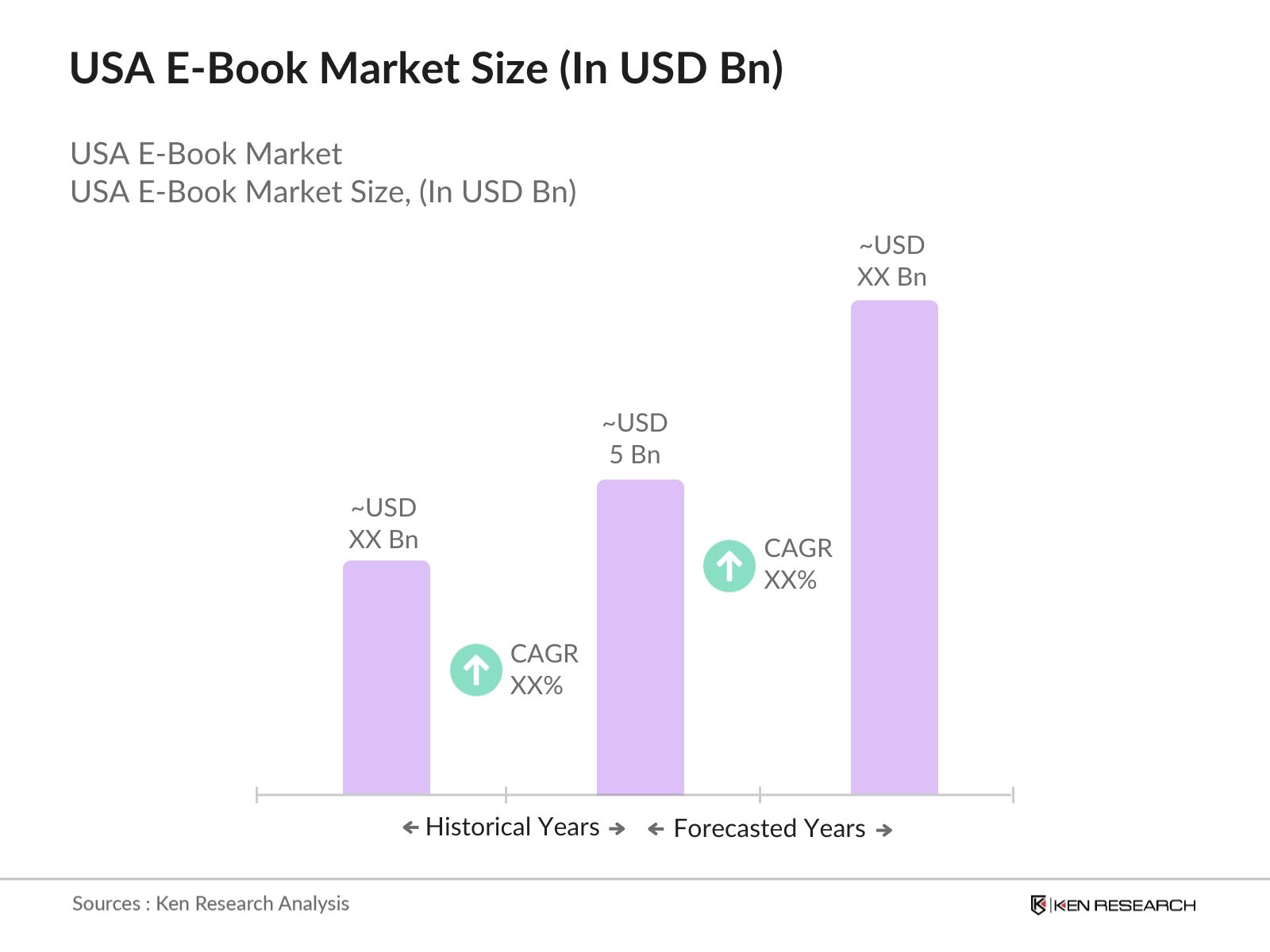
- The USA E-Book Market was valued at USD 5 billion, based on a five-year historical analysis. This growth is primarily driven by the increasing adoption of digital reading platforms, the proliferation of smartphones and tablets, and the rising popularity of e-readers. The convenience of accessing a vast library of titles at one's fingertips has significantly contributed to the market's expansion.
- Key players in this market include major cities such as New York, Los Angeles, and Chicago, which dominate due to their large populations, high literacy rates, and robust technological infrastructure. These urban centers are also home to numerous publishing houses and tech companies that facilitate the distribution and consumption of e-books, further solidifying their market leadership.
- In 2024, several U.S. states enacted laws restricting access to certain books in public and school libraries, often targeting materials with LGBTQ+ themes or content on race and racism. These laws impose requirements such as content removal, restricted access, or parental permission, significantly impacting the availability of e-books and digital content in libraries.
USA E-Book Market Segmentation
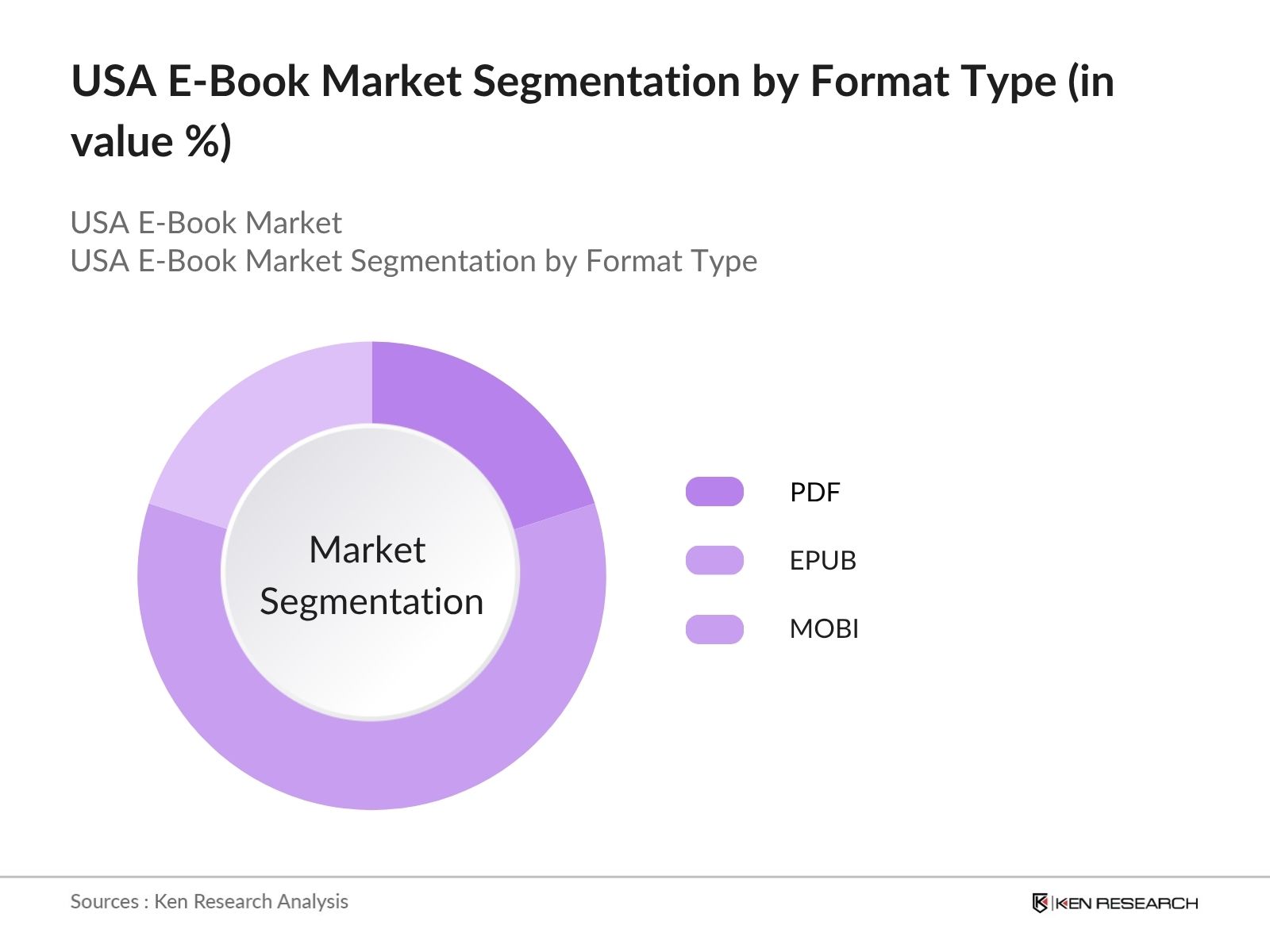
By Format: The e-books market can be segmented into various formats, including PDF, EPUB, and MOBI. Among these, the EPUB format is dominating the market due to its compatibility with multiple devices and its support for interactive content. Consumers increasingly prefer EPUB for its flexibility and ease of use, which enhances the reading experience. The rise of educational e-books, which often utilize EPUB for interactive features, has further solidified its position as the leading format in the market.
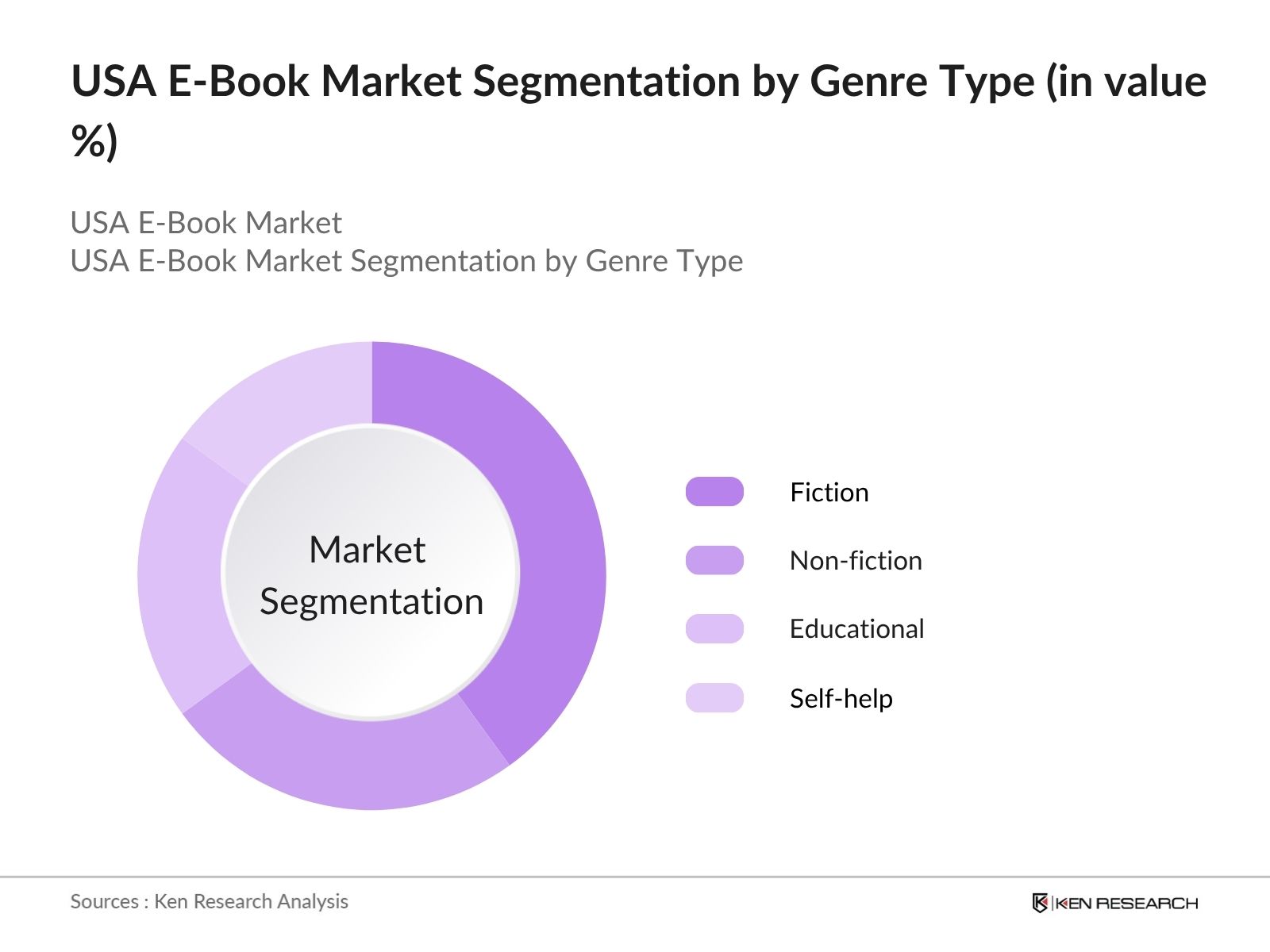
By Genre: The e-books market is also segmented by genre, including fiction, non-fiction, educational, and self-help. The fiction genre is currently dominating the market, driven by the popularity of various sub-genres such as romance, thriller, and fantasy. Readers are increasingly turning to e-books for their fiction needs due to the convenience of accessing a wide range of titles instantly. The rise of online book clubs and social media platforms has also contributed to the growing demand for fiction e-books, as readers share recommendations and reviews.
USA E-Book Market Competitive Landscape
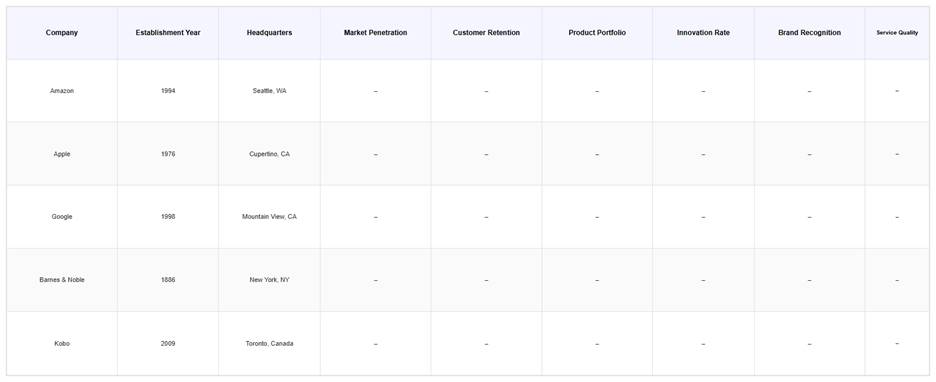
The USA E-Book Market is characterized by a competitive landscape featuring several key players, including established publishing houses and innovative tech companies. This consolidation highlights the significant influence of these major companies, which are continuously adapting to consumer preferences and technological advancements to maintain their market positions.
USA E-Book Market Industry Analysis
Growth Drivers
- Increasing Adoption of Digital Reading Devices: The proliferation of digital reading devices, such as e-readers and tablets, is a significant driver for the e-books market. In 2021, over 24% of U.S. households owned at least one e-reading device, according to the Pew Research Center. This growing accessibility to technology is fostering a culture of digital reading, with consumers increasingly preferring the convenience of carrying multiplE-Book in a single device. The rise in device ownership is expected to correlate with a substantial increase in e-book consumption, further propelling market growth.
- Rising Popularity of Self-Publishing Platforms: The self-publishing industry has seen remarkable growth, with platforms like Amazon Kindle Direct Publishing reporting over 1 million titles published annually. This trend is empowering authors and diversifying the e-book market, allowing niche genres to flourish. The U.S. creative economy, encompassing arts, culture, media, and related industries - accounts for about 3% of total U.S. GDP, as reported in the Creative Economy Outlook 2024 by UNCTAD and OECD. As more writers turn to self-publishing, the variety and availability of e-books will expand, attracting a broader audience and driving sales.
- Expanding Internet Penetration and Accessibility: With the U.S. internet penetration rate reaching 97% in 2024, the accessibility of e-books is set to increase significantly. The ITU highlights that improved internet infrastructure, particularly in rural areas, is facilitating access to digital content. This enhanced connectivity allows consumers to easily purchase and download e-books, contributing to a growing market. As more individuals gain reliable internet access, the potential customer base for e-books will expand, driving overall market growth.
Market Challenges
- Intense Competition from Traditional Publishing: The e-books market faces significant competition from traditional publishing, which still holds a substantial share of the book market. The strong performance of print books poses a challenge for e-books, as many consumers still prefer the tactile experience of physical books. The ongoing battle for market share between these two formats may hinder e-book growth, as traditional publishers continue to innovate and adapt to changing consumer preferences.
- Piracy and Copyright Issues: The e-books market is significantly impacted by piracy and copyright infringement, which undermine the revenue potential for authors and publishers. The US Copyright Office reported that piracy costs the publishing industry billions annually, with unauthorized distribution of e-books being a major concern. As digital content becomes easier to share and distribute, the challenge of protecting intellectual property rights intensifies. This ongoing issue not only affects the profitability of e-books but also discourages new authors from entering the market, thereby stifling innovation and diversity in content.
USA E-Book Market Future Outlook
The e-books market is poised for continued growth in the coming years, driven by technological advancements, increased digital literacy, and a shift in consumer preferences towards digital content. As more readers embrace e-books for their convenience and accessibility, the market is expected to expand, with new formats and genres emerging to meet diverse consumer demands.
Market Opportunities
- Growth of Audiobooks and Interactive E-Books: The rising popularity of audiobooks, presents a significant opportunity for e-book publishers to diversify their offerings. By integrating audio features and interactive elements into e-books, publishers can enhance user engagement and attract a broader audience, particularly among younger readers who favor multimedia content.
- Collaborations with Educational Institutions for E-Learning: The increasing adoption of e-learning solutions in educational institutions creates a lucrative opportunity for e-book publishers. With the U.S. education technology market expanding, partnerships with schools and universities can facilitate the distribution of educational e-books, catering to the growing demand for digital learning resources.
Scope of the Report
| By Format | PDF EPUB MOBI |
| By Genre | Fiction Non-Fiction Educational Self-Help |
| By Distribution Channel | Online Retailers Direct Sales Libraries |
| By End User | Adults Children Educational Institutions |
| By Region | Northeast Midwest South West |
Products
Key Target Audience
Investors and Venture Capitalist Firms
Government and Regulatory Bodies (e.g., Federal Trade Commission, Library of Congress)
Publishers and Content Creators
Digital Distribution Platforms
Retail Chains and Online Marketplaces
Advertising Agencies
Technology Providers and Software Developers
Industry Associations (e.g., Association of American Publishers)
Companies
Players Mentioned in the Report
Amazon Kindle
Apple Books
Google Play Books
Barnes & Noble
Kobo
ReadWave
E-Page Publishing
Digital Leaf Press
BookNest
PageTurner Ebooks
Table of Contents
1. USA E-Book Market Overview
1.1. Definition and Scope
1.2. Market Taxonomy
1.3. Market Growth Rate
1.4. Market Segmentation Overview
2. USA E-Book Market Size (In USD Bn)
2.1. Historical Market Size
2.2. Year-On-Year Growth Analysis
2.3. Key Market Developments and Milestones
3. USA E-Book Market Analysis
3.1. Growth Drivers
3.1.1. Increasing Adoption of Digital Reading Devices
3.1.2. Rising Popularity of Self-Publishing Platforms
3.1.3. Expanding Internet Penetration and Accessibility
3.2. Market Challenges
3.2.1. Intense Competition from Traditional Publishing
3.2.2. Piracy and Copyright Issues
3.2.3. Limited Consumer Awareness in Certain Demographics
3.3. Opportunities
3.3.1. Growth of Audiobooks and Interactive E-Books
3.3.2. Expansion into Emerging Markets
3.3.3. Collaborations with Educational Institutions for E-Learning
3.4. Trends
3.4.1. Increasing Use of Subscription Models
3.4.2. Integration of Augmented Reality in E-Books
3.4.3. Personalization and AI-Driven Recommendations
3.5. Government Regulation
3.5.1. Copyright Laws and Intellectual Property Rights
3.5.2. Digital Accessibility Standards
3.5.3. Taxation Policies on Digital Goods
3.5.4. Consumer Protection Regulations
3.6. SWOT Analysis
3.7. Stake Ecosystem
3.8. Porter’s Five Forces
3.9. Competition Ecosystem
4. USA E-Book Market Segmentation
4.1. By Format
4.1.1. PDF
4.1.2. EPUB
4.1.3. MOBI
4.2. By Genre
4.2.1. Fiction
4.2.2. Non-Fiction
4.2.3. Educational
4.2.4. Self-Help
4.3. By Distribution Channel
4.3.1. Online Retailers
4.3.2. Direct Sales
4.3.3. Libraries
4.4. By End User
4.4.1. Adults
4.4.2. Children
4.4.3. Educational Institutions
4.5. By Region
4.5.1. Northeast
4.5.2. Midwest
4.5.3. South
4.5.4. West
5. USA E-Book Market Competitive Analysis
5.1. Detailed Profiles of Major Companies
5.1.1. Amazon Kindle
5.1.2. ApplE-Book
5.1.3. Google Play Books
5.1.4. Barnes & Noble
5.1.5. Kobo
5.1.6. ReadWave
5.1.7. E-Page Publishing
5.1.8. Digital Leaf Press
5.1.9. BookNest
5.1.10. PageTurner Ebooks
5.2. Cross Comparison Parameters
5.2.1. Market Share
5.2.2. Revenue Growth Rate
5.2.3. Customer Satisfaction Index
5.2.4. Product Range and Diversity
5.2.5. Technological Innovations
5.2.6. Distribution Network Efficiency
5.2.7. Brand Recognition and Loyalty
5.2.8. Pricing Strategies
6. USA E-Book Market Regulatory Framework
6.1. Environmental Standards
6.2. Compliance Requirements
6.3. Certification Processes
7. USA E-Book Market Future Market Size (In USD Bn)
7.1. Future Market Size Projections
7.2. Key Factors Driving Future Market Growth
8. USA E-Book Market Future Market Segmentation
8.1. By Format
8.1.1. PDF
8.1.2. EPUB
8.1.3. MOBI
8.2. By Genre
8.2.1. Fiction
8.2.2. Non-Fiction
8.2.3. Educational
8.2.4. Self-Help
8.3. By Distribution Channel
8.3.1. Online Retailers
8.3.2. Direct Sales
8.3.3. Libraries
8.4. By End User
8.4.1. Adults
8.4.2. Children
8.4.3. Educational Institutions
8.5. By Region
8.5.1. Northeast
8.5.2. Midwest
8.5.3. South
8.5.4. West
9. USA E-Book Market Analysts’ Recommendations
9.1. TAM/SAM/SOM Analysis
9.2. Customer Cohort Analysis
9.3. Marketing Initiatives
9.4. White Space Opportunity Analysis
Disclaimer
Contact Us
Research Methodology
Step 1: Identification of Key Variables
The initial phase involves constructing an ecosystem map encompassing all major stakeholders within the USA E-Book Market. This step is underpinned by extensive desk research, utilizing a combination of secondary and proprietary databases to gather comprehensive industry-level information. The primary objective is to identify and define the critical variables that influence market dynamics.
Step 2: Market Analysis and Construction
In this phase, we will compile and analyze historical data pertaining to the USA E-Book Market. This includes assessing market penetration, the ratio of marketplaces to service providers, and the resultant revenue generation. Furthermore, an evaluation of service quality statistics will be conducted to ensure the reliability and accuracy of the revenue estimates.
Step 3: Hypothesis Validation and Expert Consultation
Market hypotheses will be developed and subsequently validated through computer-assisted telephone interviews (CATIS) with industry experts representing a diverse array of companies. These consultations will provide valuable operational and financial insights directly from industry practitioners, which will be instrumental in refining and corroborating the market data.
Step 4: Research Synthesis and Final Output
The final phase involves direct engagement with multiple manufacturers to acquire detailed insights into product segments, sales performance, consumer preferences, and other pertinent factors. This interaction will serve to verify and complement the statistics derived from the bottom-up approach, thereby ensuring a comprehensive, accurate, and validated analysis of the USA E-Book Market.
Frequently Asked Questions
01. How big is the USA E-Book Market?
The USA E-Book Market is valued at USD 5 billion, driven by factors such as increasing demand, technological advancements, and supportive government initiatives.
02. What are the key challenges in the USA E-Book Market?
Key challenges in the USA E-Book Market include intense competition, regulatory complexities, and infrastructure limitations affecting market dynamics.
03. Who are the major players in the USA E-Book Market?
Major players in the USA E-Book Market include Amazon Kindle, ApplE-Book, Google Play Books, Barnes & Noble, Kobo, among others.
04. What are the growth drivers for the USA E-Book Market?
The primary growth drivers for the USA E-Book Market are increasing consumer demand, favorable policies, innovation, and substantial investment inflows.
Why Buy From Us?

What makes us stand out is that our consultants follows Robust, Refine and Result (RRR) methodology. i.e. Robust for clear definitions, approaches and sanity checking, Refine for differentiating respondents facts and opinions and Result for presenting data with story

We have set a benchmark in the industry by offering our clients with syndicated and customized market research reports featuring coverage of entire market as well as meticulous research and analyst insights.

While we don't replace traditional research, we flip the method upside down. Our dual approach of Top Bottom & Bottom Top ensures quality deliverable by not just verifying company fundamentals but also looking at the sector and macroeconomic factors.

With one step in the future, our research team constantly tries to show you the bigger picture. We help with some of the tough questions you may encounter along the way: How is the industry positioned? Best marketing channel? KPI's of competitors? By aligning every element, we help maximize success.

Our report gives you instant access to the answers and sources that other companies might choose to hide. We elaborate each steps of research methodology we have used and showcase you the sample size to earn your trust.

If you need any support, we are here! We pride ourselves on universe strength, data quality, and quick, friendly, and professional service.