















USA E-Books Market Outlook to 2030
Region:North America
Author(s):Sanjeev
Product Code:KROD2164
November 2024
84
About the Report
USA E-Books Market Overview
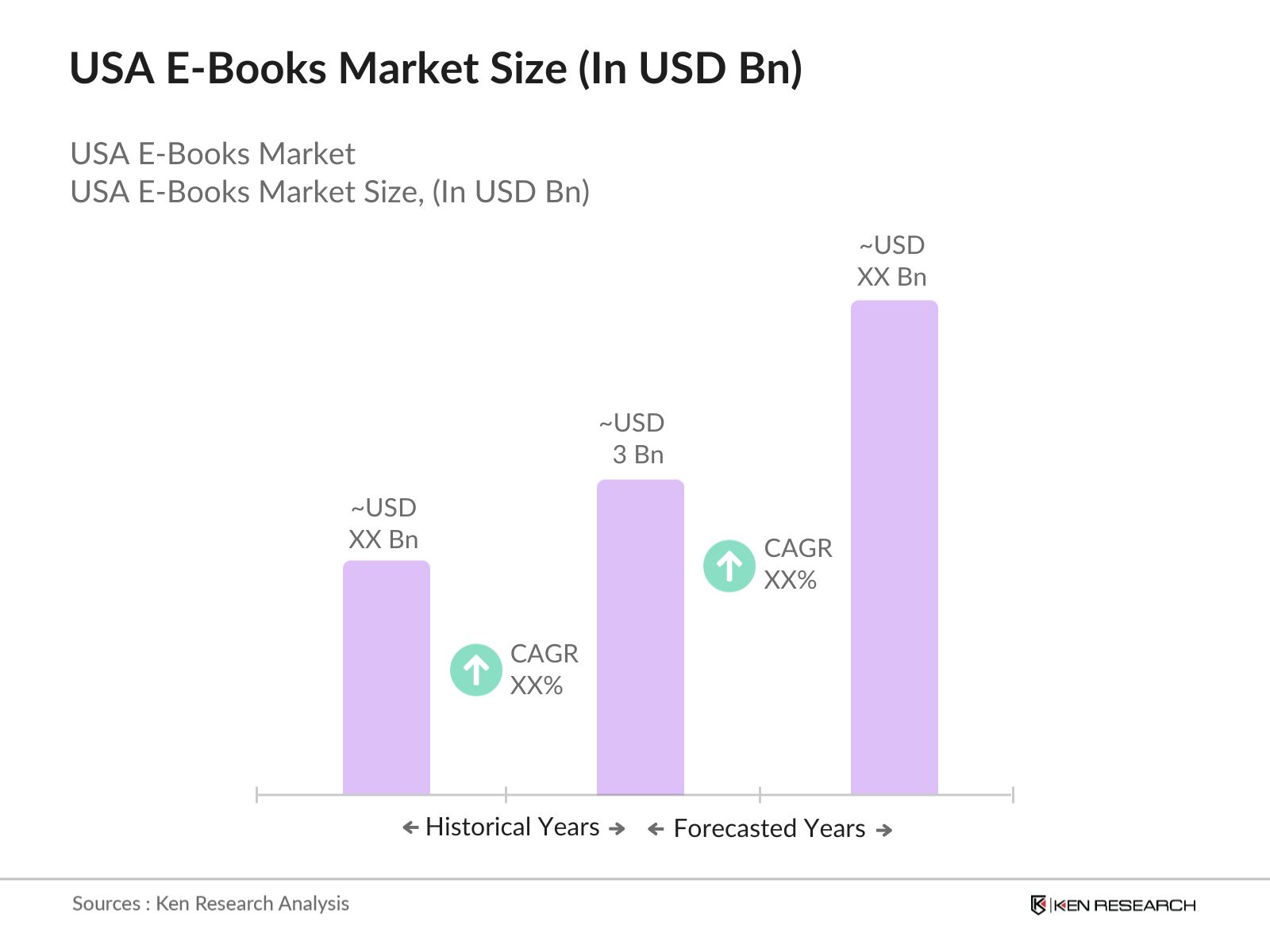
- The USA e-books market has experienced substantial growth in recent years, valued at $ 3 billion. This growth is primarily driven by the increasing penetration of digital devices such as smartphones, tablets, and e-readers, alongside the convenience offered by digital libraries and platforms. The environmental benefits of reduced paper consumption and the ability to access a wide range of books instantly have further bolstered market expansion. Consumer preferences for mobility, accessibility, and affordability are pushing publishers and retailers to adapt to digital transformation.
- Dominant cities in the USA e-books market include New York, Los Angeles, and Chicago, owing to their robust infrastructure, high internet penetration, and significant populations of tech-savvy consumers. Additionally, these cities are educational hubs with vast numbers of students and academics who frequently use digital books for educational purposes. The cultural diversity in these cities also contributes to a demand for varied genres and content, further consolidating their dominance in the market.
- Digital Rights Management (DRM) policies play a critical role in protecting intellectual property in the e-book market. The U.S. Copyright Office reported that in 2023, over 1.5 million copyright registrations were processed, with a significant portion related to digital content, including e-books. These policies ensure that e-books are not copied or distributed without authorization, safeguarding the revenues of authors and publishers. Additionally, federal measures under the Digital Millennium Copyright Act (DMCA) enforce strict penalties for violations, supporting the legal framework essential for the sustainability of the e-book market.
USA E-Books Market Segmentation
The USA e-books market is segmented by genre and by device type.
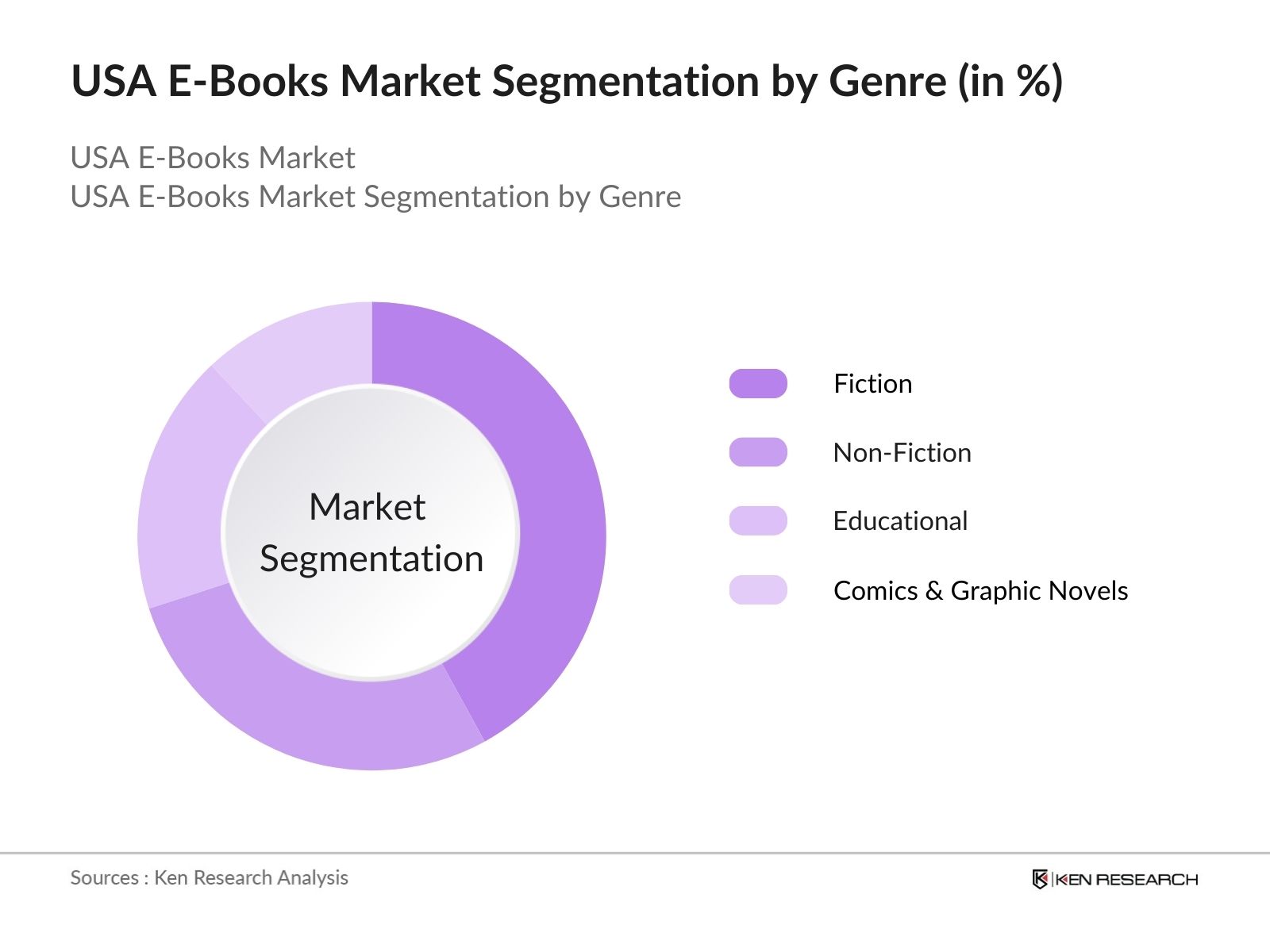
- By Genre: The USA e-books market is segmented by genre into fiction, non-fiction, educational, comics & graphic novels, and others. Fiction e-books dominate the market, driven by the enduring popularity of genres like romance, mystery, and science fiction. Instant access to trending books and international bestsellers through platforms like Amazon Kindle and Google Play Books has significantly contributed to this segments success. Moreover, authors and publishers increasingly prioritize fiction due to its ability to appeal to diverse demographics.
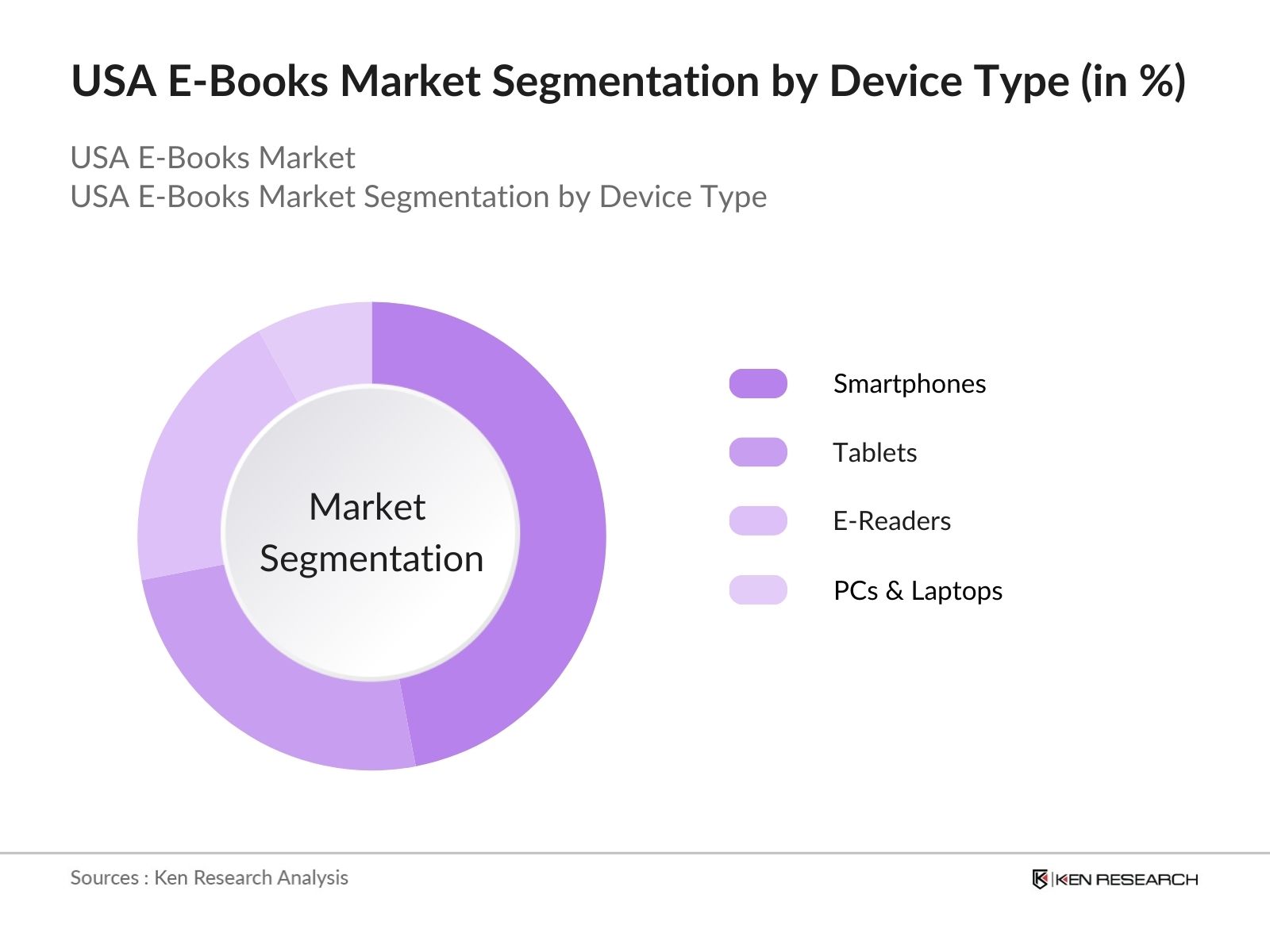
- By Device Type: The market is also segmented by device type into smartphones, tablets, e-readers, and PCs & laptops. Smartphones lead in e-book consumption due to their widespread adoption and multifunctionality. Enhanced screen resolutions, accessibility to e-reading apps, and portability make smartphones the most preferred device for on-the-go reading. Tablets and e-readers follow closely, offering superior reading experiences through features like adjustable lighting and e-ink displays tailored for extended reading sessions.
USA E-Books Market Competitive Landscape
The USA e-books market is dominated by a few key players that collectively influence market dynamics through strategic initiatives, partnerships, and innovation. Major platforms like Amazon Kindle and Apple Books have created ecosystems that integrate e-book purchasing, reading, and storage, giving them a significant edge. Additionally, niche players like Scribd and Smashwords target specific customer segments, such as self-publishing authors and subscription-based readers.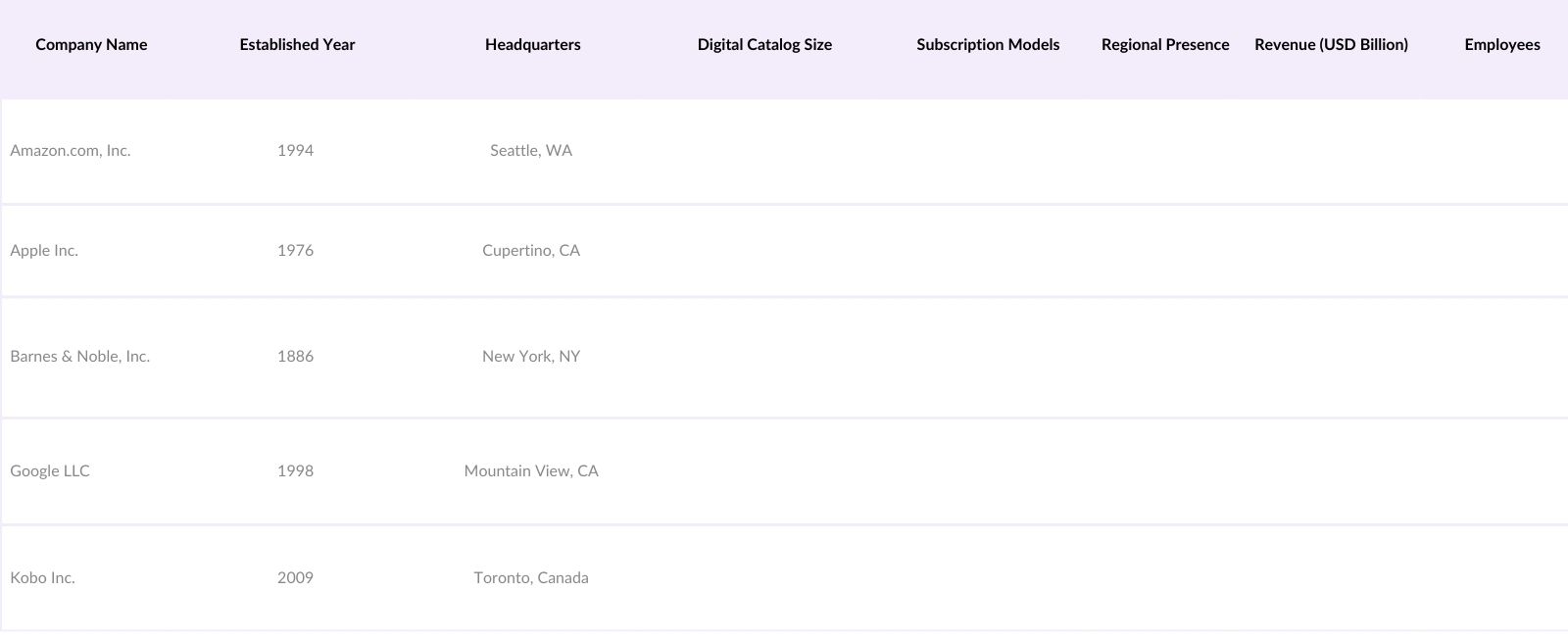
USA E-Books Market Analysis
Growth Drivers
- Technological Advancements: The proliferation of high-speed internet and the widespread availability of affordable digital devices have significantly enhanced access to e-books in the United States. According to the World Bank, as of 2022, 92% of the U.S. population had access to the internet, facilitating seamless e-book downloads and online reading. Additionally, the International Telecommunication Union reported that in 2023, there were approximately 300 million smartphone subscriptions in the U.S., providing readers with convenient platforms for e-book consumption. These technological advancements have streamlined the distribution and accessibility of digital content, contributing to the growth of the e-book market.
- Increasing Adoption of Digital Devices: The surge in ownership of digital devices such as e-readers, tablets, and smartphones has been a pivotal factor in the expansion of the e-book market. The Pew Research Center noted that in 2023, 85% of American adults owned a smartphone, and 53% owned a tablet, offering versatile platforms for e-book reading. This widespread adoption of digital devices has facilitated the transition from traditional print to digital reading formats, aligning with the preferences of a tech-savvy population.
- Environmental Sustainability Concerns: Growing awareness of environmental sustainability has influenced consumer behavior towards digital reading. The Environmental Protection Agency (EPA) reported that in 2022, the U.S. paper and paperboard production was approximately 70 million tons, contributing to deforestation and waste. E-books, being digital, eliminate the need for paper, reducing the environmental impact associated with traditional book production. This shift towards digital reading aligns with broader environmental conservation efforts and appeals to eco-conscious consumers.
Market Challenges
- Digital Piracy: Digital piracy poses a significant challenge to the e-book market, leading to revenue losses for authors and publishers. The U.S. Chamber of Commerce estimated that in 2022, the global economic impact of digital piracy was between $29.2 billion and $71 billion annually, with a substantial portion attributed to the unauthorized distribution of e-books. This illicit activity undermines the profitability and sustainability of the digital publishing industry.
- Market Saturation: The e-book market faces saturation due to the influx of self-published titles and the dominance of major platforms. Bowker reported that in 2022, over 1.7 million self-published books were released in the U.S., contributing to an overwhelming volume of available content. This saturation makes it challenging for new authors to gain visibility and for consumers to discover quality content, potentially hindering market growth.
USA E-Books Market Future Outlook
The USA e-books market is poised for steady growth over the next five years. Advancements in multimedia features, integration of audiobooks, and the development of subscription-based models are expected to drive market expansion. Consumer preference for eco-friendly and convenient reading solutions will further increase demand, while self-publishing platforms are likely to grow, enabling independent authors to reach global audiences. Additionally, the education sector is anticipated to witness higher adoption of digital formats, driven by online learning trends and the inclusion of interactive content in educational materials.
Market Opportunities
- Expansion into Educational Sectors: The integration of e-books into educational curricula offers significant growth opportunities. The National Center for Education Statistics reported that in the 2022-2023 academic year, approximately 56 million students were enrolled in U.S. elementary and secondary schools. Incorporating e-books into educational resources can enhance learning experiences through interactive content and accessibility, presenting a substantial market for digital publishers.
- Integration with Audiobook Platforms: The convergence of e-books and audiobooks caters to diverse consumer preferences and expands market reach. The Audio Publishers Association noted that in 2023, audiobook sales in the U.S. generated $1.3 billion in revenue, indicating a growing audience for audio content. Offering bundled e-book and audiobook packages can attract readers who prefer listening, thereby increasing overall digital content consumption.
Scope of the Report
|
By Genre |
Fiction |
|
By Device Type |
Smartphones |
|
By Distribution Channel |
Online Retailers |
|
By Pricing Model |
Pay-Per-Book |
|
By End-User Age Group |
Children (0-12) |
Products
Key Target Audience
E-Book Publishers
Digital Content Distributors
Online Retailers
Educational Institutions
Authors and Content Creators
Technology Providers
Investment Firms and Venture Capitalist Firms
Government and Regulatory Bodies (e.g., Federal Trade Commission)
Companies
Players Mention in the Report:
Amazon.com, Inc.
Apple Inc.
Barnes & Noble, Inc.
Google LLC
Kobo Inc.
Scribd, Inc.
Smashwords, Inc.
HarperCollins Publishers LLC
Penguin Random House LLC
Hachette Book Group, Inc.
Simon & Schuster, Inc.
Macmillan Publishers
Cengage Learning, Inc.
Wiley (John Wiley & Sons, Inc.)
OverDrive, Inc.
Table of Contents
1. USA E-Books Market Overview
1.1. Definition and Scope
1.2. Market Taxonomy
1.3. Market Growth Rate
1.4. Market Segmentation Overview
2. USA E-Books Market Size (In USD Billion)
2.1. Historical Market Size
2.2. Year-On-Year Growth Analysis
2.3. Key Market Developments and Milestones
3. USA E-Books Market Analysis
3.1. Growth Drivers
3.1.1. Technological Advancements
3.1.2. Increasing Adoption of Digital Devices
3.1.3. Environmental Sustainability Concerns
3.1.4. Rising Demand for Digital Content
3.2. Market Challenges
3.2.1. Digital Piracy
3.2.2. Market Saturation
3.2.3. Competition from Free Content
3.3. Opportunities
3.3.1. Expansion into Educational Sectors
3.3.2. Integration with Audiobook Platforms
3.3.3. Personalized and Interactive E-Books
3.4. Trends
3.4.1. Subscription-Based Models
3.4.2. Self-Publishing Growth
3.4.3. Enhanced E-Book Features (Multimedia Integration)
3.5. Government Regulations
3.5.1. Digital Rights Management (DRM) Policies
3.5.2. Taxation on Digital Goods
3.5.3. Accessibility Standards
3.6. SWOT Analysis
3.7. Stakeholder Ecosystem
3.8. Porters Five Forces Analysis
3.9. Competitive Landscape
4. USA E-Books Market Segmentation
4.1. By Genre (In Value %)
4.1.1. Fiction
4.1.2. Non-Fiction
4.1.3. Educational
4.1.4. Comics & Graphic Novels
4.1.5. Others
4.2. By Device Type (In Value %)
4.2.1. Smartphones
4.2.2. Tablets
4.2.3. E-Readers
4.2.4. PCs & Laptops
4.3. By Distribution Channel (In Value %)
4.3.1. Online Retailers
4.3.2. Publishers' Websites
4.3.3. Subscription Services
4.3.4. Libraries
4.4. By Pricing Model (In Value %)
4.4.1. Pay-Per-Book
4.4.2. Subscription-Based
4.4.3. Free (Ad-Supported)
4.5. By End-User Age Group (In Value %)
4.5.1. Children (0-12)
4.5.2. Young Adults (13-18)
4.5.3. Adults (19-60)
4.5.4. Seniors (60+)
5. USA E-Books Market Competitive Analysis
5.1. Detailed Profiles of Major Companies
5.1.1. Amazon.com, Inc.
5.1.2. Apple Inc.
5.1.3. Barnes & Noble, Inc.
5.1.4. Google LLC
5.1.5. Kobo Inc.
5.1.6. Scribd, Inc.
5.1.7. Smashwords, Inc.
5.1.8. HarperCollins Publishers LLC
5.1.9. Penguin Random House LLC
5.1.10. Hachette Book Group, Inc.
5.1.11. Simon & Schuster, Inc.
5.1.12. Macmillan Publishers
5.1.13. Cengage Learning, Inc.
5.1.14. Wiley (John Wiley & Sons, Inc.)
5.1.15. OverDrive, Inc.
5.2. Cross Comparison Parameters (Number of Employees, Headquarters, Inception Year, Revenue, Market Share, Digital Catalog Size, Subscription Models, Regional Presence)
5.3. Market Share Analysis
5.4. Strategic Initiatives
5.5. Mergers and Acquisitions
5.6. Investment Analysis
5.6.1. Venture Capital Funding
5.6.2. Government Grants
5.6.3. Private Equity Investments
6. USA E-Books Market Regulatory Framework
6.1. Copyright Laws
6.2. Digital Rights Management (DRM) Standards
6.3. Accessibility Regulations
6.4. Taxation Policies on Digital Goods
6.5. Data Privacy and Security Standards
7. USA E-Books Future Market Size (In USD Billion)
7.1. Future Market Size Projections
7.2. Key Factors Driving Future Market Growth
8. USA E-Books Future Market Segmentation
8.1. By Genre (In Value %)
8.2. By Device Type (In Value %)
8.3. By Distribution Channel (In Value %)
8.4. By Pricing Model (In Value %)
8.5. By End-User Age Group (In Value %)
9. USA E-Books Market Analysts Recommendations
9.1. Total Addressable Market (TAM), Serviceable Available Market (SAM), and Serviceable Obtainable Market (SOM) Analysis
9.2. Customer Cohort Analysis
9.3. Marketing Initiatives
9.4. White Space Opportunity Analysis
Disclaimer Contact UsResearch Methodology
Step 1: Identification of Key Variables
This step involves constructing an ecosystem map that encompasses all stakeholders in the USA e-books market. Extensive desk research and proprietary databases are utilized to identify and define critical variables influencing the market.
Step 2: Market Analysis and Construction
Historical data is analyzed to understand market penetration, the relationship between marketplaces and service providers, and revenue trends. Evaluation of service quality statistics ensures reliability in revenue estimates.
Step 3: Hypothesis Validation and Expert Consultation
Market hypotheses are validated through consultations with industry experts via computer-assisted telephone interviews (CATIs). These discussions provide insights into operational and financial trends.
Step 4: Research Synthesis and Final Output
The final phase integrates findings from direct engagements with e-book publishers and distributors. This ensures a comprehensive analysis supported by bottom-up and top-down approaches, offering a validated and accurate market report.
Frequently Asked Questions
How big is the USA e-books market?
The USA e-books market was valued at $3 billion, driven by the rising adoption of digital devices and increasing consumer preference for digital formats.
What are the challenges in the USA e-books market?
USA e-books market Challenges include digital piracy, evolving consumer preferences, and competition from free content. The need for continuous technological upgrades also poses challenges.
Who are the major players in the USA e-books market?
USA e-books market Key players include Amazon.com, Inc., Apple Inc., Barnes & Noble, Inc., Google LLC, and Kobo Inc. Their dominance stems from extensive digital catalogs, user-friendly platforms, and strategic initiatives.
What are the growth drivers of the USA e-books market?
The USA e-books market is propelled by technological advancements, environmental sustainability concerns, and rising demand for digital content across various genres.
What are the trends in the USA e-books market?
Subscription-based models, self-publishing growth, and multimedia features in e-books are among the emerging trends that enhance reader engagement.
Why Buy From Us?

What makes us stand out is that our consultants follows Robust, Refine and Result (RRR) methodology. i.e. Robust for clear definitions, approaches and sanity checking, Refine for differentiating respondents facts and opinions and Result for presenting data with story

We have set a benchmark in the industry by offering our clients with syndicated and customized market research reports featuring coverage of entire market as well as meticulous research and analyst insights.

While we don't replace traditional research, we flip the method upside down. Our dual approach of Top Bottom & Bottom Top ensures quality deliverable by not just verifying company fundamentals but also looking at the sector and macroeconomic factors.

With one step in the future, our research team constantly tries to show you the bigger picture. We help with some of the tough questions you may encounter along the way: How is the industry positioned? Best marketing channel? KPI's of competitors? By aligning every element, we help maximize success.

Our report gives you instant access to the answers and sources that other companies might choose to hide. We elaborate each steps of research methodology we have used and showcase you the sample size to earn your trust.

If you need any support, we are here! We pride ourselves on universe strength, data quality, and quick, friendly, and professional service.